
Energy and Power
House indicts Discos over worsening power condition

By Saint Mugaga
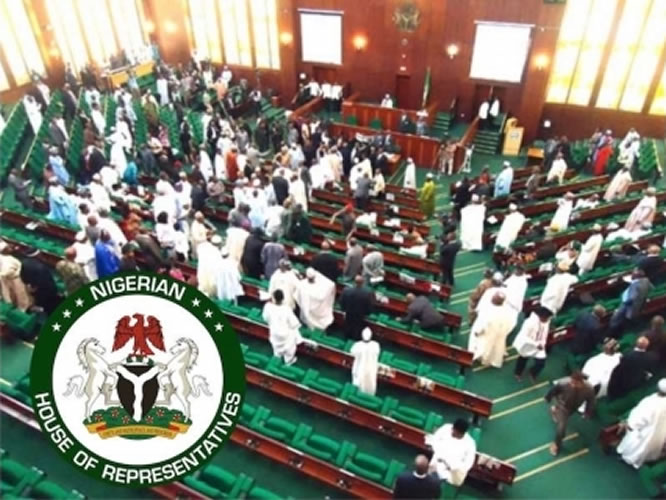
The House of Representatives Ad hoc Committee investigating Nigeria’s power sector reforms and expenditure from 2007 to 2024 has accused electricity distribution companies of crippling Nigeria’s power supply system.
The committee said they have some so through years of poor investment, inadequate expansion and failure to meet obligations outlined in their original business plans.
Speaking during a hearing on Wednesday, the Chairman of the committee, Hon. Ibrahim Almustapha Aliyu said most distribution companies had misled the government at the point of acquisition, presenting impressive business plans but failing to deploy the required resources to upgrade substations, transformers and distribution networks more than a decade after privatisation.
He expressed shock that despite claims by the Transmission Company of Nigeria (TCN) that it can wheel up to 8,000 megawatts, the DisCos continue to take only about 4,000 megawatts due to limited infrastructure, a problem he said is self-inflicted.
According to him, the power distribution firms have “Refused to invest, refused to expand and refused franchising options,” thereby creating the conditions for energy theft, meter bypassing, and consumer apathy across the country.
“You have caused this problem because you could not expand from what you inherited,” he said.
“For 13 to 14 years now, if you had made the necessary investments, substations, up-to-date transformers, proper network expansion, there would be no issue. You would uptake more energy, the cost would be lower, and Nigerians would be happy.”
He noted that many consumers resort to illegal connections because they are billed monthly for electricity that is either not supplied or grossly inadequate.
“How do you expect someone whose monthly bill equals his salary to keep paying? People will look for alternatives. And your refusal to invest has contributed to this unholy attitude of bypassing and stealing energy,” he said.
The committee chairman reminded the DisCos that Nigerians enjoyed better supply under the defunct NEPA/NITEL-era systems in some areas and expected significant improvements after private investors took over the assets.
He further challenged the DisCos to reconcile their earlier claims of competence and financial capacity with their current inability to meet tariff obligations, network expansion expectations, and service delivery benchmarks.
Chief Regulatory and Compliance Officer of Kaduna Electric, Dr. Mahmood Abubakar said about 60 per cent of electricity supplied nationwide is subsidised, a situation the company said has continued to weaken investor confidence and limit the ability of distribution companies (DisCos) to make the necessary capital investments.
He said during the hearing that only about 40 per cent of electricity, largely consumed by Band A customers, is cost-reflective, while the rest depends heavily on government subsidy that is often delayed or unpaid.
According to him, the current subsidy structure distorts billing, revenue collection, and the ability of DisCos to expand infrastructure more than a decade after privatisation.
“If we go strictly by the multi-year tariff order, about 60 percent of the energy consumed in Nigeria is subsidised by the government. Only Band A pays the reflective tariff. Even then, we have Band A feeders recording up to 80 per cent energy losses due to theft and bypasses, making full recovery impossible,” he said.
Abubakar explained that because DisCos cannot recover their full revenue requirement, they cannot secure investments or loans needed to upgrade their networks.
He added that the delay in the payment of subsidies affects the entire value chain, particularly affecting generation companies’ ability to pay for gas, thereby affecting power production.
“The subsidy is not forthcoming as and when due. It comes whenever government decides to pay. That is the reality, and it affects everyone.
“We cannot pay our market invoices fully, the Gencos cannot fulfil firm contracts with gas suppliers, and the whole chain is weakened,” he said.



By Our Correspondent
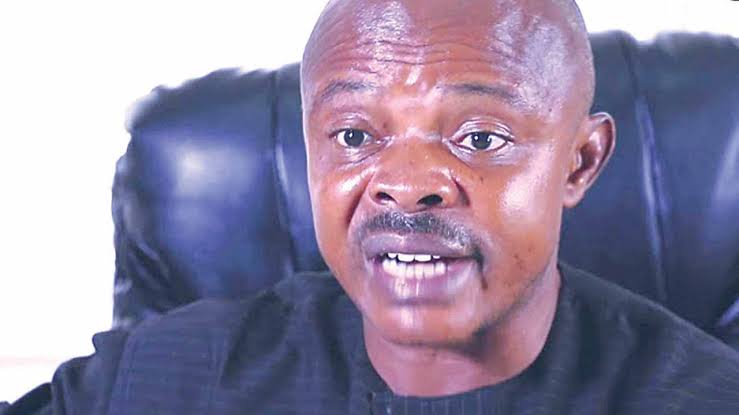
The privatisation of power in Nigeria has been described as grand deception of Nigerian people by government according to the Nigeria Labour Congress (NLC), president, Comrade Joe Ajaero.
Speaking at National Union of Electricity Employees’ (NUEE) 2026 annual conference of women and youth in Abuja, the NLC leader accused the government of creating slush funds ahead of the 2027 elections, using the proposed N2tn to N3tn bailout for power generation companies as a ‘ruse’.
Comrade Ajaero, averred that over a decade after the unbundling of the power sector, electricity generation had remained stagnant at between 4,000 and 5,000 megawatts, “the same level as before privatisation.
“A decade after the much-celebrated privatisation, what do we have? Instead of progress, we witness regression. Instead of light, we have darkness.
“The national grid collapses with the frequency of a faulty generator, sometimes plunging the entire nation into blackout. This is not the turnaround we were promised; this is a well-orchestrated robbery of the Nigerian people.”
Ajaero accused distribution companies of persistently rejecting allocated loads from the Transmission Company while Nigerians grappled with frequent grid collapses and soaring tariffs.
The labour leader criticised the privatisation
of the Power Holding Company of Nigeria (PHCN) successor firms as a fraudulent transfer of public wealth to investors who entirely lacked both the technical capacity and financial strength to manage the power assets.
“The so-called investors did not bring fresh capital into this country. They borrowed heavily from Nigerian banks, draining domestic credit and worsening pressure on the naira.
“They acquired DISCOs and GENCOs on a shoestring budget and now expect Nigerian workers to pay for their loans through outrageous electricity tariffs.”
Ajaero further frowned at the band classification system, which categorises consumers into Bands A, B and C based on hours of supply, saying it had become a backdoor mechanism for tariff hikes.
“Band A consumers pay through their noses but still receive epileptic power supply. This government is asking Nigerians to pay for darkness. Banding is the institutionalisation of extortion.
“Electricity is a right, not a commodity to be auctioned to the highest bidder while the poor are left in the dark.”
On the Federal Government’s plan to pay between N2tn and N3tn to generation companies as subsidy arrears, the NLC said there was no justification for “such a massive bailout to private firms that have failed to deliver.”
“The electricity subsidy claim remains a phantom. That N3tn is another ruse and goes nowhere. We see this as a clandestine move to settle the boys as the 2027 elections approach. Every kobo of the treasury belongs to the workers and people of Nigeria.”
The NLC insisted that electricity must be restored as a social service, arguing that no country had successfully run its power sector purely as a profit-driven enterprise without imposing hardship on citizens.
“It is only the State that can bear the huge capital investment required and the long gestation period for returns. The private sector has failed. It is time to take back the power for the people,” he stated.
While acknowledging the provisions of the new Electricity Act that devolved power generation and distribution to states, warned that decentralisation alone would not solve the structural challenges plaguing the sector.
The labour body called for a national stakeholders’ summit comprising workers’ unions, manufacturers and experts to develop what it termed a “People’s Power Roadmap” focused on affordable and stable electricity, public investment in generation and transmission infrastructure, service-reflective tariffs and a reversal of the privatisation model.
“The Nigerian people cannot continue to pay for darkness. When power is not available, it cannot be affordable. Power must be returned to the people,” Ajaero added.
Energy and Power
APC Rising Leaders Fellowship: Marwa, Onyeagba, Shagaya, Ojudu, Abiola to Head 1700 Nationwide Application Review Committee
By Saint Mugaga
Former Nigerian Ambassador to Burundi, HE Elijah Onyeagba; DG Citizen and Leadership Center, Rinsola Abiola; Executive Director, Galaxy Backbone Hon Segun Olulade; Former SSA to President Buhari Mr Wole Aboderin; SSA to the President on Community Engagement Southwest, Moremi Ojudu; ED North Central Development Commission, Princess Atika Ajana; Founder of WFM Toun Okewale Sonaiya; SSA to the President on Entrepreneurship Development Chalya Shagaya are among the 170 chairpersons and members of the shortlist committee to review over 1700 applications received from young Nigerians nationwide for the Rising Progressive Young Leaders Fellowship (RPLF).
The Rising Progressive Leaders Fellowship (RPLF) is a flagship and elite leadership development initiative of the Progressive School of Politics, Leadership and Statecraft (PSPLS) – the human capital development arm of the APC National Youth Wing, purposefully designed to produce the best of the best, a new cadre of high value, governance ready young leaders prepared for public sector leadership and national service.
Other committee chairpersons and members includes Mr Bode Olugbore; Hon Ife Adebayo; Dr Sanusi Ohiare; Mr Kingsley Mordi; Barr Zainab Buba Marwa; Mr Abu Andrew; Engr Prof Abubakar Sadiq Zubair, Hon Ginika Tor and more.
According to the APC National Youth Leader, Dr Dayo Israel, the Fellowship targets exceptional emerging leaders with the capacity to contribute meaningfully to governance today, while being deliberately groomed to shape leadership and statecraft tomorrow. It is structured as a rigorous, immersive, and transformational experience that combines intellectual depth, practical exposure, and elite mentorship to prepare the next generation of progressive leaders for roles across the public sector, political institutions, and policy making spaces.
“RPLF is delivered as a high intensity, cohort based fellowship, featuring a residential component that removes participants from everyday distractions and places them in a focused environment of learning, reflection, collaboration, and leadership formation. This immersive model fosters discipline, peer bonding, critical thinking, and a deep appreciation of the demands of public leadership and service in line with the Renewed Hope Agenda of the President Bola Ahmed Tinubu”, the APC Youth Leader, concluded.
The Fellowship draws on a distinguished faculty and resource network comprising former governors, former ministers, senior public servants, seasoned legislators, private sector leaders, policy experts, and thought leaders. Fellows benefit from direct interaction with serving and former senior government officials across both the legislative and executive arms of government, providing rare insight into real-world governance, policy negotiation, political leadership, and institutional decision making.
The application review process will commence on Wednesday, January 27, 2026, while further updates on the review exercise and final selection process will be communicated in due course.
By Saint Mugaga
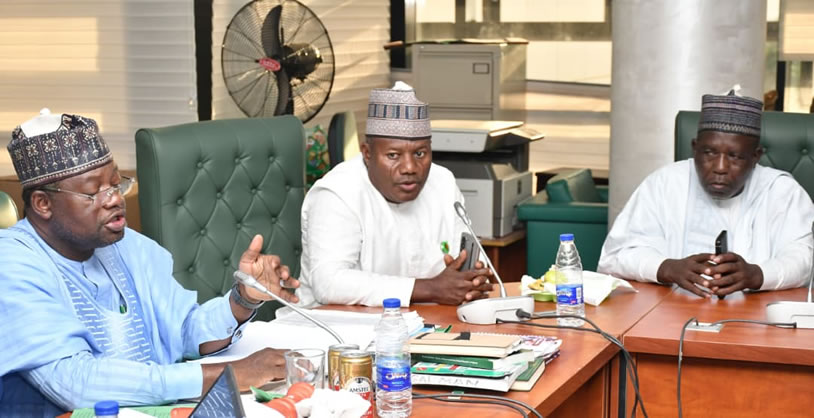
The House of Representatives Ad-hoc Committee investigating expenditure in Nigeria’s power Sector has blamed Distribution Companies (DisCos) of failing to meet their obligations and shortchanging Nigerians 13 years after privatisation of the sector.
Chairman and members of the Committee made the remark at its resumed investigative hearing when Abuja, Port Harcourt and Benin DisCos appeared before it on Wednesday.
Chairman of the Committee, Hon. Ibrahim Al-Mustapha Aliyu said that, despite privatisation of the power sector, which was aimed at providing stable power in the country, Nigerians still grapple with the challenges of power supply.
He said, “You know, the overall perception of Nigerians is that DISCOs are the major problem, the major setback to the noble initiative of privatizing the power sector. Because most of the DisCos fall in the hands of those that are not truly investors, that are not actually ready to invest, but take advantage of the sector.
“You know, nobody will agree with you that after 13 years, you could not show one particular deliberate initiative.
“I have cited an example with Abuja DISCO last time. Abuja DISCO extends up to Kontagora, but their major concentration is in Abuja, because that’s where they can make money. The larger part of Kontagora may be without electricity.
“They don’t bother. And to be honest, they find it not economically wise, as investors, to waste money extending lines, maybe of 300, 200, 250 kilometers to rural areas, to those other areas that they feel they will not be able to recoup their investment.
“This is not the intention of the privatization. And this is what is constantly taking us to the major. issue of probe, the issue of establishing the effectiveness or otherwise of the privatization generally. Look at the DisCos on 60% by the investors and 40% by the government.
“But if I ask you, how much have you returned as a dividend of the 40% back to the government? The answer is nil, because you always pose as those that are investing for charity at last. So these are the key issues.
“I have said it before we begin this meeting, maybe at the beginning of this meeting, that, you know, we have already opened talks with these investors, with the co-investors. That is the… The co-investors to their DISCOs.
“Because we have to talk as Nigerians. We have to look at avenues where we can salvage this situation. The government has demonstrated commitment. If you can get this money across… Now, if I have to go by these loans given to you by CBN, realiz)se that, yes, some have made money, as you have earlier elucidated from his submission”.


Achado Kicks Off Constituency Education Scholarship With N20 Million in Benue
Spread the loveBy Felix Umande, Makurdi Member representing Gwer East/Gwer West Federal Constituency if Benue state, Arc. Dr. Austin Asema...
House wants improved funding for BPP…Warns Against E-Procurement Votes
Spread the loveBy Saint Mugaga The House of Representatives Committee on Public Procurement has called for increased budgetary allocation to...

Cybercrime: DSS to arraign El- Rufai next Wednesday
Spread the loveThe Department of State Services (DSS) will on February 25, arraign former Governor Nasir el-Rufai of Kaduna State...

“El-Rufai’s Admission to Tapping Ribadu’s Phone is a Serious Breach of National Security”–Arewa Think Tank
Spread the loveBy Our Reporter The Convener of Arewa Think Tank, Muhammad Alhaji Yakubu, has issued a statement on Wednesday...
How Akpabio’s Leadership Secured Nigeria’s Electoral Future
Spread the loveIn the evolving story of Nigeria’s democratic consolidation, few issues have provoked as much intensity as electoral reform....

Akpabio hails Anyim at 65
Spread the loveBy Saint Mugaga The President of the Senate, Senator Godswill Akpabio, GCON has congratulated former President of the...
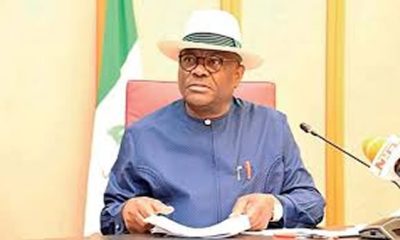

FCT Area Council Elections: Wike declares Friday Work Free, Restrict Movement From 8pm On Friday To 6pm on Saturday
Spread the loveBy Wumi Tewogbade, Abuja Ahead of the Saturday, February 21 Area Council elections in the Federal Capital Territory...

FCT Area Council Elections: AMAC PDP Chairmanship Candidate Steps Down For APC Candidate
Spread the loveBy Wumi Tewogbade, Abuja Less than 24 hours after the People’s Democratic Party (PDP) Chairmanship candidate for Bwari...
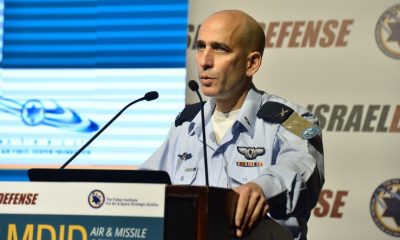

Khamenei: Regime Declares That It Wants To Destroy Israel & Is Investing Millions On Proxies” Kelman
Spread the loveRetired Israeli Air Force Major General Tal Kelman delivered a stark assessment of Iran’s priorities, stating that the...


President Tinubu Receives Professor Andrea Riccardo, Reaffirms Nigeria ‘s Commitment to Interfaith Dialogue and National Unity
Spread the loveBy Timothy Mvahan, AbujaPresident Bola Ahmed Tinubu, GCFR, has reaffirmed Nigeria’s steadfast commitment to interfaith harmony, national cohesion,...