
Energy and Power
House indicts Discos over worsening power condition

By Saint Mugaga
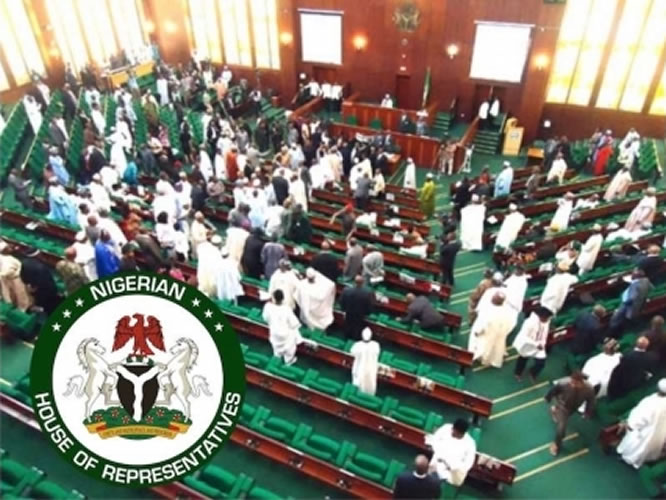
The House of Representatives Ad hoc Committee investigating Nigeria’s power sector reforms and expenditure from 2007 to 2024 has accused electricity distribution companies of crippling Nigeria’s power supply system.
The committee said they have some so through years of poor investment, inadequate expansion and failure to meet obligations outlined in their original business plans.
Speaking during a hearing on Wednesday, the Chairman of the committee, Hon. Ibrahim Almustapha Aliyu said most distribution companies had misled the government at the point of acquisition, presenting impressive business plans but failing to deploy the required resources to upgrade substations, transformers and distribution networks more than a decade after privatisation.
He expressed shock that despite claims by the Transmission Company of Nigeria (TCN) that it can wheel up to 8,000 megawatts, the DisCos continue to take only about 4,000 megawatts due to limited infrastructure, a problem he said is self-inflicted.
According to him, the power distribution firms have “Refused to invest, refused to expand and refused franchising options,” thereby creating the conditions for energy theft, meter bypassing, and consumer apathy across the country.
“You have caused this problem because you could not expand from what you inherited,” he said.
“For 13 to 14 years now, if you had made the necessary investments, substations, up-to-date transformers, proper network expansion, there would be no issue. You would uptake more energy, the cost would be lower, and Nigerians would be happy.”
He noted that many consumers resort to illegal connections because they are billed monthly for electricity that is either not supplied or grossly inadequate.
“How do you expect someone whose monthly bill equals his salary to keep paying? People will look for alternatives. And your refusal to invest has contributed to this unholy attitude of bypassing and stealing energy,” he said.
The committee chairman reminded the DisCos that Nigerians enjoyed better supply under the defunct NEPA/NITEL-era systems in some areas and expected significant improvements after private investors took over the assets.
He further challenged the DisCos to reconcile their earlier claims of competence and financial capacity with their current inability to meet tariff obligations, network expansion expectations, and service delivery benchmarks.
Chief Regulatory and Compliance Officer of Kaduna Electric, Dr. Mahmood Abubakar said about 60 per cent of electricity supplied nationwide is subsidised, a situation the company said has continued to weaken investor confidence and limit the ability of distribution companies (DisCos) to make the necessary capital investments.
He said during the hearing that only about 40 per cent of electricity, largely consumed by Band A customers, is cost-reflective, while the rest depends heavily on government subsidy that is often delayed or unpaid.
According to him, the current subsidy structure distorts billing, revenue collection, and the ability of DisCos to expand infrastructure more than a decade after privatisation.
“If we go strictly by the multi-year tariff order, about 60 percent of the energy consumed in Nigeria is subsidised by the government. Only Band A pays the reflective tariff. Even then, we have Band A feeders recording up to 80 per cent energy losses due to theft and bypasses, making full recovery impossible,” he said.
Abubakar explained that because DisCos cannot recover their full revenue requirement, they cannot secure investments or loans needed to upgrade their networks.
He added that the delay in the payment of subsidies affects the entire value chain, particularly affecting generation companies’ ability to pay for gas, thereby affecting power production.
“The subsidy is not forthcoming as and when due. It comes whenever government decides to pay. That is the reality, and it affects everyone.
“We cannot pay our market invoices fully, the Gencos cannot fulfil firm contracts with gas suppliers, and the whole chain is weakened,” he said.







By Nick Ibe, Abuja
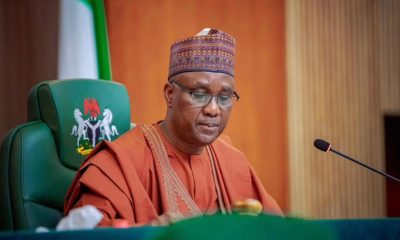
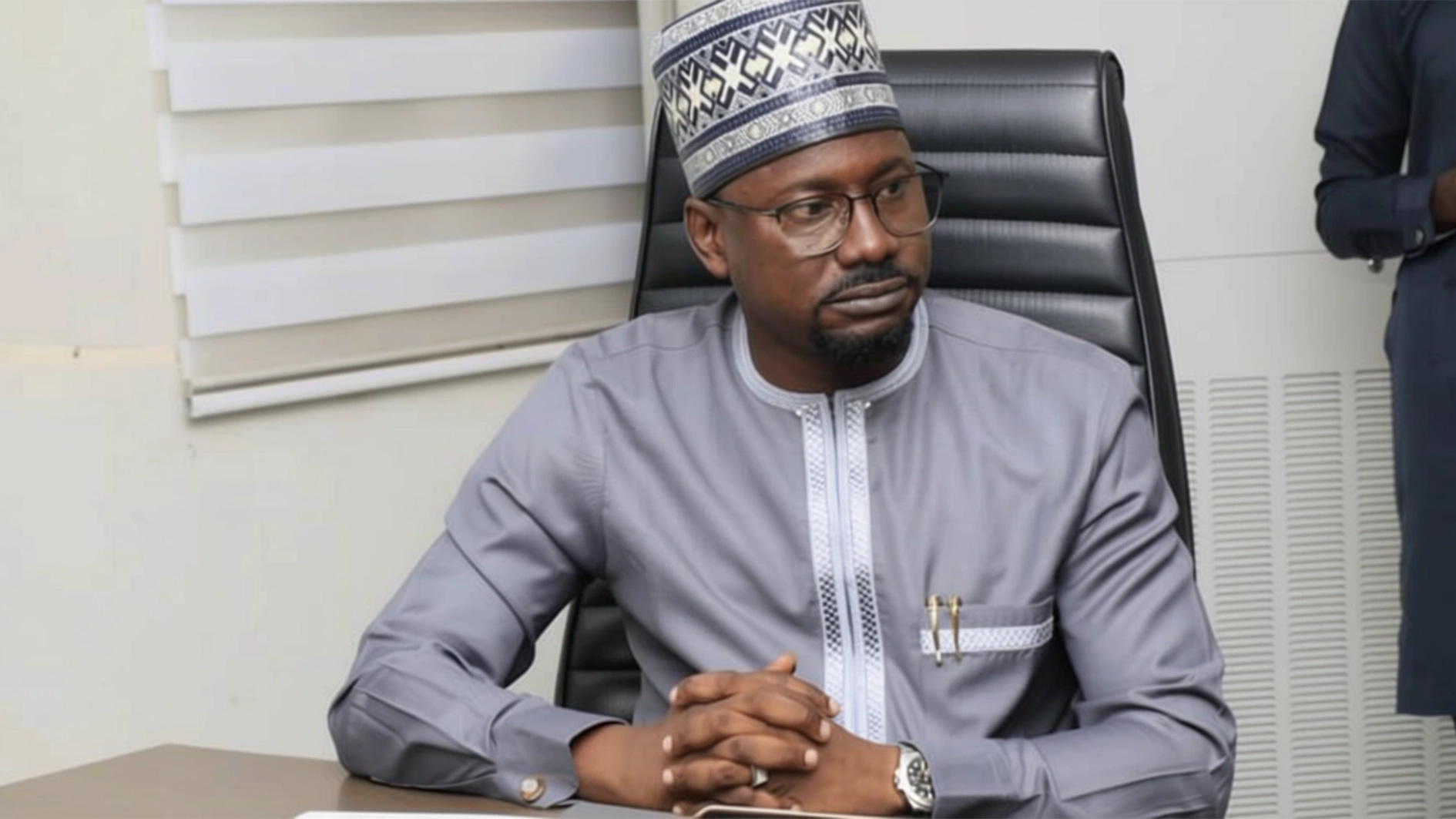
The Managing Director of the Rural Electrification Agency, REA, Abba Aliyu, has warned that Nigeria’s electricity challenge could deepen as population growth, artificial intelligence, digitalisation and the increasing electrification of transportation, agriculture and other sectors drive an unprecedented rise in demand.
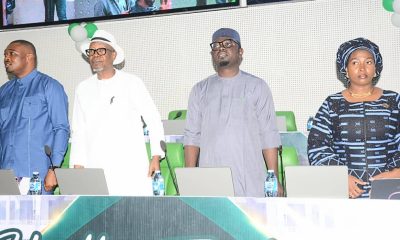
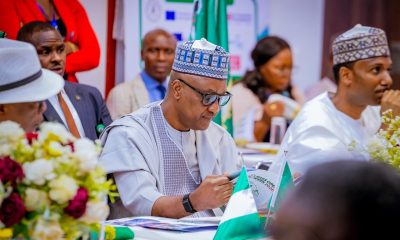
The MD gave the warning on Friday in Abuja during the signing of a collaboration agreement between the agency and Alpha Morgan Bank, which committed up to N50bn in financing for renewable energy developers.
Aliyu said the agreement was part of efforts to close the huge financing gap confronting Nigeria’s electricity sector, particularly in rural and underserved communities where millions of households and businesses remain without reliable access to power.
Under the arrangement, eligible developers participating in REA programmes, including the Distributed Access through Renewable Energy Scale-up project, will be able to access revolving loans of up to N10bn each, subject to the bank’s credit assessment and approval.
Alpha Morgan Bank will provide up to 70 per cent counterpart funding for eligible projects, with proposed loan tenures ranging from 12 to 24 months.
However, Aliyu said the N50bn facility represented only a fraction of the financing required to address Nigeria’s electricity deficit, disclosing that the country required about $23bn in additional investment to improve electricity access and supply reliability.
He said, “Currently, this era is being termed as the era of electricity. Electricity is going to drive almost every single thing that we are going to do. Electricity will drive transportation, electricity will drive agriculture, electricity will drive health, education and everything we do.
“So, when you look at the future, three factors are going to be the main drivers of increasing electricity demand. Population growth is one. Beyond that, there are the two other factors: electrification of everything, digitisation, AI and data centres. And this is profound.
“This is one of the things that will make the need for electricity continue to grow drastically, beyond any level that we have seen.”
The REA boss said Nigeria’s population was growing faster than the rate at which electricity infrastructure was being expanded, worsening the country’s electricity access challenge.
He said the growing deployment of artificial intelligence and data centres would further increase pressure on electricity systems, arguing that reliable and affordable power would increasingly become a strategic economic advantage.
According to him, the global shift towards electricity was also accelerating investment in renewable energy as the cost of solar generation and battery storage continued to decline.
Aliyu said, “One of the things that keeps making renewable energy continue to grow and remain the fastest-growing source of electricity generation is that the cost of using solar to generate electricity has kept going down.
“This is going to continue because technology keeps improving, particularly in photovoltaic manufacturing and battery storage. Solar will continue to be a dominant source of electricity generation.”
He said several countries had already begun making massive investments in electricity infrastructure to support artificial intelligence, manufacturing and data centres.
According to him, Nigeria must also treat electricity as a strategic component of its infrastructure and economic development plans.
Aliyu said President Bola Tinubu had approved a $750m renewable energy intervention aimed at deploying 1,350 mini-grids and expanding electricity access to about 2.5 million Nigerians.
He said the programme was already in its second year of implementation.
However, the REA boss stressed that the available financing remained inadequate.
“But still, what is required to address the electricity challenge in Nigeria and to enhance reliability of supply is about $23bn. What we currently have is less than $2.5bn,” he stated.
He added that the agency was expecting an additional $119m in financing from the Japan International Cooperation Agency to support the deployment of interconnected and isolated mini-grids.
Aliyu said the REA had designed many of its interventions around a performance-based framework, under which private developers must meet agreed project milestones before accessing catalytic grants.
He explained that this created opportunities for Nigerian financial institutions to provide bridge financing that would enable developers to execute projects and unlock grant funding.
“We have seen how Nigerian local financing has moved from not knowing or not seeing renewable energy as an infrastructure project to now becoming active members of the financing ecosystem,” he said.
Aliyu also disclosed that the REA planned to launch the Renewable Energy Asset Management Company next week, describing it as a platform expected to become Africa’s largest renewable energy asset holder.
According to him, the proposed company will support the sustainability, operation and maintenance of renewable energy projects while helping to recycle capital and leverage existing assets to attract fresh private-sector financing.
“We currently have assets worth over $300m in various universities. We want to leverage those assets to raise more financing,” he said.
Aliyu further disclosed that Nigeria had developed a pipeline of about 3.7 gigawatts of local renewable energy manufacturing capacity, supported by investments estimated at $225m.
He said the expansion of renewable energy was also creating opportunities for equipment leasing companies, energy service firms, fintech operators and other businesses involved in revenue collection and project maintenance.
The REA boss added that the agency was close to completing 288MW of interconnected mini-grid projects, with commissioning expected to begin in November.
Speaking at the event, the Executive Director of Alpha Morgan Bank, Doyin Anyaehie, said the partnership was designed to address the financing gap that had prevented many viable renewable energy projects from progressing.
She said the bank’s decision to commit N50bn was driven by the need to translate discussions about Nigeria’s power deficit into practical interventions.
“We all know that Nigeria has electricity challenges, power challenges, and we thought to ourselves, what can we do? What part can we play, even if it seems to chip away at the monolithic problem of power?” Anyaehie said.
She added, “One of the major challenges is that the right financing structures are oftentimes absent, and nowhere is it more evident than in the power sector.
“When we talk about Nigeria’s power challenges, oftentimes we talk about them in numbers, in gigawatts and all of that. But oftentimes, we don’t drill it down to the human challenge, which is what it really is.”
According to her, unreliable electricity affects rural businesses, health facilities and schools and limits the ability of communities to improve their livelihoods.
“We thought that while we recognise that there is a financing gap, we cannot just stay on the sidelines and acknowledge that gap. We asked ourselves, what can we do?
“Our success is going to go beyond signing this MOU. The real success will be what we can look at one or two years from now and say: because we provided this financing, developers were able to build renewable energy projects and this is the impact that we can point to,” she said.
She added that the bank was willing to work with developers with viable projects and appropriate fundamentals, saying the partnership was ultimately aimed at unlocking businesses, improving healthcare and education, and expanding economic opportunities in underserved communities.
The agreement is expected to strengthen the link between public-sector interventions and private-sector finance as Nigeria seeks fresh capital to close its electricity access gap at a time when rising population, digitalisation and new technologies are expected to push power demand to new levels.
By Nick Ibe, Abuja
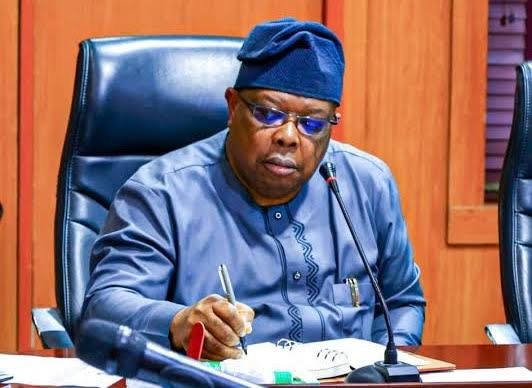
Minister of Power Joseph Tegbe has disclosed the Federal government’s plan to stop electricity subsidy payment from 2027.
Tegbe revealed this during a media interactive session on Friday, saying the subsidy would be removed gradually and consumers would not lose access to electricity services.
“We have the mandate of Mr President to clear the legacy debt and come up with sustainable structures to make sure this doesn’t pile up any more,” he said, adding that:
“I promise you, next year, by God’s grace, we will put a stop to this so-called subsidy in the power sector. Mr President, will not deprive Nigeria of anything. We’ll make sure Nigerian consumers continue to have power and improved power services.”
The minister also said there is no immediate plan to increase electricity tariffs.
The removal of subsidy aligns with recommendations by the International Monetary Fund for Nigeria to gradually remove electricity subsidies.
The government had previously put the subsidy burden at about N3 trillion as of February 2024, while the Association of Power Generation Companies says GenCos are owed roughly N6.5 trillion.
Tegbe’s comments come amid ongoing efforts to clear legacy debts in the sector.
Meanwhile, President Bola Tinubu recently approved a N4 trillion bond programme for debt settlement.
In January, the government issued a N501 billion inaugural bond under the Presidential Power Sector Debt Reduction Programme. On July 20, it announced a second tranche worth about N729 billion to settle verified debts owed to power generation companies.
Earlier this year, Tinubu also directed ministries, departments and agencies to use existing electricity laws to determine how
subsidy costs should be shared among the federal, state and local governments in the 2026 budget
By Isa Abdul, Abuja
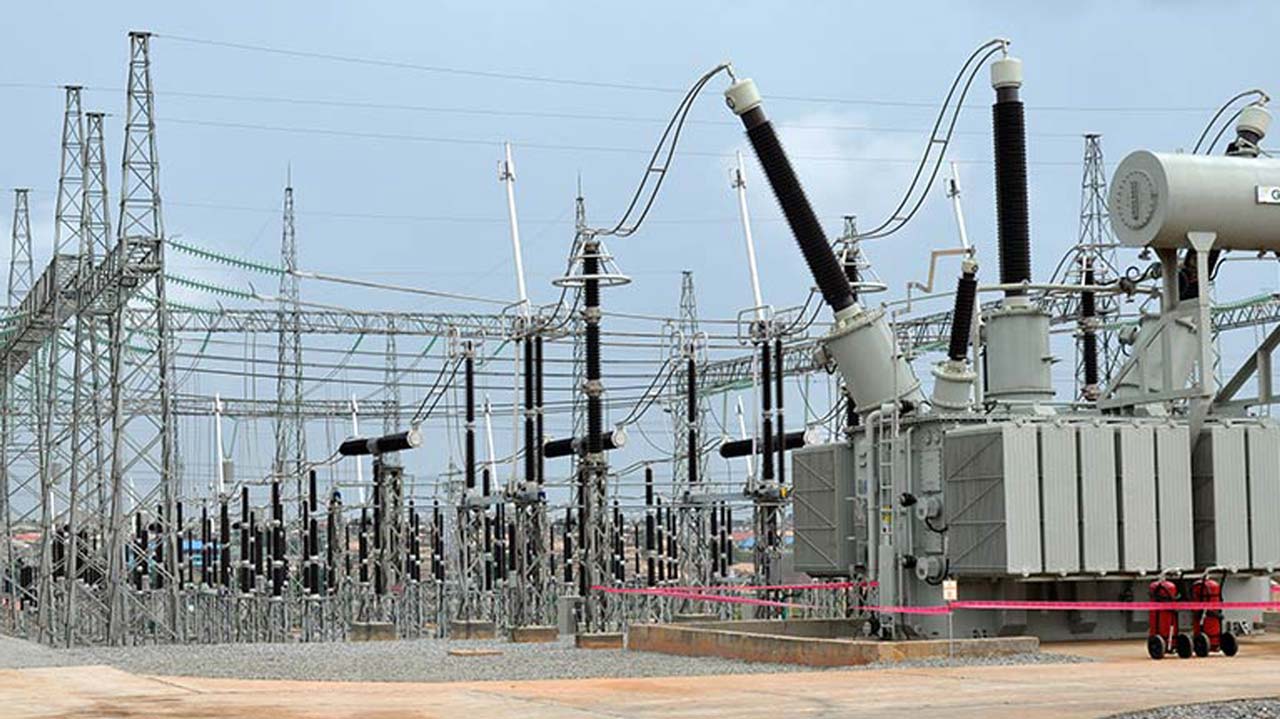
Over 1.13 million customers have abandoned various discos due to grievances with power suppliers bordering on unreliable power supply and rising energy costs, findings have shown.
This happened even as the Disco supplied more electricity, generated record revenues and expanded metering in 2025.
The National Bureau of Statistics’ latest report by DISCOs (Q4 2025), compiled from the Nigerian Electricity Regulatory Commission, showed that while operational indicators improved across the sector, the total customer base fell sharply during the year.
According to the report, the number of electricity customers declined from 13.30 million in the fourth quarter of 2024 to 12.16 million in the corresponding period of 2025, representing a year-on-year drop of 8.52 per cent or 1,133,390 customers.
The report stated, “Total customer numbers in Q4 2025 stood at 12.16 million, up from 12.03 million in Q3 2025, representing a 1.11 per cent quarter-on-quarter increase. On a year-on-year basis, the number of customers declined by 8.52 per cent, from 13.30 million recorded in Q4 2024.”
The customer decline comes despite a 6.76 per cent increase in electricity supplied by the distribution companies, which rose from 6,207.85 gigawatt-hours in the fourth quarter of 2024 to 6,627.56GWh in the same period of 2025.
Revenue collection also climbed significantly during the period.
The NBS said total revenue generated by the Discos increased by 23.75 per cent year-on-year to N630.93bn in the fourth quarter of 2025 from N509.84bn recorded in the corresponding period of 2024. On an annual basis, collections rose from N1.69tn in 2024 to N2.32tn in 2025.
Ikeja Electricity Distribution Company recorded the highest annual revenue of N440.86bn, followed by Eko Disco with N420.57bn and Abuja Disco with N375.95bn.
Metering also improved substantially, with the number of metered customers rising from 6.21 million to 6.97 million within one year, representing a 12.18 per cent increase.
The report noted that the proportion of customers on prepaid meters increased from 46.71 per cent in December 2024 to 57.27 per cent in December 2025, while estimated billing declined by 26.67 per cent as unmetered customers dropped from 7.09 million to 5.20 million.
It stated, “Similarly, the number of metered customers reached 6.97 million in Q4 2025, representing a 4.58 per cent increase from 6.66 million recorded in the preceding quarter. On a year-on-year basis, metered customers increased by 12.18 per cent.
“In addition, the number of estimated customers stood at 5.20 million in Q4 2025… On a year-on-year basis, estimated customers decreased by 26.67 per cent.”
Despite the improvements, several Discos recorded significant losses in customer numbers.
Benin Electricity Distribution Company posted the highest decline, losing 379,616 customers, followed by Kaduna Disco with 341,150 customers and Yola Disco with 311,527 customers.
Ibadan Disco lost 199,409 customers, while Port Harcourt, Kano, Eko and Jos Discos also recorded declines.
However, Enugu Electricity Distribution Company gained 245,129 customers during the period, Abuja Disco added 146,378 customers, while Ikeja Disco recorded an increase of 22,016 customers.
The development comes as households and businesses increasingly abandon the national grid over persistent power outages and high electricity costs.
Reports indicate that 24 bulk electricity consumers secured licences in 2024 to disconnect from the national grid and generate their own power, while another 22 entities obtained off-grid generation permits with a combined capacity of about 289 megawatts.
Similarly, about 250 manufacturers and tertiary institutions have exited the distribution companies’ networks in favour of self-generation due to unreliable electricity supply.
Recently too, some companies listed on the Nigerian Exchange spent N400.83bn on alternative energy sources in the first quarter of 2026, representing a 3.66 per cent increase from N386.67bn recorded in the corresponding period of 2025.
The firms that separately disclosed electricity expenses recorded an 81.50 per cent increase in power costs, reflecting the combined impact of higher tariffs and continued dependence on diesel, gas and other alternative energy sources.
The Minister of Power, Chief Joseph Tegbe, has however, assured Nigerians that electricity supply would improve significantly before the end of the year, saying the Federal Government was implementing difficult but necessary reforms to address decades of underinvestment and poor management in the power sector.



Mother Subjects Daughter to Abuse, Admits: “I made $300 from my 8-yr-old daughter’s pornographic video’
Spread the loveBy Nick Ibe The viral video on the social media involving an 8-year old girl whose ordeal was...


Lawyer Assaulted by Police: NBA Gboko Branch Secures N500 Million General and Exemplary Damages in Makurdi Court
Spread the loveBy Our Reporter In the pursuit of justice for a colleague, B. B. Iliamkondo, Esq., who was recently...


Alia Denounces Ayilamo Attack, Commiserated With Victims as DSS Arrests 3 Suspects
Spread the loveBy Felix Umande Governor Hyacinth Alia of Benue State has strongly condemned the deadly attack on Ayilamo Community...

Nigerians Lose Savings to Another Ponzi Scheme: PXES
Spread the loveBy Our Reporter Nigerians who invested millions of naira in an online investment platform known as PXES are...


PDP Accuses Alia Of Diversionary Tactics, Questions Benue’s Use OF FAAC Funds
Spread the love–Ortom’s Media Aid Says Gov’t Silent on Revenue, IDPs as Focus Shifts to 2027 Campaigns By Felix Umande...

Alia Condemns Ayilamo Attack, Commiserates With Victims, As DSS Arrests 3 Suspects
Spread the loveBy Felix Umande Governor Hyacinth Alia of Benue State has strongly condemned the deadly attack on Ayilamo Community...


FG, States, Be warned We Will Strike, Without Warning –ASUU
Spread the loveBy Nick Ibe, Abuja Without urgently resolving all the pending salary and welfare issues, by the Federal Government...
Protest Against Xenophobia: NASS Orders Boycott of South African Organised, Hosted Legislative activities
Spread the love–Calls on State Assemblies to join By Isa Abdul, Abuja In a bold move against South Africa’s xenophobic...

Why Education is Dear to Me – By Peter Obi
Spread the loveAfter returning to Abuja on 8th September 2026, following our visits to Benue and Plateau States, I travelled...


After Two Decades: FG Pays 2,700 ex-Nigeria Airways Staff N18bn
Spread the loveBy Son Tertsegha, Abuja Over two decades after the national carrier, Nigeria Airways, was liquidated, the Federal Government...