
Energy and Power
Power privatisation in Nigeria is Grand Deception–Ajaero, NLC President

By Our Correspondent
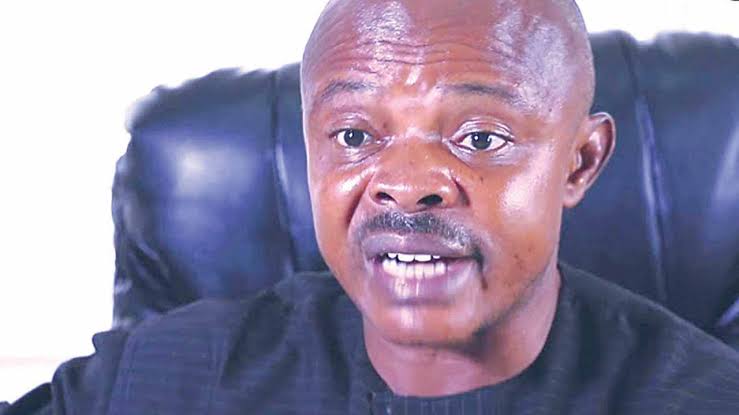
The privatisation of power in Nigeria has been described as grand deception of Nigerian people by government according to the Nigeria Labour Congress (NLC), president, Comrade Joe Ajaero.
Speaking at National Union of Electricity Employees’ (NUEE) 2026 annual conference of women and youth in Abuja, the NLC leader accused the government of creating slush funds ahead of the 2027 elections, using the proposed N2tn to N3tn bailout for power generation companies as a ‘ruse’.
Comrade Ajaero, averred that over a decade after the unbundling of the power sector, electricity generation had remained stagnant at between 4,000 and 5,000 megawatts, “the same level as before privatisation.
“A decade after the much-celebrated privatisation, what do we have? Instead of progress, we witness regression. Instead of light, we have darkness.
“The national grid collapses with the frequency of a faulty generator, sometimes plunging the entire nation into blackout. This is not the turnaround we were promised; this is a well-orchestrated robbery of the Nigerian people.”
Ajaero accused distribution companies of persistently rejecting allocated loads from the Transmission Company while Nigerians grappled with frequent grid collapses and soaring tariffs.
The labour leader criticised the privatisation
of the Power Holding Company of Nigeria (PHCN) successor firms as a fraudulent transfer of public wealth to investors who entirely lacked both the technical capacity and financial strength to manage the power assets.
“The so-called investors did not bring fresh capital into this country. They borrowed heavily from Nigerian banks, draining domestic credit and worsening pressure on the naira.
“They acquired DISCOs and GENCOs on a shoestring budget and now expect Nigerian workers to pay for their loans through outrageous electricity tariffs.”
Ajaero further frowned at the band classification system, which categorises consumers into Bands A, B and C based on hours of supply, saying it had become a backdoor mechanism for tariff hikes.
“Band A consumers pay through their noses but still receive epileptic power supply. This government is asking Nigerians to pay for darkness. Banding is the institutionalisation of extortion.
“Electricity is a right, not a commodity to be auctioned to the highest bidder while the poor are left in the dark.”
On the Federal Government’s plan to pay between N2tn and N3tn to generation companies as subsidy arrears, the NLC said there was no justification for “such a massive bailout to private firms that have failed to deliver.”
“The electricity subsidy claim remains a phantom. That N3tn is another ruse and goes nowhere. We see this as a clandestine move to settle the boys as the 2027 elections approach. Every kobo of the treasury belongs to the workers and people of Nigeria.”
The NLC insisted that electricity must be restored as a social service, arguing that no country had successfully run its power sector purely as a profit-driven enterprise without imposing hardship on citizens.
“It is only the State that can bear the huge capital investment required and the long gestation period for returns. The private sector has failed. It is time to take back the power for the people,” he stated.
While acknowledging the provisions of the new Electricity Act that devolved power generation and distribution to states, warned that decentralisation alone would not solve the structural challenges plaguing the sector.
The labour body called for a national stakeholders’ summit comprising workers’ unions, manufacturers and experts to develop what it termed a “People’s Power Roadmap” focused on affordable and stable electricity, public investment in generation and transmission infrastructure, service-reflective tariffs and a reversal of the privatisation model.
“The Nigerian people cannot continue to pay for darkness. When power is not available, it cannot be affordable. Power must be returned to the people,” Ajaero added.







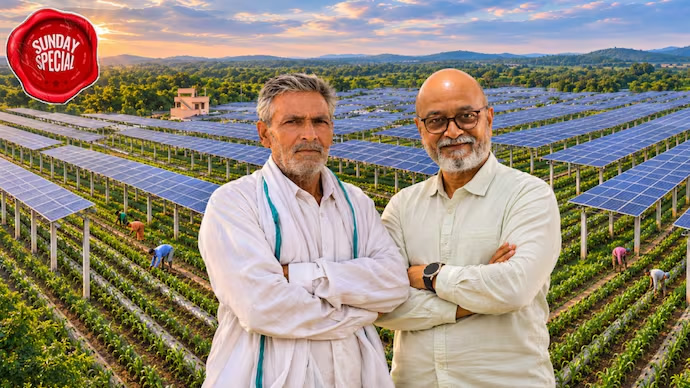
In India, a small but growing number of farmers are cultivating crops on their land while selling electricity generated by solar panels above.
The technological innovation, called agrivoltaics, is turning the same piece of land into two sources of income, with a Rajasthan farmer earning 10 times more than earlier.
Indian farmers are making this possible with crops beneath solar panels, and agrivoltaic plants on his farmland. is experimenting with crops beneath solar panels, and Anand Jain is exploring to add more agrivoltaic plants on his farmland.
A couple of years back, Kajod Mal Jat, a farmer from rural Jaipur in Rajasthan, having become an urjadata (energy provider), missed being an annadata (food provider). The solar panels he had put up on his field were generating electricity and money. But the land beneath them could no longer grow crops. Similarly, hundreds of kilometres away, in Madhya Pradesh’s Sagar district, innovator-farmer Anand Jain was determined not to let solar panels take away his joy of farming.
Today, both farmers are growing cash crops on their farms beneath and generating electricity from solar panels above, which they are selling to the government and earning big. Jat and Jain are annadatas and urjadatas at the same time. And, this has been made possible by a technology called agriphotovoltaics, or Agri-PV, or agrivoltaics, which combines farming and solar power generation on the same piece of land.
The technology, now taking its first steps on the ground in India, promises to revolutionise agriculture by boosting farmers’ incomes severalfold.
It’s already doing so.
By Nick Ibe, Abuja
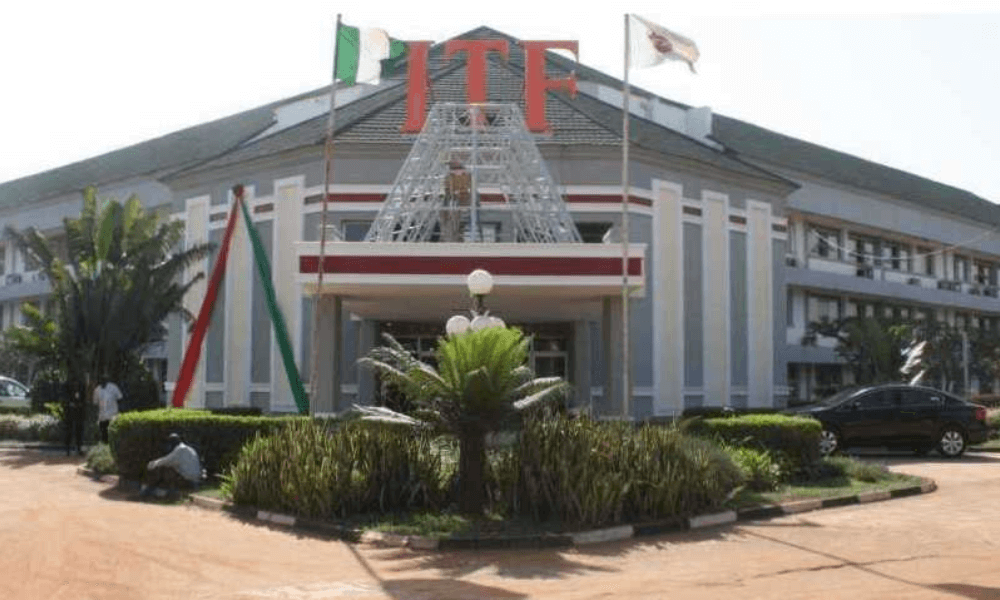
The Industrial Training Fund, ITF, has started the process to permanently abandon the national grid by converting its facilities in Jos, Plateau State, to solar power. The move is to reduce dependence on the national grid and diesel generators.
To achieve this goal, the fund has completed and commissioned solar installations at its Area Office and Staff School in Jos, while work is ongoing at its Model Skills Training Centre and the Director-General’s residence.
The ITF also plans to install a larger solar power system at its Jos headquarters as part of its transition to off-grid electricity supply across its facilities.
The development was disclosed in a statement issued by the fund on Friday in Abuja.
It partly read: “The Director-General of the Industrial Training Fund has declared an irreversible war on darkness and epileptic power supply, unveiling an ambitious plan to take all ITF infrastructure in Jos completely green and off-grid.”
Speaking during the commissioning of the completed projects, the Director-General of the ITF said unreliable electricity supply was undermining productivity and the delivery of skills training.
He said the fund can not effectively prepare Nigerians for modern industrial workplaces while depending on an unstable power supply.
“We cannot train Nigerians for the industries of tomorrow with the power failures of yesterday. If we want productivity, we must generate our own clean power. Jos will be our model city for green energy.”
Accordingly, ITF Area Office is enjoying an installed solar photovoltaic system with a capacity of 100kWh, alongside 100kWh of battery storage and a 50kW inverter.
The ITF Staff School has a 100kWh solar installation and 100kWh battery storage system, which the fund said would provide electricity for teaching and other school activities.
Work is ongoing at the Model Skills Training Centre and Academy, where the ITF plans to install a 350kW solar system supported by 500kWh of battery storage.
The facility, which has a maximum load requirement of about 70kW, houses training workshops, machinery and information and communications technology laboratories.
The Director-General’s residence is also undergoing a solar installation involving a 100kW photovoltaic system and 128kWh of battery storage.
The largest proposed installation is at the ITF headquarters in Jos, where the fund plans to deploy a 500kW solar system and a 1.5MWh battery system.
According to the statement, the headquarters currently has a peak electricity demand of about 139kW.
The solar option is to move away from the persistent electricity supply challenges in Nigeria, which force businesses, schools and public institutions to rely on costly diesel and petrol generators to maintain operations.

By Lazarus Oko
By reducing farmers’ dependence on rainfall and attracting carbon credit financing for agricultural projects, the National Agricultural Land Development Authority on Tuesday revealed it is developing climate-smart farm estates powered by solar energy and electric machinery.
This was disclosed at a session on Green Industrialisation, Critical Minerals and Energy Security at the 2026 United Nations Climate Change Conference in Antalya, Türkiye, by the Executive Secretary and Chief Executive Officer of NALDA, Cornelius Adebayo, .
The CEO spoke during the session, which focused on climate-smart farming, stating that the agency was piloting a farm estate where land clearing would be done with electric bulldozers, while electric tractors were solar-powered. In his words:
“Our hope as an agency is to earn carbon credits from such farm estates and farm locations.
“We use zero-emission areas. We’re introducing electric bulldozers; we’re introducing electric tractors in that particular location. And we are introducing solar power irrigation for full irrigation of the scheme. Everything, every single thing within that facility is climate conscious. Every single thing. And that is our first location that is supposed to be a fully clean location.”
The agency’s plan comes as Nigerian farmers contend with increasingly unpredictable rainfall, which has disrupted planting seasons and exposed rain-fed agriculture to climate risks.
Adebayo said the experience of the current planting season had reinforced the need to move towards irrigation-based farming.
In his words, “The rains were not predicted in Nigeria. And the farmers- a lot of farmers that don’t do the planting yet were the lucky ones. The ones that did the planting were quite unlucky this year. So it shows that we need to move from rain-fed to climate-smart to irrigation-based farming. And this is one direction that Nigeria is going in headway.”
NALDA was working with investors to provide solar irrigation facilities to farmers, with users paying for the services based on the hectares cultivated, he disclosed. The model, he said, would make the facilities easier to extend to more farming communities.
However, the chief executive acknowledged that electric machinery and clean-energy systems cost more than conventional equipment. But the Bank of Industry and other development finance institutions were bridging the financing gap by providing capital at lower interest rates.
NALDA boss further stated that the agency is promoting an anchor-based farming arrangement designed to reduce the financial burden and production risks faced by smallholder farmers.
Under the model, farmers receive land, training, extension services, seeds, fertiliser and other inputs through an anchor investor. The investor also arranges mechanisation services and buys the produce after harvest, deducting the cost of services and inputs supplied.
Adebayo said the arrangement meant farmers would not have to raise all the capital needed to cultivate their land before planting.
“The person that is taking the risk for that expansion is the anchor, not the smallholder. So it’s just making everything easier for that smallholder farmer to scale up. If the crop fails, it’s really the anchor that takes the hit,” he said.
He added that agricultural insurance and risk-sharing institutions would provide additional protection, although the anchor investor would bear the largest share of the production risk.
The agency is also linking farm development to rural security, arguing that farmers working in organised clusters are easier to protect than those operating on scattered plots.
Adebayo said NALDA planned to use drones to monitor farm boundaries and detect threats around its estates, while security agencies could be deployed more effectively to concentrated farming communities.
He said the model was also intended to attract young people by providing housing, solar-powered electricity, clean water and recreational facilities within farm settlements.
NALDA was established in 1992 under an Act of Parliament to support agricultural land development, improve the use of rural land resources, expand food production and create employment.
The authority was reactivated in 2020 after years of inactivity, with integrated farm estates among its programmes.
In a separate technical presentation at the Nigerian Pavilion, NALDA outlined how its Green Hope Project was combining agroforestry, food production and youth participation to address environmental degradation and strengthen food security.
The CEO’s Special Adviser on Projects, Al-Mustapha Ibrahim, said the agency’s Green Hope Project had mobilised more than 400 volunteers to plant approximately 5,000 trees across five sites in Ogun, Plateau, Kwara states and the Federal Capital Territory.
The project covered 50 hectares and included mango, avocado and coconut trees intended to support both environmental restoration and future food production.
The sites include Odogbolu in Ogun State, where 1,000 trees were planted across 10 hectares with 80 volunteers; Barkin Ladi in Plateau State, with 500 trees across five hectares and 40 volunteers; and Oke Onigbin in Kwara State, where 1,500 trees were planted across 20 hectares with 120 volunteers.
The remaining locations are Iporin in Kwara State, where 1,000 trees were planted across five hectares with 80 volunteers, and the University of Abuja, where another 1,000 trees were planted across 10 hectares with 80 volunteers.
The presentation identified mango, avocado and coconut among the food-producing tree species planted under the initiative. Beyond restoring vegetation, the trees are expected to provide fruits for household consumption and commercial sale as they mature, creating additional income opportunities for farming communities.
NALDA said the initiative was designed to make environmental restoration part of agricultural production rather than treating tree planting as a stand-alone exercise. The trees are expected to improve land cover, protect soil, support biodiversity and strengthen the resilience of agricultural landscapes to climate-related pressures.
The agency further incorporated perimeter fencing to protect newly planted areas, stressing the need for site protection and post-planting management to ensure the trees survive and mature.
The project received support from the Agricultural Research and Training Institute, the National Council on Climate Change and the National Horticultural Research Institute.
The collaboration, according to the presentation, demonstrated the importance of partnerships among government agencies and technical institutions in addressing agricultural and environmental challenges.
The initiative also targets young people through practical participation in tree planting and environmental education, with more than 400 volunteers involved in the first phase, giving them opportunities to work with agricultural and environmental stakeholders and build experience in sustainable agriculture.



ABU DSS student wins N1m prize at essay competition
Spread the loveA student of Demonstration Secondary School, Ahmadu Bello University, Adejoh Joshua Unekwu, has clinched a second position at...


Football Legend, Segun Odegbami, Attacked in Abeokuta, Escapes Death
Spread the loveBy Seyi Balogun, Lagos With no clear knowledge of the assailants or their motive, former Super Eagles captain...

FG, Chinese Firm Agree to Produce CNG Buses in Ibadan
Spread the loveBy Seyi Balogun, Lagos To introduce compressed natural gas-powered buses and establish a local assembly plant, to reduce...


JAMB UTME Free for Candidates with Disabilities, Fee Refund at Exam Centres
Spread the loveBy Isa Abdul, Abuja Special examination support has been established for candidates with disabilities, by the Joint Admissions...


Sharing Money is Digging Hole for Eco Woes, Can’t End Poverty – Fasua
Spread the loveBy Son Tertsea, Abuja A warning has been issued that distributing cash to Nigerians without addressing underlying economic...


“I conceded defeat to Buhari, a statesman that loved God, Nigeria.’ –Jonathan
Spread the loveBy Isa Abdul, Abuja The reason for conceding defeat to the late President Muhammadu Buhari in the 2015...


Secrets Behind Flamingos’ World Cup Win – Busari:
Spread the loveAfter guiding Nigeria’s Flamingos to a historic FIFA U-17 Women’s World Cup triumph, head coach Akeem Busari speaks...


Failure to Secure NNPCL GMD Job: EFCC Arraigns Woman Over N1.1 bn Fraud
Spread the loveBy Isa Abdul, Abuja One Halimat Adenike Tejuosho was Wednesday arraigned before a High Court of the Federal...

Let’s Honor All Pioneer Paramount Rulers Across Tiv and Idoma Lands.
Spread the loveBy Peters Ichull Today, the Tiv nation and the entire Benue family pause in solemn reflection to mark...


NKST Synod Says: “Alia Is A Talk-And-Do Governor”, Deserves Re-election in 2027
Spread the loveBy Felix Umande The NKST Synod has declared its support for the re-election of Benue State Governor, Rev....