
General News
Labour Takes N70,000 Allowance Request to State Govts

By Isa Abdul, Abuja
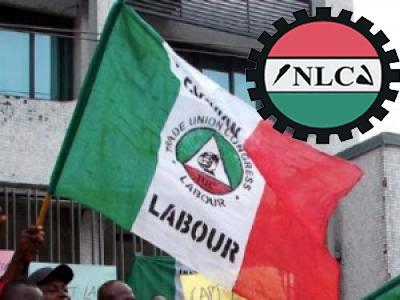
To ensure that state civil servants benefit from the N70,000 transport allowance approved for federal workers, State chapters of organised labour have started moves to commit state governors to pay state workers the transport allowance.
However, the Nigeria Labour Congress in Lagos State is reportedly eyeing N100,000 monthly allowance for workers, as its Kebbi counterpart is considering an allowance of between N40,000 and N70,000.
The Punch reports indicate that labour leaders in other states are also preparing to engage their governments while some are awaiting directives from their national leadership.
The Federal Government had approved a N70,000 monthly transport intervention for public service workers across all levels for six months, beginning in November 2026, to cushion the impact of rising living costs after a conciliation meeting with the NLC on Tuesday.
Speaking on the union’s move, the Lagos State Chairperson of the NLC, Agnes Sesi, said the union would formally engage the state government over the proposed package, noting that workers were eyeing a N100,000 allowance.
She maintained that the cost of transportation and living expenses in the state justified an allowance higher than the federal benchmark.
Sesi said Lagos workers deserved at least the same amount negotiated for federal workers.
“If the NLC is asking for N70,000, it should cut across states. If the state government cannot do more, we do not expect them to do less because of Lagos’ peculiarity.
“In fact, we are even expecting the state government to increase ours to N100,000 because of our sacrifices and resilience. But if they cannot do more than the N70,000, we are not expecting anything less.
“Transportation is expensive in Lagos. Livelihoods are high, accommodation is high, and feeding is on the high side. Everything is on the high side in Lagos State,” she added.
The labour leader urged the government to implement the relief package without delay, warning against allowing payments to accumulate as arrears.
“We don’t want the government to drag its feet on it. We don’t want this to enter into arrears.”
Kaduna, Benue workers target N70,000
In Kaduna State, the NLC Chairman, Ayuba Magaji, said the union would demand a minimum monthly transport allowance of N70,000 and would formally write to Governor Uba Sani to begin negotiations.
He said the N70,000 would serve as the starting point for negotiations, but the union would seek a higher amount if the state could afford it.
“We have received a circular from the national headquarters of the Congress. As I am talking to you, my secretary and I are making arrangements, and immediately after this programme, he will write a letter to the government to intimate it about this and the need for us to commence discussions immediately,” he said.
He added that the circular encouraged state and local governments to adopt the initiative and directed state councils to engage their respective governments.
According to reports, the Benue State NLC Chairman, Terungwa Igbe, said the union would insist on N70,000 but was yet to receive correspondence from the national secretariat.
However, the Benue State Government said it had yet to hold specific discussions on the package, even as the Commissioner for Information and Orientation, Solomon Iorpev, said Governor Hyacinth Alia would support measures to ease the burden on residents.
In Bayelsa State, the NLC Chairman, Barnabas Simon, said the state should not be excluded from the implementation of the resolution reached between organised labour and the Federal Government.
He said, “Bayelsa State is not operating a different economy from other states. We are not living under a separate economic system. Whatever affects other states also affects Bayelsa. Therefore, Bayelsa should not be left out of the implementation of the resolution.”
The Kebbi State NLC Chairman, Murtala Usman, said the union had begun lobbying members of the state House of Assembly to support its proposed transport allowance, which would range from N40,000 to N70,000.
He, however, said the allowance would be negotiated based on the state government’s financial capacity and the different categories of workers.
“I have already commenced lobbying for it. I was at the state House of Assembly on Thursday to speak with some lawmakers on how they can support us when the discussion begins,” Usman added.
In Ondo State, the NLC Chairman, Ademola Olopade, said the union planned to meet the state government in the coming days.
Asked whether the union would negotiate for a higher amount, Olopade said it would follow the agreement reached by the national leadership.
“We can’t go contrary to what the national body has negotiated with the Federal Government. Don’t forget the TUC came up with another idea; they were not part of the decision. But we at the NLC, there’s no way I can do anything contrary to the agreement between the NLC and the government on the N70,000,” he said.
The state Commissioner for Information and Orientation, Idowu Ajanaku, said the government would implement its transport relief package for workers in line with the Federal Government-labour agreement.
Similarly, the Chairman of the NLC caretaker committee in Edo State, Prof Monday Igbafen, said the state council would begin discussions with the government to domesticate the N70,000 transport relief package.
He noted that industrial action might not be immediate unless the government proved uncooperative.
In Rivers State, the NLC said it had written to the state government seeking an audience on the proposed allowance, while the TUC called for an increase in wages rather than a temporary relief package.
The state NLC Chairman, Alex Agwanwor, said, “For us in the state, we have already written to the state government on what has been agreed between the Federal Government during the meeting with our leaders.”
However, the state TUC Chairman, Samuel Ogan, opposed the allowance, saying it was not sustainable because it would last only six months.
“It’s a good gesture, but the TUC is saying the economic hardship is beyond the N70,000 or palliative, and that it is not sustainable in the sense that it’s for a short period of six months.
“We want a situation where the government increases the wage of the workers beyond the current wage. In fact, what they are proposing, let it be there before we even go and discuss the new wage,” he added.
Also, the Chairman of the NLC in Gombe State, Yusuf Bello, said the congress had received a directive from the national headquarters on the transportation allowance.
He said, “There is a directive from the national headquarters and we will write to them (Gombe State Government). We can’t push for less than N70,000, and from there, we will go and relate with our executives.”
Similarly, the NLC in Niger State has taken steps to discuss the relief allowance with the state government.
However, the NLC Chairman, Idris Lafene, said the union had yet to begin negotiations because the Head of Service was unavailable.
In Abia State, the NLC Chairman, Ogbonnaya Okoro, said the union would insist on the N70,000 package for six months and would not allow it to undermine separate minimum wage negotiations.
He said the union would engage the state government after receiving guidelines from the Federal Government.
When contacted, the Special Adviser on Media and Publicity to the governor, Ferdinand Ekeoma, said it was premature to comment before the Federal Government released the details.
“Let us wait until the Federal Government rolls out the details for us to know how it will be,” he said.
The NLC chairmen in Sokoto and Kano states, Abdullahi Jungle and Kabiru Inuwa, respectively, said the union was awaiting an official circular from its national headquarters before engaging their respective state governments.
Jungle said the circular would provide guidance on how to negotiate with the government and that the state chapter would proceed once it received the necessary directives.
The Osun State TUC Chairman, Abimbola Fasasi, said the leadership of the labour movement in the state had been engaging Governor Ademola Adeleke on measures to cushion the effects of economic hardship on workers.
Fasasi noted that the non-release of local government allocations to Osun local government areas since February 2025 had contributed significantly to the hardship.
“We have been engaging the governor and appealing to him to find something to do for our people due to the hike in petrol pump prices. Also, the seizure of local government allocations in Osun State has caused a lot of hardship,” Fasasi said.
Meanwhile, the Chairman of the Trade Union Congress in Ogun State, Akeem Lasisi, said the organised labour had not initiated discussions on the new federal package, noting that the union was instead engaging the government to extend the N10,000 transport support currently offered to public officers.
He said, “Organised Labour has not initiated discussions on this, but we have been engaging the government on ways to ease the suffering of workers across the state. One proposal is to extend the N10,000 transport relief currently offered to public officers in the state. We shall meet next week to discuss the next course of action,” he said.




General News
NLC Says Cost of Living, Naira’s Value, Transportation, Housing … To shape Wage Negotiations
–Calls NUJ to fight for members
By Seyi Balogun, Lagos
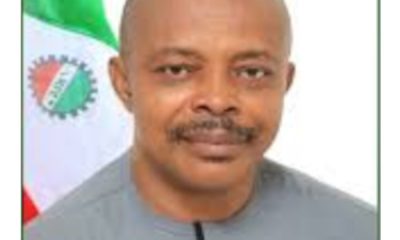
The Nigeria Labour Congress, NLC, has resolved that wage discussions should commence far before April 2027 implementation date while identifying inflation, the cost of living, the value of the naira, transportation, housing and workers’ purchasing power as major issues that would shape the next national minimum wage negotiations.
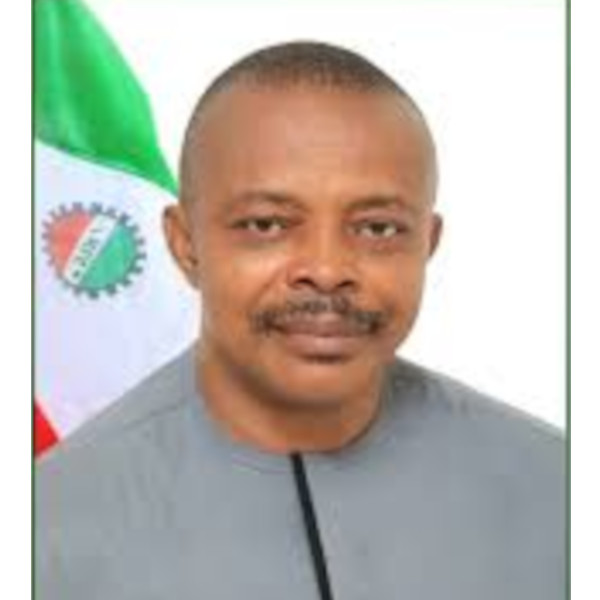
The NLC President, Joe Ajaero, spoke weekend in Lagos, at the 2026 Labour Writers Association of Nigeria, LAWAN, Annual Conference in Lagos, on the theme; “Workers at the centre of Nigeria’s Political Transition: Defending rights, advancing welfare and building economic justice”.
In his words:
“We must examine inflation, the value of the naira and other factors affecting workers’ purchasing power. The new minimum wage should be informed by the cost-of-living index and prevailing inflationary trends”
NLC also expressed concern over the poor welfare conditions of Nigerian journalists.
He said journalists face daunting harsh working conditions including inadequate salaries, job insecurity, weak pension arrangements and the absence of effective social security protection, calling on the Nigeria Union of Journalists (NUJ) to take its trade union responsibilities more seriously.
According to him, it would be counter productive to negotiate a new minimum wage without establishing what the proposed amount could actually purchase.
He warned that workers should not find themselves receiving an improved salary only for inflation to erode its value within a few months, forcing them to demand another increase. In his words:
“We must not approach the next minimum wage negotiation by simply demanding millions or billions without considering other economic factors.
“We must consider inflation, the value of the currency and other issues affecting the economy. The new minimum wage should be determined with reference to the cost-of-living index and inflationary trends.
“If the government agrees that wages should be indexed to inflation, then an increase in inflation should lead to an appropriate adjustment in wages.
“Alternatively, we must examine the prices of essential commodities and services. How much does a bag of garri cost? How much is house rent? How much does transportation cost?
These are the factors that must inform the negotiations.
“We cannot simply announce that we want ₦100,000 or ₦50,000 without establishing how those figures relate to the actual cost of living. This is important because, over the years, we have repeatedly found ourselves in a situation where workers receive a salary increase, but within a few months, inflation erodes its value and they are already demanding another adjustment. We must avoid that situation.
“The government must take a more decisive position on solving the transportation problem. Giving workers ₦70,000 as a transportation intervention for six months is not enough, although it provides some relief. For somebody earning ₦70,000, receiving another ₦70,000 is certainly meaningful.
“But what happens after six months?There are also other policies that must be considered, particularly transportation. We cannot accept a situation where workers receive ₦70,000 as temporary relief and, after six months, the government simply withdraws the intervention without providing an alternative.
“Nobody should assume that because the six-month period has expired, workers must return to their previous state of poverty. We have left Egypt; we cannot go back to Egypt.
“As far as the minimum wage negotiations are concerned, the new negotiations must recognise the existing wage structure and the improvements already achieved.
You cannot begin negotiating from a position that ignores those gains.
“You cannot expect workers to return to the old minimum wage position of ₦70,000 after receiving the additional intervention. We must consolidate the gains already made.
On the welfare of journalists, the NLC challenged the NUJ to intensify its involvement in collective bargaining and negotiations with media employers to secure better conditions of service for its members.
The labour leader questioned the absence of effective collective bargaining agreements in the media industry, asking: “What is the minimum wage for media workers across the country? What collective bargaining agreements exist between journalists and their employers?”
On journalism, he observed that, most journalists depend on employment in media organisations for their livelihoods, unlike other professionals who can establish private businesses or independent practices. He argued:
“Therefore, the NUJ must be actively involved in negotiating better welfare packages for its members.”
Ajaero also called for the revival of the proposed journalists’ village initiative and partnerships between journalists and mortgage institutions to enable media workers to own houses through affordable payment arrangements.
On job security and retirement benefits, the labour leader lamented that many journalists frequently move from one media organisation to another because of poor remuneration and unfavourable conditions of service.
He noted that low salaries also translate into inadequate pension contributions, leaving many workers financially vulnerable after retirement.
The NLC President called for improved salaries, stronger employment protection, better pension arrangements and comprehensive social security provisions for journalists.
By Vincent Tyosuugh
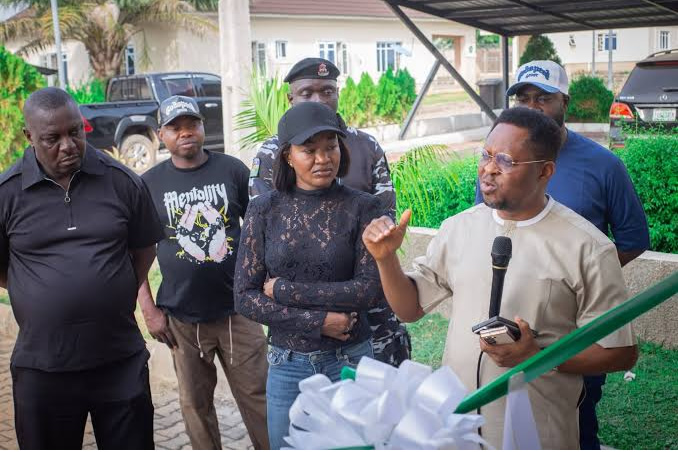
Benue State Governor, Rev. Fr. Dr. Hyacinth Iormem Alia, has fulfilled part of his promises to Francesca Orderga, Super Falcons forward.
The governor had made a N50 million cash, a house and a street-in-her-name promises. With the hand over of the keys to the Fountain Estate house in Makurdi, according to the Venue Investment and Property Company, BIPC, Managing Director, Dr Raymond Asemakaha, only the street naming in her honour is yet to be fulfilled.
The gesture is in recognition of her being a worthy Benue Ambassador and her outstanding contributions to Nigerian football.
At the ceremony, she was represented by Dr. Asemakaha, where Governor Alia commended Ordega for her resilience, dedication and remarkable achievements in football.
Alia implored young people in Benue State to draw inspiration from Ordega’s success, remain focused and pursue their talents with determination.
Alia further said Ordega was a worthy ambassador of the state, whose accomplishments had brought pride to Benue. He also promised his commitment to providing opportunities and supporting Benue youth to realise their career aspirations.
The governor assured the footballer that he would honour all commitments to her, saying that the house presentation was part of the incentives he promised in recognition of her sporting achievements.
Ordega in her response, expressed gratitude to Governor Alia for fulfilling the pledge, describing the gesture as a major source of encouragement.
She revealed that the promises made to her after the 2024/2025 Women’s Africa Cup of Nations, including a ₦50 million reward and the provision of a house, had been fulfilled.
The only outstanding commitment, according to her, is the naming of a street in her honour, adding that she had been assured that it would be carried out next year.
Ordega encouraged young people in the state not to abandon their dreams, and to embrace discipline, resilience and hard work as essential ingredients for success.
BIPC Head of Business Development and Strategy, Theresa Abeda, while speaking at the event congratulated Ordega for her recognition and urged youths across the state to emulate her dedication, perseverance and commitment to excellence.
Meanwhile, the female soccer star, Francesca Ordega hails from Mbaaye, Mbaanue, Mbaavarakaa in Mbatiav District of Gboko Local Government Area of Benue State.

By Seyi Balogun, Lagos
Former President Olusegun Obasanjo has disagreed with President Bola Tinubu’s position on government borrowing, where he justified his piling of public debts.
Obasanjo used the Friday ioccasion in Abeokuta, Ogun State, the Ajibosin Platform, a public forum with the theme: “Leveraging Artificial Intelligence to Solve Grassroots Problems and Accelerate National Development” to react to President Bola Tinubu’s defence of foreign debts.
Reacting to Tinubu’s earlier assertion that borrowing was not leprosy, Obasanjo countered that the accumulation of public debt could mortgage the country’s future and impose an unbearable burden on generations yet unborn. In Obasanjo’s words
“And for anybody to say debt is no leprosy, is absolute nonsense. Debt is worse than leprosy because leprosy destroys only one person. Debt destroys generations.”
Tinubu had said:
“If we have to borrow, we borrow. Borrowing is not leprosy; we just have to work hard to be able to pay for it,” during a meeting with Plateau State leaders, led by Governor Caleb Mutfwang and the National Chairman of the All Progressives Congress, Prof. Nentawe Yilwatda, at the State House.
The President’s position came following criticisms of Nigeria’s rising debt profile and the huge portion of government revenue being committed to debt servicing.
Obasanjo also warned Nigeria and other African countries for taking the backstage while foreign interests dominate artificial intelligence, AI, saying the emerging technology could become another instrument of exploitation and digital colonialism if the continent failed to develop its own technological capacity.
Obasanjo also questioned Nigeria’s economic performance over the years, particularly the depreciation of the naira against the United States dollar.
Going down memory lane as a farmer, he said the naira was stronger than the dollar when he established his farm 47 years ago. In his words:
“When I started my farm, 47 years ago, naira to the dollar was one naira to $1.85. Forty-seven years ago. What has Nigeria done in 47 years that we now have 1,500 naira to a dollar? What have we done?” he asked.
He challenged the country’s political leadership to demonstrate its understanding of Nigeria’s problems and identify practical solutions to the challenges confronting the nation.
“What do our leaders know? And what do they not know? And from what they know, what can they do for us?” he queried.
The former president also faulted Nigeria’s dependence on the World Bank and International Monetary Fund (IMF), arguing that their economic prescriptions were not necessarily designed to address the country’s peculiar circumstances.
“World Bank and IMF were not designed for us. They were not built by us. They were built before we became independent. And that’s the people who would determine what we do,” he said.
He urged Nigerian leaders to scrutinise foreign economic prescriptions and ensure that national policies reflected the country’s interests and development priorities.
On artificial intelligence, Obasanjo warned that Africa risked repeating the mistakes of its colonial past saying:
“I don’t know too much technically about AI, but I know that anything that is not under your control can be abused against you. And you can see that this has already started.”
Drawing parallels between AI and Africa’s historical experiences with slavery, colonialism and economic dependency, Obasanjo urged African leaders to approach the technological revolution with caution.
He also questioned the concept of technology transfer, asking African countries to examine the terms and benefits of their engagements with foreign technology providers.
“But what exactly is technology transfer? Who transferred technology to them, and what did they pay for it?” he queried.
Obasanjo further criticised what he described as unequal international economic prescriptions, citing restrictions on agricultural subsidies for developing countries despite continued support for farmers in developed economies.
He expressed concern over the estimated 24 million Nigerian children out of school, warning that the situation could create serious challenges for future generations.
“We have 24 million Nigerian children who should be in school but are not. If you are looking for the disasters of tomorrow, these children represent one of them,” he said.
He challenged policymakers and technology stakeholders to explore how AI could improve access to education and address learning challenges.
On agriculture, Obasanjo advocated the deployment of artificial intelligence to help farmers identify suitable crops, improve productivity and strengthen food and nutrition security.
Also speaking at the event, guest speaker and historian, Dr Umar Ardo, warned that Africa could be entering another phase of economic exploitation through artificial intelligence if she failed to secure ownership and control of its data, technological infrastructure and intellectual resources.
In his presentation titled, “From Slave Ships to Server Farms: Artificial Intelligence and Africa’s Unbroken History of Extraction”, Ardo argued that although AI offered significant opportunities for economic transformation, it could deepen existing inequalities if African countries remained dependent on foreign technology companies.
He said the continent must move beyond adopting foreign innovations to addressing fundamental questions surrounding ownership, control, regulation and the distribution of economic benefits.
“AI offers Africa important opportunities, but without ownership, safeguards and public purpose, it could extend a long history in which Africa supplies value while others control and capture it,” he said.
Tracing Africa’s economic history over five centuries, Ardo identified the transatlantic slave trade, colonial exploitation of natural resources and post-independence economic dependency as major phases of external extraction.
He explained that while the slave trade commodified African lives, colonialism focused largely on exploiting mineral and agricultural resources, while many post-independence economies remained dependent on exporting raw materials and importing finished products.
According to him, infrastructure and technologies introduced during colonial rule, including railways, steam engines and administrative systems, were largely organised around extracting African resources and transporting them to foreign markets.
“We supplied resources and labour; others controlled the machinery and captured much of the value,” he stated.
Ardo also identified the migration of highly trained African professionals, including doctors, nurses, engineers and scientists, to foreign countries as another dimension of the continent’s continuing resource losses.
He warned that data could become the next major commodity in Africa’s history of external extraction, noting that information generated by citizens, hospitals, farmers, businesses, indigenous communities and public institutions was increasingly valuable to the global digital economy.
“Data may become the fourth commodity in this long history of extraction,” he cautioned.
The historian expressed concern that the infrastructure for processing information, developing AI models and generating intellectual property and commercial profits remained disproportionately controlled outside Africa.
He questioned who benefited when farmers’ agricultural practices, patients’ medical records, indigenous languages, traditional medicine and cultural knowledge were incorporated into AI systems developed by foreign companies.
“When farmers’ planting patterns are recorded, who controls that knowledge; the farmer or the platform?” he asked.
Ardo canvasses local AI development, data sovereignty
To prevent artificial intelligence from becoming another instrument of economic dependency, Ardo proposed a framework anchored on technological sovereignty, data protection, indigenous innovation, grassroots development and continental cooperation.
He called for stronger legal and institutional safeguards against the uncontrolled exploitation of personal data and traditional knowledge.
While acknowledging the Nigeria Data Protection Act 2023 as an important step towards protecting citizens’ information, he said privacy protection alone was insufficient to guarantee data sovereignty.
He advocated additional mechanisms to protect community knowledge, ensure fair compensation and guarantee Africans a reasonable share of the commercial value generated from their data and intellectual resources.
Ardo urged the Federal Government to increase investment in domestic computing capacity, reliable energy infrastructure, semiconductor technology, research institutions and indigenous AI development.
He maintained that Nigeria, with a population exceeding 230 million, should not remain merely a consumer market for foreign technology.
“A country of over 230 million people should be more than a market for foreign technology,” he declared.
He also called for the development of locally controlled datasets and AI models capable of understanding African languages, agricultural practices, medicinal traditions and customary knowledge under African ownership and appropriate safeguards.
On grassroots development, Ardo urged governments to ensure that communities benefited directly from AI applications in primary healthcare, agricultural extension services, local government administration, revenue collection, conflict resolution and disaster management.
He further advocated comprehensive AI training programmes in universities, polytechnics and colleges of education to develop software developers, technicians, data stewards and other professionals.
On continental cooperation, he urged Nigeria to work with other African countries to harmonise data governance regulations, develop shared technological infrastructure and strengthen the continent’s bargaining power in engagements with international technology companies.
He identified the African Union’s Data Policy Framework, adopted in 2022, as an important foundation for coordinated continental action.
Warning that digital extraction could be more difficult to identify and resist than the exploitation of physical resources, Ardo said information could cross national borders without the knowledge or meaningful understanding of the people and communities generating it.
“One of the most efficient systems of extraction is the one its subjects volunteer to use,” he warned.
He urged African leaders to approach the AI revolution with a clear understanding of the continent’s history, insisting that Africa must become a builder, owner and rule-maker in the global technology ecosystem rather than remain a passive consumer of foreign innovations.
Drawing a comparison between Africa’s historical experiences and the emerging digital economy, he said: “Five centuries ago, they came for our bodies. Then they came for our land and its riches. Then our commodities and trained minds. Today, they come for our data.”
He, however, maintained that Africa still had the opportunity to determine its technological future.
“The choice is ours. Artificial intelligence can become another instrument through which Africa is managed, or an instrument through which Africa begins to manage its own destiny,” he added.


NCDC Says Two Suspected Ebola Cases In Adamawa Test Negative
Spread the loveBy Michael Lim The Nigeria Centre for Disease Control (NCDC) has disclosed that the two suspected Ebola cases...

NLC Says Cost of Living, Naira’s Value, Transportation, Housing … To shape Wage Negotiations
Spread the love–Calls NUJ to fight for members By Seyi Balogun, Lagos The Nigeria Labour Congress, NLC, has resolved that...


Alia Keeps Promise to Ordega, Super Falcons Star: Offers Her House in Makurdi
Spread the loveBy Vincent Tyosuugh Benue State Governor, Rev. Fr. Dr. Hyacinth Iormem Alia, has fulfilled part of his promises...


Obasanjo to Tinubu: ‘”Leprosy destroys only one person. Debt destroys generations”
Spread the loveBy Seyi Balogun, Lagos Former President Olusegun Obasanjo has disagreed with President Bola Tinubu’s position on government borrowing,...

SHOCKER: Atiku’s Son Pledges 10 Buses For Tinubu’s 2027 Re-Election Campaign
Spread the loveBy Felix Umande Abba Atiku Abubakar, son of former Vice-President and Presidential candidate of the African Democratic Congress...


NSCDC Suspends Officer Who Fired Shots at Abuja Market: To Face Orderly Room Trial
Spread the loveBy Nick Ibe, Abuja The Deputy Superintendent of Corps DSC Onoja Babayo Samuel, who was arrested by the...


Labour Takes N70,000 Allowance Request to State Govts
Spread the loveBy Isa Abdul, Abuja To ensure that state civil servants benefit from the N70,000 transport allowance approved for...
NCDC: Two Suspected Ebola Cases in North-East Nigeria: Investigations, Lab Tests Ongoing
Spread the loveBy Michael Lim Two individuals have been isolated by health authorities following suspicion that they may be infected...


EFCC’s Eagle Eyes on State Funds: Establishes Monitoring Directorate
Spread the loveBy Michael Lim The Chairman, Economic and Financial Crimes Commission (EFCC), Mr Ola Olukoyode, has said the commission...

Nigerian Academics Trained in Research Publication in High-impact International Journals –Okebukola
Spread the love–2026 tertiary institutions ranking ready December 15 By Isa Abdul, Abuja The Nigerian Tertiary Education Ranking Advisory Committee...