
General News
Calls for Justice Groe Over Death of 17-Year-old in Makurdi as Activist Alleges Polive Cover-up


Police say suspect died after gunfire exchange; family demands independent probe
By Felix Umande, Makurdi
Outrage is mounting in Benue State over the death of 17-year-old Atser Sesugh, with civil society voices demanding a transparent and independent investigation into the circumstances surrounding the incident.
Benue-based activist and humanitarian, Ukan Kurugh has accused the Benue State Police Command of attempting to manipulate the narrative and protect powerful interests.
In a statement circulated online, Kurugh alleged that the teenager was killed “in broad daylight” before witnesses, and said the family was being subjected to further pain through what he called “careless lies” and “shameless attempts to twist the truth.”
“A young boy died, a mother is crying herself to sleep. A family has been thrown into permanent pain yet your priority is propaganda instead of justice,” Kurugh said, directing criticism at the Police Public Relations Officer, Dsp. Udeme Edet.
He further alleged that the police were trying to shield influential figures while ordinary citizens suffer, adding that “no official statement can suppress the voice of innocent blood.”
The controversy follows a press release issued by the Benue State Police Command detailing its version of events.
According to the command, on 28th April 2026, operatives of the Economic and Financial Crimes Commission, EFCC, Makurdi, arrested three suspects—James Onuh, Atser Sesugh, and Solomon Aondoakura Orhena—in connection with alleged fraud and cybercrime. The suspects reportedly escaped from lawful custody at the EFCC Makurdi facility on 4th May 2026.
The police said credible intelligence led EFCC operatives to a hideout behind Mechanic Village, Kanshio, Makurdi, on 23rd May 2026 at about 1500hrs. On arrival, operatives encountered a group of armed young men suspected to be cultists who opened fire. During the exchange of gunfire, EFCC operatives said they later found Sesugh lying in a pool of blood by the roadside.
The suspect was taken to the Police Cottage Hospital Makurdi, where he was confirmed dead. His body has since been deposited at the Benue State University Teaching Hospital mortuary for preservation and autopsy.
The Commissioner of Police has directed the Deputy Commissioner of Police, Criminal Investigation Department, to investigate the circumstances of the death. Efforts are also ongoing to apprehend the other fleeing suspects.
While the police have assured the public of a thorough investigation and reiterated commitment to the rule of law, Kurugh and other residents have called for an independent probe, arguing that public trust requires transparency beyond internal police inquiries.
Kurugh warned that “all evil has an expiry date and time,” urging authorities to prioritize truth and accountability over narrative control.
Meanwhile, there is another account from Gberindyer, a settlement in Makurdi, which is that, Sesugh and a friend had escaped from EFCC custody after a raid and were later traced to the area. Eyewitnesses allege further that when EFCC operatives arrived, Sesugh attempted to flee but was shot in the leg, he fell before being allegedly shot in the chest again. As a result, residents demanded that his body would not be taken away. However, EFCC operatives took the body and since then the family had no access to it.




General News
Benue Bishop Shuts Schs, Hospital, Parish In Alia’s Community Says “Church Cannot … Expose Priests, Students To Danger”
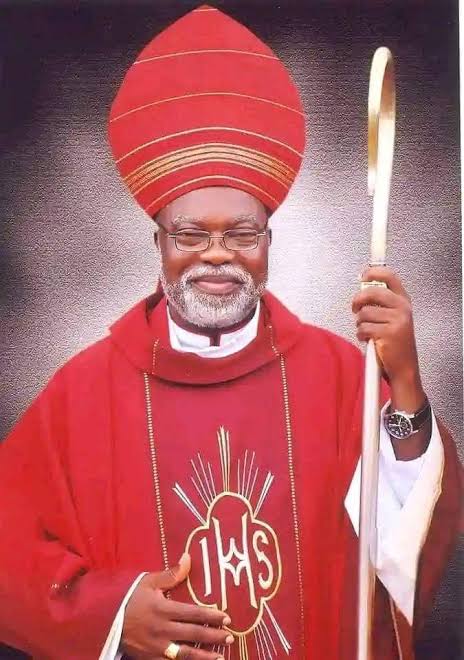
By Felix Umande
The Catholic Bishop of Gboko, Most Rev. William Avenya, has ordered the indefinite closure of four Catholic institutions in Ihugh, Benue State, and withdrawn pastoral agents following repeated attacks, arson and insecurity.
The decision, contained in a letter and decree dated October 12, takes immediate effect and affects St. Winifred Secondary School, St. Winifred Nursery and Primary School, St. Thomas Hospital, Salus Mind Care Center and St. Winifred Parish, Ihugh.
In the pastoral letter, Avenya described the withdrawal as painful but necessary to protect lives, stressing it was not motivated by anger or retaliation.
“The Church cannot, in conscience, continue to expose her Priests, Consecrated Persons, Teachers, Medical personnel, Students and Patients to danger,” he said.
The bishop cited repeated disturbances including the burning of student hostels at St. Winifred Secondary School on October 28, 2025, May 10 and 15, 2026, and October 11, 2026, recurrent burglaries at St. Winifred Parish and criminal incidents at St. Thomas Hospital. He recalled that during the reopening of the hospital on June 21, 2024, some persons displayed placards and chanted slogans demanding that Reverend Sisters leave Ihugh.
Avenya said the Diocese had engaged the host community, traditional rulers, elders and security authorities to find lasting peace, but without security guarantees.
The decree directs the withdrawal of priests, consecrated persons, catechists, pastoral workers and lay mission partners, while teaching and non-teaching staff, medical personnel and administrators are to be redeployed through appropriate diocesan offices.
It also orders safeguarding of diocesan property, transfer of parish registers and archives to the diocesan archives, and reverent removal of the Blessed Sacrament, sacred vessels and other sacred objects under supervision.
The bishop said arrangements would be made to minimise impact on students, patients and staff. Students are to be assisted to continue education in other Catholic schools in the Diocese, while patients at St. Thomas Hospital will be referred to other facilities, especially those needing urgent care. Affected staff, he said, would be treated with justice and charity.
Addressing Catholics in Ihugh, he declared:
“To our Catholic faithful in Ihugh: do not lose heart. Your Baptism is not lost with a building, nor is your faith diminished by the closing of a door.”
He appealed to community leaders, traditional rulers, youth leaders, government and security agencies to restore peace and ensure perpetrators are brought to justice, adding that return is conditional on genuine repentance, restitution and credible assurances of safety.
“This decision is a painful one, but it is not a final farewell,” he said.
Avenya called for intensified prayers for peace and designated Friday, October 23 as a day of prayer and fasting for peace and reconciliation.

Group Chief Executive Officer, NNPC Limited, Engr. Bashir Bayo Ojulari, today at the Presidential Villa in Abuja, presented the Company’s 2025 Audited Financial Statement (AFS) to President Bola Ahmed Tinubu, GCFR.
Ojulari, who was accompanied by the Company’s Group Chief Finance Officer (CFO), Dapo Segun, presented the statement, which delivered impressive results that include ₦7.2 Trillion Profit After Tax (a 33% rise compared to ₦5.4 Trillion in 2024), ₦5.8 Trillion dividend and ₦34.5 Trillion revenue.
On 29th September, 2026, NNPC Ltd announced its audited results for the year ended 31 December 2025, following its Annual General Meeting and second Earnings Call with financial and business analysts.
The results highlight the Company’s growing earnings strength and improved operational performance, laying the foundation for future growth.
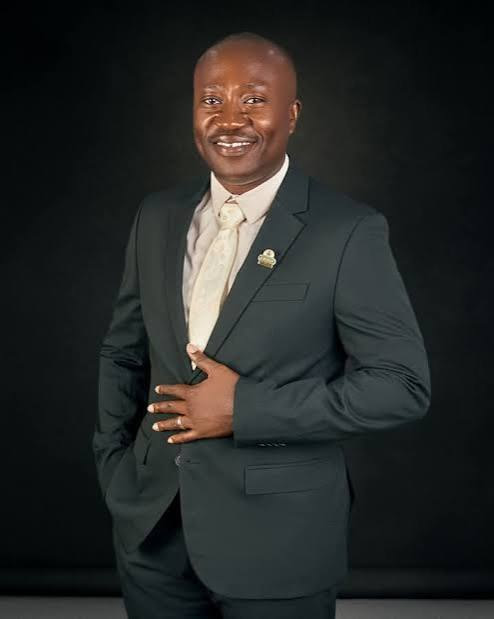
The National Chairman of the Nigerian Institution of Marine Engineers and Naval Architects (NIMENA), Dr. Eferebo Sylvanus has been honoured with the Maritime Innovation and Technology Leadership Award at the 15th Democracy Heroes Award Africa.
Eferebo received the honour at the ceremony held at the weekend at the Transcorp Hilton, Abuja, in recognition of his professional leadership and contributions to marine engineering, naval architecture and maritime technology.
The award comes amid growing calls for Nigeria to harness its maritime resources through indigenous expertise, technological advancement and research-driven industrial development.
The Democracy Heroes Award Africa, now in its 15th edition, recognises individuals making contributions across different sectors.
Eferebo’s recognition places a spotlight on a specialised but strategically important profession whose impact extends beyond engineering into industrial development and the wider blue economy.
As Nigeria continues to explore new opportunities in maritime trade, offshore energy and shipbuilding, the challenge will be ensuring that professional recognition is matched by sustained investment in research, infrastructure, training and the practical application of homegrown technology.
With more than two decades of experience in engineering consultancy and technical leadership, Eferebo leads NIMENA, a professional body committed to advancing marine engineering through research, education, technical standards and industry collaboration.
His academic background includes a Bachelor of Technology in Marine Engineering, a master’s degree in Naval Architecture and Ship Construction, and a doctorate in Naval Architecture and Shipbuilding from Rivers State University, Port Harcourt.
He is also a Fellow of the Nigerian Society of Engineers and a registered engineer with the Council for the Regulation of Engineering in Nigeria (COREN).
Beyond his professional credentials, Eferebo has built a career around developing technical solutions for Nigeria’s maritime and offshore industries.
He is the founder and chief executive officer of Somatrix Marine Limited, an engineering consultancy involved in marine consulting, ship design, marine surveys, construction management and research and development.
His leadership extends to engineering regulation and policy development, including work on maritime engineering standards and local content development.


Benue Bishop Shuts Schs, Hospital, Parish In Alia’s Community Says “Church Cannot … Expose Priests, Students To Danger”
Spread the loveBy Felix Umande The Catholic Bishop of Gboko, Most Rev. William Avenya, has ordered the indefinite closure of...

President Tinubu Receives NNPC’s 2025 Audited Financial StatementBy Aliyu Musa
Spread the loveGroup Chief Executive Officer, NNPC Limited, Engr. Bashir Bayo Ojulari, today at the Presidential Villa in Abuja, presented...


NIMENA chair, Sylvanus receives tech leadership awardBy Philip NyamAbuja
Spread the loveThe National Chairman of the Nigerian Institution of Marine Engineers and Naval Architects (NIMENA), Dr. Eferebo Sylvanus has...

SDP crises: Court strikes out criminal case against Shehu Gabam
Spread the loveBy Saint Mugaga A Magistrate Court in the Federal Capital Territory (FCT), Abuja, has struck out a criminal...


Wike Orders Removal of Illegal Structures, Stops Unauthorised Commercial operations
Spread the loveBy Isa Abdul, Abuja Wike has ordered the immediate enforcement of operations against unauthorised commercial activities and illegally...


Benue Govt Closes Two Schools in Makurdi Over Textbook Sales Violation
Spread the loveBy Vincent Tyosuugh Two academic institutions, Orenda Opal Schools have been closed by the Benue State Government over...

Only Deaf, Dumb, and Blind Can Tell Us He’s not Hearing the Truth About Nigerians’ Suffering –Cardinal Onaiyekan
Spread the loveBy Son Tertsea, Abuja Cardinal John Onaiyekan has explained why the reactions to his interview with Arise TV’s...


Nigeria Fighting Cervica Cancer: 18 Million Girls Vaccinated
Spread the loveBy Nick Ibe, Abuja In its intensified efforts to eliminate cervical cancer in Nigeria, the Federal Government said...

Bauchi Govt: Minimum Pension Now N32,000, Pays Gratuities To 2012, 2013 Retirees
Spread the loveBy Michael Lim As part of effort to reduce the huge backlog of gratuities, the Bauchi State government...

Nigeria’s Overall Best Teacher From Ogun Shows: Where You Start in Life Does Not Matter
Spread the loveBy Seyi Balogun, Lagos The emergence of Nigeria’s Overall Best Teacher for 2026 at the Federal Government’s President’s...