
Energy and Power
NALDA Plans Farm Estates Powered by Solar Energy and Electric Machinery — CEO

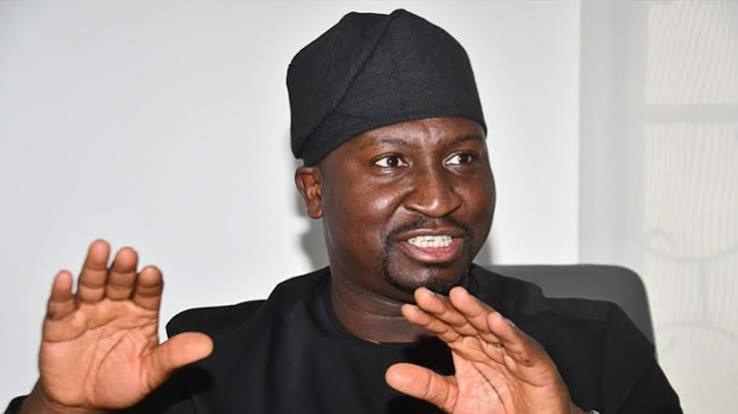
By Lazarus Oko
By reducing farmers’ dependence on rainfall and attracting carbon credit financing for agricultural projects, the National Agricultural Land Development Authority on Tuesday revealed it is developing climate-smart farm estates powered by solar energy and electric machinery.
This was disclosed at a session on Green Industrialisation, Critical Minerals and Energy Security at the 2026 United Nations Climate Change Conference in Antalya, Türkiye, by the Executive Secretary and Chief Executive Officer of NALDA, Cornelius Adebayo, .
The CEO spoke during the session, which focused on climate-smart farming, stating that the agency was piloting a farm estate where land clearing would be done with electric bulldozers, while electric tractors were solar-powered. In his words:
“Our hope as an agency is to earn carbon credits from such farm estates and farm locations.
“We use zero-emission areas. We’re introducing electric bulldozers; we’re introducing electric tractors in that particular location. And we are introducing solar power irrigation for full irrigation of the scheme. Everything, every single thing within that facility is climate conscious. Every single thing. And that is our first location that is supposed to be a fully clean location.”
The agency’s plan comes as Nigerian farmers contend with increasingly unpredictable rainfall, which has disrupted planting seasons and exposed rain-fed agriculture to climate risks.
Adebayo said the experience of the current planting season had reinforced the need to move towards irrigation-based farming.
In his words, “The rains were not predicted in Nigeria. And the farmers- a lot of farmers that don’t do the planting yet were the lucky ones. The ones that did the planting were quite unlucky this year. So it shows that we need to move from rain-fed to climate-smart to irrigation-based farming. And this is one direction that Nigeria is going in headway.”
NALDA was working with investors to provide solar irrigation facilities to farmers, with users paying for the services based on the hectares cultivated, he disclosed. The model, he said, would make the facilities easier to extend to more farming communities.
However, the chief executive acknowledged that electric machinery and clean-energy systems cost more than conventional equipment. But the Bank of Industry and other development finance institutions were bridging the financing gap by providing capital at lower interest rates.
NALDA boss further stated that the agency is promoting an anchor-based farming arrangement designed to reduce the financial burden and production risks faced by smallholder farmers.
Under the model, farmers receive land, training, extension services, seeds, fertiliser and other inputs through an anchor investor. The investor also arranges mechanisation services and buys the produce after harvest, deducting the cost of services and inputs supplied.
Adebayo said the arrangement meant farmers would not have to raise all the capital needed to cultivate their land before planting.
“The person that is taking the risk for that expansion is the anchor, not the smallholder. So it’s just making everything easier for that smallholder farmer to scale up. If the crop fails, it’s really the anchor that takes the hit,” he said.
He added that agricultural insurance and risk-sharing institutions would provide additional protection, although the anchor investor would bear the largest share of the production risk.
The agency is also linking farm development to rural security, arguing that farmers working in organised clusters are easier to protect than those operating on scattered plots.
Adebayo said NALDA planned to use drones to monitor farm boundaries and detect threats around its estates, while security agencies could be deployed more effectively to concentrated farming communities.
He said the model was also intended to attract young people by providing housing, solar-powered electricity, clean water and recreational facilities within farm settlements.
NALDA was established in 1992 under an Act of Parliament to support agricultural land development, improve the use of rural land resources, expand food production and create employment.
The authority was reactivated in 2020 after years of inactivity, with integrated farm estates among its programmes.
In a separate technical presentation at the Nigerian Pavilion, NALDA outlined how its Green Hope Project was combining agroforestry, food production and youth participation to address environmental degradation and strengthen food security.
The CEO’s Special Adviser on Projects, Al-Mustapha Ibrahim, said the agency’s Green Hope Project had mobilised more than 400 volunteers to plant approximately 5,000 trees across five sites in Ogun, Plateau, Kwara states and the Federal Capital Territory.
The project covered 50 hectares and included mango, avocado and coconut trees intended to support both environmental restoration and future food production.
The sites include Odogbolu in Ogun State, where 1,000 trees were planted across 10 hectares with 80 volunteers; Barkin Ladi in Plateau State, with 500 trees across five hectares and 40 volunteers; and Oke Onigbin in Kwara State, where 1,500 trees were planted across 20 hectares with 120 volunteers.
The remaining locations are Iporin in Kwara State, where 1,000 trees were planted across five hectares with 80 volunteers, and the University of Abuja, where another 1,000 trees were planted across 10 hectares with 80 volunteers.
The presentation identified mango, avocado and coconut among the food-producing tree species planted under the initiative. Beyond restoring vegetation, the trees are expected to provide fruits for household consumption and commercial sale as they mature, creating additional income opportunities for farming communities.
NALDA said the initiative was designed to make environmental restoration part of agricultural production rather than treating tree planting as a stand-alone exercise. The trees are expected to improve land cover, protect soil, support biodiversity and strengthen the resilience of agricultural landscapes to climate-related pressures.
The agency further incorporated perimeter fencing to protect newly planted areas, stressing the need for site protection and post-planting management to ensure the trees survive and mature.
The project received support from the Agricultural Research and Training Institute, the National Council on Climate Change and the National Horticultural Research Institute.
The collaboration, according to the presentation, demonstrated the importance of partnerships among government agencies and technical institutions in addressing agricultural and environmental challenges.
The initiative also targets young people through practical participation in tree planting and environmental education, with more than 400 volunteers involved in the first phase, giving them opportunities to work with agricultural and environmental stakeholders and build experience in sustainable agriculture.
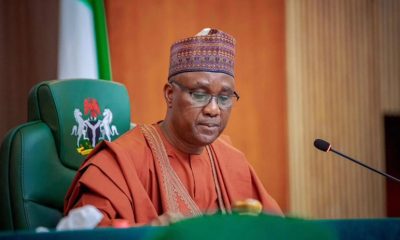


By Felix Umande
The former Chief Press Secretary to former Governor Samuel Ortom, Terver Akase, has launched a blistering attack on the Speaker of the Benue State House of Assembly, Rt. Hon. Berger Alfred Emberga, over the failure to implement the Benue State Electricity Law, 154 days after it was signed.
In a strongly-worded statement, the former CPS questioned whether the law had gone on annual leave or had been instructed to remain in darkness until further notice.
He recalled that on June 8, 2026, Governor Hyacinth Alia signed the Benue State Electricity Bill into law amid fanfare, with speeches about improving power supply, attracting investors and stimulating economic development.
“It was a big occasion. Everybody at the ceremony was excited. At last, Benue was going to take charge of its electricity future!” he said.
But, he lamented, 154 days have passed with no tangible step towards implementation.
“Has the law gone on annual leave? Is it waiting for another executive signature? Or has the electricity sector been instructed to remain in darkness until further notice?” he queried.
The former CPS contrasted Benue’s stagnation with Abia State, where Governor Alex Otti signed the electricity law on March 17, 2025, established the Abia State Electricity Regulatory Authority (ASERA), and moved swiftly to concrete interventions.
He noted that Aba and eight surrounding LGAs in Abia now benefit from the Geometric Power arrangement, while a mini-grid regulatory framework has also been introduced to encourage private investment in rural electricity.
“Meanwhile, in Benue, 154 days after the governor signed our own electricity law, we are still waiting to see the first tangible steps towards implementation. The electricity law appears to have been signed into a state of permanent suspense!” he said.
He challenged the Speaker on the House’s constitutional oversight responsibility, stressing that the legislature did not pass the law merely to provide another document for government archives, but legislation intended to change the lives of the people.
“Now that the Executive has signed it, what is the House doing to ensure that the law is implemented? Has the relevant House committee summoned the responsible officials to explain the delay? Has the government presented an implementation roadmap? What is the status of the proposed electricity regulatory agency?” he asked.
He warned that oversight is not a ceremonial function.
“Mr Speaker, with all due respect sir, oversight is not a ceremonial function. It is not enough to pass a law, watch the governor sign it, take photographs and move on to the next legislative business,” he said.
“Abia is already discussing electricity investments and delivering power through its independent arrangement. Benue is still discussing the electricity law that was signed five months ago.”
He concluded with a direct challenge to the Assembly:
“Honourable Speaker, can the House switch on its oversight light? The people are waiting for electricity, not another signing ceremony. A law signed in June should not still be searching for its first practical expression in November.”
By Nick Ibe, Abuja
States have been told to look for their power solutions locally by setting up functional electricity markets under the Electricity Act 2023.
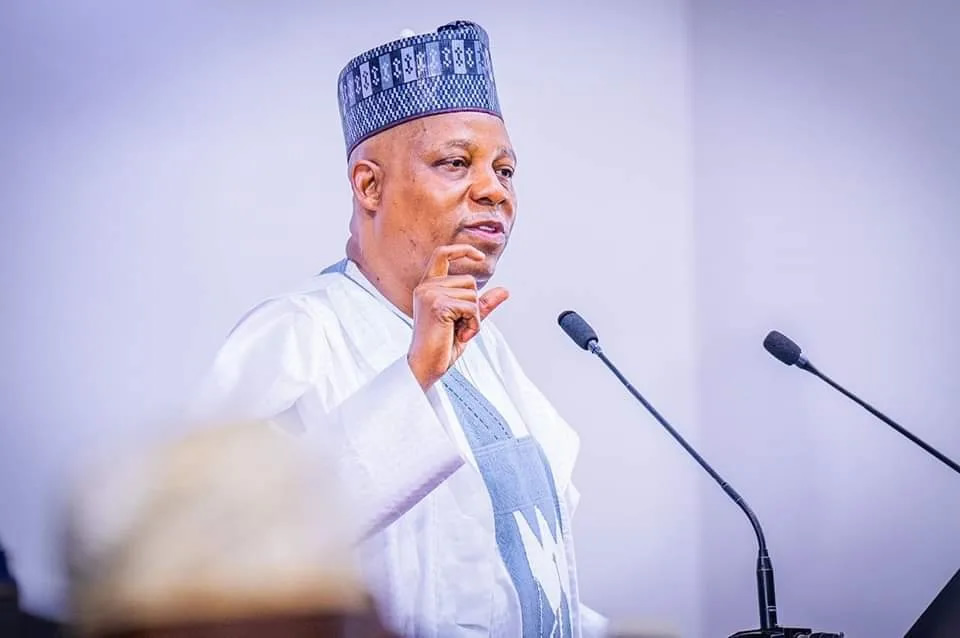
Vice President Kashim Shettima said this on Wednesday at the opening of the National Stakeholders’ Workshop on the Electricity Act 2023 at the State House Banquet Hall, Presidential Villa, Abuja.
The workshop theme, “Unlocking the Opportunities of the Electricity Act 2023 for Sustainable Energy Development and Economic Growth in Nigeria,” pulled federal and state institutions as well as regulators.
Represented by the Deputy Chief of Staff to the President, Ibrahim Hadejia, Shettima said Nigeria’s quest for building a competitive industrial economy would remain constrained unless electricity reforms produced reliable power for businesses, households and public institutions.
The Act, he said, had decentralised electricity governance to let states build power markets suited to their economies and resources. He enohasised that:
“The Act empowers states to develop and regulate intrastate electricity markets within the applicable constitutional and statutory framework.
“The size, diversity and endowments of this nation demand this decentralisation.
“Electricity supply must become a shared responsibility, pursued with innovation and accountability across the federation. Our states must shed the habit of waiting for Abuja to provide every answer.”
The Vice President pointed to solar potential in Sokoto, Borno and Katsina, gas resources in Delta, Rivers and Bayelsa, and hydroelectric opportunities in Niger and Kebbi, and urged states to turn them into investments that could power agriculture, manufacturing, healthcare and education.
He however noted that a law alone would not improve supply, urging states that had yet to set up regulators to put them in place without delay. In his words:
“Legislation cannot implement itself. States yet to act must begin their legislative and institutional preparations promptly.
“They need to establish functional electricity regulatory bodies with technical competence and capacity.”
Shettima proposed a voluntary National Electricity Reform Peer Review and Implementation Framework, involving the Nigerian Electricity Regulatory Commission, the Federal Ministry of Power, the Nigeria Governors’ Forum and state regulators.
He said states would use it to share experience, strengthen their regulators and assess progress on market development, investment readiness, consumer protection and electricity access.
According to him, “No state needs to purchase with failure the knowledge another state has already acquired.”
Shettima said annual voluntary reviews should identify implementation problems, facilitate technical assistance and promote practical solutions without undermining the constitutional powers of states.
“Private capital must arrive with technology and expertise. Transparent licensing, predictable regulation, commercially viable markets, investment safeguards and credible dispute resolution will earn investors’ confidence,” he added.
He also called for stronger consumer protection against arbitrary billing, poor service and unfair commercial practices, saying operators must be held accountable for service quality:
“The final verdict on this law will be delivered wherever a Nigerian reaches for a switch.”
The Permanent Secretary of the Federal Ministry of Power, Mahmuda Mamman, who represented the Minister of Power, Joseph Tegbe, said the Act’s success would depend on states’ ability to build credible institutions and commercially viable markets.
The Director-General of the Nigeria Governors’ Forum, Dr Abdulateef Shittu, said work was under way on a standard tariff framework for states to protect consumers while attracting investment.
He urged stakeholders to ensure that any amendment to the legal framework was built on progress already made.
The Head of Compliance at the Electricity Commission, Hauwa Yakubu, said it had issued regulatory transfers to 17 states, the latest being Akwa Ibom.
She noted that the commission was supporting new state regulators through peer-to-peer training and technical engagement.
President Bola Tinubu signed the Electricity Act 2023 in June 2023, replacing the Electricity Power Sector Reform Act of 2005.
It allows states to license generation, transmission and distribution within their borders, while the national regulator keeps oversight of interstate matters.
Lagos, Edo and Kaduna already had state electricity laws when it was signed.
The commission’s order moving Akwa Ibom’s intrastate regulation to the state regulator, AKSERC, was dated August 18, 2026.
At the time, it mandated that transfers be completed by February 17, 2027, and that the commission had reported 16 states fully transitioned in July.
Generation companies said in March that they were owed about N6.8tn at the end of February and that national output had hovered around 4,000 megawatts for years, against installed capacity of about 14,000 megawatts.
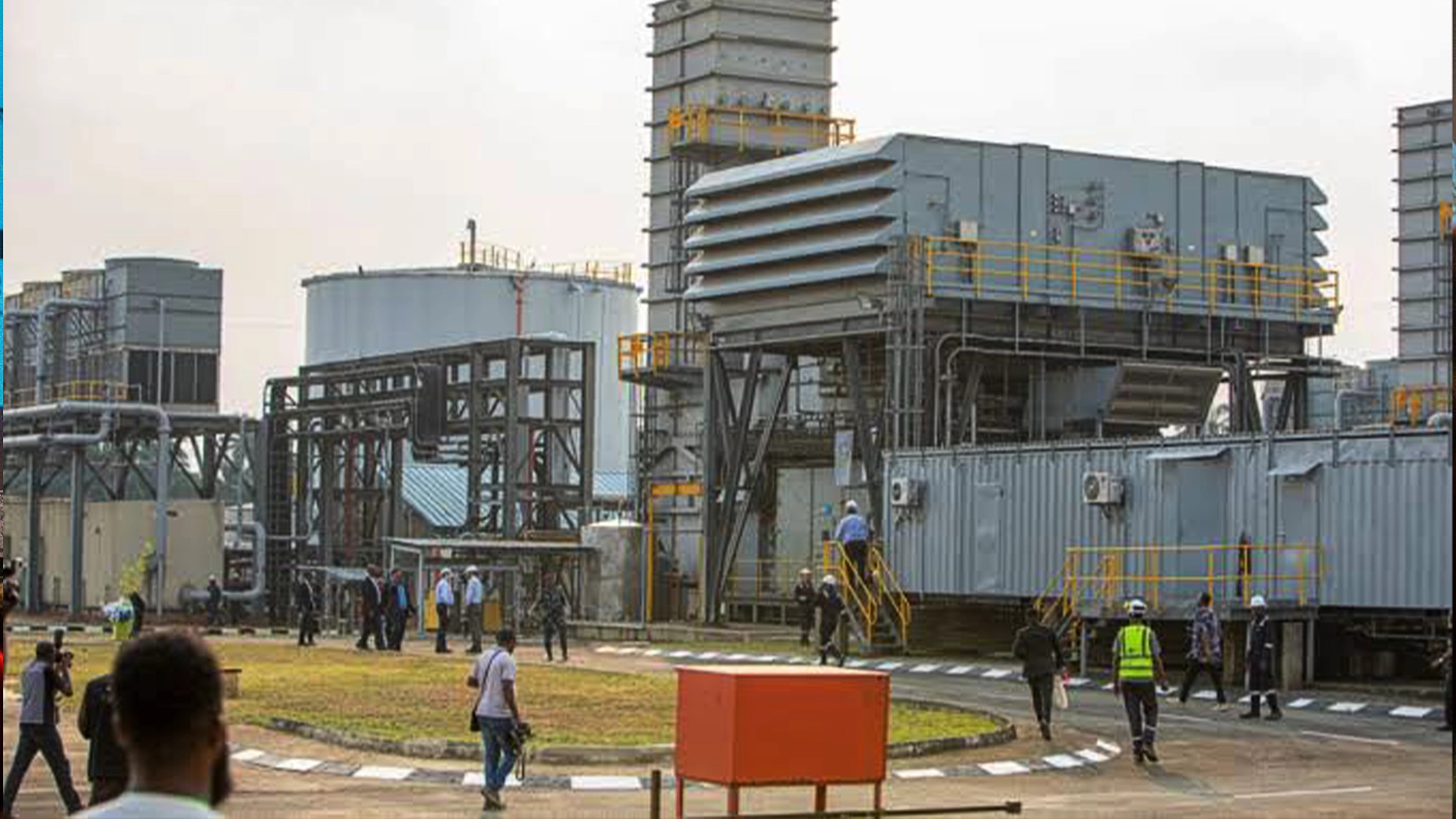
In Aba, Abia State, a new narrative evolves as the Geometric Power-owned Aba Power distribution network provides electricity to businesses, institutions and households, reducing dependence on costly petrol and diesel generators.
This is affecting business operations positively in the commercial hub, with manufacturers enjoying uninterrupted production, traders extending working hours and households enjoying improved food preservation and lower running costs.
Geometric Power Chairman, Professor Barth Nnaji, sees the Aba Integrated Power Project, an investment exceeding $900 million, as a dream come true.
He said the company was committed to providing reliable and affordable electricity to customers, irrespective of their social or economic status. In his words:
“Our services are for all people, regardless of class or status. Electricity is a fundamental right of the Nigerian people, and we are happy to provide reliable and affordable electricity to all our customers.”
He added that, unlike other legacy distribution companies, Aba Power is wholly privately owned and had not received Federal Government subsidies.
The decision of the African Export-Import Bank (Afreximbank) to provide a $50 million facility to Geometric Power Limited after a seven-year delay was what made Aba Power a reality today.
The Group Managing Director of Geometric Power, Mrs. Agatha Nnaji, said the bank provided the lifeline that enabled the project to be commissioned, saying, “Afreximbank is the bank that provided the funding that enabled us to complete and commission the project.”
“As you may know, politics got in the way, human error impacted the project, and it was delayed just as we were about to commission it. So, for seven years, we were simply maintaining the facilities that were already in place. We had staff who had to be paid to keep maintaining them.
“Eventually, when we determined the exact amount needed to complete the project—after President Jonathan intervened and his successor, the late President Muhammadu Buhari, directed his team to resolve the issues arising from the privatization—we were thrilled that Afreximbank stepped in. They shared our vision and understood the impact the project would have on the community.
“I believe that was the turning point for them. Seeing Aba’s potential as an industrial hub in Africa made them far more willing to find a way to make the project work. Although subsequent challenges prolonged completion, Afreximbank ultimately came to the rescue.
“At that crucial juncture, we needed $50 million, and they provided it. Honestly, Afreximbank’s role in all of this was remarkable. Ordinarily, a bank or financier would walk away from a project facing the kinds of hurdles we had at the time.
“We were operating in an environment where the government had breached the terms of our signed agreement. We were dealing with civil and public service officials who knew what needed to be done but refused to act.
“There was little to offer them comfort beyond the sheer determination of our lead investor. For him, it wasn’t merely a financial venture; his drive to see the project through was fueled by a desire to create a lasting, positive impact on people’s lives.”
Infrastructure built for reliability
The company says its investment in distribution infrastructure is central to its efforts to maintain stable electricity supply.
According to the Director of Commercial Operations, Engineer Victor Ngwoke, Aba Power deliberately invested in heavy-duty tubular steel poles designed to withstand extreme conditions and minimise disruptions.
“We wanted to have a very sturdy and reliable infrastructure. We, therefore, deliberately invested in heavy tubular steel poles,” he said.
Ngwoke explained that the poles have deeply buried concrete foundations and are designed to withstand substantial impact, including collisions with vehicles.
He said the company also maintained standards for conventional concrete poles and worked to restore damaged infrastructure quickly whenever faults occurred.
On metering, the director said approximately 98 per cent of Aba Power’s customers had prepaid meters, helping to reduce disputes associated with estimated billing.
With prepaid meters, customers can monitor their consumption and manage electricity expenses more effectively.
Ngwoke also disclosed that the company deployed smart meters and monitoring teams to detect and prevent electricity theft, including illegal connections and meter bypasses.
He said residents had also supported efforts to protect the network, recognising the benefits of reliable electricity to their businesses and livelihoods.
Excess capacity, wider reach
Aba Power currently takes an average of 50 to 60 megawatts from an installed generation capacity exceeding 140MW, according to the company.
The available capacity has enabled it to extend electricity supply to parts of neighbouring Rivers State, where some communities are underserved by the Port Harcourt Electricity Distribution Company.
The company says it hopes to extend its reach across Abia State, subject to the necessary infrastructure and operational requirements.
Polytechnic cuts energy costs by 80%
One of the institutions benefiting from the improved supply is Ogbonnaya Onu Polytechnic, Aba, whose Rector, Professor Christopher Okoro, said the development had transformed academic and administrative activities.
Okoro, who assumed office in 2024, said one of the first challenges he encountered was a huge outstanding diesel bill, which he considered unsustainable.
He contacted Nnaji for assistance, and the institution was connected to Aba Power within 48 hours.
Before the connection, he said, academic activities, research and other operations were constrained by unreliable electricity, with staff often leaving the campus by 2pm.
With the improved supply, students and staff now remain on campus until late in the evening, despite the institution not being residential.
“Before now, staff used to leave by 2pm. They cannot work without electricity. You cannot carry out research without electricity,” he said.
The rector said the institution’s energy costs had fallen by about 80 per cent.
Manufacturers, traders extend working hours
At Damson Industries, a manufacturer of shoe components, Chairman David Mmadueke, said reliable electricity had enabled the company to operate day and night shifts without routinely shutting down because of power outages.
“We have light here morning and night. The only time we didn’t have light was when the company had a problem with gas supply for about three days. Apart from that, this factory has never closed because there is no electricity,” he said.
Similarly, the President of Aba North Shoe Plaza, Obioma Onyebuchi, said the plaza, which houses more than 2,000 shops, switched to Aba Power on January 14 and had since enjoyed steady supply.
According to him, traders no longer depend on individual petrol or diesel generators, as the company has ensured that customers are metered.
“With the constant electricity supply from Aba Power, we can now work throughout the day. This has increased the productivity of our members,” he said.
Although some traders consider the electricity tariff high, Onyebuchi said the cost remained preferable to the substantial sums previously spent on fuel.
He expressed the plaza’s readiness to support the company to sustain reliable supply.
Steady power eases household expenses
Beyond factories and commercial centres, improved electricity supply is also changing how some households manage their finances.
Mrs Ada-Ngizi Greg-Ilobinso, a wife, mother and teacher, said reliable electricity had made household management easier, particularly in food storage and budgeting.
She explained that she could now purchase food items in bulk, preserve them in a freezer and reduce the frequency of shopping trips.
“Aba Power has really affected my life positively in so many ways. As a mother and a wife, and also as a housekeeper, a house manager, if I may say, it has really helped me because now we have steady light,” she said.
While the experiences of residents, manufacturers and institutions point to significant gains, the wider impact will depend on the consistency, affordability and reach of the electricity service.



“As Long As Yelwata Is Suffering, Nigeria Is Suffering” — Peter Obi
Spread the love–Promised water, basic edu for orphans By Felix Umande Presidential hopeful Peter Obi on Wednesday visited Yelwata community...


NALDA Plans Farm Estates Powered by Solar Energy and Electric Machinery — CEO
Spread the loveBy Lazarus Oko By reducing farmers’ dependence on rainfall and attracting carbon credit financing for agricultural projects, the...


The Best Plant-Based Protein to Lower Cholesterol
Spread the loveBy Sukhman Rekhi According to a dietitian, soy is the best plant-based protein for improving cholesterol levels. Soy...


“I’m an introvert. I like staying indoors. I don’t like to do a lot of things” — Wizkid
Spread the loveBy Seyi Balogun In view of personal experiences and lifestyle, top Nigerian Afrobeat star, Ayodeji Balogun, famously known...


Daily Trust Foundation Awards Scholarships to 70 Female Medical, Nursing Students
Spread the loveBy Daily Trust The Daily Trust Foundation has awarded scholarships to 70 female students pursuing studies in medicine,...


From 2 Tax Evading Firms: EFCC Recovers, Hands Over $3m, N1.3bn Revenue to RMAFC
Spread the loveBy Seyi Balogun, Lagos The Economic and Financial Crimes Commission, EFCC, Lagos Zonal Directorate 2, has recovered from Aiteo...
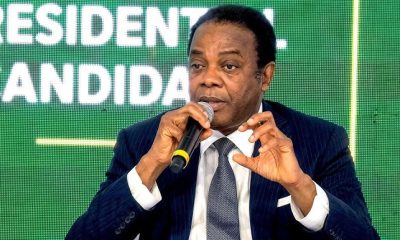

2027: I Will Step Down For Atiku, Obi Or Any Consensus Candidate, Duke Declares
Spread the loveBy Felix Umande The presidential candidate of the Peoples Redemption Party (PRP), Donald Duke, has declared his readiness...


NFF Suspends 2 Refs: Regular Ref Edu, Improved Match Assessment, Accountability, Stressed
Spread the loveBy Nick Ibe, Abuja For cancelling a ‘validly scored goal’, the NFF Refereeing Development Committee has sanctioned the...


On World Toilet Day: FG Says Less than 36% of Nigerians Have Access to Toilets
Spread the loveBy Lazarus Oko Less than 36 per cent of Nigerians have access to improved toilet facilities, raising concerns...


‘Christian persecution in Nigeria’ Takes Front Burner in US Congressional Hearing November 12
Spread the loveBy Son Tertsea, Abuja With the view to ascertaining Nigeria’s efforts to protect Christians and tackle insecurity in...