
Food and Agriculture
AI-driven sustainable agri-finance and policy systems: Alawode and Nigerian spirit


By Philip Nyam
Agriculture is at the heart of our survival and economic well-being, providing food, jobs, and income for billions across the globe. However, this vital sector is facing mounting pressures from climate change, resource depletion, and unstable financial systems.
With rising temperatures, unpredictable rainfall, and changing ecological patterns, agricultural productivity has taken a hit in many areas, especially in developing nations. On top of that, inefficiencies in agricultural finance, policy execution, and global trade have widened the gap of inequality and jeopardized food security.
In light of these challenges, incorporating artificial intelligence (AI) into sustainable agriculture and agri-finance systems offers a groundbreaking opportunity. AI technologies can boost climate intelligence, enhance financial transparency, and streamline agricultural value chains, paving the way for a more resilient and fair global food system.
Ultimately, the convergence of AI, green finance and climate-smart policy design marks a transformative shift in the global agricultural paradigm. Despite these benefits, the use of AI-driven sustainable agri-finance and policy systems remains undersubscribed in Nigeria, primarily due to poor awareness.
It is commendable that an Osun-born agricultural economist, Mr. Adedapo Emmanuel Alawode along with his team of authors took a deep-dive to advance academic research, contributing to the body of knowledge within this area of human enterprise.
Alawode is an accomplished agricultural economist, data analyst and researcher with several publications in local and international journals. His work spans artificial intelligence, agricultural finance, climate resilience, and food security. According to Stats weekly report, Dapo has 3, 176 reads, 31 citations, with 96.9 RI score, which is compared to be higher than 63% of all ResearchGate members and higher than 98% of ResearchGate members who first published in 2023.
In his study on AI-Driven Climate-Smart Agriculture and Fraud-Resistant Green Finance, he explores how AI and digital technologies are transforming agriculture into a data-driven, climate-resilient sector. Using drones, sensors, and satellite data, AI systems enhance crop management, irrigation, and pest control. The research also addresses fraud risks in green finance, proposing AI-based verification and geospatial monitoring to ensure transparency.
Another work, Agricultural Subsidy Reforms and Their Effects on Smallholder Farmers, analyzes how reforming subsidies influences farmers’ income and efficiency. Drawing on data from Malawi, Nigeria, and Zambia, it finds that targeted, transparent subsidy systems—supported by extension services and credit—can improve productivity. However, weak administration and infrastructure remain key constraints.
In Integrating IoT and AI in Sustainable Agriculture, Alawode demonstrates how connected sensors, drones, and AI analytics can optimize resource use, reduce environmental harm, and strengthen financial accountability. Predictive modeling also enhances insurance accuracy and risk management. The study proposes a framework linking environmental sustainability with financial transparency.
His paper on Financial Derivatives and Risk Management in Agricultural Markets examines how tools such as futures and options help mitigate market volatility and stabilize prices. While derivatives support price discovery and liquidity, speculative trading and unequal access pose challenges. The study calls for inclusive regulation and financial education.
In The Role of Agricultural Value Chains in Enhancing Food Security and Economic Development, he explains how linking farmers to markets and processors boosts efficiency, reduces losses, and promotes inclusive growth. Upgrading value chains through infrastructure, digital platforms, and partnerships can foster food security, rural jobs, and gender equity.
His research on Climate Change Impacts on Agricultural Productivity and Rural Livelihoods in Sub-Saharan Africa details how erratic weather and heat stress undermine yields and livelihoods. It highlights adaptation through technology, indigenous practices, and inclusive policy, stressing gender and youth empowerment for climate resilience.
Adedapo’s article, Assessing Climate Change Impacts on Agricultural Productivity and Rural Livelihoods in Sub-Saharan Africa critically examines the multifaceted effects of climate change on agricultural productivity in SSA and its cascading consequences on rural household incomes, employment patterns, food systems, and migration trends, identifying gaps in current adaptation strategies and offering a roadmap for integrating climate-smart agriculture with broader rural development policies.
In another groundbreaking research work, he explores the heterogeneity in U.S. food consumption, with a focus on how households respond to changes in food prices across regions and other social demographics, such as SNAP and non-SNAP participants.
In a poster presentation titled Recent Trends in New Mexico Farm Income: The Significance of Government Payments, Adedapo examines trends of net farm income components from 2014 to 2020 (pre-pandemic) and 2021 to 2023 (post-pandemic) considering the COVID-19 pandemic. The study analyzes trends in the value of production, production expenses, and government payments, suggesting a meaningful effect of trade disputes, pandemic disruptions, and add-hoc payments on NM farm income.
He also worked on AI-Enhanced Scenario Planning for U.S. Food Trade Policy, with focus on how AI can strengthen trade policy amid global disruptions. Using machine learning and geospatial analytics, AI can forecast shocks, support rapid policy response, and promote equity. The study advocates ethical AI governance and collaboration to build resilient food systems.
The author’s body of work serves as a complex and detailed guide for transforming modern agriculture and finance, going well beyond what individual research papers can offer. At the heart of it all is a fresh blend of cutting-edge digital technology and essential economic policy changes, all spurred by the urgent challenge of climate change. The research clearly shows that building a climate-resilient global food system is tightly linked to creating fraud-resistant green finance and ensuring transparent governance.
Works like AI-Driven Climate-Smart Agriculture and Integrating IoT and AI in Sustainable Agriculture emphasize the practical role of technology, illustrating how tools like geospatial monitoring, sensors, and machine learning are pushing farming into a new era of efficient resource use and improved productivity. The immediate benefit here is a clear path toward environmental sustainability, along with a reliable way to verify land use and crop yields, which can significantly cut down on the misallocation and corruption often seen in agricultural subsidies and green investments. But the research doesn’t stop at technical applications; it also provides vital insights for systemic policy reform.
The thorough analysis of Agricultural Subsidy Reforms in Sub-Saharan Africa offers crucial evidence for policymakers, showing that effective interventions need to shift from poorly managed input-based support to more conditional, targeted, and inclusive frameworks that are closely tied to supportive extension services and access to credit. This push for transparency is echoed in the examination of Financial Derivatives and Risk Management, which, while recognizing the important role these instruments play in stabilizing unpredictable agricultural markets, also highlights the urgent need for stronger regulations to reduce speculative risks and tackle the unfair equity gap that often leaves smallholder farmers behind.
The cumulative impact of policies calls for frameworks that are not just efficient but also inclusive and fair at their core. This research portfolio’s most significant contribution lies in its emphasis on building resilience throughout entire ecosystems, stretching from local farms to global trade networks. The insightful evaluation of Climate Change Impacts on Agricultural Productivity in Sub-Saharan Africa offers essential regional context, highlighting the vulnerabilities faced by rain-fed farming. It champions integrated adaptation strategies that blend indigenous knowledge with modern technology, while also addressing the crucial roles of gender and youth in enhancing adaptation capacity.
This regional perspective is further enriched by the global initiative on AI-Enhanced Scenario Planning for U.S. Food Trade Policy, which raises the conversation to a level of national strategic preparedness. By introducing an AI framework to simulate and predict supply chain disruptions, the author lays out a blueprint for national policies that shift from merely reacting to crises to engaging in proactive, resilient planning.
Ultimately, by linking value chain improvements, subsidy reforms, digital integrity, and strategic trade planning, the author offers a thorough and actionable vision for transforming agriculture to withstand both current and future global and climatic challenges, with a particular focus on benefiting developing regions.
…Philip Nyam, Media expert and public affairs analyst writes from Abuja

By Felix Umande
The Och’Idoma and Paramount Ruler of Idoma Kingdom, His Royal Majesty, Agabaidu John Elaigwu Odogbo, on Tuesday flagged off the office of the MATAN Food Bank Professional Association of Nigeria and its 21-Pillar Stakeholders’ initiative in Benue State.
The ceremony, which took place at the Bank of Agriculture, Makurdi on Tuesday, 3rd November 2026, was attended by government functionaries, traditional rulers, religious leaders and other stakeholders.
Speaking as both Och’Idoma and Patron of the Association, the monarch said food security must become a collective national priority, stressing that no society can attain sustainable prosperity when a significant portion of its population struggles to access adequate and nutritious food.
“Food is central to human existence, dignity, peace and national development,” he said, noting that Benue as the Food Basket of the Nation has the agricultural potential to transform its economy, but that potential must be translated into measurable productivity, income, employment and food availability.
The royal father charged the Association to move beyond meetings and ceremonial engagements to visible impact in the lives of people, measured by the number of families empowered, households supported, youths encouraged and jobs created. He also assured the leadership of his goodwill and support for initiatives that advance food security and sustainable agriculture.
He commended the Benue Chapter for adopting the 21-Pillar framework, describing it as a symbol of stability, structure and sustainability, but cautioned that the pillars must be developed into actionable programmes addressing real needs, including smallholder farmers’ empowerment, youth participation in agribusiness, women empowerment, community food banks, food processing and storage, agricultural financing, market access and skills acquisition.
The monarch further stressed the role of traditional institutions as indispensable partners in grassroots development and called for practical partnerships to encourage youths to embrace agriculture as a profitable venture.
Also speaking, the Special Adviser to the Benue State Governor on Internal Security, Chief Dr. Joseph Har, said without physical security, food security cannot be guaranteed. He noted that security challenges in the state have improved compared to the past and assured that government is determined to make the situation better.
In an interview with newsmen, the National Vice President, Contact, Mobilisation and Organisation of MATAN Food Bank Professional Association of Nigeria, Comr. Ikpe David Idah, said the event marked the official declaration of the Association’s office complex in Makurdi by its Patron, the Och’Idoma, and the kick-off of the 21 pillars in Benue as one of the pilot states in the North Central.
He listed some of the pillars to include MATAN Food Bank Foundation, MATAN Mobility, Community Food and Nutrition Resilience Initiative, Street Feeding, Pan-African and inter-regional commodity exchange, among others contained in the organisation’s profile.
According to him, the primary aim of the Association is to end hunger and ensure not just food sufficiency, but nutrition in quality, quantity and proportion, with laboratory testing and medical certification of food before distribution to the public.
–Convicted Aba businessman given ₦5m fine option
By Nick Ibe
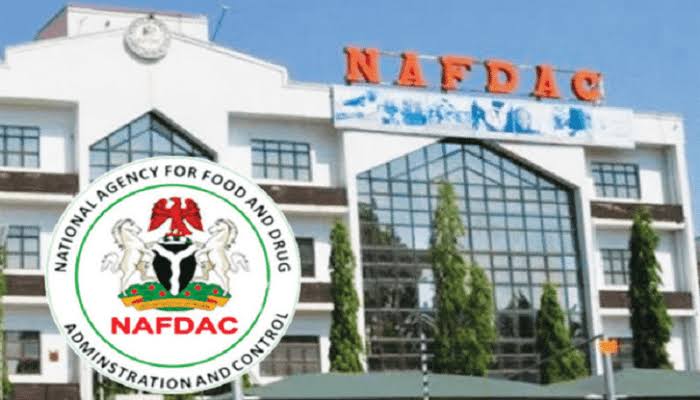
The National Agency for Food and Drug Administration and Control (NAFDAC) has won the conviction of a businessman in Aba, Abia State, for manufacturing and selling counterfeit Goya Extra Virgin Olive Oil, sentencing him to five years’ imprisonment with an option of a ₦5 million fine.
The conviction of Mr Innocent Okoye, Managing Director of Chikason Industrial Nigeria Limited, Aba, followed months of investigation and prosecution, is a remarkable action against food counterfeiting and other substandard products before unsuspecting Nigerian consumers.
Okoye, MD of Chikason Industrial Nigeria Limited, was convicted on two charges relating to the manufacture and sale of counterfeit Goya Extra Virgin Olive Oil.
According to NAFDAC, Justice K. O. Ogundare of the Federal High Court, Umuahia, Abia State, delivered the judgment on Wednesday, October 28, 2026.
The case arose from an enforcement operation conducted by the agency’s Investigation and Enforcement Directorate in April 2026, during which officials uncovered a facility in Aba allegedly used for the production and distribution of counterfeit Goya oil.
NAFDAC arrested the suspect and forwarded samples of the recovered products to its laboratory for scientific analysis. Consequently, criminal proceedings were taken against Okoye leading to his eventual conviction.
The development comes amid growing concerns over the circulation of fake food products in Nigerian markets, with counterfeiters allegedly exploiting the popularity of established brands.
In January 2026, NAFDAC raised the alarm over counterfeit Goya oil packaged in polyethylene terephthalate (PET) plastic bottles and sold to unsuspecting consumers as genuine imported products.
At a media briefing in Lagos, the agency’s Director of Investigation and Enforcement, Dr Martins Iluyomade, disclosed that investigators had uncovered an illegal production operation at Oke-Arin Market, Idumota, Lagos.
According to the agency, operators of the facility were allegedly processing palm oil with colouring agents before repackaging the mixture as Goya oil for sale.
Iluyomade explained that genuine Goya oil authorised for sale in Nigeria was imported in original glass bottles through approved distribution channels. He warned consumers to be wary of products bearing the brand name in PET plastic bottles.
Beyond the violation of product standards and intellectual property rights, food counterfeiting raises serious public health concerns because consumers may have no reliable way of determining the quality or safety of the products they purchase.
NAFDAC has urged consumers, traders and religious organisations to verify the sources of products they purchase and exercise caution when confronted with suspicious packaging or unusually presented goods.
The agency also called for the cooperation of manufacturers, distributors, retailers, consumers and law enforcement agencies in fight against counterfeit products, illegal manufacturing facilities.
The conviction though shows NAFDAC’s commitment to intensifying market surveillance, the judgment is a slap on the wrist as it is not painful enough to serve as a deterrent.

By Felix Umande
The National Economic Council, NEC, has endorsed a 90-day economic action plan proposed by the Federal Ministry of Finance to consolidate gains from President Bola Ahmed Tinubu’s economic reforms.
The plan focuses on reducing the cost of living, improving food affordability, attracting investment and accelerating delivery of projects with direct benefits to Nigerians.
The endorsement on Thursday followed a presentation by Minister of Finance and Coordinating Minister of the Economy, Mr. Taiwo Oyedele, during the Council’s 161st meeting held virtually and chaired by Vice President Kashim Shettima.
The action plan identifies five priority areas: food affordability, tax harmonisation, completion of high-impact projects, resolution of investment bottlenecks and regulated household support.
NEC also approved establishment of a national dashboard to track ongoing projects across the federation, with emphasis on transparency, accountability and accurate reporting of how proceeds from fuel subsidy removal are being utilised.
Presenting the economic outlook, Oyedele expressed optimism about progress under the reform programme and identified reduction of headline inflation and interest rates to single digits by 2027 as key policy objectives, noting that the next phase would require coordinated implementation across federal and state institutions.
Addressing members, Vice President Shettima said while the President’s reform programme was designed to achieve broader prosperity, governments at all levels must translate its objectives into improved living conditions. In his words:
“The first dividend of prosperity should be the confidence to plan a life. Our task is to make such confidence less dependent on fortune.
“Our separate jurisdictions must serve a common public interest. Our separate mandates must not become competing excuses. Each Governor carries knowledge that no federal document can supply.”
Shettima further charged governors to ensure gains translate into affordable transportation, improved healthcare, employment and financial security.
On the National Compressed Natural Gas, CNG, Bus Initiative, he stressed that success should be measured by affordability and accessibility rather than fleet size.
“The cost of reaching
a livelihood should never consume the livelihood itself,” he said.
In other resolutions, NEC reviewed the reported Ebola outbreak in the FCT. Minister of Health and Social Welfare, Prof. Muhammad Ali Pate, assured the Council that Nigeria has capacity to contain it, while acknowledging 21 states that updated their response plans and urging the remaining 15 to expedite preparedness.
The Council also directed states to strengthen polio eradication efforts through post-campaign reviews, timely release of counterpart funds and improved coordination in insecure areas.
On livestock development, Council, after receiving report of its Ad Hoc Committee chaired by Kebbi Governor Nasir Idris, resolved to strengthen federal-state collaboration to unlock the sector’s economic potential.
Council further resolved to establish a joint financing framework between federal and state governments to accelerate deployment of CNG and electric vehicles, directing that savings from the programme be passed to commuters through lower fares and that transport unions be engaged.
A committee will be constituted to coordinate the financing arrangement and ensure benefits translate into affordable and sustainable transportation.



PERSPECTIVE: Tiv Leaders Must Hear This: While Akwa Ibom Asked For A Future, Tiv Leaders Fight Over A Man
Spread the loveBy Edward Tion I watched the presidential campaign in Akwa Ibom today with a bleeding heart. Not because...


Pursue Unity, Peace, Play Active Role in Nigerian Politics, Deputy Speaker, Kalu Urges Igbo Elites, Leaders
Spread the loveBy Saint Mugaga Deputy Speaker of the House of Representatives, Rt. Hon. Benjamin Kalu has called on Igbo...


2027: Amupitan Seeks Royal Support, Partnership to Discharge Mandate Peacefully, Effectively
Spread the loveBy Isa Abdul The National Chairman of the Independent National Electoral Commission (INEC), Professor Joash Amupitan, has said...


Place 7-Year Ban On Establishment Of New Tertiary Institutions– Edu Minister Begs NASS
Spread the loveBy Son Tertsea, Abuja The Federal government has appealed to the National Assembly to halt the passage of...


Gov Sule to Security Agencies: Fish Out Sponsors of VP Shettima’s Attackers in Lafia
Spread the loveSDP: attackers APC members against Wadada’s candidacy By Isa Abdul, Abuja Prominent personalities in the state planned and...


Wike’s Entry, Allocation of UniAbuja Land a Breach of Court Order– ASUU
Spread the loveBy Nick Ibe, Abuja The Federal Capital Territory Administration’s (FCTA) allocation of some hectares of land belonging to...


Alleged 4 Herbal Concoction Consumers Die in Benue
Spread the loveBy Vincent Tyosuugh After consuming a suspected poisonous herbal concoction allegedly sold to residents of Oju Local Government...


BENUE APC Split Deepens As SGF, Stakeholders Shun Alia Campaign Flag-off, Disown Campaign List
Spread the loveBy Felix Umande The crisis rocking the Benue State chapter of the All Progressives Congress (APC) deepened on...


Defence Minister Invites Cybersecurity, Drone, DefenceTech Experts for Collaboration with DICN
Spread the loveBy Nick Ibe, Abuja Minister of Defence, General Christopher Musa (rtd) has called on Nigerians with expertise in...


Wike’s Rainbow Coalition Faces Storm Over Alleged Split Voting: VP Shettima, SDP, Ondo APC Reject Coalition
Spread the loveBy Son Tertsea, Abuja Nyesom Wike’s Rainbow Coalition has been identified as a split voting device according to...