
Sports
NFF Suspends 2 Refs: Regular Ref Edu, Improved Match Assessment, Accountability, Stressed

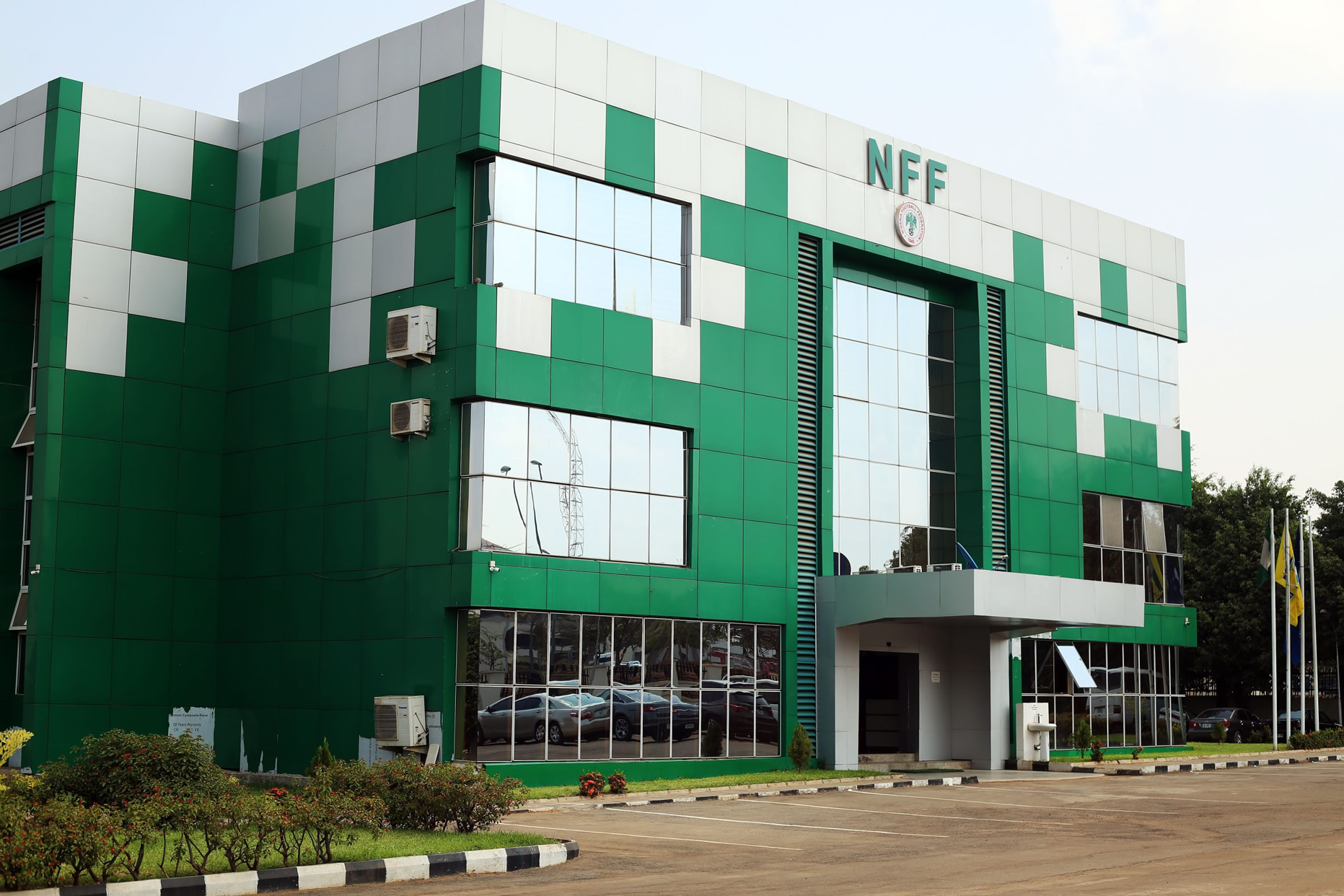
By Nick Ibe, Abuja
For cancelling a ‘validly scored goal’, the NFF Refereeing Development Committee has sanctioned the two match officials amidst growing list of officiating controversies that have unsettled Nigerian football in recent seasons.
The NFF has taken the disciplinary action against referee Abdulrasheed Jimoh and assistant referee Zakari Adamu, handing both officials indefinite suspensions following a controversial decision to disallow a goal scored by Kwara United against Enugu Rangers
The incident occurred during Sunday’s meeting at the Awka Township Stadium, where Rangers claimed a narrow 1-0 victory over Kwara United.
The Flying Antelopes had taken the lead five minutes before half-time through Victor Chimezie, who finished from a tight angle after receiving a pass from Pius Igwe. However, Kwara United believed they had found a way back into the contest in the 78th minute when Alex Jerry put the ball into the net. Their celebrations were short-lived when the second assistant referee flagged an infringement and the goal was ruled out.
The decision proved significant as Rangers held on to their advantage to secure all three points, while Kwara United left Awka empty-handed. The NFF’s intervention now confirms that the decision to disallow Jerry’s effort has been deemed a serious officiating error, with Jimoh and Adamu facing indefinite suspensions.
The development is the latest in a series of disciplinary measures taken against NPFL match officials over decisions considered to have breached the Laws of the Game or directly influenced match results.
Interestingly, the current 2026/27 campaign has already witnessed a similar incident involving a disallowed goal and an assistant referee. In September, the NFF suspended assistant referee Yakubu Aliyu indefinitely after ruling that his failure to apply the offside guidelines and the wait-and-see protocol resulted in the cancellation of a valid Doma United goal against Enyimba. The incident occurred during the Matchday 3 fixture, which Doma United won 2-0.
The NFF Refereeing Development Committee considered the assistant referee’s decision serious enough to warrant his removal from the league’s list of officials. In its communication to Aliyu, the committee said he failed to follow the appropriate offside procedures, resulting in the cancellation of a goal that should have stood. The committee also maintained that the decision affected the scoreline and outcome of the match, bringing refereeing and the game in Nigeria into disrepute.
The suspension of Jimoh and Adamu over the Kwara United incident means the current season has produced more than one high-profile case in which the NFF has sanctioned officials for cancelling a legitimate goal. The latest suspensions involving Jimoh and Adamu once again spotlight the standard of officiating in the NPFL and the NFF’s approach to holding match officials accountable.
From disallowed goals and questionable penalty decisions to missed spot-kick offences, several clubs have found themselves on the receiving end of controversial calls in recent seasons. While the NFF’s willingness to review incidents and sanction officials demonstrates an effort to address refereeing errors, the recurring nature of these cases raises questions about whether disciplinary action alone is enough to improve the standard of officiating.
For clubs competing in a league where a single goal can determine points, title ambitions, continental qualification or survival, the consequences of such decisions can be significant. The latest case also draws renewed attention to the need for continuous referee education, improved match assessment, stronger accountability, and greater consistency in applying the Laws of the Game. For Kwara United, the disallowed effort against Rangers proved costly in their search for a result in Awka.
For the NFF, the suspensions of Jimoh and Adamu represent another attempt to ensure that officiating errors that could influence match outcomes do not go unpunished. However, with similar incidents recurring across successive NPFL campaigns, the bigger challenge remains ensuring that fewer of these controversies occur at all.






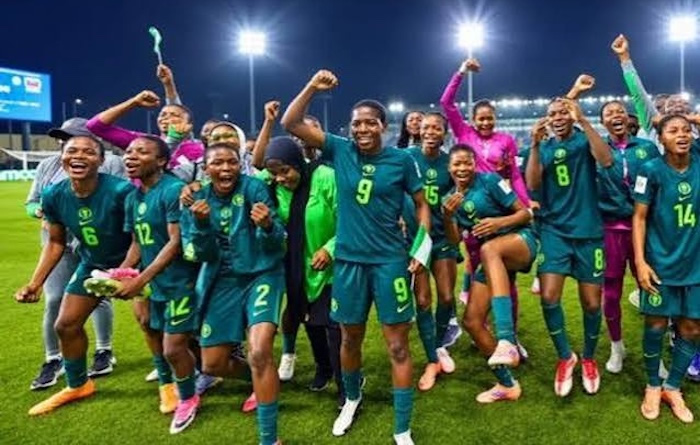
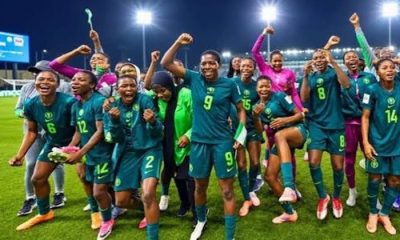
Nigeria and France have emerged as the only two countries to have won both the men’s and women’s FIFA Under-17 World Cups following the Flamingos’ historic triumph at the 2026 FIFA U-17 Women’s World Cup in Morocco.
Nigeria achieved the milestone after its U-17 women’s team defeated Japan 2-1 in Saturday’s final in Rabat, becoming the first African nation to win the women’s competition.
The victory also ended Nigeria’s 18-year wait for a FIFA U-17 title, having last won the men’s competition in 2015.
According to FIFA’s records, France were previously the only country to have won both versions of the tournament, having secured the men’s title in 2001 and the women’s trophy in 2012.
Nigeria’s five men’s U-17 World Cup titles
Nigeria’s success in the men’s competition dates back to 1985, when the Golden Eaglets defeated West Germany 2-0 in Beijing to win the inaugural edition of the tournament, then known as the FIFA U-16 World Championship.
The team went on to win the competition four more times, in 1993, 2007, 2013 and 2015..
The 2013 triumph came after a 3-0 victory over Mexico in the final, while the 2015 team defeated Mali 2-0 in Chile to become the first country to win consecutive editions of the tournament.
France became the first country to win both versions of the competition.
The French men’s team won the 2001 FIFA U-17 World Championship in Trinidad and Tobago after defeating Nigeria 3-0 in the final.
Eleven years later, France’s women’s team lifted the FIFA U-17 Women’s World Cup in Azerbaijan in 2012.
They defeated North Korea 7-6 on penalties after a 1-1 draw in the final to claim their maiden title.
France therefore held the distinction of being the only country to have won both competitions until Nigeria’s latest achievement.
Nigeria’s historic achievement was secured through a 2-1 victory over Japan in the 2026 final.
Awawu Bashiru opened the scoring in the 39th minute before Oluebube Umejiaku doubled Nigeria’s advantage two minutes into the second half.
Japan reduced the deficit through Fuki Ito in the 80th minute, but the Flamingos held on to secure the trophy.
The victory completed a remarkable campaign for the Nigerian side, which recovered from a 2-1 opening defeat to Poland to win its next six matches.
The team also defeated Brazil 3-1 in the semi-finals to book its place in the final against Japan.
The triumph was significant beyond Nigeria, as it marked the first time an African country had won the FIFA U-17 Women’s World Cup.
It also made the Flamingos the first Nigerian women’s national team to win a FIFA World Cup title.
With the latest achievement, Nigeria joins France in the exclusive group of countries to have won both the men’s and women’s FIFA U-17 World Cups.
Vanguard
By Nick Ibe, Abuja
Nigeria’s Flamingos have put themselves in a class beyond the rest as they won their first FIFA Under-17 Women’s World Cup title by beating Japan 2-1 in Saturday’s final.
The Flamingos are the first African team to win the competition, with goals from Awawu Bashiru and Oluebube Umejiaku sealing the historic victory.
Bashiru first hit the net in the 39th minute, following an assist from Mary Dunstan to give Nigeria a 1-0 lead at half-time.
Then the Flamingos’ midfielder sent a dropping ball towards goal which the Japan goalkeeper Kou Kadowaki could not hold and it slipped through her gloves to hit the net again.
Umejiaku doubled the advantage just two minutes into the second half, scoring in the 47th minute after being set up by Esther Stephen.
Esther Stephen sent a long, raking pass upfield, which Umejiaku chased down and controlled with her left foot before delicately lifting the ball over Kadowaki.
Japan fought back and reduced the deficit in the 80th minute through Fuki Ito, who converted a pass from Anri Ito to make it 2-1.
The goal set up a tense final 15 minutes, with Japan pushing for an equaliser while Nigeria sought to protect their advantage.
Kanyinsola Yusuf was booked in the 83rd minute, while the Flamingos continued to threaten through attempts from Umejiaku and Yusuf. Japan also had a late effort through Mashiro Yamaji, but Nigeria held firm.
Umejiaku was flagged offside in the 94th minute before the referee brought the match to an end after five minutes of added time.
The victory over Japan capped a remarkable campaign for the Flamingos, who recovered from a 2-1 opening defeat to Poland to win five consecutive matches on their way to the final.
The Nigerian side responded to the setback with a 2-0 victory over Puerto Rico before producing one of the tournament’s biggest surprises by defeating defending champions North Korea 3-1. The result ended North Korea’s 18-match unbeaten run in regulation time at the competition.
They followed up with a 2-1 win over Mexico in the Round of 16, with Oluebube Umejiaku and Mary Dunstan scoring to send Nigeria into the quarter-finals. Azeezat Oduntan then converted a late penalty in the 89th minute to secure a 1-0 victory over Venezuela and a place in the semi-finals.
The Flamingos sealed their first-ever appearance in the final with a 3-1 victory over Brazil ss Queen Joseph opened scoring in the 56th minute before Awawu Bashiru scored twice, in the 71st and 80th minutes, to put Nigeria in control.
Brazil managed a late consolation, but it was not enough to stop the Nigerian side from reaching the title decider.
According to Channels TV, the team’s response to the opening defeat was also highlighted by head coach Akeem Busari, who said psychological guidance and renewed confidence helped change the players’ attitude and approach. Captain Harmony Chidi had described the prospect of winning the trophy as a moment that would never be forgotten.
The triumph is another landmark for a team that had already established itself as one of Africa’s leading sides at the age-grade level. Before travelling to Morocco, the Flamingos won the 2026 WAFU-B U-17 Girls Cup in Côte d’Ivoire, recording five victories from five matches, scoring 17 goals and conceding just once.
By Son Tertsea
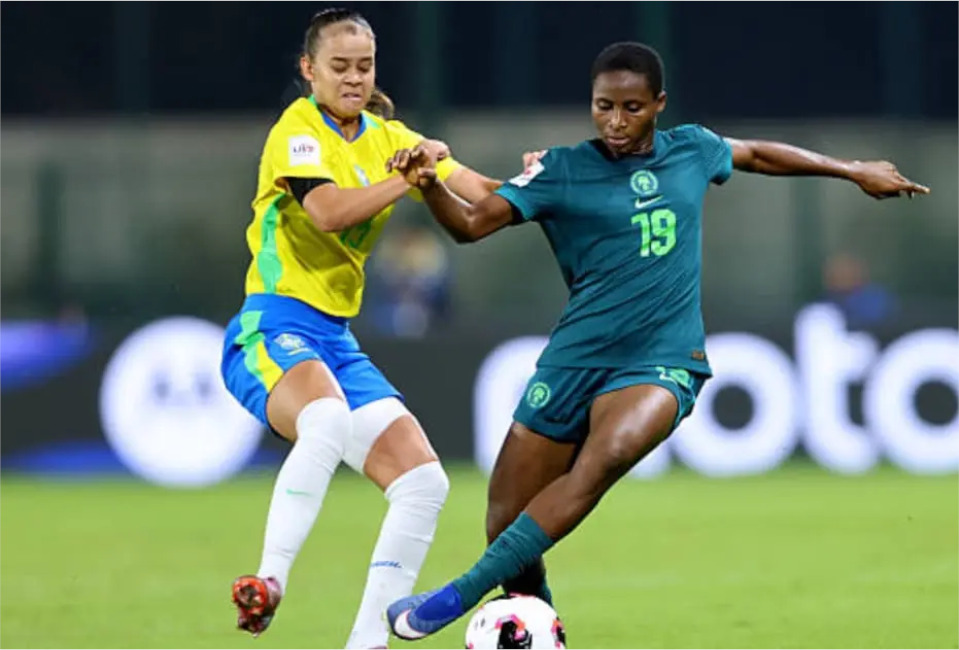
Nigeria advanced into the final of the Under-17 Women’s World Cup for the first time ever as the Flamingos defeated Brazil 3-1 in the semi-final on Wednesday night.
Queen Joseph opened scoring before Awawu Bashiru’s brace sealed the impressive win.
Joseph slotted home from four yards to put Akeem Busari’s side ahead, and the lead was doubled at the 71th minute as Bashiru lofted a cross that sailed over the goalkeeper into the net.
She sealed the win with a well-placed finish at the near post to send Nigerian fans and officials into jubilation.
Brazil’s consolation goal came 89 minutes from Greise Kelly.
All goals were scored in the first half.
Nigerians jubilated a first-ever win against the South Americans as they reached the final in Morocco. It is the first time an African nation will reach the final of the tournament, and Nigeria is set to break its bronze medal feat of 2022.
The fixtures show Nigeria will play Japan who defeated favourites Korea DPR in the other semi-final.
The final match will take place on Saturday, November 7.


From 2 Tax Evading Firms: EFCC Recovers, Hands Over $3m, N1.3bn Revenue to RMAFC
Spread the loveBy Seyi Balogun, Lagos The Economic and Financial Crimes Commission, EFCC, Lagos Zonal Directorate 2, has recovered from Aiteo...

2027: I Will Step Down For Atiku, Obi Or Any Consensus Candidate, Duke Declares
Spread the loveBy Felix Umande The presidential candidate of the Peoples Redemption Party (PRP), Donald Duke, has declared his readiness...


NFF Suspends 2 Refs: Regular Ref Edu, Improved Match Assessment, Accountability, Stressed
Spread the loveBy Nick Ibe, Abuja For cancelling a ‘validly scored goal’, the NFF Refereeing Development Committee has sanctioned the...

On World Toilet Day: FG Says Less than 36% of Nigerians Have Access to Toilets
Spread the loveBy Lazarus Oko Less than 36 per cent of Nigerians have access to improved toilet facilities, raising concerns...

‘Christian persecution in Nigeria’ Takes Front Burner in US Congressional Hearing November 12
Spread the loveBy Son Tertsea, Abuja With the view to ascertaining Nigeria’s efforts to protect Christians and tackle insecurity in...


In Defiance to Shettima’s Call: Benue APC forms ‘Strategic Alliance’ With other Political Parties
Spread the loveBy Felix Umande The Benue APC has formed the Strategic Alliance for Tinubu/Shettima 2027 with other political parties...
182 Special Legislative Seats For Women Welcomed: But Numbers Not Enough
Spread the loveBy Our Reporters Nigerians across professional and gender lines hold divergent views on the National Assembly’s proposed 182...

Massive Voter Registration Fraud: INEC Deletes 1.6m Records, To Prosecute Staff
Spread the loveBy Isa Abdul, Abuja The Independent National Electoral Commission (INEC) has, during its records assessment discovered widespread irregularities...

Nigeria and France: Only 2 Countries to Have Won both Men’s, Women’s U-17 World Cups
Spread the loveNigeria and France have emerged as the only two countries to have won both the men’s and women’s...

“I told Tinubu I’m too Old to be a Minister, but I Will Help in the Background” – Tunde Bakare
Spread the loveBy Seyi Balogun, Lagos The Leader of Citadel Global Community Church, Pastor Tunde Bakare, has advanced reasons why...