
Sports
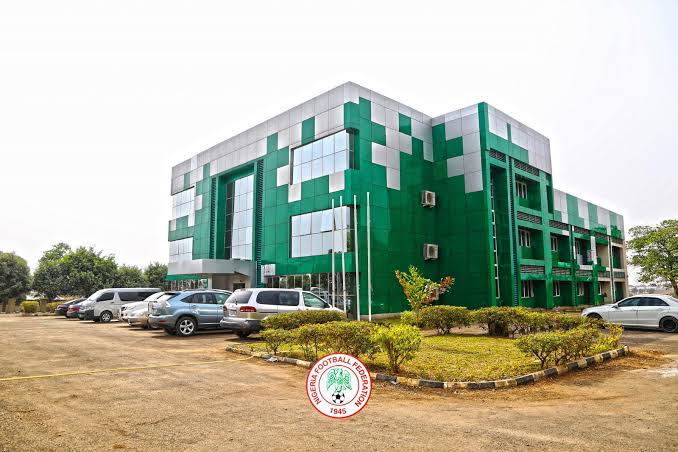
Nigerian Football Undergoes Surgical Operation: ‘NORMALISATION COMMITTEE’ Takes Charge 3 Months

–As FIFA backs NFF Sept elections’ cancellation
By Nick Ibe, Abuja
With the Ibrahim Gusau-led administration of Nigerian Football Federation, NFF, recording unpardonable failures since taking office, and one of the most painful being Nigeria’s failure to qualify for the 2026 FIFA World Cup. The failure was despite Nigeria having a large pool of established players and an expanded African allocation for the 2026 World Cup.
The Super Falcons’ elimination from the African playoff for the 2027 World Cup by the Banyana Banyana of South Africa, in Morocco,
the corruption among other ills associated with football administration forced the National Sports Commission to act, to redeem the game in Nigeria.
The National Sports Commission’s (NSC) immediate step was to cancell the Nigeria Football Federation (NFF) electoral congress, which was scheduled to hold on September 27 in Lafia, Nasarawa State, to pave the way for a thorough reorganisation of the federation.
This move has severely jolted the Ibrahim Gusau-led executive committee, which was bidding for a second term in office, having taken the mantle four years ago.
In the interim, the NSC is set to name a “normalisation committee” to run the nation’s football affairs for three months.
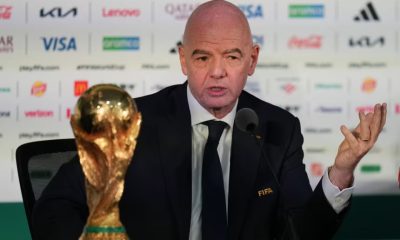
The NSC was said to have got the permission of the World Football governing body (FIFA) after it assured the embattled President Gianni Infantino of Nigeria’s support in his re-election bid.
The NSC is said to have also reached out to the president of the Confederation of African Football (CAF), Patrice Motsepe.
With Gusau off the line, the NSC’s initial move to allegedly bring in the former President of the NFF, Amaju Pinnick, was said to be rejected by the Presidency.
Reports indicated that the Presidency has given the NSC the approval to announce the normalisation committee within 48 hours. It was not clear who the NSC will finally pick to head the committee.
The normalisation committee, which will be in charge of the nation’s football for three months, is expected to prepare the ground for a new NFF election, including taking care of the grey areas many stakeholders including, Chief Segun Odegbami, had complained about.





Sports
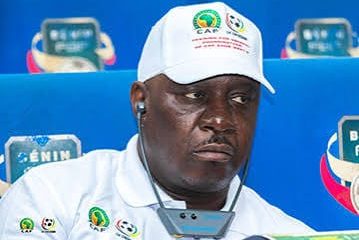
Nigerian Diplomat, Akpenpuun, Appointed CAF’s Coordinator for 2026 WAFU-B U-17 AFCON Qualifiers
By Son Tertsea, Abuja
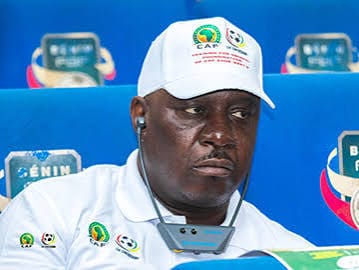
The Confederation of African Football (CAF) has appointed a retired Nigerian elite football referee and diplomat, Mr. Robert Terlumun Akpenpuun, as the Assistant General Coordinator for the 2026 West African Football Union (WAFU) Zone B U-17 Africa Cup of Nations (AFCON) qualifiers in Ouagadougou, Burkina Faso.
The tournament which is scheduled to run from October 10 to 23, 2026, is aimed at bringing together the region’s top young football talents to compete for qualification to the U-17 AFCON.
Akpenpuun’s appointment by the Confederation of African Football (CAF) was confirmed in a letter of September 30, 2026, signed by the Executive Director of WAFU Zone B, Philip Tchere. It partly read:
“We have the pleasure to inform you that you have been designated as Assistant General Coordinator for the WAFU-B U-17 AFCON Qualifiers 2026, to be held from October 10th to 23rd in Ouagadougou, Burkina Faso.”
Akpenpuun, an Assistant Comptroller of Immigration, is a prominent figure in Nigerian football administration. He previously served as a protocol officer and a member of the Nigeria Football Federation (NFF) Protocol Committee. Since 2023, he has been deployed on a strategic foreign mission, serving as the Immigration Attaché at the Nigerian Embassy in Abidjan, Côte d’Ivoire.
This appointment marks another recognition of his extensive experience and ongoing contributions to football administration and competition organisation within the African football community.
In his role as Assistant General Coordinator, he will work closely with CAF and WAFU-B officials to ensure the seamless coordination and successful delivery of the qualifying tournament in Ouagadougou.
Foreign
Spain’s Royal Spanish Football Federation (RFEF) Pioneers Egg-freezing and In-vitro Fertilization (IVF) for Female Soccer Players and Referees.
By Son Tertsegha, Abuja
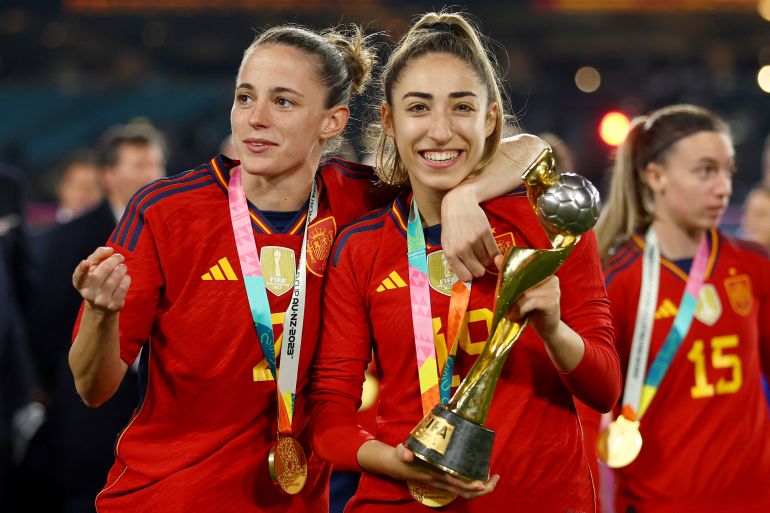
Spain’s Royal Spanish Football Federation (RFEF) has introduced bearing the full costs for Egg-freezing and In-vitro Fertilization (IVF) for Female Soccer Players and Referees. The policy covers international players who have received at least two national team call-ups.
The programme runs through an official partnership with the Tambre fertility clinic and is secured through 2029.
Beyond egg vitrification, the agreement provides access to various family planning treatments and complements existing rules allowing players to have children nearby during training camps and tournaments.
The policy takes bearing from the advocacy efforts of star players like Alexia Putellas and Patri Guijarro who heavily campaigned for the initiative, noting that an elite athlete’s peak biological fertility years directly overlap with their peak professional playing years.
According to reports, the goal is to achieve Work-Life Balance designed to ensure that female athletes do not feel forced to choose between starting a family and pursuing a professional career at the highest level.
By Nick Ibe
Nigeria has agreed an $8.5m-a-year equipment deal that the Nigeria Football Federation says is the biggest in African football. The deal will also end its 11-year association with Nike and return to adidas.
Former NFF president, Ibrahim Gusau, who resigned along with the federation’s executive committee on Thursday, disclosed the agreement at a news conference in Abuja, saying adidas will pay the federation $4.5m annually in cash and provide another $4m worth of equipment for Nigeria’s national teams.
The NFF will also receive a 20 per cent royalty on merchandise sales, a clause that could push the value of the agreement well beyond the guaranteed $8.5m annual figure.
Gusau said the contract has already been signed, though it was originally scheduled to be announced in September. He said:
“It is about the highest kit sponsorship in Africa. No other country in Africa has that kind of sponsorship.
“Adidas will pay Nigeria $4.5 million every year in cash and then they will provide kit worth $4 million every year.”
The package becomes the largest kit-supply agreement for an African national football federation, if beating Morocco’s deal with Puma, reportedly valued at $1.7m, previously the highest publicly known figure on the continent.
Nigeria’s outgoing Nike contract signed since 2015, had become grossly inadequate for the federation’s needs argued Gusau:
“As (former) president, I cannot gift someone a jersey because we met a contract that has been running for 11 years on the same terms worth $500,000 in cash and $1 million in kit supply. $500,000 in 2015 and still $500,000 in 2026. It is like you have nothing.”
Nigeria was to first sign with Nike in April 2015 due to its earlier adidas deal being cancelled over breaches during the 2014 World Cup.
Gusau said the limitations of the Nike arrangement had proven so inadequate that the federation had resorted to buying additional kits for its teams, including Nigeria’s U-20 women’s team for the World Cup in Poland.
“We have to buy jerseys for the girls that travelled to Poland because $1 million worth of equipment cannot even service Super Eagles qualifiers for World Cup and Nations Cup as well as Super Falcons,” he said.
Due to the insufficiency, the federation began pushing Nike for improved terms in 2024 but could not reach an agreement, prompting it to solicit competing offers, with Nike retaining a contractual right to match the best proposal. Gusau added:
“Finally, they agreed that we could negotiate with others. At the end of the day we contacted adidas and other kit sponsors and we were able to secure a substantial agreement with adidas. Nike has to match whatever we were offered. They were unable to match the offer from adidas and that is why we are moving on.”
Adidas previously supplied Nigeria’s 1994 Africa Cup of Nations kits and its first World Cup appearance that same year, and again from 2004 to 2014, a period that included the Super Eagles’ 2013 Africa Cup of Nations title.
Nike’s return in 2015 produced some of Nigeria’s most recognisable kits, including the widely celebrated 2018 World Cup jersey.
Adidas has a larger retail footprint in Nigeria, with about 13 stores compared to Nike’s one, and it plans to expand to 32 stores within two years. This was another factor behind the switch.

Nigeria @66: CAN Tells FG to Let Economic reforms Reach Every Nigerian Home
Spread the loveBy Nick Ibe, Abuja The Federal Government has been urged to ensure the country’s economic recovery translates into...

Nigerian Diplomat, Akpenpuun, Appointed CAF’s Coordinator for 2026 WAFU-B U-17 AFCON Qualifiers
Spread the loveBy Son Tertsea, Abuja The Confederation of African Football (CAF) has appointed a retired Nigerian elite football referee...

2027: APM Presidential Candidate, Makinde, Appoints Amos Dunia as Special Adviser, Public AffairsBy Saint Mugaga
Spread the loveThe Presidential Candidate of the Allied Peoples Movement (APM) and Oyo State Governor, Engr. Seyi Makinde, has appointed...

Pilot Attempts “Suicide Crash” With Israel-bound Plane: Overpowered by Passengers
Spread the loveBy Son Tertsea, Abuja An Israel-bound plane co-pilot attacked the pilot midair, in what is believed to be...


School Surprises Man, 98, With Diploma 80 Years after Dropping Out
Spread the lovePaul Little received his diploma from Dallas Center High School in Grimes, Iowa, more than 80 years after...


Education Ministry Introduces QR-Ranking, Approves 2026–2028 Textbooks
Spread the loveBy Nick Ibe, Abuja QR-based ranking codes have been introduced by the Federal ministry of Education to strengthen...

Press Iccon Independence Day celebrations
Spread the loveAll of us at Press Icon Media Ltd wish you, esteemed advertisers, friends, associates, well-wishers, readers and the...
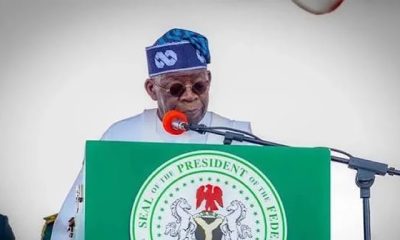

Independence Day: Tinubu Declares End Of Emergency Reforms, Says Nigeria Now Entering Age Of Prosperity
Spread the loveBy Felix Umande President Bola Ahmed Tinubu has declared that Nigeria has passed the phase of emergency economic...
FROM REFORM TO PROSPERITY: INDEPENDENCE DAY ADDRESS TO THE NATION BY HIS EXCELLENCY, PRESIDENT BOLA AHMED TINUBU, GCFR, 1ST OCTOBER 2026
Spread the loveMy fellow Nigerians, Sixty-six years ago today, our flag was raised, for the first time, over a free...


Nigeria @66: Akpabio celebrates Nigerians’ resilience; urges love, unity, belief in the country’s futureBy Saint Mugaga
Spread the lovePresident of the Senate and Chairman of the National Assembly, Senator Godswill Obot Akpabio, GCON has congratulated Nigerians...