
Foreign
Khamenei: Regime Declares That It Wants To Destroy Israel & Is Investing Millions On Proxies” Kelman

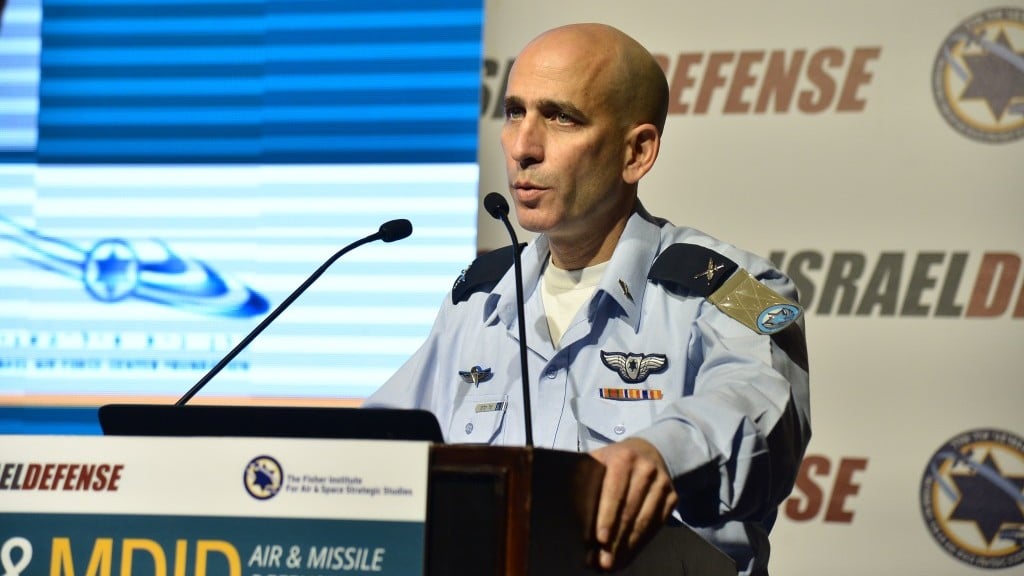
Retired Israeli Air Force Major General Tal Kelman delivered a stark assessment of Iran’s priorities, stating that the regime in Tehran is “investing millions of dollars not on its people but on its proxy forces and on its ballistic missile capability.” The comments came during an interview with the Jerusalem Post’s Defense and Tech podcast, where Kelman drew on nearly 40 years of military experience to analyze regional threats.
Kelman, who served as head of the J5 strategic planning and cooperation directorate in the IDF general staff, emphasized that the fundamental problem facing Israel and the West is not merely Iran’s nuclear program or missile capabilities, but the nature of the regime itself. “The core problem is the very extreme fundamentalist regime that now controls Iran,” he explained, noting that he has been consistent in this assessment throughout his years dealing with Iranian threats.
The retired general pointed out that Israel maintained relationships with Iran until 1979, and stressed that there is no inherent conflict with the Iranian people. “I think actually with a different regime there can be amazing cooperation and relationships between Israel and Iran,” Kelman said, highlighting the potential for both countries as advanced nations in technology and industry.
However, the current regime’s actions speak louder than its declarations. “It’s not only declarations, it’s also actions that it wants to destroy Israel,” Kelman stated, emphasizing the regime’s dedication to funding proxy forces across the region rather than improving conditions for Iranian citizens.
Kelman outlined what he believes should be the international strategy moving forward: “We need to find ways to weaken, restrain this regime and basically improve the conditions for in the future a regime change.” He acknowledged that achieving regime change would be extraordinarily difficult, noting that Iran’s Islamic Revolutionary Guard Corps (IRGC) comprises two million people and serves as the strongest organization in the country, effectively preventing any organized opposition from rising.
The major general expressed skepticism that military force alone could topple the Iranian regime, but suggested it might influence the Iranian population. “At the end of the day, it needs to happen from within,” he said, while admitting he’s not sure such change will happen in the near future.
Despite this uncertainty, Kelman maintained that regime change remains “the most important thing that needs to happen to have a positive Middle East.” He described the current regional situation as cards thrown in the air, with the potential to fall into either a similar configuration as before October 7th or create an entirely new Middle East—if Israel, in close coordination with the United States, plays its cards correctly…. see More








—Govt says items illegally exported to USA
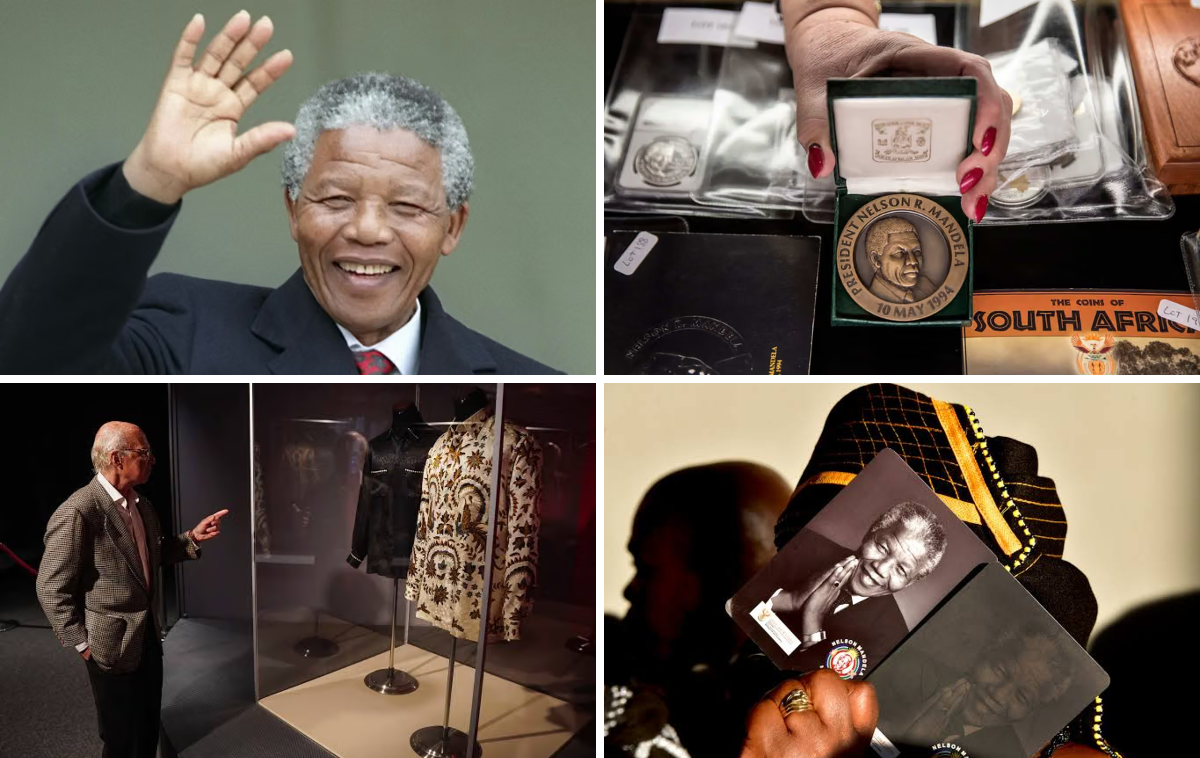
South Africa has returned to its Constitutional Court in a renewed attempt to stop the auction in the United States of 29 personal items once belonging to Nelson Mandela, escalating a four-year legal battle over whether the memorabilia should be treated as private property or protected national heritage.
South Africa makes fresh bid to block $1.35 million auction of Nelson Mandela’s belongings after 4-year legal battle.
South Africa has approached its Constitutional Court to try to stop the US auction of 29 items once owned by Nelson Mandela.
The contested items include Mandela’s prison key, identity card, glasses, and shirts, spanning significant periods of his life.
Mandela’s daughter, Makaziwe Mandela, and a former prison warder own the items and have authorized the sale to fund a memorial garden.
South African authorities argue the items should be protected under national heritage laws.
The South African Heritage Resources Agency (SAHRA) and the Department of Sport, Arts and Culture argue that the objects form part of South Africa’s national heritage and were exported without the required permission.
The latest legal challenge follows earlier rulings by South African courts that cleared the way for the auction.
The collection includes Mandela’s identity card, shirts, writings, hearing aids, glasses and a key to his prison cell on Robben Island, where he spent 18 of his 27 years in prison.
The items therefore span some of the most significant periods of Mandela’s life, from his imprisonment under apartheid to his emergence as South Africa’s first democratically elected president.
The question is, are these Mandela family property or national heritage?
The objects are not all owned by the South African state.
According to the BBC, the items in the collection belong to Mandela’s eldest daughter, Makaziwe Mandela, and Christo Brand, a former Robben Island prison warder who developed a close relationship with Mandela during his incarceration.
South African authorities argue the items should be protected under national heritage laws.
Makaziwe authorised the proposed sale, with proceeds intended to finance a memorial garden near her father’s grave in Qunu, in South Africa’s Eastern Cape.
Reports confirm that the sale was authorised by Mandela’s eldest daughter to raise funds for the memorial project.
The dispute began after SAHRA discovered the potential auction in a British newspaper report in late 2021. The report said the collection could include Mandela’s prison key, which was expected to fetch more than £1 million, or about $1.35 million at the time, according to the BBC.
New York-based auction house Guernsey’s subsequently announced plans for the sale. SAHRA challenged the auction, arguing that the items could not legally be exported because of their cultural and historical significance. The auction was suspended while the legal dispute moved through South Africa’s courts.
The legal argument rests partly on South Africa’s National Heritage Resources Act, which allows objects to receive heritage protection because of their association with political processes, events, figures and leaders in the country.
The judgement
But a Pretoria High Court judgment raised questions about how broadly that definition could be applied.
The contested items include Mandela’s prison key, identity card, glasses, and shirts, spanning significant periods of his life.
Writing in The Conversation, Dr Duane Jethro, a senior lecturer in African Studies, noted that the court found SAHRA’s proposed interpretation potentially so broad that almost anything Mandela had touched or been associated with could theoretically qualify as a heritage object.
The court questioned why ordinary items associated with Mandela should automatically receive heritage protection while other objects, including the large number of Springbok rugby jerseys and political clothing Mandela signed during his public life, would not necessarily receive the same status.
It also indicated that objects would need to possess an extraordinary quality or a high degree of national significance to qualify for registration as heritage objects.
That reasoning is particularly significant because many of the disputed objects are ordinary personal possessions rather than unique state artefacts. Items such as Mandela’s reading glasses and hearing aids may have enormous symbolic value because they belonged to him, but the court was required to determine whether that association alone was enough to give them legal heritage status.
Meanwhile, Dr Nelson Mandela’s home has been abandoned and deteriorating.
The courts have consequently been asked to navigate a difficult line between the rights of private owners to dispose of inherited possessions and the state’s responsibility to preserve objects that embody South Africa’s political history.
The latest Constitutional Court application comes after the auction was first announced in 2021 and subsequent court proceedings cleared the sale. The government is now making another attempt to prevent the 29 objects from being auctioned in the United States.
For South Africa, the case is about more than the financial value of Mandela memorabilia. It raises a broader question over who controls the physical legacy of one of Africa’s most consequential political figures — his family, private collectors or the state on behalf of the public.
Mandela, who became South Africa’s first democratic president in 1994, died in 2013 at the age of 95. The Constitutional Court’s latest intervention could determine whether these personal objects remain available for private sale or become protected as part of the country’s national heritage.
Foreign
Spain’s Royal Spanish Football Federation (RFEF) Pioneers Egg-freezing and In-vitro Fertilization (IVF) for Female Soccer Players and Referees.

By Son Tertsegha, Abuja
Spain’s Royal Spanish Football Federation (RFEF) has introduced bearing the full costs for Egg-freezing and In-vitro Fertilization (IVF) for Female Soccer Players and Referees. The policy covers international players who have received at least two national team call-ups.
The programme runs through an official partnership with the Tambre fertility clinic and is secured through 2029.
Beyond egg vitrification, the agreement provides access to various family planning treatments and complements existing rules allowing players to have children nearby during training camps and tournaments.
The policy takes bearing from the advocacy efforts of star players like Alexia Putellas and Patri Guijarro who heavily campaigned for the initiative, noting that an elite athlete’s peak biological fertility years directly overlap with their peak professional playing years.
According to reports, the goal is to achieve Work-Life Balance designed to ensure that female athletes do not feel forced to choose between starting a family and pursuing a professional career at the highest level.
Hannah Ellis-Petersen and Gaurav Pokharel in Kathmandu
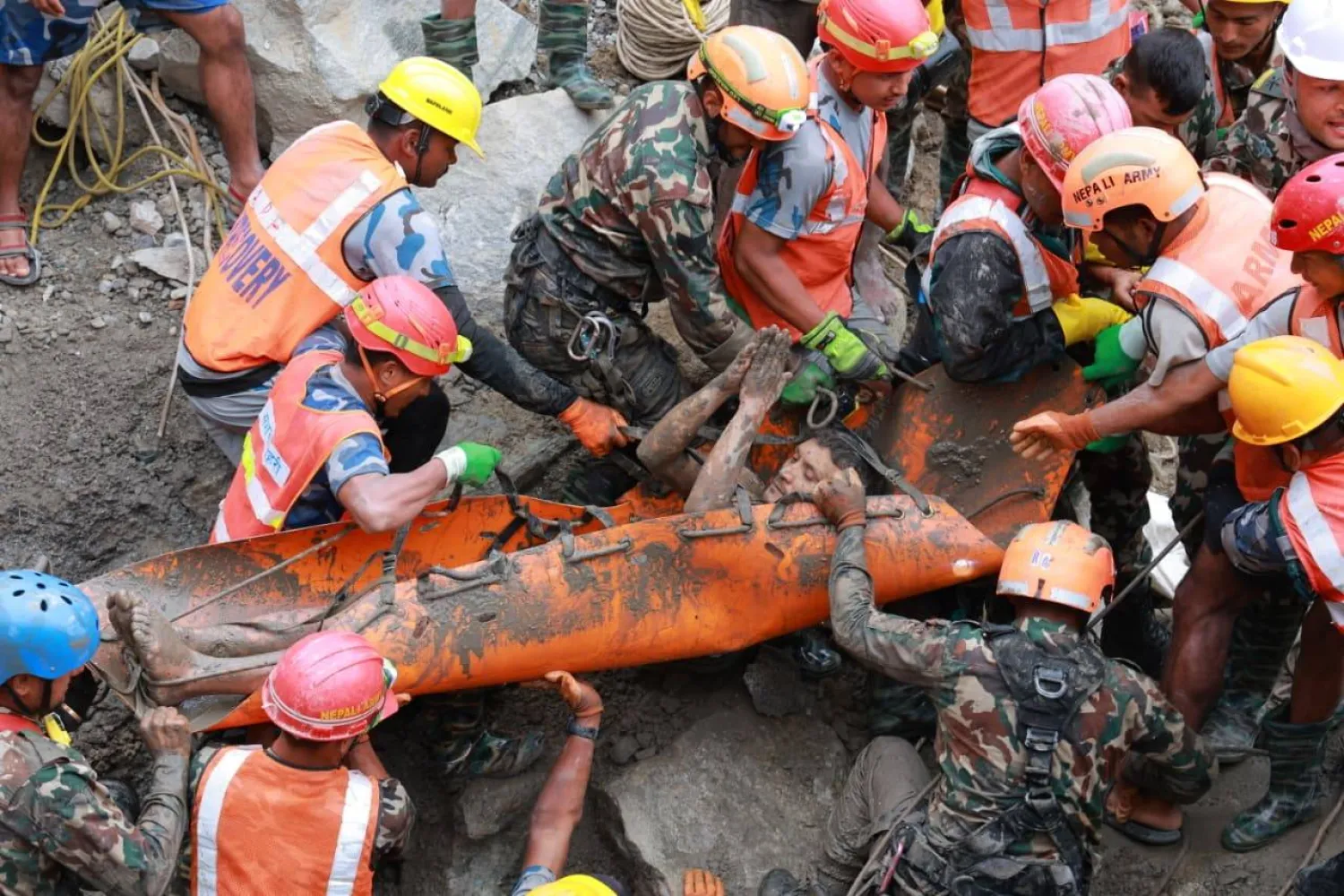
Two people have been pulled out alive from a hydropower tunnel in Nepal nine days after deadly flash floods buried the projects in deep mud and left them trapped.
The workers were rescued during an operation at the Trishuli 3A tunnel, a hydropower project in one of the areas worst affected by last week’s floods, according to the army spokesperson Brig Gen Raja Ram Basnet.
Sanjay Shah, a foreman, was the first to be rescued and was taken to the army barracks in Trishuli. Another person, identified as Kabir Maharjan, a project supervisor, was also pulled from the tunnel. They were recovered from a depth of 170 metres (558ft) inside the tunnel, Basnet said.
A senior police official confirmed that a body had also been found during the rescue operation, which has yet to be identified. By Friday afternoon, police confirmed they had halted the search as they had found no more signs of life.
After the flood: human suffering on an unfathomable scale in Nepal’s worst-hit districts
Nepal’s army released images of Shah being pulled from the small dark entrance of a tunnel. He emerged covered in mud but conscious and was carried from the site on a rescuer’s shoulder.
Speaking to army officials after he was rescued, Shah’s first question was: “What day is it?”
Shah said he had been in the tunnel’s control room at the time of the flood, alongside about 40 to 45 others. “Since I was in the control room, my responsibility was to save everyone’s lives,” he said. “After such an accident, I couldn’t just run away by myself. I had to save everyone.”
He said that after realising there had been a major accident, he raced through the tunnel telling people to run and save themselves. “In doing so, I lost time. In the end, I couldn’t get out myself,” he said.
To keep himself calm in the darkness of the tunnel, Shah said he spent his time chanting mantras. He said that while trapped, he had heard the voices of three or four others.
“We were communicating by shouting to each other from nearby. There could also be people inside the powerhouse. Some of them may not have been able to escape,” he said.
Officials said the two men had been flown to a hospital in Kathmandu. Shah was said to be stable but Maharjan was in a critical condition and had been transferred to intensive care.
Hirashova Maharjan, Kabir’s wife, said he had been in shock at first and was not talking, but had since said “a few words”. She said he had an injury to his leg and was extremely jaundiced.
“He did not even recognise me initially. He only said: ‘Where am I? What happened to me?’ He did not say anything else,” she said. “He is better now. He said he wanted some water, so I gave him water. Then I asked him if he recognised me, and he said yes. He nodded his head.”
“We had almost lost hope,” she said, adding that when she saw the photos of him being pulled from the tunnel, “I was so happy that I cried.”
Most of the hydropower projects along the Bhotekoshi and Trishuli rivers were destroyed when a surge of water, debris and mud came coursing down the valley last week, triggered by the collapse of a melting glacier on the border between Nepal and China-controlled Tibet.
At least 1,287 people were killed in the floods and more than 5,000 remain missing, according to Nepal’s disaster management agency.
‘Everyone seems to have forgotten’: In Tibet, flood-hit families search for the missing and grapple with China’s silence
Rescue efforts have increasingly centred on the hydropower tunnels, where authorities believe workers may have survived for more than a week in air pockets. So far, more than 270 people have been rescued across several projects.
Large boulders and flood waters had deluged the hydropower tunnels, blocking off the entrances, and some were buried deep in mud. At the Upper Trishuli 3A facility, it took rescue workers almost six days to find the tunnels.
Speaking over the phone from the rescue site, Amrit Thapa, deputy superintendent of the armed police force, who is part of the seven-person search and rescue team, said they had managed to crawl the length of the tunnel looking for survivors.
They were accompanied by a team from the Nepal army.
“The team crawled through areas for about 10 to 15 metres and reached the main section,” said Thapa. “When we went to the final point, we found a body on the remaining upper level.”
Thapa said that “except for two sections, the entire tunnel was filled with debris. After checking everything, we did not hear any further voices. We also searched the entire powerhouse area, but so far, nothing else has been found.”
Army and specialist teams have been working round the clock to try to clear debris from the tunnel entrance. At least 550 workers are missing from the hydropower project along the Trishuli River, according to the Independent Power Producers’ Association of Nepal.
In total, local authorities estimate about 900 workers are missing from 12 hydropower projects high up in the Himalayas, with about 500 believed to be trapped in tunnels.
Rescue efforts have also focused on Rasuwagadhi hydropower plant, where Nepali authorities said they were confident that 46 workers trapped in an underground chamber in the plant were still alive.



Mother Subjects Daughter to Abuse, Admits: “I made $300 from my 8-yr-old daughter’s pornographic video’
Spread the loveBy Nick Ibe The viral video on the social media involving an 8-year old girl whose ordeal was...


Lawyer Assaulted by Police: NBA Gboko Branch Secures N500 Million General and Exemplary Damages in Makurdi Court
Spread the loveBy Our Reporter In the pursuit of justice for a colleague, B. B. Iliamkondo, Esq., who was recently...


Alia Denounces Ayilamo Attack, Commiserated With Victims as DSS Arrests 3 Suspects
Spread the loveBy Felix Umande Governor Hyacinth Alia of Benue State has strongly condemned the deadly attack on Ayilamo Community...


Nigerians Lose Savings to Another Ponzi Scheme: PXES
Spread the loveBy Our Reporter Nigerians who invested millions of naira in an online investment platform known as PXES are...

PDP Accuses Alia Of Diversionary Tactics, Questions Benue’s Use OF FAAC Funds
Spread the love–Ortom’s Media Aid Says Gov’t Silent on Revenue, IDPs as Focus Shifts to 2027 Campaigns By Felix Umande...

Alia Condemns Ayilamo Attack, Commiserates With Victims, As DSS Arrests 3 Suspects
Spread the loveBy Felix Umande Governor Hyacinth Alia of Benue State has strongly condemned the deadly attack on Ayilamo Community...

FG, States, Be warned We Will Strike, Without Warning –ASUU
Spread the loveBy Nick Ibe, Abuja Without urgently resolving all the pending salary and welfare issues, by the Federal Government...
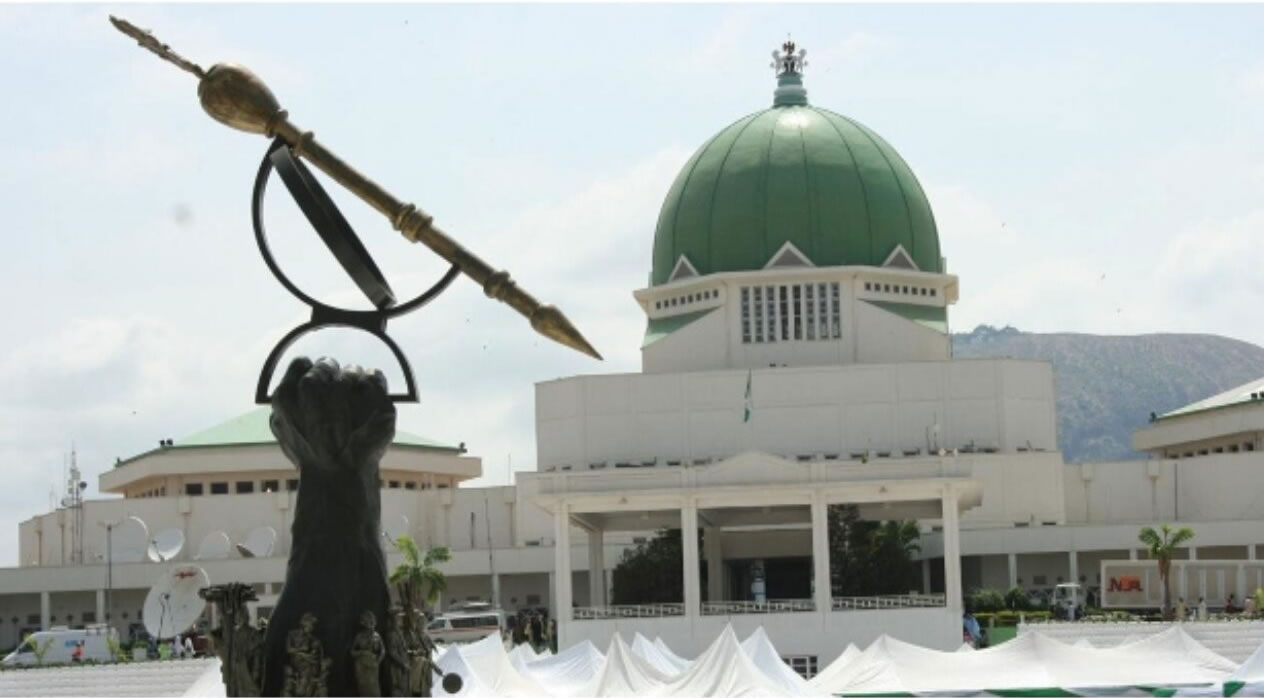
Protest Against Xenophobia: NASS Orders Boycott of South African Organised, Hosted Legislative activities
Spread the love–Calls on State Assemblies to join By Isa Abdul, Abuja In a bold move against South Africa’s xenophobic...


Why Education is Dear to Me – By Peter Obi
Spread the loveAfter returning to Abuja on 8th September 2026, following our visits to Benue and Plateau States, I travelled...

After Two Decades: FG Pays 2,700 ex-Nigeria Airways Staff N18bn
Spread the loveBy Son Tertsegha, Abuja Over two decades after the national carrier, Nigeria Airways, was liquidated, the Federal Government...