
Article
Washington’s Plan to Neutralize Iran’s Hormuz Leverage

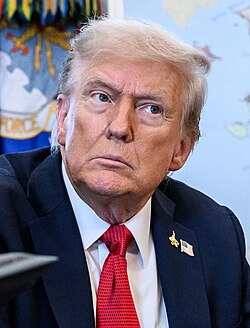
The U.S. and its allies are accelerating pipelines, export terminals, and overland trade corridors to reduce global dependence on the Strait of Hormuz and weaken Iran’s ability to disrupt oil markets.
Key projects include expanded Saudi and UAE pipeline capacity, new Iraqi export routes to Turkey and Syria, and the fast-tracked India–Middle East–Europe Economic Corridor (IMEC), designed to bypass Hormuz.
Washington is also seeking to diversify global oil supplies by boosting production across the Americas, aiming to ensure future Hormuz disruptions have a far smaller impact on energy markets and oil prices.
Kuwait oil industry
For decades, Iran has relied on the Strait of Hormuz as its most effective geopolitical weapon — a crucial energy chokepoint through which up to a third of the world’s oil is transported and about a fifth of its liquefied natural gas (LNG). Tehran’s immediate blockade of the transit route at the onset of the 28 February U.S./Israeli joint military operation against Iran prompted a cessation of maritime traffic through the chokepoint, catalysing a spike in oil prices of over 70%. The prospect of such a blockade continuing into the U.S.’s 3 November Mid-Term Elections was the decisive factor behind President Donald Trump’s willingness to forge a peace deal, at least in the short term. This is because there is a direct link between the oil price, the price of gasoline, U.S. economic growth, and the success of incumbent presidents and their parties in elections, as fully analysed in my latest book on the new global oil market order.
Understandably, according to several senior energy security sources in London, Brussels, and Washington, exclusively spoken to by OilPrice.com over the past few days, moves are afoot to reshape the regional energy map to ensure that Iran’s Hormuz threat becomes increasingly ineffective in the coming years. So, what exactly is going on right now?
Trump is fully in favour of medium- and long-term methods to circumvent the effectively Iran-controlled Strait of Hormuz, particularly given the relative ineffectiveness of the short-term measures available once Tehran’s blockade was in place. The ‘Southern Highway’ corridor that hugged the coast of Oman and was actively backed by U.S. and Gulf allies proved slightly more effective at reducing market panic than it was at restoring the number of oil tankers in transit. During peak operations early in the blockade, the corridor allowed roughly a dozen vessels per weekend to transit, rising to around 119 ships by late June — still a long way off the historical 700 weekly transits normal for the waterway. Similarly taking the edge off market panic but still representing a fraction of what was required over the medium- and long-term to keep oil prices from spiralling, were the land-based routes for trucks carrying oil through Iraq and Syria. Iraq’s case is instructive, as it managed to move around 500 trucks on average a day into Syria at the height of the blockade, with each one carrying around 250 barrels of crude oil — totalling 125,000 barrels per day (bpd). That compared to the previous 3.3-3.4 million bpd it moved through the Strait of Hormuz before the blockade.
More significant options were also used alongside these makeshift measures, with one being the capacity expansion of Saudi Arabia’s East-West Pipeline (1,200 km long, moving crude from eastern oil fields across the Arabian Peninsula to the Red Sea port of Yanbu) to 7 million bpd for a while. However, Yanbu’s marine terminal and domestic refining create a bottleneck, capping actual export throughput at around 4.5 million bpd. Another option was the UAE’s Habshan-Fujairah Pipeline (360 km long, linking Abu Dhabi’s fields directly to the port of Fujairah on the Gulf of Oman), which has seen capacity increase to its maximum level of 1.8 million bpd.
At the same time, further support came from increased oil supply from the U.S. and other countries, massive releases of barrels from the strategic petroleum reserves of International Energy Agency member countries, and a massive, multi-year oil supply surplus that acted as critical energy buffers to broader economic fallout when the blockade of the Strait of Hormuz hit. That said, going into the crisis, the U.S. oil industry was already pumping at absolute record highs, providing a vital supply baseline of 13.6 million bpd.
Despite calls from Trump for this figure to be ramped up, big independent producers and majors are maintaining pre-war capital expenditure plans, with many having stated that they are already running close to full capacity. However, increased flows from countries Washington regards as being in its ‘Americas sphere of influence’ — notably Venezuela, Argentina, and Brazil — are intended to form part of the long-term workaround for the dominance of the Strait of Hormuz in world oil flows.
Venezuela remains at the top of the U.S.’s list for resuscitation of its potentially huge oil sector, with Argentina and Brazil not far behind and already producing significant increases in barrels, as analysed in full recently by OilPrice.com.
The Americas hemisphere already accounts for 32% of global crude production, and U.S. Assistant Secretary of State for Economic, Energy, and Business Affairs, Caleb Orr, highlighted recently that Ecuador and El Salvador are also among the governments Washington works with “hand in glove” on security. He added that security is the “table stakes” for any productive economic relationship and the foundation of the broad-based change in the Americas.
That said, this is only one part of the solution to the bypassing of the Strait of Hormuz puzzle currently being worked on by Washington and its allies, including those in the Middle East. The first phase of these efforts looks to bypass up to 50% of the normal 20-21 million bpd oil flow going through the Strait using existing overland corridors and fast-tracked construction. The UAE, for example, is already fast-tracking a second parallel pipeline to Fujairah, which should double its bypass capacity to over 3 million bpd, with completion brought forward to 2027.
A similar U.S.-inspired idea is to enable Iraq to bypass the Strait by pumping more northern oil through the Kirkuk-Ceyhan pipeline to Turkey’s Mediterranean coast, with capacity here recently reactivated to handle 170,000-250,000 bpd. Progress has been halted by a failure to reach an agreement with Turkey, as also detailed recently by OilPrice.com, but given how geopolitically important it is to the U.S. and its allies, the impasse looks unlikely to persist too much longer, according to a senior source who works closely with the European Union’s (E.U.) energy security complex. Other pipelines running through Iraq and into Syria, Jordan, or Oman are also under discussion, the source adds.
Just last week, Iraq’s Foreign Minister, Fuad Hussein, met with Syrian President Ahmad Al-Sharaa in Damascus to advance plans for expanding cooperation on energy infrastructure, including the project to rehabilitate the 800-kilometre pipeline from Iraq’s Kirkuk to the Syrian port of Banias, which has a historical design capacity of 300,000 bpd. Last month, Iraqi Prime Minister Ali Al-Zaidi and U.S.
Special Presidential Envoy Tom Barrack advanced a memorandum of understanding with U.S.-based investment firm TI Capital to fund and project-manage the pipeline’s reconstruction. In parallel with this, the U.S. and its allies are also fast-tracking the huge Basra-Haditha Pipeline, as detailed in my latest book on the new global oil market order. This US$5 billion, 700-km internal pipeline would run from the southern oil fields of Iraq up to Haditha and would have a capacity of 2.25-2.5 million bpd.
When finished, it would allow Iraq to pump its enormous southern oil reserves directly to the north and into Europe or Syria, completely bypassing the Strait of Hormuz.
Perhaps the single-most strategically important component of the U.S.-led effort to reduce dependence on the Strait of Hormuz is the long-planned but now dynamically expedited India-Middle East-Europe Economic Corridor (IMEC). Originally launched at the 2023 G20 Summit but stalled by regional conflict, the project has been turbocharged by the Strait of Hormuz blockade, with planners now estimating that it could eventually divert around 60% of container traffic that currently risks transiting Hormuz. Its architecture is built around two integrated corridors: an eastern maritime leg linking India’s western ports to the Arabian Gulf, and a northern overland rail network running through Saudi Arabia and Jordan to Israel’s Port of Haifa, from where short?sea shipping connects directly to Europe.
Crucially, the 2026 wartime redesign anchors the eastern maritime leg in Oman rather than the UAE, allowing ships from India to unload entirely outside the Strait of Hormuz before transferring cargo onto the Arabian Peninsula rail grid.
Additional ‘IMEC Plus’ nodes through Egypt and Syria are under discussion to create a wider lattice of land-based alternatives, while new legal frameworks — including the India-EU free trade agreement and the U.S. Senate’s Eastern Mediterranean Gateway Act — have formally designated Greece as Europe’s entry hub, according to the E.U. source. This positions IMEC as a central pillar of the broader strategy to bypass Hormuz and permanently reduce Iran’s ability to weaponise the chokepoint.
These measures demonstrate that Washington and its allies are no longer relying on short-term crisis management but are instead building a permanent, multi-route architecture that makes any future blockade far less economically damaging. Iran will retain the ability to disrupt regional shipping, but its leverage over global oil flows is being structurally eroded with every kilometre of new pipeline, port expansion, and corridor redesign. The long-term objective is clear: ensure that the next Hormuz crisis does not become a global one.
By Simon Watkins for Oilprice.com






By Celphas Iyorhen
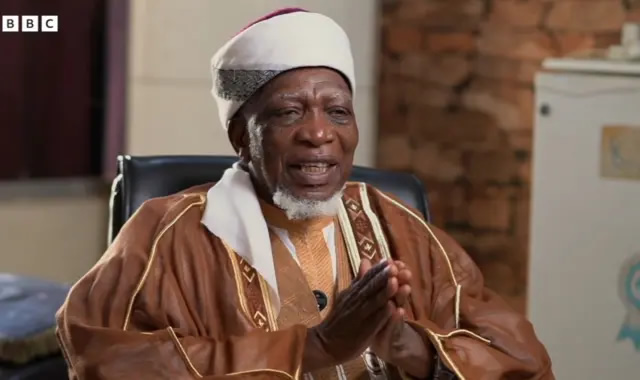
The National Human Rights Commission wants Sheikh Sani Yahaya Jingir arrested for hate speech. It sounds decisive. It sounds like justice is stirring. But when you place that call against the full and documented weight of what Christians in Nigeria have endured under this government, not just from Jingir, but from a parade of voices that have faced zero consequence, the NHRC’s intervention reads less like protection and more like performance. Nigerians deserve honesty, not acting.
Let us begin from the foundation. Before Jingir opened his mouth, the architecture of Christian marginalisation had already been constructed brick by brick. When President Bola Ahmed Tinubu chose a Muslim running mate, Sheikh Ibrahim Aliyu Kaduna had already issued a public threat: pick a Christian running mate and lose Muslim votes. Whether that threat directly shaped Tinubu’s choice is a matter for political analysts. What is not in dispute is that the then candidate, having observed the contempt, the nepotism and the imbalance that defined Buhari’s presidency, found no moral discomfort in replicating the same deviltry. The victims of that era were still counting their dead when the new government arrived in the same morally objectionable appearance.
Then came Professor Ishaq Akintola of MURIC. When the Christian Association of Nigeria raised objections to the Muslim-Muslim ticket, Akintola stepped forward not to address the legitimate constitutional grievance, but to lecture Christians on ingratitude. The framing was chilling in its honesty: appointments given to non-Muslims were not rights, they were favours. By that logic, Christians are guests in their own country, tolerated when convenient and reminded of their second-class status when they complain. The president watched this without a word. Silence, at that level and in that context, is not neutrality. It is endorsement.
In January 2026, the same Akintola wrote an open letter to former Vice President Atiku Abubakar arguing that Nigeria’s structure since colonial days had been built along Christian cultural lines and that this needed to change. Read that carefully. The executive director of a prominent Muslim rights organisation was publicly agitating for a reconfiguration of Nigeria along the lines of an Islamic state, ignoring the rest of the people they consistently referred to as “infidels”. The presidency was not stirred. The NHRC was not alarmed. No arrest was called for.
The Supreme Council for Shari’ah in Nigeria, under Abdurrasheed Hadiyyatullah, went further, criticising the government for appointing Christians at all in what they described as a Muslim administration. This was not whispered in a corner. It was a public declaration that Christian Nigerians have no rightful place in the leadership of their own country. Once again, no consequences followed.
Nasir El-Rufai, whose tenure as Kaduna governor saw Southern Kaduna Christians slaughtered with impunity, spent a significant portion of his post-government life deriding, mocking and bullying Christians in public. The state tolerated him. He only got himself into detention when he turned his aggression toward President Tinubu himself and threatened to remove him from power in 2027. The lesson wrote itself in plain language: in Nigeria today, you may torment Christians without consequence, but the moment you threaten the Jagaban’s mandate, the system moves against you. That is not a government protecting citizens. That is a government protecting itself.
Sheikh Ahmed Gumi has spent years using television stations and social media platforms to justify terrorism and bully its victims simultaneously. He walks free. He speaks freely. He appears freely. He was not important when he was serving in Nigerian military but he is now adore as a man in charge of terrorism.
When the Tor Tiv, Professor James Ayatse, stood before President Tinubu after the Yelewata massacre and described with clarity the horror being visited upon Benue State communities, the president heard him. He has heard similar accounts from concerned citizens, from traditional rulers, from the Council of Bishops of Nigeria who sat across from him and told him the truth about what is happening to Christians in this country. The bishops did not go there to flatter him. They went there with documented evidence of a people being killed, displaced and occupied. The president’s visible displeasure at their presentation, followed by attacks on the bishops from voices within the presidency, tells you everything you need to know about where this administration stands.
This is the government the NHRC is now calling upon to arrest Sheikh Jingir.
The Commission speaks of monitoring inflammatory statements, of working with security agencies, of ensuring the 2027 elections are free from hate. These are fine words. But a commission that stayed quiet while MURIC rebranded Christian citizenship as a privilege, while Shari’ah councils demanded a purely Muslim government, while Gumi provided theological cover for terrorists, has lost the people’s trust and credible standing to now perform urgency over Jingir. The selectivity is itself a statement, and that statement is “a joke”.
Christians in Nigeria are not facing a hate speech problem. They are facing a structural, sustained and largely unpunished campaign of elimination, displacement and humiliation, backed by silence from the highest office in the land. Jingir’s words are a symptom. The disease is a presidency that has made its peace with the suffering of its Christian citizens.
Calling for his arrest without confronting that reality is not advocacy. It is noise. And the victims deserve far better than noise.
Celphas Iyorhen
A Concerned Citizen from the Middle-Belt.
THE NHRC’S CALL TO ARREST SHEIKH JINGIR IS AN INSULT TO THE INTELLIGENCE OF THE VICTIMS
Wednesday, 12th August, 2026
The National Human Rights Commission wants Sheikh Sani Yahaya Jingir arrested for hate speech. It sounds decisive. It sounds like justice is stirring. But when you place that call against the full and documented weight of what Christians in Nigeria have endured under this government, not just from Jingir, but from a parade of voices that have faced zero consequence, the NHRC’s intervention reads less like protection and more like performance. Nigerians deserve honesty, not acting.
Let us begin from the foundation. Before Jingir opened his mouth, the architecture of Christian marginalisation had already been constructed brick by brick. When President Bola Ahmed Tinubu chose a Muslim running mate, Sheikh Ibrahim Aliyu Kaduna had already issued a public threat: pick a Christian running mate and lose Muslim votes. Whether that threat directly shaped Tinubu’s choice is a matter for political analysts. What is not in dispute is that the then candidate, having observed the contempt, the nepotism and the imbalance that defined Buhari’s presidency, found no moral discomfort in replicating the same deviltry. The victims of that era were still counting their dead when the new government arrived in the same morally objectionable appearance.
Then came Professor Ishaq Akintola of MURIC. When the Christian Association of Nigeria raised objections to the Muslim-Muslim ticket, Akintola stepped forward not to address the legitimate constitutional grievance, but to lecture Christians on ingratitude. The framing was chilling in its honesty: appointments given to non-Muslims were not rights, they were favours. By that logic, Christians are guests in their own country, tolerated when convenient and reminded of their second-class status when they complain. The president watched this without a word. Silence, at that level and in that context, is not neutrality. It is endorsement.
In January 2026, the same Akintola wrote an open letter to former Vice President Atiku Abubakar arguing that Nigeria’s structure since colonial days had been built along Christian cultural lines and that this needed to change. Read that carefully. The executive director of a prominent Muslim rights organisation was publicly agitating for a reconfiguration of Nigeria along the lines of an Islamic state, ignoring the rest of the people they consistently referred to as “infidels”. The presidency was not stirred. The NHRC was not alarmed. No arrest was called for.
The Supreme Council for Shari’ah in Nigeria, under Abdurrasheed Hadiyyatullah, went further, criticising the government for appointing Christians at all in what they described as a Muslim administration. This was not whispered in a corner. It was a public declaration that Christian Nigerians have no rightful place in the leadership of their own country. Once again, no consequences followed.
Nasir El-Rufai, whose tenure as Kaduna governor saw Southern Kaduna Christians slaughtered with impunity, spent a significant portion of his post-government life deriding, mocking and bullying Christians in public. The state tolerated him. He only got himself into detention when he turned his aggression toward President Tinubu himself and threatened to remove him from power in 2027. The lesson wrote itself in plain language: in Nigeria today, you may torment Christians without consequence, but the moment you threaten the Jagaban’s mandate, the system moves against you. That is not a government protecting citizens. That is a government protecting itself.
Sheikh Ahmed Gumi has spent years using television stations and social media platforms to justify terrorism and bully its victims simultaneously. He walks free. He speaks freely. He appears freely. He was not important when he was serving in Nigerian military but he is now adore as a man in charge of terrorism.
When the Tor Tiv, Professor James Ayatse, stood before President Tinubu after the Yelewata massacre and described with clarity the horror being visited upon Benue State communities, the president heard him. He has heard similar accounts from concerned citizens, from traditional rulers, from the Council of Bishops of Nigeria who sat across from him and told him the truth about what is happening to Christians in this country. The bishops did not go there to flatter him. They went there with documented evidence of a people being killed, displaced and occupied. The president’s visible displeasure at their presentation, followed by attacks on the bishops from voices within the presidency, tells you everything you need to know about where this administration stands.
This is the government the NHRC is now calling upon to arrest Sheikh Jingir.
The Commission speaks of monitoring inflammatory statements, of working with security agencies, of ensuring the 2027 elections are free from hate. These are fine words. But a commission that stayed quiet while MURIC rebranded Christian citizenship as a privilege, while Shari’ah councils demanded a purely Muslim government, while Gumi provided theological cover for terrorists, has lost the people’s trust and credible standing to now perform urgency over Jingir. The selectivity is itself a statement, and that statement is “a joke”.
Christians in Nigeria are not facing a hate speech problem. They are facing a structural, sustained and largely unpunished campaign of elimination, displacement and humiliation, backed by silence from the highest office in the land. Jingir’s words are a symptom. The disease is a presidency that has made its peace with the suffering of its Christian citizens.
Calling for his arrest without confronting that reality is not advocacy. It is noise. And the victims deserve far better than noise.
Article
I Stand With the Catholic Bishops’ Conference of Nigeria (CBCN) on their Pastoral Visit to the President of the Federal Republic of Nigeria
By Timothy Dokpesi AdidiDear Church Fathers,
You have once again rekindled the hope of the Church. I am writing this open letter to you as a member of the Catholic community in Nigeria and a product of the Church. I am writing this letter not out of sentiment (although it will be interpreted as such) but out of a burning desire to put in perspective what the Catholic Church stands for. Your visit to President Bola Ahmed Tinubu of the Federal Republic of Nigeria was not necessarily political, as understood and misinterpreted. The joy of this visit lay in the collegial dimension it took on. It really brought out the beauty of the Catholic Church as known in the era of the Church Fathers through the ages. Your voice represented the old long saying, ‘Roma locuta est, causa finita est’ (Rome has spoken and the case is finished). A saying that comes from an early fifth-century sermon by Saint Augustine of Hippo, who stated, “The two councils sent their decrees to the Apostolic See, and the decrees quickly came back. The cause is finished.”
Your Excellencies, the visit was indeed timely and necessary. It reflects the unity and oneness of the Catholic Church. This was quite different from the usual ‘one-man squad,’ which sometimes confuses the true nature and identity of the Catholic Church. The visit you had definitely puts an end to the difference between when one speaks from the church and for the church. Your voice has changed the narrative in the nation’s political landscape, and these changes have given the Church a ray of hope in the current economic realities that confront the poor. Your Excellencies, you have also brought to the limelight the Catholic Social Teachings (CSTs). It has become very obvious that the CSTs are not theoretical; they are alive and impactful.
More so, in this regard, you have also reiterated and unraveled the concept of the Church as the Family of God, which was famously highlighted and formally adopted as the guiding pastoral image for the Church in Africa during the “Special Assembly for Africa of the Synod of Bishops” in 1994 and subsequently promulgated by Pope John Paul II in his post-synodal apostolic exhortation, “Ecclesia in Africa” (1995). As the President of the CBCN, Most Rev. Dr. Matthew Man-Oso Ndagoso was reading the mind of the Church; I truly see what the Catholic Church represents.
The Church is known to be non-partisan. This nonpartisan dimension of the Church is indifferent to the realities that characterize the membership of political parties that reside in the Catholic community.
The Catholic Church represents the true Body of Christ but does not belong to any political party. Hence, it underscores the fact that it is this nature of the Catholic Church that gives it the prerogative to speak truth to power. Your Excellencies, you indeed spoke truth to power. It reminds me of the draconian days of Sani Abacha when the likes of Bishop Matthew Hassan Kukah (then Fr. Kukah) and Fr. George Ehusani spoke truth to power as they constantly used the Catholic Secretariat to engage the military government.
Your Excellencies, you have done what you ought to do, and the world has seen your significant effort in calling a spade a spade. Your message defied any form of diplomacy and corporate negotiation. It was firm and without fear of intimidation. The gleaming red buttons and the red colors on your cassock reflect your acceptance of the consequences of your position you were ready to take. You were ready to die for the sake of the truth. You were ready to become martyrs for the sake of the members of the Catholic community and all of Christendom, knowing full well that the blood of martyrs is the seed of Christianity. You took the risk to surrender your lives like the Good Shepherd who laid down His life. This you have done for Nigeria and Nigerians. It is also important to know that you have done this not for the Catholic community alone; you have added your voice to liberate Nigerians and Africa by extension. You have set the path for economic recovery.
It is indeed worthwhile to know that the Prophetic mission of the faith is very much alive. Again, you have re-echoed the true understanding of prophecy in Ancient Israel. Your prophetic voice stands out against the misunderstanding of Biblical prophecy. A prophet is not a soothsayer, nor is he a prognosticator, neither is he person who forecast the future. A prophet is a mouth piece of God; he is one who addresses the socio-economic and political condition of his time and addresses the ill; thereby warning the leaders to do what is right or else face the wrath of God. You have issued a warning to the leaders of our time. May they take heed and let no one lead them astray.
On this note, I commit myself to the fidelity of the faith as seen in the Catholic Social Teachings and as deposited in the authority of your mission as Fathers of the Faith. In so doing, I renew my baptismal promises to align with the Faith that was handed over to you through the apostles. May your faith in the teachings that were handed down to you through the Apostles be constantly renewed and reinvigorated.
By Timothy Dokpesi Adidi, PhD
Article
Media Expo, Backlash From Soccer Governing Bodies: Is this the Road to Infantino’s Tragic End?
By Son Tertsegha, Abuja
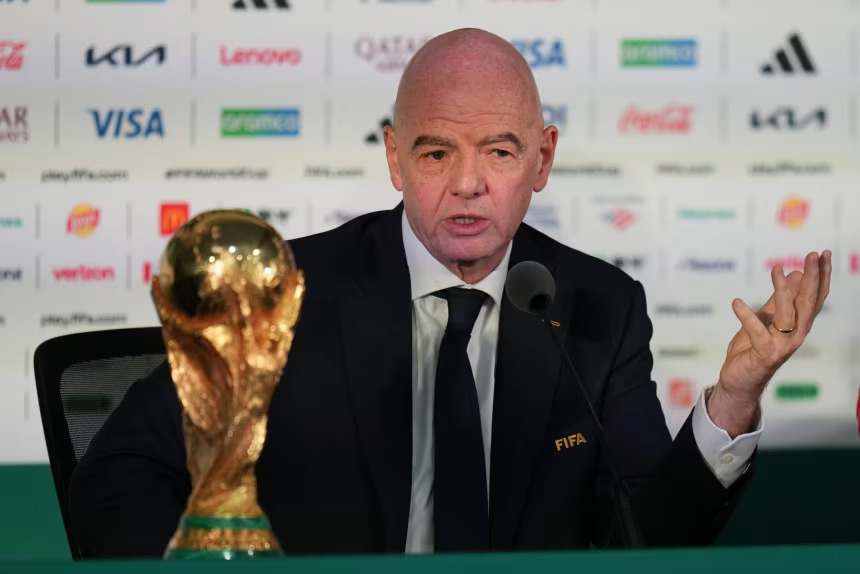
FIFA, world soccer’s governing body, and the man at its helm, Infantino, yet to revel in the euphoria of the successful, unprecedented dollar haul from the 2026 world cup, launched a controversial idea called FIFA Forward Enterprise, or FFE, that would have changed world cup history and financing: allowing billions of dollars in private commercial investment in the game.
But the predictable turn of dangerous signals from soccer bodies against his plans, FIFA President, Gianni Infantino, caved in. He reversed himself with the statement Friday evening that:
“Having listened carefully to all the views, it has become clear that the project has created divisions of a nature that, regardless of the level of support, are no longer in the interest of the objective set out in the first place.”
First to spill the beans earlier last week, was the British newspaper, The Times, which exposed the secret FIFA Forward Enterprise, or FFE, deal under which FIFA would have created a commercial rights and event operations company, 20% of which was to be sold to private investors with FIFA retaining ownership of 80%
The next pain in FIFA’s, precisely Infantino’s, neck was the prompt, fierce opposition from UEFA’s reaction, calling the proposal “irresponsible and indefensible.” It stated further that:
“The World Cup cannot be treated as an investment product,” stressing, “It is one of football’s greatest sporting legacies,” and that “the World Cup is not for sale.”
Coming out next was North America’s soccer governing body, the 41-member Confederation of North, Central American and Caribbean Association Football (CONCACAF) which rejected the plan, questioning “the need for private equity investment to fund new and existing FIFA Forward programs following the most profitable FIFA World Cup in history.”
CONCACAF, however, stopped short of making a boycott threat.
Then, on Friday, the Asian Football Confederation followed without clearly rejecting the plan, only to say that it stood “in solidarity with UEFA and CONCACAF in expressing serious concerns over FIFA’s proposal to introduce private investment into FIFA’s flagship competitions and the decision-making process around FFE.”
Further harm was to come on Friday, when Carlos Cordeiro, one of Infantino’s senior advisers, threw in the towel, saying in a statement that he could not “stand by while FIFA considers selling a stake in the World Cup.”
But Infantino’s defence that “The FIFA Forward Enterprise project was intended to provide a basis for further strengthening our FIFA Member Associations and our sport worldwide, especially in those countries where support is most needed,” in the morning of Friday, fell flat with Cordeiro’s resignation in the day.
Consequently, Infantino had to entirely drop the idea in the evening of the same day.
Intriguingly, the FFE saga has the image of President Trump and his son-in -law’s Kushner family looming large in the dark.
For different reasons, Infantino has reportedly received “mounting criticism in recent months over his close relationship with Mr. Trump leading up to the 2026 World Cup, which the U.S. hosted with Mexico and Canada. Last year, Infantino awarded Mr. Trump the inaugural FIFA Peace Prize.”
Earlier last month, during the World Cup tournament, the soccer world exchanged Mr. Trump said he pressed Infantino to review the red card that was given to U.S. striker Folarin Balogun during a knockout game against Bosnia and Herzegovina. Under FIFA rules, the red card required that Balogun be suspended for the team’s next match against Belgium.
“All I did, I asked for a review because I didn’t think it was a foul,” Mr. Trump said at the time. “… If they wouldn’t allow, you know, a top player, maybe the best, maybe among the best players on the team, I think it would have had a big stain. And I related, just that, I didn’t tell him what to do, I can’t tell him what to do.”
Curiously, in an unprecedented move, FIFA overturned Balogun’s suspension one day before the Belgium match, and without a detailed explanation.
FIFA confirmed in an earlier statement that Thrive Eternal, a venture spearheaded by Joshua Kushner, the brother of President Trump’s son-in-law Jared Kushner, was “expected to lead the proposed investor group.” Thrive Eternal is a subsidiary of Thrive Capital, an investment firm owned by Joshua Kushner.
FIFA had estimated that under the deal, the 211 member associations of FIFA would see their so-called FIFA Forward Funding rise from $8 million per four-year cycle to approximately $20 million.
Last week Tuesday, a source close to Thrive Capital told CBS News that criticism of the firm’s involvement was unjustified.
“I think the first assumption is that Trump was involved in FFE in any capacity, which is just not accurate,” the source told CBS News. “Josh himself does not have any links with the administration, he does not have any political roles, he has not donated to them, he is not involved in any capacity. If you look at his donation record, all of the causes he has donated to are Democrat … it’s kind of unfair to assume a lot about somebody just because of what their brother does.”
Asked by reporters during a Cabinet meeting Friday if FIFA officials or Infantino had spoken to him about Infantino’s plan, Mr. Trump responded, “No, I never spoke to him.”
Meanwhile, FFE has created “no confidence” votes against a once top pride of the football world. Now, global soccer administrators and governing bodies are up in arms, not only against Infantino’s FFE, but against the man himself.


100 Days To 2027 Polls: INEC Vows Neutrality, Says BVAS, Ballots Ready
Spread the loveBy Felix Umande The Independent National Electoral Commission, INEC, has assured Nigerians and the international community of its...

THE LAST TANGO: Tears, Tributes and A Final Goal As Messi Bows Out After 21 Years
Spread the loveBy Felix Umande Emotions ran high at the Estadio Monumental on Tuesday night as Lionel Messi signed off...

Church’s Duty to Empower Individuals, Create Opportunities and Improve Family’s Economic Well-being
Spread the loveBy Seyi Balogun, Lagos The need for the Church’s commitment to empowering its members through employment opportunities, entrepreneurship...

Taraba Explores ADR for Sustainable Peace Between Crop, Livestock Farmers
Spread the loveBy Michael Lim Conflict prevention between livestock farmers and host communities in Taraba State through the promotion of...

Financial Inclusion: Kwara Buys Dangote Refinery Shares For Female Teachers
Spread the loveBy Michael Lim Kwara State Government has announced plans to buy shares in the Dangote Refinery Initial Public...

Benue Govt Gives 2-Week Ultimatum To Owners Of Illegal Billboards, Threatens Mass Removal
Spread the loveBy Felix Umande The Benue State Government has decried the arbitrary erection of billboards across the state by...


INEC Tracking Illegal Campaign Spending
Spread the love–Tells Editors: “remain primary filter against information disorder.” By Son Tertsea, Abuja The Independent National Electoral Commission (INEC)...

Importers, Petroleum Marketers Kick Against Dangote’s Restriction of Petrol Sales
Spread the loveBy Seyi Balogun Major marketers have kicked against Dangote Petroleum Refinery’s non sale of Premium Motor Spirit (petrol)...

Jim Ovia Counsels: Nigeria must not Sacrifice Quality for Quantity in Tertiary Education
Spread the loveBy Seyi Balogun, Lagos Nigeria must not allow the size and the number of universities to come at...

Unidentified, Mutilated Corpse of Man Found Behind Pankshin Market in Plateau
Spread the loveBy Michael Lim, Jos On Tuesday morning, the corpse of an unidentified man was found behind the Monday...