
General News
House quizzes NBET boss over N4.09bn revenue


By Saint Mugaga
The House of Representatives on Thursday quizzed the acting Managing Director of the Nigerian Bulk Electricity Trading (NBET) Plc, Mr. Johnson Akinowo over the utilisation of N4.099 billion accrued from regulatory incomes in 2025 fiscal year.
Chairman, House Committee on Finance, Hon. Abiodun James Faleke who spoke in Abuja during the 2025 budget performance, expressed grave concern over series of expenditures incurred by the Company including the sums of: N377.031 million spent on welfare packages out of N377.658 million approved budget; Other expenses worth N76.939 million out of N78.838 million approved budget; among others.
Other lawmakers who spoke during the review of the 2025 budget performance, demanded explanation on the directive issued by the Chief of Staff to the President, banning overseas travels, N470.122 million spent on international travels and transport: training out of N479.845 million approved budget.
According to the documents submitted to the Committee, NBET also spent the sums of N111.804 million on management/staff/board retreat; N71.379 million on board sitting/Directors allowance; NN36.313 million on professional fees; N48.779 million on conferences, seminar and exhibition; N31.858 million on refreshment and meals; N9.713 million on cleaning and fumigation expenses; N60.231 million on maintenance of office/IT equipment; N68.552 billion on office stationeries/computer consumables; N65.530 million on Local travel and transport -others and additional sum of N79.103 million on Local travel and transport: training, as well as N1.780 billion spent on personne cost, among others.
The lawmakers also expressed concern over the non-declaration of revenue generated in December 2025 in the document submitted to the Committee.
While responding to allegation bothering on the ban on international travel, he said: “yes, we are very aware of it and as a corporate responsible organization, we are guided by all the stipulations of that directive.
“So, every and all travels that you see that was funded there had either an SGF or Head of Service approval. For instance, at an MD/CE, if I am going to travel, I require that SGF approval…
“I’ll give you an example. For the World Bank Spring Meeting, in relation to the Partial Risk Guarantee of the Federal Government of Nigeria that Embed manages, they meagre the insurance and of the World Bank during the Spring Meetings, require our presence to provide clarification and to engage on their portfolio in Nigeria.”
While noting that he was part of Federal Ministry of Finance delegation, he maintained that other MDAs under the Ministry incmuding Debt Management Office, Bank of Industry (BOI), Central Bank of Nigeria (CBN), among others were part of the “critical parties that can speak to the items in details when they come and defend Nigeria’s position.”
Mr. Akinowo explained that out of total sum of N855 billion approved by the National Assembly for power reform programme, Federal Government released the sum of N60 million.
He however noted that becUse of the time the money was released, the Agency could not complete the procurement process, hence the N60 million remain unutilized till date.
“For the revenues of 2025, regulatory income for participants in the electricity market are provided for them to run their operations. And I listed the agencies, that was why I tried to give that introductory background when I was speaking to the revenues. They are provided, it is the design of the electricity market that provides the revenue distribution. Distribution companies get two invoices.
“One is for energy and capacity which they pay to embed and embed pays to the GENCOs. The other one is for market administrative charge, which is supposed to cover the operations of the agencies of government that provide the service in the electricity market,” he explained.
According to him, the regulatory agencies include: the regulator, Nigerian Electricity Regulatory Commission (NERC), Transmission Company of Nigeria (TCN), and GENCO of Nigeria to cover wheeling charges for wheeling the electricity as well as Nigerian Independent System Operator, which is comprised of the system operator and the micro operator to cover their operations.
He added that the regulatory revenue to cover their operations now makes them to be excluded from appropriation for the current. So we typically get capital from appropriation while we are supposed to run the operations from the recurrent from the regulatory revenue as approved by NERC, the regulator from time to time.
He explained that, the actual n line with extant rules, NBET funds the capital component of the annual budget from Appropriation Act.
While clarifying issues bothering on non-declaration of revenue accrued in December 2025, the NBET helmsman further explained that: “if you issue an invoice in December and it is not due for payment, if the contract says your invoice is due 25 days after, and that in five days is in January or in February, then that is what it is, because the legislation takes care of it and is captured for transparency.”
While ruling, Hon. Faleke said that the Committee resolved to make omnibus request from NBET, hence demanded for documentary evidences of all the expenditures incurred throughout 2025, as well as approvals and waivers obtained from relevant authorities including the Presidency.
To this end, the Committee resolved to suspend the consideration of the 2026 budget proposal, and adjourned to Tuesday, 10th February, 2026 during which Accountant General of the Federation is expected to appear.
The House Committee also queried the proposed 2026 budget of ₦14.325 billion for the Federal Ministry of Finance, with lawmakers raising concerns over discrepancies in the capital expenditure component during a budget defence session at the National Assembly.
A breakdown of the proposal shows ₦4.5 billion allocated for personnel costs, ₦4.6 billion for overheads, and ₦5.2 billion earmarked for capital projects. However, members of the committee questioned the composition of the capital vote, with Hon. James Faleke specifically demanding clarification over figures he described as inconsistent with standard capital budget projections.
Responding, the Minister of Finance and Coordinating Minister of the Economy Wale Edun explained that the disputed capital figure was captured by the Budget Office and includes debt servicing obligations, which he stressed are not part of the ministry’s regular capital expenditure.
According to the minister, the classification created the appearance of an inflated capital allocation, whereas the bulk relates to statutory debt service entries.
Also speaking at the session, Chairman of the Revenue Mobilization, Allocation and Fiscal Commission (RMAFC), Mohammed Shehu, disclosed that the commission is currently engaging several revenue-generating agencies to resolve long-standing fiscal and remittance issues.
He noted that renewed consultations are already yielding progress, with agencies increasingly approaching the commission to address lingering concerns around revenue accountability and framework compliance.



General News
Reps Tell Airtel, MTN, Glo CEOs: Come and Explain Why Your Poor Network Quality Persists

By Isa Abdul, Abuja
The House of Representatives ad hoc committee probing into poor telecom services has summoned the chief executive officers (CEOs) of major telecommunications companies operating in Nigeria.
The committee issued summons to the companies on Wednesday, requesting the heads of MTN Nigeria, Airtel Nigeria, Globacom (Glo), Mafab Communications Limited, and other service providers to appear before it on Wednesday, October 28, 2026
The panel passed the resolution after lawmakers expressed dissatisfaction with the alleged failure of the chief executives to honour earlier invitations.
Consequently, the committee directed the Nigerian Communications Commission (NCC) to ensure that the CEOs comply with the summons.
Among others, the lawmakers want answers from the service providers why there is persistent decline in service quality that disrupts communication and commercial activities for millions of subscribers and businesses nationwide.
The committee has threatened to issue arrest warrants for any chief executive who fails to voluntarily appear before it.
The committee chairman, Olumide Osoba, pointed out that telecommunications plays a significant role in Nigeria’s economy, noting that the sector has evolved beyond voice calls and internet connectivity to becoming integral to essential commercial transactions, including point-of-sale (POS) payments.
He said businesses, financial services, and other critical economic activities rely heavily on stable telecommunications networks, adding that deteriorating service delivery is a national concern.
Osoba explained further that the committee was set up to probe the barrage of subscriber complaints and uncover the underlying causes of the substandard services.
Ibe Osonwa, an Abia lawmaker, said the CEOs’ failure to appear before the committee shows disregard for parliament.
Osonwa said companies that benefit significantly from the Nigerian market could not reasonably ignore invitations from the legislature, especially when the inquiry concerns the quality of services they provide to customers and the broader economy.
By Shu’aibu Leman
Last Wednesday, October 21,2026, I wrote about Dele Giwa, the legendary Nigerian journalist murdered by a parcel bomb in October 1986. I had hoped that, nearly four decades later, Nigeria had moved beyond the era when journalists were threatened for daring to speak truth to power. Sadly, the reported ordeal of a young journalist in Kaduna suggests that the struggle for freedom of expression remains far from over.
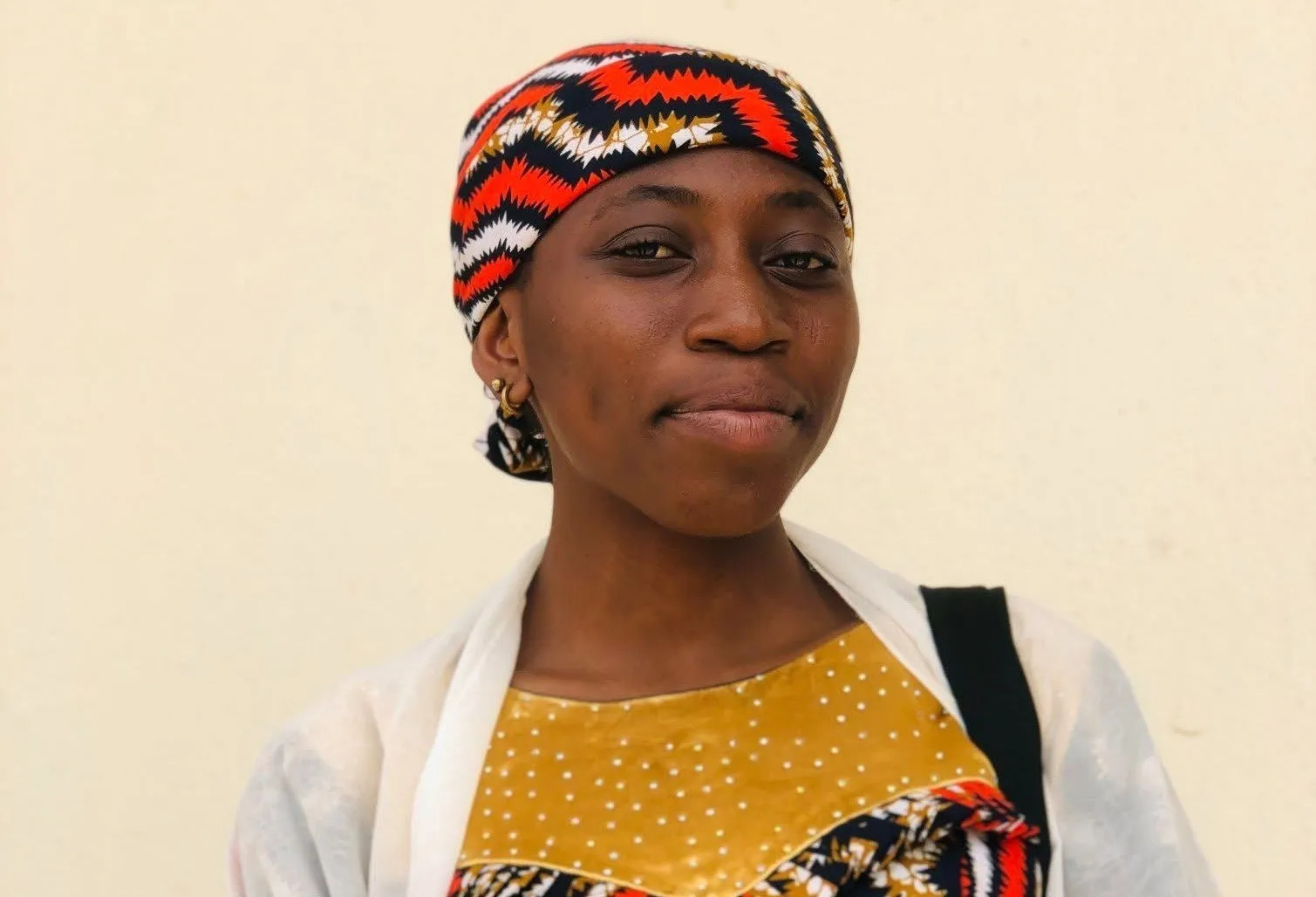
On Tuesday, October 20, 2026, the reported ordeal of 23-year-old Farida Isiak, a reporter with Nagarta Radio in Kaduna, brought this concern into sharp focus.
According to reports, the matter began with a dispute involving ₦100 change from a charcoal sale between her mother and a neighbour. Her mother was reportedly arrested, and when her father went to secure her bail, he too was detained. Their reported detention allegedly compelled Farida to present herself at the police station.
She was subsequently accused of defaming the police in a Facebook post criticising the reported treatment of her parents. Although she reportedly deleted the post and apologised, she remained in detention. She was later taken before a court in Kawo and reportedly sentenced to four years’ imprisonment or a fine of ₦1.75 million for defamation.
The development raised troubling questions about the circumstances surrounding her arrest, the handling of the complaint and the fairness of the judicial process.
Fortunately, the intervention of some lawyers following the summary trial prevented Farida from being taken to a correctional centre to begin serving the reported sentence. She was subsequently granted bail, and the case is scheduled for retrial on November 3.
Her release on bail is a welcome development. However, it does not bring the matter to a close. The forthcoming retrial presents an opportunity for the issues surrounding the initial proceedings to receive proper judicial scrutiny, including the court’s jurisdiction, the fairness of the process and the legal basis for the reported sentence.
The intervention of the lawyers deserves recognition. Yet, we must ask ourselves why a young journalist should have to depend on such intervention to avoid being taken to a correctional centre following a summary trial.
Access to justice should never depend on the availability of a last-minute intervention.
If the reports surrounding Farida’s ordeal are accurate, they raise serious questions about the protection of fundamental rights and the proper exercise of public authority.
Section 39 of the Constitution of the Federal Republic of Nigeria 1999, as amended, guarantees freedom of expression, including the freedom to hold opinions and receive and impart ideas and information without interference, subject to the Constitution.
Section 35 protects personal liberty, while Section 36 guarantees the right to a fair hearing. These protections are fundamental to the administration of justice and the relationship between citizens and public institutions.
The Nigeria Police Act 2020 also contains provisions restricting the arrest of one person in place of another. The precise statutory provision should be considered alongside the facts established in Farida’s case.
These constitutional and legal safeguards are not privileges reserved for journalists, influential individuals or those who can afford expensive legal representation. They exist to protect every Nigerian.
The concerns reportedly raised by Amnesty International about Farida’s case also deserve serious attention.
The late American broadcaster Larry King once observed: “The First Amendment is not for the press; it is for the people.”
That statement captures an important democratic principle. Freedom of expression is not the exclusive privilege of journalists. It belongs to every citizen, the market trader who complains about misconduct, the student who questions wrongdoing, the worker who challenges an injustice and the mother who demands justice for her child.
Journalists do not own this freedom. They help defend it and amplify the voices of those who might otherwise go unheard.
If a young journalist can reportedly face imprisonment after criticising the treatment of her parents, what protection does an ordinary citizen have when confronted with similar circumstances?
This is the question that makes Farida’s case a matter of wider public interest.
Journalists are not above the law. Freedom of expression does not confer immunity from lawful consequences, and allegations of defamation must be addressed through appropriate legal procedures.
However, there is a fundamental distinction between holding someone accountable under the law and using the machinery of law enforcement in a manner that could intimidate citizens or discourage legitimate criticism.
Public institutions must be open to scrutiny. Police officers, like other public officials, exercise authority on behalf of the people and must be prepared to answer legitimate questions about their conduct.
Criticism of public institutions should not automatically be treated as an attack that warrants punitive action. Equally, any allegation of wrongdoing must be investigated fairly, with due regard for the rights of everyone involved.
The authorities must therefore ensure that the circumstances surrounding Farida’s arrest and the reported detention of her parents receive an impartial examination.
I appeal to the Kaduna State Commissioner of Police to ensure that any outstanding questions about the police’s conduct in this matter are investigated fairly and transparently.
I also urge the Chief Judge of Kaduna State to ensure that the judicial process receives appropriate scrutiny within the law, particularly regarding the court’s jurisdiction, the fairness of the initial proceedings and the legal basis for the reported sentence.
The retrial scheduled for November 3 must be approached with the seriousness it deserves. Farida must have a fair opportunity to present her defence, and the proceedings must be conducted impartially, without intimidation or prejudice.
The Nigeria Union of Journalists (NUJ), both at the national level and in Kaduna State, must equally provide Farida with the legal assistance and institutional support she needs throughout the proceedings.
As a former National Secretary of the NUJ, I believe strongly that no young journalist should be left to face such a challenge alone.
The union’s responsibility extends beyond issuing statements whenever journalists are threatened or detained. It must also help ensure that affected members have access to legal representation, institutional support and appropriate professional solidarity.
The legal community, civil society organisations and human rights advocates also have an important role to play. Their intervention in cases such as Farida’s can help ensure that questions of fundamental rights receive the attention they deserve.
Nevertheless, the responsibility to defend freedom of expression does not rest with journalists and lawyers alone. Every Nigerian who believes in justice and accountability has a stake in protecting this fundamental freedom.
Dele Giwa paid the ultimate price in 1986. His murder remains a painful reminder of the dangers journalists can face when their work challenges powerful interests.
Farida’s circumstances are different, and the two cases should not be equated. Yet, both compel us to reflect on the conditions under which journalists can perform their duties without fear and on society’s responsibility to protect the freedom to speak.
Nearly four decades after Giwa’s death, we must ask ourselves: have we learnt enough to protect those who dare to speak out?
We cannot rewrite history, but we can determine what lessons we draw from it.
We must build a society where public institutions welcome accountability, the courts uphold justice, and citizens can express their concerns without fear of unlawful punishment.
Farida’s release on bail is encouraging, but it must not mark the end of public attention to her case. The forthcoming retrial deserves careful scrutiny, and she must be allowed to pursue her defence in accordance with the law.
Protecting Farida is about more than protecting one journalist. It is about defending every Nigerian’s right to question authority, demand accountability and seek justice without fear.
History will judge us not only by the injustices we condemn, but also by the people we choose to defend when their rights are threatened.
If we fail to protect the young journalist today, who will be left to speak for us tomorrow?
Leman is a former National Secretary of Nigeria Union of Journalists- NUJ
General News
An Open Letter To Prof. Isaac Nathaniel Itodo, Vice-Chancellor, Joseph Saawuan Tarkaa University Makurdi (JOSTUM)
Sir,
The persistent increment in acceptance fee, school fees and hostel fee in JOSTUM is no longer an issue we can leave for the current Students’ Union leaders alone. As past students Union leaders and concerned stakeholders, we cannot keep quiet and watch it happen.
With all due respect, VC Sir, records are clear. You met school fees at a maximum of N53,000, but today it is N82,000 and you are pushing it to N150,000. You met acceptance fee at N13,000, moved it to N23,000, and now it is being moved to N50,000. And you are doing this knowing fully well that you have less than a year to complete your tenure as Vice-Chancellor Sir.
Prof Sir, we must ask: What kind of development is this? Is this a sign of a leader who cares about humanity and the poor? To many of us, this looks heartless, exploitative, and a deliberate attempt to kill the dreams of the common man in JOSTUM.
JOSTUM is not like other universities. While other universities may pay N150k as fees, JOSTUM students spend double at Home (off Campus). In JOSTUM, a student buys drinking water , cooking, washing and bathing water daily, pays transport from North Core or South Core to lecture halls daily, off-campus house rent in Ujam community is now like Lagos. How can our students cope with this daily increment?
Sir, since you assumed office, have you discussed how to reduce students’ stress? Have you provided additional students’ buses? Solar lights that used to shine all the times in previous administrations are now on economy under you.
VC Sir, We are not ungrateful. We appreciate your efforts in your own way and we commend your academics transformation and infrastructural strides. But on this fee increment sir, we are no longer appealing or begging we are demanding a total reversal.
We say NO to this increment. WE NO GO GREE
Respectfully,
Comr. Sam AY.
A Concerned Past students Union leader.


Reps Tell Airtel, MTN, Glo CEOs: Come and Explain Why Your Poor Network Quality Persists
Spread the loveBy Isa Abdul, Abuja The House of Representatives ad hoc committee probing into poor telecom services has summoned...

Shettima Tells States: Develop, regulate, Use Your Power For Devt Needs
Spread the loveBy Nick Ibe, Abuja States have been told to look for their power solutions locally by setting up...


Why Investors Shun Nigeria : contract breaches, court delays, ex-parte orders
Spread the loveBy Nick Ibe, Abuja Legal and business leaders have revealed situations that discourage long term investments in Nigeria....

FARIDA ISIAK: Who Will Protect The Young Journalist?
Spread the loveBy Shu’aibu Leman Last Wednesday, October 21,2026, I wrote about Dele Giwa, the legendary Nigerian journalist murdered by...

An Open Letter To Prof. Isaac Nathaniel Itodo, Vice-Chancellor, Joseph Saawuan Tarkaa University Makurdi (JOSTUM)
Spread the loveSir, The persistent increment in acceptance fee, school fees and hostel fee in JOSTUM is no longer an...

US Pressure: Drug Cartels Now Using African Routes to Reach Europe, American Markets
Spread the love–Mexican cartels turning Nigeria into meth hub – US By Nick Ibe, Abuja Mexican drug cartels now under...

STATE POLICE: Benue, Ogun, Delta, Enugu, Others Approve Constitution Amendment As Draft Bill Heads To Justice Ministry
Spread the loveBy Felix Umande The push for state police in Nigeria has gained fresh momentum as Benue, Ogun, Delta,...


Ugbema Roundabout Becoming A Death Trap For Thousands.
Spread the loveBy Felix Umande The current state of Ugbema Roundabout, a major junction in Benue State connecting many neighbouring...

Plateau Indigenous Youths Reject Petition Against DSS, Accuse Fulani Groups of Orchestrating ‘Calumny’ to Halt Security Operations
Spread the loveBy Philip Nyam A coalition of Plateau indigenous youth organisations has defended the Department of State Services (DSS),...


Hope for Patients as Reps Pass Organ, Tissue Transplantation Authority Bill
Spread the loveBy Philip Nyam The House of Representatives at plenary on Wednesday passed through second reading a bill seeking...