
Business and Economy
Ensure transparency, effective deployment of tax resources, NUJ, FCT Chair tells FG


By Saint Mugaga
Chairman of the Nigeria Union of Journalists (NUJ), Federal Capital Territory (FCT) Council, Comrade Grace Ike has called for transparency, accountability, and effective deployment of tax revenues to infrastructure development as part of the sweeping tax reforms under President Bola Ahmed Tinubu.
She spoke at the inaugural distinguished parliamentarian lecture organised by the House of Representatives Press Corps with the theme “navigating tax reforms in Nigeria: Insights on President Bola Ahmed Tinubu’s policies”.
The lecture was delivered by former Speaker of the House of Representatives are Chairman of the National Credit Guarantee Company Limiter Yakubu Dogara.
The NUJ Chairman said the tax reforms represent bold steps toward modernizing Nigeria’s fiscal system, broadening the tax base, and reducing over-dependence on oil revenues.
She said “Tax reform is pivotal to Nigeria’s economic growth, fiscal sustainability, and social development. Under President Bola Tinubu’s leadership, we are witnessing bold steps aimed at modernizing and strengthening our tax system”.
Ike commended the administration’s commitment, emphasizing that the success of the reforms depends on how well revenues are used to improve infrastructure and the quality of life for citizens.
“We must place emphasis on improved infrastructures, urging the government to deploy taxes effectively,” she noted.
The NUJ FCT Chair stressed the need for clear communication of the policies so Nigerians understand their rights and responsibilities.
She said the media has a central role in fostering dialogue and building public trust in the reforms.
“The media must provide accurate, unbiased information and foster public dialogue to build trust in these reforms. Transparency and accountability should guide every stage of implementation to protect the interests of all Nigerians,” she stated.
Ike also urged collaboration among all stakeholders, including lawmakers, the executive, civil society, and the media, to ensure the reforms deliver tangible benefits.
“Our collective goal must be a Nigeria with a robust economy, where tax policies contribute to sustainable development and improved quality of life for every citizen,” she added.
She commended the Speaker of the 10th House of Representatives, Rt. Hon. Abbas Tajudeen, for making the lecture a reality, describing it as a platform that will enrich public policy engagement.
Chairman of the House of Representatives Press Corps, Gboyega Onadiran said taxation has become one of the most contentious issues in Nigeria today, with multiple narratives circulating about petroleum tax, data tax, and requirements such as the National Identification Number (NIN) for bank operations.
He said the newly introduced Distinguished Parliamentarian Lecture is designed to bridge the gap between the legislature and the public by simplifying parliamentary activities and clarifying national issues.
“As journalists, the mirror of society and agenda setters, we believe this forum offers a unique opportunity to unpack these grey areas and simplify parliamentary activities for Nigerians,” he said.
The Press Corps chairman explained that the aim of the lecture is to create a platform where distinguished parliamentarians, past and present, can share knowledge and provide clarity on topical national issues through the lens of the legislature.
“This is vital, because the legislature remains the most misunderstood arm of government in Nigeria,” he added.
Onadiran described the inaugural guest lecturer, former Speaker Yakubu Dogara, as a statesman whose insights would enrich discourse on tax reforms and national development.
“As Speaker of the 8th House of Representatives, he presided over the passage of historic bills, set legislative records, and distinguished himself as a bridge-builder committed to deepening democracy and promoting good governance,” he noted.
The Chairman of the Organising Committee of the Distinguished Parliamentarian Lecture, Philip Nyiam, said the initiative marks a new chapter for the Press Corps, positioning journalists as agenda setters and contributors to national development beyond routine reporting.
Nyiam said the Press Corps was determined to expand its role by enlightening Nigerians on issues of national interest.
“This is a novel in the history of the House Press Corps. It is part of efforts to change the narrative where journalists are seen as only reporting press releases, statements and conferences. As the watchdog of society, we are also agenda setters and we also enlighten society on key issues of national interest,” he stated.
He explained that the lecture was organised to demystify President Tinubu’s tax reform agenda, which has sparked apprehension and debate since the law came into effect.
According to him, the event provides a platform to address controversies around the reforms and their place in the Renewed Hope Agenda of the administration.
“This will be the contribution of the Press Corps to the growth of our nation and the sustenance of democracy and good governance,” Nyiam added.
He said the choice of the guest lecturer, Rt. Hon. Yakubu Dogara, former Speaker of the 8th House of Representatives and current Chairman of the National Credit Guarantee Company Ltd., was deliberate, given his experience, courage, and record of legislative achievements.
Nyiam expressed confidence that the deliberations would enrich national discourse on tax reforms and governance.



By Isa Abdul, Abuja
The Federation Account in October 2026, rose to N2.428tn representing an increase of N90bn, or 3.85 per cent, from the N2.338tn distributed in September for the federal Government, 36 states and 774 local government councils.
The increase followed a recovery in statutory revenue, supported by improved receipts from petroleum-related taxes, royalties and import duties, despite a decline in Value Added Tax collections.
The allocation, which represents revenue generated in September, was approved at the October meeting of the Federation Account Allocation Committee held in Abuja.
This was disclosed in a statement issued on Thursday by the Director of Press and Public Relations in the Office of the Accountant-General of the Federation, Bawa Mokwa.
According to the statement, “A total sum of N2.428tn, being September 2026 Federation Account Revenue, has been shared to the Federal Government, States and the Local Government Councils.”
The PUNCH analysis shows that the latest distribution marks a modest recovery from the sharp decline recorded in September, when FAAC allocations fell by N669bn, or 22.2 per cent, from the record N3.007tn shared in August.
Despite the improvement, the October allocation remained N579bn, or 19.3 per cent, below the August peak, which was the highest monthly FAAC distribution in reviewed records dating back to 2019.
The allocation was also N122bn, or 4.8 per cent, below the N2.550tn distributed in July, although it exceeded the N2.300tn shared in June.
According to the FAAC communiqué, gross statutory revenue increased by N246.384bn, or approximately 8.6 per cent, to N3.096tn in September from N2.850tn in August.
The improvement followed a sharp contraction in the preceding month, when statutory revenue declined by N1.508tn from N4.359tn recorded in July.
“According to the communiqué, gross statutory revenue of N3.096tn was received for the month of September 2026. This was higher than the sum of N2.850tn received in the preceding month by N246.384bn,” the statement read.
However, gross VAT collections declined by N17.972bn, or 2.2 per cent, to N816.872bn in September from N834.843bn in August.
The decline reversed the increase recorded in August, when VAT receipts rose by N40.875bn from N793.968bn in July.
The statement said, “Gross revenue of N816.872bn was available from the Value Added Tax in September 2026. This was lower than the N834.843bn available in the month of August 2026 by N17.972bn.”
Further analysis showed that total gross Federation Account revenue increased by N228bn, or 6.2 per cent, from N3.685tn in August to N3.913tn in September.
However, the increase in gross collections did not translate into a corresponding rise in distributable revenue because deductions, transfers, refunds and savings also increased.
The communiqué indicated that N131.758bn was deducted as cost of collection in September, compared with N125.142bn in August, representing an increase of N6.616bn.
Similarly, transfers, refunds and savings rose by N131bn, or 10.7 per cent, from N1.221tn to N1.352tn.
Consequently, the amount available for distribution increased by only N90bn despite the N228bn rise in gross revenue.
By Michael Lim
Kwara State Government has announced plans to buy shares in the Dangote Refinery Initial Public Offering (IPO) for female teachers in the state.
The plan is part of a new initiative to promote investment and financial inclusion among educators.
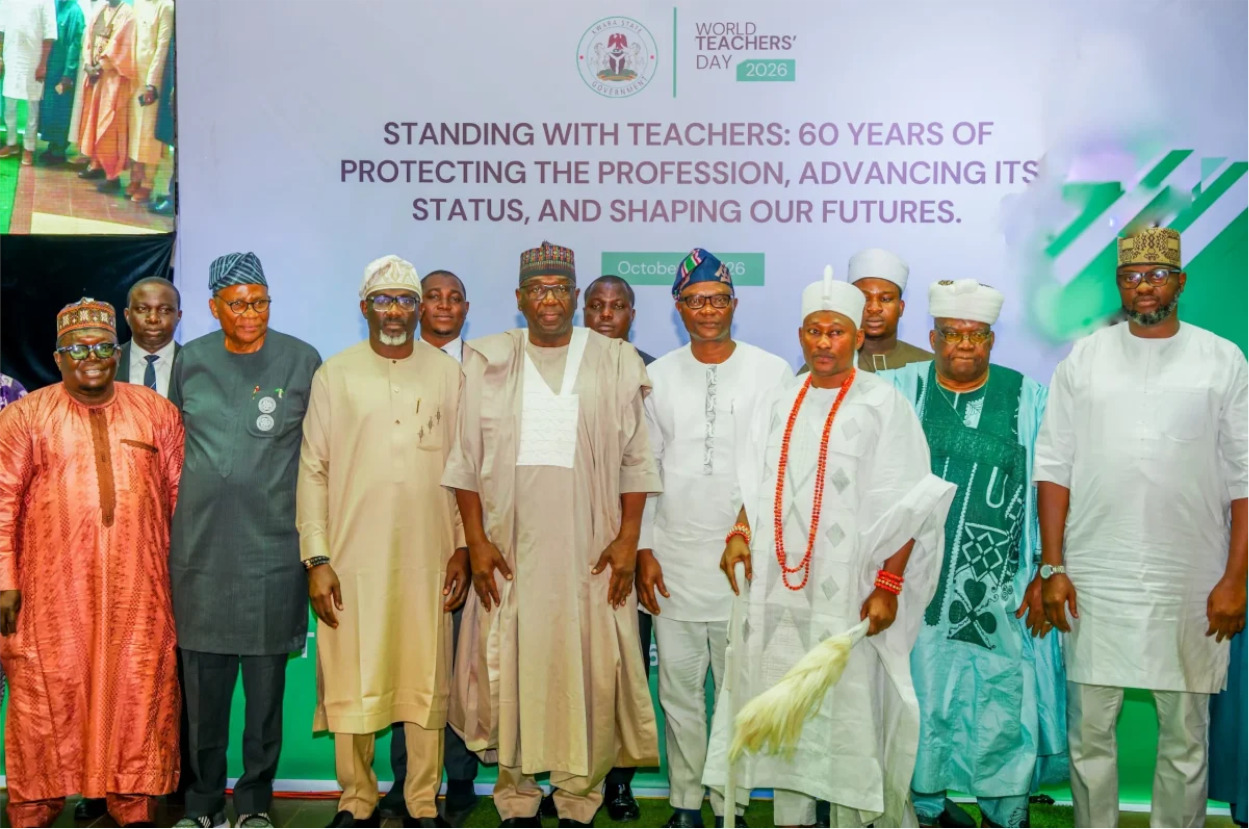
Governor AbdulRahman AbdulRazaq disclosed this on Monday in Ilorin while speaking at an event organised to mark the 2026 World Teachers’ Day.
The Governor also presented about N120 million in awards to outstanding teachers, head teachers, principals and schools.
The governor said the state would purchase 10,000 shares for 10 female teachers in each of the outstanding public schools.
He added that the scheme would also be extended to outstanding retired female teachers.
He said the initiative was being developed in partnership with the Dangote Foundation to encourage women to move beyond earning income to building assets through investment and share ownership.
“Dangote has created the Dangote Foundation, providing subscription grounds for women only. For every ten shares we purchase they will give a grant of another ten shares, making twenty shares,” AbdulRazaq said.
He added, “Our hardworking women teachers in TESCOM and SUBEB will get ten shares each. We will also extend it to the retired female teachers so that peace and prosperity will go round them.”
AbdulRazaq directed the Head of Service, Dr Olufunke Mercy Shittu, to work out modalities for capturing qualified retired female teachers under the initiative.
The governor said the investment programme was part of wider efforts to improve the welfare and economic opportunities available to teachers in the state.
He said his administration would continue to prioritise teachers because of their central role in determining the quality of education and, ultimately, the future of the state.
“We will continue to do our part, including improving your welfare and working conditions on a sustainable basis. We are confident that you and other stakeholders will always do your part,” he said.
The governor also presented financial awards totalling about N120 million to outstanding education stakeholders across different categories.
While 29 best principals and head teachers received N29 million, 119 outstanding teachers received N59.5 million.
Eleven serving and retired university dons were presented with N22 million under the Pioneer Professorship Recognition Awards, while three schools received N9 million for the Best Kept School Award.
AbdulRazaq said the recognition was designed to reward sacrifice and motivate educators to sustain their contributions to the state’s education system.
He said the administration’s education reforms had focused on improving both the quality of teaching and learning, citing merit-based recruitment, continuous professional development, improved school infrastructure and the use of technology and data through KwaraLEARN.
The governor also highlighted the regular promotion of teachers and implementation of the 27.5 per cent Teachers’ Specific Allowance as measures aimed at improving their welfare.
According to him, the interventions were yielding results, particularly in the performance of Kwara pupils at national and international competitions.
The Chairman of the State Universal Basic Education Board (SUBEB), Prof Sheu Raheem Adaramaja, announced that the 2026 promotion exercise for eligible teachers had been approved by the state government.
Adaramaja said the promotion examination would hold on October 10, adding that Kwara would be the first state in the federation to conduct its 2026 promotion exercise for eligible teachers.
Commissioner for Education and Human Capital Development, Dr Lawal Olohungbebe, said the award programme demonstrated that hard work deserved recognition.
He urged the awardees to sustain their performance and encouraged teachers across the state to continue developing themselves professionally.
The former Kwara State Chairman of the Nigeria Labour Congress (NLC) and keynote speaker, Comrade Umar Farooq, said supporting teachers should be regarded as an investment in children, communities and society.
The state Chairman of the Nigeria Union of Teachers (NUT), Comrade Yusuf Wahab Agboola, thanked the government for its interventions in school infrastructure and teachers’ welfare, while urging it to adopt the national harmonised retirement age for teachers.
*Plans intervention or games for young entrepreneurs
By Aliyu Musa
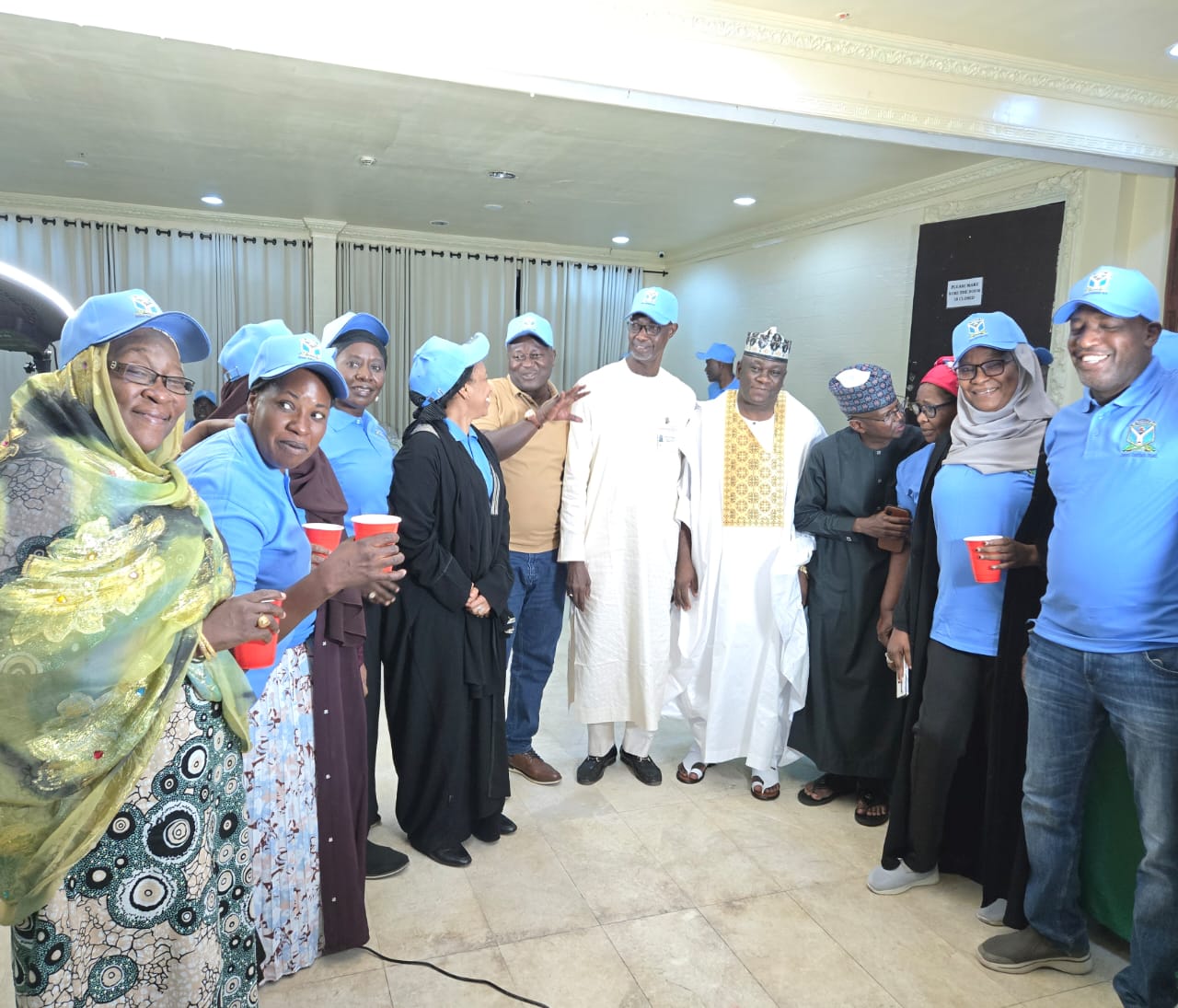
THE University of Maiduguri business management class of 1997 at its first reunion in Abuja emphasized the need to support young entrepreneurs and provide them the necessary support such that they can contribute to the micro economic growth and eliminate devices that falls below acceptable moral and legal standards.
The class of 97 also agreed to constitute an investment committee that will assist the forum pursue its goals ahead of its proposed 30th anniversary slatted for 2027.
Former deputy speaker of the House of Representatives,Honourable Babangida Nguroje who also spoke at the reunion called on his course mates to deploy their professional strength in ways that will strengthen the nation’s economy , give back to their university and groom upcoming entrepreneurs through trainings and offer opportunities for them to grow .
Honourable Nguroje emphasized the need to boost the micro economy of Nigeria through investments that will further create jobs for the teeming youths and grow the country’s domestic growth .
According to him ,”It is my honour to be in your midst this evening and a rare opportunity for all of us to be united again after several years.
“It is particularly important that this union is coming at a time that this country needs our expertise as students of figures ,data and research .
“This is out first reunion and I am glad that we have developed in our individual capacities and areas of interests .
“Much as we are here basically to catch up again , it is important that discourse matters that will send out footprints in our university by identifying areas we can assist our university , particularly our department .
“We must also look at ways of making this gathering annually and how best we can lift those in need and create opportunities for all of us .”
One of the organizers of the reunion Mrs Julianna Aiwerioghene said the class of 97 will take seriously the issues of empowerment and as managers ,it will be interested in grooming younger business owners to again their full potentials .
“We will be interested in harnessing their capabilities and help them build themselves through trainings and other forms of support .
“We want to see a productive generation for the younger ones and we will be subsequently looking at helping each other and continually look at how we will remain united and grow together. Progress is what we take seriously and we will also not forget out university in the process .”

Reps Order INEC To Restore Two Benue Constituencies, Conduct Elections
Spread the loveBy Felix Umande The House of Representatives has urged the Independent National Electoral Commission, INEC, to immediately comply...


Gunmen Kidnap Catholic Priest In Benue, Police Launch Rescue
Spread the loveBy Felix Umande The Catholic Diocese of Otukpo has announced the kidnap of one of its priests, Rev....

October FAAC for FG, States, Local Councils Increases to N2.43tn
Spread the loveBy Isa Abdul, Abuja The Federation Account in October 2026, rose to N2.428tn representing an increase of N90bn,...

New Minimum Wage: FG, NLC Disagree Over Commencement Date
Spread the loveBy Nick Ibe, Abuja Timing has become a central issue in the yet-to-commence wage enhancement talks between the...

Sanusi: Food imports Harm Rice Mills, Bank Loans and Food Security
Spread the loveBy Seyi Balogun, Lagos The Emir of Kano, Muhammadu Sanusi, has called for an alternative approach to food...

Nasarawa State Government Urged to Clarify Requirements for Establishing Chiefdom
Spread the loveBy Isa Abdul The Nasarawa State government has been called to make public the legal requirements for the...

ASUU Tells Taraba Govt: TSU Not Nigeria’s Highest-paying Varsity
Spread the loveBy Michael Lim The claim that the Taraba State University is Nigeria’s highest-paying state university, has been dismissed...


Tinubu Sends Bill: Asks Senate to Approve National School of Government, Repeal ASCON
Spread the loveBy Son Tertsea, Abuja The Senate has received a bill from President Bola Tinubu asking it to approve...

Africa’s Second-best University Signs Deal with World’s Largest Aircraft Manufacturer for Aerospace Students in South Africa
Spread the loveAirbus Southern Africa, the University of the Witwatersrand (Wits), one of Africa’s top universities, and the Institut Supérieur...


Nigeria’s 1996 Olympic Gold: Jo Bonfrere Claims He’s Still Waiting for Gold Medal, Other Rewards
Spread the loveBy Nick Ibe, Abuja 30 years after guiding Nigeria to victory in the men’s football event at the...