
Food and Agriculture
Sanusi: Food imports Harm Rice Mills, Bank Loans and Food Security

By Seyi Balogun, Lagos
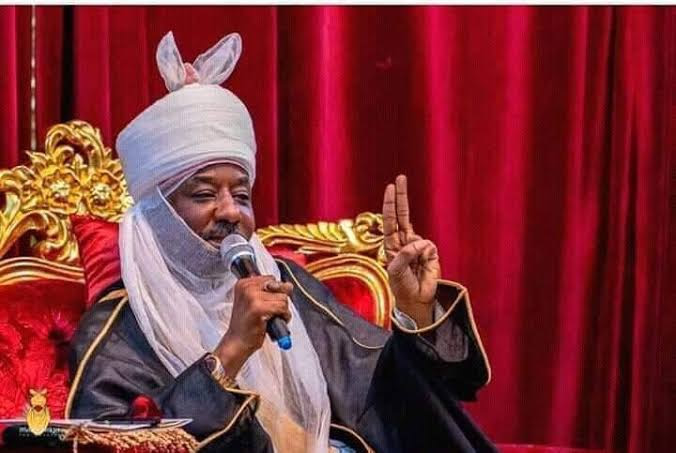
The Emir of Kano, Muhammadu Sanusi, has called for an alternative approach to food affordability, warning that policies aimed at reducing food prices through imports could undermine domestic agricultural production and threaten long-term food security.
Emir Sanusi who spoke at the Sustainable Table Series under the theme: “Leading the Sustainable Development Agenda: People, Planet and Development,” held at the Federal Palace Hotel, Victoria Island, Lagos on Thursday, stressed that governments should prioritise nutrition, education, infrastructure and productive investment to improve economic development.
He said that Nigeria’s decision to open its market to food imports, including rice from Thailand, was a disservice to local rice mills leading to banks grappling with bad loans from investments in the agricultural value chain. In his words:
“All the rice mills that people built were wiped out. All the loans that the banks gave people in the agriculture chain, became bad loans.”
He stated further that even though the policy helped lower food prices occasioned by the removal of the petrol subsidy, it undermined domestic production and threatened long-term food security.:
“There’s nothing wrong with making food cheap for the poor, but there are ways of making food cheap or subsidising the poor on food without opening up the market to this floodgate of imports.”
Consequently, he stressed, the government should support poor households without exposing local farmers and businesses to overwhelming competition from imports.
He added that Nigeria must develop its capacity to produce food rather than depend on imports, warning that short-term interventions could discourage investment in agriculture and weaken the country’s ability to achieve sustainable food security.
The Emir also questioned Nigeria’s infrastructure priorities, arguing that governments often concentrated on visible projects such as flyovers and underpasses while rural communities lacked basic bridges connecting them to markets, schools and healthcare facilities.
Sanusi said a greater proportion of public funds spent on urban infrastructure could be directed towards connecting rural communities to essential services and economic opportunities.
In his view, “roads should connect farmers to markets and workers to jobs, while investments in electricity and other infrastructure should be planned around the needs of businesses and communities.”
The Emir also raised concerns about Nigeria’s debt-servicing burden, claiming that the country spent about 100 per cent of its revenue on debt servicing.
He said fiscal reforms were necessary but emphasised that they should be accompanied by transparency, accountability and measures to protect vulnerable households.
He further argued that citizens would be more willing to accept difficult economic reforms when they could see that the burden was fairly shared and that public savings translated into better services and opportunities.
The former CBN governor said Africa’s development challenge was not merely the availability of resources, policies or capital, but the ability to convert them into productive capacity, capable institutions and broadly shared prosperity.
“The next decade must be judged by delivery, not by declarations,” he said.
The emir also raised the alarm over child malnutrition in Kano State, saying more than 50 per cent of children under five are malnourished, while about 40 per cent of women of childbearing age are anaemic.
He warned that malnutrition threatened Nigeria’s human capital development, stressing that the country could not build a productive workforce without addressing nutritional deficiencies among children from pregnancy through their early years.
He said, “In my state, Kano, over 50 per cent of under-fives are malnourished. About 40 per cent of women of childbearing age are anaemic. With malnutrition, the brain is not properly formed; that is not the human capital that you want for development.”
Sanusi expressed concern that interventions often focused on identifying malnourished children after the damage had occurred rather than preventing nutritional deficiencies during pregnancy and early childhood.
He asked, “But who is looking at malnutrition? Who is getting to them in the villages? Who’s getting to the women when they get pregnant to make sure they eat what they’re supposed to eat?
“What we’re doing today is, we count them after they become malnourished, and we have these horrible statistics year after year. There’s a lot of malnutrition; there’s no food in the villages.
“And again, you cannot produce youth who have been malnourished, who don’t have the brains and expect these youth to be major contributors to human capital.”
According to him, addressing malnutrition starts during pregnancy and continuing after childbirth to ensure that children receive adequate nutrition during their formative years. He stressed:
“So it begins from conception, the moment a woman is pregnant, we have to be there until the baby is born, and then the baby comes around, and then with proper nutrition, we build the base for the youth.”
The Emir linked the challenge to Nigeria’s broader development prospects, noting that a young population would only become an economic advantage if citizens were healthy, educated, skilled and productively employed.
He said foundational education must equip children with literacy, numeracy and the ability to think, reason and solve problems, adding that education should prepare young people to participate meaningfully in a changing economy.
“Then you have foundational learning, children needing to acquire literacy, numeracy, and the ability to think, reason, and solve problems,” Sanusi said.
The monarch also called for greater attention to technical education, saying it should be respected as a pathway to skilled employment and enterprise rather than treated as an inferior alternative to conventional academic education.
Speaking, Sanwo-Olu said his administration was pursuing a development agenda that placed people, environmental protection and economic prosperity at the centre of its policies.
The governor said Lagos had to balance its rapid growth with the need to protect the environment and improve residents’ quality of life.
He said the state’s N4.4tn 2026 budget of shared prosperity allocated N2.338tn to capital projects, while the Lagos Education Access Fund was being implemented with a target of reaching more than 200,000 children within three years.
According to him, the government’s development priorities also include equipping young people with skills for emerging industries and creating opportunities for women and small business owners to participate more fully in the economy.
Sanwo-Olu urged businesses, financial institutions, universities and civil society organisations to work with the government to advance sustainable development.
He noted that the global Sustainable Development Goals had a 2030 deadline, making implementation, accountability and measurable results increasingly urgent.
Event convener, Olaniyan, called for greater investment in energy infrastructure, technology, Artificial Intelligence, and human capital towards achieving the Sustainable Development Goals. In his words:
“There are a lot of opportunities that we need to mobilise capital into. The next stage is moving from knowledge to implementation.
“We need to mobilise more capital towards implementation of the SDGs. We also need to look at how to store food, reduce post-harvest losses and reduce food inflation.”
The event also featured interventions from experts across various fields, including Dapo Otunla, Ademola Ogunbanjo, Rolake Akinkugbe-Filani, Uche Uzoebo, and Sam Faleye, on the importance of access to capital and attaining sustainable development.


By Michael Lim
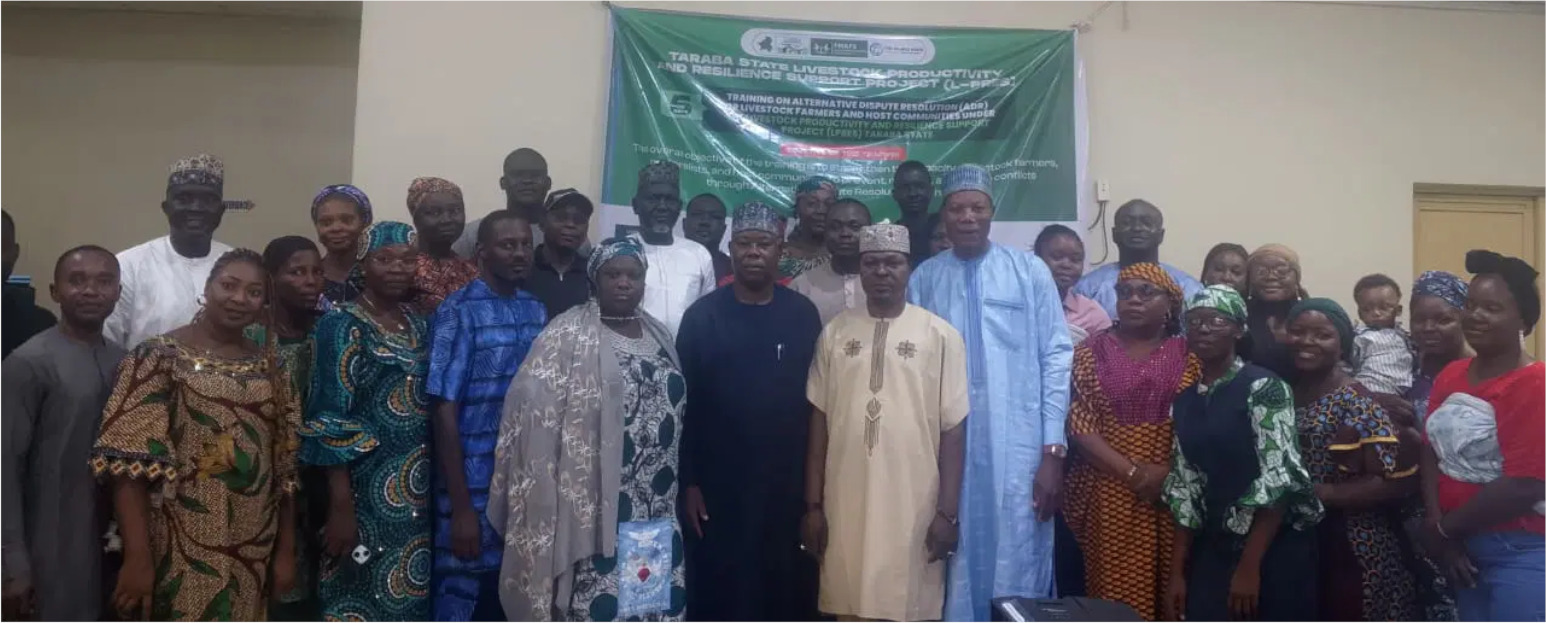
Conflict prevention between livestock farmers and host communities in Taraba State through the promotion of dialogue and Alternative Dispute Resolution by the Livestock Productivity and Resilience Support Project has been emphasised.
The initiative was highlighted at the opening of a five-day ADR training organised in Jalingo for livestock farmers, host communities, traditional and community leaders and other stakeholders in the livestock sector.
The training focused on peaceful, community-based approaches to resolving disputes before they escalate into violent conflicts, particularly disagreements over access to land and water, livestock movement and alleged destruction of crops.
Speaking during the training, the L-PRES State Project Coordinator, Hananiah Albert, said peace and stability were critical to the growth and sustainability of livestock production in the state.
Albert, who was represented by the project’s ICT and Communication Officer, Ezra Atimas, said livestock farming remained a major source of livelihood for many residents, stressing that disputes within the sector should be resolved through dialogue rather than confrontation.
He said ADR provided disputing parties with an opportunity to sit together, listen to one another and address their concerns with a view to reaching mutually acceptable solutions.
The coordinator also urged stakeholders to make greater use of existing community leadership structures, saying early intervention and effective communication could prevent minor disagreements from developing into serious conflicts.
Also speaking, a resource person and Dean of the Faculty of Social Sciences, Taraba State University, Dr Danjuma Yusuf, urged livestock farmers and members of host communities to make greater use of traditional and community leadership structures in resolving disputes.
Yusuf advised stakeholders to involve traditional rulers, religious leaders, women’s groups and livestock associations in conflict resolution, noting that their participation could promote dialogue, build trust and preserve relationships between farmers and host communities.
He stressed that ADR should not be limited to situations where conflicts had already erupted, but should also be used as a preventive mechanism for identifying and addressing grievances before they become violent.
The training is expected to strengthen the capacity of livestock farmers and host communities to peacefully manage disputes while promoting improved community relations, security and sustainable livestock development across Taraba State.
Food and Agriculture
October AGLOFEST: To Converge Investors, Businesses, Cultural institutions, Creative Industry

By Nick Ibe, Abuja
October 2026 has been chosen by the Federal Government to launch the African Global Festival , AGLOFEST, as part of efforts to strengthen Nigeria’s cultural diplomacy, economic cooperation and engagement with Africa and the global Black Diaspora.
Developed as a public-private partnership, the festival will bring together government officials, development partners and members of the global Black Diaspora.
The initiative has received presidential approval and is being developed in collaboration with relevant ministries, departments and agencies, including the Ministries of Art, Culture, Tourism and Creative Economy; Trade, Investment and Industry; and Foreign Affairs.
AGLOFEST is designed to showcase Nigeria’s cultural heritage, tourism potential, creative industries and investment opportunities while positioning the country as a meeting point for Africans and members of the Black Diaspora.
The festival will feature three major components: the Black Diaspora Economic Forum, which will focus on trade, investment and business partnerships; the Black Diaspora Cultural Presentation, highlighting African heritage and creative expressions; and the Renewed Global Hope and Peace Concert, which will use music and entertainment to promote peace, unity and global engagement.
The Convener of AGLOFEST and Chief Executive Officer of T-BYK, Tunde MacAlabi, praised President Bola Tinubu for approving the initiative.
MacAlabi described the approval as a major milestone in the development of the festival, saying it would deepen Nigeria’s economic, cultural and strategic relationship with the global Black Diaspora. In his words:
“AGLOFEST was conceived as a platform through which Nigeria can deepen its economic, cultural and strategic relationship with the global Black Diaspora.
“The October 2026 launch will mark the beginning of a new chapter in positioning Nigeria as a leading global hub for Black cultural expression, investment, tourism and economic cooperation.”
MacAlabi said preparations were ongoing, with engagements continuing with prospective international participants, strategic partners, investors, sponsors, cultural organisations and members of the global Black Diaspora.
He said the festival was conceived as a long-term international initiative that would create opportunities across tourism, hospitality, aviation, transportation, entertainment, creative industries, trade, investment and infrastructure.
The convener also called on state governments, private-sector organisations, international institutions, development partners, cultural institutions and members of the global Black Diaspora to support the initiative.
He said the October launch would mark a step towards strengthening Nigeria’s global cultural engagement, expanding economic partnerships and deepening the country’s relationship with Africa and the Black Diaspora.
Food and Agriculture
“Sasakawa Helped Us To Stand Again” — Benue Women Farmers Hail Foundation For Reviving Livelihoods
–Cooperative Credits Intervention For 58-Hectare Farm Revival, Mechanization, Improved Seeds and Training
By Felix Umande
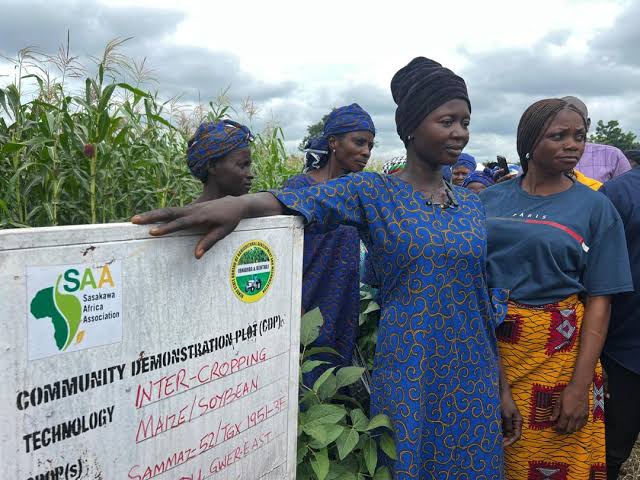
Farmers, particularly women, in Benue State have expressed deep appreciation to the Sasakawa Africa Association, SAA, for its support that has revived their farms, processing businesses, and livelihoods.
Speaking during an interview on Tuesday, September 15, 2026 in Mbatier community, of Buruku LGA, the President of the Divine Open Doors Multipurpose Cooperative, Benue State, Mrs. Ngufan Blessing Chichi, said the intervention by Sasakawa since 2020 has been “so impactful” and has enabled women farmers to stand firmly in agriculture.
“We existed in several other local governments here in Benue State. In each and every local government, we intend to have a chapter. All our chapters have 50 women,” she said.
Mrs. Chichi said Sasakawa intervened with financial aid and donation of a power tiller to ease land preparation to encourage women who at some point got discouraged due to hardship and post-farming loses.
“The cost of doing a hectare manually was 60,000 Naira. But now, with the power tiller, we pay the boys 20,000 Naira, buy diesel 7,000 Naira, and some other services, just about 30-something thousand Naira, a hectare is finished. This has actually helped us,” she stated.
She said the support encouraged members to return to farming. Presently, the cooperative has about 58 hectares under cultivation with cassava and soybean.
Beyond cultivation, Mrs. Chichi said the cooperative now processes cassava into flour, popularly known as Akpu, which is packaged for wider distribution.
“With this product, it can go anywhere in the country, because it is not easy to travel with the raw Akpu. But with this one, it can be packaged in cartons. You just boil your water, pour inside and turn it, it’s just like pounded yam,” she explained.
She credited Sasakawa for training members on weed control, record keeping, and savings culture.
“If it is not because of their training, we wouldn’t have known about weed control. Anything record keeping, we know it because Sasakawa taught us. Anything savings, we know because Sasakawa helped us to know how to save and to use our money judiciously,” she said.
On marketing, she noted growing demand for their processed products through direct engagement. “Anytime we process, many people run to come and pick it from us. When they try, they send a message again because there is a number on it,” she said.
The cooperative operates a profit-sharing model where dividends are shared annually based on contributions, while also allocating one hectare yearly to the host community to foster goodwill and farm security.
“If it is not because of Sasakawa, we wouldn’t have been able to stand here today. Sasakawa has helped us to regroup once again. It has helped us to stand,” she said.
Another farmer, Mrs. Akombu Erdoo, listed interventions brought to her community by Sasakawa to include training, improved seed varieties, financial support, herbicides and fertilizer. She mentioned cassava varieties introduced to include 419, Dickson, Game Changer, Farmers’ Pride and Baba70, among others.
According to Mrs. Akombu, farmers in the community are now “building houses and sponsoring their family bills” from farm profits.
At Mbatsaase community of Mbaapen, farmers including Msugh Ahula and Wuese Felicia said Sasakawa’s training has transformed agriculture in their area and revived farming.
Speaking during a tour in Buruku, Dr. Engr. Moshood Sulaiman, Program Officer for Climate Resilient and Sustainable Agrifood Systems with Sasakawa Africa Association, said mechanization is key to the intervention.
“We empower local group with 18 horsepower power tiller to till the soil for them before planting. Mechanization alone can contribute like 20% in terms of farm production,” he said.
“So, we empower them with this 18 horsepower power tiller to help them to till the soil because if you look at the hectares of land they have here is very large. So, if you compare this power tiller to manual labor, it’s incomparable. The difference is widely significant. While this is, the power tiller can work like 20 to 40 times faster than what human labor can give you.”
He explained that one hectare that takes 7 to 10 days manually can be tilled in 2 to 3 hours with the power tiller, reducing drudgery and production cost.
“For sustainability, we train the operators on operation, repair, maintenance, and troubleshooting of the machine, and we are following up with that,” Dr. Sulaiman added.
The agricultural interventions of the Sasakawa Africa Association across the eight local government areas in Benue State has witnessed a widespread testimonies as residents seeks its operations in other local communities.


Reps Order INEC To Restore Two Benue Constituencies, Conduct Elections
Spread the loveBy Felix Umande The House of Representatives has urged the Independent National Electoral Commission, INEC, to immediately comply...


Gunmen Kidnap Catholic Priest In Benue, Police Launch Rescue
Spread the loveBy Felix Umande The Catholic Diocese of Otukpo has announced the kidnap of one of its priests, Rev....


October FAAC for FG, States, Local Councils Increases to N2.43tn
Spread the loveBy Isa Abdul, Abuja The Federation Account in October 2026, rose to N2.428tn representing an increase of N90bn,...

New Minimum Wage: FG, NLC Disagree Over Commencement Date
Spread the loveBy Nick Ibe, Abuja Timing has become a central issue in the yet-to-commence wage enhancement talks between the...

Sanusi: Food imports Harm Rice Mills, Bank Loans and Food Security
Spread the loveBy Seyi Balogun, Lagos The Emir of Kano, Muhammadu Sanusi, has called for an alternative approach to food...

Nasarawa State Government Urged to Clarify Requirements for Establishing Chiefdom
Spread the loveBy Isa Abdul The Nasarawa State government has been called to make public the legal requirements for the...


ASUU Tells Taraba Govt: TSU Not Nigeria’s Highest-paying Varsity
Spread the loveBy Michael Lim The claim that the Taraba State University is Nigeria’s highest-paying state university, has been dismissed...


Tinubu Sends Bill: Asks Senate to Approve National School of Government, Repeal ASCON
Spread the loveBy Son Tertsea, Abuja The Senate has received a bill from President Bola Tinubu asking it to approve...

Africa’s Second-best University Signs Deal with World’s Largest Aircraft Manufacturer for Aerospace Students in South Africa
Spread the loveAirbus Southern Africa, the University of the Witwatersrand (Wits), one of Africa’s top universities, and the Institut Supérieur...


Nigeria’s 1996 Olympic Gold: Jo Bonfrere Claims He’s Still Waiting for Gold Medal, Other Rewards
Spread the loveBy Nick Ibe, Abuja 30 years after guiding Nigeria to victory in the men’s football event at the...