
Foreign
Morocco’s Noor Quarzazate Complex: One of World’s Largest Solar Plants

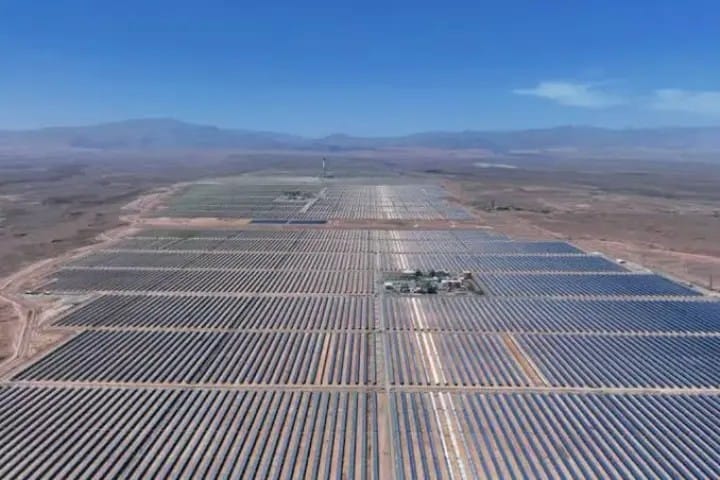
In 2016, Morocco installed a solar plant next to the Sahara Desert: 10 years later, it provides electricity to more than one million people
The Noor Ouarzazate complex combines three solar technologies and is one of the largest in the world
A decade ago, Morocco committed to a project that many considered too ambitious for an African country. Today, that initiative has become an international benchmark in renewable energy and a key part of the kingdom’s energy model.
The Noor Ouarzazate solar complex rises near the city of Ouarzazate, at the gateway to the Sahara Desert, and covers some 3,000 hectares. Its first phase, Noor I, was inaugurated in February 2016 by King Mohammed VI. Then came Noor II, III, and IV, which increased the total installed capacity to around 580 megawatts.
Three technologies in one place
What makes this complex unique is the combination of systems. Noor I and II operate with parabolic trough mirrors that concentrate solar radiation. Noor III is a tower about 250 meters high surrounded by thousands of heliostats, while Noor IV uses conventional photovoltaic panels.
Part of the captured heat is stored in molten salts, which makes it possible to continue producing electricity for several hours after sunset. This ability to generate clean energy in a controlled way on a large scale is one of its great attractions.
The project, developed by the state agency MASEN together with international partners, involved an investment of more than 3 billion dollars.
An impact that reaches one million people
Today, the complex supplies electricity to some 1.1 million Moroccans. According to the country’s authorities, it prevents the emission of around 760,000 tons of CO₂ per year. In addition, it has generated employment, technical training, and local development programs.
Not everything has been easy. Noor III was out of operation between February 2024 and April 2025 due to a leak in a molten salt tank. Even so, the Noor I plant reached its production record in 2025, with 500.8 gigawatt-hours.
The plant is a key part of Morocco’s goal for more than half of its electricity capacity to come from renewable sources.
MARCA







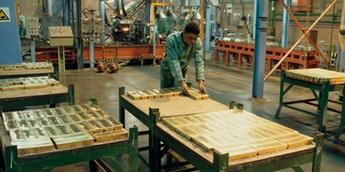
Angola has opened its first gold refinery, a $20.7 million investment by state diamond company Endiama that will allow the country to refine and certify gold locally.
The country’s first gold refinery was inaugurated in Viana, Luanda, on November 20.
Endiama financed the $20.7 million refinery which, the minister says, can process 25kg per shift.
Angola produced 99.5kg of gold in 2024.
The refinery includes a laboratory and public assay office.
The refinery, in the Viana Industrial Development Hub in Luanda, includes a laboratory and Angola’s first public assay office. The office will test the purity of gold, silver, platinum and issue official marks of guarantee, according to the Ministry of Mineral Resources, Petroleum and Gas.
Endiama and the ministry have said the refinery can process up to 25kg of gold a day.
At the inauguration, however, Mineral Resources Minister Diamantino Azevedo told Lusa that 25kg was the plant’s capacity per shift, with three shifts allowing up to 75kg a day. He added current gold production did not require the refinery to run more than one shift.
Endiama said the $20.7 million was spent on construction and equipment. The company said the project forms part of its plan to diversify its business beyond diamonds and retain more value from Angola’s mineral resources.
Angola’s latest published official annual figure puts gold production at 99.5kg in 2024. The ministry said in August that the country had 49 gold exploration projects under way and four in production, with more than $120 million invested in the sector.
Those figures show a growing project pipeline, but exploration projects are not producing mines.
That makes the refinery’s operating rate a key question. Its maximum shift capacity is far above Angola’s recorded annual output, and the minister’s comments indicate the plant will initially run one shift.
The ministry has called on mining companies to increase exploration and production so the refinery can support a larger domestic gold industry.
The plant enters a global market in which gold demand, including over-the-counter investment, topped 5,000 tonnes in 2025 and reached a record value of $555 billion, according to the World Gold Council.
Angola’s government says local refining and certification would improve traceability and help buyers assess the metal’s quality and origin.
That matters in a sector facing scrutiny over illicit trade. SWISSAID estimated that at least 453 tonnes of African gold that producing countries had not declared for export reached the United Arab Emirates in 2024, including gold routed through neighbouring countries. The estimate is based on comparisons of trade data.
The refinery is not yet accredited by the London Bullion Market Association (LBMA). The ministry says it intends to pursue international quality and laboratory certifications, including LBMA accreditation, after operations begin. That step will matter if Angola wants the refinery’s bars to meet the standards used by major international bullion markets.
Foreign
For Rural Character, Limit Artificial Light Pollution: South African Towns Ban Streetlights, Perimeter Fences
By Malcolm Libera
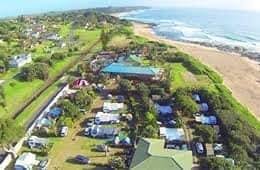
A handful of small coastal towns in the Western Cape have restrictions on streetlights, security fences and other perimeter barriers.
Betty’s Bay, Pringle Bay, and Rooi-Els, situated along the Hangklip coast, fall under the jurisdiction of the Overstrand Municipality.
However, they also form part of the Kogelberg Biosphere Reserve, a UNESCO-designated area known for its biodiversity.
The villages have planning restrictions intended to preserve their rural character, limit artificial light pollution, and allow wildlife to move freely between the mountains, fynbos, and coastline.
The restrictions are set out in the Hangklip Villages Conservation Overlay Zone (HCOZ), the Overstrand Municipality Land Use Scheme, and the municipality’s Fences and Fencing By-law.
One of these provisions concerns conventional streetlights, which are not permitted in the villages unless a specific threshold of property owners supports their installation.
Under the conservation overlay provisions, streetlights may not be erected unless documented votes in favour have been obtained from 66% of registered property owners in the respective village.
The restriction is intended to preserve the area’s dark-sky environment and limit the impact of artificial lighting on nocturnal wildlife.
Animals such as caracals, owls, bats, and Cape grysbok rely on natural darkness for their behaviour, feeding and movement. Artificial lighting can interfere with these activities and affect insects, coastal birds, and marine life.
The municipality also regulates outdoor lighting on individual properties to prevent excessive light from spilling into neighbouring properties and public spaces.
Property owners are encouraged to direct external lighting downward rather than allowing it to spill over property lines.
Sensor-operated lights are also recommended as an alternative to permanent lighting because they remain off when not in use.
The regulations also specify what constitutes a public nuisance. This includes lighting with a source intensity exceeding 500 candela, illumination exceeding three lux, or an upward light ratio greater than 2.5%, measured from a street, public place or property boundary.
Electric fence restrictions
Durban, South Africa – 6 December 2020: A yellow warning placed on an electric fence to signify to others the danger of touching the fence as crime increases in the country
Security infrastructure is also subject to restrictions, especially where it could obstruct wildlife movement or create hazards for animals.
The municipality’s Fences and Fencing By-law requires prior written consent from the municipality for certain perimeter barriers.
These include electrified fences and barriers fitted with barbed wire, spikes, or other sharp protrusions.
Electrified fencing is generally only permitted above a wall at least 1.8 metres high, subject to compliance with the relevant electrical safety regulations.
Without municipal consent, fences along lateral and rear property boundaries may not exceed 1.8 metres, while fences within 4.5 metres of a street boundary may not exceed 1.2 metres.
The Overstrand Land Use Scheme also outlines parameters for boundary walls and fences, including a general maximum height of 2.1 metres, with electric fencing permitted above that height.
These restrictions are relevant in Betty’s Bay and the surrounding villages, where residential properties are situated within an environmentally sensitive landscape.
Wildlife, including tortoises, porcupines, small antelope and baboons, regularly moves through the area.
Solid walls and poorly designed security barriers can obstruct these routes, while electrified or sharp ground-level barriers can injure or kill smaller animals.
The regulations are intended to balance property security with environmental protection and ensure that residential development does not unnecessarily fragment natural habitats.
For homeowners in these areas, this means that installing conventional streetlights, building high boundary walls or adding certain security features is prohibited without municipal approval.
Businesstech

By Isa Abdul, Abuja
In Saudi Arabia, a kiss in the mosque would earn you death, as two Bangladeshi nationals, identified as Nazrul Islam Abdul Basir and Siri Akhtar, have reportedly been executed in Saudi Arabia following their conviction over the alleged immoral act inside a Mecca mosque.
Reports circulating on social media indicate that the couple had travelled to Mecca for their honeymoon. But what was to be memorable event is their lives became a suicide mission.
The gesture was wrong in a wrong place, not an expression of gratitude to Allah for their marriage, as far as the Saudis are concerned.
Reports claim the couple’s bodies had been returned to Bangladesh in two coffins for burial.
Some online reports claim the couple were newlyweds executed over a kiss (such as a forehead kiss or a kiss inside the mosque).
However, the Saudi government’s official statement did not detail the exact nature of the act, and conflicting reports—including statements from family members and media checks—disputed whether they were newlyweds or what specific physical contact occurred.
But reports indicate the Bangladesh Consulate General in Jeddah stated they received no advance notice or prior notification from Saudi authorities regarding the executions and have formally requested clarification and acknowledgement.



Protecting the Ballot and ‘rig and die’ Slogan
Spread the loveBy Seyi Balogun, Lagos As the 2027 general elections approach, echoes of ‘rig and die’ slogan, a mantra...

Morocco’s Noor Quarzazate Complex: One of World’s Largest Solar Plants
Spread the loveIn 2016, Morocco installed a solar plant next to the Sahara Desert: 10 years later, it provides electricity...


“Hold My Hand”: Yul Edochie Breaks Down As He Recalls Father Pete Edochie’s Final Words
Spread the loveBy Felix Umande Nollywood actor Yul Edochie has recounted his final moments with his late father, veteran actor...

NDLEA Dismantles 4th Meth Lab in Enugu, Arrests Drug Baron, 5 Mexicans
Spread the loveBy Lazarus Oko The National Drug Law Enforcement Agency (NDLEA) has dismantled the 4th industrial-scale methamphetamine laboratory in...


President Tinubu Supports Families of NAF Plane Crash Victims With N100m, Flats in Abuja
Spread the loveBy Isa Abdul, Abuja The 25 victims of the October 5 Nigerian Air Force (NAF) ATR 42 aircraft...


Niger: Suspected FulaniTerrorists’ Attack, Kambari Vigilante Reprisal Leave 74 killed in Borgu LGA
Spread the loveBy Isa Abdul, Abuja The Niger State government has confirmed that death toll from the clash between Kambari...


Asisat Oshoala Looks Beyond the Pitch: Earns Post Graduate Degree
Spread the loveBy Nick Ibe, Abuja Super Falcons striker Asisat Oshoala has her focuse on the future beyond playing football...


FG Gives 600 Tailors N5m Support Each
Spread the loveBy Michael Lim, Jos The Industrial Training Fund, IMF, acting on behalf of the Federal Government, is floating...

Plateau: Irigwe Mass Bury 17 Killed by Fulani, Allege Destruction of Farms
Spread the loveBy Michael Lim, Jos The 17 Irigwe people killed in a gunmen attack on Chando Zrreci (Tafi Gana)...


Kano to Establish Housing Regulatory Agency
Spread the loveBy Michael Lim The Kano State Government has set the stage to regulate the housing sector where rent...