
Foreign
Angola Opens First Gold Refinery to Keep More of the Metal’s Value Home

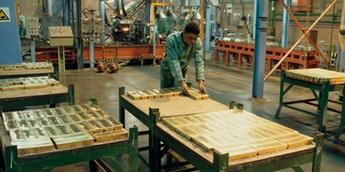
Angola has opened its first gold refinery, a $20.7 million investment by state diamond company Endiama that will allow the country to refine and certify gold locally.
The country’s first gold refinery was inaugurated in Viana, Luanda, on November 20.
Endiama financed the $20.7 million refinery which, the minister says, can process 25kg per shift.
Angola produced 99.5kg of gold in 2024.
The refinery includes a laboratory and public assay office.
The refinery, in the Viana Industrial Development Hub in Luanda, includes a laboratory and Angola’s first public assay office. The office will test the purity of gold, silver, platinum and issue official marks of guarantee, according to the Ministry of Mineral Resources, Petroleum and Gas.
Endiama and the ministry have said the refinery can process up to 25kg of gold a day.
At the inauguration, however, Mineral Resources Minister Diamantino Azevedo told Lusa that 25kg was the plant’s capacity per shift, with three shifts allowing up to 75kg a day. He added current gold production did not require the refinery to run more than one shift.
Endiama said the $20.7 million was spent on construction and equipment. The company said the project forms part of its plan to diversify its business beyond diamonds and retain more value from Angola’s mineral resources.
Angola’s latest published official annual figure puts gold production at 99.5kg in 2024. The ministry said in August that the country had 49 gold exploration projects under way and four in production, with more than $120 million invested in the sector.
Those figures show a growing project pipeline, but exploration projects are not producing mines.
That makes the refinery’s operating rate a key question. Its maximum shift capacity is far above Angola’s recorded annual output, and the minister’s comments indicate the plant will initially run one shift.
The ministry has called on mining companies to increase exploration and production so the refinery can support a larger domestic gold industry.
The plant enters a global market in which gold demand, including over-the-counter investment, topped 5,000 tonnes in 2025 and reached a record value of $555 billion, according to the World Gold Council.
Angola’s government says local refining and certification would improve traceability and help buyers assess the metal’s quality and origin.
That matters in a sector facing scrutiny over illicit trade. SWISSAID estimated that at least 453 tonnes of African gold that producing countries had not declared for export reached the United Arab Emirates in 2024, including gold routed through neighbouring countries. The estimate is based on comparisons of trade data.
The refinery is not yet accredited by the London Bullion Market Association (LBMA). The ministry says it intends to pursue international quality and laboratory certifications, including LBMA accreditation, after operations begin. That step will matter if Angola wants the refinery’s bars to meet the standards used by major international bullion markets.
Foreign
For Rural Character, Limit Artificial Light Pollution: South African Towns Ban Streetlights, Perimeter Fences
By Malcolm Libera
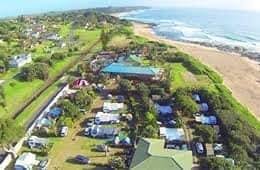
A handful of small coastal towns in the Western Cape have restrictions on streetlights, security fences and other perimeter barriers.
Betty’s Bay, Pringle Bay, and Rooi-Els, situated along the Hangklip coast, fall under the jurisdiction of the Overstrand Municipality.
However, they also form part of the Kogelberg Biosphere Reserve, a UNESCO-designated area known for its biodiversity.
The villages have planning restrictions intended to preserve their rural character, limit artificial light pollution, and allow wildlife to move freely between the mountains, fynbos, and coastline.
The restrictions are set out in the Hangklip Villages Conservation Overlay Zone (HCOZ), the Overstrand Municipality Land Use Scheme, and the municipality’s Fences and Fencing By-law.
One of these provisions concerns conventional streetlights, which are not permitted in the villages unless a specific threshold of property owners supports their installation.
Under the conservation overlay provisions, streetlights may not be erected unless documented votes in favour have been obtained from 66% of registered property owners in the respective village.
The restriction is intended to preserve the area’s dark-sky environment and limit the impact of artificial lighting on nocturnal wildlife.
Animals such as caracals, owls, bats, and Cape grysbok rely on natural darkness for their behaviour, feeding and movement. Artificial lighting can interfere with these activities and affect insects, coastal birds, and marine life.
The municipality also regulates outdoor lighting on individual properties to prevent excessive light from spilling into neighbouring properties and public spaces.
Property owners are encouraged to direct external lighting downward rather than allowing it to spill over property lines.
Sensor-operated lights are also recommended as an alternative to permanent lighting because they remain off when not in use.
The regulations also specify what constitutes a public nuisance. This includes lighting with a source intensity exceeding 500 candela, illumination exceeding three lux, or an upward light ratio greater than 2.5%, measured from a street, public place or property boundary.
Electric fence restrictions
Durban, South Africa – 6 December 2020: A yellow warning placed on an electric fence to signify to others the danger of touching the fence as crime increases in the country
Security infrastructure is also subject to restrictions, especially where it could obstruct wildlife movement or create hazards for animals.
The municipality’s Fences and Fencing By-law requires prior written consent from the municipality for certain perimeter barriers.
These include electrified fences and barriers fitted with barbed wire, spikes, or other sharp protrusions.
Electrified fencing is generally only permitted above a wall at least 1.8 metres high, subject to compliance with the relevant electrical safety regulations.
Without municipal consent, fences along lateral and rear property boundaries may not exceed 1.8 metres, while fences within 4.5 metres of a street boundary may not exceed 1.2 metres.
The Overstrand Land Use Scheme also outlines parameters for boundary walls and fences, including a general maximum height of 2.1 metres, with electric fencing permitted above that height.
These restrictions are relevant in Betty’s Bay and the surrounding villages, where residential properties are situated within an environmentally sensitive landscape.
Wildlife, including tortoises, porcupines, small antelope and baboons, regularly moves through the area.
Solid walls and poorly designed security barriers can obstruct these routes, while electrified or sharp ground-level barriers can injure or kill smaller animals.
The regulations are intended to balance property security with environmental protection and ensure that residential development does not unnecessarily fragment natural habitats.
For homeowners in these areas, this means that installing conventional streetlights, building high boundary walls or adding certain security features is prohibited without municipal approval.
Businesstech

By Isa Abdul, Abuja
In Saudi Arabia, a kiss in the mosque would earn you death, as two Bangladeshi nationals, identified as Nazrul Islam Abdul Basir and Siri Akhtar, have reportedly been executed in Saudi Arabia following their conviction over the alleged immoral act inside a Mecca mosque.
Reports circulating on social media indicate that the couple had travelled to Mecca for their honeymoon. But what was to be memorable event is their lives became a suicide mission.
The gesture was wrong in a wrong place, not an expression of gratitude to Allah for their marriage, as far as the Saudis are concerned.
Reports claim the couple’s bodies had been returned to Bangladesh in two coffins for burial.
Some online reports claim the couple were newlyweds executed over a kiss (such as a forehead kiss or a kiss inside the mosque).
However, the Saudi government’s official statement did not detail the exact nature of the act, and conflicting reports—including statements from family members and media checks—disputed whether they were newlyweds or what specific physical contact occurred.
But reports indicate the Bangladesh Consulate General in Jeddah stated they received no advance notice or prior notification from Saudi authorities regarding the executions and have formally requested clarification and acknowledgement.

By Son Tertsea, Abuja
A Catholic priest was crushed to death by a wooden crucifix that pressed him against the pulpit as it fell from the wall while celebrating Mass in the Ecuadorian city of Guayaquil on Saturday.
According to reports, shouts of “Father, Father! Call an ambulance!” people at Our Lady of Perpetual Help church could be heard shouting just before a livestreamed broadcast cuts out.
The graphic footage of the accident went viral Sunday on social media and was widely carried by news outlets.
The Archdiocese of Guayaquil mourned the death of the priest, Patricio Sanchez, in a statement and expressed its “solidarity, affection and love” for his family and friends.


Tinubu Seeks Fresh Approval For Slimmer ₦65.17trn 2026 Budget, Sends Revised Fiscal Plan To Reps
Spread the loveBy Felix Umande President Bola Tinubu has asked the House of Representatives to repeal and re-enact the 2026...


Gov. Alia Condoles Plateau State Governor Over Brother’s Death
Spread the loveBy Son Tertsea, Abuja Governor Hyacinth Iormem Alia has expressed deep sadness over the death of Arch. Morris...


Gov Alia Mourns Loss of APC Faithful in Tragic Accident
Spread the loveBy Vincent Tyosuugh The Governor of Benue State, Rev. Fr. Hyacinth Alia, has received with shock and heavy...


Why Nigeria Can’t Host World Cup – Infantino, FIFA President
Spread the loveBy Nick Ibe, Abuja Nigeria is currently assessed as lacking the necessary infrastructure required to host the FIFA...

States Charged to Support Small Businesses in Nigeria With N1 bn Monthly
Spread the loveBy Nick Ibe, Abuja Support for small businesses, despite increased federal allocations, has been rated by the House...

Angola Opens First Gold Refinery to Keep More of the Metal’s Value Home
Spread the loveAngola has opened its first gold refinery, a $20.7 million investment by state diamond company Endiama that will...


The Imperative of Multiple Media Revenue Sources – Elazeh
Spread the loveThe Group Managing Director of Leadership Newspapers, Muazu Elazeh, has urged Media organisations across Africa to diversify their...


Why Nigeria’s Rice Revolution Falls With 90 Mills Shutdown Across States
Spread the loveNigeria’s much-celebrated rice revolution is facing a major reversal, with more than 90 out of the country’s 260...


FG to Review Electricity Tariff Model Without Cost Hikes
Spread the loveBy Nick Ibe, Abuja Nigeria’s electricity tariff model is being reviewed but the tariff increase ruled out in...


Fani-Kayode Raises the Alarm over Attacks on Nigerians in South Africa
Spread the loveBy Isa Abdul, Abuja Worries have been raised over unexplained deaths of Nigerians, alleged wrongful conduct of some...