
Oil and Gas
At NOG Energy Week, NNPC, Partners Sign Landmark Gas Agreements

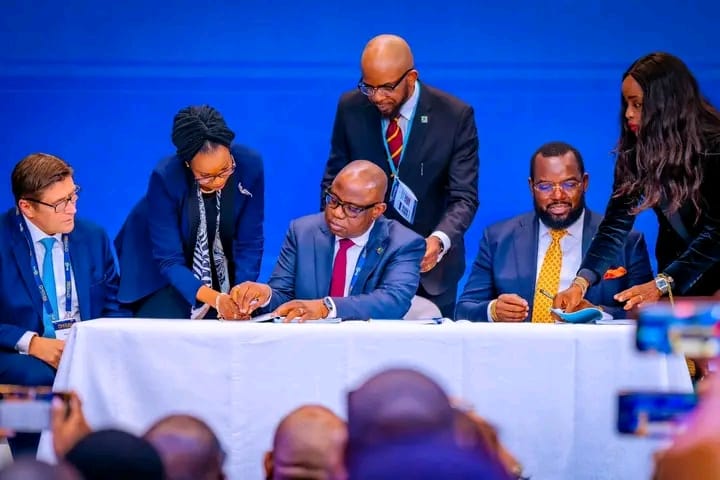
.. Deals Set to Catalyse Industrial Growth, Enhance Nigeria’s Energy Security
By Aliyu Musa
The Nigerian National Petroleum Company Limited (NNPC Ltd) today announced the signing of six strategic agreements with key partners, ranging from Memorandum of Understanding (MoU), Gas Supply Agreement (GSA), and other gas transportation deals, marking a significant milestone in Nigeria’s journey towards industrial revitalisation and enhanced energy security.
The agreements, executed on the sidelines of the ongoing 25th NOG Energy Week, in Abuja on Tuesday, include: an MoU with Ajaokuta Steel Company Limited (ASCL) ; a Gas Sale Aggregation Agreement (GSAA) with Ajaokuta Steel Company Limited (ASCL); a GSA with UTM FLNG; a Network Entry Agreement with Chevron Nigeria Ltd; a Network Entry Agreement with AGPC, and a Network Entry Agreement with NNPC Exploration & Production Ltd (NEPL).
According to the GCEO NNPC Ltd, Engr. Bayo Bashir Ojulari, the agreements underscore NNPC Ltd.’s commitment to advancing the Federal Government’s gas-based industrialisation agenda, driving sustainable economic growth and enhancing Nigeria’s energy security.
“What we are witnessing today is not just about signing agreements. It is about igniting the engine of Nigeria’s industrialisation. Gas is the key. It is source of revenue and profit. It is also the only product that can have that level of industrial impact on Nigeria, more than any other hydrocarbon.”, Ojulari stated.
He particularly described the agreements as a testament to NNPC Ltd’s shared commitment to transparency, efficiency, and a standardised framework for Nationwide gas utilisation, which will unlock new supply capacity for the domestic market and solidify the role of gas as a catalyst for economic transformation.
Ojulari noted that the agreements signal a new era of strategic partnerships that will drive local content, enhance energy security and accelerate Nigeria’s journey towards becoming a global industrial powerhouse. He described NNPC Ltd as the partner of choice. “We are on a journey, even as we look forward to greater collaboration with industry partners.”
A cornerstone of the signing ceremony was the agreement with Ajaokuta Steel Company Limited (ASCL). In the MoU, NNPC Ltd. and ASCL commit to extend collaboration beyond gas supply, aiming to catalyse the production of raw materials for oil and gas pipes, a critical enabler for major infrastructure projects such as the African- Atlantic Gas Pipeline (AAGP) and the Escravos -Lagos Pipeline System (ELPS) 3.
The MoU is anchored on two major pillars: the revitalisation of the Ajaokuta Steel Complex and the expansion of domestic gas utilisation through the Nigerian Gas Transportation Network Code.
This was complemented by the execution of a 20-year Gas Sale and Aggregation Agreement (GSAA) between NNPC E&P Limited (NEPL), Gas Aggregation Company of Nigeria Ltd/Gte (GACN), and ASCL. This agreement will see the supply of 3MMscf/d of Firm Contract Volumes and 47MMscf/d of Interruptible Contract Volumes to be used as feedstock for the power plant servicing the steel complex .
NNPC Ltd/ Seplat JV also took a major step towards commercialising Nigeria’s vast natural gas resources by signing a 15-year Wet Gas Sale and Purchase Agreement (WGSPA) between the NNPC Ltd/Seplat Energy Producing Nigeria Unlimited (SEPNU) Joint Venture and UTM FLNG Ltd.
Under the agreement, the Joint Venture will supply 200 million standard cubic feet of gas per day (MMscf/d) to the UTM Floating LNG (FLNG) project, providing the long-term feedgas certainty required to support financing and position the project for a Final Investment Decision (FID) in the fourth quarter of 2026.
Further demonstrating its commitment to a regulated and efficient gas market, NNPC Ltd. announced the successful migration of legacy interconnection agreements to the new Nigerian Gas Transportation Network Code. This involved the signing of Network Entry Agreements (NEnAs) with three major gas producers.
These agreements, signed with Chevron Nigeria Limited (CNL), AGPC, and NEPL, will inject up to 800MMscf/d of natural gas into the domestic transportation network. This will serve Nigeria’s power plants, Gas-Based Industries (GBIs), and industrial clusters, significantly enhancing network connectivity and operational flexibility while improving the security of gas supply.
The signing of the various landmark agreements was witnessed by the Honourable Minister of Petroleum (Gas), Rt. Hon. Ekperikpe Ekpo; Honourable Minister of Petroleum ( Oil), Senator Heineken Lokpobiri; Special Adviser to the President on Energy, Ms. Olu Verheijen; Commission Chief Executive of NUPRC, Mrs Oritsemeyiwa Eyesan and Authority Chief Executive of NMDPRA, Rabiu Umar.
These agreements came within the milestone 25th NOG Energy Week themed “Advancing Energy Ambitions for Competitive & Resilient Economies,” which spotlighted the critical role of strategic partnerships in delivering energy and industrial value.




By Seyi Balogun
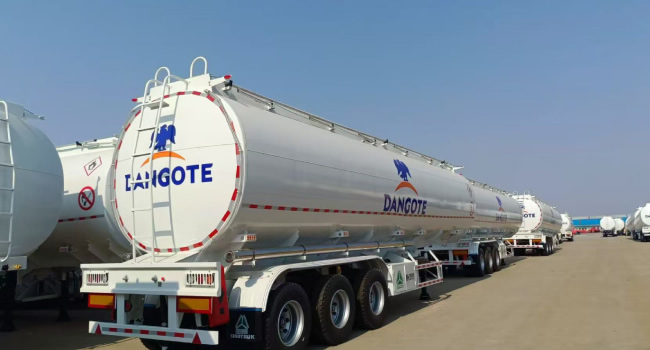
Major marketers have kicked against Dangote Petroleum Refinery’s non sale of Premium Motor Spirit (petrol) to importers of the product.
According to the refinery, importers of petroleum products into Nigeria will no longer enjoy sales from the Dangote Petroleum Refinery’s Premium Motor Spirit (petrol).
Reports confirm the refinery’s position saying it would no longer sell petrol to those blending Dangote fuel with imported grades.
“We are not selling petrol to those who are importing, since they are trying to blend our high-quality products with their ultra-low-quality imported products,” the source said, pleading for anonymity because he was not permitted to speak with the press.
Another source, according to the Punch said the refinery now prefers to sell its petrol to members of the Independent Petroleum Marketers Association of Nigeria, IPMAN, and others not known for importing. “We are selling to independent marketers and others who are not importing,” he stated.
It was learnt that the development informed why some marketers went to court to get an order that the Nigerian Midstream and Downstream Petroleum Regulatory Authority should continue to grant them import licences.
The marketers feared that they might be left stranded if they could not import fuel at a time when the Dangote refinery had halted petrol sales to them. Dangote had earlier threatened to stop transacting business with fuel importers, whom it accused of blending its Euro-5 petrol grade with imported grades.
It is concerned that such practices could make it difficult to distinguish between products supplied directly by the refinery and products subsequently blended or handled by third parties.
“It is difficult to understand why we would invest heavily in producing high-quality petroleum products for Nigerians, only for those products to be mixed with imported products of uncertain quality and the resulting product to be associated with the refinery,” the refinery said last month.
Reacting, importers and petroleum marketers kicked against the restriction of petrol sales to marketers who import petrol, describing the move as an attempt to block imports. The marketers also challenged the refinery to provide evidence that imported petrol entering the Nigerian market is below the required quality standard.
The marketers, who preferred not to be mentioned, accused Dangote of trying to prevent the importation of petrol. “We know what Dangote is trying to do. He is just trying to block imports,” one of the marketers said. The marketer argued that a company that sells petrol could not dictate whether a consumer should combine its product with fuel purchased from another supplier.
Using the example of motorists buying petrol from different filling stations, the marketer said Dangote could not prevent consumers from combining products sourced from different suppliers.
“For example, when you buy petrol from a TotalEnergies station, and you go down the road, and your petrol is almost finished, you then buy from MRS. Can TotalEnergies say you should not mix its petrol with MRS petrol? No, it can’t. I don’t understand the game that the Dangote refinery is playing,” he stated.
Another marketer also argued that the Federal Government had a responsibility to ensure an adequate petrol supply and protect consumers, insisting that imports remain necessary when domestic production drops.
Speaking, the National Vice Chairman of the IPMAN, Hamed Fashola, stated that the Dangote refinery is selective about who it sells petrol to because not all major marketers import.
“I don’t know how far that is correct; Dangote now sells to only IPMAN. I think somehow the information I have is that Dangote is selective about it, say those that are involved in importing. I think it’s not everybody that is importing,” he said.
Clarifying IPMAN’s purchasing position amid market competition, Fashola noted that independent marketers operate flexibly to secure the most competitive pricing, sourcing supply indiscriminately from both local refineries and importers.
“We buy our product anywhere we feel it is cheap. Anywhere we see the product, we go for it, both Dangote and the importers. We always go for the best price,” Fashola stated.
Meanwhile, the National Publicity Secretary of the IPMAN, Chinedu Ukadike, expressed the belief that the Dangote refinery is open to doing business with anyone.
Ukadike noted that independent marketers are ready to buy and sell petrol from all suppliers, stressing that they were not currently involved in importing the product.
While saying he would not know if importers truly blend Dangote’s petrol with imported petrol, he concluded that Dangote is in the best position to determine whatever it can do to discourage blending.
“I believe that the Dangote refinery is open for business and that it will continue to sell to marketers. The issue of blending, I cannot say yes or no, because I’m not part of those who are importing. Independent marketers are not importing yet; we are just marketers who buy and sell.
“So, if there is any measure to discourage adulteration of petroleum products by Dangote, I think the refinery and its experts know best. They know the best way to deal with that. But our own is to continue to buy and sell to marketers. If there is a way to discourage adulteration of petroleum products, I won’t stop Dangote from doing so,” Ukadike added.
Oil and Gas
NNPC Retail Gives Customers ₦66 Off Every PMS Litre…As Independence Anniversary Promotion Opens at Mega Stations
By Aliyu Musa
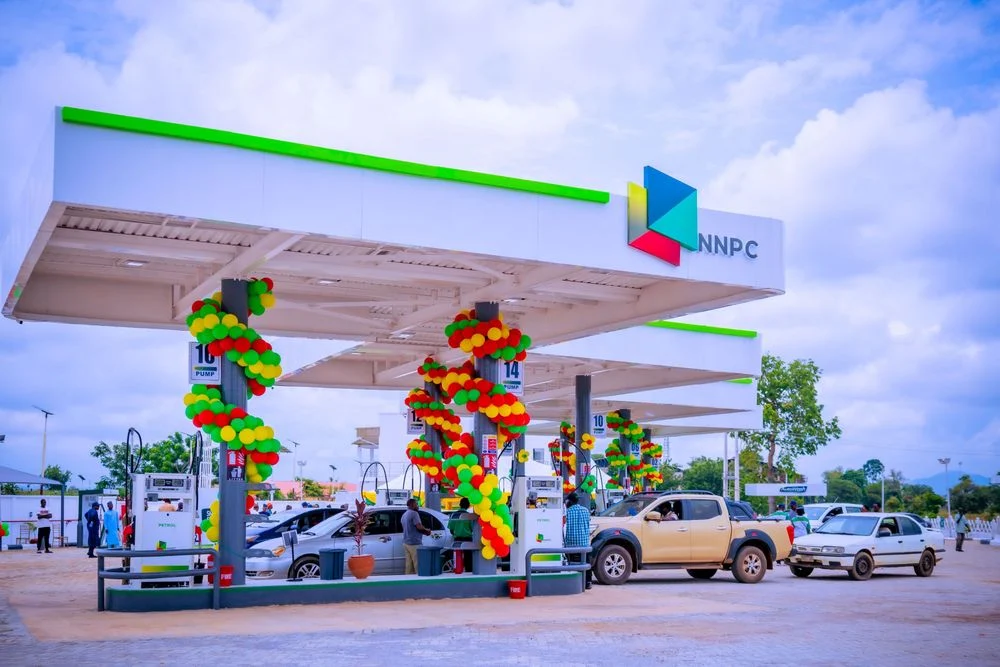
NNPC Retail Limited commenced its week-long 66th Independence Anniversary fuel promotion on 1 October 2026. On the day, Management and staff were at the mega station to engage with customers and promote awareness of the offer.
Customers get ₦66 off every litre of PMS purchased via the NNPC Fuel App, from 1 to 7 October 2026.
NNPC Retail’s Director, Operations, Baba Kukawa, said the promotion forms part of the company’s activities to commemorate Nigeria’s Independence Anniversary, combining the national celebration with a customer-focused promotion aimed at enhancing customer engagement and encouraging the use of its digital services.
By Philip Nyam
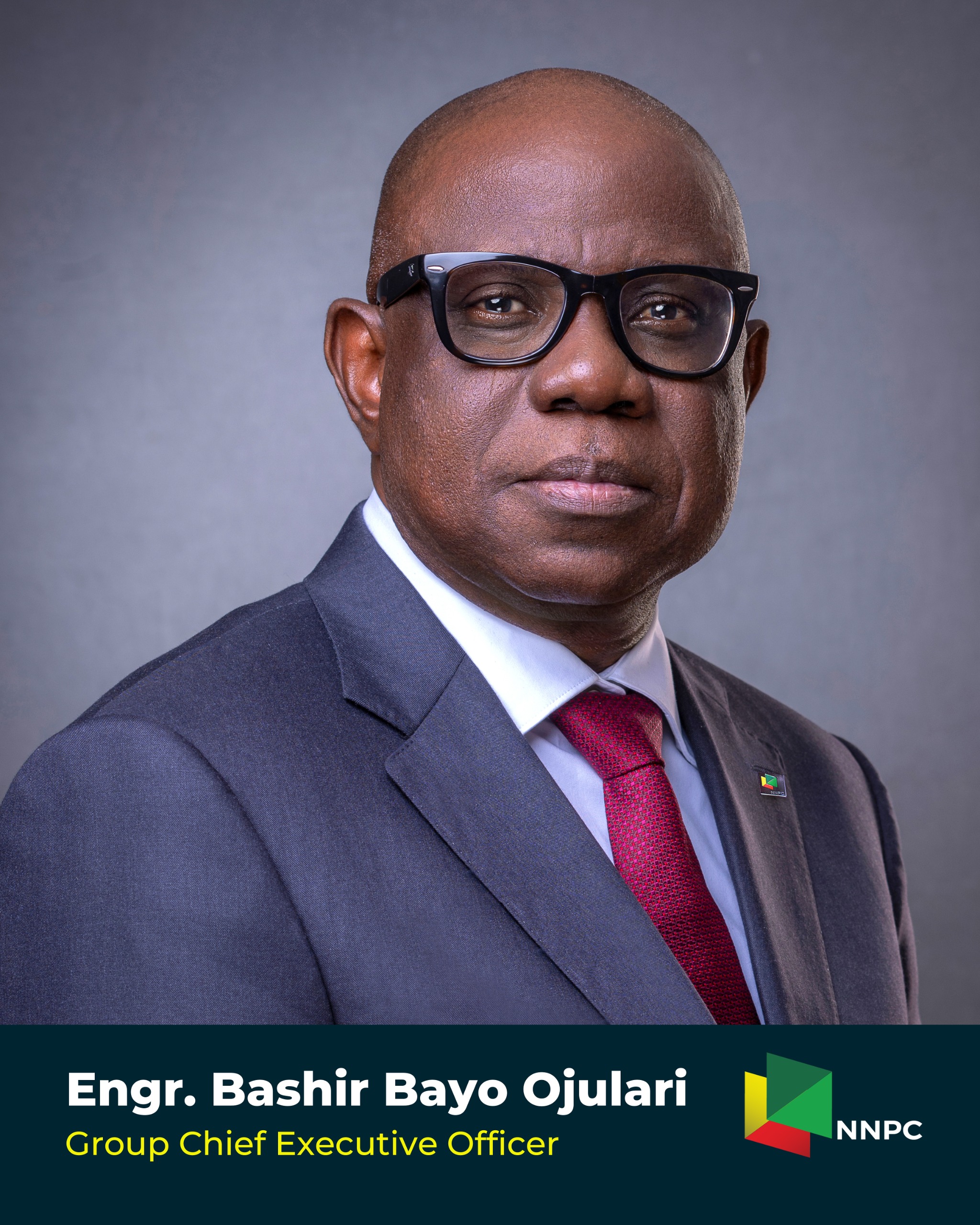
The Nigerian National Petroleum Company Limited (NNPC Ltd) has welcomed the $800 million Final Investment Decision (FID) on the Ima Gas Project, describing it as a landmark development that affirms the growing viability of Nigeria’s upstream gas sector.
The project, located offshore in OMLs 112 and 117 and developed by AMNI International in partnership with TotalEnergies, will produce about 300 million standard cubic feet of gas per day at peak.
According to Andy Odeh, Chief Corporate Communications Officer NNPCL, the output will supply critical feed gas to Nigeria LNG Limited in support of its Train 7 expansion, which will increase capacity at the Bonny Island plant from 22 million tons per annum to 30 Mtpa.
The FID was enabled by the Presidential Directives of 2024, which provided fiscal incentives for non-associated gas, streamlined contracting and lowered development costs.
Ima is the fourth major gas project to reach FID under President Bola Ahmed Tinubu, after Iseni, Ubeta and HI.
Group Chief Executive Officer, NNPC Ltd., Engr. Bashir Bayo Ojulari described it as “a decisive vote of confidence in Nigeria’s gas sector and in the bold reforms” that have created competitive terms and a predictable investment environment.
NNPC Ltd. also commends the collaboration between AMNI, TotalEnergies and the Nigerian financial sector, saying the model of indigenous operator, international partner and domestic capital is a template for future developments.
NNPC Ltd. reaffirms its commitment to work with government, regulators and industry partners to sustain investment momentum and deploy Nigeria’s gas resources for industrialisation, job creation and long-term prosperity.


100 Days To 2027 Polls: INEC Vows Neutrality, Says BVAS, Ballots Ready
Spread the loveBy Felix Umande The Independent National Electoral Commission, INEC, has assured Nigerians and the international community of its...


THE LAST TANGO: Tears, Tributes and A Final Goal As Messi Bows Out After 21 Years
Spread the loveBy Felix Umande Emotions ran high at the Estadio Monumental on Tuesday night as Lionel Messi signed off...


Church’s Duty to Empower Individuals, Create Opportunities and Improve Family’s Economic Well-being
Spread the loveBy Seyi Balogun, Lagos The need for the Church’s commitment to empowering its members through employment opportunities, entrepreneurship...

Taraba Explores ADR for Sustainable Peace Between Crop, Livestock Farmers
Spread the loveBy Michael Lim Conflict prevention between livestock farmers and host communities in Taraba State through the promotion of...


Financial Inclusion: Kwara Buys Dangote Refinery Shares For Female Teachers
Spread the loveBy Michael Lim Kwara State Government has announced plans to buy shares in the Dangote Refinery Initial Public...


Benue Govt Gives 2-Week Ultimatum To Owners Of Illegal Billboards, Threatens Mass Removal
Spread the loveBy Felix Umande The Benue State Government has decried the arbitrary erection of billboards across the state by...


INEC Tracking Illegal Campaign Spending
Spread the love–Tells Editors: “remain primary filter against information disorder.” By Son Tertsea, Abuja The Independent National Electoral Commission (INEC)...

Importers, Petroleum Marketers Kick Against Dangote’s Restriction of Petrol Sales
Spread the loveBy Seyi Balogun Major marketers have kicked against Dangote Petroleum Refinery’s non sale of Premium Motor Spirit (petrol)...


Jim Ovia Counsels: Nigeria must not Sacrifice Quality for Quantity in Tertiary Education
Spread the loveBy Seyi Balogun, Lagos Nigeria must not allow the size and the number of universities to come at...


Unidentified, Mutilated Corpse of Man Found Behind Pankshin Market in Plateau
Spread the loveBy Michael Lim, Jos On Tuesday morning, the corpse of an unidentified man was found behind the Monday...