
Sports
Burna Boy and Shakira Unveil Official 2026 FIFA World Cup Anthem

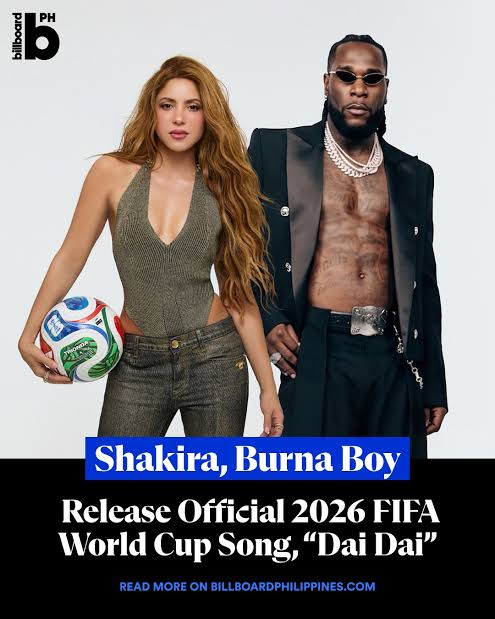
Burna Boy and Shakira released “Daï Daï” as the official anthem of the 2026 FIFA World Cup.
The song will support a global education initiative targeting $100 million in funding for disadvantaged children through royalties and donations.
FIFA confirmed that the 2026 World Cup final will feature a Super Bowl-style halftime concert for the first time.
Grammy Award-winning Nigerian artist Burna Boy strengthened his position as one of Africa’s leading global music figures after collaborating with Shakira on “Daï Daï,” the official anthem of the 2026 FIFA World Cup.
The track, released globally on Thursday, May 14, became the second single from the tournament’s official album and received a significantly warmer reception than “Lighter,” the first single performed by Jelly Roll and Carín León, which drew mixed reactions from audiences.
On her Instagram account, Shakira released a one-minute video revealing the title selected for the 2026 World Cup. The footage showed the singer walking through Maracanã Stadium after a live performance attended by a large crowd while carrying “Trionda,” the tournament’s official ball.
“Today, the road to the FIFA World Cup 2026 reached a new milestone with the release of the competition’s official song, Daï Daï, performed by Shakira and Burna Boy via Sony Music Latin,”FIFA said on its official website.
Afrobeats Secures a Global Stage
“Daï Daï” blends Latin pop and Afrobeats influences. The expression reportedly derives from Italian and means “Go!” — a universal chant of encouragement.
Shakira and Burna Boy combined their vocals and stage energy to celebrate football’s global appeal and cross-cultural exchange.
Damini Ebunoluwa Ogulu, known professionally as Burna Boy, plays a central role in the project. The 35-year-old artist brought Afrobeats’ signature sound and his international profile to the song, while Shakira contributed her Latin pop identity.
The collaboration further established Afrobeats as a major force in global music and positioned Burna Boy as one of the defining musical faces of the 2026 tournament.
Earlier this spring, Burna Boy became the first African artist to headline a solo concert at Stade de France. He also released his ninth studio album, “No Sign of Weakness” , in July 2025. The project remained rooted in Afrobeats while featuring collaborations with Mick Jagger, Travis Scott and Stromae.
Meanwhile, FIFA confirmed that the 2026 World Cup final, scheduled for July 19 at MetLife Stadium, will include a halftime concert inspired by the Super Bowl format for the first time.
The 2026 FIFA World Cup will run from June 11 to July 19 across the United States, Canada and Mexico. The tournament will also mark the first edition featuring 48 national teams.
“Daï Daï” Supports Children’s Education
The “Daï Daï” initiative also carries a philanthropic dimension.
In partnership with FIFA and Global Citizen, Shakira aims to raise $100 million to improve access to education and football programs for disadvantaged children worldwide.
The project will direct all royalties generated by the song to the Education Fund. Meanwhile, Sony Music announced an initial donation of $250,000 to support the initiative and expand its social impact.
Ubrick F. Quenum





Sports
How FG’s Docility and FIFA’s Compromise on Mpasi Conspired Against Nigeria’s 2026 W’Cup Qualifier– Report
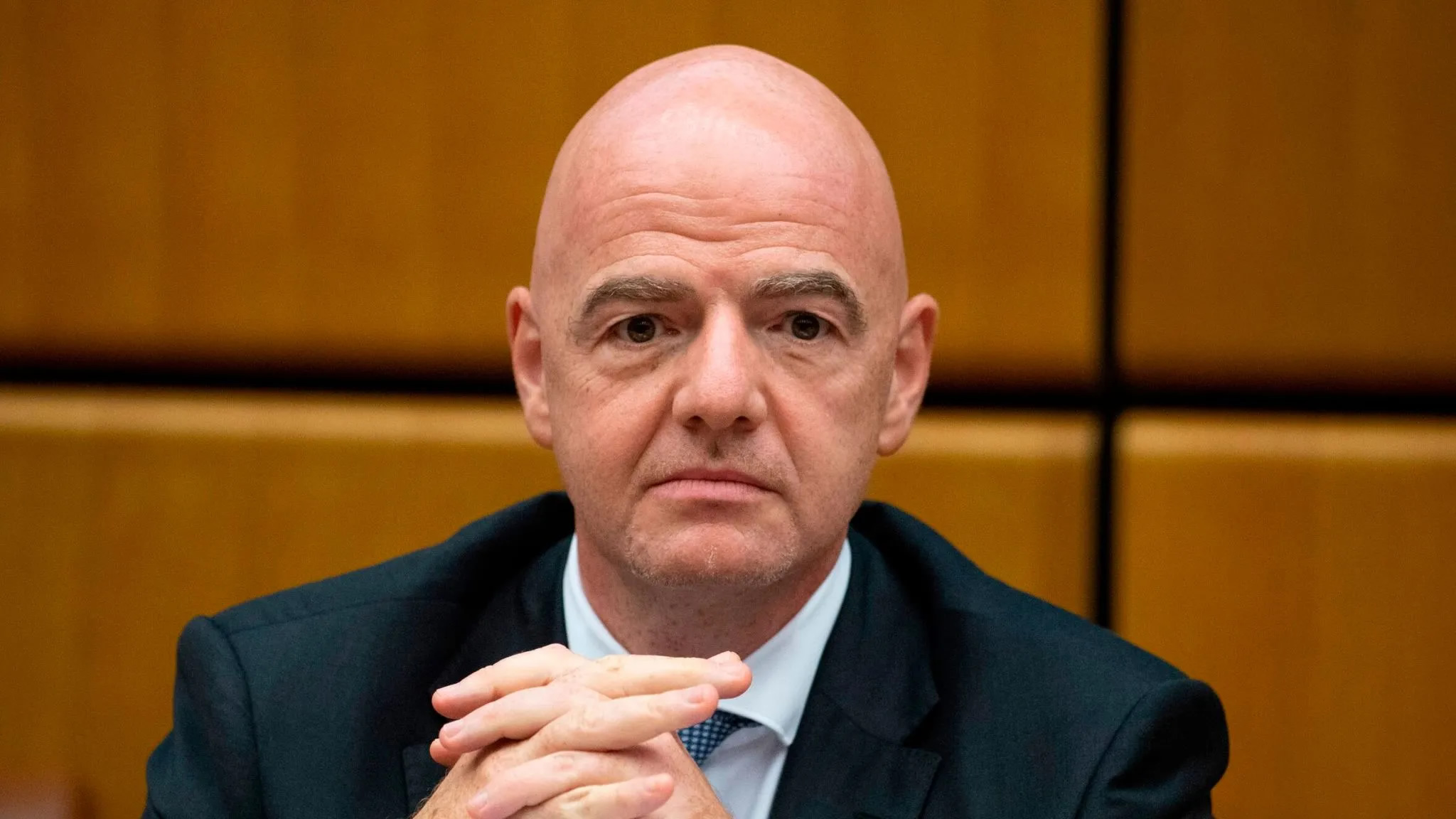
The apex world soccer’s governing body, FIFA, knew that the Democratic Republic of Congo fielded an ineligible player in the 2026 World Cup qualifier game played against the Super Eagles of Nigeria, The New York Times has learnt.
The match, which was held in November 2025 in Rabat, Morocco, was the final of the CAF play-offs for a spot in the intercontinental tournament.
DR Congo won 4-3 on penalties after the match ended 1-1.
According to the report published on Tuesday, FIFA’s own legal officials had privately determined that Congo had breached player eligibility rules after goalkeeper Lionel Mpasi failed to complete the required documentation to switch his international affiliation from France, where he had represented youth teams.
Despite the finding, FIFA allowed Mpasi to continue playing, and Congo went on to defeat Jamaica in March to secure its first World Cup appearance in 52 years.
The development has raised fresh questions over FIFA’s handling of Nigeria’s complaint against Congo, which came after the Central African side defeated the Super Eagles on penalties in the African play-off final in November 2025.
The defeat condemned Nigeria to a second consecutive World Cup miss, after also missing out on the 2022 edition in Qatar.
In December 2025, the Nigeria Football Federation lodged a complaint with FIFA alleging that Congo had fielded players who were not properly eligible to represent the country.
The NFF’s complaint questioned the clearance of several foreign-born players, including Mpasi, and alleged that the Congolese federation had misled FIFA in securing their eligibility.
Documents and correspondence reviewed by The New York Times, alongside information from a senior official directly involved in the case, showed that FIFA officials had considered several possible sanctions against Congo, including awarding the match to Nigeria, imposing fines, replacing Congo with Nigeria in the play-off against Jamaica or taking no action on the grounds that Nigeria had filed its complaint late.
Under FIFA rules, fielding an ineligible player can result in a team forfeiting the match in which the player featured, as FIFA had previously taken a more decisive position in similar cases.
In 2016, FIFA sanctioned Greece after it fielded an ineligible player who had previously represented Australia at youth level, awarding a 3-0 defeat in its match against Turkey. Two years later, the governing body changed the results of two Bolivia World Cup qualifying matches after determining that Bolivia had fielded a player who had previously represented Paraguay.
At the time FIFA was reviewing the Congo eligibility case, Véron Mosengo-Omba, an ally of Infantino, was preparing to contest for the presidency of the Congolese football federation.
Two months later, following Congo’s qualification for the World Cup, Mosengo-Omba emerged as the sole candidate and was elected president after eight other contenders had either withdrawn or been disqualified following changes to eligibility rules.
Cameroonian former FIFA official Prince Zelkifli Rahman Ngoufonja, popularly known as Prince Zul, said the relationship between Infantino and Mosengo-Omba raised questions over the potential consequences of FIFA removing Congo from the World Cup.
“If FIFA removed Congo from the World Cup,” he said, Infantino’s ally’s prospects “could have been damaged.”
Mosengo-Omba, however, said he was unaware of FIFA’s findings regarding Mpasi’s eligibility.
The Punch
By Felix Umande
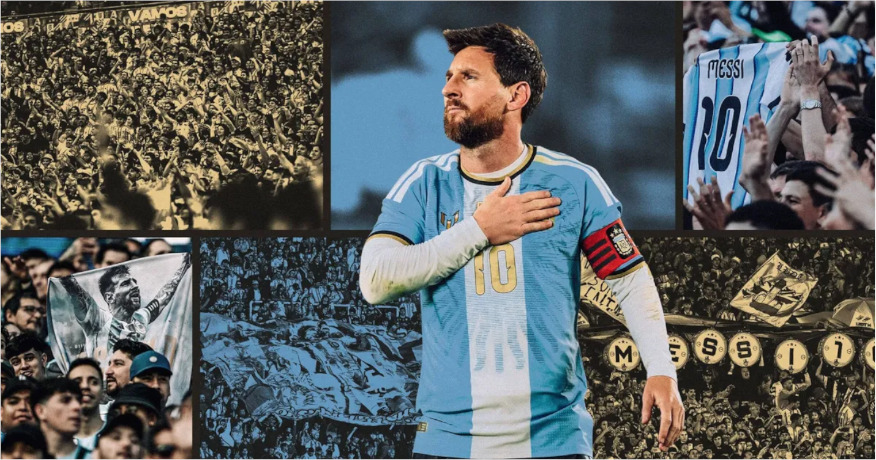
Emotions ran high at the Estadio Monumental on Tuesday night as Lionel Messi signed off from international football the only way he knows how — with a goal, two assists and a stadium in tears.
In his 208th and final game for Argentina, the 39-year-old led La Albiceleste to a 3-0 friendly win over Benin in what was billed as “The Last Tango” — a farewell in front of 85,000 adoring fans.
It was a script written for the GOAT.
After a goalless first half, Messi delivered two moments of magic. In the 48th minute, his corner found fellow retiree Nicolas Otamendi, 38, who fired home the opener. In the 61st minute, he set up 22-year-old Nico Paz — touted as one of his heirs — from the edge of the box.
Then came the finale. In the 71st minute, after Agustin Giay was fouled in the box, Messi stepped up and emphatically dispatched a penalty into the roof of the net for his 126th and final international goal, sparking a deafening chant of “Messi, Messi.”
The Inter Miami forward, who wore a special kit for the occasion, leaves as Argentina’s all-time record appearance maker and top scorer with 126 goals and 69 assists in 208 caps over 21 years.
His glittering international career includes the 2008 Olympic gold, Copa América titles in 2021 and 2024, the 2022 Finalissima, and the ultimate prize — the 2022 FIFA World Cup in Qatar, where he also won the Golden Ball. He was a World Cup finalist in 2014 and again this summer, when Argentina lost 1-0 to Spain in New Jersey.
The night was pure theatre. Messi arrived in tears as the team bus crawled through crowds to the stadium, took to the pitch holding hands with his three children, and wept again during the national anthem sung by Falklands War veteran Fabio Santana. His wife Antonela Roccuzzo and mother Celia Cuccittini watched from a VIP box, while a giant Argentina jersey with “Gracias” and No.10 was unfurled on the pitch.
After the final whistle, the sky above the Monumental lit up with a drone show reliving his career — ending with the iconic image of him lifting the World Cup.
An emotional Messi told fans: “It was a huge source of pride for me to defend this jersey for more than 20 years. Not coming anymore is going to be deeply painful. I swear I’d like to play for the rest of my life, because playing for the Argentina national team is the most beautiful thing that can happen to you.”
Messi announced his international retirement on August 31, citing the gruelling 2026 World Cup campaign and the illness and subsequent death of his father Jorge as factors. He remains under contract with Inter Miami until 2028.
As he said himself on Tuesday: “Now I’m here on the saddest day of my career, which is the day I have to say goodbye to the national team. But now I’ll be on that side, with the fans, supporting all the boys. Always united.”
By Seyi Balogun, Lagos
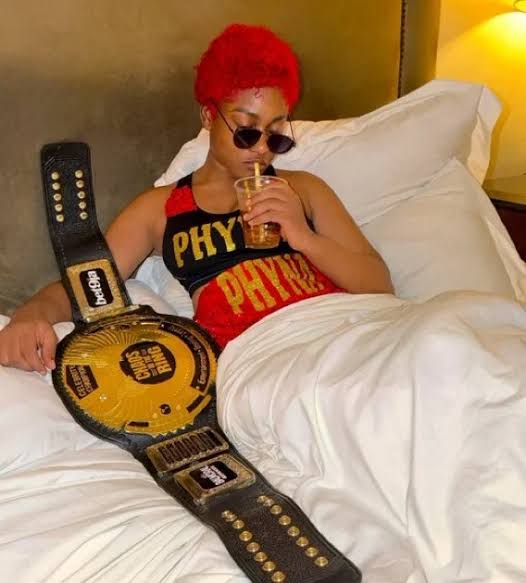
Big Brother Naija winner, Ijeoma Otabor, aka Phyna, has celebrated the fourth anniversary of her reality TV success with another victory, making history as the winner of Nigeria’s first female celebrity boxing bout.
Phyna won the seventh season of Big Brother Naija,
Level Up, on October 2, 2022. Four years later, the reality star marked the anniversary with a boxing victory over Nollywood actress Nkechi Blessing by knockout.
Reflecting on the two milestones in a post shared on Friday, Phyna wrote:
“October 2nd will forever be a special date in my life.
“Today marks the anniversary of the day I won BBN, and now, years later, I’m celebrating another historic victory becoming the first female boxer to step into this ring and win this fight. ”
The victory came during Balmoral Promotions’ Chaos in the Ring event at the Federal Palace Hotel, Victoria Island, Lagos, on Thursday.
The former reality star sees her transition from reality television to boxing as part of her determination to challenge herself and break barriers. She wrote:
“From reality TV to the boxing ring, I’ve always been willing to challenge myself, break barriers, and prove that there is so much more to Phyna than what people see.
“This one is for every woman who has ever been told she couldn’t. We can. We will. And we absolutely should.”
Phyna thanked Balmoral Promotions and Bet9ja for the opportunity, describing October 2 as “a date of victory, courage and new beginnings.”
She also received ₦50m as the winner of the historic bout and said she intends to pursue professional boxing, suggesting her victory over Nkechi could mark the start of a longer career in the sport.
Following the fight, Phyna named Nollywood actress Etinosa Idemudia as her next potential opponent, accusing her of disturbing her through direct messages.
“I came in, and I kept my cool and did the thing. Now I would like to fight Etinosa. I think it is time I teach her a lesson,” Phyna said after the bout.
Etinosa, who watched the fight from ringside, accepted the challenge, saying, “I have been advising you to carry the Edo name with pride. We do not run from any fight. I accept the challenge fully.”
Phyna’s victory came on the same night skit maker Carter Efe defeated musician Speed Darlington by technical knockout in their four-round celebrity bout.


How FG’s Docility and FIFA’s Compromise on Mpasi Conspired Against Nigeria’s 2026 W’Cup Qualifier– Report
Spread the loveThe apex world soccer’s governing body, FIFA, knew that the Democratic Republic of Congo fielded an ineligible player...
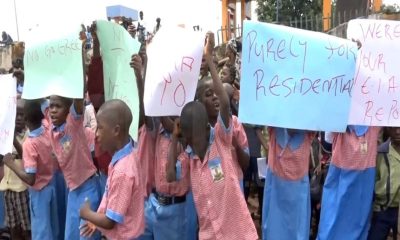

Kogi Community Protests Building of Mortuary in Residential Area.
Spread the loveBy Isa Abdul The construction of an alleged mortuary close to public school and residential buildings has been...


100 Days To 2027 Polls: INEC Vows Neutrality, Says BVAS, Ballots Ready
Spread the loveBy Felix Umande The Independent National Electoral Commission, INEC, has assured Nigerians and the international community of its...
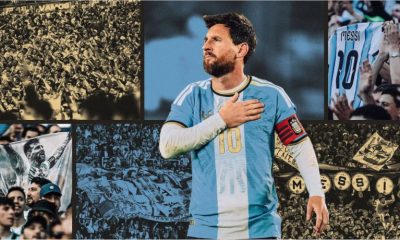

THE LAST TANGO: Tears, Tributes and A Final Goal As Messi Bows Out After 21 Years
Spread the loveBy Felix Umande Emotions ran high at the Estadio Monumental on Tuesday night as Lionel Messi signed off...


Church’s Duty to Empower Individuals, Create Opportunities and Improve Family’s Economic Well-being
Spread the loveBy Seyi Balogun, Lagos The need for the Church’s commitment to empowering its members through employment opportunities, entrepreneurship...

Taraba Explores ADR for Sustainable Peace Between Crop, Livestock Farmers
Spread the loveBy Michael Lim Conflict prevention between livestock farmers and host communities in Taraba State through the promotion of...

Financial Inclusion: Kwara Buys Dangote Refinery Shares For Female Teachers
Spread the loveBy Michael Lim Kwara State Government has announced plans to buy shares in the Dangote Refinery Initial Public...

Benue Govt Gives 2-Week Ultimatum To Owners Of Illegal Billboards, Threatens Mass Removal
Spread the loveBy Felix Umande The Benue State Government has decried the arbitrary erection of billboards across the state by...


INEC Tracking Illegal Campaign Spending
Spread the love–Tells Editors: “remain primary filter against information disorder.” By Son Tertsea, Abuja The Independent National Electoral Commission (INEC)...

Importers, Petroleum Marketers Kick Against Dangote’s Restriction of Petrol Sales
Spread the loveBy Seyi Balogun Major marketers have kicked against Dangote Petroleum Refinery’s non sale of Premium Motor Spirit (petrol)...