
Sports
CAF’s AFCON Final Decision Built on Reports, Not Preferential Interpretation

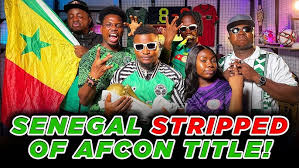
The decision by the CAF Appeal Board to strip Senegal of the 2025 AFCON title did not come from pressure or speculation. Instead, it was the culmination of conclusions from a set of detailed and consistent official reports.
Those reports now form the foundation of the ruling that awarded Morocco a 3-0 win against Senegal.
According to Médias24, multiple documents reviewed by CAF describe the same sequence of events late in the match. In the 97th minute, tensions escalated quickly after the referee awarded a penalty awarded to Morocco.
Senegal’s players reacted strongly. The referee’s report notes that, on instructions from head coach Pape Thiaw, the players left the pitch and returned to the dressing room.
The match stopped at that point, and play only resumed several minutes later.
That moment became the turning point of the case.
CAF’s decision focused on that exact sequence. And the official reports all describe not just a protest, but a full interruption of the match after Senegal’s players left the field.
From a regulatory perspective, that detail matters.
Under CAF rules, leaving the pitch without the referee’s authorization triggers automatic consequences. And the return to the field does not cancel what already happened.
Consistent reports across all levels
Indeed, both the referee’s account and other official reports make this exact case.
The match commissioner confirmed that most Senegalese players left the field, forcing a temporary suspension. The general coordinator described strong reactions from players, staff, and substitutes, especially after the VAR decision.
Security reports added further context. They mention attempts by some supporters to approach the pitch and objects being thrown from the stands. The atmosphere became tense, and security teams had to step in to contain the situation.
All in all, these reports do not contradict each other. They instead converge on one key point: the match was disrupted after Senegal’s players left the field.
From protest to regulatory breach
CAF’s ruling does not treat the incident as a simple protest.
Disagreement with refereeing decisions is part of football. Leaving the pitch is not.
That distinction defines the case.
Analyst Samir Bennis has made the same argument in his recent analyses. “The Senegalese team’s conduct amounted to a withdrawal from the field of play,” he recently wrote, pointing to both video evidence and official reports.
Bennis has also stressed that Article 82 of the CAF regulations is clear and cannot be subject to creative interpretations under any circumstances. The article unambiguously stipulates that a team that refuses to play or leaves the pitch without authorization “shall be considered to have lost.”
There is no clause allowing the act to be reversed if the team later returns. There is also no minimum duration required.
In that context, Senegal’s actions fall under both refusal to play and withdrawal, a combination that is difficult to defend from a legal standpoint.
A decision rooted in structure, not narrative
The broader debate around the final has grown beyond the match itself. Different interpretations and narratives continue to circulate as both camps anxiously await the final verdict from the Court of Arbitration for Sport (CAS).
But CAF’s decision follows a structured approach.
It relies on:
Official match reports
Consistent accounts from multiple officials
Clear regulatory provisions
That combination leaves limited room for ambiguity.
As Médias 24’s analysis shows, the reasoning behind the ruling is built step by step, focusing on the rule as written and the facts as documented.
What comes next
The case now moves to the Court of Arbitration for Sport (CAS).
CAS will not revisit the emotions of the match or the controversy around the penalty. It will focus on whether CAF correctly applied its own regulations.
That brings the case back to its core question: what are the consequences when a team leaves the field during a match?
CAF has already answered that question.
And based on the reports and the rules, that answer rests less on interpretation and more on the application of the text itself
Source: medias24





Foreign
Spain’s Royal Spanish Football Federation (RFEF) Pioneers Egg-freezing and In-vitro Fertilization (IVF) for Female Soccer Players and Referees.

By Son Tertsegha, Abuja
Spain’s Royal Spanish Football Federation (RFEF) has introduced bearing the full costs for Egg-freezing and In-vitro Fertilization (IVF) for Female Soccer Players and Referees. The policy covers international players who have received at least two national team call-ups.
The programme runs through an official partnership with the Tambre fertility clinic and is secured through 2029.
Beyond egg vitrification, the agreement provides access to various family planning treatments and complements existing rules allowing players to have children nearby during training camps and tournaments.
The policy takes bearing from the advocacy efforts of star players like Alexia Putellas and Patri Guijarro who heavily campaigned for the initiative, noting that an elite athlete’s peak biological fertility years directly overlap with their peak professional playing years.
According to reports, the goal is to achieve Work-Life Balance designed to ensure that female athletes do not feel forced to choose between starting a family and pursuing a professional career at the highest level.
By Nick Ibe
Nigeria has agreed an $8.5m-a-year equipment deal that the Nigeria Football Federation says is the biggest in African football. The deal will also end its 11-year association with Nike and return to adidas.
Former NFF president, Ibrahim Gusau, who resigned along with the federation’s executive committee on Thursday, disclosed the agreement at a news conference in Abuja, saying adidas will pay the federation $4.5m annually in cash and provide another $4m worth of equipment for Nigeria’s national teams.
The NFF will also receive a 20 per cent royalty on merchandise sales, a clause that could push the value of the agreement well beyond the guaranteed $8.5m annual figure.
Gusau said the contract has already been signed, though it was originally scheduled to be announced in September. He said:
“It is about the highest kit sponsorship in Africa. No other country in Africa has that kind of sponsorship.
“Adidas will pay Nigeria $4.5 million every year in cash and then they will provide kit worth $4 million every year.”
The package becomes the largest kit-supply agreement for an African national football federation, if beating Morocco’s deal with Puma, reportedly valued at $1.7m, previously the highest publicly known figure on the continent.
Nigeria’s outgoing Nike contract signed since 2015, had become grossly inadequate for the federation’s needs argued Gusau:
“As (former) president, I cannot gift someone a jersey because we met a contract that has been running for 11 years on the same terms worth $500,000 in cash and $1 million in kit supply. $500,000 in 2015 and still $500,000 in 2026. It is like you have nothing.”
Nigeria was to first sign with Nike in April 2015 due to its earlier adidas deal being cancelled over breaches during the 2014 World Cup.
Gusau said the limitations of the Nike arrangement had proven so inadequate that the federation had resorted to buying additional kits for its teams, including Nigeria’s U-20 women’s team for the World Cup in Poland.
“We have to buy jerseys for the girls that travelled to Poland because $1 million worth of equipment cannot even service Super Eagles qualifiers for World Cup and Nations Cup as well as Super Falcons,” he said.
Due to the insufficiency, the federation began pushing Nike for improved terms in 2024 but could not reach an agreement, prompting it to solicit competing offers, with Nike retaining a contractual right to match the best proposal. Gusau added:
“Finally, they agreed that we could negotiate with others. At the end of the day we contacted adidas and other kit sponsors and we were able to secure a substantial agreement with adidas. Nike has to match whatever we were offered. They were unable to match the offer from adidas and that is why we are moving on.”
Adidas previously supplied Nigeria’s 1994 Africa Cup of Nations kits and its first World Cup appearance that same year, and again from 2004 to 2014, a period that included the Super Eagles’ 2013 Africa Cup of Nations title.
Nike’s return in 2015 produced some of Nigeria’s most recognisable kits, including the widely celebrated 2018 World Cup jersey.
Adidas has a larger retail footprint in Nigeria, with about 13 stores compared to Nike’s one, and it plans to expand to 32 stores within two years. This was another factor behind the switch.
Sports
2nd Enugu International Marathon Ends Great: State Guns for World Athletics Road Race Label for 2027 Edition
By Son Tertsegha
The 2nd edition of the Enugu international 42km elite races for men and women recorded resounding success Saturday.
Kenya’s Edwin Kipyego and Ethiopia’s Zenebe Aberu emerged winners of the men’s and women’s races respectively.
With more than 3,000 runners taking to the streets of Enugu city for the event, Enugu State Government, organisers of the event, in partnership with Nilayo Sports Management, and the Athletics Federation of Nigeria (AFN) providing technical support, the future for subsequent editions looks good.
Kipyego produced a tactical performance to win the men’s race in 2:20:38, making his decisive move at the 37km mark to break away from a leading pack of four runners.
The Kenyan crossed the finish line first to claim the $15,000 prize, gold medal and title of Enugu City International Marathon champion.
Ethiopia’s Habtamu Girma finished second in 2:23:39, while compatriot Shiferaw Daltiemayu took third in 2:23:41.
The race was flagged off at 6:30am at Shoprite on Abakaliki Road by Enugu State Governor Peter Mbah, with the route passing through Independence Layout, Okpara Avenue and Nike Lake Road before finishing at Mike Okpara Square.
Kipyego described the course as challenging but praised the support of spectators along the route.
“This was a tough but beautiful course. The hills tested us, but the people of Enugu carried us with their cheers. I will definitely return next year,” he said.
Nigerian runners dominated the 10km event, with Gyang James Boyi and Obadih Vivian winning the men’s and women’s races respectively.
Boyi clocked 29:59 to secure the ₦3 million first prize after making his decisive move with 3km remaining, while Vivian triumphed in 35:13.09.
Davwi Gyang and Mwantiyi Teyei finished second in the men’s and women’s races respectively, while Pam Joshua and Danjuma Agnes took third positions.
The 10km race, which was flagged off at 8:30am at Chris Tee Petrol Station on CIC Road, was designed to promote mass participation and identify emerging road-running talents.
Nilayo Sports Management chief executive officer Yetunde Olopade described the event as a world-class competition.
“Enugu has set the standard. From athlete welfare to security and crowd management, this marathon has shown that Nigeria can host international-label races,” she said.
Enugu State Deputy Governor Ifeanyi Ossai said the marathon was in line with the state’s sports tourism ambitions, adding that the event would continue to grow.
Commissioner for Sports Lloyd Ike Ekweremadu commended the Local Organising Committee, sponsors, medical teams and security agencies for ensuring a successful event.
He also disclosed that the state had applied for World Athletics Road Race Label status for the 2027 edition.



Mother Subjects Daughter to Abuse, Admits: “I made $300 from my 8-yr-old daughter’s pornographic video’
Spread the loveBy Nick Ibe The viral video on the social media involving an 8-year old girl whose ordeal was...


Lawyer Assaulted by Police: NBA Gboko Branch Secures N500 Million General and Exemplary Damages in Makurdi Court
Spread the loveBy Our Reporter In the pursuit of justice for a colleague, B. B. Iliamkondo, Esq., who was recently...


Alia Denounces Ayilamo Attack, Commiserated With Victims as DSS Arrests 3 Suspects
Spread the loveBy Felix Umande Governor Hyacinth Alia of Benue State has strongly condemned the deadly attack on Ayilamo Community...


Alia Condemns Ayilamo Attack, Commiserates With Victims, As DSS Arrests 3 Suspects
Spread the loveBy Felix Umande Governor Hyacinth Alia of Benue State has strongly condemned the deadly attack on Ayilamo Community...


FG, States, Be warned We Will Strike, Without Warning –ASUU
Spread the loveBy Nick Ibe, Abuja Without urgently resolving all the pending salary and welfare issues, by the Federal Government...
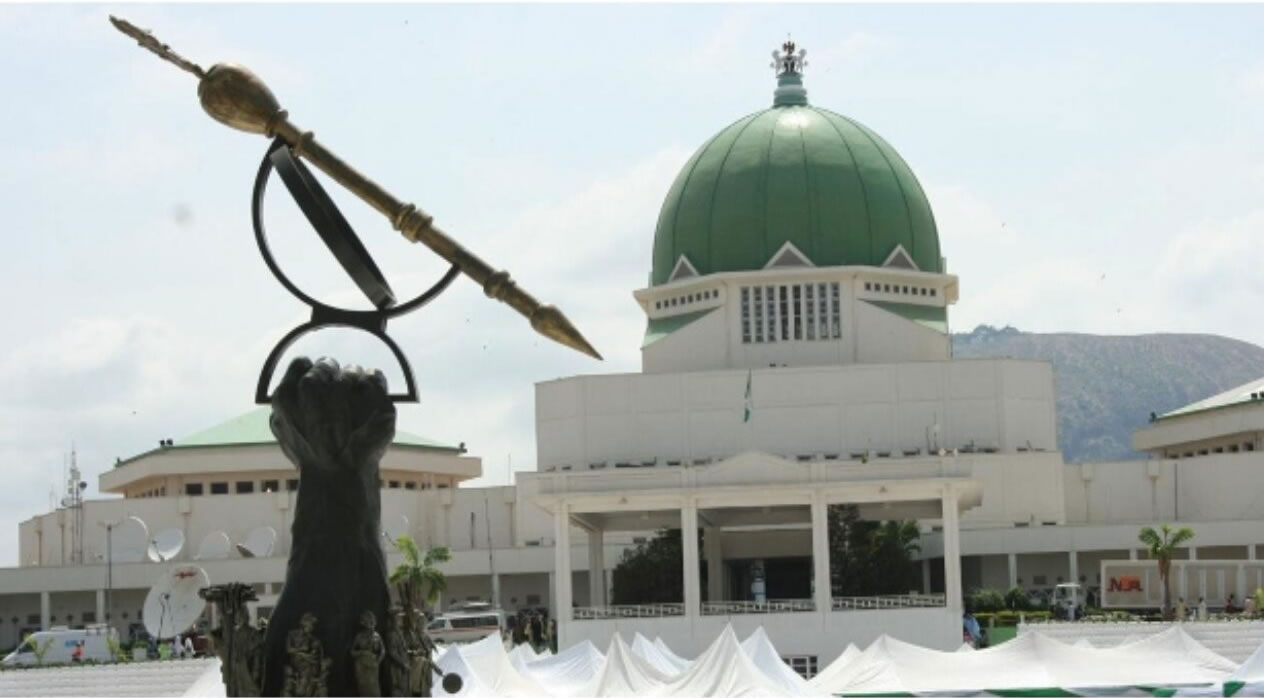
Protest Against Xenophobia: NASS Orders Boycott of South African Organised, Hosted Legislative activities
Spread the love–Calls on State Assemblies to join By Isa Abdul, Abuja In a bold move against South Africa’s xenophobic...

Why Education is Dear to Me – By Peter Obi
Spread the loveAfter returning to Abuja on 8th September 2026, following our visits to Benue and Plateau States, I travelled...

After Two Decades: FG Pays 2,700 ex-Nigeria Airways Staff N18bn
Spread the loveBy Son Tertsegha, Abuja Over two decades after the national carrier, Nigeria Airways, was liquidated, the Federal Government...

To Boost Sch Enrollment: Nasarawa Plans Mobile Courts To Arrest, Prosecute Parents Of Out Of School Children
Spread the loveBy Michael Lim, Jos As part of measures to tackle the growing number of out-of-school children in Nasarawa...

Akume to Religioud Leaders Make Peacebuilding Part OF National Security Ahead of 2027
Spread the loveBy Felix Umande The Secretary to the Government of the Federation, Senator Dr. George Akume, CON, on Wednesday...