Connect with us

General News

Criticize Jonathan with Fairness, Honesty and Respect for Historical Truth

Published

on

Spread the love

—Nigerian Diaspora Group Tells VeryDarkMan

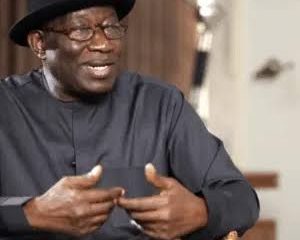
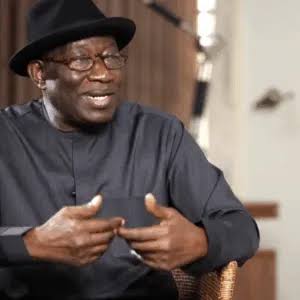
Nigerian diaspora group, the Goodluckans 2027 Diaspora Leadership Council, has defended former Nigerian President Goodluck Jonathan, following recent criticisms levelled against him by a social media commentator, VeryDarkMan.

In its weekend statement, the group condemned VeryDarkMan’s remarks as unfair and disrespectful to a leader whose role in strengthening Nigeria’s democracy remains widely acknowledged.

The statement, signed by the council’s coordinator, Eliana Melekwe, stated:

“Public influence carries enormous responsibility and must be exercised with fairness, honesty and respect for historical truth, particularly when discussing leaders whose sacrifices and contributions to democratic governance are well established.”

The council further praised Dr Jonathan for what it described as his calm disposition, inclusive leadership style and steadfast dedication to democratic governance.

The group recalled the historic statement during the 2015 presidential election: “my political ambition is not worth the blood of any Nigerian,” noting that the declaration became an antidote to the charged atmosphere of the moment which also enhanced the sustenance of Nigeria’s democratic journey.

It added that Dr Jonathan’s peaceful concession of defeat at the time also helped prevent political unrest in the country.

“At a delicate period in the nation’s political history, President Jonathan chose peace, unity and democratic continuity over personal ambition,” the statement added.

The organisation further argued that the former president’s conduct since leaving office has continued to attract admiration both locally and internationally, earning him recognition as a respected statesman and advocate for democracy across Africa.

See also  Another Batch Of 100 Kidnaped Students Rescued In Niger State

Meanwhile, the controversial social media commentator VeryDarkMan (VDM) recently criticized former President Goodluck Jonathan, alleging that he was being politically sponsored by President Bola Tinubu’s administration to divide opposition votes ahead of the 2027 elections.

Continue Reading
Click to comment

Leave a Reply

Your email address will not be published. Required fields are marked *

General News

NDLEA Warns: Nigeria’s Drug Consumption Status Worrisome

Published

on

By

National Drug Law Enforcement Agency, NDLEA
Spread the love

By Isa Abdul, Abuja

The National Drug Law Enforcement Agency chairman, retired Brig. Gen. Buba Marwa, has warned that Nigeria’s drug consumption status has become a sobering reality despite some progress made in the last five years.

The NDLEA boss stated this at the opening session of a two-day National Drug Control Master Plan (NDCMP) Consultative Forum organised by the agency on Monday in Abuja.

Marwa said UNODC estimates suggest a 40 per cent spike in drug use across Africa by 2030, while recent reports from the Global Initiative Against Transnational Organised Crime (GI-TOC) indicate that West Africa remains a high-pressure corridor for cocaine flows between Latin America and Europe.

He expressed worry that Nigeria’s drug situation was getting was getting complex due to the surge in synthetic substances, prescription drug abuse, poly-drug use, and New Psychoactive Substances (NPS), as well as the digitalisation of the drug trade through encrypted platforms and dark-web operations.

In his words:“As Africa’s most populous nation and largest economy, Nigeria cannot afford to be a passive observer. The risks to our youth, our workforce, and our national security are too high.

“This forum is therefore our battle room for the next five years. Our primary objective is to finalise the Zero Draft of the NDCMP 2026–2030, a roadmap built on the rigorous summative evaluation of our previous cycle.

“The new plan introduces two critical pillars to our strategy, that is: the Alternative Development and Sustainable Livelihoods that addresses the socio-economic drivers of the drug trade.

See also  Nigerians' Loss of Human Values Deeply Troubling Realities

“This is also as well as disrupting the illicit drug economy, using financial intelligence to choke the lifeblood of trafficking networks.”

He however gave kudos to local and international partners, especially the UNODC and ECOWAS, in the development of the 2026–2030 NDCMP draft.

Marwa called on participants at the event to view the drug war not as an abstract concept but a daily reality in homes, schools, and communities.

“We are here not just as policy-makers and experts, but as parents, citizens, and guardians of the next generation. Despite our different backgrounds, our goal is singular and that is a drug-free Nigeria.

“I urge you to use the next two days to think boldly. Challenge the status quo, propose innovations. Your inputs will determine the trajectory of our nation’s safety for the next half-decade.

“I look forward to a final NDCMP 2026–2030 that stands as a roadmap of hope and promise for a safer, healthier Nigeria,” Marwa added.

Mr Cheikh Toure, Country Representative of the United Nations Office on Drugs and Crime (UNODC), in his comments called for stronger community-based participation in Nigeria’s drug control efforts warning that drug abuse and trafficking cannot be achieved from the centre alone.

He said drug control in a country with 36 states, the FCT and 774 local government areas must be driven at community level to be effective.

“State and local governments must take ownership of the response by providing funding, integrating drug control priorities into development plans, and ensuring services reach grassroots communities.”

While commending NDLEA for leading the consultative process, he noted that Nigeria’s drug challenge is becoming increasingly complex and expanding in scope.

See also  Insecurity, Human Trafficking and Poverty Creating a Bleak Future for Benue, Stakeholders Warn

Toure described the NDCMP as an opportunity to align responsibilities across all levels of government and strengthen coordination for real impact.

He further stressed that without such commitment and the involvement of younger people who are both a vulnerable group and key partners in prevention and response efforts without whom even the strongest national strategy may not deliver the desired results.

He further emphasised gender inclusion, noting that women and girls now face unique vulnerabilities thus becoming central to prevention, treatment, and community resilience.

Minister of State for Education, Prof. Suwaiba Ahmad, in her submission commended the NDLEA for its sustained commitment, professionalism, and proactive approach in tackling drug abuse and illicit trafficking in Nigeria.

She said the agency’s efforts in advocacy, enforcement, rehabilitation, and stakeholder collaboration remain meaningful in protecting communities and restoring hope to affected individuals and families.

“As we work collectively to develop a robust and responsive National Drug Control Master Plan, it is important that we adopt a holistic and multi-sectoral approach that integrates education, healthcare, law enforcement, community engagement, and social support systems.

“Such collaboration is essential to addressing both the root causes and consequences of substance abuse in our society.

“I therefore urge participants at this forum to engage constructively, share valuable insights, and develop practical recommendations that will strengthen Nigeria’s drug control framework and ensure a sustainable outcome for future generations,” she said.

Continue Reading

General News

Joe Ajaero Says Power sector An Embodiment of Scam in Nigeria

Published

on

By

NLC-Joe-Ajaero
Spread the love

The plethora of reforms in the power sector, creation of the DisCos and privatisation, the subsidy regimes, metering issues and all the purported efforts in the power sector for the public interest have been described by President of the Nigeria Labour Congress, NLC, and General Secretary of the National Union of Electricity Employees,
NUEE, Joe Ajaero, as “the biggest scam in the country.

Ajaero reportedly stated in a press interview that the electricity sector has become a preserve of powerful interests to milk Nigeria.

In his opinion, the biggest structural failure in Nigeria’s power sector today is not generation, transmission, or distribution in isolation.

“I cannot say that any one of these areas is the major problem. It is collective. We have three sectors that work together. The truth is that if there is a problem in one sector or another, then you are going to suffer for it.

“If you generate 10,000 megawatts and transmission capacity is 5,000 megawatts, it is not guaranteed that you will even wheel 5,000 megawatts. You may get to distribution, and the distribution capacity may not even take 10,000 megawatts. So, you suffer either way.

“If you have distribution capacity that can take 10,000 megawatts, but transmission cannot meet that capacity, it is a problem. If you have transmission and distribution capacity that can take 10,000 megawatts, but generation has not provided 10,000 megawatts, then that is also a problem. Every sector must match the other.

“But the greatest challenge is that these three sectors believe they can handle 10,000 megawatts, yet the supply is not stable. Distribution cannot say it can consistently handle 4,000 megawatts. They may do so today, but tomorrow they may not. The same thing applies to transmission and generation. Generation may tell you there is no gas or that the water level has dropped.

“I think this is a challenge we have created in this country because we do not have a conscious master plan for the power sector. The stakeholders are investors whose motive is simply to make money. Until the stakeholders sit together and plan for the future, the problem will remain.

Ajaero asked sarcastically, “Was privatisation meant to improve electricity supply? It is important that we realise this. Privatisation was never meant to improve power supply.

“Before the eventual privatisation, licences were given to some individuals to generate electricity, but they did nothing. We told them that the total capacity of NEPA, later known as the PHCN, was 4,000 megawatts. It is scandalous and criminal that the total capacity today is still about 4,000 megawatts.

Continuing, the NLC president asked, ” Who is really to blame for Nigeria’s darkness?
At the time, I led the union and we warned them that if they privatised and split the system into 20 companies, it would still be the same 4,000 megawatts they were sharing. And that is exactly what happened. Eko, Ikeja, Ibadan, Enugu DisCo, and others are all still depending on the same 4,000 megawatts.

“The unbundling and privatisation were not meant to increase capacity. The plan was simply to divide the system so that you would have 20 managing directors and several executive directors, all being serviced from the same 4,000 megawatts. The plan was not to increase generation, transmission, or distribution,” he said.

Ajaero added, “They claimed they wanted to privatise NEPA because it was obsolete. Yet they were all fighting to buy the same supposedly obsolete equipment. They also claimed NEPA was inefficient, but it was that same NEPA that was divided into 20 entities and sold. How did they expect that to improve power supply?

“If they truly privatised for the purpose of improving the power sector, they should have shown examples of countries where privatisation improved generation, transmission, and distribution.

Asked if he thinks government policy is the challenge, or if inefficiency in the private sector, he said,

“You have to balance the two. You cannot simply generalise that the private sector is inefficient. For example, you can assign the private sector a place like Abuja Central Area. They can handle independent generation there. They can use solar to generate, transmit, and distribute power within that area effectively.

“You can also go to Zungeru, which can provide about 900 megawatts, and build a power plant there. We are not talking about politically motivated power stations, as were built when Olusegun Agagu was Minister of Power.

See also  Crisis Rocks Gov Alia’s Camp As APC Suspends Key Appointees In Vandeikya LGA Over Anti-party Activities.---Numbeve Threatens Legal Action Over Suspension

“Then you go to the Niger Delta, to places like Bayelsa and Rivers, where gas is constantly being flared. The gas being flared there can power gas-fired stations. Instead, we build political power plants in places like Papalanto and Omotosho and then construct expensive gas pipelines from Bayelsa to those locations. More money is spent on pipelines when the plants could simply have been built where the gas already exists. Once there is any disruption along the pipeline route, the gas supply is affected.

“So, we need diversification. We need an energy mix. When people discuss climate change, some countries talk about reducing non-environmentally friendly sources. But you must first have enough electricity before transitioning. Countries like Germany still use coal significantly. In fact, Germany depends on not less than 40 per cent coal for its electricity supply.

“In Nigeria, we have no coal-fired power plants despite our large coal deposits. Why? I visited one or two coal-fired plants in South Africa, and a single plant generated 2,000 megawatts. If we combine coal plants with hydro projects like Mambilla and Zungeru, we could generate around 5,000 megawatts from those sources alone. Gas stations could then serve as supplementary or emergency plants.

“But instead, we overload gas-powered stations and charge Nigerians based on the cost of gas. That is why I advocated for a Ministry of Energy, where the minister in charge of gas would also oversee transmission and generation. In that case, gas supply and pricing issues would be better coordinated.

On President Bola Tinubu’s appointment of Joseph Tegbe as Power Minister, he said,

“I have stopped advising government on the people they appoint because they have their own considerations. To them, they believe those people will deliver, so we simply watch.

“Even the person appointed as Special Adviser on Power, Mr Rilwan Lanre Babalola, is a former minister. He was at the Bureau of Public Enterprises (BPE) when they designed the privatisation modalities for PHCN. After that process failed, perhaps Mr President is bringing him back to make the system work.

“So let us wait and see, 12 or 13 years later, whether they can finally get it right. The man, Babalola, is also the chairman of a newly established Presidential Task Force on Power Sector Reset and Restoration. But I do not know its exact assignment.

“Is it meant to improve generation, transmission, or distribution?
Because if the focus shifts away from those core areas, Nigerians will not get electricity.

On if Nigeria plans to commission power plants this year? He said, “That is the important question. If we start building power plants today, they will only be commissioned in the next three years. But are there any plants currently being built for commissioning next year, in two years, or in three years? If there are none, then the power situation will not improve.

“You cannot achieve stable electricity by magic. If we begin now, then in the next four years we can expect improvement. But if no projects are ongoing, even reinforcing existing lines will not solve the problem permanently.

About his thoughts on the banding system: Band A, Band B, and Band C, where Nigerians pay more for electricity but still do not get supply, the NLC boss blamed Nigerians’ docility.

“Nigerians are too docile. Why should somebody classify me as Band A and classify another person differently? Is it not my right to have electricity for 24 hours?

“As long as this banding system exists, many parts of the country will continue to suffer poor supply. If you go to some villages now, many communities hardly receive electricity supply. The authorities focus on areas designated as Band A because they can pay more. To that extent, electricity is no longer treated as a social service.

“People in villages and rural communities are effectively abandoned because they cannot afford the high tariffs. Band A, Band B, and Band C are unfair, and people should not accept the arrangement.

“Most Nigerians, including government officials, have said the privatisation of the power sector is not working. Why is it difficult to reverse it?” he asked.

See also  Tinubu’s Commitment to State Police, a Generational Legacy — Kogi Govt

Asked about the privatisation policy originated under the Peoples Democratic Party (PDP) and inherited by the All Progressives Congress (APC) from Muhammadu Buhari to Bola Tinubu, he said, have not clearly presented their own power or energy policy. They have simply continued with privatisation.

On the perpetuation by APC of PDP’s wrong ways, he said, “Ordinarily, a new government should assemble experts to review the previous policy and produce a new blueprint. The late President Umaru Musa Yar’Adua actually set up a Power Sector Reform Committee headed by Rilwanu Lukman, and I served on that committee. He suspended the privatisation for three years because he said, “How can I privatise something that is not available?”

The 4,000 megawatts Nigeria currently generates was largely achieved during President Olusegun Obasanjo’s administration. When Obasanjo came in, generation was around 2,000 megawatts. Through rehabilitation and the installation of turbines, it was increased to 4,000 megawatts without building entirely new plants. Later, they started projects like Papalanto and Omotosho.

“However, some plants such as Geregu were commissioned using generators, and many eventually ran into problems. At least they attempted to build power plants. But when these plants were sold, some transactions were questionable. For example, Geregu was sold under willing buyer, willing seller arrangements without proper bidding.

“Now ask yourself—since the takeover, have these companies increased capacity beyond what they inherited? That alone is enough to show whether privatisation has worked or not.

“In every power station, there are simple improvements that can be made. For instance, if you have turbines, you can increase capacity. Ask any of them: have they increased capacity? Are they even operating optimally?

“Even if they are operating optimally, countries still plan ahead. If Nigeria has 500 houses this year, next year that number could rise to 550. Those additional 50 houses will need electricity connections and power. So how many megawatts are we supposed to generate next year? Are we not supposed to be building more plants?

“Because by the time you have additional houses competing for the same 4,000 megawatts, the number of hours of electricity supply people receive will reduce. As demand rises and supply remains stagnant, the situation naturally worsens.

On the organised Labour in the sectors’ complaint about casualisation, pension issues, and lack of working tools and how these issues affect the sector, he posited:

“The issue in the power sector also concerns human rights and conditions of service. In fact, we were able to secure conditions of service in some areas, but many of those who came in had no intention of respecting workers’ rights.

“Let me tell you what happened recently. The new management that took over one of the DisCos sent a document to all workers in the form of an oath of secrecy. They circulated it and gave all workers within their coverage area a deadline to sign it. The document leaked and got to us. We wrote to them, warning that if they failed to withdraw the form, they would have us to contend with. The following day, or two days later, they withdrew it.

“They had attempted to circulate the same kind of form around 2003, and we resisted it then as well. The essence of that document was to compel workers to distance themselves from unions, thereby allowing management to do whatever they wanted. They could convert workers into casual staff and impose all kinds of unfavourable conditions. That is what you are seeing in the power sector today.

“Even the people currently managing some of these DisCos are not the original owners. The first people who bought these companies resold them, and the companies have since changed hands several times. In truth, many of those initial buyers lacked both the financial and technical capacity to manage them. They did not have the money required.

“If you observe closely, some banks have effectively taken over many power companies because they financed their acquisitions through loans. The original buyers of these power assets had little or no capital of their own. They borrowed heavily from Nigerian banks, and this contributed to the liquidity challenges the banks later faced because of the power sector. No foreign capital came into the country to purchase these DisCos. The acquisitions were financed largely with local bank loans.

See also  Another Batch Of 100 Kidnaped Students Rescued In Niger State

“That is why, if you look at Abuja Electricity today, banks have effectively taken over because the operators could not repay their loans. Since then, everything has revolved around profit. Human rights abuses began to emerge. Not long ago, we saw what happened at one of the DisCos where almost 900 workers were sacked. That is the kind of abuse taking place.

“The operators lack the financial muscle and technical competence required to run these companies effectively. At the time, if you and I had agreed, we could simply have registered an electricity company, gone to a bank, obtained a loan, and acquired either Abuja or Ikeja Electricity. If we failed to service the loan, the bank would step in and seize the company.

“As we speak, almost eight or nine DisCos have been taken over by banks. Many of these companies are facing serious challenges because of this arrangement. That is the problem we have today. We failed to ensure that only investors with genuine technical expertise and real financial capacity took over these DisCos. Now, the banks are effectively running them. But banks are not electrical engineering companies. They are now hiring personnel here and there just to keep operations going.

On if this is the kind of privatisation process Nigeria intended to pursue, Ajaero replied:

“The whole idea behind privatisation was to attract Foreign Direct Investment (FDI), technical competence, and managerial expertise. At the time, apart from the Nigerian Electricity Supply Corporation (NESCO) Limited in Plateau State, Nigeria had virtually no indigenous electricity company with such experience.

“Unfortunately, some individuals simply emerged and took over these companies without the necessary capacity. That is why they are still experimenting. One of these DisCos has had almost six managing directors in succession. Each new management comes in, sacks workers, and focuses mainly on increasing tariffs—and they are succeeding.

“They use these arguments to convince the Federal Government to grant subsidies and financial support. Now they are talking about six trillion naira. Yet before privatisation, the government was not even subsidising PHCN with N100 million or N50 million.

“Government was practically giving nothing. So why is government now paying trillions after privatisation?

“That is the question Nigerians should ask

“How much was government spending on PHCN before privatisation, when it was still fully government-owned?

“The assets were privatised for about N400 billion, and these operators were already collecting substantial revenues from day one. Yet between then and now, government has reportedly committed trillions of naira to support the sector.

“That is why it is difficult to break the clique controlling the power sector. I have spoken before about regulatory capture. This clique can influence, if not determine, who becomes Minister of Power, who becomes Chairman of the Nigerian Electricity Regulatory Commission (NERC), and who occupies other strategic positions. That is what is happening today.

“I had a serious debate with the last minister in his office. He was defending the decision for his office to use solar power. I told him he could not justify that unless he no longer wanted the Transmission Company of Nigeria (TCN) or the DisCos to remain profitable.

“If government offices use solar power, and citizens like me also switch to solar at home, while billions are still being invested in the grid, how then do you expect DisCos to recover costs by charging ordinary Nigerians who often do not even enjoy stable electricity supply? Why would the Minister of Power set such an example?

“If a large percentage of Nigerians eventually switch to solar, then what exactly would the Minister of Power still be managing?

“I understand that a presidential task force has now been set up. But if that task force is not focused on how Nigeria can sustainably move from about 4,000 megawatts to a significantly higher capacity, then it serves little purpose.

“It is not enough to celebrate achieving 5,000 megawatts today if by the next morning generation drops back to 3,000 megawatts because the improvement is not sustainable.

“Let us stop pretending we do not have ambition. Let us, for example, set a target and ask ourselves how to achieve it sustainably, so that it becomes the minimum available capacity at any given time,” he counselled.

Continue Reading

General News

CAN condemns abduction of school children, killing of teachers, in Orire LGA

Published

on

By

Christian Association of Nigeria (CAN) logo
Spread the love

By Wumi Tewogbade, Abuja

The Christian Association of Nigeria, (CAN), on Monday condemned the barbaric abduction of schoolchildren, teachers and school officials during coordinated attacks on schools in the Ahoro-Esinele and Yawota communities of Oriire Local Government Area of Oyo State.

This was stated in a statement issued and signed by President, CAN, Archbishop Daniel Okoh, in Abuja.

Okoh said the broad daylight, murder and abduction of defenceless children and citizens are unacceptable, they should be released unconditionally immediately.

The CAN boss, tasked the three tiers of government to activates safe school initiatives, it must no longer exist only on paper while students and teachers remain exposed to terror.

Okoh raised alarm over the dangerous spread of terror, kidnapping into the South-West and other regions, which he added, is threatening national stability, public confidence and the safety of future generations.

These regions used to be parts of the country once considered relatively secure, he therefore urged the government to acts now.

The statement read in parts, “The invasion of schools by armed criminals in broad daylight, the murder of innocent citizens, and the forceful abduction of defenceless children represent a horrifying collapse of security and a direct assault on the conscience of our nation. It is intolerable, disgraceful and utterly unacceptable that Nigerian children can no longer sit safely in classrooms without the fear of being kidnapped by armed gangs.

“CAN is outraged that heavily armed attackers were able to storm multiple schools, terrorise communities, kill innocent people and disappear with dozens of pupils and teachers. This is not merely another security incident. It is a national disgrace and a frightening reminder that organised criminal violence is spreading into parts of the country once considered relatively secure.

See also  Crisis Rocks Gov Alia’s Camp As APC Suspends Key Appointees In Vandeikya LGA Over Anti-party Activities.---Numbeve Threatens Legal Action Over Suspension

“We mourn the reported killing of the assistant headmaster who courageously tried to protect the children, as well as other innocent victims caught in this horrific attack. Their sacrifice must never be forgotten, and those responsible must be identified, apprehended and prosecuted without hesitation”.

The CAN President said, “The sight of terrified teachers and helpless mothers pleading for mercy from inside captivity is a national humiliation that no responsible society should tolerate. No parent should ever have to watch helplessly as their child is dragged into the forest by gunmen. No teacher should have to choose between educating children and risking abduction or death”.

He lamented that, “Nigerians are exhausted by condolences without consequences and promises without protection. The continued failure to decisively dismantle kidnapping networks and armed criminal groups is steadily normalising terror across the country. What was once concentrated in parts of northern Nigeria is now spreading dangerously into the South-West and other regions, threatening national stability, public confidence and the safety of future generations.

“We therefore call on the Federal Government, security agencies and the Oyo State Government to move beyond routine statements and demonstrate immediate, forceful and coordinated action. Every available security and intelligence resource must be deployed to secure the unconditional release of the abducted victims and bring the perpetrators and their collaborators to justice.

“Nigeria must never surrender its schools, its children or its future to armed criminals. Safe school initiatives must no longer exist only on paper while students and teachers remain exposed to terror. Rural communities, forest corridors and known criminal hideouts must be aggressively secured, monitored and reclaimed without delay”.

See also  Insecurity, Human Trafficking and Poverty Creating a Bleak Future for Benue, Stakeholders Warn

He said, CAN stands in solidarity with the affected families, churches, school communities and residents of Oriire Local Government Area during this painful period.

“We pray for the safe return of all abducted victims and for comfort, strength and healing for every family affected by this tragedy.

“When children are hunted in their classrooms, silence becomes complicity and delay becomes dangerous. Nigeria must act decisively to defeat these criminal networks before more innocent lives are destroyed”.

The Government of Oyo state, h
confirmed the abduction of seven teachers and undisclosed number of children during Friday’s attack on three schools in Oriire Local Government Area of Oyo State by suspected bandits.

Continue Reading

Recent

General News12 hours ago

Criticize Jonathan with Fairness, Honesty and Respect for Historical Truth
Spread the love—Nigerian Diaspora Group Tells VeryDarkMan Nigerian diaspora group, the Goodluckans 2027 Diaspora Leadership Council, has defended former Nigerian...

All Progressive Congress APC Flag All Progressive Congress APC Flag
Politics16 hours ago

APC: Disowns Fake Results in Plateau, Declares Gagdi House of Reps Winner

Spread the loveBy Our Reporter The All Progressives Congress (APC) Plateau State Primaries Electoral Committee chairman, Stella Okotete, has declared...

National Drug Law Enforcement Agency, NDLEA National Drug Law Enforcement Agency, NDLEA
General News16 hours ago

NDLEA Warns: Nigeria’s Drug Consumption Status Worrisome

Spread the loveBy Isa Abdul, Abuja The National Drug Law Enforcement Agency chairman, retired Brig. Gen. Buba Marwa, has warned...

NLC-Joe-Ajaero NLC-Joe-Ajaero
General News16 hours ago

Joe Ajaero Says Power sector An Embodiment of Scam in Nigeria

Spread the loveThe plethora of reforms in the power sector, creation of the DisCos and privatisation, the subsidy regimes, metering...

Sports16 hours ago

Burna Boy and Shakira Unveil Official 2026 FIFA World Cup Anthem

Spread the loveBurna Boy and Shakira released “Daï Daï” as the official anthem of the 2026 FIFA World Cup. The...

Christian Association of Nigeria (CAN) logo Christian Association of Nigeria (CAN) logo
General News2 days ago

CAN condemns abduction of school children, killing of teachers, in Orire LGA

Spread the loveBy Wumi Tewogbade, Abuja The Christian Association of Nigeria, (CAN), on Monday condemned the barbaric abduction of schoolchildren,...

General News2 days ago

Why the Killing of Abu-Bilal al-Manuki by U.S. and Nigerian Forces Matters

Spread the loveBy Zagazola Makama The reported killing of Abu-Bilal al-Manuki, a senior commander of the Islamic State and widely...

General News2 days ago

Benue Bureau Chief Stephen Aondona Race, Cites Party Unity

Spread the loveBy Felix Umande from Makurdi Hon. Stephen Uta Aondona, Executive Secretary of the Benue State Bureau for Mines...

All Progressive Congress APC Flag All Progressive Congress APC Flag
Politics2 days ago

Political Earthquake in Benue as Six Incumbent Reps Lose APC Return Tickets

Spread the loveParty primaries upend Benue’s National Assembly lineup ahead of 2027 elections By Felix Umande, Makurdi Six sitting House...

General News2 days ago

5 dead, 11 rescued, in Abuja building collapse…..as Wike orders free treatment for casualties

Spread the loveBy Wumi Tewogbade, Abuja The Minister of the Federal Capital Territory (FCT), Nyesom Wike, has ordered free medical...