
General News
Joe Ajaero Says Power sector An Embodiment of Scam in Nigeria

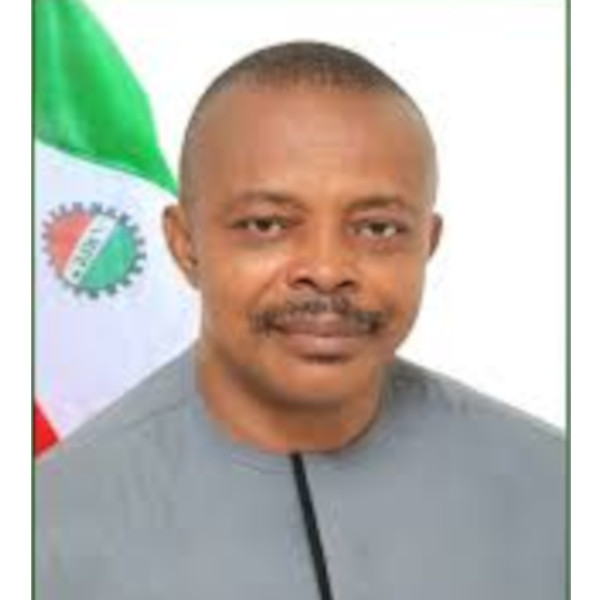
The plethora of reforms in the power sector, creation of the DisCos and privatisation, the subsidy regimes, metering issues and all the purported efforts in the power sector for the public interest have been described by President of the Nigeria Labour Congress, NLC, and General Secretary of the National Union of Electricity Employees,
NUEE, Joe Ajaero, as “the biggest scam in the country.”
Ajaero reportedly stated in a press interview that the electricity sector has become a preserve of powerful interests to milk Nigeria.
In his opinion, the biggest structural failure in Nigeria’s power sector today is not generation, transmission, or distribution in isolation.
“I cannot say that any one of these areas is the major problem. It is collective. We have three sectors that work together. The truth is that if there is a problem in one sector or another, then you are going to suffer for it.
“If you generate 10,000 megawatts and transmission capacity is 5,000 megawatts, it is not guaranteed that you will even wheel 5,000 megawatts. You may get to distribution, and the distribution capacity may not even take 10,000 megawatts. So, you suffer either way.
“If you have distribution capacity that can take 10,000 megawatts, but transmission cannot meet that capacity, it is a problem. If you have transmission and distribution capacity that can take 10,000 megawatts, but generation has not provided 10,000 megawatts, then that is also a problem. Every sector must match the other.
“But the greatest challenge is that these three sectors believe they can handle 10,000 megawatts, yet the supply is not stable. Distribution cannot say it can consistently handle 4,000 megawatts. They may do so today, but tomorrow they may not. The same thing applies to transmission and generation. Generation may tell you there is no gas or that the water level has dropped.
“I think this is a challenge we have created in this country because we do not have a conscious master plan for the power sector. The stakeholders are investors whose motive is simply to make money. Until the stakeholders sit together and plan for the future, the problem will remain.
Ajaero asked sarcastically, “Was privatisation meant to improve electricity supply? It is important that we realise this. Privatisation was never meant to improve power supply.
“Before the eventual privatisation, licences were given to some individuals to generate electricity, but they did nothing. We told them that the total capacity of NEPA, later known as the PHCN, was 4,000 megawatts. It is scandalous and criminal that the total capacity today is still about 4,000 megawatts.
Continuing, the NLC president asked, ” Who is really to blame for Nigeria’s darkness?
At the time, I led the union and we warned them that if they privatised and split the system into 20 companies, it would still be the same 4,000 megawatts they were sharing. And that is exactly what happened. Eko, Ikeja, Ibadan, Enugu DisCo, and others are all still depending on the same 4,000 megawatts.
“The unbundling and privatisation were not meant to increase capacity. The plan was simply to divide the system so that you would have 20 managing directors and several executive directors, all being serviced from the same 4,000 megawatts. The plan was not to increase generation, transmission, or distribution,” he said.
Ajaero added, “They claimed they wanted to privatise NEPA because it was obsolete. Yet they were all fighting to buy the same supposedly obsolete equipment. They also claimed NEPA was inefficient, but it was that same NEPA that was divided into 20 entities and sold. How did they expect that to improve power supply?
“If they truly privatised for the purpose of improving the power sector, they should have shown examples of countries where privatisation improved generation, transmission, and distribution.
Asked if he thinks government policy is the challenge, or if inefficiency in the private sector, he said,
“You have to balance the two. You cannot simply generalise that the private sector is inefficient. For example, you can assign the private sector a place like Abuja Central Area. They can handle independent generation there. They can use solar to generate, transmit, and distribute power within that area effectively.
“You can also go to Zungeru, which can provide about 900 megawatts, and build a power plant there. We are not talking about politically motivated power stations, as were built when Olusegun Agagu was Minister of Power.
“Then you go to the Niger Delta, to places like Bayelsa and Rivers, where gas is constantly being flared. The gas being flared there can power gas-fired stations. Instead, we build political power plants in places like Papalanto and Omotosho and then construct expensive gas pipelines from Bayelsa to those locations. More money is spent on pipelines when the plants could simply have been built where the gas already exists. Once there is any disruption along the pipeline route, the gas supply is affected.
“So, we need diversification. We need an energy mix. When people discuss climate change, some countries talk about reducing non-environmentally friendly sources. But you must first have enough electricity before transitioning. Countries like Germany still use coal significantly. In fact, Germany depends on not less than 40 per cent coal for its electricity supply.
“In Nigeria, we have no coal-fired power plants despite our large coal deposits. Why? I visited one or two coal-fired plants in South Africa, and a single plant generated 2,000 megawatts. If we combine coal plants with hydro projects like Mambilla and Zungeru, we could generate around 5,000 megawatts from those sources alone. Gas stations could then serve as supplementary or emergency plants.
“But instead, we overload gas-powered stations and charge Nigerians based on the cost of gas. That is why I advocated for a Ministry of Energy, where the minister in charge of gas would also oversee transmission and generation. In that case, gas supply and pricing issues would be better coordinated.
On President Bola Tinubu’s appointment of Joseph Tegbe as Power Minister, he said,
“I have stopped advising government on the people they appoint because they have their own considerations. To them, they believe those people will deliver, so we simply watch.
“Even the person appointed as Special Adviser on Power, Mr Rilwan Lanre Babalola, is a former minister. He was at the Bureau of Public Enterprises (BPE) when they designed the privatisation modalities for PHCN. After that process failed, perhaps Mr President is bringing him back to make the system work.
“So let us wait and see, 12 or 13 years later, whether they can finally get it right. The man, Babalola, is also the chairman of a newly established Presidential Task Force on Power Sector Reset and Restoration. But I do not know its exact assignment.
“Is it meant to improve generation, transmission, or distribution?
Because if the focus shifts away from those core areas, Nigerians will not get electricity.
On if Nigeria plans to commission power plants this year? He said, “That is the important question. If we start building power plants today, they will only be commissioned in the next three years. But are there any plants currently being built for commissioning next year, in two years, or in three years? If there are none, then the power situation will not improve.
“You cannot achieve stable electricity by magic. If we begin now, then in the next four years we can expect improvement. But if no projects are ongoing, even reinforcing existing lines will not solve the problem permanently.
About his thoughts on the banding system: Band A, Band B, and Band C, where Nigerians pay more for electricity but still do not get supply, the NLC boss blamed Nigerians’ docility.
“Nigerians are too docile. Why should somebody classify me as Band A and classify another person differently? Is it not my right to have electricity for 24 hours?
“As long as this banding system exists, many parts of the country will continue to suffer poor supply. If you go to some villages now, many communities hardly receive electricity supply. The authorities focus on areas designated as Band A because they can pay more. To that extent, electricity is no longer treated as a social service.
“People in villages and rural communities are effectively abandoned because they cannot afford the high tariffs. Band A, Band B, and Band C are unfair, and people should not accept the arrangement.
“Most Nigerians, including government officials, have said the privatisation of the power sector is not working. Why is it difficult to reverse it?” he asked.
Asked about the privatisation policy originated under the Peoples Democratic Party (PDP) and inherited by the All Progressives Congress (APC) from Muhammadu Buhari to Bola Tinubu, he said, have not clearly presented their own power or energy policy. They have simply continued with privatisation.
On the perpetuation by APC of PDP’s wrong ways, he said, “Ordinarily, a new government should assemble experts to review the previous policy and produce a new blueprint. The late President Umaru Musa Yar’Adua actually set up a Power Sector Reform Committee headed by Rilwanu Lukman, and I served on that committee. He suspended the privatisation for three years because he said, “How can I privatise something that is not available?”
The 4,000 megawatts Nigeria currently generates was largely achieved during President Olusegun Obasanjo’s administration. When Obasanjo came in, generation was around 2,000 megawatts. Through rehabilitation and the installation of turbines, it was increased to 4,000 megawatts without building entirely new plants. Later, they started projects like Papalanto and Omotosho.
“However, some plants such as Geregu were commissioned using generators, and many eventually ran into problems. At least they attempted to build power plants. But when these plants were sold, some transactions were questionable. For example, Geregu was sold under willing buyer, willing seller arrangements without proper bidding.
“Now ask yourself—since the takeover, have these companies increased capacity beyond what they inherited? That alone is enough to show whether privatisation has worked or not.
“In every power station, there are simple improvements that can be made. For instance, if you have turbines, you can increase capacity. Ask any of them: have they increased capacity? Are they even operating optimally?
“Even if they are operating optimally, countries still plan ahead. If Nigeria has 500 houses this year, next year that number could rise to 550. Those additional 50 houses will need electricity connections and power. So how many megawatts are we supposed to generate next year? Are we not supposed to be building more plants?
“Because by the time you have additional houses competing for the same 4,000 megawatts, the number of hours of electricity supply people receive will reduce. As demand rises and supply remains stagnant, the situation naturally worsens.
On the organised Labour in the sectors’ complaint about casualisation, pension issues, and lack of working tools and how these issues affect the sector, he posited:
“The issue in the power sector also concerns human rights and conditions of service. In fact, we were able to secure conditions of service in some areas, but many of those who came in had no intention of respecting workers’ rights.
“Let me tell you what happened recently. The new management that took over one of the DisCos sent a document to all workers in the form of an oath of secrecy. They circulated it and gave all workers within their coverage area a deadline to sign it. The document leaked and got to us. We wrote to them, warning that if they failed to withdraw the form, they would have us to contend with. The following day, or two days later, they withdrew it.
“They had attempted to circulate the same kind of form around 2003, and we resisted it then as well. The essence of that document was to compel workers to distance themselves from unions, thereby allowing management to do whatever they wanted. They could convert workers into casual staff and impose all kinds of unfavourable conditions. That is what you are seeing in the power sector today.
“Even the people currently managing some of these DisCos are not the original owners. The first people who bought these companies resold them, and the companies have since changed hands several times. In truth, many of those initial buyers lacked both the financial and technical capacity to manage them. They did not have the money required.
“If you observe closely, some banks have effectively taken over many power companies because they financed their acquisitions through loans. The original buyers of these power assets had little or no capital of their own. They borrowed heavily from Nigerian banks, and this contributed to the liquidity challenges the banks later faced because of the power sector. No foreign capital came into the country to purchase these DisCos. The acquisitions were financed largely with local bank loans.
“That is why, if you look at Abuja Electricity today, banks have effectively taken over because the operators could not repay their loans. Since then, everything has revolved around profit. Human rights abuses began to emerge. Not long ago, we saw what happened at one of the DisCos where almost 900 workers were sacked. That is the kind of abuse taking place.
“The operators lack the financial muscle and technical competence required to run these companies effectively. At the time, if you and I had agreed, we could simply have registered an electricity company, gone to a bank, obtained a loan, and acquired either Abuja or Ikeja Electricity. If we failed to service the loan, the bank would step in and seize the company.
“As we speak, almost eight or nine DisCos have been taken over by banks. Many of these companies are facing serious challenges because of this arrangement. That is the problem we have today. We failed to ensure that only investors with genuine technical expertise and real financial capacity took over these DisCos. Now, the banks are effectively running them. But banks are not electrical engineering companies. They are now hiring personnel here and there just to keep operations going.
On if this is the kind of privatisation process Nigeria intended to pursue, Ajaero replied:
“The whole idea behind privatisation was to attract Foreign Direct Investment (FDI), technical competence, and managerial expertise. At the time, apart from the Nigerian Electricity Supply Corporation (NESCO) Limited in Plateau State, Nigeria had virtually no indigenous electricity company with such experience.
“Unfortunately, some individuals simply emerged and took over these companies without the necessary capacity. That is why they are still experimenting. One of these DisCos has had almost six managing directors in succession. Each new management comes in, sacks workers, and focuses mainly on increasing tariffs—and they are succeeding.
“They use these arguments to convince the Federal Government to grant subsidies and financial support. Now they are talking about six trillion naira. Yet before privatisation, the government was not even subsidising PHCN with N100 million or N50 million.
“Government was practically giving nothing. So why is government now paying trillions after privatisation?
“That is the question Nigerians should ask
“How much was government spending on PHCN before privatisation, when it was still fully government-owned?
“The assets were privatised for about N400 billion, and these operators were already collecting substantial revenues from day one. Yet between then and now, government has reportedly committed trillions of naira to support the sector.
“That is why it is difficult to break the clique controlling the power sector. I have spoken before about regulatory capture. This clique can influence, if not determine, who becomes Minister of Power, who becomes Chairman of the Nigerian Electricity Regulatory Commission (NERC), and who occupies other strategic positions. That is what is happening today.
“I had a serious debate with the last minister in his office. He was defending the decision for his office to use solar power. I told him he could not justify that unless he no longer wanted the Transmission Company of Nigeria (TCN) or the DisCos to remain profitable.
“If government offices use solar power, and citizens like me also switch to solar at home, while billions are still being invested in the grid, how then do you expect DisCos to recover costs by charging ordinary Nigerians who often do not even enjoy stable electricity supply? Why would the Minister of Power set such an example?
“If a large percentage of Nigerians eventually switch to solar, then what exactly would the Minister of Power still be managing?
“I understand that a presidential task force has now been set up. But if that task force is not focused on how Nigeria can sustainably move from about 4,000 megawatts to a significantly higher capacity, then it serves little purpose.
“It is not enough to celebrate achieving 5,000 megawatts today if by the next morning generation drops back to 3,000 megawatts because the improvement is not sustainable.
“Let us stop pretending we do not have ambition. Let us, for example, set a target and ask ourselves how to achieve it sustainably, so that it becomes the minimum available capacity at any given time,” he counselled.




By Isa Abdul
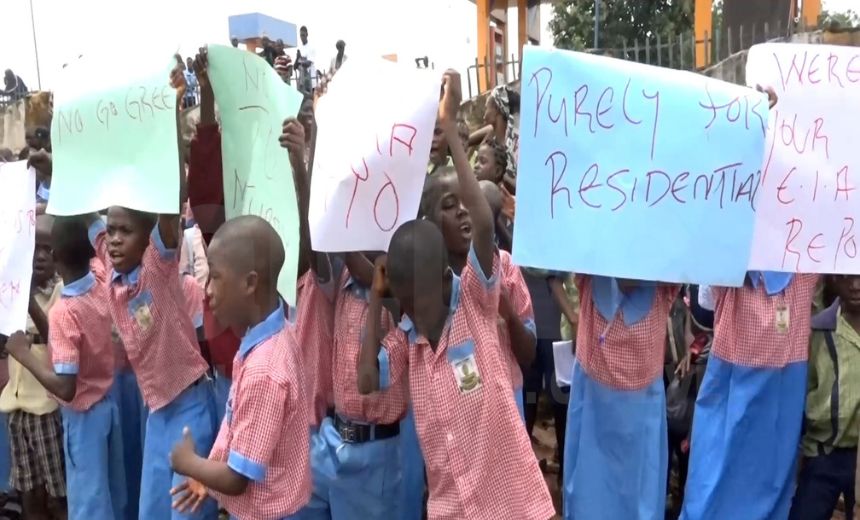
The construction of an alleged mortuary close to public school and residential buildings has been protested against by the residents of Agbeji Community in Dekina Local Government Area of Kogi State.
The protesters who carried placards on Tuesday cite health and environmental concerns, even as the landowner insists he has the right to develop the property.
One of the protesters, who spoke on camera said they are not against someone’s business but their worry is the location of the mortuary near residential buildings and a public school.
But the landowner who identified himself as Alh. Rilwan Okobomude, disagrees, insisting the property is his and that he has the right to develop it, while pledging to comply with relevant regulations.
In an interview with News Central, monitored in Abuja, the land owner talked about building the mortuary for the hospital.
But it is not clear why he’s building a mortuary before the hospital.
General News
Benue Govt Gives 2-Week Ultimatum To Owners Of Illegal Billboards, Threatens Mass Removal
By Felix Umande
The Benue State Government has decried the arbitrary erection of billboards across the state by individuals, groups and political parties without approval, warning that all unauthorised structures will be pulled down after a two-week grace period.
In a joint statement issued on Tuesday, October 6, 2026, by the Benue State Signage and Advertisement Agency, the Benue State Internal Revenue Service, BIRS, and the Urban Development Board, the government said the billboards were erected without permit, without clearance and without payment of prescribed fees.
The agencies said the practice breaches the law, deprives the state of legitimate revenue, endangers public safety and undermines orderly urban development.
The statement, signed by the Commissioner for Information and Orientation, Hon. Chief Solomon Iorpev, however, said government was prepared to assume that many offenders acted out of ignorance rather than deliberate defiance.
Consequently, owners and operators of unauthorised billboards have been given two weeks, beginning Tuesday, October 6, 2026, to regularise their structures.
Within the window, they are required to approach the Benue State Signage and Advertisement Agency to begin the permit process, obtain clearance from the Urban Development Board, and pay all required fees.
The government warned that enforcement will commence on Tuesday, October 20, 2026, with no further notice.
“Enforcement teams are expected to begin the removal of every billboard that has not been regularised from the set date. Billboards taken down will be at the owners’ cost. Anyone who ignores this window should expect no sympathy and no exception, regardless of status, affiliation or political party,” the statement said.
It described the grace period as a sign of government’s goodwill and preference for compliance over confrontation, urging all concerned to use the window.
For further clarification, the government advised the public to contact 09034345007.
–Tells Editors: “remain primary filter against information disorder.”
By Son Tertsea, Abuja
The Independent National Electoral Commission (INEC) has set in motion a financial monitoring mechanism, in conjunction with anti-graft and financial intelligence agencies, to fish out those embarking on illegal campaign spending.
This was one of the INEC Chairman, Prof. Joash Amupitan’s, disclosures on Monday in Abuja while delivering a keynote at a strategic workshop with media executives organised by the Nigerian Guild of Editors (NGE) in collaboration with the commission.
INEC chairman also disclosed that the number of registered voters has risen to more than 103 million.
In addition, INEC said, it has acquired 57,000 new Bimodal Voter Accreditation System (BVAS) machines as part of measures to strengthen the technological infrastructure for the 2027 elections.
Its target, according to the body, was to commence voting simultaneously across all polling units nationwide during the 2027 elections.
INEC’s collaboration with the Economic and Financial Crimes Commission (EFCC), Independent Corrupt Practices and Other Related Offences Commission (ICPC) and the Nigerian Financial Intelligence Unit (NFIU), he said, was to monitor campaign financing and identify suspicious expenditure with s view to preventing money from undermining the credibility of the elections.
In Amupitan’s view, the teams will track illegal campaign spending, strengthen surveillance around polling units to detect attempts to influence voters through financial inducements.
He warned political actors that violators of the Electoral Act would attract arrest and prosecution, adding that elections must be decided by the conviction of the voter, not the depth of a candidate’s pocket.
The chairman disclosed that the three-phase National Register of Voters had produced 10,772,421 new voters, with 2,611,266 in the first phase, 4,121,835 in the second phase and 3,867,997 in the third phase, respectively. But the fugure is subject to final verification, completing eight of the 14 major statutory activities contained in its timetable for the 2027 elections.
The electoral umpire added that the final Automated Biometric Identification System (ABIS) cleanup was complete, and the preliminary register was displayed for claims and objections. In his words:
“In line with Section 10 of the Electoral Act 2026, the first phase of the CVR commenced on August 25, 2025 and ended on December 10, 2025, registering 2,611,266 voters; Phase II commenced on January 5, 2026, and ended on April 17, 2026, registering 4,121 ,835 voters; and Phase Ill commenced on May 11, 2026 and ended on July 26, 2026, registering 3,867,997 voters. The total new registration stands at 10,772,421, subject to the ABIS verification being concluded.”
Amupitan revealed that the commission had drawn lessons from recent off-cycle elections and would improve its logistics, personnel and technology ahead of the 2027 polls.
The commission further warned political parties, candidates and campaign managers against violence, intimidation and hate speech and other vices ahead of the 2027 general elections.
The commission, through the Inter-Agency Consultative Committee on Election Security (ICCES), he said, had activated an early-warning framework to monitor political violence, thuggery and dangerous campaign rhetoric.
Amupitan called editors, the “bridge in an era of information chaos”, to work with INEC to build a public space of verified information, civic responsibility and institutional trust. In his words:
“When newsrooms prioritise factual accuracy over sensational headlines, when reports contextualise field logistics rather than default to inflammatory speculation, and when information is verified before publication, you perform a sacred public service. You act as the primary filter protecting our democracy against information disorder.”
In his submission at the event, President of the Nigerian Guild of Editors (NGE), Eze Anaba, canvassed for a credible and transparent electoral process that would give voters, rather than the courts, the outcome of elections.
He said: “Elections were not merely about casting ballots but about building citizens’ confidence that their votes would count and that institutions responsible for conducting elections would act fairly and professionally.”
To Akingbulu, verification was a two-way process, arguing that newsrooms could not properly verify information that institutions failed to disclose.
Warning against deepfakes, fabricated campaign materials and other forms of manipulated content, saying such developments could undermine public confidence in the electoral process.
The Executive Director of the International Press Centre (IPI), Lanre Arogundade, stressed the importance of timely and transparent communication from INEC.


How FG’s Docility and FIFA’s Compromise on Mpasi Conspired Against Nigeria’s 2026 W’Cup Qualifier– Report
Spread the loveThe apex world soccer’s governing body, FIFA, knew that the Democratic Republic of Congo fielded an ineligible player...


Kogi Community Protests Building of Mortuary in Residential Area.
Spread the loveBy Isa Abdul The construction of an alleged mortuary close to public school and residential buildings has been...

100 Days To 2027 Polls: INEC Vows Neutrality, Says BVAS, Ballots Ready
Spread the loveBy Felix Umande The Independent National Electoral Commission, INEC, has assured Nigerians and the international community of its...


THE LAST TANGO: Tears, Tributes and A Final Goal As Messi Bows Out After 21 Years
Spread the loveBy Felix Umande Emotions ran high at the Estadio Monumental on Tuesday night as Lionel Messi signed off...


Church’s Duty to Empower Individuals, Create Opportunities and Improve Family’s Economic Well-being
Spread the loveBy Seyi Balogun, Lagos The need for the Church’s commitment to empowering its members through employment opportunities, entrepreneurship...
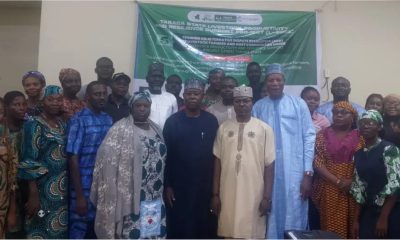

Taraba Explores ADR for Sustainable Peace Between Crop, Livestock Farmers
Spread the loveBy Michael Lim Conflict prevention between livestock farmers and host communities in Taraba State through the promotion of...
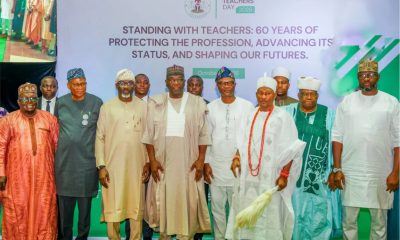

Financial Inclusion: Kwara Buys Dangote Refinery Shares For Female Teachers
Spread the loveBy Michael Lim Kwara State Government has announced plans to buy shares in the Dangote Refinery Initial Public...

Benue Govt Gives 2-Week Ultimatum To Owners Of Illegal Billboards, Threatens Mass Removal
Spread the loveBy Felix Umande The Benue State Government has decried the arbitrary erection of billboards across the state by...


INEC Tracking Illegal Campaign Spending
Spread the love–Tells Editors: “remain primary filter against information disorder.” By Son Tertsea, Abuja The Independent National Electoral Commission (INEC)...


Importers, Petroleum Marketers Kick Against Dangote’s Restriction of Petrol Sales
Spread the loveBy Seyi Balogun Major marketers have kicked against Dangote Petroleum Refinery’s non sale of Premium Motor Spirit (petrol)...