
General News
Xenophobic Attacks Not in South Africa or Africa’s Interest— Obasanjo


By Nick Ibe, Abuja
Former President Olusegun Obasanjo has criticised South Africans’ attacks against other African nationals saying it is not in South Africa or Africa’s interest to do so.
The former president spoke in an interview on C-Suite Cafe, hosted by Ikem Okuhu. In his opinion:
“I believe that it’s not in the best interest of South Africa or Africa in what has happened. What is the percentage of these immigrants? Also, some of them are job creators. Three, how much of your jobs are they taking over, and if you get these people out, what will be the total outcome for South Africa?”
He stressed that even if migrants had violated immigration laws or committed crimes, such offences should not be used to justify attacks on their homes and businesses.
“There are criminals among the illegal migrants, but I do not believe that you use illegality to treat illegality, asking and encouraging area boys and area girls to break into their houses and break into their shops.
“I was trying to find out, but people told me the ANC [Ruling party in South Africa] is having a political problem of meeting the expectations of the ordinary people. That many be true, and if that is happening, that is not the right way to go about it.
Obasanjo said Nigeria’s role in the anti-apartheid campaign was due to the conviction that no Black person should be treated as inferior because of their skin colour, adding that Nigeria supported the campaign without expecting any personal or national reward in return.
“We were not doing what we did in South Africa or in Southern Africa or decolonisation anywhere for our personal gain or for our country. We did it for our race. I believe that no Black man anywhere or Black person anywhere should be regarded as an inferior human being because of his colour.
“That was the principle; we stuck with it and fought for it.”
Obasanjo, who served as Nigeria’s military head of state from 1976 to 1979 and later as civilian president from 1999 to 2007, described Nigeria’s contribution to the anti-apartheid struggle as “enlightened self-interest”.
“And for me—and I believe for Nigeria at that time and even now—we should be proud of what we did because without Nigeria, South Africa would not have got rid of apartheid when it got rid of it. That is true.”
He said Nigeria worked alongside several African and international leaders in opposing apartheid, including former US President Jimmy Carter, former British Prime Minister James Callaghan, former president of Tanzania Julius Nyerere, Kenneth Kaunda of Zambia, former Mozambique president Samora Machel, and Swedish Prime Minister Olof Palme.
“It’s not only in South Africa but everywhere. The expectations of ordinary people are not being met in Nigeria, Kenya and almost all countries in Africa. I believe if we are talking of integration, coming up together, I believe using illegality to treat illegality is not the way out.”




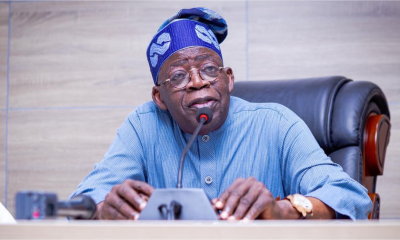






In The Kwara-born chieftain of the All Progressives Congress (APC) and security expert, Alhaji Ibrahim Mohammed Ajia, PhD, Dan Amanan of Fune Emirate has called on Nigerian youths to take an active role in fighting insecurity and building a peaceful, prosperous nation.
The call was contained in his 47th birthday message signed by his Director of Communications and Strategy, Mallam Abdulrahman Aliagan, and made available to journalists on Tuesday in Abuja.
Ajia, a politician, businessman and former police officer, said his birthday offered an opportunity to reflect on Nigeria’s security challenges and the collective responsibility required to address them.
According to the statement, Nigeria’s security crisis cannot be left entirely to the military, police and other security agencies. While government has the primary responsibility to protect lives and property, citizens — especially young Nigerians — must become active partners in promoting peace and security.
“Nigerians must not continue to wait for somebody else to solve the country’s problems. They must rise and solve them themselves. Nobody is coming to solve our problems for us,” the statement said.
Drawing on his experience in the Nigeria Police and the security sector, Ajia said he remains ready to support national efforts through constructive engagement with young people and communities.
He described Nigeria’s youth population as one of the country’s greatest security assets and urged young Nigerians to reject violence and criminality while embracing responsible citizenship, intelligence-sharing, innovation, peacebuilding and community development, especially as the 2027 general elections approach.
He clarified that youth participation must be lawful and coordinated, and should not involve confronting criminals or taking the law into their own hands. Young people can report suspicious activities, support early-warning systems, help prevent conflicts and work with traditional institutions, religious leaders, civil society and security agencies.
Technology, he added, can support secure crime reporting, mapping of insecurity hotspots, emergency communication and the fight against misinformation.
Ajia who is currently in Saudi Arabia for lesser hajj to mark his special day urged youths to reject exploitation by political actors and criminal interests, warning against their recruitment for political violence.
He also called for responsible use of social media, urging young Nigerians to verify information before sharing reports about attacks, ethnic groups, religious communities or security incidents.
He challenged influencers, journalists, bloggers, content creators and social-media users to recognise that digital responsibility is part of national responsibility.
Ajia noted that youth empowerment is itself a security strategy. He advocated investment in vocational education, apprenticeships, entrepreneurship, agriculture, technology, creative industries and skills development.
He further urged young Nigerians to bridge ethnic, religious and regional divisions through sports, entrepreneurship, cultural exchanges, dialogue, volunteerism and joint development initiatives.
The statement stressed that the call for youth participation does not absolve government of its responsibilities.
Government must protect citizens, enforce the law, strengthen institutions and ensure justice. Security personnel must receive adequate equipment, training, welfare and support, while citizens must be able to trust the institutions to which they report threats.
“A secure Nigeria must be built on effective institutions, citizen cooperation, intelligence, justice and accountability — not merely more guns and personnel,” Ajia said.
END.
General News
Sasakawa Empowers 9,000 Benue Farmers With Market-driven Agriculture, Processing Centres

Foundation Expands “Grow to Sell” Model Across 8 LGAs, Links Farmers to Ready Markets
The Sasakawa Africa Association, SAA, has empowered about 9,000 beneficiaries across eight local government areas in Benue State through integrated agricultural interventions aimed at shifting smallholder farmers from subsistence to commercial production.
The interventions, delivered under The Nippon Foundation, TNF, project in partnership with the Benue State Ministry of Agriculture via the Benue State Bureau of Agricultural Development and Mechanization, BNARDA, focus on Soybeans, Maize, Rice and Horticultural Crops.
SAA’s intervention program currently operates in Gwer-East, Gboko, Tarka, Guma, Ushongo, Vandeikya, Buruku, and Konshisha LGAs.
According to data released during a project tour on Monday, September 14, 2026, SAA in 2025 mobilized and sensitized 1,366 farmers, and reached 8,950 farmers through step-down extension services.
Other achievements include the establishment of 1.5 hectares of CBSM seed multiplication plots involving 75 farmers, 1 Agro-Enterprise Processing Centre, APEC, 9 youth spray gang members empowered, and 58 participants in market linkage meetings.
Speaking in Cheedu community, Gwer East LGA, during the tour, SAA Program Officer for Safe, Adequate and Nutritious Food Systems, Dr. Engr. Moshood Sulaiman, said the Foundation in addition to its agricultural empowerments and trainings established a solar-powered cassava processing center and borehole to address high production costs and water scarcity.
“We discovered that they produce a lot of cassava but they have to travel several kilometers to access equipment. So we established this center with a 5-ton per hour grater, two pressers and two 4×8 fryers,” he said.
“The borehole is solar-powered for 24/7 water access. We entrusted it to a community leader because giving such enterprises to a whole group to manage often creates problems.”
Mr. Jonathan Taknan Yasa, Program Officer for Inclusive Markets and Agribusiness Development, said the core of the intervention is changing farmers’ mindset.
“We try to turn their mindset from farming as a way of life to farming as a business. We promote ‘produce to sell,’ meaning you have a ready market before going into production. As I speak to you, this group here already has a ready market for their garri. In fact, they don’t even meet the demand,” he stated.
Yasa added that SAA trained farmers on group dynamics and identified the Cheedu group as capable of running the processing center as a business, building on a previous project that promoted TME 419 cassava variety.
Mr. Moses Nongoatse, Communications Officer, said the interventions also help farmers cope with climate change effects like erratic rainfall and dry spells through the use of improved seeds.
Country Director, Dr. Godwin Atser, represented by Mr. Nathaniel Otene, said SAA’s work rests on three pillars: productivity and regenerative agriculture, safe and nutritious agri-food systems with emphasis on biofortification, and inclusive markets and agribusiness development.
“So we have a system that captures the entire value chain from production through enhancing nutrition and then ensuring there’s market for the farmers,” Otene said.
The Acting Director General of BNARDA, Mrs. Dooshima Zaki, described SAA’s work as “a huge asset” to Benue State, noting that it aligns with the state government’s passion for agriculture.
“This will amplify exactly what the Sasakawa team program is doing in the state… The state government is very passionate concerning agriculture, and it encompasses these three pillars you are working on,” she said.
Beneficiaries including Mrs. Mary Ukamave, Mr. Kwaghngu Aondofa, Zaki Atindi Tyom, and Mr. Ronald Aondoaver, who spoke in Gwer East and Gboko, expressed appreciation to Sasakawa.
According to them, the new farming system introduced by SAA has made farming “better and profitable.”
The farmers said they have received free trainings on how to cultivate and grow their crops better with inorganic fertilizers plus other benefits they could never thought of before the coming of Sasakawa.
General News
“The Era Of White Elephant Projects IS Over” — Tinubu Warns Regional Development Commissions
By Felix Umande
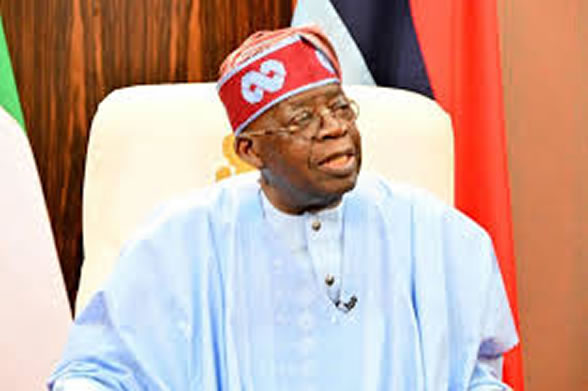
President Bola Tinubu on Monday ordered the timely release of funds to the Regional Development Commissions, warning their boards and managements against corruption, waste and the execution of projects that do not directly benefit citizens.
The President gave the directive while declaring open the maiden North Central Stakeholders Development Summit organised by the North Central Development Commission, NCDC, in Abuja.
Represented by the Secretary to the Government of the Federation, Sen. George Akume, Tinubu said the Federal Government would continue to provide political and financial backing to the commissions to enable them execute projects that unlock the economic and industrial potential of the country.
“I therefore direct the Secretary to the Government of the Federation to ensure that all funds accruable to the Commissions are released as and when due,” he said.
Tinubu said the creation of the Regional Development Commissions was part of his administration’s Renewed Hope Agenda to accelerate development and close longstanding gaps.
“Rather, it is our way of looking at why development gaps still exist and trying to close them up for the benefit of our people,” he stated, stressing that the commissions were not established to replace or duplicate the functions of any tier of government.
He listed roads, rail, air transportation, industrialisation, security, investment, human capital development, education and health as priority sectors.
The President cautioned the commissions to develop “clear, concise, attainable and fundable programmes” and avoid white elephant projects.
“The era of white elephant projects is over and there is no excuse for the Commissions to become another conduit for wasting public funds,” he warned.
He also charged the Ministry of Regional Development to ensure the commissions operate within the Regional Development Policy Document, while the legislature provides necessary oversight.
Tinubu warned boards and managements against corruption, marginalisation, politicisation and ethnicisation of government operations.
“Such actions will not be tolerated and government will not hesitate to sanction anyone found culpable,” he said.
He urged the commissions to explore alternative sources of financing, including public-private partnerships, donor funding and development financing, where permitted by law, instead of depending solely on government funding.
On the North Central region, the President said the zone has enormous potential in agriculture, food production, agro-processing, solid minerals, industrial development, peace and security, but has “operated below its potential for too long.”
He acknowledged the region’s security challenges and said the Federal Government had intensified surveillance, established more security formations, deployed additional personnel, increased prosecution of criminals, and supported dialogue and reconciliation.
He urged the NCDC to complement these efforts, noting that “development could only take place in an atmosphere of peace and security.”
Tinubu described the summit’s theme, “The Great Leap Forward: A 20-Year Economic, Infrastructural and Social Development Plan for the North Central Region,” as appropriate, and tasked stakeholders to produce a consensus-driven plan that aligns with the Renewed Hope Agenda.
“This Summit should not end up as one of those platforms where ideas are ventilated and reports generated only to be left dusting on the shelves. The NCDC should show a better example by following through to implementation,” he said.


Ajia At 47: No One Is Coming To Solve Nigeria’s Problem, Youths Must Rise — Ajia
Spread the loveIn The Kwara-born chieftain of the All Progressives Congress (APC) and security expert, Alhaji Ibrahim Mohammed Ajia, PhD,...


APC Govs Reject Wike’s Rainbow Coalition
Spread the love–Allege alliance would weaken Tinubu, APC candidates’ fortune at poll By Isa Abdul, Abuja The APC Governors’k Forum...

Sasakawa Empowers 9,000 Benue Farmers With Market-driven Agriculture, Processing Centres
Spread the loveFoundation Expands “Grow to Sell” Model Across 8 LGAs, Links Farmers to Ready Markets The Sasakawa Africa Association,...

“The Era Of White Elephant Projects IS Over” — Tinubu Warns Regional Development Commissions
Spread the loveBy Felix Umande President Bola Tinubu on Monday ordered the timely release of funds to the Regional Development...


It’s Unethical, Illegal to Charge Clients in Foreign Currencies, EFCC Tells Lawyers
Spread the loveBy Seyi Balogun, Lagos Legal practitioners across the country have been called to desist from the illegal and...

“I had great time. Right now I don’t mind; I can take commercial.” Flight –Dangote
Spread the love–Advises wealthy Nigerians to invest in manufacturing, productive ventures. By Seyi Balogun, Lagos Africa’s richest man, President of...


Xenophobic Attacks Not in South Africa or Africa’s Interest— Obasanjo
Spread the loveBy Nick Ibe, Abuja Former President Olusegun Obasanjo has criticised South Africans’ attacks against other African nationals saying...


MIT Spinout Turns Plastic Waste into Resilient Building Materials
Spread the loveAtlas Building Composites is commercializing MIT research to turn plastic waste into parts for buildings and other infrastructure....

ETP Pays Ayilamo Attack Victims’ Medical Bills
Spread the loveBy Vincent Tyosuugh Equipping The Persecuted, ETP, has extended its humanitarian gesture to those injured in the Thursday,...


Ex-Canteen Worker Turned Lecturer Celebrates Destiny Helper, Badejo, New LASU VC
Spread the loveBy Seyi Balogun, Lagos Lagos State University’s newly appointed Vice-Chancellor, Prof. Ayodeji Olawunmi Badejo, has been celebrated for...