
General News
Sardauna unrest :Nguroje calls for caution, restraintBy Aliyu Musa

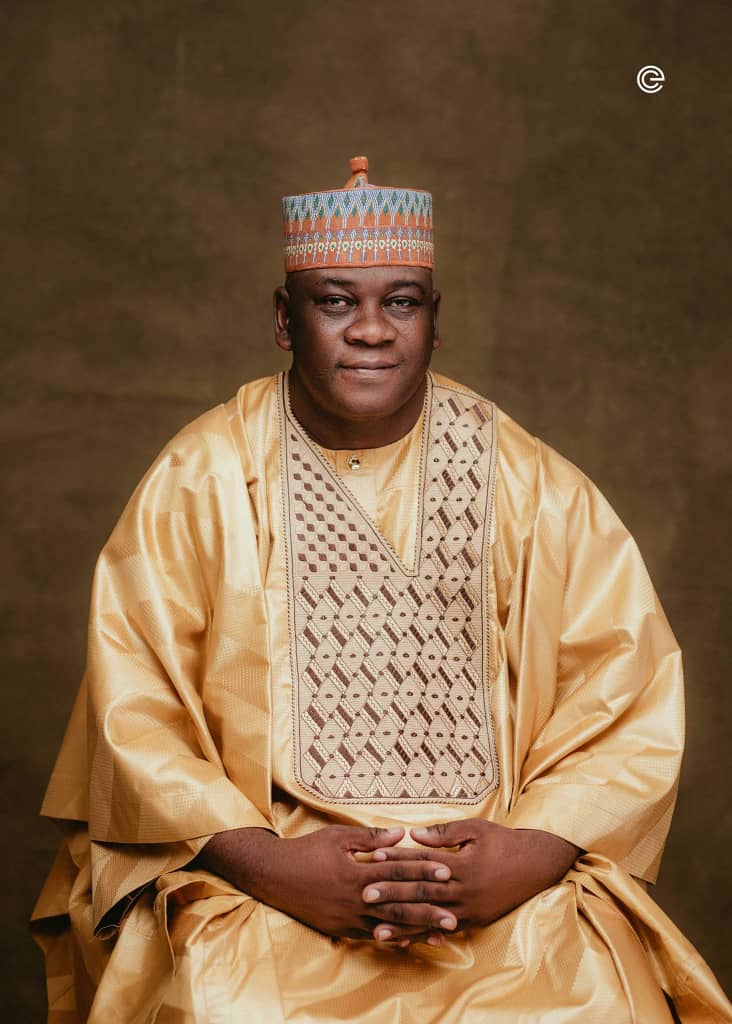
The former Deputy Speaker of the House of Representatives,Honourable Babangida Nguroje has called on all parties in the unrest at Sardauna local Government of Taraba State exercise restraint and allow appropriate law enforcement agencies to restore peace and order .
The Garkuwan Sardauna also commended the traditional institution in the affected areas for their efforts all these years in ensuring peace reigns in the and encouraged them to continue to play such roles as custodians of tradition and cultural norms for a better society .
He emphasized that the peace and unity in Sardauna and Taraba in general should not be allowed to be compromised at all times .
In a statement ,Honourable Nguroje commended the leadership of the Sardauna Local Government for it’s prompt action ,stressing that violence can only create disunity and affect the development of the areas in dispute and urged all parties to embrace peace ,dialogue and tolerance .
Honourable Nguroje described the unrest as unfortunate and called on every member of the society to abide by the laid down procedures to restore peace in the affected areas .
He maintained that the unity that has existed hitherto the unrest must be sustained by all parties,stressing that waste of lives and destruction of properties will only take the area backwards .
He said Taraba state in general has been known for peaceful co-existence and that any act that portrays any part of the state in a negative manner must be avoided at all cost .
He expressed sadness that disagreements could not be settled through dialogue and urged all parties to ensure that peace returns in the local government .
He pleaded with the people of Mbamnga, Mbara and Geroji to take urgent steps in embracing peace and genuine reconciliation for the good and progress of the area .
General News
As Nigerian Labour’s Mussle Flexing Continues, Ajaero Says: NLC Can Negotiate alone, But TUC Can’t
By Son Tertsea, Abuja
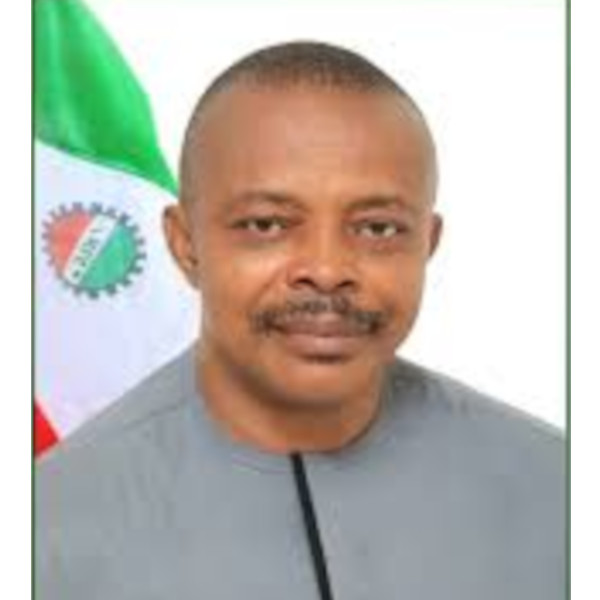
Joe Ajaero, President of the Nigeria Labour Congress, has asserted that NLC has the authority to negotiate alone on labour matters, countering the position of his Trade Union Congress counterpart, Festus Osifo, that both labour bodies are equal partners to participate in such negotiations.
Ajaero said the TUC could negotiate alongside the NLC but could not independently negotiate with labour authorities, citing the principle of most workers’ representatives under the International Labour Organisation.
Speaking Monday as a guest on Channels Television’s The Morning Brief, he held this position amid the disagreement between the two labour bodies over the N70,000 transport allowance approved by the Federal Government for workers across all levels for six months. In his words:
“TUC can negotiate along with NLC but NLC can negotiate alone based on the principle of most workers representatives of the ILO.”
Ajaero gave an example of how the TUC is required to present its proposals to the NLC for onward submission when engaging with the ILO.
“TUC sent their negotiation alone ahead of the ILO conference but they returned it back and I had to minute on it.
“They have to send their list here for me to forward it; that is the position of the ILO. NLC determines how TUC participates.”
Ajaero further stated that the Ministry of Labour and other labour authorities would not engage with the TUC independently on workers’ welfare negotiations. In other words:
“TUC can’t negotiate alone; if they are saying and it is implied, it does not happen. I don’t think the Ministry of Labour or the Labour Authority will allow that to happen.”
Osifo’s claim that the TUC had a significant number of workers in the federal civil service, Ajaero countered saying that the Trade Union Amendment Act 2005 and the 1999 Constitution, have given workers the right to choose their unions.
“The 2005 Trade Union Amendment Act made membership of trade unions voluntary.
“It is the worker that determines the union he belongs to;
“Section 40 of the Nigerian 1999 Constitution as amended was clear that every Nigerian worker has the right to belong to any trade union, political or religious institution of his choice, which gives every worker the latitude to belong to any union of their choice.”
Ajaero also argued that Osifo’s claim about the number of workers represented by the TUC did not reflect the composition of the Joint National Public Service Negotiating Council.
According to him, only one of the eight union bodies in the joint council belongs to the TUC, while the remaining seven are affiliated with the NLC.
He further argued that the TUC-affiliated union in the joint body had subjected its powers to the council.
In the course of the programme, Ajaero explained how the N70,000 transport allowance agreement was reached, saying NLC had issued an ultimatum to the Federal Government before the intervention was agreed upon.
“We gave government an ultimatum; we were supposed to start an action. The government asked for four days to meet with us, and we met, and they resumed sitting after four days.
“After the meeting, the 70k allowance came up.”
By Michael Lim, Jos
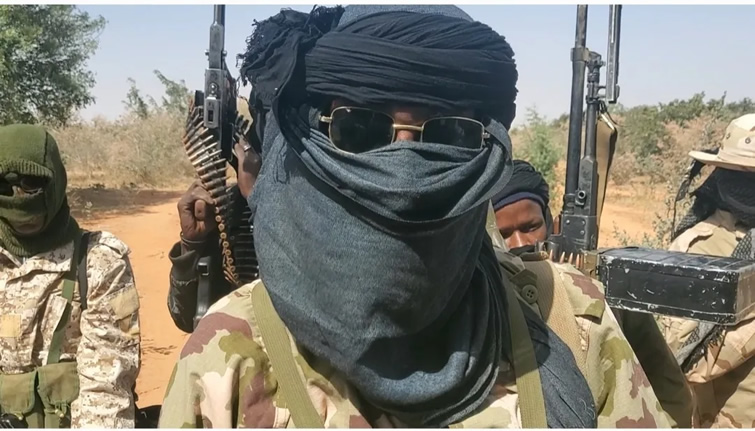
A 100-level female student of Plateau State University, Bokkos, has been abducted by gunmen suspected to be kidnappers while another person sustained injuries during an attack on off-campus student residential areas in Bokkos Local Government Area of Plateau State.
According to reports, the incidents which occurred on Saturday evening at about 8:40pm, had heightened concerns over the safety of students residing outside the university campus.
Speaking on condition of anonymity, a student confirmed the abduction to journalists on Sunday, saying the victim, a 100-level female student, had gone out with another female colleague when she was abducted.
“Yes, the student was taken away by the attackers last night, and we have not seen her since then. She is staying off campus, but I don’t know her,”
The source lamented the growing insecurity in the council area and appealed to security agencies to ensure the safe rescue of the victim.
A staff of the university, speaking anonymously confirmed the incident saying the institution was aware of the development. In his words:
“The university is aware of a reported shooting incident in one of the off-campus student residential areas. This would be the second such incident in four weeks.”
According to him, although the incident did not occur within the university campus, the management was deeply concerned about the safety of students living outside the institution.
“While the incident did not occur within the university campus, which remains our direct responsibility to secure, we are deeply concerned that any of our students living off campus should face such threats to their safety.”
He added that the administration of the Vice-Chancellor, Prof. Shedrack Best, was determined to provide safe and secure on-campus accommodation for students.
“The administration of Prof. Shedrack Best has made concerted efforts to provide safe and secure on-campus accommodation for all students.
“However, due to severe financial constraints, the university is currently only able to accommodate about 1,000 students in its dormitories.”
“The university will continue to engage relevant authorities to expand both accommodation and security for our nearly 20,000 students,” he said.
Efforts to get the reaction of the Plateau State Police Command spokesperson, Alabo Alfred, on the matter were unsuccessful.
General News
NLC Says Cost of Living, Naira’s Value, Transportation, Housing … To shape Wage Negotiations
–Calls NUJ to fight for members
By Seyi Balogun, Lagos
The Nigeria Labour Congress, NLC, has resolved that wage discussions should commence far before April 2027 implementation date while identifying inflation, the cost of living, the value of the naira, transportation, housing and workers’ purchasing power as major issues that would shape the next national minimum wage negotiations.
The NLC President, Joe Ajaero, spoke weekend in Lagos, at the 2026 Labour Writers Association of Nigeria, LAWAN, Annual Conference in Lagos, on the theme; “Workers at the centre of Nigeria’s Political Transition: Defending rights, advancing welfare and building economic justice”.
In his words:
“We must examine inflation, the value of the naira and other factors affecting workers’ purchasing power. The new minimum wage should be informed by the cost-of-living index and prevailing inflationary trends”
NLC also expressed concern over the poor welfare conditions of Nigerian journalists.
He said journalists face daunting harsh working conditions including inadequate salaries, job insecurity, weak pension arrangements and the absence of effective social security protection, calling on the Nigeria Union of Journalists (NUJ) to take its trade union responsibilities more seriously.
According to him, it would be counter productive to negotiate a new minimum wage without establishing what the proposed amount could actually purchase.
He warned that workers should not find themselves receiving an improved salary only for inflation to erode its value within a few months, forcing them to demand another increase. In his words:
“We must not approach the next minimum wage negotiation by simply demanding millions or billions without considering other economic factors.
“We must consider inflation, the value of the currency and other issues affecting the economy. The new minimum wage should be determined with reference to the cost-of-living index and inflationary trends.
“If the government agrees that wages should be indexed to inflation, then an increase in inflation should lead to an appropriate adjustment in wages.
“Alternatively, we must examine the prices of essential commodities and services. How much does a bag of garri cost? How much is house rent? How much does transportation cost?
These are the factors that must inform the negotiations.
“We cannot simply announce that we want ₦100,000 or ₦50,000 without establishing how those figures relate to the actual cost of living. This is important because, over the years, we have repeatedly found ourselves in a situation where workers receive a salary increase, but within a few months, inflation erodes its value and they are already demanding another adjustment. We must avoid that situation.
“The government must take a more decisive position on solving the transportation problem. Giving workers ₦70,000 as a transportation intervention for six months is not enough, although it provides some relief. For somebody earning ₦70,000, receiving another ₦70,000 is certainly meaningful.
“But what happens after six months?There are also other policies that must be considered, particularly transportation. We cannot accept a situation where workers receive ₦70,000 as temporary relief and, after six months, the government simply withdraws the intervention without providing an alternative.
“Nobody should assume that because the six-month period has expired, workers must return to their previous state of poverty. We have left Egypt; we cannot go back to Egypt.
“As far as the minimum wage negotiations are concerned, the new negotiations must recognise the existing wage structure and the improvements already achieved.
You cannot begin negotiating from a position that ignores those gains.
“You cannot expect workers to return to the old minimum wage position of ₦70,000 after receiving the additional intervention. We must consolidate the gains already made.
On the welfare of journalists, the NLC challenged the NUJ to intensify its involvement in collective bargaining and negotiations with media employers to secure better conditions of service for its members.
The labour leader questioned the absence of effective collective bargaining agreements in the media industry, asking: “What is the minimum wage for media workers across the country? What collective bargaining agreements exist between journalists and their employers?”
On journalism, he observed that, most journalists depend on employment in media organisations for their livelihoods, unlike other professionals who can establish private businesses or independent practices. He argued:
“Therefore, the NUJ must be actively involved in negotiating better welfare packages for its members.”
Ajaero also called for the revival of the proposed journalists’ village initiative and partnerships between journalists and mortgage institutions to enable media workers to own houses through affordable payment arrangements.
On job security and retirement benefits, the labour leader lamented that many journalists frequently move from one media organisation to another because of poor remuneration and unfavourable conditions of service.
He noted that low salaries also translate into inadequate pension contributions, leaving many workers financially vulnerable after retirement.
The NLC President called for improved salaries, stronger employment protection, better pension arrangements and comprehensive social security provisions for journalists.


As Nigerian Labour’s Mussle Flexing Continues, Ajaero Says: NLC Can Negotiate alone, But TUC Can’t
Spread the loveBy Son Tertsea, Abuja Joe Ajaero, President of the Nigeria Labour Congress, has asserted that NLC has the...

100-level Plateau Varsity Female Student Abducted by Kidnappers, Shoot Another
Spread the loveBy Michael Lim, Jos A 100-level female student of Plateau State University, Bokkos, has been abducted by gunmen...


NCDC Says Two Suspected Ebola Cases In Adamawa Test Negative
Spread the loveBy Michael Lim The Nigeria Centre for Disease Control (NCDC) has disclosed that the two suspected Ebola cases...
NLC Says Cost of Living, Naira’s Value, Transportation, Housing … To shape Wage Negotiations
Spread the love–Calls NUJ to fight for members By Seyi Balogun, Lagos The Nigeria Labour Congress, NLC, has resolved that...


Alia Keeps Promise to Ordega, Super Falcons Star: Offers Her House in Makurdi
Spread the loveBy Vincent Tyosuugh Benue State Governor, Rev. Fr. Dr. Hyacinth Iormem Alia, has fulfilled part of his promises...


Obasanjo to Tinubu: ‘”Leprosy destroys only one person. Debt destroys generations”
Spread the loveBy Seyi Balogun, Lagos Former President Olusegun Obasanjo has disagreed with President Bola Tinubu’s position on government borrowing,...

SHOCKER: Atiku’s Son Pledges 10 Buses For Tinubu’s 2027 Re-Election Campaign
Spread the loveBy Felix Umande Abba Atiku Abubakar, son of former Vice-President and Presidential candidate of the African Democratic Congress...


NSCDC Suspends Officer Who Fired Shots at Abuja Market: To Face Orderly Room Trial
Spread the loveBy Nick Ibe, Abuja The Deputy Superintendent of Corps DSC Onoja Babayo Samuel, who was arrested by the...

Labour Takes N70,000 Allowance Request to State Govts
Spread the loveBy Isa Abdul, Abuja To ensure that state civil servants benefit from the N70,000 transport allowance approved for...
NCDC: Two Suspected Ebola Cases in North-East Nigeria: Investigations, Lab Tests Ongoing
Spread the loveBy Michael Lim Two individuals have been isolated by health authorities following suspicion that they may be infected...