
Business and Economy
Nigerian Economy at Risk: 22 Firms Threatened by N3.9trn Debt


–Job losses loom
A wide disparity in the ability of companies listed on the Nigerian Exchange Limited, NGX, to cover their debt obligations with cash has emerged, with some companies holding several times more cash than debt, while others have cash covering only a fraction of their outstanding borrowings.
Analysts noted that the cash/debt position of some of the listed companies could affect investment, employment, production and capital-market development.
The available data obtained by Vanguard, covering 40 companies in the second quarter of 2026, showed a combined total debt of N3.9 trillion, out of which 18 firms have cash/debt ratios of at least 1.0 times, indicating that their cash holdings are equal to or greater than their total debt, while 22 companies have ratios below 1.0 times, meaning their total debt exceeds cash on hand.
The cash/debt ratio measures a company’s ability to meet its debt obligations using cash available to it. A ratio above 1.0 times generally indicates that a company has sufficient cash to cover its total debt, although the ratio does not, on its own, measure overall financial strength or debt-servicing capacity.
Cash/debt analysis
On the table of the cash/debt analysis, HBM Nigeria led, with a cash/debt ratio of 319.07 times, based on cash of N393.68 billion and total debt of N1.23 billion.
It was followed by UPDC Real Estate Investment Trust, with 283.73 times, from cash of N7.15 billion against debt of only N25.2 million, while eTranzact International recorded 214.89 times, with N23.69 billion cash and N110.24 million debt.
CWG also recorded a high ratio of 211.1 times, with cash of N7.4 billion compared with total debt of N35.06 million.
Other companies with substantial cash coverage included Unilever Nigeria, with a ratio of 44.8 times; Berger Paints, 18.4 times; Industrial & Medical Gases, 13.56 times; and NASCON Allied Industries, 12.72 times.
Companies with stronger cash cover
The available data, as gathered by Vanguard, also showed that several major companies had cash exceeding their debt.
Vitafoam Nigeria recorded 5.88 times, while UPDC posted 5.47 times. International Breweries had 3.34 times, Sterling Financial Holdings 3.08 times and May & Baker Nigeria 2.83 times.
Livestock Feeds recorded 1.94 times, Julius Berger Nigeria 1.85 times, Chams Holdings 1.65 times and Dangote Cement 1.31 times. Skyway Aviation recorded 1.19 times.
The figures suggest that these companies have, based purely on cash on hand relative to total debt, a degree of liquidity protection against debt obligations.
However, analysts caution that a high cash/debt ratio should not automatically be interpreted as evidence that a company is more profitable or efficiently managed.
Debt exceeds cash in 22 companies
On the other hand, Aradel Holdings recorded a cash/debt ratio of 0.96 times, with cash of N1.77 trillion against total debt of N1.84 trillion.
Ellah Lakes recorded 0.81 time, John Holt 0.77 times, Academy Press 0.72 times and Eterna 0.69 times. ABC Transport had 0.58 times, while Cadbury Nigeria and Fidson each recorded 0.53 times.
The ratio fell further among BUA Cement, at 0.46 times; BUA Foods, 0.44 time; Beta Glass, 0.34 time; Conoil, 0.20 times; Guinness Nigeria, 0.16 times; and Champion Breweries, 0.16 times.
DAAR Communications recorded 0.14 time, while Cutix and Japaul Gold & Ventures each recorded 0.11 times.
Geregu Power had 0.09 times, FTN Cocoa Processors 0.08 times, C & I Leasing 0.07 time, Chellarams 0.05 times and Caverton Offshore Support Group the lowest at 0.03 times.
This means, for example, that Caverton’s N2.46 billion cash position represents only a small fraction of its N87.15 billion total debt, while Chellarams had N235.16 million cash against N5.12 billion debt.
Implications for companies
Market analysts said the cash/debt ratio provides investors with an important indication of the liquidity pressure facing companies, particularly in an environment where the cost of borrowing remains significant.
They noted that companies with ratios substantially above 1.0 time have greater cash buffers with which to meet debt obligations, fund working capital and withstand temporary disruptions in revenue.
However, they said excessive cash holdings could also raise questions about whether funds are being deployed productively.
According to the analysts, a very high cash/debt ratio may be positive from a liquidity perspective, but investors should examine why the company is holding so much cash instead of investing it in productive assets, expanding operations, reducing debt or returning capital to shareholders.
For companies with ratios below 1.0 time, the concern is different. A low ratio does not necessarily mean that a company is in financial distress because businesses generate operating cash flows and may have access to undrawn credit facilities and other sources of liquidity.
Nevertheless, analysts said a persistently low ratio could expose companies to refinancing and interest-rate risks, particularly where debt repayments fall due before sufficient operating cash is generated.
Implications for shareholders
For shareholders, the ratio has implications for both risk and returns.
Companies with relatively strong cash positions may have greater flexibility to service debt, maintain operations during difficult periods and finance expansion without immediately resorting to additional borrowing or equity dilution.
On the other hand, companies with low cash/debt ratios may face higher financial risk if earnings or operating cash flows weaken.
Analysts, however, stressed that shareholders should not make investment decisions based solely on the ratio.
They said investors should consider profitability, operating cash flow, interest expenses, debt maturity profile, working-capital requirements, asset quality and management’s capital-allocation strategy alongside the cash/debt position.
Implications for Nigerian economy
At the broader economic level, analysts said the cash/debt position of listed companies could affect investment, employment, production and capital-market development.
Companies carrying heavy debt burdens may devote a larger proportion of their earnings to interest and principal repayments rather than expansion, technology, employment and dividend payments.
Where debt is used productively, however, leverage can support expansion and increase productive capacity.
The implication, analysts said, is that the quality and use of debt matter as much as the amount of debt itself.
A company with a low cash/debt ratio but strong and predictable operating cash flow may be able to manage its obligations effectively, while a company with a high cash/debt ratio but weak operations could still face business challenges.
For the Nigerian economy, the ability of listed companies to maintain adequate liquidity is therefore important because financially stable businesses are better positioned to sustain production, employment, tax payments and investment.
Cash/debt ratio not a standalone measure
Analysts therefore advised investors to treat the cash/debt ratio as one component of a wider financial-health assessment.
The data shows a clear divide: while some NGX-listed companies have cash positions several times larger than their debt, others have debt that is many multiples of their available cash.
The difference highlights the varying approaches of companies to borrowing, liquidity management and capital allocation and provides investors with an additional indicator for assessing financial risk.
Analysts’ comments
Ambrose Omordion, Chief Operating Officer, InvestData Consulting Limited, said investors should not assess debt in isolation but should examine earnings, cash flow, interest-cover ratios and the maturity profile of borrowings.
He said a high level of debt could magnify shareholder returns when borrowed funds are invested in profitable projects, but could also magnify losses when earnings and cash flows weaken.
The same principle applies to the cash-to-debt ratio.
A company with a low ratio but strong and predictable operating cash flow may remain financially stable, while a company with a high ratio but weak operations may face longer-term challenges if its cash balance is not being replenished.
Impact on companies
For the companies themselves, high cash cover provides an important cushion in an environment of elevated interest rates.
Companies that need to refinance maturing loans may face higher finance costs when new loans are contracted. Those with significant cash can repay some debt, negotiate from a stronger position with lenders or fund part of their capital expenditure internally.
This could reduce finance costs and improve profitability.
Commenting on the ratios, economic and communications expert, Clifford Egbomeade, said: “The interpretation of cash and debt should go beyond the ratio itself,” stressing that investors should examine the quality and utilisation of the cash.
According to him: “A company with substantial cash and low debt has greater flexibility to respond to economic shocks, finance expansion or take advantage of investment opportunities without immediately resorting to expensive borrowing.
“This is particularly relevant in Nigeria where corporate borrowing costs remain relatively high.
“Some companies deliberately retain cash to finance inventories, capital expenditure, acquisitions, dividend payments and other strategic commitments.
“In addition, cash and cash equivalents may include restricted funds or short-term investments that cannot necessarily be deployed immediately.
“This means that shareholders should examine the composition of cash before drawing conclusions about a company’s liquidity.”
Business and Economy
BUILDING A BUSINESS: Maria Cabral Menezes worked as a trader before deciding to risk it all and start her own business.

Maria Cabral Menezes, 27, never set out to be an entrepreneur — let alone one behind a product that achieved $10,000 in sales in less than 36 hours.
Menezes moved to the U.S. from Brazil to study at the University of Pennsylvania, where she majored in behavioral economics, retailing and international development. After graduating in 2021, she joined JPMorgan Chase as a global equities trader, then moved to Citadel as a trader after a year.
“I came to the U.S. to go down the most typical finance path ever,” Menezes tells Entrepreneur in a new interview. “I was not meant to be an entrepreneur, at least I didn’t think I was.”
As a trader, Menezes encountered a pain point. When she traveled for conferences, she would try to rewear the same blazer two or three days in a row and not feel very confident that it was clean enough. She would also go to the gym in the morning and travel around for the rest of the day with sweaty clothes stuffed into a duffel bag.
Then there was the chair. Menezes would tell her friends about the chair she had at home, piled up with clothes she had worn once. The clothes were too clean to wash, but not fresh enough to rewear and feel confident. She would end up paying to dry clean them.
“I remember thinking, I wish there was something like a dry shampoo, but for your clothes,” Menezes says. “A spray that allows you to re-wear an item between washes so that you’re not constantly over-washing your clothes or over dry cleaning, which is not good for the actual clothing itself if you lightly wore it.”
Menezes started researching the market. She found that laundry companies mostly focused on detergent. They didn’t consider the 99% of the time when clothes were nowhere near the washing machine.
That was the inspiration for Menezes’ brand, WashWise, and its hero product, the Reset Spray. The $29 product markets itself as “dry clean in a bottle” and a “dry shampoo for clothes.” It reduces wrinkles in fabric, cleanses and neutralizes odors in a way that is skin- and fabric-safe. The spray comes in two fragrances and two sizes, including a travel option. Menezes launched the product last month.
“My goal is that when you take any piece of clothing out, you’re going to think, Is this dirty? Is this clean?” Menezes says. “And if it’s in between, we’re WashWising it.”
Though the Reset Spray was built with sustainability in mind, WashWise positions it more as a time-saving product. It’s selling convenience to consumers who travel, work out, wear synthetic fabrics or simply do not want to run a load of laundry after every light wear.
“We’re basically giving people time back,” she says.
Menezes believes that framing helps the product reach multiple audiences. The phrase “dry shampoo for clothes” may immediately register with women who already use dry shampoo, she says, but the use cases extend beyond that customer.
“It’s not just the woman who understands ‘dry shampoo for clothes,’” she says. “It’s also the Wall Street bro who sometimes has wrinkles in between meetings, or the college kid who is messy and doesn’t do laundry as much as they should.”
Menezes says the brand’s consumer research found that one bottle of product could replace up to $300 in dry-cleaning costs, six hours of laundry time and 110 gallons of water, although those results will depend on an individual consumer’s habits.
How she developed the spray
Menezes started developing the product by first examining what a washing machine does for clothes so that she could copy it in a spray format. She was still working at Citadel last year when she came into contact with a chemist via LinkedIn.
“I bounced the idea off of her, and we started really at home, putting all of these formulations together in my living room,” Menezes says. “Eventually we came up with a formulation we felt so confident about that we were ready to go speak to contract manufacturers.”
Menezes estimates the internal process involved 10 to 15 iterations. The eventual manufacturer made two minor reformulations, focused more on product preservation and scale than on the formula’s core function.
“By the time we went to them, we already had something that was proven in our own house,” she says.
The full path from meeting the chemist to the first production run took more than a year. It was not a straightforward process. Menezes initially explored a separate idea: a water-soluble bag for sweaty workout clothes that would dissolve in the wash and contain odor-neutralizing agents.
Then she identified an obvious flaw.
“When something is sweaty, it’s going to melt the bag before it ever gets to your home,” she says. “It was just such an oversight.”
She tabled that product, though Menezes says WashWise may eventually introduce another solution for handling especially sweaty clothing until it can be washed.
A finance mindset, applied to consumer products
The spray also presented a complex formulation challenge. Many ingredients used for odor neutralization can interfere with fragrance, Menezes says, while other components can work against wrinkle reduction or cleansing performance.
“The hardest part was finding ways in which we were learning enough about these ingredients to find innovative ingredients that work symbiotically,” she says.
Menezes left Citadel once she believed the product had legs and could be manufactured. She had worked on WashWise briefly alongside her full-time job but says the intensity of a finance career made a true side hustle unrealistic.
“The moment I hit all those checks and knew this was feasible, that’s when I decided to leave,” she says. She has worked on WashWise full-time since June of last year.
Before raising outside funding, Menezes says she invested between $50,000 and $70,000 of her own savings. WashWise raised $1.2 million from investors including Hims & Hers co-founder Jack Abraham, Oats Overnight founder Brian Tate, cents founder Alex Jekowski and FJ Labs in August.
Menezes has not paid herself in more than a year, choosing instead to invest resources in hiring and customer acquisition.
“I see the value of every dollar I’m putting in,” she says. “I would rather put every dollar into something that has a huge multiplier effect.”
Her finance background has shaped how she operates the company. Menezes says her primary takeaway from Citadel is insisting on process: questioning why each task is done, if it can be improved and how it could function at a much larger scale.
“In order to survive in a place like Citadel, your process needs to be bulletproof,” she says. “There’s no, ‘We do this just because we do this.’”
The difference between startup life and finance
The move from public-market investing to private-company building forced Menezes to get comfortable with uncertainty. In finance, she could measure results quickly and precisely. Market performance follows an investment decision. Startup choices, including hiring decisions, brand strategy and long-term partnerships, are less easy to evaluate.
“It’s taught me to be a lot more intuitive,” she says. “There’s less quantitative stuff to grasp onto.”
For Menezes, disciplined process and intuition are not opposites. She says that thoroughly examining routine decisions makes her better prepared when an unexpected decision requires speed and judgment.
“The moment something comes at me out of the blue and I have to make a fast decision, I feel like I’m the best prepared version of myself to make that decision,” she says. “I feel very confident in trusting myself.”
Building demand before checkout opened
WashWise’s launch in early August was more than a year in the making, but its early sales surge rested heavily on audience-building in the months before launch.
Rather than waiting to reveal a polished product, Menezes documented the company’s development across TikTok and Instagram. She posted packaging options, new boxes, formulation updates and questions for prospective customers. Her audience was relatively small, about 3,000 followers on Instagram and roughly 600 on TikTok at the time of this interview. However, followers were highly engaged.
“Anytime we wanted advice, we always went on social media to ask for it,” she says.
That approach gave early followers a sense of ownership. By the time WashWise launched, the product did not arrive as a surprise.
“If you’ve been a friend of mine and you’ve followed along, you probably know just as much of WashWise as myself, because I really tried to share it all,” Menezes says.
She also created a TikTok series called “Deglamorizing Founder Life,” in which she candidly discusses setbacks and difficult days. The posts gave her a way to build a founder-led brand without turning entrepreneurship into a polished highlight reel.
“Actually building is really hard,” she says. “So that’s one thing I’ve been doing. Whenever I have a rough day, and building is tough, I share that because I think it’s important too.”
A strategy that worked
That transparency ran against some conventional public-relations advice. Menezes says members of her PR team worried that building too visibly would remove an element of surprise from the eventual launch. She saw it differently.
“I’m like, no, I want people to see the journey because it means that once we turn the orders on, there’s a lot of demand already there,” she says.
The strategy appears to have worked. Menezes says WashWise built “a really, really big list of people who were ready to purchase” before launch.
More importantly, customers already understood the vocabulary. The company used phrases like “chair robe,” a reference to that chair full of once-worn clothes, and “dry shampoo for clothes” repeatedly enough that they became shorthand for the problem WashWise was trying to solve.
“We really owned words that hadn’t been out there as part of this new habit we’re trying to create,” she says.
The Reset Spray hit $10,000 in sales in less than two days after launching August 10. Menezes says that her goal is to make WashWise a household name and change people’s habits with the Reset Spray and other products she’s currently developing.
“Let’s do it once; let’s do it really well,” she says. “Let’s have all our marketing and all our focus on this one product, and then let’s do it again and keep repeating it.”
She added that the approach was similar to what Dyson does: Think outside the box, develop one product, really nail it, then move on.
“We’re giving it the time it needs to establish ourselves as innovators in the laundry space before going for the next one,” she says.
Business and Economy
‘Small Businesses Are An Important Part Of Our Economy’ — Tinubu Hails $12m Entrepreneurship Centre In Abuja

By Felix Umande
President Bola Ahmed Tinubu has welcomed the construction of the $12 million Abuja Centre for Entrepreneurship, saying the project will strengthen Nigeria’s MSME ecosystem and help more businesses grow, create jobs and expand economic activity.
The Centre, funded by the Republic of Korea through the Korea International Cooperation Agency (KOICA), is being developed at the SMEDAN Industrial Development Centre in Idu, Abuja, in partnership with the Federal Government through SMEDAN and the United Nations Development Programme (UNDP).
In a statement on Tuesday, September 23, 2026, by his Special Adviser on Information and Strategy, Bayo Onanuga, President Tinubu said the Centre would help in establishing, strengthening and growing businesses.
“Small businesses are an important part of our economy. They employ people, support families and create activity in communities across the country,” the President said.
“Many entrepreneurs already have the ideas and the determination to succeed. What they often need is better access to facilities, technology, training and the support that can help their businesses grow. This Centre will provide more of that support and strengthen the ecosystem around them.”
The Centre will support the wider MSME and entrepreneurship ecosystem, providing facilities, technology, training and enterprise support for aspiring entrepreneurs, start-ups and growing businesses, with an initial target of 500 entrepreneurs, 400 start-ups and 1,500 MSMEs.
About $5.9 million will go into construction, while $6.1 million will fund equipment and programmes for entrepreneurs and businesses.
According to the statement, ACE will provide workspaces, digital facilities, training, incubation and enterprise support for entrepreneurs, start-ups and growing businesses.
It will serve businesses in Abuja and surrounding cities, including Kaduna, Jos, Keffi, Lafia, Minna, Makurdi and Lokoja, while contributing to a stronger entrepreneurship and MSME ecosystem across Northern Nigeria.
President Tinubu said the Federal Government would continue to expand conditions that allow small businesses to grow and compete.
“We want more Nigerians to be able to start businesses, grow them and employ others. We also want existing small businesses to have better access to the tools and support they need to become stronger and more productive. That is important for jobs, incomes and the wider economy,” he said.
The President said the project complements the administration’s wider investments in digital skills, entrepreneurship, enterprise development and support for MSMEs.
The Centre has also been designed to accommodate women and persons with disabilities. It will include accessible facilities and crèche services for women with young children.
While construction is ongoing, SMEDAN, KOICA and UNDP will work with universities, incubators, financial institutions, private-sector organisations and entrepreneur networks to build a wider support system around the Centre and identify businesses that can benefit from its programmes.
President Tinubu thanked the Government of the Republic of Korea for the $12 million investment and commended KOICA, UNDP and SMEDAN for bringing the project to the construction stage.
He said Nigeria would continue to welcome investments and partnerships that strengthen local businesses, deepen enterprise development and create more jobs.
By Son Tertsea, Abuja
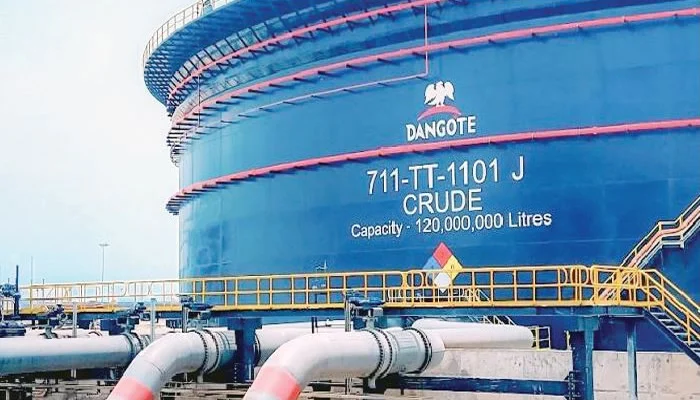
The high expectation for immediate profit as being expressed especially by new investors who participated in the Dangote IPO from their investment may land them in disappointment, after all.
This much has been highlighted by BusinessDay’s analysis of Ifeoluwa Balogun, as a case study, whether real or an imaginary figure, captures the excitement around Dangote Refinery’s public offer. For instance, Balogun optimistically says:
“I bought Dangote shares that are worth N42,000. I am expecting to cash out big time to buy something valuable, at least a piece of land in Imowe-Ibafo, Ogun State.”
To have hope is good. But to be definite about what you are not in control of may trigger unpleasant consequences. For example, the Baloguns may not know that Dangote’s: “N2.15 trillion IPO is creating access to ownership, not a shortcut to wealth. With 4.1 billion shares offered at N525 each and a minimum subscription of just 10 shares, the offer is bringing equity ownership within reach of ordinary Nigerians. What happens to their money after the subscription, however, will depend on the refinery’s future earnings, cash generation and share-price performance,” it has pointed out.
This case study goes further with the analysis: “For Balogun, N42,000 buys 80 shares before applicable charges. If the shares eventually reach N1,050, his holding would be worth N84,000. If they reach N5,250, it would be worth N420,000. Neither outcome has a timetable, and neither price is guaranteed.”
That distinction is becoming important as the Dangote IPO draws first-time investors into Nigeria’s stock market.
The offer is scheduled to close on October 13, having been opened to the public on September with the minimum subscription set at N5,250.
Sure, investors are buying a stake in a business that has recently demonstrated substantial earning power. Dangote Refinery reported $13.91 billion in revenue in the first half of 2026, alongside $2.60 billion in EBITDA and $1.82 billion in net profit, according to BusinessDay. The result marked a sharp turnaround from the loss recorded in 2025.
“Those numbers explain the enthusiasm around the offer. But an equity investor is buying future earnings, not simply the latest six months of profit.” In addition, it’s important to note that:
“The refinery operates in a volatile global business. Its earnings are exposed to crude-oil costs, refined-product prices, refining margins, foreign exchange, demand and international energy-market conditions. A strong first half does not guarantee that future periods will produce the same results.”
The company’s future expansion also matters. Dangote says the refinery has crude-distillation capacity of 700,000 barrels per day and plans to expand that to 1.4 million barrels per day. Basically, ” The wider complex includes petrochemicals, storage, marine infrastructure and logistics.
“For shareholders, therefore, the investment case extends well beyond the IPO. The value of their shares will depend on whether the company can sustain production, expand profitably, manage its financial obligations, generate cash and return value to shareholders. That makes the distance between owning shares and becoming wealthy important.”
If Balogun’s 80 shares rise from N525 to N1,000, his holding would be worth N80,000. But that increase remains a market gain until he sells. If the market price falls below N525, the value of his investment falls instead. The investor therefore has to live with the market’s timing.
Someone who expects the shares to finance a land purchase within a particular period could be forced to sell earlier than planned, potentially at a price below expectation. The market does not adjust its timing to an investor’s financial needs.
It’s in view of these fluctuating realities that the regulator, “The Securities and Exchange Commission has urged prospective investors to read the approved prospectus and understand the terms and risks before subscribing. It has also warned against people or platforms promising guaranteed allocations or returns.”
The significance of the IPO is therefore broader than whether Dangote shares rise after listing. It is introducing more Nigerians to ownership of productive assets at a time when household incomes remain under pressure. But ownership comes with uncertainty: the investor participates in both the gains and the risks of the business.
The punchy end of the discourse is even more important: “For Balogun, the more useful question is not how quickly N42,000 can become enough to buy land. It is whether he can afford to hold the investment long enough for the underlying business to create value. The Dangote IPO can put ownership within reach of ordinary Nigerians. It cannot put a guaranteed fortune within reach overnight.”



Nyesom Wike’s Son, Jordan, Dragged to Court for $2.1m Alleged Land Fraud
Spread the love–Court Orders Jordan To Produce American Passport By Nick Ibe, Abuja Jordan Ezenwo Nyesom-Wike, son of the FCT...


Nigerian Economy at Risk: 22 Firms Threatened by N3.9trn Debt
Spread the love–Job losses loom A wide disparity in the ability of companies listed on the Nigerian Exchange Limited, NGX,...

National Assembly to translate laws into Igbo, Yoruba, Hausa, others
Spread the loveThe National Assembly will soon deepen the digitisation of parliamentary records by translating Nigerian laws into Igbo, Hausa,...


Court Convicts 21 Companies in Absentia for Operating Illegal Investment Schemes
Spread the loveBy Michael Lim 21 companies have been convicted and sentenced for operating without licenses from Security and Exchange...


Aondoakaa Appoints Dzever As DG Of Campaign Organization
Spread the loveBy Felix Umande The Governorship Candidate of the Peoples Democratic Party (PDP) in Benue State, Chief Michael Kaase...


Tennessee Governor Declines to Halt Execution of Woman on Death Row
Spread the loveIf the execution proceeds, Christa Pike would be the first woman to be executed in Tennessee in more...


Tinubu Again Movement 2027 sets for massive solidarity March, rally in AbujaBy Aliyu Musa
Spread the loveArrangements have been concluded by Tinubu Again Movement 2027 (TAM) for a massive solidarity March and support rally...


Kaduna State Nigeria’s Highest-ranked in the 2026 Transparency and Integrity Index
Spread the love–Niger State, Cross River and 31 others ranked low By Son Tertsea, Abuja Kaduna state has been judged...


NDLEA, UAE’s NDEA sign MoU to deepen Anti-narcotics Cooperation
Spread the loveBy Nick Ibe, Abuja The National Drug Law Enforcement Agency (NDLEA) has signed a Memorandum of Understanding (MoU)...


Rainbow Coalition Rejected As APC Chairmen Call for Wike’s Defection
Spread the loveThe Rainbow Coalition, FCT minister Nyesom Wike’s, political movement for the reelection of President BolaTinubu is facing rejection...