
Business and Economy
Dangote IPO Not a Magic Wand to wealth


By Son Tertsea, Abuja
The high expectation for immediate profit as being expressed especially by new investors who participated in the Dangote IPO from their investment may land them in disappointment, after all.
This much has been highlighted by BusinessDay’s analysis of Ifeoluwa Balogun, as a case study, whether real or an imaginary figure, captures the excitement around Dangote Refinery’s public offer. For instance, Balogun optimistically says:
“I bought Dangote shares that are worth N42,000. I am expecting to cash out big time to buy something valuable, at least a piece of land in Imowe-Ibafo, Ogun State.”
To have hope is good. But to be definite about what you are not in control of may trigger unpleasant consequences. For example, the Baloguns may not know that Dangote’s: “N2.15 trillion IPO is creating access to ownership, not a shortcut to wealth. With 4.1 billion shares offered at N525 each and a minimum subscription of just 10 shares, the offer is bringing equity ownership within reach of ordinary Nigerians. What happens to their money after the subscription, however, will depend on the refinery’s future earnings, cash generation and share-price performance,” it has pointed out.
This case study goes further with the analysis: “For Balogun, N42,000 buys 80 shares before applicable charges. If the shares eventually reach N1,050, his holding would be worth N84,000. If they reach N5,250, it would be worth N420,000. Neither outcome has a timetable, and neither price is guaranteed.”
That distinction is becoming important as the Dangote IPO draws first-time investors into Nigeria’s stock market.
The offer is scheduled to close on October 13, having been opened to the public on September with the minimum subscription set at N5,250.
Sure, investors are buying a stake in a business that has recently demonstrated substantial earning power. Dangote Refinery reported $13.91 billion in revenue in the first half of 2026, alongside $2.60 billion in EBITDA and $1.82 billion in net profit, according to BusinessDay. The result marked a sharp turnaround from the loss recorded in 2025.
“Those numbers explain the enthusiasm around the offer. But an equity investor is buying future earnings, not simply the latest six months of profit.” In addition, it’s important to note that:
“The refinery operates in a volatile global business. Its earnings are exposed to crude-oil costs, refined-product prices, refining margins, foreign exchange, demand and international energy-market conditions. A strong first half does not guarantee that future periods will produce the same results.”
The company’s future expansion also matters. Dangote says the refinery has crude-distillation capacity of 700,000 barrels per day and plans to expand that to 1.4 million barrels per day. Basically, ” The wider complex includes petrochemicals, storage, marine infrastructure and logistics.
“For shareholders, therefore, the investment case extends well beyond the IPO. The value of their shares will depend on whether the company can sustain production, expand profitably, manage its financial obligations, generate cash and return value to shareholders. That makes the distance between owning shares and becoming wealthy important.”
If Balogun’s 80 shares rise from N525 to N1,000, his holding would be worth N80,000. But that increase remains a market gain until he sells. If the market price falls below N525, the value of his investment falls instead. The investor therefore has to live with the market’s timing.
Someone who expects the shares to finance a land purchase within a particular period could be forced to sell earlier than planned, potentially at a price below expectation. The market does not adjust its timing to an investor’s financial needs.
It’s in view of these fluctuating realities that the regulator, “The Securities and Exchange Commission has urged prospective investors to read the approved prospectus and understand the terms and risks before subscribing. It has also warned against people or platforms promising guaranteed allocations or returns.”
The significance of the IPO is therefore broader than whether Dangote shares rise after listing. It is introducing more Nigerians to ownership of productive assets at a time when household incomes remain under pressure. But ownership comes with uncertainty: the investor participates in both the gains and the risks of the business.
The punchy end of the discourse is even more important: “For Balogun, the more useful question is not how quickly N42,000 can become enough to buy land. It is whether he can afford to hold the investment long enough for the underlying business to create value. The Dangote IPO can put ownership within reach of ordinary Nigerians. It cannot put a guaranteed fortune within reach overnight.”

By Isa Abdul
Economic crunch is gradually reshaping the Nigerian economic landscape, particularly the formal employment system.
According to the Punch, businesses are abandoning traditional fixed salary structures as employers are moving their workers, entirely or partially, to commission-based remuneration models. This is shifting the burden of low sales directly onto their staff.
From retail outlets to tech startups and manufacturing firms, the narrative is uniform: if you do not bring in revenue, you do not get paid.
This is a new survival switch
Years back, monthly pay was the golden standard of employment security in Nigeria.
But with business patronage slowing to a crawl, companies say maintaining a high wage bill is no longer sustainable.
“We had no choice,” says Mr. David Amaechi , the Managing Director of a mid-sized consumer electronics retail chain. He continued that:
“Our foot traffic has dropped by more than 40 percent compared to last year.
“People are prioritizing food and fuel over gadgets.
“We were faced with two options: either shut down operations entirely and lay off all 25 employees, or transition them to a performance-based system.
“We chose to keep them on, but now, a base salary only covers basic transport, while 70 percent of their take-home pay relies purely on the volume of goods they sell.”
He explained that while the decision was painful, it has kept his business afloat.
“It forces the team to be aggressive, but more importantly, it aligns our expenses directly with our actual revenue.
“If the business doesn’t make money, we cannot afford to pay out millions in fixed wages.”
While business owners view the move as an innovative emergency cushion, employees describe it as a fast track to financial insecurity.
With the cost of transportation, housing, and utilities skyrocketing, an unpredictable paycheck is pushing many urban workers to the brink.
Chioma Nnaji, a sales representative at a drycleaning service company, shared her recent struggles under the new payment structure.
“Two months ago, management announced that our basic salary was being cut by 60 percent, and the rest would be made up via a five percent commission on a number of clothes washed.
“But the customers are simply not coming. Some days, we don’t make a single sale.
“Those that come leave their clothes for months before coming to collect them.
“Last month, I went home with less than half of what I used to earn. My rent is due, food prices are rising daily, and I cannot even predict what I will earn next week.”
Labor experts warn that this trend could trigger widespread job dissatisfaction and a mental health crisis among the workforce.
The pressure to convert window-shoppers into paying clients in a depressed economy is turning workplaces into high-stress environments.
Economic analysts note that while commission structures are standard practice in sectors like real estate and insurance, their sudden adoption in conventional retail, hospitality, and corporate services reflects a deeper structural crisis.
“What we are seeing is the informalization of formal employment,” Dr. Abiodun Shonubi, a labor economist, said.
“Employers are effectively outsourcing their market risks to their employees. When consumer patronage slows because disposable income has been wiped out by inflation, it is unfair to penalise the floor worker who has no control over macroeconomic policies.
“While it helps businesses survive short-term cash flow crunches, it ultimately dampens aggregate demand because workers have less money to spend, creating a vicious cycle for the economy.”
However, given the scarcity of alternative job openings, many employees feel powerless to challenge the changes.
As the business landscape remains volatile, the commission-based salary model appears poised to stay.
For Nigerian employers, it is a necessary life support machine. For the average worker, it is another heavy layer of uncertainty in an already challenging economic climate.
Business and Economy
NBTI Receives, Presents Nigeria’s 7 Shining Stars in Lahore, Pakistan to Science and Tech Minister

By Seyi Balogun
Seven Nigerian entrepreneurs who proudly represented the nation and distinguished themselves at the SEE Pakistan 2026 World Startup Championship in Lahore, Pakistan have been received by the Management of the National Board for Technology Incubation (NBTI), led by the Director-General/Chief Executive Officer, Dr. Kazeem Kolawole Raji.
The remarkable international performance of the Nigerian entrepreneurs represents another compelling demonstration of the depth of talent, creativity, enterprise and technological ingenuity embedded within Nigeria’s emerging innovation ecosystem. SEE Pakistan 2026 brought together startups, entrepreneurs, investors, mentors and innovation stakeholders through a major international platform designed to promote entrepreneurship, innovation, visibility and global collaboration.
Following their reception at NBTI, the seven champions were presented to the Honourable Minister of Innovation, Science and Technology, Dr. Kingsley Tochukwu Udeh, SAN, where their outstanding international achievement was formally showcased as part of the Federal Government’s continuing efforts to strengthen Nigeria’s technology, innovation and entrepreneurship ecosystem.
The achievement is particularly significant against the backdrop of the transformative economic direction of the administration of President Bola Ahmed Tinubu whose bold economic and institutional reforms are designed to reposition Nigeria for sustainable growth, productivity, investment and prosperity.
President Tinubu’s administration has articulated the ambition of building a $1 trillion Nigerian economy by 2030, with technology, innovation, productivity, enterprise development and a skilled youthful workforce forming important components of that transformation agenda. The Federal Government’s Nigeria First Policy, in particular, places emphasis on strengthening Nigerian businesses, promoting domestic products and services, creating employment and enhancing the competitiveness and innovative capacity of Nigerian enterprises.
The NBTI Management commends President Bola Ahmed Tinubu, GCFR, for providing a policy environment in which Nigerian entrepreneurs, innovators and technology-driven enterprises can increasingly aspire to compete beyond the shores of Nigeria.
The Board recognises that the transformation of Nigeria into a globally competitive, innovation-driven economy requires more than policies alone. It requires deliberate investment in people, institutions, technology, entrepreneurship, research, product development, incubation, commercialisation and access to international markets.
It is within this broader national vision that NBTI continues to strengthen its Technology Incubation Centres and support mechanisms for entrepreneurs across the country.
Speaking at the reception, the Director-General/CEO of NBTI, Dr. Kazeem Kolawole Raji, congratulated the entrepreneurs for their resilience, professionalism, determination and exceptional representation of Nigeria on the international stage.
Dr. Raji described their achievement as a powerful reflection of the enormous creative and entrepreneurial capacity of Nigerian youths and innovators.
He stated that the success of the entrepreneurs was not merely an individual accomplishment but also a demonstration of what can be achieved when innovation, incubation, mentorship, institutional support and entrepreneurial determination are brought together.
By Nick Ibe
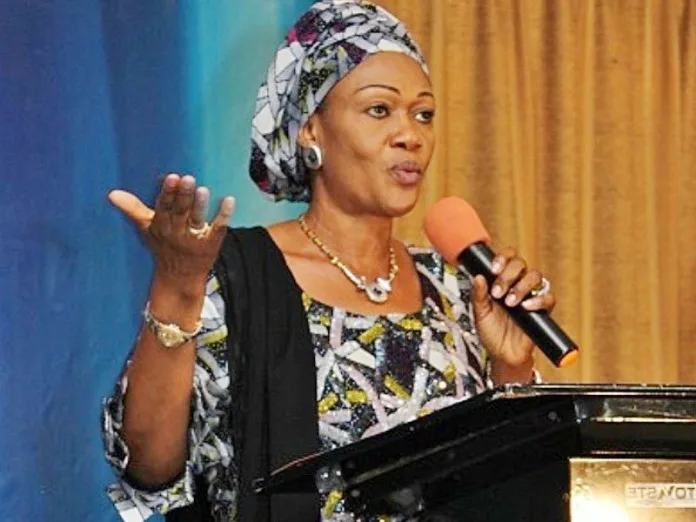
A call to reduce food waste and adopt sustainable practices to protect the environment has been made by the First Lady, Senator Oluremi Tinubu in a message marking the 2026 World Cleanup Day.
The day was observed on Sunday with the theme, “From Clean Plates to Clean Cities.”
She said the focus on food waste was particularly apt as climate change, conflicts and other global challenges continue to disrupt food production and supply. In her words:
“This year’s focus on food waste is particularly important at a time when climate change, conflicts, and other global challenges continue to disrupt food production and supply.”
She urged Nigerians to become more responsible in how they purchase, prepare, consume, and preserve food.
“I encourage households, businesses, and communities to reduce food waste, dispose of refuse properly, and adopt more sustainable practices that protect our environment,” she added.
Tinubu said collective efforts were needed to build cleaner and healthier communities for present and future generations.
“Through our collective efforts, we can build cleaner, healthier communities for present and future generations,” she said.


Iran Walks Out of UNGA in Protest Over Trump’s Combative ‘Annihilation’ Speech
Spread the loveUnited States President Donald Trump threatened on Tuesday to “annihilate” Iran if Tehran fails to reach a deal...

Osun State Assembly First to Approve State Police as N’Assembly Clarifies Transmission
Spread the loveBy Seyi Balogun The National Assembly clarified Tuesday that the constitutional amendment seeking to create the State Police...

Benue 2027: Aondoakaa Pledges Free Healthcare, Geriatric Units For Elderly, If Elected
Spread the loveBy Felix Umande The governorship candidate of the Peoples Democratic Party (PDP) in Benue State, Chief Michael Aondoakaa,...


Dangote IPO Not a Magic Wand to wealth
Spread the loveBy Son Tertsea, Abuja The high expectation for immediate profit as being expressed especially by new investors who...

INEC: AI manipulation Real Threat to 2027 Elections,
Spread the loveBy Nick Ibe, Abuja The misuse of artificial intelligence in creating and spreading manipulated content is “no longer...


Daddy Showkey To P-Square: No matter what, you guys are brothers, resolve things, you have children.
Spread the loveBy Seyi Balogun Daddy Showkey, one of the veteran Nigerian singers, has expressed disappointment over the prolonged rift...


NSCDC Discovers Illegal Juice Factory in Lagos, arrests two women
Spread the loveBy Seyi Balogun, Lagos For operating an illegal juice factory in Aradagun, in the Badagry area of Lagos...

Workers’ Tell Tinubu: Sell Fuel ‘N500/litre or Pay N500,000 minimum wage’ –
Spread the loveBy Nick Ibe The painful reality of living costs and the uncertain general economic situation in Nigeria, workers...


Death of 37 Miners in Custody: Ajia Calls for Independent Investigation, Accountability
Spread the loveA chieftain of the All Progressives Congress (APC) and the Dan Amanan Fune Emirate of Yobe State. Alhaji...


Body Operating With Name National PTA, Unknowed to Edu Ministry
Spread the loveBy Son Tertsea, Abuja The body operating under the name National Parent-Teacher Association (PTA) of the Federal Unity...