
General News
INEC: AI manipulation Real Threat to 2027 Elections,

By Nick Ibe, Abuja
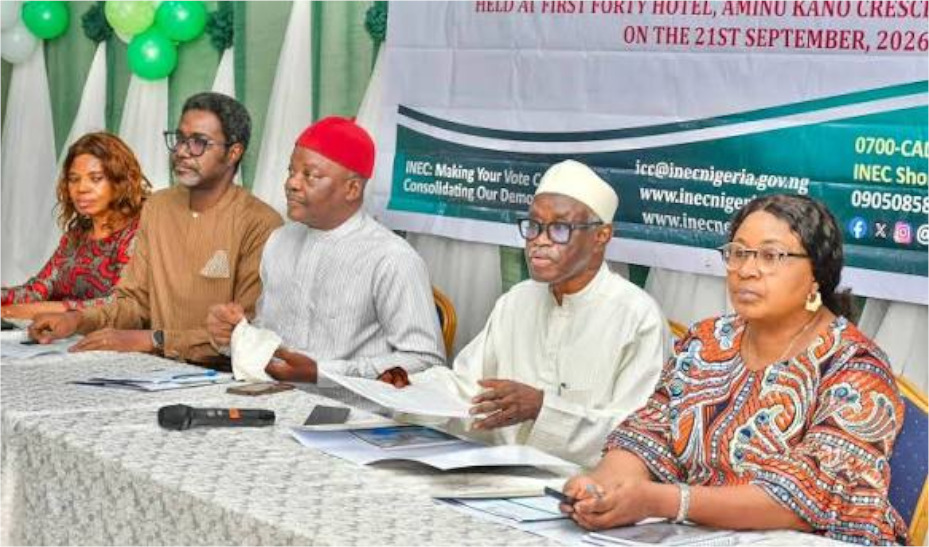
The misuse of artificial intelligence in creating and spreading manipulated content is “no longer a distant, theoretical risk” to the 2027 general elections, Independent National Electoral Commission, INEC, has warned.
The commission said the growing accessibility of generative AI had made it cheaper and considerably harder to detect fabricated audio, videos and images, raising concerns about the potential impact on voters and electoral credibility.
This was contained in a statement signed by the Director of Voter Education and Publicity, Victoria Eta-Messi, on Monday.
Also, the National Commissioner and Chairman of the Information and Voter Education Committee, Mohammed Haruna, raised the concern on Monday in Abuja while declaring open a capacity-building workshop for Public Affairs Officers drawn from across the states.
Haruna said the threat extended beyond fabricated content, noting that AI could also be deployed to produce highly targeted messages designed to feed conflicting narratives to different groups of voters.
“Generative AI has made it cheaper and considerably harder to detect manipulated audio, video and images,” he said.
He added that the development made it imperative for electoral technology and electoral communication to be treated as interconnected aspects of election management.
Haruna recalled that the INEC Chairman, Prof Joash Amupitan (SAN), recently said electoral credibility no longer depended only on ballot papers, Bimodal Voter Accreditation System machines and result sheets, but also on the information environment in which voters formed their judgments.
According to him, Amupitan had called for electoral technology and electoral communication to be treated “not as separate concerns but as a single discipline.”
Haruna said the workshop, themed “Strengthening PAOs Capacity for Credible, Verified and Responsible Election Communication Towards 2027,” was designed to equip INEC’s public affairs officers with the skills required to respond to the emerging information challenges.
Describing PAOs as “the frontline communicators of INEC in the states,” he said, “the credibility of INEC’s communication, in many respects, begins with the work you do.”
The national commissioner said the officers would receive training in verification, escalation and clear, consistent messaging, adding that the skills would be tested in real time as the 2027 elections approach.
In her welcome remarks, Eta-Messi said the officers had a major responsibility in shaping public perception of the commission.
“It is through you that Nigerians form much of their impression of who we are, what we stand for, and how reliable our information is,” she said.
Eta-Messi said INEC operated under constant public scrutiny and was regularly confronted with attempts to misrepresent its work and undermine public confidence.
She disclosed that the workshop was not a one-off engagement, saying further capacity-building interventions were at an advanced stage of planning with support from development partners.
The director described the training as “the beginning of sustained engagement” to ensure that the officers were adequately prepared for their responsibilities.
Presenting the objectives of the workshop, the Deputy Director, Information and Publicity, Wilfred Ifogah, said the programme was designed to strengthen the practical communication skills required by PAOs in their day-to-day duties as the 2027 elections draw closer.
He said the training would clarify escalation lines between PAOs, heads of department, the Voter Education and Publicity Department and Resident Electoral Commissioners.
Ifogah added that the programme would strengthen consistency in press statements, talking points and social media communication, while building the officers’ capacity to monitor the information ecosystem and respond to misinformation and disinformation.
He said the workshop would also introduce participants to “the responsible use of artificial intelligence in communication work, including its practical applications, its limitations, and the safeguards required around confidentiality and verification.”
In his view, Ifogah said participants were expected to leave the workshop with “a shared appreciation of the standards of accuracy, consistency and professionalism required of every Public Affairs Officer of this Commission,” particularly ahead of the 2027 general elections.




By Seyi Balogun
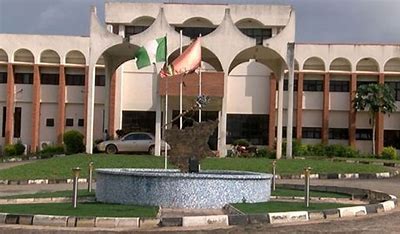
The National Assembly clarified Tuesday that the constitutional amendment seeking to create the State Police Services Bill transmitted to the 36 state Houses of Assembly, only Osun State House of Assembly had turned in its decision.
Osun became the first state legislature to approve the proposed constitutional amendment for the establishment of state police.
The clarification came amid reports suggesting that the National Assembly had forwarded the entire package of proposed Constitution alterations to the state legislatures for consideration.
In a statement signed by the Clerk to the National Assembly, Kamoru Ogunlana, the National Assembly said the State Police Services Bill was the only constitutional alteration proposal so far transmitted to the states, while other bills would be forwarded after being passed in identical form by both chambers.
The statement was titled, “National Assembly Clarifies Transmission of Constitution Alteration Bill to State Houses of Assembly.”
Ogunlana recalled that on September 16, 2026, the National Assembly announced the transmission of the Constitution of the Federal Republic of Nigeria 1999 (Sixth Alteration) Bill, 2026, titled, “A Bill for an Act to Alter the Constitution of the Federal Republic of Nigeria, 1999 to Provide for the Establishment of State Police Services; and for Related Matters.”
He said, “For the avoidance of doubt, it is only this particular Constitution Alteration Bill that has so far been transmitted to the state Houses of Assembly.
“It is, therefore, incorrect to suggest or create the impression that all the Constitution Alteration Bills before the National Assembly have been transmitted to the states.”
According to him, the decision to prioritise the State Police Bill was in response to widespread public demands and concerns over security and policing in the country.
The clerk explained further that the remaining Constitution Alteration Bills would be transmitted to the 36 state Houses of Assembly after they had been passed in identical form by both chambers of the National Assembly.
“The other Constitution (Sixth Alteration) Bills before the National Assembly will be transmitted to the Houses of Assembly of the 36 states of the federation upon their passage in identical form by both chambers of the National Assembly, in accordance with the constitutional amendment process,” the statement added.
Following the transmission of the bill, lawmakers of the Osun State House of Assembly, at plenary on Tuesday, unanimously approved the proposed constitutional amendment after deliberations.
The Speaker of the Assembly, Adewale Egbedun, earlier read a letter from the National Assembly, “requesting state Houses of Assembly across the federation to deliberate on and approve the proposed constitutional amendment.”
The Speaker further explained that “the amendment had been forwarded to the House for its consideration and approval as part of the constitutional amendment process.”
In separate submissions, the lawmaker representing Ife South State Constituency, Lawrence Adeoti, and Taofeek Olayiwola, representing Ede South State Constituency, supported the passage of the bill, noting that the establishment of state police would further enhance security across the country.
Also contributing to the debate, Adewumi Adeyemi, representing Obokun State Constituency, and Jeremiah Awoyeye, representing Ife Central State Constituency, described the proposed establishment of state police as timely.
They also said that, when established, state police would strengthen the security architecture of the country, particularly at the state and local government levels.
They maintained that the proposed amendment would “enhance the ability of states to provide adequate security personnel and respond more effectively to security challenges within their respective jurisdictions.”
After the deliberations, the Assembly’s Majority Leader, Babajide Kofoworola, representing Ede North State Constituency, moved the motion for the House to support the proposed amendment.
The motion was subsequently seconded by Tajudeen Adeyemi, representing Ifelodun State Constituency.
By Seyi Balogun, Lagos
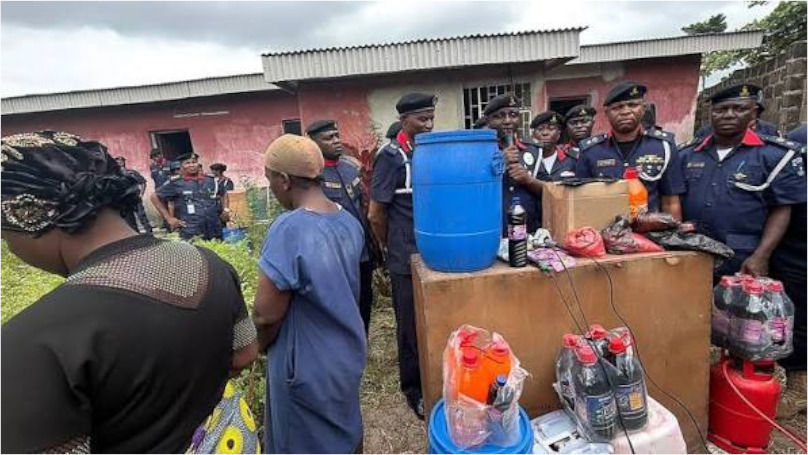
For operating an illegal juice factory in Aradagun, in the Badagry area of Lagos State, two female suspects have been arrested by operatives of the Nigeria Security and Civil Defence Corps (NSCDC) who stormed the facility on Saturday.
The factory, where a drink branded Barkas Juice was allegedly produced, was uncovered at Talabi Onilegbale Street, Aradagun, Olorunda Local Council Development Area, on September 19, 2026, at about 9:00 p.m.
The two women, aged 48 and 50, were arrested at the premises by operatives of the NSCDC Badagry Divisional Headquarters.
The corps alleged that the factory was unregistered and that the product, produced under Titi Alubarika Trading Stores Ltd, carried a purportedly fake National Agency for Food and Drug Administration and Control (NAFDAC) registration number, 01-2166L.
According to The Guardian, a truck at the premises loaded with the products was still at the factory, apparently awaiting distribution.
Cartons of the drink and rolls of product labels were also seen inside the bungalow being used for production, while part of the building served as a residence.
A dirty well, which the NSCDC said was being used to source water for production, was also seen within the premises, alongside an unclean industrial storage tank.
The operation, according to the NSCDC, followed five days of surveillance after intelligence was received about the activities at the location.
The corps also alleged that the products were being distributed to Edo State and other parts of the country.
Speaking on behalf of the Lagos State Commandant, Adedotun Keshinro, the NSCDC spokesperson, Oluwaseun Abolurin, said the operation was conducted after operatives encountered resistance from youths in the area.
He said the corps had to strengthen its inter-agency collaboration, including involving the Nigerian Army, to guard against possible attacks. He, however, said community support helped the operation to succeed. In his words:
“Adulterated fruit drinks are being produced in this factory and supplied to Edo State and other parts of the country. The products were found packed in cartons and also loaded in a truck.”
Abolurin described the alleged production process as a threat to public health, urging Nigerians to be wary of unregistered fruit drinks.
He added that the NSCDC contacted NAFDAC to verify the registration y informed that the product was not registered.
Abolurin further alleged that the drink contained high levels of sugar, additives and dyes, but did not provide laboratory findings to substantiate the claim.
Speaking to The Guardian, the primary suspect, Morenikeji Alawiye, said the factory had originally been established by her grandmother and had been operating for nearly two decades, although she acknowledged that it had previously been shut down.
According to her, the family initially produced bottled and sachet water before the factory ran into difficulties.
Alawiye said she had been trying to regularise the business before her arrest and claimed that she had contacted an uncle working with NAFDAC to assist with the process.
She also said an aunt had introduced a prospective customer in The Gambia who wanted the product manufactured for export.
By Nick Ibe
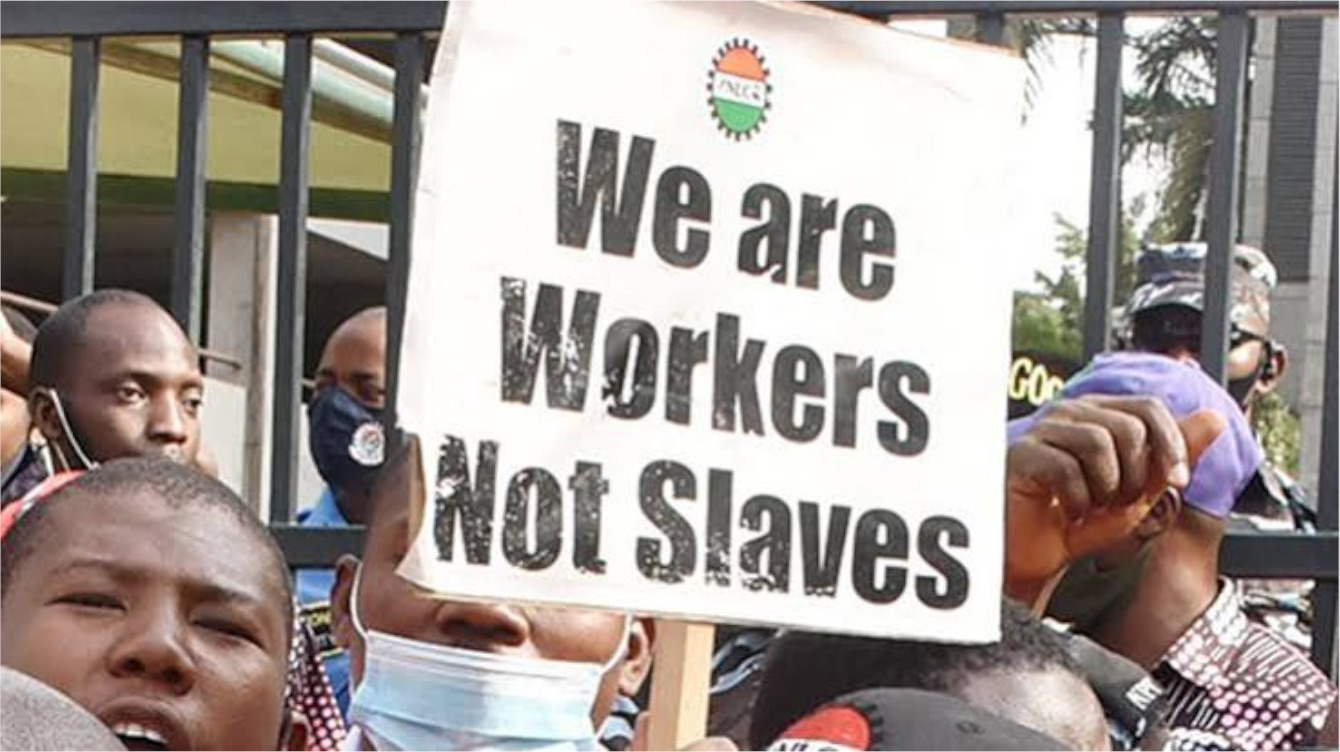
The painful reality of living costs and the uncertain general economic situation in Nigeria, workers are seeking an immediate intervention, with civil servants under the aegis of the Joint National Public Service Negotiating Council, JNPSNC, Trade Union Side, inviting President Bola Tinubu’s intervention.
In a letter addressed to the President, the workers urged the Federal Government to stabilise the price of petrol at N500 per litre, approve an immediate Wage Award and upwardly review salaries and allowances across the public service.
The workers equally demanded the immediate constitution of a committee to negotiate a new National Minimum Wage ahead of January 2027.
The recent increase in fuel prices to N1,430 per litre and above in some locations, in their submission, had further worsened the cost-of-living crisis.
They gave the Federal Government until Wednesday, September 30, 2026, to take action on their demands, warning that the prevailing hardship was creating palpable tension among workers and Nigerians.
The workers added that the removal of fuel subsidy three years ago had triggered an astronomical increase in fuel prices and produced multiplier effects on the prices of essential commodities across the economy.
According to the JNPSNC, the situation had made life increasingly unbearable for workers, adding that the provision of food palliatives was not a sustainable solution to the economic crisis. They argued in the letter:
“It has dawned on Nigerian workers that the provision of palliatives such as bags of rice, Indomie, vegetable oil, garri, among other edible foods, is as good as weaponising Nigerians with poverty because it is a Pyrrhic intervention which is unsustainable, inaccessible to the majority of Nigeria’s population and also limited to political cronies.”
The more sustainable intervention, they stressed, would be to reduce the cost of fuel to N500 per litre, stating that the measure would have a multiplier effect across the economy.


Iran Walks Out of UNGA in Protest Over Trump’s Combative ‘Annihilation’ Speech
Spread the loveUnited States President Donald Trump threatened on Tuesday to “annihilate” Iran if Tehran fails to reach a deal...

Osun State Assembly First to Approve State Police as N’Assembly Clarifies Transmission
Spread the loveBy Seyi Balogun The National Assembly clarified Tuesday that the constitutional amendment seeking to create the State Police...

Benue 2027: Aondoakaa Pledges Free Healthcare, Geriatric Units For Elderly, If Elected
Spread the loveBy Felix Umande The governorship candidate of the Peoples Democratic Party (PDP) in Benue State, Chief Michael Aondoakaa,...


Dangote IPO Not a Magic Wand to wealth
Spread the loveBy Son Tertsea, Abuja The high expectation for immediate profit as being expressed especially by new investors who...

INEC: AI manipulation Real Threat to 2027 Elections,
Spread the loveBy Nick Ibe, Abuja The misuse of artificial intelligence in creating and spreading manipulated content is “no longer...


Daddy Showkey To P-Square: No matter what, you guys are brothers, resolve things, you have children.
Spread the loveBy Seyi Balogun Daddy Showkey, one of the veteran Nigerian singers, has expressed disappointment over the prolonged rift...


NSCDC Discovers Illegal Juice Factory in Lagos, arrests two women
Spread the loveBy Seyi Balogun, Lagos For operating an illegal juice factory in Aradagun, in the Badagry area of Lagos...
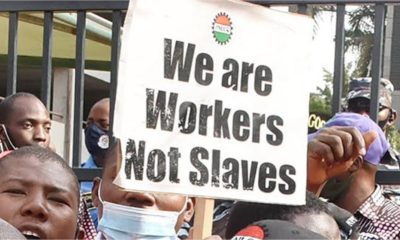

Workers’ Tell Tinubu: Sell Fuel ‘N500/litre or Pay N500,000 minimum wage’ –
Spread the loveBy Nick Ibe The painful reality of living costs and the uncertain general economic situation in Nigeria, workers...


Death of 37 Miners in Custody: Ajia Calls for Independent Investigation, Accountability
Spread the loveA chieftain of the All Progressives Congress (APC) and the Dan Amanan Fune Emirate of Yobe State. Alhaji...


Body Operating With Name National PTA, Unknowed to Edu Ministry
Spread the loveBy Son Tertsea, Abuja The body operating under the name National Parent-Teacher Association (PTA) of the Federal Unity...