
General News
Kaduna State Nigeria’s Highest-ranked in the 2026 Transparency and Integrity Index

–Niger State, Cross River and 31 others ranked low
By Son Tertsea, Abuja
Kaduna state has been judged as Nigeria’s highest-ranked state in the 2026 Transparency and Integrity Index, scoring 54.68 per cent, according to a report by the Centre for Fiscal Transparency and Public Integrity (CeFTPI).
Osun State ranked second with 50.54 per cent, followed by Kwara State with 48.19 per cent.
Rivers State came fourth with 37.97 per cent, while Enugu and Kebbi states occupied fifth and sixth positions, respectively, with 36.63 per cent each.
On the other hand, Niger State, Cross River and 31 others ranked low.
The report, unveiled on Monday, September 28, assessed state governments on the disclosure of public financial information, procurement practices, human resources and inclusion, anti-corruption measures, and citizens’ engagement.
The findings showed a wide gap between the highest- and lowest-ranked states, with a difference of 43.82 percentage points between Kaduna and Niger.
Furthermore, the report showed that only three of Nigeria’s 36 states scored at least 45 per cent, while 15 states, representing 40.5 per cent, recorded scores below 25 per cent.
Bayelsa and Yobe jointly ranked 34th with 14.86 per cent each, ahead of Niger, which occupied the bottom position.
The findings, according to the organisation, highlight wide differences in how state governments disclose information about public finances, government contracts, recruitment, anti-corruption measures and opportunities for citizens to engage with public institutions.
Presenting the report, Executive Director at CEPTI, Dr. Umar Yakubu said the report assessment covers five areas including fiscal transparency, open procurement, human resources and inclusion, control of corruption, and citizens’ engagement.
“Each category accounts for 20 per cent of the overall score. Fiscal transparency examines whether state governments publish budget documents, revenue and expenditure figures, allocations and audit reports.
“Open procurement assesses the availability of information about government contracts, including tender notices, contract details and implementation reports.
“The human resources and inclusion category examines the publication of information on recruitment, promotion, staffing and inclusion in the public service.
“This includes whether governments disclose recruitment procedures and relevant information about their workforce.
“The control of corruption category assesses the disclosure of anti-corruption measures, including relevant policies and whistleblowing frameworks. It considers whether information is available on the safeguards governments have put in place to address corruption.
“Citizens’ engagement examines the channels through which members of the public can communicate with government institutions, raise concerns and participate in relevant public processes.
“The report’s methodology assigns equal weight to the five categories, meaning each contributes one-fifth of a state’s final score.
A low score therefore indicates that a state performed poorly against the index’s transparency and disclosure criteria,” he explained
He said the report assessment is guided by Nigerian laws and policies, including the Freedom of Information Act, 2011, and the Fiscal Responsibility Act, as well as relevant international commitments.
How other states performed
Consequently, Gombe scored 36.55 per cent, while Anambra and Abia recorded 36.19 per cent each. Oyo followed with 36.08 per cent, and Ekiti scored 35.21 per cent.
Bauchi recorded 34.67 per cent, Ondo 31.75 per cent, Kogi 31.11 per cent, Kano 30.86 per cent, Plateau 30.41 per cent and Delta 30.22 per cent.
Akwa Ibom scored 29.97 per cent, Katsina 29.78 per cent, while Lagos and Borno jointly recorded 28.19 per cent.
Adamawa scored 26.86 per cent, Nasarawa 26.67 per cent and Sokoto 26.22 per cent.
Also, Zamfara scored 24 per cent, Jigawa 23.75 per cent, Edo 22.86 per cent, Benue 20.63 per cent, and Taraba 19.75 per cent.
Ogun recorded 18.86 per cent, Imo 18.67 per cent, Ebonyi 18.41 per cent, and Cross River 17.97 per cent.
The difference between Kaduna, the highest-ranked state, and Niger, the lowest-ranked, was 43.82 percentage points.








By Vincent Tyosuugh
The suspension of Mr Vitalis Neji, Chairman of Kwande Local Government Area,
has been extended by six more months over allegations of gross misconduct and abuse of office, by the Benue State House of Assembly.
The Majority Leader, Mr Bemdoo Ipusu, on Thursday during plenary in Makurd, moved a motion for the extension and it was seconded by the Minority Leader, Mr Isaac Ochekliye.
Mr Alfred Emberga, speaker, ruling on the motion, directed Mrs Rita Iortsor, to continue in her acting capacity as chairman of the council until the conclusion of the investigation.
Neji was suspended on August 20 for three months based on the interim report by an ad hoc committee set up by the House to investigate allegations against him.
The committee’s report which was presented by the then Majority Leader and committee chairman, Mr Peter Ipusu, said Neji appeared in his appearance was unable to satisfactorily defend himself against the allegations.
Consequently, the House recommended his suspension, with the speaker ruling that it should take immediate effect to allow for further investigation into the allegations.
By Isa Abdul, Abuja
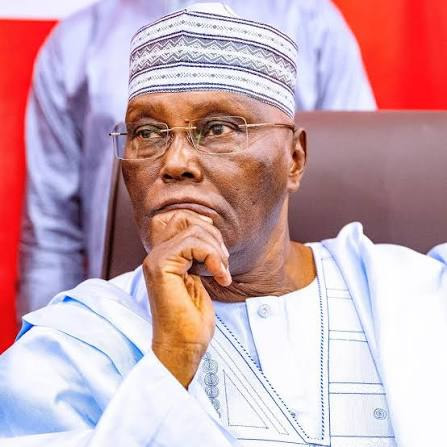
The hurdles for the African Democratic Congress leadership and its presidential candidate, Atiku Abubakar, are certainly multiplying ahead of the 2027 general elections, with a Federal High Court in Abuja invalidating a resignation letter allegedly written by former Deputy National Chairman, Nafiu Bala Gombe.
The development has further complicated the dispute over the party’s leadership, following last week’s judgment which nullified the emergence of the National Working Committee led by former Senate President, Senator David Mark.
Justice Peter Lifu made a consequential declaration rendering every decision taken by the Mark-led NWC null and void, including the nomination and candidacy of former Vice President Atiku Abubakar as presidential candidate of the ADC.
The weight of that decision has sunk deep against Atiku’s ambition to lead Nigeria.
According to the Punch, in the Certified True Copy of the judgment obtained on Wednesday, the court ordered that “…all actions, decisions, and steps taken by the 2nd (David Mark) and 3rd (Rauf Aregbesola) defendants [and other members of the NWC they represent] as national officers of the 1st defendant (ADC), from July 29, 2025, the date of their unlawful and illegal emergence as such officers, are null, void, and without effect.”
Although the court stopped short to declare Gombe the party’s substantive National Chairman, it ruled that the Independent National Electoral Commission should recognise him as the only elected member of the ADC’s National Working Committee whose four-year tenure remained valid.
But holding on a string for survival, the ADC Presidential Campaign Council claimed that Gombe had acknowledged Mark as the National Chairman of the party during a National Executive Committee meeting. It also claimed that Gombe had officially resigned.
But Gombe denied resigning from his position, claiming that the purported letter of his resignation was fake with his signature bring forged to give it validity.
Lifu in his judgment also acknowledged some discrepancy in the signature which gave heft to his decision that it was forged.
Furthermore, Justice Peter Lifu, in the judgment of November 5, held that the invalidation of the process that produced Mark and former Minister of Interior, Rauf Aregbesola, as National Chairman and National Secretary, respectively, did not automatically confer leadership of the party on Gombe.
In the CTC, the judge said the invalidity of the disputed leadership arrangement and Gombe’s claim to a particular office were separate legal issues.
“I must, however, distinguish the invalidity of a process from the plaintiff’s claim to automatic succession,” Lifu held.
He said Gombe’s argument that he was the only elected member of the party’s NWC who had not resigned might entitle him to supervise the party’s affairs. Still, he did not automatically establish his entitlement to a specific national office.
“The validity of the challenged process and the plaintiff’s entitlement to a particular office are related but separate questions,” the judge stressed.
He further stated that any declaration recognising Gombe as entitled to act as a national officer must be supported by the relevant provisions of the party’s constitution, evidence and applicable laws.
“Any relief declaring him entitled to act as a national officer must be supported by the applicable constitutional provisions and evidence, and subject to the internal working arrangements and decisions of the 1st Defendant and the provisions of applicable laws,” he said.
The court, however, declared that INEC was bound to recognise Gombe as “the only elected member” of the party’s NWC “whose four-year tenure remains in effect.”
Gombe had told the court that he was elected Deputy National Chairman on October 12, 2022, for four years.
Meanwhile, ADC has vowed to contest the judgment at the Court of Appeal with the view of upturning Justice Lifu’s rulings.

By Lazarus Oko
The University of Nigeria, Nsukka (UNN) community has been thrown in grief, shock and mourning over the deaths of four students who reportedly participated in an off-campus party.
The deaths were confirmed by the Vice-Chancellor, Prof. Simon Ortuanya, who disclosed in a statement posted on the university’s Facebook page on Thursday that six other students who attended the gathering were receiving treatment at different hospitals.
Ten students from different departments, according to the statement, attended the party organised to celebrate a friend who had completed his final-year examinations. The four reportedly died after consuming substances suspected to be alcohol and drugs.
“Within these three days, all social and academic activities will be suspended in the University,” Ortuanya announced, saying the incident was “death too many”.



Benue Assembly Extends Kwande LG Chairman’s Suspension by Six Months
Spread the loveBy Vincent Tyosuugh The suspension of Mr Vitalis Neji, Chairman of Kwande Local Government Area,has been extended by...

2027: More Hurdles for Atiku from Abuja Court Judgment
Spread the loveBy Isa Abdul, Abuja The hurdles for the African Democratic Congress leadership and its presidential candidate, Atiku Abubakar,...
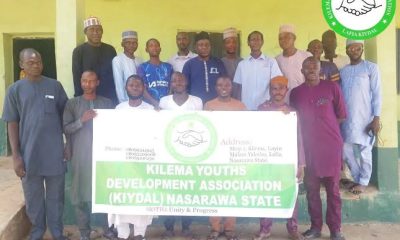

Nasarawa Youths Donate School to Community
Spread the loveBy Michael Lim Kilema Youth Development Association Lafia, KIYDAL, Nasarawa state, has donated a school to the Kilema...


Four UNN Students Confirmed Dead Following Off-Campus Party
Spread the loveBy Lazarus Oko The University of Nigeria, Nsukka (UNN) community has been thrown in grief, shock and mourning...


My Grandma Stood by Me When My Mother Wanted me to Stop Football, Marry – Flamingos captain Chidi
Spread the loveBy Lazarus Oko Flamingos captain Harmony Chidi has revealed how her mother initially opposed her ambition to become...
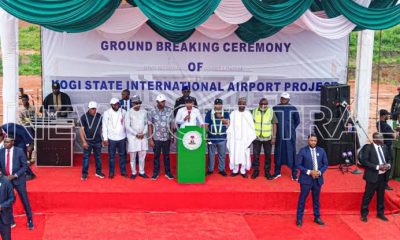

Kogi Int’l Airport Inches To Reality With President Tinubu’s Flag Off
Spread the loveBy Michael Lim, President Bola Tinubu’s flag off on Tuesday of the construction of the Kogi International Airport...


Kogi Central Flood: Natasha to Rebuild Damaged Houses
Spread the loveBy Michael Lim Natasha Akpoti-Uduaghan, the Senator representing Kogi Central Constituency in the Senate has pledged to rebuild...


Renewed Hope is Working: Jigawa Reaps N59.5bn Water Project, 900KM Roads, Railway Under Tinubu
Spread the lovePresident Bola Tinubu’s economic reforms are delivering visible development in Jigawa State, a member of the APC Presidential...

NIMENA Opens Up Asia-Pacific Market For Nigerian Start UpsBy Philip NyamAbuja
Spread the loveNational Chairman of the Nigerian Institute of Marine Engineers and Naval Architects (NIMENA), Engr. Sylvanus Eferebo has said...
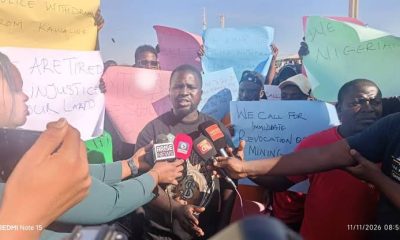

“Economic Pains from Mining Site Closure Forced Us to Protest” — Plateau Community Residents
Spread the loveBy Michael Lim, Jos The closure of a mining site in their community by security operatives over a...