
General News
Tinubu Praises Kaduna Gov Uba Sani’s Free CNG Mass Transit … As Benue Increases Fares for Commuters

By Son Tertsea
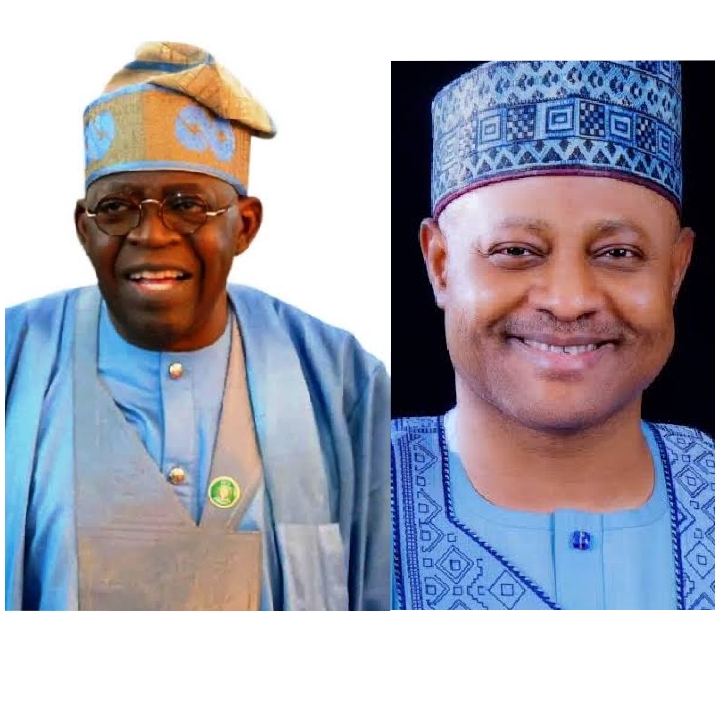
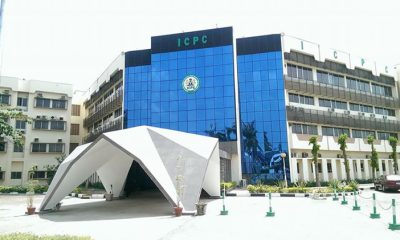
President Bola Ahmed Tinubu has praised Kaduna state government for deploying Compressed Natural Gas, CNG, mass transit schemes thereby reducing the burden of transportation on citizens.
The President specifically cited the Kaduna State Government’s free CNG mass transit initiative under Governor Uba Sani, describing it as evidence that cheaper domestic energy can translate into tangible savings for ordinary Nigerians.
President Tinubu called other governors to emulate the Kaduna state initiative.
But in contrast, Benue state, through its transport company, Benue Links, on September 15, 2026, added at least one thousand naira more for all commuters going outside the state.
In a release, the company justified its action to the rising fuel cost from N1,350 to N1,415, a development that is receiving public condemnation.
The president made the remarks in an update on the National Affordable CNG Transit Programme, following his August 27 meeting with the 36 state governors, where he said they agreed that Nigerians should begin to experience measurable reductions in transportation costs from October 1.
The President said Kaduna’s experience demonstrated what was possible when subnational governments deployed alternative energy to provide affordable transportation.
“In Kaduna, 100 CNG-powered buses are providing free transportation on major routes across the State. In their first year of operation, the buses carried about 3.2 million passengers, saving commuters more than ₦3.5 billion in transport costs,” Tinubu said.
He also cited interventions in Borno, Oyo, Adamawa, Enugu and Plateau states, where CNG-powered or alternative-energy transport services have resulted in lower fares for commuters.
According to him, the Federal Government, the Presidential Initiative on Compressed Natural Gas and Electric Vehicles, state governments and other stakeholders are working to identify priority transport corridors, determine appropriate interventions and establish the infrastructure required to expand affordable transportation nationwide.
An implementation committee was subsequently constituted under the auspices of the Nigeria Governors’ Forum, with Kwara State Governor and Forum Chairman AbdulRahman AbdulRazaq as chairman.
Tinubu said the urgency of the programme had increased amid renewed pressure on global energy supplies and rising petrol and diesel prices, stressing that Nigeria’s abundant gas resources offered an opportunity to reduce the country’s vulnerability to international energy market fluctuations.
He maintained that the Federal Government would continue to support the expansion of CNG infrastructure and vehicle conversion capacity, while encouraging states to work with transport unions and commercial operators to ensure that savings from cheaper energy translated into lower fares.
The President also restated his opposition to a return to the petrol subsidy regime, arguing that such a policy would expose the economy to international oil-price fluctuations and divert resources from other areas of development.
Responding to the presidential commendation, Governor Uba Sani thanked Tinubu and reaffirmed his administration’s commitment to policies aimed at reducing the burden on vulnerable households.
“We deeply appreciate President Bola Ahmed Tinubu for this recognition and for his administration’s continued support to subnational governments in delivering meaningful interventions to our people,” Sani said.
The governor said Kaduna had continued to pursue interventions in areas including education, vocational training, skills development and mass transportation, adding that the state’s free CNG scheme remained one of its major interventions following the removal of the petrol subsidy.
“Kaduna remains the only subnational government providing FREE CNG mass transit rides to its citizens. With about 3.2 million passenger trips and over ₦3.5 billion saved by commuters in the first year alone, the scheme has become one of our most impactful interventions in cushioning the effects of fuel subsidy removal,” he said.
The Kaduna government had earlier disclosed that the 100 CNG buses operate daily on designated routes, while 200 modern bus stops were being constructed to support the scheme.
The development places Kaduna’s free CNG transport initiative among the interventions the Federal Government is highlighting as it seeks to expand affordable mass transit and lower transportation costs across the country ahead of the October 1 target.







General News
The Civil Service for Federal and State is the Same, the Salary Structure Should also be Same –Jonathan
By Seyi Balogun
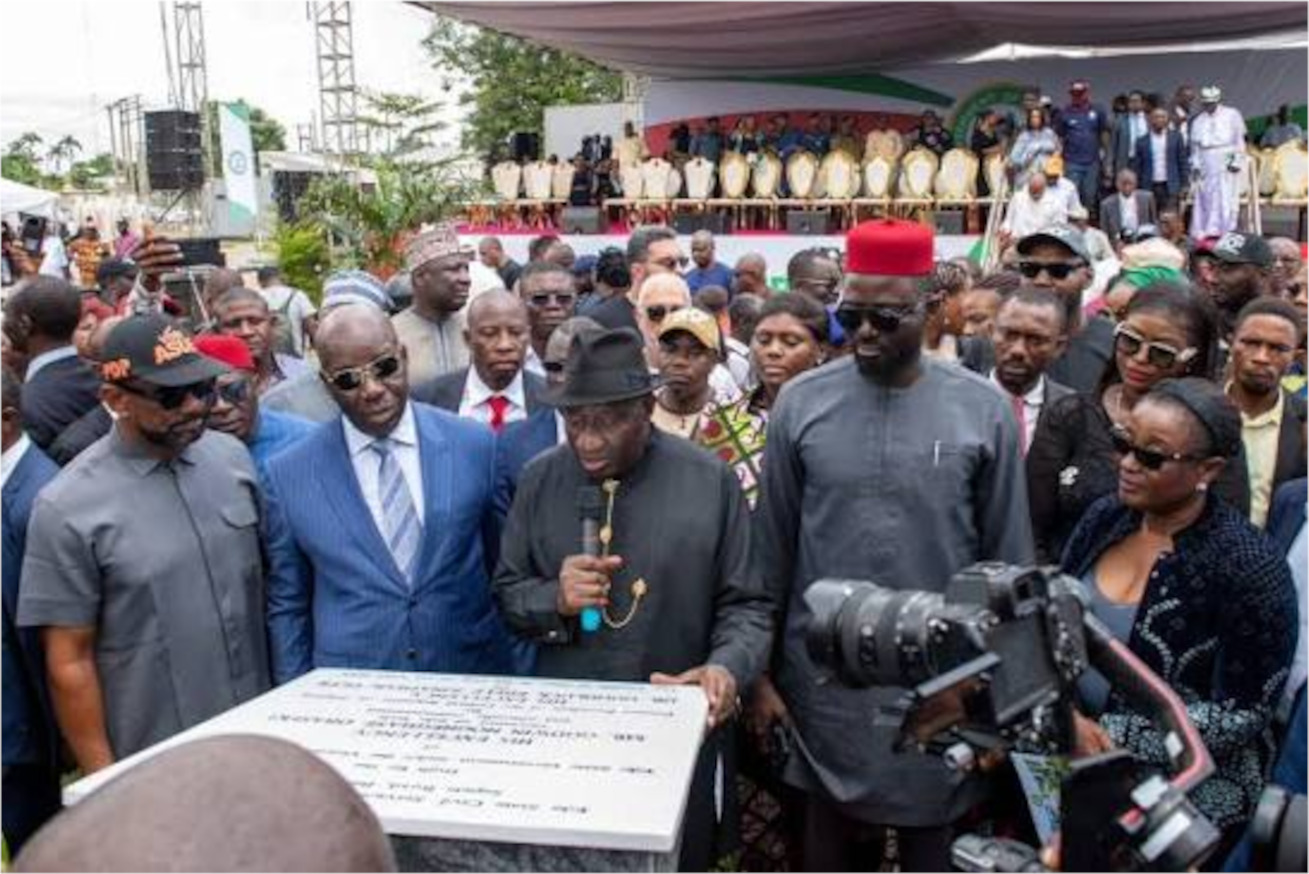
The harmonisation of structures and salary scales across Nigeria’s federal and state civil services has been called for by former President Goodluck Jonathan.
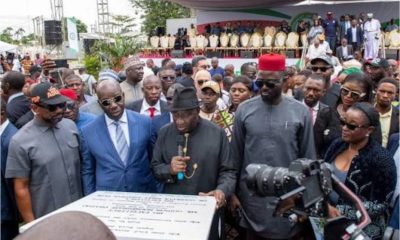
Jonathan made the call in Yenagoa during the foundation-laying and fund-raising ceremony for the Bayelsa State Association of Retired Permanent Secretaries’ Secretariat Complex.
The former President commended the retired permanent secretaries for the initiative, noting that the calibre of personnel in the Bayelsa State public service compared favourably with their counterparts at the federal level.
He recalled that during his tenure as governor of Bayelsa State, he restructured the civil service by creating Grade Level 17 for directors who previously retired at Level 16.
He said the adjustment was intended to ensure that directors in the state civil service enjoyed the same grade level as their counterparts in the federal civil service. In his words:
“The civil service of the federation is the civil service of the federation, whether you are working at the state level or you are working at the federal level, and I believe that the salary structure should be the same because it is the same government.
“A professor lecturing in a federal university should receive the same salary as a professor lecturing in a state university. So why should a director in the state be on Level 16 while a director at the federal level is on Level 17?”
He recalled that after discovering the disparity in the grade levels of directors in Bayelsa State, he directed the Secretary to the State Government, Head of Service and Accountant General to restructure the service and create Grade Level 17 for directors.
According to him, those previously on Level 16 were reclassified as deputy directors and promoted accordingly.
Jonathan said the proposed secretariat complex would serve the retired permanent secretaries and the wider public, describing the project as a worthwhile contribution to the state and the country.
“I have to thank all of you and I appreciate you for your service to the states and, by implication, to the country. And for this noble project that you are doing, I commend you,” he said.
He added that the facility would serve not only government officials but also private citizens.
Also speaking, Bayelsa State Governor Douye Diri, represented by the Head of Service, Dr Ebiye Sawyer, pledged government support for the project and commended the retired officials for their vision and dedication.
Sawyer said the project represented more than the laying of a foundation stone, describing it as the beginning of a lasting legacy for retired permanent secretaries in the state.
“On behalf of His Excellency, Senator Douye Diri, the necessary support will come from government towards completing this project,” he said.
In his welcome address, Chairman of the association, King Collins Ebi Daniel, described the proposed complex as an institutional edifice designed to preserve the legacy of public service.
He said the facility would comprise administrative offices, event halls, conference rooms and recreational facilities.
King Daniel disclosed that the project was estimated to cost N500 million and was expected to be completed within two years.
Other dignitaries at the event, including the Chairman of the occasion, Professor Imiri, a former Director-General of the Nigerian Law School, Yenagoa Campus, and the Chief Launcher, Chief Maxwell Oko, pledged their support.
They urged the association to consider developing the facility into a policy institute that could contribute to state and national development.
Also present were traditional ruler, King Amalate Turner, and the Senator representing Bayelsa East Senatorial District, Senator Benson Agadaga.
General News
As Howard Buffett Takes over from his Billionaire Father Warren: What’s the Future of Berkshire Buy-and-Hold Policy?.
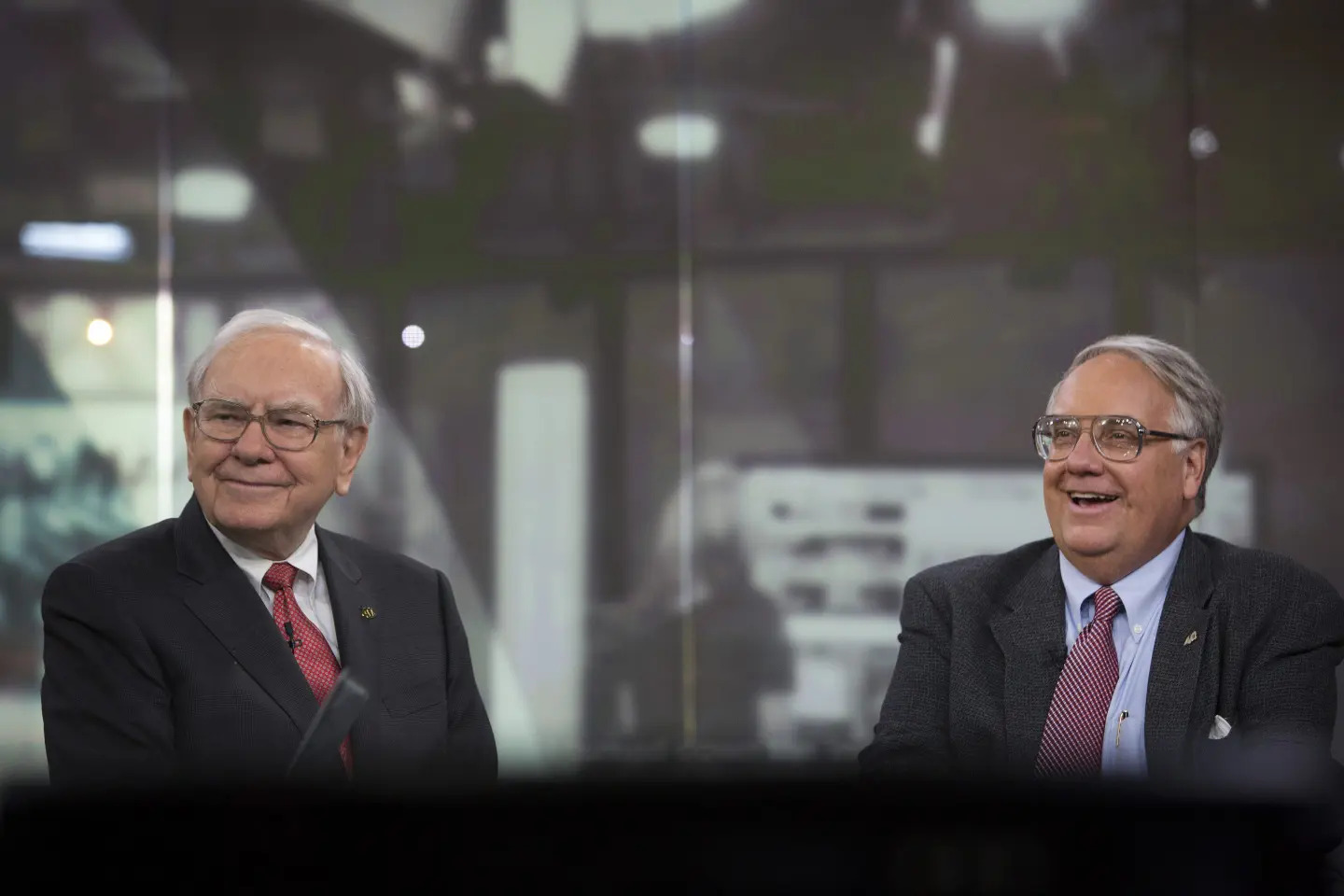
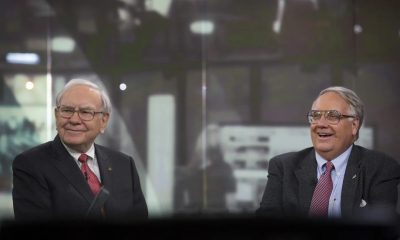
When Warren Buffett stepped down as chairman of Berkshire Hathaway on Friday, the job passed to his 71-year-old son who has spent most of his life doing things that look nothing like his father’s.
Howard Graham Buffett farmed thousands of acres, carried a badge as an elected sheriff, photographed war zones and endangered species across more than 100 countries, and runs a foundation with over $1 billion committed to conflict-affected regions like Sudan and the Democratic Republic of Congo.
He’s received the highest honor for foreign citizens from the governments of Mexico, Colombia and Rwanda, all for his foundation’s work in each country.
And now, he’s chairing a trillion-dollar conglomerate.
A sheriff and a farmer
Howard’s been a Berkshire director for 33 years, since 1993. According to his dad Warren’s retirement letter, that’s longer than the “apprenticeship” he himself served before becoming Berkshire’s CEO at 34.
But Howard’s own career has run almost entirely outside finance. He operates a 1,500-acre family farm in Pana, Illinois, plus foundation-run research farms spanning more than 1,500 acres in Arizona and over 9,200 acres in South Africa. He’s also a vocal advocate for no-till conservation agriculture.
He’s held elected office twice: as a Douglas County, Nebraska commissioner from 1989 to 1992, and, more unusually, as Sheriff of Macon County, Illinois, from September 2017 to November 2018, after five years working as an auxiliary deputy. And he still holds a position today: he still serves as the county’s undersheriff.
Separately, he’s built a body of published photography from conflict zones—including the front lines of the Ukraine war—and wildlife habitats across roughly 130 countries, authoring several books along the way. Most of the work was tied directly to his foundation’s focus on food security, conservation and humanitarian response in unstable regions.
His role at Berkshire
Greg Abel, who took over as CEO in January, will continue running Berkshire’s operations day to day. Howard’s role, as Warren Buffett described it in Friday’s letter, is different: “Greg runs the company; Howard will guard its culture and values—both worth more than anything on our balance sheet.”
He continued: “Think of Howard as a policy the shareholders own and hope never to claim against.”
That’s nothing new and instead, has been part of Berkshire’s succession planning for years. Howard isn’t expected to weigh in on capital allocation or acquisitions. Rather, Abel has already shown he’ll move fast, already deploying $10 billion into Alphabet and paying $6.8 billion to acquire homebuilder Taylor Morrison within his first year (for a total enterprise value of $8.5 billion).
Instead, Howard’s job is to serve as a check against any future leadership that might try to unwind what makes Berkshire unusual: its buy-and-hold investment stance and the autonomy it gives the businesses it owns.
Former Yahoo President Susan Decker will continue as lead independent director, serving with Howard as well as his father, who remains on the board.
Giving away the fortune
Howard is also one of three siblings—alongside Susie and Peter—responsible for distributing most of Warren Buffett’s remaining fortune, listed at $145 billion on the Bloomberg Billionaires Index. Their father has said he abandoned earlier plans for a single sweeping philanthropic strategy in favor of handing the decisions to his children’s own foundations, which now distribute roughly $500 million a year combined.
Howard has spoken about the limits of that kind of giving. In a January conversation with CNBC with his siblings, he pointed to countries like Congo and Sudan, where he said funding alone can’t fix poverty if the rule of law has broken down.
“There’s a lot of things you can fund that will go nowhere,” he said. “If you’re not addressing the real issue of rule of law then you just can’t have success.”
General News
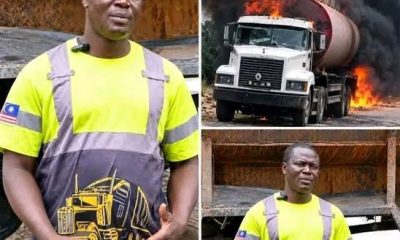
Sacrificial Courage: Driver Moves Burning Truck From Fuel Station, Saves Lives, Property in Osun State
By Felix Umande
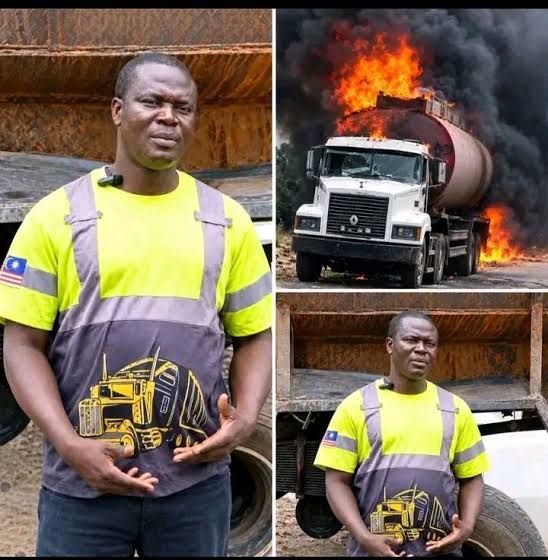
Courage has a new name in Osun State — Alagbe Hezekiah, a38-year-old tanker driver and proud indigene of Ogbomoso, whose singular act of bravery averted what could have been a catastrophic tragedy.
On Thursday, September 17, 2026, disaster loomed at Feesu Junction, along the Iwo-Ibadan Expressway, opposite Lado Filling Station in Iwo, Osun State.
Hezekiah had gone to supply diesel at the filling station. The hose had already been connected to offload the content when fire suddenly erupted from the truck. The cause of the fire is still unknown.
According to him, he and his motor boy immediately tried to put out the fire with a fire extinguisher, but the inferno was beyond control and was spreading fast toward the filling station, nearby shops and residential buildings. His apprentice fled in panic.
At that moment, Hezekiah made a decision that only a true hero could make.
Instead of running for his own life, he jumped into the burning tanker and drove it out of the filling station, away from the crowd, away from fuel pumps, away from lives and property.
“I thought of what I can do to avert putting lives of many and properties at risk. I drove the vehicle out of the petrol station. I scanned the area for where there are no people living. I decided to drive to a riverbank where there will be no casualties,” he recounted.
“I took the bold step with the conviction that I may survive or be consumed and die with the incident. However, sacrificing my life to save properties and other people’s lives would be better than risking others with the incident.”
He drove the flaming tanker until he got to a safe, uninhabited riverbank area where he detached the head of the truck from the burning tank, preventing the fire from spreading further.
Eyewitnesses at Odo-Ori Market said if he had not acted fast, the entire Feesu Junction, which is surrounded by filling stations, businesses and homes, would have gone up in flames. No life was lost.
Hezekiah, who has been driving tankers since 2004 with over 22 years of experience, said he had never encountered such a situation before.
He has since been hailed across Nigeria as “The Best Driver of the Year” and a true definition of courage, selflessness and professionalism.
The hero also used the opportunity to appeal to the Oyo and Osun State Governments to fix deplorable roads and to advise fellow tanker drivers to always put safety and human life first.


Tinubu Praises Kaduna Gov Uba Sani’s Free CNG Mass Transit … As Benue Increases Fares for Commuters
Spread the loveBy Son Tertsea President Bola Ahmed Tinubu has praised Kaduna state government for deploying Compressed Natural Gas, CNG,...

Foreign Medical Tourism to Drop as Nigeria Records First Tele-robotic Surgery Success in West Africa
Spread the loveBy Son Tertsea Nigeria’s first tele-robotic surgery on September 20, 2026 at the Redeemer’s Health Village (RHV), in...


Experts Warn Against “informalization of formal employment”
Spread the loveBy Isa Abdul Economic crunch is gradually reshaping the Nigerian economic landscape, particularly the formal employment system. According...

NBTI Receives, Presents Nigeria’s 7 Shining Stars in Lahore, Pakistan to Science and Tech Minister
Spread the loveBy Seyi Balogun Seven Nigerian entrepreneurs who proudly represented the nation and distinguished themselves at the SEE Pakistan...

Reduce Food Waste, Mrs Tinubu urges Nigerian Households, Communities
Spread the loveBy Nick Ibe A call to reduce food waste and adopt sustainable practices to protect the environment has...

The Civil Service for Federal and State is the Same, the Salary Structure Should also be Same –Jonathan
Spread the loveBy Seyi Balogun The harmonisation of structures and salary scales across Nigeria’s federal and state civil services has...

Miva University Appoints Cross River-Born EFCC Officer Professor of Practice
Spread the loveDr David Olom Nkpe, Assistant Commander of the Economic and Financial Crimes Commission (EFCC), has been appointed as...

NDLEA intercepts N3.4bn Loud, opioids, arrests fake police officer, mechanic-drug dealer
Spread the loveBy Nick Ibe Operatives of the National Drug Law Enforcement Agency (NDLEA) have intercepted over 1.3 million pills...

As Howard Buffett Takes over from his Billionaire Father Warren: What’s the Future of Berkshire Buy-and-Hold Policy?.
Spread the loveWhen Warren Buffett stepped down as chairman of Berkshire Hathaway on Friday, the job passed to his 71-year-old...

Sacrificial Courage: Driver Moves Burning Truck From Fuel Station, Saves Lives, Property in Osun State
Spread the loveBy Felix Umande Courage has a new name in Osun State — Alagbe Hezekiah, a38-year-old tanker driver and...