
Politics
Southern Kaduna now stands with APC – Speaker Abbas


… Says Tinubu shows unmatched commitment to the devt of Kaduna South District
The Speaker of the House of Representatives Rt. Hon. Abbas Tajudeen has said that the Southern part of Kaduna State now stands with the ruling All Progressives Congress (APC), owing to the exemplary leadership demonstrated by President Bola Ahmed Tinubu.
Speaking in Kafanchan at a rally to receive some high-profile Southern Kaduna politicians formerly of the People’s Democratic Party (PDP) into the APC on Saturday, Speaker Abbas noted that President Tinubu has prioritized the development of Southern Kaduna by bringing some laudable projects to the area.
Those who defected from the PDP to the APC included the senator representing Kaduna South, Senator Sunday Marshall Katung, and the member representing Jamaa/Sanga Federal Constituency, Hon. Daniel Amos, along with thousands of their supporters.
Speaker Abbas, who went down memory lane, said, “For all its history since 1999, Southern Kaduna has been considered the stronghold of the PDP. For decades, they claimed ownership of your loyalty, your dreams, and your destiny. But today, that claim has ended. The people have reclaimed their power. The tide has turned. The old walls have fallen. And the people of Southern Kaduna now stand with the All Progressives Congress.”
Describing the defection of the two prominent politicians to the APC as a progressive move, the Speaker said Senator Katung and Hon. Amos “have chosen the path of progress. They have chosen to stand with President Bola Ahmed Tinubu and the APC. This is not an ordinary defection. It is a political earthquake. It is a new dawn in the politics of Kaduna South and, indeed, in Nigeria.”
“My brothers and sisters, this defection is a message. It is a message that the era of division is over. It is a message that the people of Southern Kaduna are ready to move forward with Nigeria’s progress. It is a message that the APC is now the home of unity, inclusion, and development.
“President Tinubu has shown an unmatched commitment to the development of Southern Kaduna. He has listened to your long-standing cries for inclusion and responded with action. The Federal University of Applied Sciences in Kachia, established by this administration, is a bold symbol of renewal and progress. It will soon open its doors to students and begin shaping the next generation of scientists, innovators, and thinkers.
“The establishment of the Federal Medical Centre in Kafanchan reflects the government’s deep commitment to the health and well-being of every citizen. It will bring quality healthcare closer to the people and strengthen medical services across Southern Kaduna.
“The creation of the Military Command Centre in Samaru Kataf marks a decisive step towards lasting peace and security. It demonstrates the government’s resolve to protect lives, defend communities, and restore confidence in the region’s safety.
“These are all living proofs of inclusion and justice. They show that President Bola Ahmed Tinubu leads not with promises, but with action. He is a leader who keeps his word and delivers development where it matters most.”
The Speaker added that the appointment of sons of Southern Kaduna to strategic national roles was a demonstration of the President’s commitment to develop the area.
“Bishop Matthew Hassan Kukah has been appointed as the Pro-Chancellor and Chairman of the Governing Council of the Federal University of Applied Sciences, Kachia. Professor Qurix Williams Barnabas has been appointed as the first Vice-Chancellor of the university. These appointments honour Southern Kaduna. They recognise excellence and integrity.”
Speaker Abbas also described Governor Senator Uba Sani as “a strong pillar of support,” saying the governor’s “inclusive governance has opened doors for all. He has built bridges where divisions once stood. He has placed development above politics and unity above partisanship.”
The Speaker said he has always regarded the people of Southern Kaduna as brothers and sisters, noting, “My love for this region is genuine and long-standing. The friendship I have shared with your leaders and communities is built on mutual respect and trust.
“Working with President Tinubu, we ensured the 2025 Budget reflects true inclusion. Southern Kaduna is now a priority for national development. These projects are not just for today. They are investments for the future. They will educate, empower, and connect our people for generations.
“We have secured major projects for your zone in the 2025 budget with the full support of President Tinubu. We made education a top priority. The 2025 Budget places Southern Kaduna at the centre of learning and opportunity. The Federal University of Applied Sciences in Kachia will raise a new generation of scientists and innovators who will drive the nation’s future. The College of Education in Gidan Waya, Kafanchan, will train teachers who will rebuild the foundations of our schools and shape the minds of our future leaders. The Federal School of Statistics in Manchok will produce data experts to guide government planning and evidence-based decision-making. The College of Nursing in Kafanchan will equip young people with the skills to save lives and strengthen healthcare delivery in our communities.
“Education must reach everyone in Southern Kaduna. That is why we are building Inclusive Education Centres in Jema’a, Kachia, Sanga and Kagarko. These centres will give children with special needs a place to learn, grow, and dream. We are also constructing CBT Centres in Jema’a, Sanga and Zango. They will prepare our young people for the digital economy and help them compete confidently in a fast-changing world.
“Southern Kaduna must not depend on others for progress. That is why we are establishing Skills Acquisition Centres in Sanga and Kachia. These centres will train young men and women in trades, create jobs, and help them become self-reliant. The completed Vocational Training Centre in Jagindi, Jema’a Local Government, is already changing lives. It stands as proof that with the right tools, our youth can succeed anywhere.
“We are renovating primary schools in Jema’a, Sanga, Kaura, Jaba and Kagarko because no child should learn under a broken roof. Every classroom must be a place of pride and hope. We are also constructing a complete secondary school in Kaura to give rural students the chance to continue their education close to home. These efforts will rebuild the education system from the ground up and prepare the next generation for leadership.
“Roads are the lifelines of development. We are constructing major roads in Kauru and Jaba to connect farms to markets, link communities, and open trade routes for businesses. These roads will boost economic activity, reduce isolation, and promote unity across Southern Kaduna.
“These projects are not mere promises; they are tangible investments in the people. They will lift families out of poverty, create jobs, strengthen local economies, and secure the future of this great region. Under the leadership of President Tinubu and with the partnership of the National Assembly, and the Government of Kaduna State, Southern Kaduna now stands not at the margins but at the heart of Nigeria’s progress.”
He called on the people to continue supporting the Tinubu administration and Governor Uba Sani’s government in Kaduna State.
Speaking, Governor Uba Sani said APC is waxing stronger in Kaduna State due to the people-oriented programmes of the APC-led administration at both the federal and state levels.
He said when he assumed office in May 2023, he made a solemn pledge to run an all-inclusive government, to treat everyone equally, noting that the gale of defections of members of the opposition to the APC in Kaduna State is an indication that the people have embraced his leadership.
He thanked Speaker Abbas for working with him to run an all-inclusive government, saying they have been recording significant successes in the last two and a half years.





By Son Tertsea, Abuja
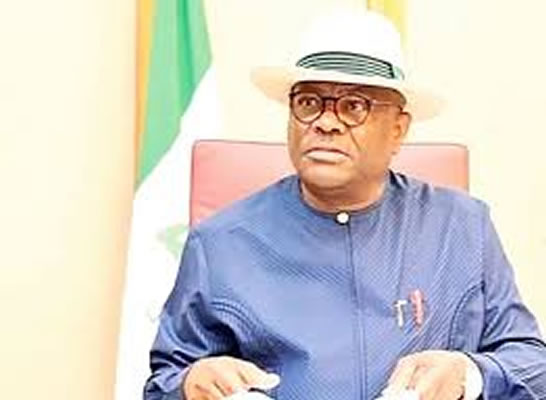
The Minister of the Federal Capital Territory, Nyesom Wike, has been told to either join the All Progressives Congress or quit the Rainbow Coalition by the Zamfara State Governor Dauda Lawal.
Lawal said this, insisting that Wike cannot support President Bola Tinubu’s re-election while backing candidates of other parties in the 2027 elections.
The governor stated this in an interview with Channels Television’s Inside Sources on the sidelines of the 81st United Nations General Assembly in New York on Thursday, monitored in Abuja.
The governor said the position of APC governors on Wike’s cross-party political platform remained unchanged, despite the minister’s repeated defence of the coalition.
He said Wike should make his political allegiance clear ahead of the 2027 elections. In his words:
“Our message is very, very clear: Be on one side. You can’t be in two sides. If you’re in APC, please come out and support APC. Not you’re supporting APC here and you’re supporting other political parties somewhere else. It doesn’t make sense. It’s not done anywhere.
“And that is why we maintain our stand, and it is very clear—the message is very clear. He can speak, he can say whatever he wants to say, but our position has been very, very clear: APC all the way from head to toe.”
Asked if the governors were asking Wike to join the APC, Lawal replied, “Exactly. What’s the essence?”
He added that he would raise the matter with Tinubu, saying Wike’s political position needed to be clearly defined.
“It’s something that I will take up with the President when he comes back. So, let there be a very, very clear line where this guy belongs to. It’s either he’s in APC or he’s out. It’s simple. And I go with my brothers, the governors,” Lawal said.
The dispute centres on Wike’s Rainbow Coalition, a cross-party platform through which the minister has been mobilising support for Tinubu’s re-election while maintaining that political parties should remain free to field candidates for governorship and legislative elections.
Wike has repeatedly said his support for Tinubu does not amount to an endorsement of APC candidates in other contests.
In a statement issued earlier this month, Wike said he would support Tinubu for the presidency while the Peoples Democratic Party would remain free to contest governorship, National Assembly and state House of Assembly elections. He also said the Rainbow Coalition had nothing to do with the APC.
The minister subsequently defended the coalition, saying its objective was to mobilise people from different political platforms to support Tinubu’s re-election. He also questioned the opposition of APC governors to the arrangement, citing the role of the G5 governors in the 2023 presidential election.
The APC governors, however, have maintained that they would not support any political arrangement capable of weakening the party or its candidates ahead of the 2027 elections.
The disagreement has since widened into a dispute over political structures for the 2027 elections, with the governors objecting to a platform that could support Tinubu at the presidential level while backing candidates outside the APC in governorship and legislative contests.
Lawal also responded to Wike’s description of some APC governors as lazy, saying the FCT minister knew the people he was referring to.
“Well, I mean, he knows the people he’s referring to, honestly. As for me, I mean, you can’t say that in Zamfara State. The difference is very, very clear. I invite anybody to come and see what we’re doing in Zamfara State,” he said.
By Isa Abdul, Abuja
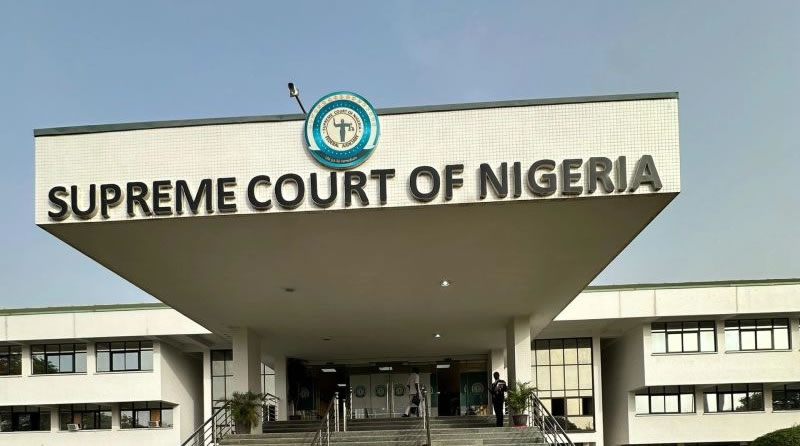
Portions of the Electoral Act 2026 that were earlier invalidated by the Court of Appeal have been restored by the Supreme Court, in a ruling on Thursday.
The apex court in a unanimous decision upheld the appeal filed by the Independent National Electoral Commission (INEC) challenging the appellate court’s judgment.
In its lead verdict, delivered by Justice Adamu Jauro, the Supreme Court specifically validated the provisions of sections 77(5), (6) and (7), as well as 84(2) of the Electoral Act 2026, which regulate the membership registers of political parties and the procedure for the nomination of candidates for the 2027 general elections.
It faulted the appellate court for upholding an appeal filed by the Zenith Labour Party (ZLP) against those portions of the electoral law.
According to the apex court, the contested sections of the Electoral Act were not in conflict with the provisions of the 1999 Constitution, as amended.
Stressing that the ZLP’s appeal ought to have been dismissed, the panel went ahead to reinstate the judgment of the Federal High Court on the matter.
Aside from dismissing the appeal, the Supreme Court awarded costs of N2 million against the ZLP, which was listed as a respondent in the appeal.
We recall that the Abuja Division of the appellate court had, on July 16, struck down portions of the Electoral Act for being inconsistent with the Constitution.
The appellate court, in a unanimous decision by a three-member panel, held that the sections were at variance with the provisions of sections 221 and 222 of the 1999 Constitution, as amended, which give political parties the right to decide whom to sponsor in an election.
The judgment followed an appeal marked CA/ABJ/CV/750/2026, which the ZLP lodged against INEC.
The ZLP had gone to the appellate court to challenge the dismissal of a suit it filed to query the constitutionality of some provisions of the Electoral Act 2026 relating to the membership registers of political parties and the conduct of primary elections.
Section 77(5) of the Electoral Act stipulates that only persons whose names are contained in the register submitted to INEC not later than 21 days before the date fixed for primaries, congresses or conventions are eligible to vote.
Sub-section (6) provides that a political party shall not use any other register for party primaries, congresses and conventions except the register submitted to the Commission.
Likewise, sub-section (7) provides that a political party that fails to submit its membership register within the stipulated time shall not be eligible to field a candidate for the election.
On the other hand, section 84(2) of the Electoral Act 2026 provides that the procedure for the nomination of candidates by political parties for the various elective positions shall be by direct primaries or consensus.
The appellate court, in its lead verdict delivered by Justice Eberechi Nyesom-Wike, found merit in the case the ZLP brought before it.
However, dissatisfied with the invalidation of sections of the Electoral Act 2026, INEC took the matter before the Supreme Court.
While the electoral body, in the appeal marked SC/CR/495/2026, urged the apex court to allow the appeal and overturn the appellate court’s decision, the ZLP sought its dismissal for want of merit.
Justice Mohammed Umar of the Federal High Court in Abuja had, on May 5, dismissed the ZLP’s case as lacking in merit.
Dissatisfied with the verdict, the political party approached the appellate court and asked it to determine, among other things, whether the stated provisions of the Electoral Act are superior to the powers conferred on political parties by the 1999 Constitution, as amended.
The party urged the appellate court to determine whether the electoral law was an attempt to usurp the right of political parties to decide how to conduct their internal affairs.
In its judgment, the appellate court noted that sections 177 and 182 of the 1999 Constitution, as amended, already listed the qualifying and disqualifying factors for political parties and candidates in an election.
It held that no other condition contained in a subsidiary law could disqualify an individual already qualified by the Constitution.By Isa Abdul, Abuja
Portions of the Electoral Act 2026 that were earlier invalidated by the Court of Appeal have been restored by the Supreme Court, in a ruling on Thursday.
The apex court in a unanimous decision upheld the appeal filed by the Independent National Electoral Commission (INEC) challenging the appellate court’s judgment.
In its lead verdict, delivered by Justice Adamu Jauro, the Supreme Court specifically validated the provisions of sections 77(5), (6) and (7), as well as 84(2) of the Electoral Act 2026, which regulate the membership registers of political parties and the procedure for the nomination of candidates for the 2027 general elections.
It faulted the appellate court for upholding an appeal filed by the Zenith Labour Party (ZLP) against those portions of the electoral law.
According to the apex court, the contested sections of the Electoral Act were not in conflict with the provisions of the 1999 Constitution, as amended.
Stressing that the ZLP’s appeal ought to have been dismissed, the panel went ahead to reinstate the judgment of the Federal High Court on the matter.
Aside from dismissing the appeal, the Supreme Court awarded costs of N2 million against the ZLP, which was listed as a respondent in the appeal.
We recall that the Abuja Division of the appellate court had, on July 16, struck down portions of the Electoral Act for being inconsistent with the Constitution.
The appellate court, in a unanimous decision by a three-member panel, held that the sections were at variance with the provisions of sections 221 and 222 of the 1999 Constitution, as amended, which give political parties the right to decide whom to sponsor in an election.
The judgment followed an appeal marked CA/ABJ/CV/750/2026, which the ZLP lodged against INEC.
The ZLP had gone to the appellate court to challenge the dismissal of a suit it filed to query the constitutionality of some provisions of the Electoral Act 2026 relating to the membership registers of political parties and the conduct of primary elections.
Section 77(5) of the Electoral Act stipulates that only persons whose names are contained in the register submitted to INEC not later than 21 days before the date fixed for primaries, congresses or conventions are eligible to vote.
Sub-section (6) provides that a political party shall not use any other register for party primaries, congresses and conventions except the register submitted to the Commission.
Likewise, sub-section (7) provides that a political party that fails to submit its membership register within the stipulated time shall not be eligible to field a candidate for the election.
On the other hand, section 84(2) of the Electoral Act 2026 provides that the procedure for the nomination of candidates by political parties for the various elective positions shall be by direct primaries or consensus.
The appellate court, in its lead verdict delivered by Justice Eberechi Nyesom-Wike, found merit in the case the ZLP brought before it.
However, dissatisfied with the invalidation of sections of the Electoral Act 2026, INEC took the matter before the Supreme Court.
While the electoral body, in the appeal marked SC/CR/495/2026, urged the apex court to allow the appeal and overturn the appellate court’s decision, the ZLP sought its dismissal for want of merit.
Justice Mohammed Umar of the Federal High Court in Abuja had, on May 5, dismissed the ZLP’s case as lacking in merit.
Dissatisfied with the verdict, the political party approached the appellate court and asked it to determine, among other things, whether the stated provisions of the Electoral Act are superior to the powers conferred on political parties by the 1999 Constitution, as amended.
The party urged the appellate court to determine whether the electoral law was an attempt to usurp the right of political parties to decide how to conduct their internal affairs.
In its judgment, the appellate court noted that sections 177 and 182 of the 1999 Constitution, as amended, already listed the qualifying and disqualifying factors for political parties and candidates in an election.
It held that no other condition contained in a subsidiary law could disqualify an individual already qualified by the Constitution.
Politics
Nasarawa: PDP suffers major set back, as Gaza’s governorship receives boostBy Philip NyamAbuja
The Peoples Democratic Party (PDP) Wednesday suffered a tsunami in Nasarawa state as its former youth leader, Hon. ABM Jacob Alebura led many members of the party into the opposition Labour Party.
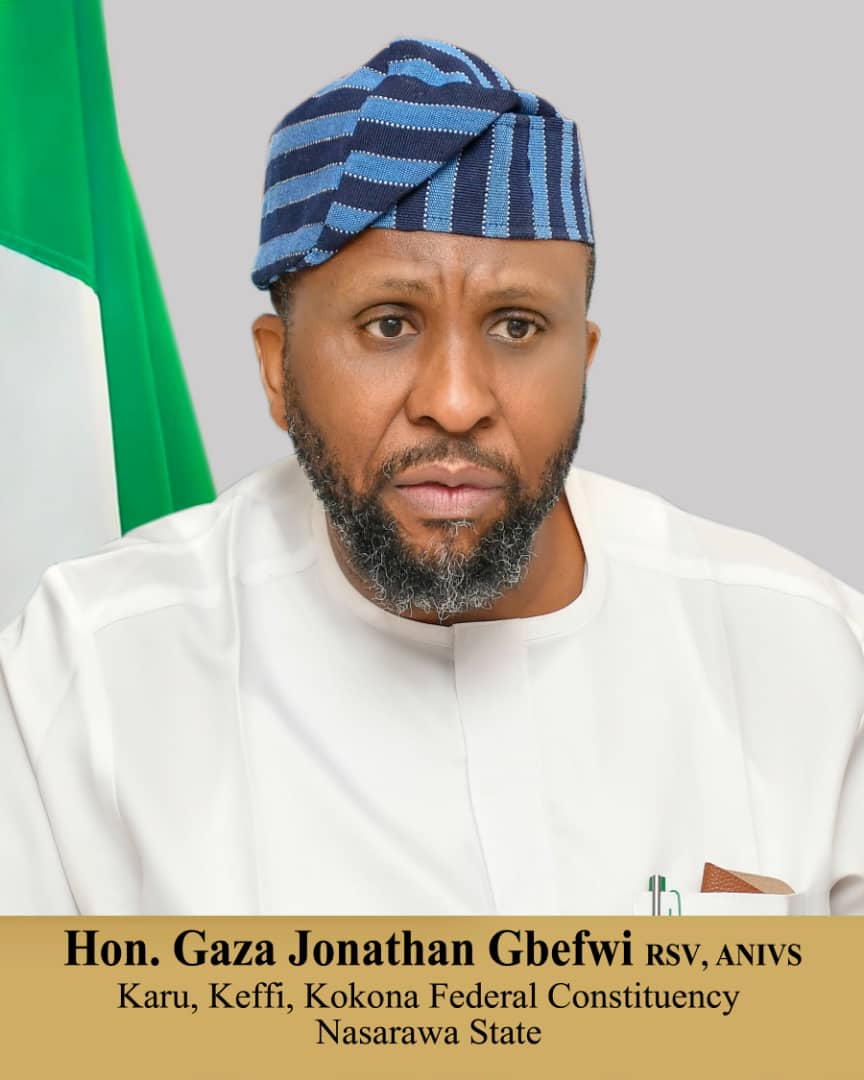
The development consequently boosted the chances of the gubernatorial candidate of the Labour Party , Hon. Jonathan Gbefwi Gaza.
Hon. Gaza, is the chairman of the House of Representatives Committee on Solid Minerals and currently represents Karu/Keffi/ Kokona federal constituency of Nasarawa state in the National Assembly.
Hon. Alebura in a letter of intent to join the Labour Party obtained by New Telegraph said he has officially joined the Labour Party (LP) and has register himself as full member of the party under the Doma Local government area structure .
According to him, ” I’m writing to formally express my intent to join the Labour Party LP and to officially register myself as a full member of the Labour Party, under the Doma Local government area structure Nasarawa state, effective from today.
“I’m committed to upholding the ideals, values and constitution of the Labour Party and I look forward to actively participating in the activities of the party at the ward level, towards building a stronger, more inclusive, and people-oriented political movement ĝfor the progress of our community and our nation”, the letter read.
Recalled that Hon Alebura had on the 19th September 2026 officially resigned from the PDP, citing marginalisation from the party leaders and the stakeholders as well as unending crisis between him and the chairman of the party in Doma local government area.
The defectors were received into the Labour Party by the state party chairman and leadership in Doma local government area as well as the stakeholders of the party.


75% of Pilgrimage Funds Stolen, EFCC Boss Alleges
Spread the loveBy Nick Ibe, Abuja About 75 per cent of funds released by the Federal Government for Christian and...


Plateau Women Protest, Block Highway over Killing of Three Vigilantes
Spread the loveBy Michael Lim, Jos The killing Friday of three vigilantes, including the community youth leader, during a night...


NNPC Ltd Welcomes $800m Ima Gas Final Investment Decision
Spread the loveBy Philip Nyam The Nigerian National Petroleum Company Limited (NNPC Ltd) has welcomed the $800 million Final Investment...

The UN Hypocritic, Irresponsible Walkout Of Shame: And Nigeria’s Terrorism at Home
Spread the loveBy H. E. Mejeh Yesterday in New York, Nigerian delegates staged a well-rehearsed walkout from the United Nations...

Shehu Sani: El-Rufai Never Did Enough to Stop Southern Kaduna Killings
Spread the love–He is paying price for misgovernance, irresponsibility By Isa Abdul, Abuja El-Rufai had no real commitment to stopping...


October AGLOFEST: To Converge Investors, Businesses, Cultural institutions, Creative Industry
Spread the loveBy Nick Ibe, Abuja October 2026 has been chosen by the Federal Government to launch the African Global...


US Sells ex-Gambian Dictator Jammeh’s $3.5m Mansion, Shares $2.5m to Victims
Spread the loveBy Son Tertsea The United States has returned about $2.5 million to The Gambia from the sale of...


Nasarawa Police Foil Murder Attempt, Net 4 Kidnappers, 2 Cultists
Spread the loveMichael Lim Four suspected kidnappers who allegedly plotted to kill their victim after collecting ransom have been arrested...


Bill Gates Warns AI Is ‘Powerful’ Enough To Destroy Humanity
Spread the love–There “absolutely” needs to be legislation regulating AI and law enforcement By Son Tertsea, Abuja Billionaire Bill Gates...
EFCC Chair: “I receive over 20,000 Corruption Petitions Yearly in Respect to Public Corruption
Spread the loveBy Son Tertsea, Abuja Fresh concerns have been raised over the scale of corruption in the public sector...