
General News
Nasarawa Police Foil Murder Attempt, Net 4 Kidnappers, 2 Cultists


Michael Lim
Four suspected kidnappers who allegedly plotted to kill their victim after collecting ransom have been arrested by the Nasarawa State Police Command after a foiled planned abduction.
The command’s spokesperson, SP Ramhan Nansel, who disclosed this in a statement yesterday on behalf of the commissioner of police, Shetima Jauro Muhammad, said two suspects were also arrested in connection with a cult-related killing in Lafia.
Nansel said operatives of the State Intelligence Department (SID), Lafia, received credible intelligence on a criminal conspiracy to abduct one Alhaji Ibrahim Abdullahi, popularly known as Alhaji Na’iye.
“Following a discreet investigation, four suspects – all residents of Adudu District in Obi local government area – were arrested,” Nansel said.
He identified the suspects as Yahaya Musa, Likita Adamu, Riga Abdullahi and Saidu Alhaji Gari.
Nansel explained that two of the suspects were arrested on 19th September, while the third and fourth suspects were picked up on September 22 and 23, respectively.
According to Nansel, during interrogation, the suspects allegedly confessed to their involvement in the planned abduction and further disclosed that they had planned to kill the victim after collecting the ransom.
He said the suspects have been transferred to the State Criminal Investigation Department (SCID), Lafia, for further investigation and prosecution.
In a separate development, the command said its operatives arrested two suspects over a cult-related killing behind the Eji-World area of Lafia.
According to the police statement, the incident occurred on September 24, 2026 at about 6:00am, when the divisional police officer, Ombi 1 Division, Lafia, led a team to the scene following a distress call.
Nansel said at the scene, the police found one Venus, surname unknown, aged 26, an indigene of Benue State, lying in a pool of blood.
He said the victim was rushed to the Federal University Teaching Hospital, Lafia, where he was confirmed dead by a medical doctor, adding that his corpse had been deposited at the hospital’s mortuary for autopsy.
Preliminary investigation, according to him, revealed that the assailants had gone in search of the victim’s friend, one Joseph Friday Oluyemi of Maisoti Street, Lafia, who later reported to the police that he had received threats from suspected cult members.
Nansel said two suspects – Friday Joshua and ThankGod Auta Vincent – have been arrested in connection with the murder, while efforts are ongoing to apprehend other fleeing suspects.











General News
EFCC Chair: “I receive over 20,000 Corruption Petitions Yearly in Respect to Public Corruption

By Son Tertsea, Abuja
Fresh concerns have been raised over the scale of corruption in the public sector by Ola Olukoyede, Chairman of the Economic and Financial Crimes Commission (EFCC).
Olukoyede said the commission receives more than 20,000 petitions on public corruption every year.
Speaking in Abuja at a ceremony marking the 80th birthday of former Attorney-General of the Federation and Minister of Justice, Kanu Agabi, the EFCC boss said the volume and nature of the complaints reflected the depth of the corruption challenge confronting Nigeria.
He said some of the cases investigated by the commission involved public officials whose financial positions changed dramatically after assuming office. In his words:
“I receive over 20,000 petitions in a year in respect to public corruption, all terrible. What is going on? Like every minute, public officers take money, and if you go through some of our case files you will weep.”
He said the alleged diversion of public resources was not merely a matter for law enforcement agencies.
He argued that Nigerians were collectively affected by the consequences of corruption.
“The way people take national resources, as Nigerians we’re victims of these fraudulent activities. And we must come together for once in our lifetime and say no to the activities of some of our leaders,” he said.
The EFCC chairman further disclosed that investigations sometimes traced substantial dollar and naira assets to public servants who had comparatively modest financial positions before assuming office.
According to him, some officials allegedly accumulated millions of dollars and naira within three or four years of being in public office, while others were linked to the ownership of large numbers of houses.
“Somebody will spend three to four years as a public servant, but before he got to office he had less than N100 thousand in his account. By the time he’s leaving, we were able to trace several millions of dollars and naira to him,” Olukoyede said.
“Some build 50 something houses, sometimes 200 houses. There’s no way a nation will develop with those kinds of people in power, no way”, he added.
He said public office holders should be prepared to account for their stewardship, stressing that transparency and accountability must remain central to the management of public resources.
Also speaking at the event, the chairman of the Independent Corrupt Practices and Other Related Offences Commission (ICPC), Musa Adamu Aliyu, identified societal acceptance of corrupt practices and weaknesses within public institutions as major factors sustaining corruption.
“The major challenge of corruption in this country is that we tolerate the culture of corruption, that is why it is thriving. Secondly, we have systemic errors, our systems are weak,” Aliyu said.
The ICPC chairman consequently called for integrity education to begin early, particularly in primary and secondary schools, saying younger Nigerians must be deliberately exposed to values that discourage corruption.
He urged stakeholders to engage members of Generation Z and Generation Alpha on the importance of integrity and responsible citizenship.
“We need to tell them that we want them to imbibe the culture of integrity,” he said.
Olukoyede’s remarks came against the backdrop of continuing efforts by Nigeria’s anti-corruption agencies to investigate alleged financial crimes involving public officials.
The EFCC has repeatedly said its mandate covers the investigation and prosecution of economic and financial crimes, while cases ultimately remain subject to judicial determination.
The event brought together members of the bench and bar, public officials, civil society organisations, academics and other stakeholders.
It provided a platform for discussions on the rule of law, public accountability and the fight against corruption in Nigeria.
General News
Akume Urges CEOs of Federal Agencies To Take Tinubu’s Reforms To Grassroots, Counter Disinformation

By Felix Umande
The Secretary to the Government of the Federation (SGF), Senator George Akume, has charged Chief Executives of Federal Parastatals to cascade government reforms to the grassroots to counter disinformation and project the true impact of the administration’s policies.
Akume made the call on Friday in Abuja when he received a delegation of the Forum of CEOs of Federal Parastatals led by its Convener/Chairman and Director-General of the National Board for Technology Incubation (NBTI), Dr. Kazeem Kolawole Raji.
The SGF, who was represented by the Permanent Secretary, Political and Economic Affairs Office, Bekearedebo Augusta Warrens, thanked the Forum for conferring on him the title of Grand Patron and for organizing themselves into a cohesive body with a shared vision.
He said the structures on ground and mathematical projections make the Forum’s proposed target of mobilizing 10 million votes for President Bola Tinubu achievable.
Akume emphasized the need for effective grassroots communication to correct false narratives around the current economic reforms.
“In your various domains where your power is operative, ensure that people become aware of these achievements. Push this message down to the grassroots, because one thing I’ve observed in the policy right now is a lot of disinformation. This reform policy is not meant to imprison or impoverish Nigerians, and that is the narrative that has been spread down to the grassroots. Push this message to help promote the image of this administration,” he stated.
He commended the CEOs for promoting the Renewed Hope Agenda within their respective agencies and assured them of institutional support from the Office of the SGF to achieve their strategic goals, urging them to establish a structured framework for ongoing collaboration and effective communication with the OSGF.
Earlier, Dr. Raji said the Forum conferred the Patronship on the SGF in recognition of his exemplary leadership and role in coordinating the machinery of government. He said the Forum is poised to mobilize 10 million votes for the re-election of President Bola Tinubu in the 2027 general election through lawful, ethical, peaceful and issue-based grassroots engagement, leveraging the extensive networks of federal agencies nationwide.
Raji said a key objective of the Forum is to bridge the communication gap between government policies and the public and to ensure achievements and reforms of the Tinubu administration are accurately documented and communicated.
By Isa Abdul, Abuja
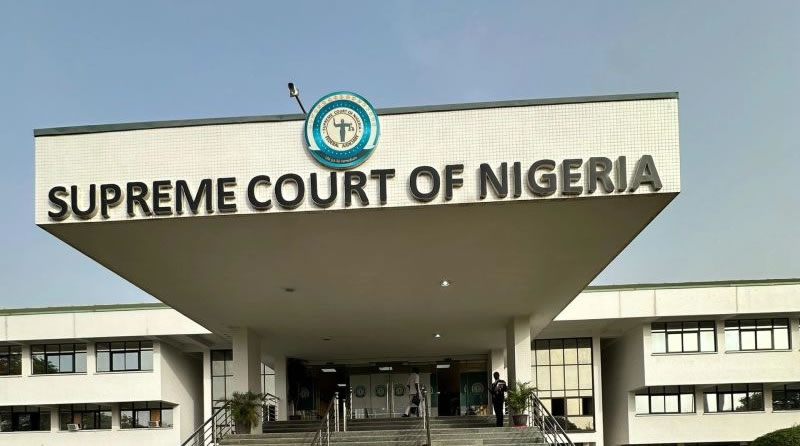
Portions of the Electoral Act 2026 that were earlier invalidated by the Court of Appeal have been restored by the Supreme Court, in a ruling on Thursday.
The apex court in a unanimous decision upheld the appeal filed by the Independent National Electoral Commission (INEC) challenging the appellate court’s judgment.
In its lead verdict, delivered by Justice Adamu Jauro, the Supreme Court specifically validated the provisions of sections 77(5), (6) and (7), as well as 84(2) of the Electoral Act 2026, which regulate the membership registers of political parties and the procedure for the nomination of candidates for the 2027 general elections.
It faulted the appellate court for upholding an appeal filed by the Zenith Labour Party (ZLP) against those portions of the electoral law.
According to the apex court, the contested sections of the Electoral Act were not in conflict with the provisions of the 1999 Constitution, as amended.
Stressing that the ZLP’s appeal ought to have been dismissed, the panel went ahead to reinstate the judgment of the Federal High Court on the matter.
Aside from dismissing the appeal, the Supreme Court awarded costs of N2 million against the ZLP, which was listed as a respondent in the appeal.
We recall that the Abuja Division of the appellate court had, on July 16, struck down portions of the Electoral Act for being inconsistent with the Constitution.
The appellate court, in a unanimous decision by a three-member panel, held that the sections were at variance with the provisions of sections 221 and 222 of the 1999 Constitution, as amended, which give political parties the right to decide whom to sponsor in an election.
The judgment followed an appeal marked CA/ABJ/CV/750/2026, which the ZLP lodged against INEC.
The ZLP had gone to the appellate court to challenge the dismissal of a suit it filed to query the constitutionality of some provisions of the Electoral Act 2026 relating to the membership registers of political parties and the conduct of primary elections.
Section 77(5) of the Electoral Act stipulates that only persons whose names are contained in the register submitted to INEC not later than 21 days before the date fixed for primaries, congresses or conventions are eligible to vote.
Sub-section (6) provides that a political party shall not use any other register for party primaries, congresses and conventions except the register submitted to the Commission.
Likewise, sub-section (7) provides that a political party that fails to submit its membership register within the stipulated time shall not be eligible to field a candidate for the election.
On the other hand, section 84(2) of the Electoral Act 2026 provides that the procedure for the nomination of candidates by political parties for the various elective positions shall be by direct primaries or consensus.
The appellate court, in its lead verdict delivered by Justice Eberechi Nyesom-Wike, found merit in the case the ZLP brought before it.
However, dissatisfied with the invalidation of sections of the Electoral Act 2026, INEC took the matter before the Supreme Court.
While the electoral body, in the appeal marked SC/CR/495/2026, urged the apex court to allow the appeal and overturn the appellate court’s decision, the ZLP sought its dismissal for want of merit.
Justice Mohammed Umar of the Federal High Court in Abuja had, on May 5, dismissed the ZLP’s case as lacking in merit.
Dissatisfied with the verdict, the political party approached the appellate court and asked it to determine, among other things, whether the stated provisions of the Electoral Act are superior to the powers conferred on political parties by the 1999 Constitution, as amended.
The party urged the appellate court to determine whether the electoral law was an attempt to usurp the right of political parties to decide how to conduct their internal affairs.
In its judgment, the appellate court noted that sections 177 and 182 of the 1999 Constitution, as amended, already listed the qualifying and disqualifying factors for political parties and candidates in an election.
It held that no other condition contained in a subsidiary law could disqualify an individual already qualified by the Constitution.By Isa Abdul, Abuja
Portions of the Electoral Act 2026 that were earlier invalidated by the Court of Appeal have been restored by the Supreme Court, in a ruling on Thursday.
The apex court in a unanimous decision upheld the appeal filed by the Independent National Electoral Commission (INEC) challenging the appellate court’s judgment.
In its lead verdict, delivered by Justice Adamu Jauro, the Supreme Court specifically validated the provisions of sections 77(5), (6) and (7), as well as 84(2) of the Electoral Act 2026, which regulate the membership registers of political parties and the procedure for the nomination of candidates for the 2027 general elections.
It faulted the appellate court for upholding an appeal filed by the Zenith Labour Party (ZLP) against those portions of the electoral law.
According to the apex court, the contested sections of the Electoral Act were not in conflict with the provisions of the 1999 Constitution, as amended.
Stressing that the ZLP’s appeal ought to have been dismissed, the panel went ahead to reinstate the judgment of the Federal High Court on the matter.
Aside from dismissing the appeal, the Supreme Court awarded costs of N2 million against the ZLP, which was listed as a respondent in the appeal.
We recall that the Abuja Division of the appellate court had, on July 16, struck down portions of the Electoral Act for being inconsistent with the Constitution.
The appellate court, in a unanimous decision by a three-member panel, held that the sections were at variance with the provisions of sections 221 and 222 of the 1999 Constitution, as amended, which give political parties the right to decide whom to sponsor in an election.
The judgment followed an appeal marked CA/ABJ/CV/750/2026, which the ZLP lodged against INEC.
The ZLP had gone to the appellate court to challenge the dismissal of a suit it filed to query the constitutionality of some provisions of the Electoral Act 2026 relating to the membership registers of political parties and the conduct of primary elections.
Section 77(5) of the Electoral Act stipulates that only persons whose names are contained in the register submitted to INEC not later than 21 days before the date fixed for primaries, congresses or conventions are eligible to vote.
Sub-section (6) provides that a political party shall not use any other register for party primaries, congresses and conventions except the register submitted to the Commission.
Likewise, sub-section (7) provides that a political party that fails to submit its membership register within the stipulated time shall not be eligible to field a candidate for the election.
On the other hand, section 84(2) of the Electoral Act 2026 provides that the procedure for the nomination of candidates by political parties for the various elective positions shall be by direct primaries or consensus.
The appellate court, in its lead verdict delivered by Justice Eberechi Nyesom-Wike, found merit in the case the ZLP brought before it.
However, dissatisfied with the invalidation of sections of the Electoral Act 2026, INEC took the matter before the Supreme Court.
While the electoral body, in the appeal marked SC/CR/495/2026, urged the apex court to allow the appeal and overturn the appellate court’s decision, the ZLP sought its dismissal for want of merit.
Justice Mohammed Umar of the Federal High Court in Abuja had, on May 5, dismissed the ZLP’s case as lacking in merit.
Dissatisfied with the verdict, the political party approached the appellate court and asked it to determine, among other things, whether the stated provisions of the Electoral Act are superior to the powers conferred on political parties by the 1999 Constitution, as amended.
The party urged the appellate court to determine whether the electoral law was an attempt to usurp the right of political parties to decide how to conduct their internal affairs.
In its judgment, the appellate court noted that sections 177 and 182 of the 1999 Constitution, as amended, already listed the qualifying and disqualifying factors for political parties and candidates in an election.
It held that no other condition contained in a subsidiary law could disqualify an individual already qualified by the Constitution.



US Sells ex-Gambian Dictator Jammeh’s $3.5m Mansion, Shares $2.5m to Victims
Spread the loveBy Son Tertsea The United States has returned about $2.5 million to The Gambia from the sale of...


Nasarawa Police Foil Murder Attempt, Net 4 Kidnappers, 2 Cultists
Spread the loveMichael Lim Four suspected kidnappers who allegedly plotted to kill their victim after collecting ransom have been arrested...


Bill Gates Warns AI Is ‘Powerful’ Enough To Destroy Humanity
Spread the love–There “absolutely” needs to be legislation regulating AI and law enforcement By Son Tertsea, Abuja Billionaire Bill Gates...


EFCC Chair: “I receive over 20,000 Corruption Petitions Yearly in Respect to Public Corruption
Spread the loveBy Son Tertsea, Abuja Fresh concerns have been raised over the scale of corruption in the public sector...


2027: Join APC or quit the Rainbow Coalition, Zamfara Gov tells Wike
Spread the loveBy Son Tertsea, Abuja The Minister of the Federal Capital Territory, Nyesom Wike, has been told to either...


Akume Urges CEOs of Federal Agencies To Take Tinubu’s Reforms To Grassroots, Counter Disinformation
Spread the loveBy Felix Umande The Secretary to the Government of the Federation (SGF), Senator George Akume, has charged Chief...


2027 Polls: S’Court Restores Portions of Electoral ActInvalidated by Appeal Court
Spread the loveBy Isa Abdul, Abuja Portions of the Electoral Act 2026 that were earlier invalidated by the Court of...


FCSC Boss: Amend Universities Acts for Smarter Funding, Governance Autonomy
Spread the loveBy Michael Lim A fundamental review of the legal framework governing Nigerian universities to grant them greater operational,...


Benue Assembly Passes Bill For Free Treatment Of Snakebites
Spread the loveBy Felix Umande The Benue State House of Assembly has passed a bill to be signed into law...


Press Wins War Against Trump: CNN, MS Now and Politico Back into White House
Spread the loveBy Son Tertsea The trio of CNN, MS NOW and Politico have gained a court nod allowing them...