
General News
FCSC Boss: Amend Universities Acts for Smarter Funding, Governance Autonomy

By Michael Lim
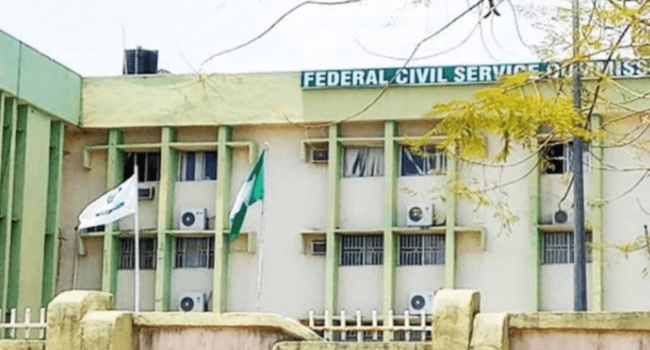
A fundamental review of the legal framework governing Nigerian universities to grant them greater operational, academic autonomy and enable them to explore innovative funding mechanisms has been canvassed by Prof Tunji Olaopa.
Olaopa who is also the Chairman of the Federal Civil Service Commission (FCSC), made the call on Thursday in Abuja while speaking as chairman of the occasion at a special convening on “University Governance and the Corporate World: Towards an ‘All-of-People’ Approach to Financing Federal University Lokoja”.
He said the existing legal and governance framework had created bottlenecks that constrained universities’ ability to mobilise resources, conduct research and respond effectively to the needs of industry and society.
According to him, the National Assembly, the Federal Ministry of Education, the National Universities Commission (NUC) and other stakeholders should collaborate to achieve the fundamental review.bin his view:
“This will entail initiating amendment to existing university establishment Acts, to grant full operational and academic autonomy to universities.”
Olaopa, however, stressed that greater autonomy must be accompanied by stronger accountability and a financing framework linked to clearly defined objectives and measurable outcomes.
An “all-of-people partnership model” is what he canvasses that would expand university governance beyond the traditional structures of governing councils and senates to incorporate industry, host communities, alumni, trade unions and other stakeholders.
He further criticised the separation of strategic planning from budgeting in many universities, saying the practice often resulted in duplication, administrative silos and wastage of scarce resources.
He argued that no new academic programme, building project or recruitment initiative should be approved unless it was aligned with a specific key performance indicator contained in an institution’s strategic plan.
Meanwhile, the Vice-Chancellor of Federal University Lokoja (FUL), Prof. Gbenga Solomon Ibileye, has called on the private sector, development partners, alumni and other stakeholders to invest in the university, describing the institution as an investment opportunity rather than one dependent solely on government funding.
“I am here to invite you to investment, and to speak to you in the language that every serious investor understands, which is the language of returns on investment,” Ibileye said.
He added: “I am here to present Federal University Lokoja not as an institution waiting for charity, but as an institution offering opportunity: viable, high-demand business opportunities within a secure and federally backed institutional environment.”
The vice-chancellor said FUL, established in 2011, had grown to more than 30,000 students, with 17 faculties, a College of Postgraduate Studies and a College of Health Sciences spread across two campuses.
He added that the rapid growth in student population and academic programmes had created a corresponding demand for infrastructure and services that government funding alone could no longer adequately meet.
Ibileye identified purpose-built student hostels, faculty and staff accommodation, conference and hospitality facilities, commercial and mixed-use developments, research laboratories, innovation and incubation facilities, cloud and computing infrastructure, agriculture, a hospital and a solar farm as some of the investment opportunities available at the university.
He described student accommodation as one of the immediate opportunities, citing the widening gap between demand and available facilities.
Under the proposed arrangement, he said investors could finance, construct and operate accommodation facilities, recover their investments during an agreed concession period and subsequently transfer the assets to the university.
He also identified staff and faculty housing as another investment opportunity, saying decent accommodation would help the institution attract and retain academic and non-academic personnel as it expanded.
Ibileye said FUL’s location in Lokoja, at the confluence of the Rivers Niger and Benue and about 200 kilometres from Abuja, offered additional commercial, hospitality and real estate opportunities.
On technology, he said the university was positioning itself for the emerging knowledge economy through programmes in artificial intelligence, cyber security, data science and software engineering.
He disclosed that the Tertiary Education Trust Fund (TETFund) had approved a Centre of Excellence in Artificial Intelligence, Robotics and Cyber Sciences for the university, creating opportunities for corporate investment in research laboratories, innovation hubs, computing infrastructure, scholarships, faculty development and technology commercialisation.
The vice-chancellor said the university would operate three broad partnership models: Build-Operate-Transfer (BOT), Public-Private Partnership (PPP), and Lease and Joint Venture.
Under the BOT model, he explained that investors would finance, construct and operate projects, recover their investments during the concession period and transfer the assets to the university at the expiration of the agreement.
The PPP model, he said, would involve the university and investors sharing development responsibilities, risks and returns, while the lease and joint venture arrangement would allow investors to develop and operate projects on university land.
Ibileye assured prospective investors that the university would provide a regulated framework, clearly defined agreements, transparent risk allocation and mechanisms for investment recovery.
He urged real estate developers, financial institutions, technology companies, telecommunications firms, energy companies, development partners, alumni and high-net-worth individuals to take advantage of the opportunities.
Earlier, the Director of Alumni Relations and Linkages, Prof. Abel Joseph, said the initiative was designed to change the longstanding perception that funding a federal university was exclusively the responsibility of government.
Joseph said FUL’s rapid expansion had created urgent needs in infrastructure, research funding, student support and innovation, making alternative sources of financing necessary to complement government support.
He said the “All-of-People” approach recognised the shared interest of government, alumni, corporate organisations, host communities, parents and other stakeholders in the development of the university.
Joseph called for stronger collaboration between universities and the corporate sector, noting that while industry required research, innovation and skilled manpower, universities could benefit from industry’s practical knowledge, mentorship and financial resources.
He said such collaboration could transform FUL from a conventional degree-awarding institution into a solutions-oriented university capable of responding directly to national and industrial challenges.
The initiative, he added, formed part of the university’s Vision Plan 2026–2031.
The Abuja convening brought together university officials, members of the governing council, corporate representatives, alumni, development partners and other stakeholders to examine FUL’s investment prospectus and possible partnership models.
By Felix Umande
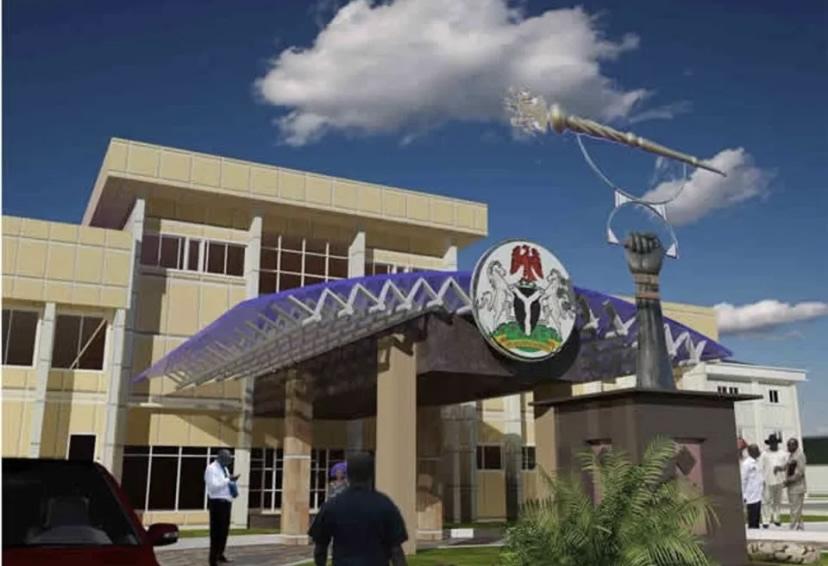
The Benue State House of Assembly has passed a bill to be signed into law by the Governor providing for free treatment of snakebites in government hospitals across the state.
The bill scaled third reading during plenary presided over by the Speaker, Rt. Hon. Berger Alfred Emberga, on Thursday.
Its passage followed a public hearing held on March 23, 2026, where stakeholders in the health sector highlighted its benefits to the people.
Chairman, House Committee on Health and Human Services, Hon. Dr. Mathew Damkor (Tiev State Constituency), who led debate on the bill, said snakebites remain a serious but often neglected public health challenge, particularly among farmers and rural dwellers.
He said the law would eliminate financial barriers to treatment and establish a structured response system for victims.
Speaker Emberga described the law as timely and important, noting that snakebite incidents cause serious challenges in rural communities, especially among farmers.
Also at plenary, the House passed into law the Benue State Honours Bill, which seeks to recognise excellence, integrity and service to the state while promoting patriotism, diligence and innovation.
The bill, which is designed to encourage contributions to socio-economic development and establish a transparent, merit-based honours system, was considered clause by clause before passage. Members said it would honour deserving sons and daughters who have contributed immensely to the development of the state.
In another development, the House received the report of the House Committee on Rural Development and Cooperative on its familiarisation visit to the Ministry of Cooperative and Rural Development, presented by Dr. Abraham Jabi (Buruku State Constituency).
Following the report, the Speaker directed the committee to liaise with the Accountant-General of the state to ascertain why funds have not been released to the ministry.
Meanwhile, the Tuberculosis Elimination, Human Rights Protection and Anti-Discrimination Bill, sponsored by Hon. Simon Gabo (Mata State Constituency), was read for the first time.
By Vincent Tyoduugh
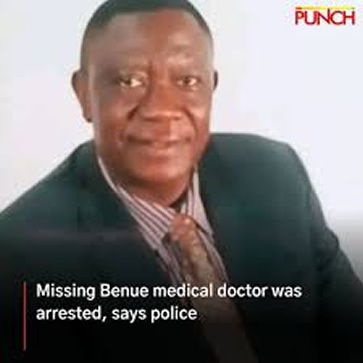
The fears spread over the abduction of Dr Jonah Ogbaji have been allayed as the Police Public Relations Officer for the Benue State Command, DSP Peter Aondongu, has stated that the Chief Medical Director of Multicare Hospital, Makurdi, was arrested by operatives of the Special Tactical Squad attached to the Force Intelligence Department in Abuja.
The PPRO was reacting to the alleged abduction of the medical doctor, which had gone viral on social media across the state.
The police spokesman said in a statement issued Thursday that the medical doctor was arrested by operatives of the Special Tactical Squad attached to the Force Intelligence Department, Abuja, in connection with an undisclosed investigation.
Social media platforms in the state had been awash with reports of the suspected abduction of the medical doctor around 9pm on Wednesday while he was attending to patients at his hospital along Ankpa Road, Makurdi.
Aondongu, in the statement, described the alleged abduction claim as “false”.
According to him:
“The Command has received enquiries regarding reports of the alleged abduction of a medical doctor and owner of a hospital in Makurdi.
“Upon verification, the report is false. The doctor was not abducted. He was arrested yesterday at his hospital by operatives of the Special Tactical Squad (STS) attached to the Force Intelligence Department (FID), Abuja, in connection with an ongoing investigation.”
Aondongu said the specific circumstances surrounding the investigation were yet to be known to the Command.
The command, however, advised the people of the state to disregard reports of the medical doctor’s alleged abduction or kidnapping.
The arrested medical doctor was a two-term ex-officio member of the Peoples Democratic Party (PDP), North Central.
By Nick Ibe
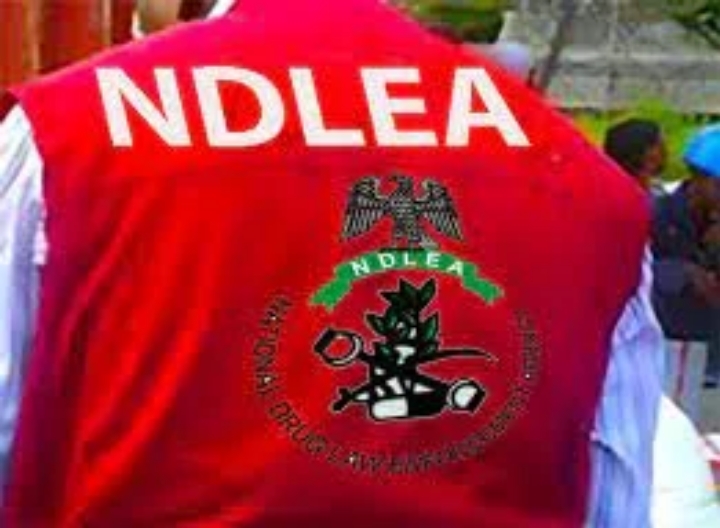
A Nigerian-Mexican drug cartel operating a clandestine methamphetamine laboratory in Eziama community in Obeagu, Awgu Local Government Area of Enugu State has been dismantled by the National Drug Law Enforcement Agency (NDLEA), which struck a decisive blow against another transnational organised crime.
According to a press release on Thursday , 24th September, 2026, signed by Femi Babafemi, Director, Media and Advocacy, NDLEA Headquarters, Abuja, two kingpins: 45-year-old Chukwu Obumneme Christopher, alias Brown, and 60-year-old Chukwu Georginus Monday, alias George, were arrested in connection with the operation of the meth lab in partnership with a notorious Mexican drug cartel member, Rodriguez Villanueva, based in Mexico City, Mexico.
The statement said the arrest followed “several months of intelligence and surveillance on the syndicate.”
The suspects have already been arraigned according to NDLEA: “They were arraigned before Hon. Justice Mabel Taiye Segun-Bello of the Federal High Court, Enugu Judicial Division, on a five-count charge bordering on conspiracy, the organisation, management and financing of a Drug Trafficking Organization, and unlawful possession of precursor chemicals used in methamphetamine production, contrary to the NDLEA Act. After their plea, Justice Segun-Bello has now scheduled their trial for 21st October 2026, following an application by the Agency for an accelerated hearing.”
Also named in the charge, and currently at large, are Uchenna, alias Uche; Celestine Ikemefuna Iwuchukwu; and Rodriguez Villanueva, who is a notorious member of a Mexican drug cartel.
Investigations by a Special Operations Unit (SOU) of NDLEA revealed a sophisticated, transnational operation by the Nigerian-Mexican cartel. Surveillance activities by NDLEA between 1st and 4th December, 2025, tracked Brown’s movements between Lagos, Enugu and Anambra States, ultimately leading operatives to a compound in Obeagu where a clandestine laboratory capable of producing methamphetamine in commercial quantities was uncovered. The lab, fitted with improvised reactors and distillation apparatus, mirrored similar facilities recently dismantled in Ogun, Oyo and Ebonyi.
A search of the premises led to the recovery of vast quantities of precursor chemicals, including 690 litres of methylamine, 1,000 litres of isopropyl alcohol, 300 litres of hydrochloric acid, 290 litres each of toluene and acetone, 400 litres of liquid sodium hydroxide, 125 kilograms of N-phenylacetamide, 414 kilograms of lead acetate, and 769.6 kilograms of tartaric acid, among other controlled substances, a haul consistent with a high-potency, P2P-based methamphetamine manufacturing operation.
A related search of George’s family residence yielded eight large fuel tanks, four commercial gas burners, four dehydrators, and 11 kilograms of ephedrine, further underscoring the scale of the cartel’s operations.
Reacting to the development, Chairman/Chief Executive of the NDLEA, Brig. Gen. Mohamed Buba Marwa (Rtd), reaffirmed the Agency’s unwavering resolve to track down every fleeing suspect connected to the cartel, and ensure that they all face the full weight of the law.
He commended all NDLEA officers involved in the operation for their professionalism and doggedness in cracking yet another international drug syndicate. He described the Enugu lab bust as further proof that Nigeria will not be allowed to become a haven for transnational drug cartels, warning that the Agency’s intelligence-driven operations and international partnerships would continue to close every loophole exploited by drug barons, whether local or foreign.
He reiterated his charge to all NDLEA personnel to sustain the momentum of relentless enforcement until the nation is rid of the scourge of illicit drug production and trafficking.


FCSC Boss: Amend Universities Acts for Smarter Funding, Governance Autonomy
Spread the loveBy Michael Lim A fundamental review of the legal framework governing Nigerian universities to grant them greater operational,...

Benue Assembly Passes Bill For Free Treatment Of Snakebites
Spread the loveBy Felix Umande The Benue State House of Assembly has passed a bill to be signed into law...


Press Wins War Against Trump: CNN, MS Now and Politico Back into White House
Spread the loveBy Son Tertsea The trio of CNN, MS NOW and Politico have gained a court nod allowing them...

Dr Ogbsji Arrested Not Abducted Benue Police PRO Confirms
Spread the loveBy Vincent Tyoduugh The fears spread over the abduction of Dr Jonah Ogbaji have been allayed as the...
NDLEA Discovers, Dismantles Enugu Drug Lab, Nigerian -Mexican Cartel Kingpins Docked
Spread the loveBy Nick Ibe A Nigerian-Mexican drug cartel operating a clandestine methamphetamine laboratory in Eziama community in Obeagu, Awgu...

CCB Probes Assets of over 20 Ministers, 30 Perm Secs
Spread the loveBy Nick Ibe, Abuja The assets of more than 20 ministers and 30 permanent secretaries have been investigated...


BUILDING A BUSINESS: Maria Cabral Menezes worked as a trader before deciding to risk it all and start her own business.
Spread the loveMaria Cabral Menezes, 27, never set out to be an entrepreneur — let alone one behind a product...

Prof Obi Davies-Ekwenna: Surgeon Who Led Nigeria’s First Tele-robotic Surgery
Spread the loveThe Professor of urology and transplant surgery has been involved in pioneering robotic surgical programmes in Nigeria and...

Nasarawa: PDP suffers major set back, as Gaza’s governorship receives boostBy Philip NyamAbuja
Spread the loveThe Peoples Democratic Party (PDP) Wednesday suffered a tsunami in Nasarawa state as its former youth leader, Hon....


‘Small Businesses Are An Important Part Of Our Economy’ — Tinubu Hails $12m Entrepreneurship Centre In Abuja
Spread the loveBy Felix Umande President Bola Ahmed Tinubu has welcomed the construction of the $12 million Abuja Centre for...