
General News
International Day of Hope. 12 July

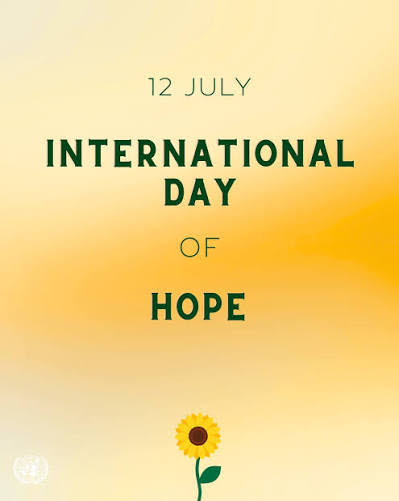
The United Nations is the product of hope.
A Universal Need in Uncertain Times
In a world facing growing unrest, widening social divisions, and persistent economic and environmental challenges, the global community continues to seek values that unite rather than divide.
Among these, hope stands out as a deeply powerful and universally resonant force. Recognizing this, the United Nations General Assembly has designated 12 July as the International Day of Hope—a day to celebrate and promote hope as a guiding principle for individuals, communities, and nations alike.
This resolution draws upon the enduring values of the United Nations Charter and the Universal Declaration of Human Rights, which call for peace, dignity, tolerance, and shared progress. It builds on earlier UN initiatives—such as the International Day of Conscience—by highlighting the essential role hope plays in promoting well-being, mutual respect, social stability, and sustainable development.
The declaration of the International Day of Hope is more than symbolic—it is a global invitation to act. It calls on Member States, regional and international bodies, civil society, and individuals to cultivate environments where hope can thrive. These efforts may include public education, awareness campaigns, community outreach, acts of kindness, and the promotion of forgiveness and reconciliation. By embracing these values, societies can foster inclusion, empathy, and resilience.
Ultimately, this day is a reminder that even in difficult times, hope remains a transformative force. It can bridge divides, drive progress, and uplift the human spirit. The International Day of Hope invites all of us to pause, reflect, and recommit to a future built not on despair or division, but on shared humanity and the unwavering belief in a better tomorrow.
Scientific Foundations, Health Impact, and Measurement
Psychologist C. R. Snyder defines hope as a combination of agency and pathways thinking—in other words, the motivation to pursue goals and the perceived ability to find ways to achieve them. Neuroimaging research shows that hope activates reward and motivation centers in the brain, such as the ventral tegmental area, which is also linked to relief from depressive symptoms.
The World Health Organization defines mental health as the ability to manage stress, work productively, and contribute to one’s community. Research consistently shows that higher levels of hope are associated with lower rates of depression, anxiety, and trauma-related stress.
These psychological benefits are mirrored in physical health: cancer patients with higher hope report better survival rates and stronger adherence to treatment. Hope in early adulthood is associated with healthier long-term outcomes, and sustained hope correlates with fewer emergency room visits and reduced short-term mortality.
Impact of Hope on Mental and Physical Health
Hope is also measurable. The Adult Hope Scale (AHS), developed by Snyder, is a validated instrument that separately assesses the agency and pathways components of hope. Building on this framework, the United Nations is supporting the development of a Voluntary Hope Index to guide national and global progress tracking.
A Foundation for Sustainable Development
Hope plays a vital role in advancing the Sustainable Development Goals (SDGs):
• SDG 3: Health – Hope improves mental well-being and supports treatment engagement.
• SDG 4: Education – Hope enhances student motivation and academic outcomes.
• SDG 8: Economic Inclusion – Hope drives ambition, savings, and entrepreneurship.
• SDG 13: Climate Action – Hope sustains long-term commitment to environmental efforts.
Development programs that integrate hope-building strategies—such as coaching and mentoring—yield improved results for people living in poverty.
Hope and Peacebuilding
Hope supports peacebuilding by fostering trust, encouraging dialogue between groups, and empowering young leaders.
Hope Contributes to Peacebuilding by:
• initiating the process through the promotion of trust and dialogue, and
• fostering greater social cohesion and reconciliation.
Together, these two pillars of community healing create a strong foundation for lasting peace.
Hope and the Common Good
Hope is a powerful force for both personal recovery and collective resilience. It fosters social trust, encourages civic participation, reduces polarization, and strengthens a shared sense of identity. These qualities support inclusion, peace, and sustainable progress—core aspects of the public good and central to SDG 16: Peace, justice, and strong institutions. The International Day of Hope reminds us that hope is not only a personal virtue—it is a collective responsibility.
“There is no peace without hope, no development without trust, and no future without belief in one.” — UNESCO Dialogue on Peace and Human Rights
Ways to Observe the Day
- Education and Awareness: Organize talks, school activities, or public campaigns to promote understanding and inspire hope.
- Community Engagement: Launch initiatives such as Hope Hubs, mentoring programs, or support groups that foster connection and resilience.
- Cultural Expression: Host art exhibits, performances, or storytelling events that celebrate shared values and diverse experiences.
- Service and Reconciliation: Participate in interfaith gatherings, peace dialogues, or volunteer efforts that build bridges and heal divisions. Ways to Get Involved
Who How They Can Contribute
Educators Teach lessons that promote resilience, agency, and emotional literacy.
Local Leaders Host community events that promote inclusion, connection, and mutual support. Media Highlight inspiring stories of recovery, cooperation, and positive change.
Health Professionals Integrate hope-centered approaches into care and therapy.
Philanthropies Fund community-based initiatives that build hope and resilience.
Celebrate Hope-Day by turning optimism into meaningful action. Gather friends, colleagues, or students for a short “Circle of Hope” conversation to discuss local challenges and imagine solutions. Dedicate an hour to service—mentor a young person, clean up a public space, check in on an elderly neighbor, or volunteer for a mental health helpline. Incorporate reflections on hope into lessons, meetings, or faith gatherings to spark ongoing dialogue. Every small gesture—whether a heartfelt conversation, an act of kindness, or a moment spent teaching—helps spread the spirit of hope that this day is meant to inspire in communities everywhere.
General News
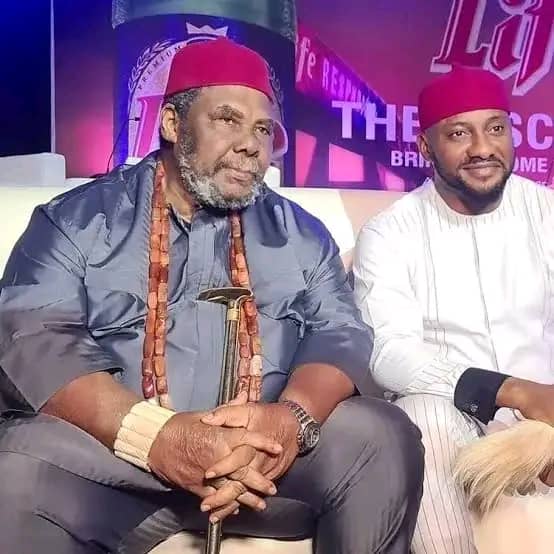
“Hold My Hand”: Yul Edochie Breaks Down As He Recalls Father Pete Edochie’s Final Words
By Felix Umande
Nollywood actor Yul Edochie has recounted his final moments with his late father, veteran actor Pete Edochie, revealing that the deceased asked him to hold his hand while they were at the hospital.
Yul, in an emotional tribute shared on his Instagram page on Friday, described his father as a kind man, wonderful father, and role model, saying he was still struggling to come to terms with his death.
“I’ll never forget your last words to me at the hospital when you told me to hold your hand,” he wrote.
The actor recalled how his father supported him throughout his journey in Nollywood, adding that he had promised to make the veteran actor proud when he joined the movie industry.
“When I joined Nollywood many years ago, I told you I would make you proud. I’m happy I made you proud. I’m happy I’ve kept your legacy going. I’m happy I celebrated you constantly,” he wrote.
He also described their private moments together, saying they would spend hours talking and laughing, while his father constantly wanted him around and encouraged him to call every day.
Yul described the deceased as a strict but caring father who taught him generosity, integrity, and the importance of keeping his word.
He wrote, “You taught me to be a giver. You taught me to be a man of integrity. You taught me to be a man of my word.”
Veteran Nigerian actor, Chief Pete Edochie, died on Wednesday, November 25, 2026, in Enugu, after a prolonged battle with prostate cancer.
By Lazarus Oko
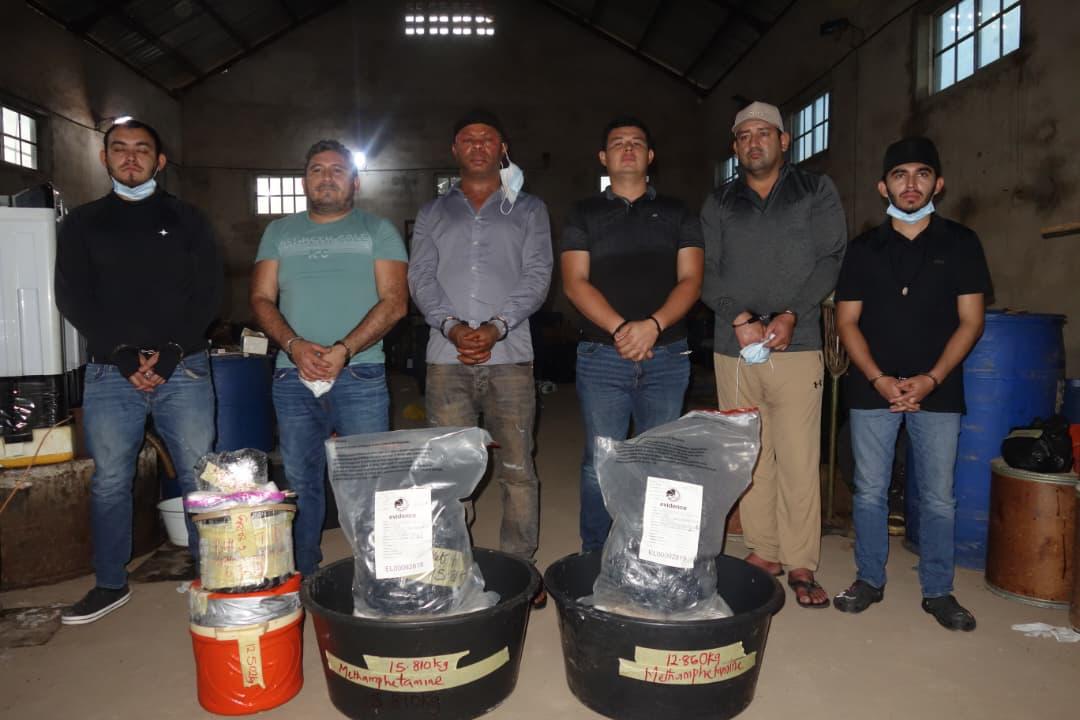
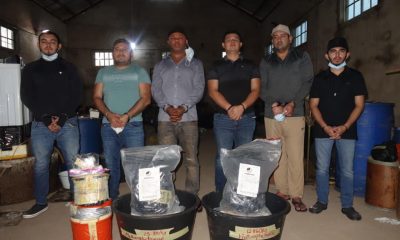
The National Drug Law Enforcement Agency (NDLEA) has dismantled the 4th industrial-scale methamphetamine laboratory in Enugu, arresting a 63-year-old drug baron, Chuks Enoch Ezeike, popularly known as ‘Over Size’, and five Mexican meth specialists whom he smuggled into the country with forged passports to produce the Class A drug on Nigerian soil.
According to a statement released by Femi Babafemi
Director, Media and Advocacy
NDLEA Headquarters, Abuja, on Wednesday, 25th November 2026, a total of 1,512 kilograms of methamphetamine, finished and in production, with an estimated value of US$226.8 million, equivalent of Three Hundred and Three Billion Nine Hundred and Thirteen Million Naira (N303,913,000,000.00), was recovered from the clandestine factory, alongside 6.68 tons of 20 different types of precursor and essential chemicals and an array of industrial equipment for making the illicit substance.
The release said that Ezeike, a businessman who holds the traditional title of Ebekuo Dike na Nanka in his community in Anambra state, had built the industrial complex behind San Savanna Oil Company Limited, at Kilometre ½ Abakaliki Expressway, Emene, Enugu, complete with living quarters for the Mexicans so they could live and produce in the same place without being seen in town.
Announcing the breakthrough at a press conference held at the NDLEA National Headquarters, Abuja on Wednesday 25th November 2026, Chairman/Chief Executive Officer of the Agency, Brig. Gen. Mohamed Buba Marwa (Rtd) described it as one of the most carefully planned, intelligence-led operations ever conducted by the Agency. According to him, the operation “began in faraway Mexico, ran through Colombia, France and the Republic of Benin, crossed into Lagos, and ended in an industrial complex in Enugu.”
Marwa explained that the Agency’s Special Operations Unit (SOU) began working on critical intelligence in April 2026, which identified Ezeike as a specialist in setting up clandestine methamphetamine laboratories with links to Oscar Ramos-Cardenas, a Mexican known for large-scale, industrial-grade methamphetamine production. “From that moment, Ezeike was a marked man. Our officers opened a file on him, and we watched and waited,” the NDLEA boss said.
“On 25th August 2026, we received intelligence on the flight itineraries of five Mexican nationals, all identified as methamphetamine experts who were travelling from Mexico to Nigeria. Our analysis left no room for doubt: they were coming to set up an industrial-scale meth laboratory on Nigerian soil.
“Working closely with the Nigeria Immigration Service, we ensured that when they landed here in Abuja on 28th August 2026, they were denied entry. They were put on the next available flight back to Mexico. On that same day, our officers found out that Ezeike had travelled from Enugu to Abuja to receive the visiting Mexicans. His own bank records later confirmed the hotel payment in Abuja that day. The visitors he came to receive were the very men we had just sent back”, Marwa stated.
Undeterred, Ezeike and his foreign collaborators worked out a new route. The meth experts were flown from Bogotá, Colombia, through Paris, France, to the Republic of Benin, while Ezeike procured forged Argentine, Colombian and Chilean passports and sent them through a driver to Cotonou, where the Mexicans handed over their genuine passports and took on new identities.
On 19th September 2026, the Agency was alerted that five Mexicans had arrived in Cotonou, intending to slip into Nigeria through the land border. They are:
i. Gonzalez Numez Lucas (Name on forged passport)
Oscar Ramos-Cardenas (Real name and leader/chief specialist)
ii. Lopez Salvador Vasquez Esperanza (Name on forged passport
Juan Antonio Sarabia-Cabrera (Real name)
iii Hernandez Cortes Carlos Fuentes (Name on forged passport)
Luis Enrique Garcia-Amador (Real name)
iv. Fernandez Rio Mateo Jimenez (Name on forged passport)
Jose Alejandro Renteria-Reyes (Real name)
v. Rodriguez Araya Andres Perez (Name on forged passport)
Salomon Cabanillas-Torres (Real name)
This time, Marwa said, the Agency took a deliberate decision to let them in. “We wanted the whole network: the meth specialist, the financier, the factory and the product. Sending them home a second time would only have postponed the problem,” he stated.
Three of the Mexicans crossed into Nigeria through the Seme Border Post on 20th September, while the remaining two followed on 21st September, on a road trip arranged by Ezeike. With NDLEA special operatives embedded in their every move, Ezeike received them in Lagos and lodged them in a hotel, where he was observed having breakfast with them on 22nd September, before moving them to Enugu.
While the Mexicans lived and worked in the San Savanna complex, Ezeike stayed at Adig Suites, 2 Nwafor Orizu Street, Enugu, moving about in three vehicles: a blue Toyota Corolla, a red Toyota RAV4 and a Lexus RX 350. Providing further details, Marwa said
“Throughout September and October, our officers kept watch on both locations. In the course of surveillance, we watched the regular movement of Ezeike’s blue Corolla drive into San Savanna, stay a few minutes, and return to Adig Suites. Assisted by appropriate tools such as the deployment of a drone and other intelligence deductions, we were able to put all pieces together by 7th November 2026.
“Having got all this down, it was now time to strike. On 9th November, 2026, we assembled over 200 personnel of our Strike Force and Enugu State Command into a staging area. On 10th November, 2026, I gave the order to take down the lab. At about 5a.m. on Wednesday, 11th November 2026, operatives of our Special Operations Unit, the Strike Force, the Forensic Directorate and the Enugu State Command carried out simultaneous raids on both locations. All personnel were appropriately deployed with clear tasks – those for outer cordon, inner cordon, search and arrest.
“At the San Savanna complex, our men stormed the laboratory and the adjoining guest house, which also served as a stash house. All five Mexicans were arrested at the scene, in the middle of production. At the same time, at Adig Suites, our operatives arrested Ezeike in Room 106. He was then taken to San Savanna to witness the search. There, in the presence of our officers, Ezeike admitted that he owns the laboratory and that he brought the Mexicans into Nigeria to manufacture methamphetamine. He told us that they had produced only a small batch so far. He also told us the Mexicans were due to leave Nigeria two days later, on Friday, 13th November 2026. In other words, we caught them with two days to spare.”
The 6.68 tons of precursor and essential chemicals recovered include 2,835kg of lead acetate, 1,050kg of tartaric acid, 450kg of mandelic acid, 160kg of P2P and 70kg of methylamine. Equipment seized includes four industrial burners, two industrial distillation units, two boilers, two hydraulic presses, eleven gas cylinders, two freezers, two digital scales and four washing/drying machines, all of which forensic experts have confirmed are consistent with industrial methamphetamine manufacture.
“They were producing methamphetamine not by the kilogram, but by the ton. Had they succeeded, that poison would have flooded our streets, our schools and our communities, and exported to destroy lives abroad, with Nigeria’s name stamped on it,” the NDLEA boss declared.
According to Marwa, statements by the suspects since their arrest confirm that this was no first-time venture but an organised, recurring transnational operation with three layers: a cartel command in Mexico that recruits, deploys and pays the specialists; Ezeike as the local coordinator who built the laboratory, procured the chemicals and arranged travel, transport and false documents; and the Mexican production crew led by Ramos-Cardenas, whose supporting members change with each deployment.
He said the cartel deliberately kept Nigerians out of the laboratory to reduce the risk of exposure, which was why the Mexicans lived where they worked and hid behind a company signboard. The cooks were paid according to their production output.
Marwa noted that in the last four months alone, NDLEA has dismantled four industrial-scale methamphetamine laboratories in Enugu, the Ogun forest, the Oyo forest and the Ebonyi forest, with five Mexican nationals arrested in the earlier operations already in prison custody facing trial. With the latest five, the number of Mexican meth specialists arrested in Nigeria in four months now stands at ten.
Sending a strong message to foreign cartels, the NDLEA boss said: “Nigeria is not your laboratory. It is not your warehouse, and it is not your transit route. You may change your passports, your names, your flight routes and your entry points, but you cannot change the fact that we are watching. The next person you send will meet the same fate. Every one of your cooks who comes to Nigeria will leave in handcuffs, or not leave at all, except to serve his sentence.”
To Nigerian collaborators, he warned: “You are the greater traitors. You sell out your own country and your own people for profit. There is no hiding place for you. Not in a hotel suite, not behind a company signboard, and not in the deepest forest. We will find you, we will arrest you, we will prosecute you, and we will go after every naira, every property and every asset you gained from this trade.”
He urged landlords, property owners and communities to know who lives in their property and what they do there, and to report anything suspicious to the nearest NDLEA office, assuring that their identities would be protected.
Marwa commended officers of the SOU, Strike Force, Forensic Directorate, DOGI, Intelligence Directorate, and Enugu State Command for their patience, discipline and courage over seven long months, following the cartel “from the airport to the border, from Lagos to Enugu, without once tipping them off.” He also thanked the Nigeria Immigration Service, the Agency’s international partners and President Bola Ahmed Tinubu for his unwavering support for the Agency’s work.
“The war against illicit drugs is a war for the soul of our nation. We will not lose it,” he stated.
General News
President Tinubu Supports Families of NAF Plane Crash Victims With N100m, Flats in Abuja
By Isa Abdul, Abuja
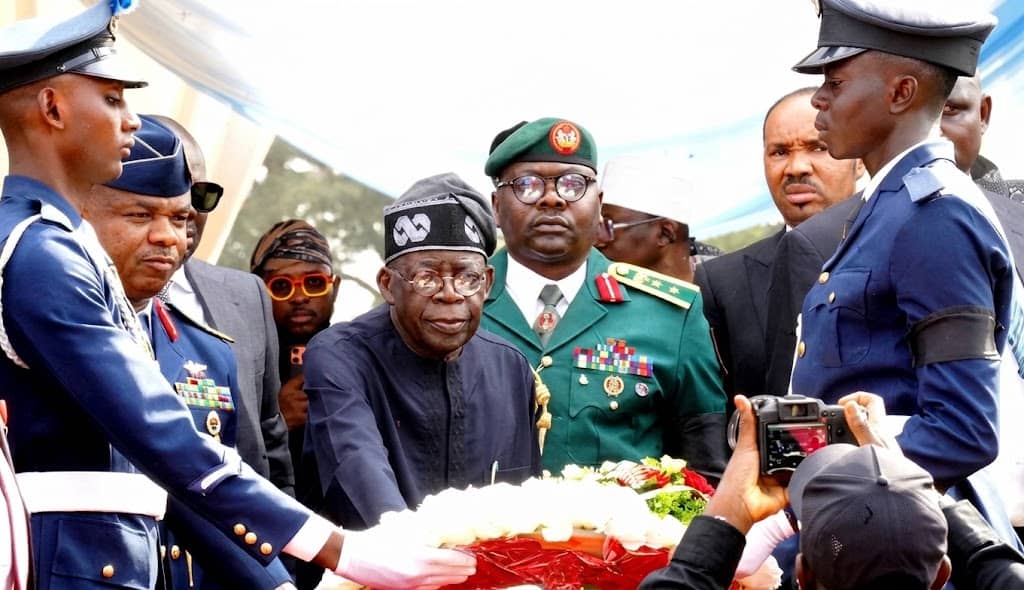
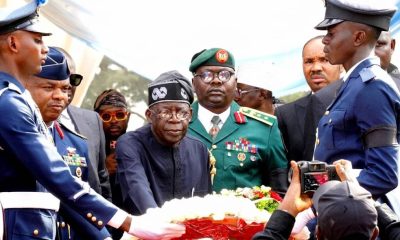
The 25 victims of the October 5 Nigerian Air Force (NAF) ATR 42 aircraft crash in Igbokoda, Ondo State were honoured by President Bola Ahmed Tinubu while leading top government officials and military chiefs in a wreath- laying ceremony.
The event was at the National Military Cemetery, Abuja, where a memorial service was organised, with the President announcing N2.5 billion financial support package and the allocation of houses to the families of the 25 victims of the Nigerian Air Force (NAF) aircraft accident in Ondo State.
He said each family will get N100 million and a three-bedroom flat at the Renewed Hope Housing Estate in Karsana, Abuja. In his words:
“As a tangible expression of the nation’s gratitude, I approve the allocation of three-bedroom flats in the Renewed Hope Housing Project in Abuja to the families of each of the military personnel who lost their lives in this accident.
“No home can ever replace the one you have lost, but they gave their lives for Nigeria, and Nigeria will give their family a home.”
President Tinubu said the gesture would also be extended to the immediate families of the civilians on board the aircraft.
“In addition to the flats, these officers would receive from this government N100m each,” he said, assuring the bereaved families of the government’s commitment to supporting them beyond the memorial ceremony.
“Long after the wreaths have faded, our commitment to these families must remain evergreen.”
The President, who pledged that the nation would neither forget their sacrifices nor abandon dependents of the departed, also promised a comprehensive investigation into the circumstances surrounding the crash.
He assured that the report of the probe would inform measures to strengthen military and civilian aviation safety standards, operational procedures and institutional accountability.
Describing the tragedy as a painful national loss, Tinubu said the welfare of military personnel and their families remained a sacred obligation of the nation, stressing that those who risked their lives in defence of the country deserved the best possible support from the government.
The President added: “As Commander-in-Chief, I reaffirm my administration’s commitment to a professional, well-equipped, and mission-ready Armed Forces. We will continue to prioritise modernisation, training, operational safety, and the welfare of our personnel.
“A nation that asks its sons and daughters to fly into danger must give them the best wing it can build. We must also stand by the families who bear the deepest cost of national service.”
Tinubu acknowledged the depth of their grief, particularly the additional anguish occasioned by the inability to recover the remains of their loved ones.
He said: “Your loss is our nation’s loss, and your grief is our grief. They were not merely passengers aboard the aircraft. They were our gallant officers, airmen and airwomen and fellow compatriots who travelled along with them.
“They carried dreams in their hearts and our flag on their shoulders. We could not bring them home to you, and our inability to recover their remains has made this harder still.
“But hear me, the sky did not take their honour. Nothing can diminish the worth of their lives or the love they leave behind.”
The President also commiserated with the leadership and personnel of the Nigerian Air Force and the wider Armed Forces over the loss of their colleagues, urging them to draw strength from one another and sustain their support for the affected families.
Chief of Air Staff (CAS) Air Marshal Sunday Kelvin Aneke, who spoke as the chief mourner, assured Nigerians that the Air Force would conduct a comprehensive and transparent investigation into the accident.
CAS Aneke pledged that the welfare of the bereaved families would remain a priority of the Service in line with the President’s directive, reaffirming the commitment of the Air Force to the safety and well-being of its personnel.
He maintained that the sacrifices of the fallen personnel would not be forgotten, assuring their families of the continued support and solidarity of the Service as they grappled with the consequences of the tragedy.
The CAS also presented the national flag to the next of kin of each of the deceased Air Force personnel in recognition of their service and sacrifice to the nation.
Read Also: Shettima to governors, LG chairmen: translate increased revenues into better living conditions for Nigerians
Assuring families of the deceased that the NAF’s responsibility towards them would not end with the memorial ceremony, he described the crash as “a profound loss to the Air Force, the affected families and the nation.”
The Air chief added that the service remained committed to the welfare, dignity and legitimate concerns of the bereaved families.
He stressed that they deserved continued engagement, transparent communication, assistance and compassionate treatment.
Aneke acknowledged that no speech or memorial ceremony could replace the loved ones lost by their spouses, parents, children, siblings and other relatives, noting that the pain of bereavement was deeply personal and could not be measured by the passage of time.
“Your grief is real, deeply personal and deserving of our utmost respect,” he said, acknowledging the sacrifices made by families who supported their loved ones throughout their demanding careers in service to the nation.
CAS Aneke also comforted children who had lost their parents, assuring them that memories, photographs and stories of their loved ones would remain a lasting connection to the lives they lived.
He called for continued compassion and understanding towards the bereaved, noting that grief differed from one individual to another and that every family deserved the freedom to mourn in accordance with its beliefs, traditions and personal circumstances.
The CAS said the tragedy went beyond the loss of 25 lives, as each victim represented a unique story of love, family, friendship, service and unfulfilled dreams.
He noted that the deceased comprised military personnel and civilians who had made different contributions to their families, communities and the nation.
According to him, their worth extended beyond their ranks, appointments and professional achievements to the relationships they built, responsibilities they carried and positive impact they made on the lives of others.
The Air chief expressed appreciation to President Bola Ahmed Tinubu, noting that his decision to attend despite his demanding national responsibilities demonstrated compassion, leadership and solidarity with the Air Force family.
On the circumstances surrounding the crash, Aneke acknowledged that questions remained unanswered, stressing that the investigation, as directed by the President, must be allowed to establish the facts through a thorough, impartial and evidence-based process.
He cautioned against speculation and premature conclusions, assuring that the Nigerian Air Force remained committed to communicating verified information responsibly and drawing appropriate lessons from the incident.
“I recognise that questions remain about the circumstances of the accident and that uncertainty can deepen the pain of bereavement. The relevant investigation must be allowed, as directed by Mr. President, to establish the facts through a thorough, impartial and evidence-based process.
“We will not substitute speculation for evidence or offer conclusions before they are properly published. We remain mindful of the importance of communicating verified information responsibly and of learning every appropriate lesson.
“Seeking answers with professionalism and integrity is part of the respect we owe both those who died and those who mourn them,” he said.
The Air Chief urged NAF personnel to reflect on the human purpose of their profession and ensure that the tragedy strengthened their commitment to operational safety, professionalism and the protection of lives.
Dignitaries at the solemn ceremony were: Senate President Godswill Akpabio; Ondo State Governor Lucky Aiyedatiwa; Defence Minister Gen. Christopher Musa; National Security Adviser (NSA) Mallam Nuhu Ribadu, Chief of Army Staff (COAS) Lt.-Gen. Waidi Shaibu; Chief of Naval Staff (CNS) Vice Admiral Idi Abbas and Inspector-General of Police (IGP) Tunji Disu.
Others were: National Intelligence Agency (NIA) Director-General Ambassador Mohammed Mohammed; Department of State Services (DSS) Director-General of Tosin Ajayi and National Emergency Management Agency (NEMA) Director-General Zubaida Umar Abubakar.
Those who died:
Crew:
Squadron Leader MI Aburime — Flight Captain
Squadron Leader AP Man-Ugwueje — Co-pilot
Flight Lieutenant IS Bako — Co-pilot
Warrant Officer Abubakar A — Aircraft Technician
Corporal Uguru HC — Aircraft Technician
Passengers:
Flight Lieutenant TL Lazarus
Flight Lieutenant M Akinloye
Flying Officer IM Adeshina
Master Warrant Officer Onwuka F
Master Warrant Officer Matini BA
Warrant Officer Nuhu FS
Flight Sergeant James RB
Flight Sergeant Mohammed AI
Sergeant Ani AE
Sergeant Izibenikien SI
Sergeant Alafuka C
Sergeant Mbadugha AN
Lance Corporal Ugwuba FC
Lance Corporal Eledan GE
Mrs Ezeh Nneka
Godstmine Tarabina
Joy Micheal
Sunday Micheal
Ukeme David
Gideon Omotola



Protecting the Ballot and ‘rig and die’ Slogan
Spread the loveBy Seyi Balogun, Lagos As the 2027 general elections approach, echoes of ‘rig and die’ slogan, a mantra...


Morocco’s Noor Quarzazate Complex: One of World’s Largest Solar Plants
Spread the loveIn 2016, Morocco installed a solar plant next to the Sahara Desert: 10 years later, it provides electricity...

“Hold My Hand”: Yul Edochie Breaks Down As He Recalls Father Pete Edochie’s Final Words
Spread the loveBy Felix Umande Nollywood actor Yul Edochie has recounted his final moments with his late father, veteran actor...

NDLEA Dismantles 4th Meth Lab in Enugu, Arrests Drug Baron, 5 Mexicans
Spread the loveBy Lazarus Oko The National Drug Law Enforcement Agency (NDLEA) has dismantled the 4th industrial-scale methamphetamine laboratory in...

President Tinubu Supports Families of NAF Plane Crash Victims With N100m, Flats in Abuja
Spread the loveBy Isa Abdul, Abuja The 25 victims of the October 5 Nigerian Air Force (NAF) ATR 42 aircraft...

Niger: Suspected FulaniTerrorists’ Attack, Kambari Vigilante Reprisal Leave 74 killed in Borgu LGA
Spread the loveBy Isa Abdul, Abuja The Niger State government has confirmed that death toll from the clash between Kambari...

Asisat Oshoala Looks Beyond the Pitch: Earns Post Graduate Degree
Spread the loveBy Nick Ibe, Abuja Super Falcons striker Asisat Oshoala has her focuse on the future beyond playing football...


FG Gives 600 Tailors N5m Support Each
Spread the loveBy Michael Lim, Jos The Industrial Training Fund, IMF, acting on behalf of the Federal Government, is floating...

Plateau: Irigwe Mass Bury 17 Killed by Fulani, Allege Destruction of Farms
Spread the loveBy Michael Lim, Jos The 17 Irigwe people killed in a gunmen attack on Chando Zrreci (Tafi Gana)...

Kano to Establish Housing Regulatory Agency
Spread the loveBy Michael Lim The Kano State Government has set the stage to regulate the housing sector where rent...