
Education
How Uneducated 84-yr-old established Al-hikmah University

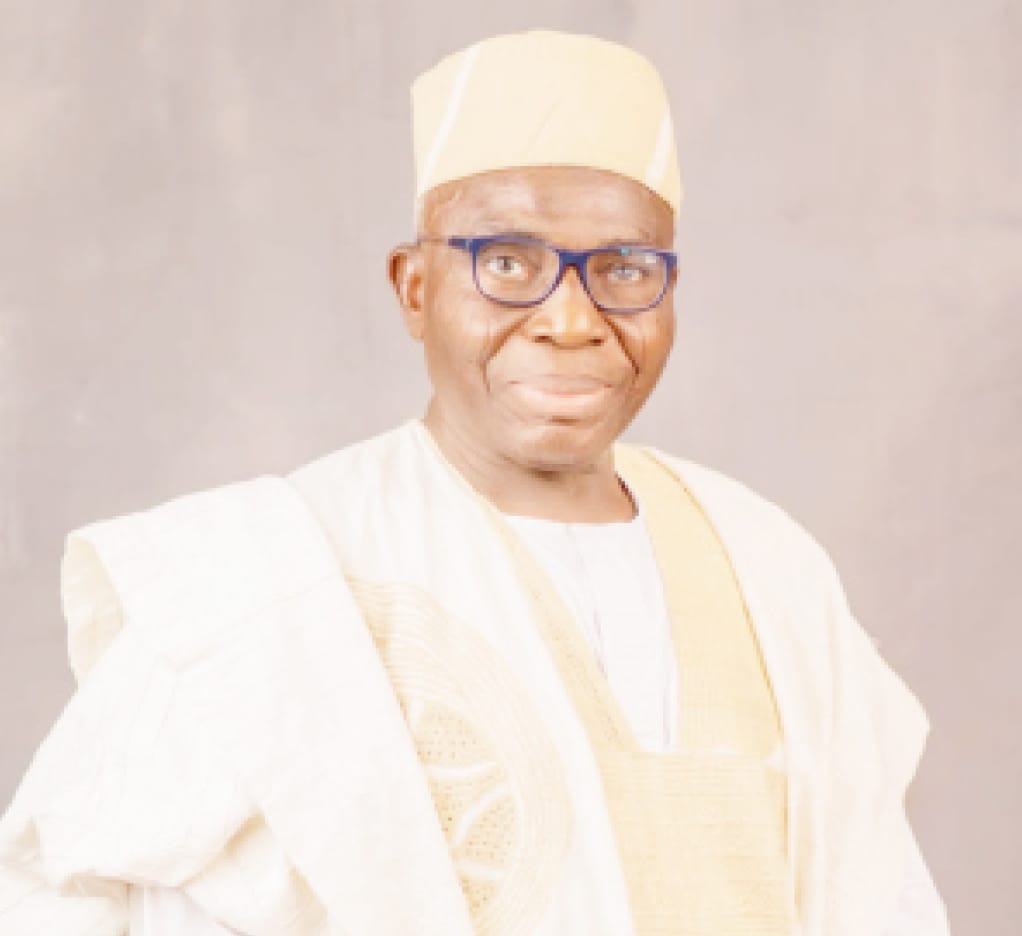
Al-hikmah University in Ilorin, Kwara State capital, established by a business mogul, Alhaji Abdulraheem Oladimeji, in 2005, today, has over 11,000 students.
Without formal education, Oladimeji founded the institution in a way that baffles human understanding. In this interview, the 84-year-old narrates in clear and unambiguous English language how his attempt to have formal education flopped, his adventures in the business world and how he gambled to invest in establishing a university which now pays off. Excerpts:
You lacked formal education, yet founded a university that now has in its employment doctors and professors. How do you feel about this?
Well, I feel fulfilled and honoured that we are finally here today. I will say my investment in the education sector was divine after one of my sons dreamt of me establishing an Islamic university while in Saudi Arabia for Hajj in 1994. This coincided with my desire to impact my family and humanity through Islamic and Western knowledge. I had planned to establish a plastic factory and had imported all the equipment and machines with almost all the buildings completed. As a businessman, this was initially difficult because return on investment in education is not instant. But I wanted to use it to serve humanity.
How have you been able to run the university despite your educational limitation?
I am a very detailed person who Almighty Allah complemented with talents, wisdom, creative courage and intelligence in my approach to issues. Then, I have the ability to pray. There will always be challenges from the staff and students, especially from changes in leadership. Vice Chancellors are supposed to spend five years, but we had to let one go after two years when we found his performance unsatisfactory. From the VC, DVC to Bursar, these are key positions in the university that must be manned by capable hands if you don’t want to run into trouble.
How did the process begin?
I started with AbdulRaheem College of Islamic Foundation which was affiliated to the ABU Zaria, International Islamic University in Sudan and later Islamic University in Madinah, Saudi Arabia. This then propelled us to get our own university license during the administration of President Olusegun Obasanjo. I also have AbdulRaheem College of Advanced Studies in Igbaja for remedial studies, for people wanting to gain admission into undergraduate degree studies in the university.
Did you have funding challenge while establishing Al-Hikmah University?
Yes. You see, I only had the desire for education but didn’t make my findings on what it entailed; whether one was going to make money or just spend it. I spent N100 million to obtain the license although government returned the money after six months when they became convinced we could pay salaries. We were also required to have a 10,000-acre land. This was unlike my previous business investments whereby one started making money almost instantaneously. The government barely supported us in the construction of our buildings, so we hit a brick wall and the only solution was for me to sell half of my property abroad. But I was happy to do so because I used it to fulfill my heart’s desire.
Any regret thus far?
None whatsoever, I still have a lot of properties in Nigeria and abroad and my children are now doing great things in life. I’m grateful for that.
Some people say you’re difficult to work with. How true is this?
I don’t like hypocrisy and I don’t engage in it, that is where people got the notion that I am difficult to relate with. Those saying that are hypocrites and they find me difficult to manipulate. It is our hypocrisy that got us to this point in Nigeria. If I wasn’t cautious, the university wouldn’t have progressed. Like I said, some VCs lasted only two years but look at what then-VC, Prof Noah Yusuf, did, look at the grounds that were broken under him. We are on the verge of birthing our medical school. Then-Katsina State Governor, Malam Aminu Bello Masari, spent two days with us, not as a state guest but as our guest. So, it is normal for some people to say those things about me because I refused to allow them take advantage of me.
Any plans to return to school?
What am I still looking for beyond what God has given me? This is enough. My teachers must be extremely patient otherwise we will fight all the time. I am a very busy person. During Prof Oloyede’s tenure, two professors from the University of Ilorin used to come home but they stopped because I was always attending to people from morning till around 3pm.
What was growing up like, for you?
I am the last child of my late parents. My father – Malam AbdulRahman Yusuf Oladimeji – was a Lagos-based businessman who later relocated home because of age and started petty businesses. He was a farmer, hunter, herbalist and trader. My mum, Hawau, was the first Iyalode of Igbaja and traded in chickens. I lost them both as an infant and then lived with my uncle.
When did you leave Igbaja for Lagos?
At about ten years old. The opportunity to travel to Lagos came in 1948, but prior to that, I was following my uncle to the farm. The Evangelical Church of West Africa (ECWA) wanted a place to start an elementary school and they approached my uncle who obliged them. Preparation for my resumption was on top gear when my uncle changed his mind after he witnessed the beating of a student by one of the teachers on our way to the farm. Because of this single incident, he revoked the land offer after he stopped the punishment. I was too beloved to him to be subjected to such punishment because of western education. So, he gave out my uniform which had already been sewn. The community intervened and after a lot of pleading, he agreed to give the church another land in a different location. Suffice it to say that the initial piece of land is today the Igbaja Campus of Al-Hikmah University School of Preliminary Studies.
So, what happened in Lagos?
I started menial jobs with a popular food seller, Mama Sikira, in Isalegangan, Lagos Island, but came back to Igbaja following some untoward experiences. After a while, I returned to Lagos to work with the business enterprise of Pa Gabriel who hailed from Oro in Kwara State. I was on a wage of 70 kobo and, later, it was increased to 80 kobo. After a short stint, I came back home before I relocated to Lagos around 1950 as a trade apprentice, this time around with one Alhaji Usman Alabi, a popular businessman better known as Sumonu Wosonle. I was with him for eight years without pay but learnt a lot from him. By the time I became independent in 1963, he gave me £180 which was N360 based on our agreement. But it was in form of liabilities (bad debt) and I was left with the challenge of recovering them.
Was there any attempt or effort to return to school during this period?
Yes, but the attempt was not successful. While still with my boss, I wanted to go back home but was denied and I felt unhappy, so I wanted to communicate. My attempt to find someone to help write a letter was not successful. I became angry and resolved to learn how to read and write, at least. I enrolled in an evening lesson costing one penny a month to learn ABD, the Yoruba alphabet. After graduating from the Yoruba class, I had the challenge of funding to proceed to learn the English alphabet which cost two pence but I didn’t get the support.
Did the dream perish at this point?
No, I was eager to at least read and write even without formal education. So, I came up with the idea to organise evening lessons for children in Yoruba alphabets in front of my master’s shop after we had closed at the price of one penny per pupil.
I partnered another friend to teach English alphabets at two pence each. As the one who came up with the idea, provided space and resources, I demanded that he paid me one penny from his two.
This was a win-win situation for me all with the support of Almighty Allah. The success of that lesson was underscored by the way it was embraced by about 50 pupils in the first month. Moreover, the initiative was to use the opportunity to grasp the English alphabets from my partner whose teaching period comes after mine.
After I finished, I will sit in his session and also learn, that was it.
SOURCE: VANGUARD



By Son Tertsea, Abuja
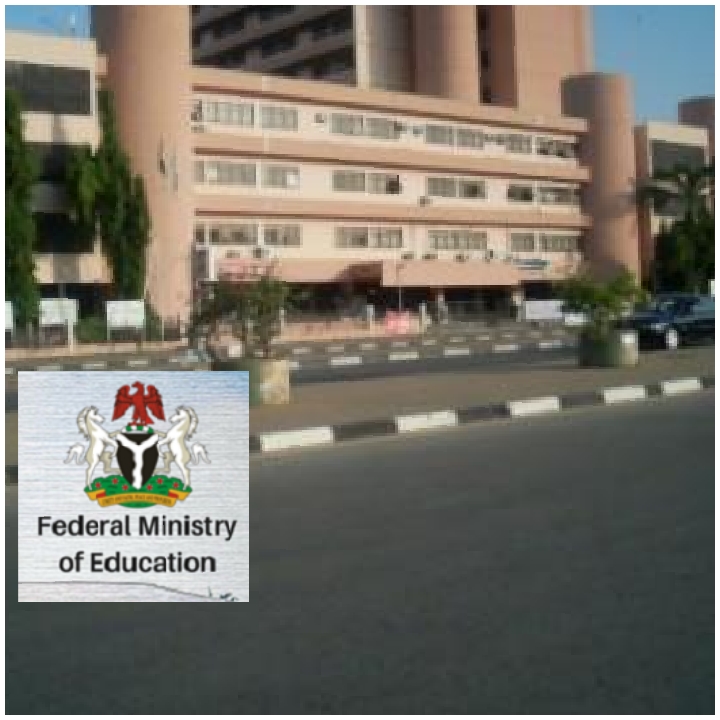
The body operating under the name National Parent-Teacher Association (PTA) of the Federal Unity Colleges is not recognised or authorised by the Federal Ministry of Education and does not represent the individual PTAs in the 118 Federal Unity Colleges nationwide.
the Ministry has declared.
According to a press release on Monday, 21 September, 2026, signed by Boriowo Folasade,
Director, Press and Public Relations,
the Ministry stated that “The association has no mandate to speak on behalf of the Colleges, their PTAs, parents or guardians.”
Consequently, any statement, directive, appeal or communication issued by the association has no official standing and should be disregarded by the public.
The statement further advised parents and guardians to rely exclusively on official communications from the Federal Ministry of Education and the management of their respective Federal Unity Colleges on matters concerning schools, students and academic activities.
It added: “The Honourable Minister of Education, Dr. Maruf Tunji Alausa, CON, urged parents and guardians to ensure that their children and wards are in their respective Federal Unity Colleges, as the 2026/2027 academic session has commenced nationwide.
“The Minister reaffirmed the Ministry’s commitment to the effective administration of the Federal Unity Colleges and to providing students with a safe, conducive and supportive environment for learning and overall development throughout the academic session,” the release added
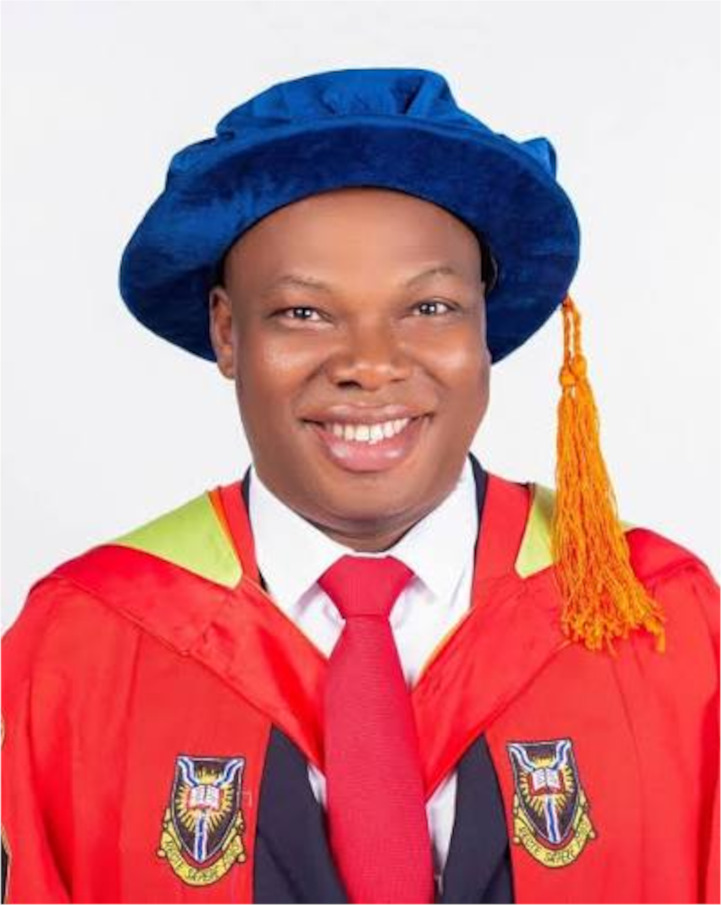
Dr David Olom Nkpe, Assistant Commander of the Economic and Financial Crimes Commission (EFCC), has been appointed as Professor of Practice in Criminology and Security Studies by Miva Open University.
The three-year appointment, effective September 1, 2026, to August 31, 2029, recognises Nkpe’s extensive experience in economic and financial crime investigation, anti-corruption enforcement, law enforcement and security studies.
Nkpe, an accomplished anti-corruption practitioner and criminology scholar, will serve in the university’s School of Management and Social Sciences, bringing years of field experience to the training and mentorship of students and faculty.
Under the appointment, he will participate in guest lectures, masterclasses, workshops, curriculum development and other academic activities designed to expose students to the practical realities of criminology, security and anti-corruption enforcement.
The appointment is also expected to strengthen the link between professional practice and academic scholarship by giving students access to practical knowledge from an experienced law-enforcement practitioner.
Through the appointment, Nkpe is expected to contribute his professional experience to the development of future practitioners and scholars in criminology, security studies and the wider anti-corruption field.
His role will further provide an avenue for aspiring criminologists and security professionals to gain insights into crime investigation, prevention, financial crime control and contemporary security challenges.
The appointment is non-remunerated but comes with institutional recognition and support, including a professorial gown and recognition plaque.
In a further gesture with direct benefits for students, six students are to be nominated for full undergraduate scholarships under the arrangement.
The appointment marks another professional milestone for Nkpe and highlights the growing role of experienced practitioners in enriching university education with practical knowledge and field-based expertise.
Miva Open University, licensed by the National Universities Commission (NUC) in 2023, is an open and distance-learning institution offering university education to students in Nigeria and beyond.
By Nick Ibe, Abuja
Without urgently resolving all the pending salary and welfare issues, by the Federal Government and state governments issues, affecting lecturers’ welfare and the implementation of the 2025 agreement, the Academic Staff Union of Universities (ASUU) will shut down public universities again.
ASUU warned that it may activate its suspended strike “without any further notice.”
The threat followed an emergency meeting of its National Executive Council (NEC) held on September 5, 2026, at its Festus Iyayi National Secretariat Complex, University of Abuja.
ASUU National President, Prof. Christopher Piwuna, released the statement to journalists in Abuja on Friday, saying the failure of the government to fully implement the December 2025 agreement, pay outstanding withheld salaries and remit billions of naira deducted from workers’ pay had pushed the university system towards another industrial crisis.
The union said it could no longer guarantee uninterrupted academic activities while the economic and professional wellbeing of its members remained under threat.
ASUU said lecturers are still owed three-and-a-half months out of the seven-and-a-half months’ salaries withheld during the administration of former President Muhammadu Buhari, despite the payment of four months by the present administration.
It said the outstanding salaries had lost more than 50 per cent of their value since 2022 due to the devaluation of the naira and rising inflation. It said:
“We state for the umpteenth time that the lecturers have done the work for which they are being punished. They did it at huge cost to their physical and psycho-social well-being.
“Some lost their lives in the process and many are now managing life-threatening ailments. For healing and restoration in the Nigerian University System, we think the withheld salaries of lecturers should be released without further delay.”
ASUU also accused the government of failing to remit deductions from lecturers’ salaries for pension contributions, staff cooperative societies and ASUU check-off dues, alleging that the outstanding third-party deductions run into billions of naira.
The union described the non-remittance of the deductions as a double financial loss to its members, arguing that workers were not only denied access to the funds but also deprived of potential investment returns.
It alleged that the continued withholding of the deductions could be linked to lecturers’ rejection of the Integrated Personnel and Payroll Information System (IPPIS).
“ASUU-NEC is fully prepared to call out its members if nothing concrete is done to address this lingering problem without further delay,” the union warned.
The union also expressed frustration over what it described as the “non- or haphazard implementation” of the 2025 FGN-ASUU Agreement by federal and state governments.
While commending the Federal Ministry of Education for recent efforts to clear outstanding salaries owed workers in federal universities of agriculture, ASUU said the interventions had not addressed the broader challenges confronting academics.
It said lecturers were being subjected to uncertainty over when and how much of their salaries would be paid, with some allegedly having to engage their vice-chancellors over salary delays.
ASUU, however, singled out Abia State Governor, Dr Alex Otti, for commendation, saying he had publicly announced the full adoption of the 2025 FGN-ASUU agreement and apologised to the union over bureaucratic bottlenecks that caused delays and distortions.
The union also commended Bauchi, Ekiti, Ogun, Benue, Yobe, Adamawa, Kebbi, Katsina and Borno states, where it said implementation of the agreement had commenced.
It said Kano, Edo, Plateau, Taraba, Gombe and Bayelsa states had pledged to commence implementation in September or October.
ASUU, however, warned governors yet to act that failure to implement the agreement could plunge their universities into what it described as an “industrial crisis of monumental proportions.”
The union said authorities of affected universities had already been notified of the commencement of strike action in their respective institutions unless satisfactory progress was recorded.
ASUU also opened another front of confrontation with Osun State Governor, Ademola Adeleke, over the two-year extension granted to the Vice-Chancellor of Osun State University (UNIOSUN), Prof. Clement Adegbooye.
Governor Adeleke had, on September 1, announced the extension of Adegbooye’s tenure from January 2027 to January 2029 during the inauguration of the university’s reconstituted Governing Council.
ASUU described the decision as unacceptable, arguing that the law under which the vice-chancellor was appointed provides for a single five-year tenure without extension.
The union accused the governor of hurriedly amending the law to accommodate the extension, warning that the development could undermine university autonomy and set a dangerous precedent for other state universities.
It also criticised Adegbooye for accepting the extension, noting that he had previously served as a branch secretary of ASUU at Obafemi Awolowo University, Ile-Ife.
The union urged him to reconsider the decision before January 2027, when it said his legally valid tenure would expire.
ASUU warned that it would challenge the development if efforts to reverse the decision failed.
ASUU Faults Government’s Economic Claims
Beyond university-specific grievances, ASUU accused the Federal and state governments of increasingly shifting their attention from governance and workers’ welfare to the 2027 general elections following the lifting of the ban on electioneering campaigns on August 19.
The union rejected government claims of macroeconomic growth, arguing that the figures had not translated into improved living conditions for ordinary Nigerians.
It cited declining purchasing power, rising living costs and inadequate access to healthcare, education, electricity, potable water and roads as evidence of what it described as “growth without development.”
ASUU also endorsed the call by Nigeria Labour Congress (NLC) President, Joe Ajaero, for an immediate review of the national minimum wage, saying workers’ salaries could no longer cope with inflation.
The union advocated indexing the minimum wage to inflation to protect workers’ purchasing power and provide an automatic mechanism for adjusting wages as the cost of living rises.
‘Don’t Blame Us If Universities Shut Down’
ASUU said its latest warning should not be interpreted as an attempt to deliberately disrupt the academic calendar, insisting that the welfare of its members had reached an existential point.
It appealed to students, parents, labour leaders, media practitioners and other Nigerians to prevail on the government to address the brewing crisis before it escalates.
“In no mistaken terms, ASUU posits that the non- or haphazard implementation of the 2025 FGN-ASUU Agreement by federal and state governments is a recipe for industrial crisis in Nigeria’s public universities,” it said.
“In the same vein, withholding the three-and-half months’ salaries and third-party deductions by the government is an ill-wind for lasting peace on our campuses.”
The union added: “ASUU-NEC resolved to notify all concerned that the Union may activate its suspended strike action without any further notice if the critical issues raised in this release are not speedily addressed.”


Death of 37 Miners in Custody: Ajia Calls for Independent Investigation, Accountability
Spread the loveA chieftain of the All Progressives Congress (APC) and the Dan Amanan Fune Emirate of Yobe State. Alhaji...

Body Operating With Name National PTA, Unknowed to Edu Ministry
Spread the loveBy Son Tertsea, Abuja The body operating under the name National Parent-Teacher Association (PTA) of the Federal Unity...

Peter Obi Distances Self From Purported Letter to Obi of Onitsha
Spread the loveBy Nick Ibe A letter purportedly written by him to the Obi of Onitsha, Igwe Nnaemeka Achebe, against...


2027 Elections: Police Must Never Be Seen As Political Tool, Tinubu Warns
Spread the loveBy Felix Umande President Bola Ahmed Tinubu has charged the Nigeria Police Force to maintain the highest standards...
Tinubu To Return At Weekend After Extended Working Vacation In London, Paris – Presidency
Spread the loveBy Felix Umande President Bola Ahmed Tinubu will return to Nigeria at the weekend following the extension of...

Benue Govt Suspends Muslim Pilgrims Board Chairman, Secretary Over Alleged Mismanagement
Spread the loveBy Felix Umande The Benue State Executive Council has approved the suspension of the Chairman and Executive Secretary...


BUILDING A BUSINESS: He Started an eBay Side Hustle at 14 – Then Grew It Into a $92 Million
Spread the loveKey TakeawaysLior Pozin started dropshipping on eBay at 14.By age 21, he was making $6,000 per month dropshipping,...

Plateau Imposes Curfew on 3 LGAs, Bans Use Of Motorcycles
Spread the loveBy Michael Lim, Jos A dusk-to-dawn curfew on Barkin Ladi, Bokkos and Mangu Local Government Areas of Plateau...

Tinubu Praises Kaduna Gov Uba Sani’s Free CNG Mass Transit … As Benue Increases Fares for Commuters
Spread the loveBy Son Tertsea President Bola Ahmed Tinubu has praised Kaduna state government for deploying Compressed Natural Gas, CNG,...

Foreign Medical Tourism to Drop as Nigeria Records First Tele-robotic Surgery Success in West Africa
Spread the loveBy Son Tertsea Nigeria’s first tele-robotic surgery on September 20, 2026 at the Redeemer’s Health Village (RHV), in...