
Education
FG Plans Spending N80bn on Tertiary institutions For Food Security, Self Sustenance


By Son Tertsea, Abuja
The Federal Government has planned spending up to N80 billion of financial support on 40 tertiary institutions to establish commercial farms, in order to boost food production.
The strategic intention is to further create employment opportunities, reduce dependence on government funding by universities and other higher institutions to become self sustaining..
Dr Tunji Alausa, Minister of Education, unveiled this at a meeting with heads of some selected institutions and the management of the Bank of Agriculture. The meeting’s aim was to discuss the implementation of the Renewed Hope Tertiary Agricultural and Entrepreneurship Programme.
According to a statement issued on Tuesday by the Special Adviser on Media and Communications to the minister, Ikharo Attah, “The programme is designed to mobilise more than 500,000 hectares of underutilised land across tertiary institutions for commercial agricultural production, research and enterprise development.”
Alausa said participating universities, polytechnics and colleges of education would be expected to provide approximately 1,000 hectares each, although institutions with smaller landholdings could also qualify based on the viability of their business proposals.
The understanding is for every participating institution to establish a limited liability company, partner with the Bank of Agriculture “which would provide between N1bn and N2bn in financing for agricultural production and related inputs.
“The minister explained that the initiative was aimed at addressing the longstanding under utilisation of agricultural land in tertiary institutions by providing access to financing, machinery, technical expertise and institutional support.”
He said the Federal Government had also made provisions for the initiative through previous interventions by the Tertiary Education Trust Fund, which approved N1bn for some institutions and N2bn for others.
Alausa added that the Federal Ministry of Education had provided N20bn in its capital budget to support 20 tertiary institutions under the agricultural development initiative.
Oarticipating institutions are to receive 10 tractors each at significantly reduced costs through the government’s agricultural mechanisation initiative.
In addition, modern seedlings, farm implements, irrigation equipment, water pumps, fertilisers and technical expertise would be offered to improve productivity.
To guarantee markets for the expected harvests, the minister said arrangements would be made with produce aggregators to purchase crops, while measures would be introduced to minimise post-harvest losses.
He added that the programme would extend beyond primary agricultural production to processing and other agro-allied businesses, creating a sustainable value chain around participating institutions.
Alausa said students, unemployed graduates, alumni, academic and non-academic staff, as well as members of host communities, would be encouraged to participate in the commercial farming activities under the supervision of lecturers and agricultural experts.
Prof. Adamu Ahmed, Vice-Chancellor of Ahmadu Bello University, Zaria, welcomed the programme saying it would help the institution translate its extensive agricultural research capacity into commercial production.
The Rector, Federal Polytechnic Oko, Dr Chioma Awuzie, expressed hope that the initiative would enable the institution to maximise its available land through mechanised farming and improve agricultural production.
The Managing Director of BOA, Ayo Sotinrin, meanwhile has promised the bank’s provision of financing and market linkages to help institutions commercialise agricultural research, improve productivity and generate revenue.


Education
Nigerian Academics Trained in Research Publication in High-impact International Journals –Okebukola
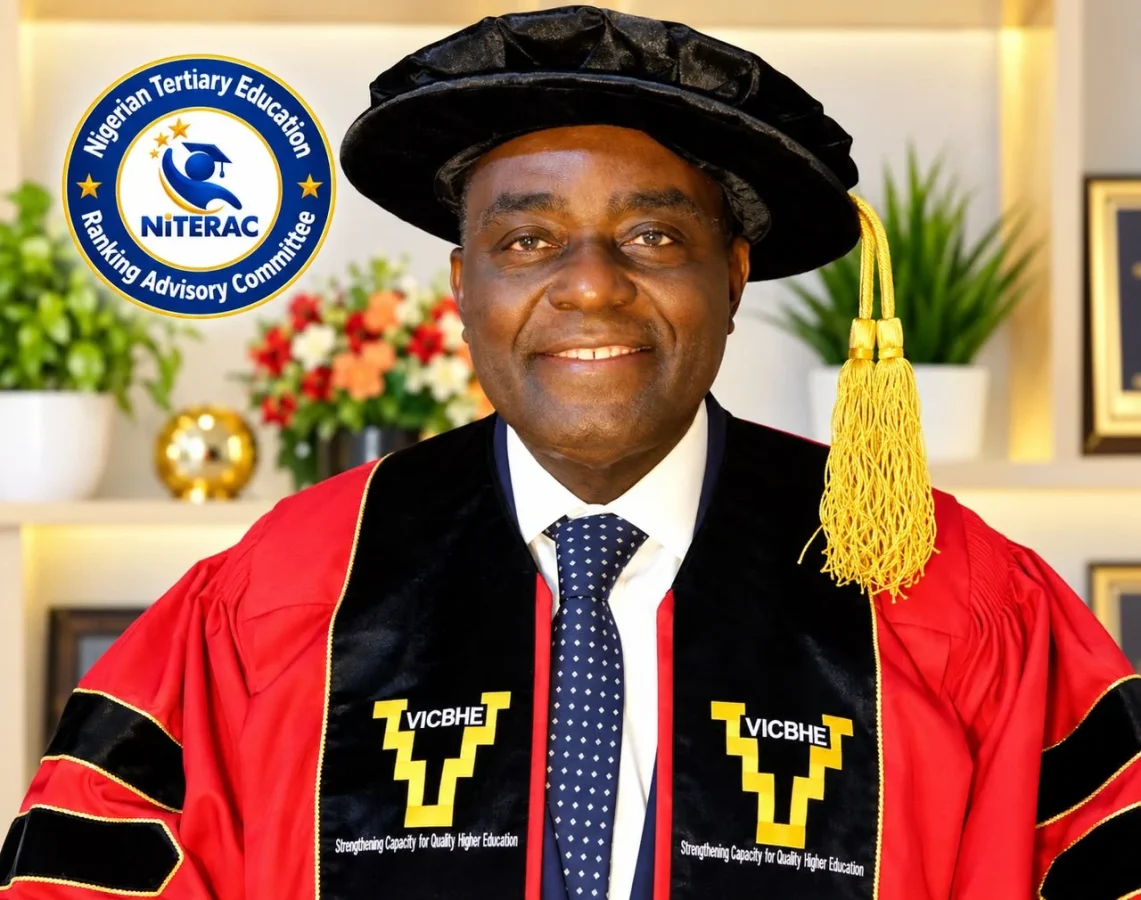
–2026 tertiary institutions ranking ready December 15
By Isa Abdul, Abuja
The Nigerian Tertiary Education Ranking Advisory Committee has revealed that 4,203 Nigerian academics have been trained in publishing research in high-impact international journals, as a strategic plan to improve the research output, visibility and global competitiveness of the country’s tertiary institutions.
Also, work on the 2026 national ranking of tertiary institutions is advancing with league tables for universities, polytechnics and colleges of education expected to be released on December 15, according to Prof. Peter Okebukola, Chairman , Nigerian Tertiary Education Ranking Advisory Committee.
The exercise has been progressing as an approved 17-step process guides it, Okebukola disclosed in Abuja, saying that the result would be handed to the Minister of Education, Dr Tunji Alausa, for approval before making it public.
The ranking exercise, mandated by the Federal Ministry of Education, he stressed, was designed not merely to place institutions on league tables but to encourage improvements in teaching, research and institutional performance. In his words:
“The national ranking exercise is not just about positioning institutions on league tables. It is also about stimulating improvements in teaching, research and international competitiveness.”
Okebukola added that Nigerian universities and other tertiary institutions, must produce research that attracts international readership and citations to improve their standing in global university rankings.
The December 15 date, he stressed, remained subject to the minister’s approval of the committee’s recommendations.
The announcement comes amid growing attention to Nigeria’s performance in international university rankings, following the release of the 2027 Times Higher Education World University Rankings, which showed an increase in the country’s representation from 24 universities in 2026 to 29 in 2027.
Nigeria had the highest number of ranked universities in sub-Saharan Africa, accounting for 42 per cent of the 69 institutions from the region included in the global ranking. Other 32 Nigerian universities were listed in the Reporter category, bringing the number of institutions participating in the ranking exercise to 61.
The Federal Ministry of Education had earlier disclosed that the national ranking framework would assess universities using 22 indicators covering different aspects of institutional performance, as part of efforts to promote healthy competition and improve the quality of tertiary education.
The international ranking development has also highlighted areas requiring improvement, particularly teaching quality, research environment, academic reputation, research productivity and international collaboration.
Okebukola said the capacity-building programme was part of the committee’s strategy to address some of these gaps, particularly the ability of Nigerian scholars to publish research in reputable international journals.
The three-day free masterclass, held from October 15 to 17, 2026, was organised by the Virtual Institute for Capacity Building in Higher Education, the training arm of NiTERAC, under the theme, “Publishing in High-Impact Journals: What Editors and Reviewers Look For.”
The programme featured lectures by Prof Olusola Adesope of Washington State University, United States; Prof Jibril Baba of Ahmadu Bello University, Zaria; and Prof Obinna Onwujekwe of the University of Nigeria, Nsukka.
Participants were taken through practical exercises in which they acted as journal editors and reviewers, assessed manuscripts, identified weaknesses and practised responding to reviewers’ comments.
The NiTERAC chairman said the practical sessions were intended to familiarise academics with international publishing standards, reduce avoidable manuscript rejection and improve their chances of getting published in reputable journals.
In the combined test and practical assessment, 23 participants emerged as joint highest scorers, each recording the maximum 3,060 marks.
The scholars were drawn from institutions including the National Open University of Nigeria, Abia State University, Nigerian Defence Academy, Covenant University, Babcock University, Lagos State University, Yaba College of Technology, Rivers State University, University of Benin and Obafemi Awolowo University.
Yaba College of Technology recorded the highest number of successful participants, with 65 scholars, followed by Lagos State University with 43 and Obafemi Awolowo University with 41.
Other institutions with notable participation included Nnamdi Azikiwe University with 39, the National Open University of Nigeria with 38, Michael Okpara University of Agriculture with 25, Olabisi Onabanjo University with 23, and the University of Ilorin and University of Benin with 22 each.
The National Open University of Nigeria and Ladoke Akintola University of Technology also recorded pass rates of 97 per cent and 95 per cent, respectively.
In a related development, the VICBHE management has approved the Dr Tunji Alausa Prize for five vice-chancellors who attained the Distinction Plus classification in the training programme.
The recipients are Prof Elisabeta Smaranda Olarinde of Afe Babalola University, who scored 3,040 marks; Prof Oyedunni Sola Arulogun of Chrisland University, 2,945; Prof Gutti Babagana of Kashim Ibrahim University, 2,900; Prof Ibiyinka Agboola Fuwape of Michael and Cecilia Ibru University, 2,570; and Prof Akan Bassey Williams of Ritman University, 2,500.
Commending the vice-chancellors for participating in the training, Okebukola said their involvement demonstrated the importance of continuous learning and leadership by example in strengthening academic standards.
He said: “Nigerian universities and other tertiary institutions must produce research that attracts international readership and citations if they are to improve their positions in global rankings.”
Okebukola further announced that the institute would organise another free practical masterclass in mid-November, focusing on research visibility and how academics could make their scholarship more discoverable, read and cited.
The forthcoming programme is expected to feature scholars from the African Academy of Sciences, led by its President, Prof Friday Okonofua, and Dr Chika Ezeugwu of Harvard University, alongside Okebukola.
He said the training would equip Nigerian academics with practical skills to increase the visibility, readership and citation impact of their research publications.
The NiTERAC chairman expressed appreciation to Alausa for supporting the national ranking initiative, reaffirming the committee’s commitment to improving the quality, visibility and international competitiveness of Nigerian tertiary institutions.

By Nick Ibe, Abuja
Nigerian universities have been asked to stop issuing admission letters to candidates seeking admission into their various institutions. The Joint Admissions and Matriculation Board, JAMB insists that such act was not within their mandate.
Stating this was JAMB registrar, Prof. Segun Aina, while receiving a delegation from Veritas University, Bwari, Abuja, which paid him a courtesy visit in his office.
The registrar pointed out that JAMB is the only body statutorily empowered to issue official admission letters to candidates seeking entry into all tertiary institutions in Nigeria, including universities, polytechnics, and colleges of education.
Prof. Aina stated that the irony of the situation is that once candidates see a document as emanating from an institution purporting to offer them admission, they believe that it is real.
He, therefore, charged universities guilty of this ignoble act to desist, adding that they also have the responsibility of ensuring that those candidates obtain the right documents from the board.
Furthermore, he referenced the Federal Ministry of Education’s explicit stand that all admissions be conducted through the Central Admissions Processing System (CAPS) and that anything done contrary to that is illegal and invalid.
As a result, no institution is permitted to substitute its own letters for the official JAMB admission letter issued by the board after a candidate had accepted his admission on CAPS.
He added that it is only admission offered through this platform is recognised and would be accepted for the purpose of mobilisation for the National Youth Service Corps (NYSC), among others.

By Vincent Tyosuugh
Two academic institutions, Orenda Opal Schools have been closed by the Benue State Government over alleged textbook policy violation which allows students to reuse old text books or source them from the open market.
Giving reasons for the seal, the Benue Education Quality Assurance and Examinations Board, BEQAEB, said its action followed petitions from parents that their wards were forced to buy textbooks from the schools and that their assignments were not being marked for not buying the prescribed textbooks from the schools. It further pointed to failure of the school proprietor and administrators to honour an invitation to address the complaints.
The board’s Executive Secretary, Dr Terna Francis, led officials of its Directorate of Enforcement and Compliance to the schools, where a court order authorising the sealing of the premises was served on the proprietor before the facilities were locked.
According to a statement issued by the board’s Information Officer, Jeffrey Adzam, on Thursday, the government’s policy allows parents to reuse textbooks previously purchased for older children.
“Parents are also permitted to obtain textbook lists from schools and purchase the required books from bookstores outside the schools.”
However, the board alleged that the affected schools insisted that parents must purchase textbooks directly from them, contrary to the new policy.
Francis said the board received reports that some pupils whose parents had paid their school fees but could not afford the prescribed textbooks were subjected to punitive treatment, including having their homework left unmarked.
The statement added that some parents who had already bought the books from external vendors alleged that the schools refused to allow their children to use them during the current academic session.
According to the board, the parents were told to either purchase new textbooks directly from the schools or withdraw their children and enrol them elsewhere.
BEQAEB further alleged that pupils were barred from bringing textbooks bought outside the schools into their classrooms, leaving some of them demoralised.
“Dr Francis described the alleged practices as unacceptable and inconsistent with the protection of learners’ rights and welfare under applicable laws in Benue State and Nigeria.
“He explained that the government’s policy was intended to provide flexibility for parents, promote the reuse of textbooks where appropriate and prevent schools from imposing unnecessary restrictions that undermine the interests of learners and their families,” the statement said.
He said the board had invited the proprietor and school administrators to a meeting to resolve the complaints, but they turned it down.
According to the statement, the board subsequently approached the court through the Benue State Attorney-General and obtained an order authorising the sealing of the school premises.
The proprietor, Onyinye Okoye, allegedly led members of staff to attack Francis and his team after the court order had been served.
The statement said the incident involved verbal assaults on the officials and the destruction of an official vehicle belonging to the board.
The board condemned the reported incident, saying disputes with regulatory authorities should be resolved through lawful channels rather than violence or intimidation.
It said the schools would remain sealed until their proprietors and administrators met its conditions, complied with government regulations and demonstrated a commitment to protecting the rights of pupils and parents.
“He urged parents and guardians whose children experience similar forms of alleged victimisation or violations of government education policies to submit formal petitions to BEQAEB, accompanied by relevant evidence.
“He assured the public that such complaints would be investigated and appropriate action taken in accordance with the law,” the statement said.


NJC Suspends 3 Judges for Judicial Misconduct, Places 6 on Watchlist
Spread the loveBy Nick Ibe, Abuja Three judges have been suspended for one year over alleged judicial misconduct by the...


As Court Nullifies Nasarawa ADC Governorship Candidature: Angbazo Consults for Next Steps
Spread the loveBy Isa Abdul The governorship candidature of the African Democratic Congress (ADC) in Nasarawa State, won Gen. Nuhu...


FG Plans Spending N80bn on Tertiary institutions For Food Security, Self Sustenance
Spread the loveBy Son Tertsea, Abuja The Federal Government has planned spending up to N80 billion of financial support on 40...


Nigeria Reaches First-ever Women U-17 World Cup Final by Beating Brazil
Spread the loveBy Son Tertsea Nigeria advanced into the final of the Under-17 Women’s World Cup for the first time...


PERSPECTIVE: Borno Judgement is about a Child, not a Creed
Spread the loveBy Bulama Bukarti On May 5, 2026, the High Court of Borno State sitting in Maiduguri convicted Mrs...


A closer Look at Nigerian Prof Dapo Akande: New ICJ Judge
Spread the loveBy Son Tertsea, Abuja Nigerian-born legal scholar Professor Dapo Akande has been elected as a judge of the...


Plateau PDP Chieftain Zang Distances Self from APC Campaign Council
Spread the loveBy Michael Lim, Jos Hon. Aminu Zang, has rejected his inclusion in the All Progressives Congress (APC) 2027...

NIMC: Steps to Download Your NIN Slip Free
Spread the loveBy Isa Abdul, Abuja Nigerians have been educated on how to download their National Identification Number slips online...


Alia Approves Fresh Appointments, Charges Appointees On Integrity, Dedication
Spread the loveBy Felix Umande Benue State Governor, Rev. Fr. Hyacinth Alia, has approved a fresh set of appointments into...

Och’Idoma Flags Off MATAN Food Bank Secretariat, 21-Pillar Initiative In Benue
Spread the loveBy Felix Umande The Och’Idoma and Paramount Ruler of Idoma Kingdom, His Royal Majesty, Agabaidu John Elaigwu Odogbo,...