
Education
FG to Drop JSS, SSS Separation Policy After 20m Pupils Drop Out

By Nick Ibe, Abuja
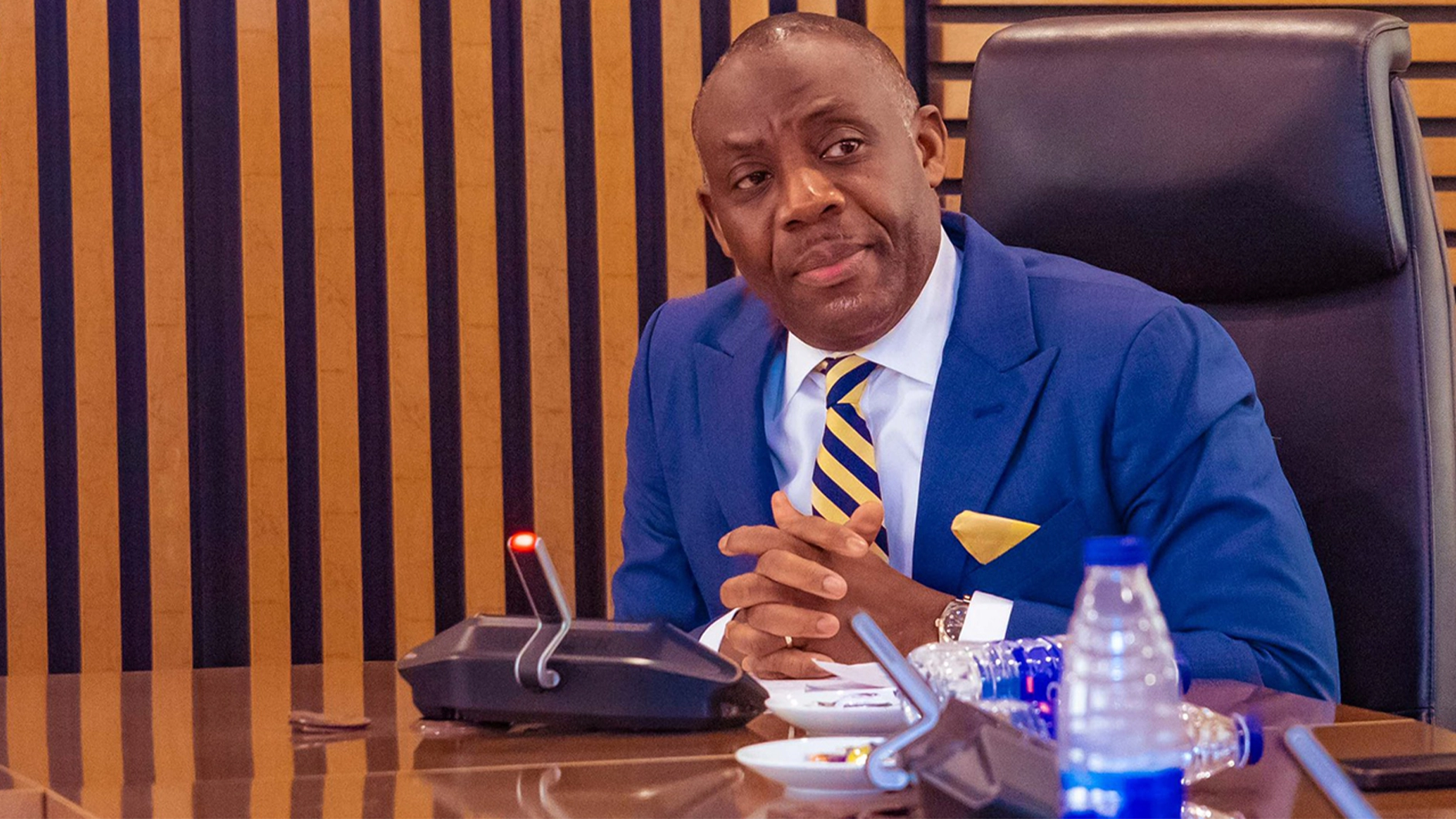
The Federal Government is set to drop the policy separating Junior Secondary Schools (JSS) from Senior Secondary Schools (SSS). The policy shift is being considered after data showed more than 20 million pupils dropped out before reaching the senior secondary level.
Announcing this Tuesday in Abuja was the Minister of Education, Dr Tunji Alausa, during the inauguration of the UBEC Ministerial Implementation and Monitoring Committee.
Alausa pointed out that the “disarticulation policy,” which required JSS and SSS to operate separately with different principals and facilities, has not met expected objectives. He justified the review saying:
“We have 20 million dropouts from primary school to JSS. Where are those students? We also found we have 80,000 public primary schools, and only about 15,000 junior secondary schools. That’s a one to eight ratio.”
The minister said the imbalance has caused overcrowding in JSS facilities and left many senior secondary schools underutilised. He made reference to Kaduna and other northern states as examples.
“This disarticulation policy has failed. We will phase it out. We can’t be creating positions because we want to create a director level for people while we harm our education system. It’s about doing what is best for every Nigerian child.”
He added that the proposal to abolish the policy will be tabled at the next meeting of the National Council on Education.
The policy shift is aimed at expanding access and improving learning outcomes, Alausa said. He acknowledged past failures in addressing transition rates but stated: “This government will not fail. We are fixing it.”
At the same event, Alausa inaugurated a committee chaired by Prof. Rashid Aderinoye to oversee UBEC-funded Smart Schools, Bilingual Schools and Alternative Schools.
The committee is mandated to ensure the projects are completed, handed over to states and opened for learning.
UBEC has invested in hundreds of such schools nationwide.
The minister said many remain unfinished or have not admitted learners, describing it as a waste of public resources.

By Seyi Balogun, Lagos
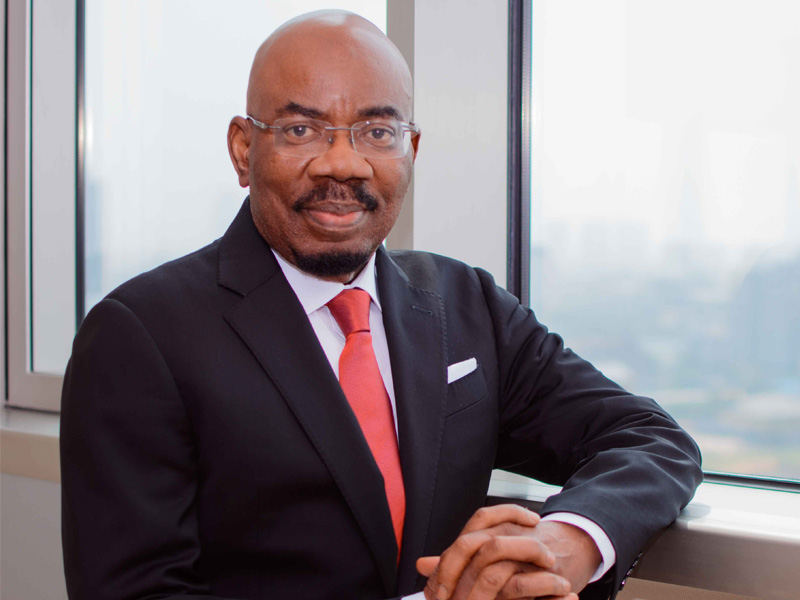
Nigeria must not allow the size and the number of universities to come at the expense of quality, was the advise of Founder of Zenith Bank and Founder/Chairman, Board of Trustees of James Hope University, Mr Jim Ovia.
Ovia said this recently in Lagos at the launch of the book, “Education Quality Assurance in Higher Institutions” written by the Director, Monitoring and Inspection, Lagos State Ministry of Tertiary Education, Dr. Mrs Yemisi Omoloye.
Jim Ovia, who was represented as Chief Launcher by the President and Vice-Chancellor of James Hope University, Prof. Olu Akinkugbe, said quality assurance remains the foundation for producing leaders and innovators, and the book provides a roadmap for that journey.
Speaking on behalf of Jim Ovia, Akinkugbe said:
“At James Hope University, we are not just building an institution, we are building a legacy, and legacy cannot be built on a weak foundation. Quality assurance is the cement that holds that foundation together. Mr Jim Ovia’s vision is to create a world-class institution that produces not just graduates, but leaders, innovators, distruptors, and problem-solvers, and that vision is impossible without a stringent and forward-thinking approach to quality assurance.”
The book launch was held at the Lagos State Education Resource Centre, Ojodu, Berger, Lagos.
Ovia noted that the book confronts the question as to whether Nigeria, with about 312 universities plus polytechnics and colleges of education, and with Lagos State alone having about 59 higher education institutions, and Ogun State about 49 of the same, is growing in quantity at the expense of quality.
“This book confronts that question head-on, and it provides a comprehensive framework covering curriculum, faculty performance, infrastructure, governance and student support, to ensure our universities can stand shoulder-to-shoulder with the best in the world,” he said.
He described Dr. Omoloye as a custodian of standards, noting that her dual role as Director in the Ministry, and member of the Governing Council of James Hope University, representing the Lagos State Government, shows that regulation should be a collaborative partnership.
“Dr Omoloye is not just the one who inspects our work, she is a vital part of the team that helps us define and achieve our goals. She brings the regulator’s sharp, objective eye to the council table, and she brings the council’s commitment to innovation back to the regulatory body,” he added.
He called on policymakers, administrators, regulators and educators to use the book as a constant reference point to improve standards.
“Let us embrace its principles and work collaboratively to build a system of higher education in Nigeria that we can all be proud of. May this book catalyse the positive, radical change our nation so desperately needs,” he said.
The launch was attended by the Commissioner for Tertiary Education, Lagos State, Honourable Tolani Sule, Commissioner for Environment and Water Resources, Honourable Tokunbo Wahab, Permanent Secretary, Ministry of Tertiary Education, Mr Adeniran Kasali, former Vice-Chancellor of Lagos State University, Prof. Ibiyemi Olatunji-Bello, and other vice-chancellors, school proprietors and directors.

By Isa Abdul, Abuja
The Federal Ministry of Education has expanded teacher preparation in gender-responsive pedagogy, safe learning environments and digital skills.
According to the press release by Boriowo Folasade,
Director, Press and Public Relations, the Ministry has reaffirmed its commitment to strengthening teacher capacity and ensuring that every child in Nigeria learns in a safe, inclusive and supportive environment, as it deepens collaboration with UNESCO, the Government of Japan and other development partners.
The release stated that the “commitment was reaffirmed in Abuja at a three-day Master Trainers Workshop on Safe Learning Environment, Gender-Responsive Pedagogy and ICT Skills for Educators in Teacher Training Institutions.”
Representing the Minister of State for Education, Prof. Suwaiba Sa’id Ahmad, the Director of the College of Education, Dr Uchenna Uba, said increased access to education must be matched by protection, inclusion and effective learning.
She highlighted the National Policy on Anti-Bullying in Nigerian Schools and stressed the need to equip teachers to recognise abuse, respond appropriately and protect learners’ dignity and wellbeing.
According to the release, Ahmad said:
“45 master trainers from 15 teacher training institutions are being equipped with skills in gender-responsive pedagogy, safe learning environments, prevention and response to school-related gender-based violence, and ICT integration. They are expected to cascade the training to about 500 teachers and educators.”
The Ministry’s spokesperson further reaffirmed the ministry’s commitment to sustained collaboration with UNESCO, Japan and the African Union to advance teacher development and inclusive education.
By Nick Ibe, Abuja
A 14-day ultimatum has been given the Federal government to release funds for the implementation of the recently signed 2026 Agreement and pay outstanding arrears, failing which the Senior Staff Association of Nigerian Universities, SSANU, will shut down universities.
Following the threat, the Minister of Education, Dr. Tunji Alausa, is said to be desperately making moves to avert the strike, by assuring that the funds would be released on or before next week.
At its 56th National Executive Council, NEC, meeting held at the University of Uyo, Akwa Ibom State, at the weekend, SSANU took the decision to down tools if the funds are not released.
Consequently, a communiqué issued at the end of the meeting and signed by its national president, Comrade Mohammed Ibrahim, SSANU noted that the arrears constitute legitimate financial entitlements of affected members and must be paid in full without further delay.
The communiqué stated that the meeting deliberated extensively on developments affecting the Nigerian university system, the welfare of members of the union and other issues of national importance, including the implementation of the 2026 FGN/SSANU Agreement, funding of universities, security, the economy and cost of living, public education, accreditation of university programmes, food security, technology and cybersecurity, energy, the rule of law and the general state of the nation.
The communique read:
“NEC acknowledged that implementation of the 2026 FGN/SSANU Agreement, which took effect from January 1, 2026, notwithstanding its formal signing on June 29, 2026, has commenced in some universities.
“NEC, however, expressed serious concern that implementation remains incomplete and uneven across the university system as a result of funding and administrative challenges.
“NEC categorically demanded the immediate release and payment of all outstanding arrears arising from the implementation of the 2026 FGN/SSANU CONTTA salary structure, calculated from the effective date of January 1, 2026.
“NEC stressed that these arrears constitute legitimate financial entitlements of affected members and must be paid in full without further delay. NEC further observed that universities which have so far implemented the CONTTA salary structure did so largely through internally sourced funds, without direct cash backing from the Federal Government.
“NEC therefore called on vice-chancellors and governing councils of universities that are yet to implement the financial and non-financial components of the 2026 FGN/SSANU Agreement to draw lessons from institutions that have taken proactive steps to implement the Agreement in the interest of staff welfare, industrial harmony and improved organisational performance.”
“Conclusively, NEC, in session, after exhaustive deliberations on the continued non-release of funds for the implementation of the 2026 FGN/SSANU Agreement, issued the Federal Government a 14-day ultimatum to release the required funds and ensure the full payment of all outstanding CONTTA arrears.
“NEC stressed that members have waited sufficiently for the benefits of an Agreement already concluded and therefore demand immediate and full compliance within the stipulated period.”
However, the SSANU president informed that the Minister of Education, Dr. Tunji Alausa, had assured them that the Office of the Accountant-General of the Federation was working hard to ensure that the funds were released by next week at the latest.
Comrade Mohammed said the release of the funds, as promised, before the expiration of the 14-day ultimatum would avert the situation.
In his words:
“At this juncture, I must inform you, comrades, that just before this press briefing, I received a call from the Minister of Education, Dr. Tunji Alausa, informing me of the current progress being made on the release of the money.
“He just confirmed to me that the Director of Funds in the Federal Ministry of Finance and the Accountant-General’s Office had confirmed that the money would be released on or before next week. We hope this will be done. And if that is done, it will avert the situation. Otherwise, our ultimatum stands.”
On the payment of the outstanding two months’ withheld salaries and one-year arrears of the 25 per cent and 35 per cent salary increases, “NEC expressed serious concern over the continued non-payment of the remaining two months’ salaries withheld during the 2022 industrial action and categorically demanded the immediate release and payment of the outstanding two months’ salaries to all affected members.”
The SSANU NEC further demanded the immediate release and payment of the outstanding one-year arrears arising from the 25 per cent and 35 per cent salary increases, stressing that these are legitimate entitlements due to affected university workers and should no longer be subjected to further delay.
“NEC therefore called on the Federal Government to take immediate steps to settle these outstanding obligations in full, in order to address the financial hardship being experienced by affected members and demonstrate commitment to the welfare of university workers.”
SSANU further expressed concern over the uneven implementation of the Agreement in state-owned universities and noted the varying experiences across institutions, including developments in Ondo, Delta and Kaduna states.
“NEC strongly called on state governments and governing councils of state universities to ensure full and equitable implementation of the Agreement and to provide the necessary funding for its execution. NEC maintained that staff of state universities must not be treated as lesser partners in the Nigerian University System and cautioned that selective or delayed implementation could undermine industrial harmony.”


How FG’s Docility and FIFA’s Compromise on Mpasi Conspired Against Nigeria’s 2026 W’Cup Qualifier– Report
Spread the loveThe apex world soccer’s governing body, FIFA, knew that the Democratic Republic of Congo fielded an ineligible player...

Kogi Community Protests Building of Mortuary in Residential Area.
Spread the loveBy Isa Abdul The construction of an alleged mortuary close to public school and residential buildings has been...


100 Days To 2027 Polls: INEC Vows Neutrality, Says BVAS, Ballots Ready
Spread the loveBy Felix Umande The Independent National Electoral Commission, INEC, has assured Nigerians and the international community of its...


THE LAST TANGO: Tears, Tributes and A Final Goal As Messi Bows Out After 21 Years
Spread the loveBy Felix Umande Emotions ran high at the Estadio Monumental on Tuesday night as Lionel Messi signed off...


Church’s Duty to Empower Individuals, Create Opportunities and Improve Family’s Economic Well-being
Spread the loveBy Seyi Balogun, Lagos The need for the Church’s commitment to empowering its members through employment opportunities, entrepreneurship...

Taraba Explores ADR for Sustainable Peace Between Crop, Livestock Farmers
Spread the loveBy Michael Lim Conflict prevention between livestock farmers and host communities in Taraba State through the promotion of...

Financial Inclusion: Kwara Buys Dangote Refinery Shares For Female Teachers
Spread the loveBy Michael Lim Kwara State Government has announced plans to buy shares in the Dangote Refinery Initial Public...

Benue Govt Gives 2-Week Ultimatum To Owners Of Illegal Billboards, Threatens Mass Removal
Spread the loveBy Felix Umande The Benue State Government has decried the arbitrary erection of billboards across the state by...


INEC Tracking Illegal Campaign Spending
Spread the love–Tells Editors: “remain primary filter against information disorder.” By Son Tertsea, Abuja The Independent National Electoral Commission (INEC)...

Importers, Petroleum Marketers Kick Against Dangote’s Restriction of Petrol Sales
Spread the loveBy Seyi Balogun Major marketers have kicked against Dangote Petroleum Refinery’s non sale of Premium Motor Spirit (petrol)...