
Opinion
How Dangote Groomed His 3 Daughters to be Industry Leaders


He trained his daughters long before handing them key leadership roles. Most people think Aliko Dangote’s daughters just inherited roles because of who their father is. They say, “Dangote’s children are lucky.” But luck was not what raised them. Training did.
Long before the headlines started calling his daughters “leaders of Dangote Group,” Dangote was already doing something quiet and deliberate. He was preparing them; with work.
While many people only saw Dangote building cement plants and refinery, something else was happening behind the scenes: His daughters were learning the business from inside, not from the balcony.
They didn’t wake up one morning and enter boardrooms. Before they stepped into leadership at Dangote Group, Halima, Mariya and Fatima were trained, tested, and seasoned inside the business.
Halima Dangote studied marketing and business administration, attended leadership programs at Harvard, Kellogg and Columbia, then worked across NASCON, Flour Mills and core operations, even leading a major turnaround before becoming Group Executive Director and head of the Dangote Family Office in Dubai.
Mariya Dangote earned her way. After an MBA from Coventry University, she joined Dangote Industries in strategy and planning, worked on backward integration and digital transformation, and now sits on the board of Dangote Cement and Dangote Sugar operations.
Fatima Dangote began her journey as a technical specialist and executive assistant in strategic units, growing into the role of Group Executive Director for commercial operations, overseeing procurement, communications and core strategy across the group.
None of them skipped ground-level experience. They entered the company not as queens, but as students. None was plucked straight into power. They learned, worked, and proved their worth inside one of Africa’s biggest business empires.
They sat in meetings.
They worked in departments.
They watched projects fail and succeed.
They learned how difficult it is to run factories, manage people, deal with losses, fix systems.
One of them worked through struggling companies.
Another was involved in turnaround projects.
Another handled strategy, procurement, and operations the boring but critical parts people don’t clap for. Years passed in preparation.
So when Dangote slowly stepped back from daily leadership
It didn’t look like a handover.
It looked like a continuation because the hands were already trained.
And his daughters didn’t just hear about some failures their father made in business, they saw them.That is how leadership is formed. Not by inheritance alone.
By exposure, responsibility, and patience.
This is for you and me to learn from as a woman and parent
– Don’t rush position before preparation.
– Teach skills, not entitlement
– Let your children learn struggle, not just success
– Let your own failures become lessons, not secrets
– Build people before you hand over power
Dangote didn’t just build companies.
He built capacity.
And that’s why his legacy didn’t stop with cement.
It moved into people.
If you’re building a life, a career, a business, or raising children
Remember this:
- What you train today will lead tomorrow.
- What you rush today may collapse tomorrow without proper training.
Growth is quiet.
Preparation is slow.
Gone are the days when. parents having only daughters, said their worth ends in the kitchen, now men make them formidable. Parents are intentional about training their children, don’t ignore yours.
You must do the work and when the time comes, the results will show. May we never fail as parents.


Opinion
The Court of Appeal Judgement and Separation of Powers: Senator Natasha Akpoti-Uduaghan and The Clerk of The National Assembly of The Federal Republic of Nigeria & 3 ORS
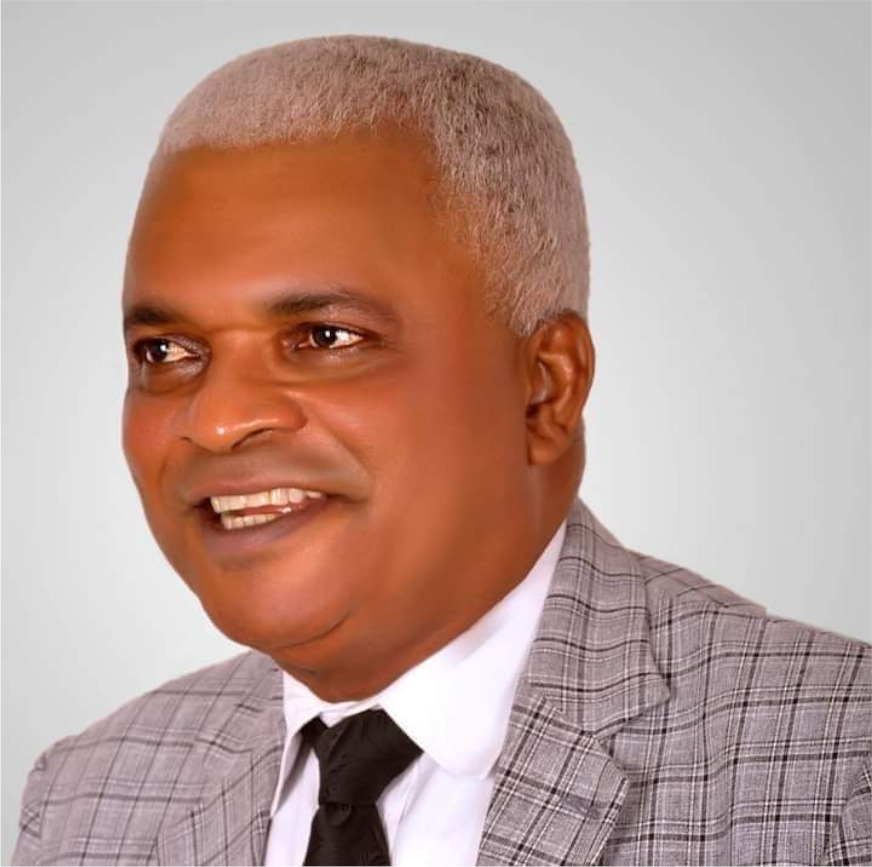
By Rt. Hon Eseme Eyiboh mnipr
The judgment of the Court of Appeal delivered on Monday, February 9, 2026, represents a consequential affirmation of the constitutional principles that sustain Nigeria’s democratic order and the orderly functioning of its institutions.
By upholding the disciplinary actions of the Senate as lawful and procedurally sound, the Court has robustly reinforced the doctrine of separation of powers, a cornerstone of our constitutional democracy. The ruling confirms with unmistakable clarity that the authority of the Senate to regulate its internal proceedings and discipline its members is firmly rooted in the Constitution and its Standing Orders. This authority is neither incidental nor ornamental; it is an essential responsibility entrusted to the legislature to preserve order, decorum, and institutional integrity in the discharge of its duties on behalf of the Nigerian people.
The Court of Appeal has further enriched our constitutional jurisprudence by clearly delineating the proper limits of judicial intervention in the internal affairs of a co-ordinate arm of government. While reaffirming the judiciary’s vital role as guardian of fundamental rights, the judgment recognises that the legislature must retain the autonomy necessary to enforce its rules and maintain discipline, provided it acts within the province of the law. This equilibrium is indispensable to effective governance and democratic stability.
The circumstances that gave rise to this litigation are regrettable. Parliamentary democracy rests on respect for established rules, collective responsibility, and due deference to the authority of the Chair. Persistent refusal to comply with lawful directives of the Presiding Officer—including the reallocation of seating arrangements within the chamber—as well as failure to appear before the statutory Committee on Ethics, Privileges and Public Petitions, runs counter to the ethos of parliamentary conduct. Such actions risk undermining institutional authority and distracting from the Senate’s higher obligations of legislation, oversight, and representation in the national interest.
While the Court of Appeal set aside the contempt proceedings and the associated fine on procedural grounds, it is significant that the core findings affirming the Senate’s disciplinary powers and the validity of its actions remain undisturbed. This distinction reinforces both the primacy of due process and the legitimacy of institutional self-regulation under the Constitution.
As the Senate moves forward, it remains steadfast in its constitutional mandate to foster robust debate, exercise rigorous oversight, and enact legislation that advances the peace, order, and good government of the Federal Republic of Nigeria. In keeping with the spirit of reconciliation and institutional maturity that must guide democratic leadership, the Senate looks ahead with restraint, goodwill, and an abiding commitment to collective purpose rather than past grievance.
In this spirit, the Senator concerned, who has since resumed legislative duties, is expected to continue her duties with renewed adherence to parliamentary rules, mutual respect, and the shared responsibilities that bind all members of the National Assembly.
The strength of our democracy ultimately lies in the strength of its institutions, each operating responsibly within its recognised constitutional remit. The judgment of the Court of Appeal fortifies that foundation and renews the resolve to build a disciplined, stable, and forward-looking legislature in service of the Nigerian people.
The facts have spoken for themselves
God bless the Federal Republic of Nigeria.
Rt. Hon. Eseme Eyiboh, MNIPR
Special Adviser, Media/Publicity and Official Spokesperson
to the President of the Senate
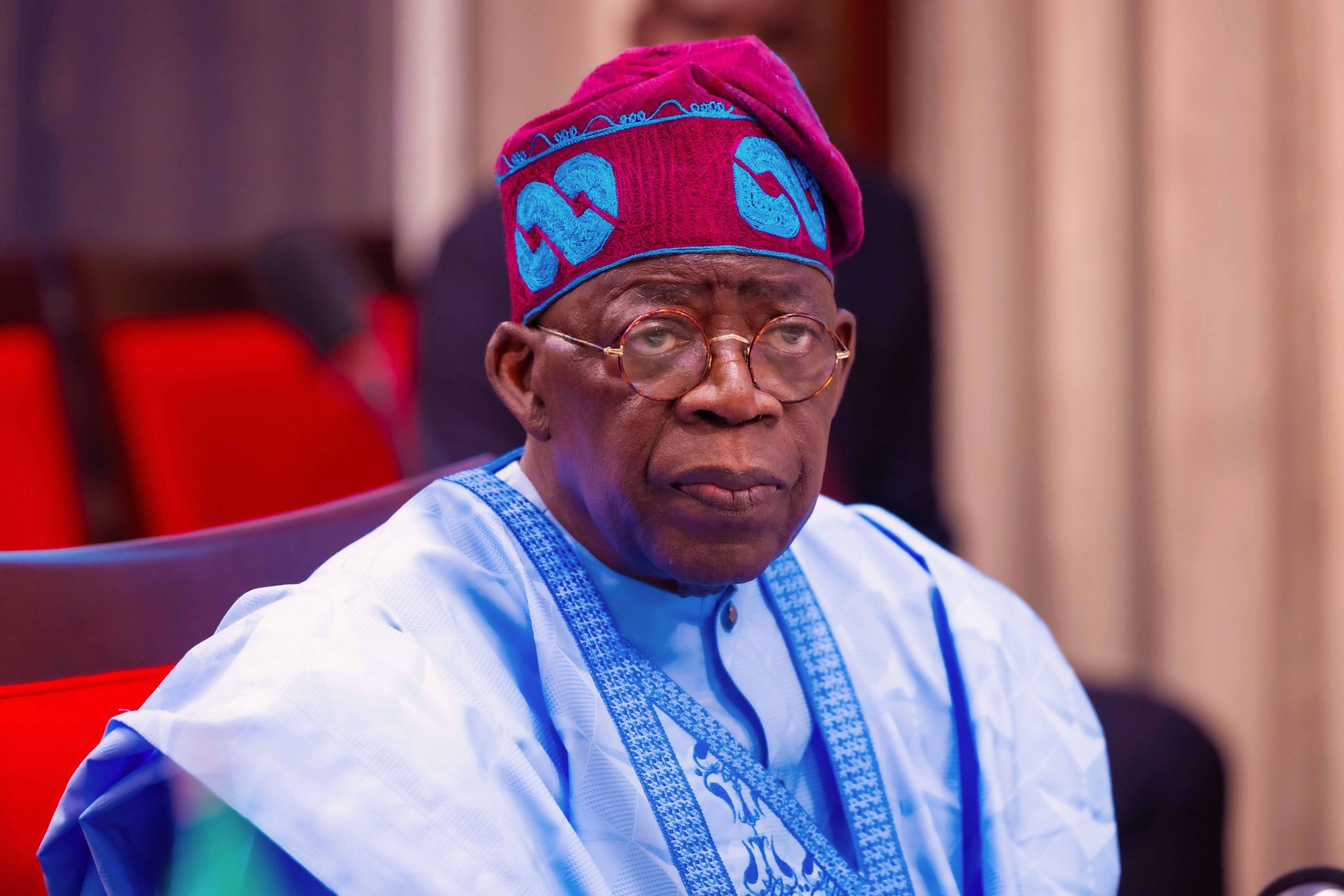
By : Sylvester Odion Akhaine
MR President, Good morning. I hope you heeded my note of caution in your engagement with Turkiye during your official visit. Of course, future historians will not record the fact that no one advised the president on the complex issues surrounding Turkiye and Nigeria’s national interests.
However, my subject today is the de-secularisation of the Nigerian state project by the Islamists in Nigeria, which must be decisively tackled as it poses a grave danger to the continuity of the country.
The alarm bell has been set off since the inception of the prevailing republic, when some governors in the northern part of the country decided to impose a sharia dispensation in their states in defiance of the country’s basic law. The secularity of the Nigerian state is clearly enshrined in Section 10 of the 1999 Constitution as amended, which states that “The Government of the Federation or of a State shall not adopt any religion as State Religion”. This was the same wording in the 1963 Republican Constitution.
Having just emerged from a brutal dictatorship, and Islamists in the north entered the sharia gambit, Obasanjo, instead of acting decisively in defence of the constitution, was a bit cautious and labeled the exercise a political sharia. They started cutting hands and limbs, in a hypocritical order, presided over by men who drink cognac in London, far away from the prying eyes of the subjected citizens of their respective states. This was at a time when Qatari women were flying F15 aircrafts.
I recall through personal communication that Justice Uwais of blessed memory, a devout Moslem, was shocked that
President Obasanjo did not bring the matter to the Supreme Court for adjudication. It was appeasement per excellence, having ceded an inch, the Islamists have gone ahead to take miles to impose a Sharia dispensation on a multinational country. Even the northern enclave of the country, where the Islamists, a fraction of the population, seek to negate the grundnorm is not a homogeneous entity. And the belief that the Moslems outnumbered people of other faiths is presumptuous and fallacious.
With absolute disdain for the secularity of the state, it was reported recently that Yobe State Hisbah has banned males and females from sitting together in public transport. This ban order dated 6th January was signed by the Hisbah Yobe Commission’s coordinator, Muhammad Yahudi, acting on behalf of Dr Yahuza Hassan Abubakar, the Chairman of the Commission. The directive states inter alia and with justificatory tone that “Intermingling of males and females in public transportation and gatherings.
Isolated discussions between males and females are conducted in a manner that contradicts the teachings of Islam”. Therefore, they are firmly prohibited. The prohibition also includes sitting together at social gatherings across the state. Before our very eyes, a Bama-style scenario, where Boko-Haram modelled everything after the Taliban in Afghanistan, is emerging. The question is what happens to people of other faiths who are residents and citizens of the state.
Another discontent coming from the north is the call for amnesty for the terrorists and their reintegration into the formal security network in the country. To be clear, these are terrorists who have crippled work-a-day lives of the people of the north and have extended their nefarious activities to the southern half of the country. It is becoming clear that some elites in the north are hand in glove with the terrorists and have sought to frame their activities as freedom fighters and establish a parallel between them and the Niger-Delta militants.
According to the Coalition of Northern Elders, “If the Federal Government can pay billions to ex-Niger Delta militants to guard pipelines, why can’t the government give contracts to armed
Fulani herdsmen to guard our forests? They stressed further that “They are already in the bushes; they know the terrain. By engaging them formally, we can finally have peace.”
This met with a rebuttal from several social forces in society. Of importance is the response of the Retired Lt. General Christopher Musa, Defence Minister, who said in unambiguous terms that “We are not paying a dime to any terrorists who killed people at will. We will go after them, make them pay for their killing. Niger Delta militants case is different, they only kidnap for ransom but not to the extent of killing people, children and destroying houses”
Recall that way back in 2021, when some of the diehard Islamist sponsors broached the matter, Pa Edwin Clark of blessed memory had tackled them. According to Clark, the call for amnesty for bandits is not only obnoxious but criminal. He said former Governor of Zamfara State, Ahmad Yerima, and Ahmad Gumi, an Islamic cleric, who called for amnesty for bandits, were merely confusing two contemporary security issues, the fight for resources in the Niger Delta and blatant criminality by bandits in the North. Pa Clark’s points have again been reinstated by the incumbent Minister of Defence, underlining the comparative irrationality of the coalition of northern elders’ stance.
Even before the current blabbing of the so-called northern elders, a memo on plans by Dikko Radda, Katsina State Governor, to grant amnesty to 70 terrorists was in the public sphere. A clear anomaly has been mired in legal niceties. The governor, it is argued, has the power to grant clemency on any offence whatsoever. However, the Terrorism (Prevention & Prohibition) Act, 2022, which is federal law denies the governors power to grant amnesty. All these are happening against the backdrop of escalating activities of the terrorists. On 18 January, 166 citizens were abducted in Kurmin Wali, Kaduna State. There are also surreptitious attempts to arm the Miyetti Allah-affiliated herdsmen.
Mr President, the subtext of all these is preparation for a jihad. Religion should belong to the private realm, the conscience of the individual, not the affairs of the state. This is imperative in a multinational entity. The de-secularisation ploy will not succeed; it would spell the end of Nigeria. Let everyone know that pacifism in some sections of the country is not cowardice; it is the hallmark of humanism.
Professor Akhaine is with the Department of Political Science, Lagos State University.
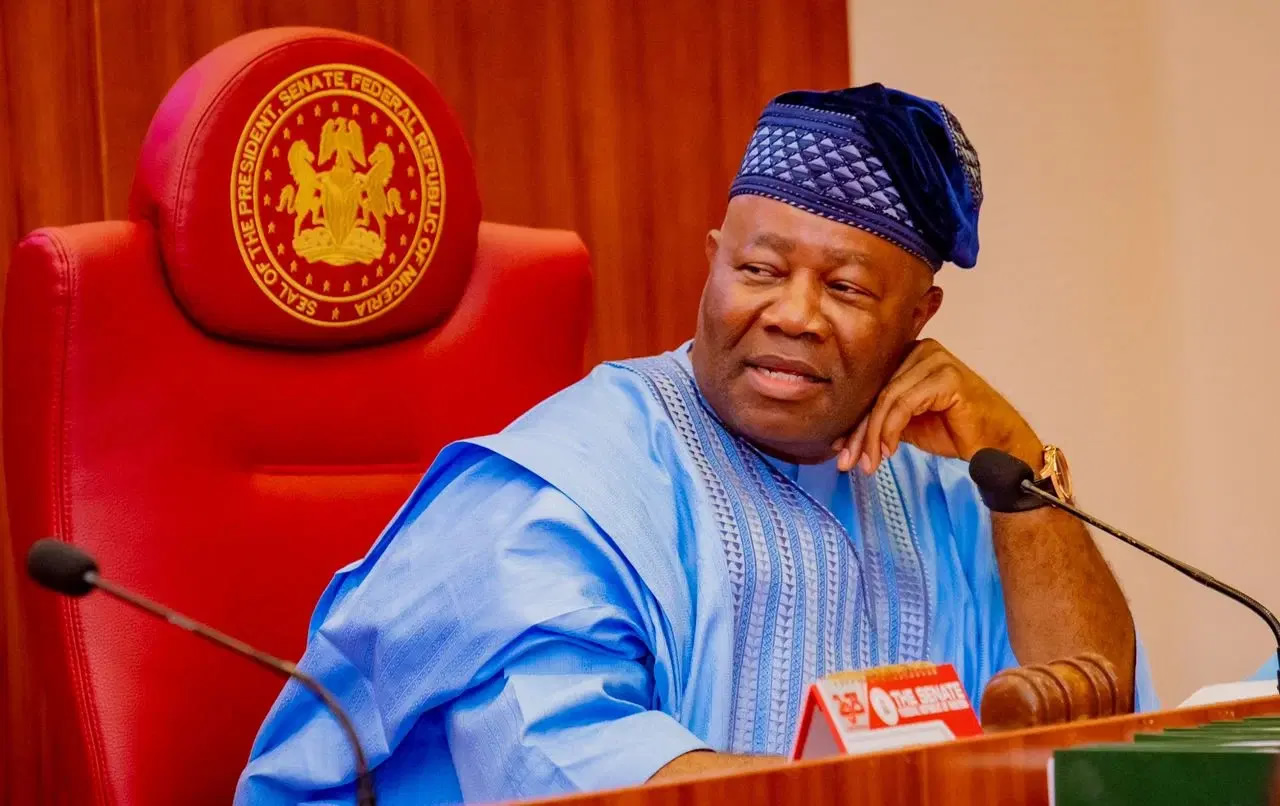
By Hon. Eseme Eyiboh, MNIPR
In politics, silence is often louder than speech, for it speaks in the language of calculation and consequence. Forgiveness, when declared by a powerful man, is louder still—a thunderclap in a quiet chamber. It unsettles expectations, invites suspicion, and demands interrogation, not because it is weak, but because power is never presumed innocent when it chooses mercy.
When Senate President Godswill Akpabio, GCON, announced his New Year resolution to forgive all offenders and withdraw every suit he had instituted, Nigeria’s political class instinctively reached for its usual tools—cynicism, calculation, conspiracy. This decision, however, does not fit comfortably within the margins of the country’s familiar scripts of power and vendetta; it demands a slower reading.
The context itself matters. On New Year’s Day 2026, Akpabio was not behind a podium, flanked by politicians. He was seated in Sacred Heart Parish, Uyo, listening to a homily—not as Nigeria’s number-three citizen, but as a humble, God-fearing parishioner. The priest, Reverend Father Donatus Udoette, preaching with quiet authority and pastoral fervor, exhorted his congregants to let go of past hurts and choose peace over grievance. Akpabio would later say that, at some point, he realised the sermon was speaking directly to him.
The announcement that followed shortly after bore the unmistakable imprint of that moment. About nine defamation suits would be withdrawn, including the ₦200 billion case against Senator Natasha Akpoti-Uduaghan, arising from allegations he had consistently denied and publicly rejected. Other cases, some involving his close associates, would go the same way. In a political culture where litigation has become an extension of reputation management, this was no minor gesture. Akpabio had been unapologetic about defending his name through the courts. The law, in his hands, had been both shield and sword. To voluntarily lay it down is to interrupt a habit of power.
The question, therefore, is not whether Akpabio could afford to forgive. It is why he chose to do so.
To answer that, one must resist the temptation to isolate this act from the man’s broader leadership story. Akpabio has always lived publicly in dual registers. There is the assertive politician who, as governor of Akwa Ibom State, left behind concrete evidence of ambition fulfilled—flyovers, boulevards, hospitals, model schools, an international airport, and an international stadium. Supporters invoke the Latin phrase res ipsa loquitur: the facts speak for themselves.
Then there is the other register: the man who frames his political journey in spiritual terms; who describes his rise from the shadows to national limelight as evidence of divine ordering and grace; who once called himself, without irony, “the most ranked Christian in government.” A man who sees himself not merely as a participant in Nigeria’s politics, but as an instrument within a providential design—God’s will, he believes, for Nigeria at this moment.
In Nigeria, faith in politics is common. Stability of faith is rarer. Akpabio’s Christianity is not episodic. It has shaped how he understands authority itself. Power, in this worldview, is not merely seized or negotiated; it is entrusted. And what is entrusted carries moral obligation.
This is where forgiveness ceases to be sentimental and becomes political philosophy.
The same drive for tangible outcomes has characterised, albeit differently, his tenure as Senate President. It has been defined less by flamboyance than by control. The Senate he leads has been unusually productive and notably calm—more than ninety-six bills passed in two years, with over fifty-eight assented to by the President. In a chamber once notorious for theatrics, this stability is not accidental. It reflects a leadership style that values restraint over spectacle and consensus over conquest.
While his action was inspired, it also makes political sense. Withdrawing defamation suits fits neatly into this logic. Legal battles consume attention. They tether leaders to old grievances. They narrow the emotional bandwidth required for institutional leadership. To let them go is to reclaim focus—and to recommit to what ultimately matters: nation-building.
Critics will argue that forgiveness is easier from a position of strength. They are right. That is precisely why it matters. In fragile political systems, restraint by the powerful sets a tone no code of conduct can enforce. It lowers the temperature. It changes incentives.
Nigeria’s public sphere has become deeply adversarial. Every disagreement is framed as insult. Every critique is personalised. Politics has learned to confuse hostility with toughness. In such an environment, Akpabio’s choice rightly disrupts a dangerous rhythm.
Faith provides the language; humility provides the discipline. Humility here is not self-effacement. No one can accuse Akpabio of being unaware of his own stature. Rather, it is a confidence that does not require constant vindication. As the late global gospel icon, Uma Ukpai, once told him: “Only fruit-bearing trees draw missiles. If you are drawing missiles, it means you are bearing fruit.”
To accept that counsel is to understand leadership as emotional labour. To forgive is not to deny injury; it is to refuse to let injury define governance.
There is, of course, a strategic dimension. Nigerian politics does not permit innocence. The decision comes at a time when Senate unity is under constant scrutiny and rumours of internal challenge circulate freely. Choosing reconciliation over escalation strengthens institutional cohesion. It preserves authority without making it brittle.
Yet strategy does not cancel sincerity. In Nigerian leadership, the sacred and the secular are not opposing realms but overlapping obligations. Godswill Akpabio’s Catholic identity, deeply rooted in his home state, has always been both personal and public. He has hosted bishops at the national level. He is planning a worship centre within the National Assembly complex. These are not gestures of convenience; they are expressions of a worldview in which governance, godliness, and morality intersect.
This is why the withdrawal of lawsuits should be read not merely as personal forgiveness but as public modelling. Akpabio has often spoken of nation-building as a collective task, insisting that it requires citizens to rise above division and embrace shared purpose. Forgiveness, in this sense, becomes civic pedagogy.
Nigeria suffers from obvious physical infrastructure deficits. It also suffers from what might be called spiritual infrastructure decay. Distrust is habitual. Anger is efficient. Leaders who demonstrate emotional regulation contribute to national repair in ways budgets cannot capture.
The implications extend directly into legislative leadership. Managing one hundred and nine senators with competing ambitions requires more than procedural mastery. It demands moral authority—authority that flows not only from rules, but from example.
By choosing forgiveness over litigation, Akpabio strengthens his hand not through coercion but through credibility. He signals that power can afford generosity; that leadership does not require perpetual combat; that not every insult deserves a reply.
There is risk, of course. Forgiveness can be misread as weakness. Silence can be exploited. But leadership that waits for perfect safety rarely leads. Akpabio’s resolution accepts vulnerability as the price of example.
What emerges, then, is a synthesis: the force of developmental leadership from his gubernatorial years, the finesse of institutional management as Senate President, obedience to God and now a claim to moral authority through public restraint.
Nigeria often produces leaders who deliver material progress but corrode trust, or leaders who speak ethically but govern ineffectively. Akpabio’s gesture attempts to collapse that false choice.
To be clear, the true test lies ahead. Forgiveness must be sustained, not performed once and shelved. Its power will be measured by whether it cools tempers, reshapes conduct, and encourages reciprocal restraint.
For now, Akpabio has offered an unconventional lesson in Nigerian statecraft: that surrendering legal claims can strengthen authority; that stable faith produces calm rather than noise; and that humility, properly understood, is not the absence of confidence but its highest expression.
In a country struggling to rebuild trust while confronting insurgency, economic hardship, and climate anxiety, reconciliation is not a luxury. It is governance.
Sometimes, the most radical act in politics is not retaliation, but restraint. And with his New Year’s resolution, Senator Godswill Akpabio, the Senate President has demonstrated precisely that.
Rt Hon Eseme Eyiboh mnipr is the Special Adviser, Media/Publicity and Official Spokesperson to the President of the Senate


Tinubu Appoints Adesayo, Ceo Nemsa; Magaji Da’u Aliyu As Md Of Shestco
Spread the loveBy Saint Mugaga President Bola Tinubu has appointed Hon. Magaji Da’u Aliyu as the Managing Director of the...

Prof. Alabar Is New VC of Father Adasu University, Makurdi
Spread the loveBy Felix Umande, Makurdi Governor Hyacinth Iormem Alia of Benue State has approved the appointment of Prof. Timothy...


Tiv Christians feared killed, churches burnt in 33 days in Taraba
Spread the loveBy Our Correspondent At least 102 Tiv Christians have been feared killed with dozens of churches burnt in...

Prof Gundu Asks Court to Strike out Gov Sule’s ₦100.5bn Defamation Suit
Spread the loveBy Our Correspondent A High Court of the Federal Capital Territory, FCT, has been asked to dismiss the...

The Court of Appeal Judgement and Separation of Powers: Senator Natasha Akpoti-Uduaghan and The Clerk of The National Assembly of The Federal Republic of Nigeria & 3 ORS
Spread the loveBy Rt. Hon Eseme Eyiboh mnipr The judgment of the Court of Appeal delivered on Monday, February 9,...


President Tinubu: We’ll Overcome Terrorism, Banditry
Spread the loveBy Saint Mugaga President Bola Tinubu on Monday declared that Nigeria will defeat terrorism and banditry, describing the...


Appeal Court affirms Natasha’s suspension, says Senate Acted within law
Spread the loveBy Saint Mugaga The Court of Appeal, Abuja Division on Monday, affirmed the suspension of the Kogi Central...


EU trains youths on digital skills programme in North-East
Spread the loveBy Wumi Tewogbade, Abuja The European Union (EU) said it has concluded its Digital skills promotion programme targeting...

Top Abuja Social Group, Club De Pals, Inaugurate EXCO
Spread the loveBy Our ReporterClub De Pals, a congregation of Tiv elites based in Abuja, yesterday , Sunday, 8th February...

Mahmoud Empowers 4,064 Kano Indigene
Spread the love… as Prof. Ganduje weighs in on political rift By Wumi Tewogbade, Abuja Over 4,064 indigenes of Kano...