
Opinion
Why Nigeria’s Defence HQ refused to call foiled plot a ‘coup’ – Report

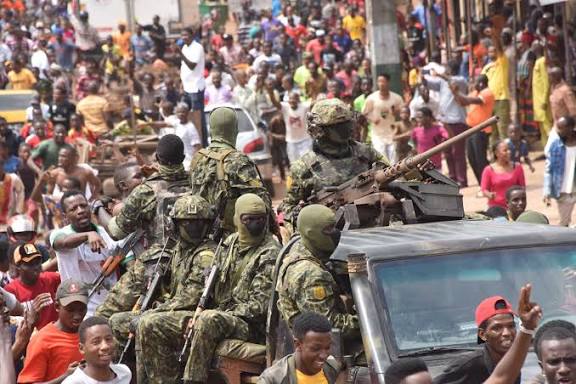
Fresh details have emerged regarding the government’s cautious public communication strategy following the recent uncovering of an alleged coup plot, with a senior legal luminary in President Bola Ahmed Tinubu’s cabinet reportedly advising authorities against publicly labelling the incident a “coup.”
PRNigeria gathered that this legal advice was issued shortly after internal intelligence operatives of the Defence Headquarters (DHQ) detected what was initially believed to be a coordinated plan by some military personnel and their civilian sponsors to destabilise the government.
The legal professional, described as one of the Presidency’s most respected advisers on constitutional and security matters, reportedly warned that prematurely labelling the incident a “coup” could have serious legal, psychological, and operational consequences.
“The counsel from the Presidency was very clear,” a security source told PRNigeria. “He said we must avoid sensational language until investigations are complete. Once you call it a coup, you set off panic, alert potential accomplices, and make legal proceedings much harder to sustain.”
The counsel stressed that investigators needed to gather incontrovertible evidence before any public pronouncement, noting that hasty declarations could compromise ongoing surveillance and prosecution efforts.
PRNigeria also learned that the caution was partly intended to prevent suspected collaborators—both within and outside the military—from fleeing once the story broke. Intelligence operatives were still tracing communication links and financial flows connected to the detained officers at the time.
The military was also keen to ensure the psychological and mental health of the detained personnel were thoroughly evaluated before concluding that the conspiracy was genuine, especially since many had a history of disciplinary issues.
“The military was handling the issue discreetly to protect institutional integrity,” an official explained. “The deliberate restraint was a strategic decision… The leadership didn’t want to create unnecessary tension in the polity or send wrong signals to our international partners.”
It was on this basis that the Defence Headquarters initially described the arrests as cases of “indiscipline” and “professional misconduct,” rather than linking them directly to any coup attempt. Insiders noted that this tactical press release, however, exacerbated public confusion before the media fully leaked the incident.
While the Federal Government and the DHQ have since reaffirmed their commitment to democratic governance, military and government officials have maintained silence on the full findings until the investigation reaches its legal conclusion.
By PRNigeria
By H. E. Mejeh
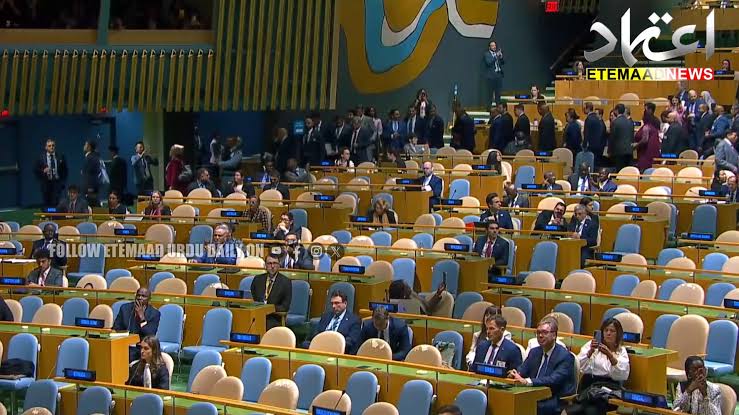
Yesterday in New York, Nigerian delegates staged a well-rehearsed walkout from the United Nations General Assembly as Israeli Prime Minister, Benjamin Netanyahu, took the podium.
Dozens of delegates left the hall in protest of Israel’s war in Gaza and Lebanon. Netanyahu, unfazed, called them “moral cowards” and continued his speech.
It was a powerful scene for international cameras. But for any Nigerian watching at home, it was a scene of profound irresponsibility and hypocrisy.
Our government is very good at performing morality abroad, while abdicating its primary duty at home.
What moral standing do we have to walk out on terrorism?
Israel says it is fighting terrorism – Hamas, Hezbollah, Iran. You may agree or disagree with its methods. But its government leaves no doubt that it will defend its citizens at all costs. Netanyahu told the UN that attacking Iran “was one of the easiest decisions I’ve ever had to make” because the security of his people was non-negotiable.
What is Nigeria’s doctrine on terrorism?
For over 15 years, Boko Haram, ISWAP, bandits, and kidnappers have turned the North-East, North-West, and North-Central into killing fields. Thousands of our citizens have been slaughtered, our schoolgirls abducted, our farmers displaced, our soldiers ambushed, killed. Yet the response of the Nigerian government has been press releases, committees, and condolence messages.
We walk out against alleged genocide in Gaza, but we have normalized genocide in Benue, in Plateau, in Southern Kaduna, in Zamfara, in Borno. A government that cannot protect its own people has no business performing outrage on the world stage.
The Lackadaisical War
1.No Clear Ideology: Israel has defined its enemy. Nigeria still calls terrorists “bandits,” “gunmen,” and “unknown gunmen,” as if naming them correctly would be too offensive.
2.No Accountability: When terrorists kill 40 citizens in a village, no security chief loses his job. When a school is attacked, no minister resigns. Failure is rewarded with tenure extension.
3.No Justice: Terror suspects are “repented” and reintegrated with stipends, while their victims rot in IDP camps without justice or compensation.
Which serious nation fights terrorism this way?
Our delegates can afford to fly Business Class to New York to walk out on Israel, but our soldiers in the trenches cannot afford basic drones, night-vision goggles, and timely air support.
The Truth
You cannot fight foreign injustice while you pamper domestic terror.
That UN walkout was not foreign policy. It was a distraction. A government that is failing to secure lives and property at home is trying to buy cheap moral credit abroad.
If our government had the same energy it used to walk out on Netanyahu to walk into Sambisa Forest, into the bandit camps of Zamfara, into the killer herdsmen hideouts in Benue, Nigeria would be safer today.
Charity begins at home. Security begins at home. Leadership begins at home.
Until we defeat the terrorists in Nigeria, we have no moral right to lecture any nation on how it defeats its own.
H. E. Mejeh Esq.
Lawyer with Conscience, Nurtured by Truth.

By Rufai Oseni
The Minister of Works is a key player in President Bola Ahmed Tinubu’s government who is not performing well to help Mr President win the hearts of many Nigerians ahead of the crucial January 2027 Election.
I have been a staunch supporter of President Tinubu even before the 2023 Presidential Election.
I strongly disapprove of the performance of Works Minister, Sen. David Umahi. His failure is causing huge embarrassment and hatred to PBAT because of the hardship brought upon Nigerians on federal roads despite the trillions of naira released for road rehabilitation projects by PBAT.
I doubt if since May 29, 1999 there has been any Nigerian President who has shown so much commitment and determination to fix federal highways than President Tinubu
Believe me, if I were the Minister of Works under a very patriotic, committed and determined leader like President Tinubu, I would have restored these critical federal highways within the last three years with such trillions of naira released for this purpose. I say this from my knowledge and experience as an Engineer who headed Delta State Government Direct Labour Agency (DLA), an Agency statutorily charged with the construction, rehabilitation and maintenance of roads and who in August 2011 was saddled with the tough task of urgently restoring hundreds of kilometers of roads in my State that had collapsed and became death traps leading to fatal accidents and deaths of our people and commuters.
In less than two years and with only about three billion naira released by the State Government, I reconstructed and rehabilitated these collapsed roads, constructed some new ones and also opened up many new roads in our rural communities to enable our farmers to commute easily to their farms and transport their produce to urban cities.
The records are there, he said, for anyone to go verify. He added that: Some of the asphalt paved roads I did over thirteen years ago are still standing firm today as if they were constructed just one week ago. I guarantee that these roads will last another ten years or more.
A patriotic and committed PBAT should not end up being daily abused by Nigerians who are rightly angry because of the hell they go through traveling on these roads; instead, Mr President should be receiving their praises and prayers if only his Minister of Works rightly utilized the funds released to him by the President to fix these roads.
I can tell Nigerians that President Tinubu is more pained and heartbroken than anyone else seeing reports of the hell Nigerians still go through traveling across our country on these federal roads.
Frankly if this disturbing situation continues on our federal highways I worry that Nigerians may express their anger against PBAT at the January 2027 Presidential Election except Mr President swiftly takes decisive action right now
The Minister’s Concrete Pavement Policy has been a disaster and a source for huge waste of public funds. It is ridiculous and makes no engineering and economic sense at all! What has Concrete Pavements got to do on Lokoja to Abuja, Abuja to Kaduna highways? I am surprised that some State Govs even adopted his Concrete Pavement Policy and wasting their States’ Funds.
It is wrong for the Minister to promise that within the next two weeks he will restore the collapsed sections of Benin-Agbor-Asaba and Benin-Sapele-Effurun Fedeal Highways. He knows that this is not possible in this peak of rainy season. Only palliative works can be done just to allow vehicles to maneuver.
It is also wrong for the NDDC to be directed to take over responsibility meant for the Ministry of Works and for which trillions of naira have been released to the Ministry. Statutory Funds approved and released to NDDC are not meant for such Federal Road Projects; they are meant to take care of very special and pressing needs of our people of the Oil and Gas Producing States of Niger Delta Region
By Philip Nyam
Last month, I was part of a delegation that participated in the Seminar on Young Leaders under the Global Development Initiative (GDI), organised by the University of International Business and Economics (UIBE), in Beijing, China. We came from diverse countries including Angola, Antigua and Barbuda, Gambia, Grenada, the Kurdish Iran, Nigeria, Sierra-Leone, Macedonia, and South Africa. Available records show that the UIBE has, since 2000, with the approval of the Chinese Ministry of Commerce, conducted more than 140 bilateral and multilateral training programmes, hosting over 350,000 participants.
The UIBE is by every standard a welcoming academic environment, a great citadel of learning renowned for building leaders for tomorrow. It is axiomatic that one of the problems plaguing developing or underdeveloped countries is poor leadership. This effort is to lay a solid foundation and bridge the gap.
The GDI, of course, is China’s ambitious proposal for worldwide development, launched by President Xi Jinping at the UN General Assembly on September 21, 2021. The idea is simple and urgent: Push the UN 2030 Agenda and the SDGs, but anchor them in what developing countries need most. Poverty reduction, food security, vaccines and health, financing for development, climate change and green development, industrialisation and the digital economy. In other words, the GDI is China’s call for a shared future, and it is a project that puts developing countries first.
So, for two weeks at UIBE, we lived inside that idea. Despite the fact that some of us were visiting China for the first time, we quickly integrated. We were taught China’s basic national conditions and achievements since reform and opening up. We studied how China is implementing the UN 2030 Agenda through poverty alleviation. We took lectures on China’s political system, the digital economy, artificial intelligence, intellectual property, Chinese history, Chinese culture, and the cultivation of young leaders under GDI. The participants were also exposed to the philosophy behind Chinese steady development: “If you want to be rich, build the roads”. The lecturers were professional and down-to-earth; the supervisors and volunteers were amazing, and the people were generally friendly and welcoming. And so, we read, digested, and assimilated what we were taught.
Between classes, China opened itself to us. We tasted our way through Beijing and Sichuan’s rich cuisine. In Chengdu, capital city of Sichuan Province, we watched Sichuan Opera face-changing until we couldn’t tell where the mask ended and the wonder began. We sat for tea and learned the quiet discipline in every pour. At the Panda Base, we met giant pandas and red pandas, black-and-white ambassadors that everyone falls for. We climbed the Great Wall and felt history under our feet. We had the rare opportunity of participating in the Fourth China International Supply Chain Expo, and we visited the Museum of Foreign Economic and Trade Relations.
It was indeed a masterclass in policy and culture. But some encounters don’t fit into a seminar schedule. They slip between lectures, between the Great Wall and a bowl of hotpot, and end up rewriting the whole trip for you. And the lesson I keep returning to came from a narrow lane lit by lanterns. It didn’t happen in a lecture hall; it happened in Kuanzhai Alley of Chengdu.
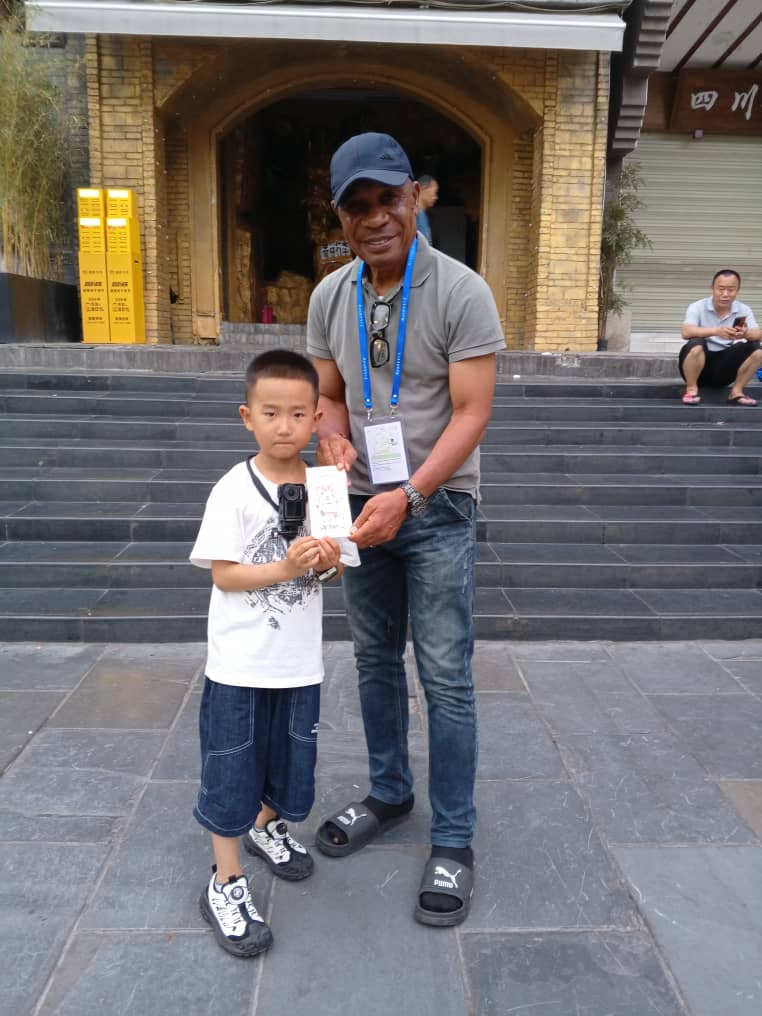
My encounter with a six-year-old boy named Eno. It was a rare encounter that has left an indelible impression on me. Kuanzhai’s Alley is Chengdu’s living room. Red lanterns, teahouse chatter, the smell of spice in the air. We were taking a walk into the Alley when a small voice stopped me. Eno was six. Bright eyes. Questions ready before his hello finished. “Where from? Your name? Do you love football?” At six, he spoke good English. He knew Cristiano Ronaldo. He asked about pandas and why only Chengdu keeps them so close. He asked about the ongoing World Cup in the USA, Canada, and Mexico. He talked like a child with maps and goals in his head, but he listened like someone older. No shyness, no demand. Just courage wrapped in courtesy.
Then came the gesture I did not expect. Eno pressed a small picture of a panda into my hand. “Wish you well,” he said, and gave it free. No blood, no prior knowing. A stranger’s hand, offering love without a sound. I felt it immediately. I had to look away for a second. Because tears rose unbidden. In that moment, Eno was not just a boy in an alley. He was the idea behind GDI made human: spreading love, uniting humanity, one small act at a time. To me, Eno is not just a little boy in an alley; he is China’s welcome, wide and deep.
That small panda picture now lives in my sitting room in Nigeria. I guard it. Some days it’s just paper and ink. Other days it’s a window back to Chengdu, to lantern light, to a boy who decided a stranger should feel welcome.
Eno taught me something the lectures circled but could not say as plainly: kindness needs no reason. It just begins. Love needs no reason to be sweet. If GDI is about building a more connected, equitable world, I saw it in miniature that afternoon. Policy, trade, and technology matter. So do pandas, football, and a child’s unguarded generosity.
I hope to reconnect with Eno someday. Until then, I’ll keep looking for that golden light in Kuanzhai’s alleys, and I’ll keep telling the story of the six-year-old who reminded a visitor from Nigeria that the soul of a city, a nation, can fit in one small hand.
…Philip Nyam participated in the just-concluded Seminar on Young Leaders under the GDI in Beijing.

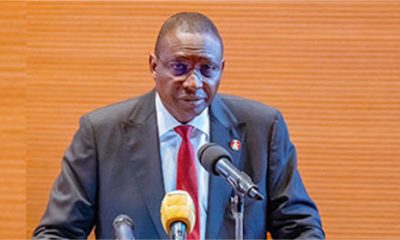

75% of Pilgrimage Funds Stolen, EFCC Boss Alleges
Spread the loveBy Nick Ibe, Abuja About 75 per cent of funds released by the Federal Government for Christian and...
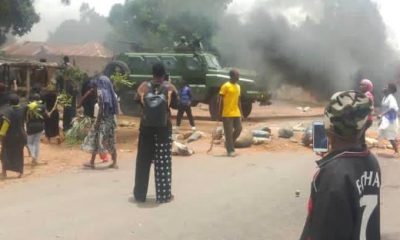

Plateau Women Protest, Block Highway over Killing of Three Vigilantes
Spread the loveBy Michael Lim, Jos The killing Friday of three vigilantes, including the community youth leader, during a night...

NNPC Ltd Welcomes $800m Ima Gas Final Investment Decision
Spread the loveBy Philip Nyam The Nigerian National Petroleum Company Limited (NNPC Ltd) has welcomed the $800 million Final Investment...
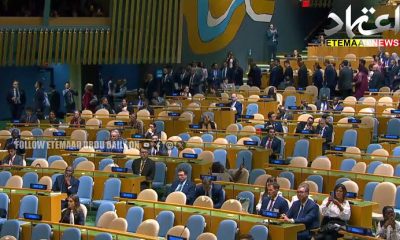

The UN Hypocritic, Irresponsible Walkout Of Shame: And Nigeria’s Terrorism at Home
Spread the loveBy H. E. Mejeh Yesterday in New York, Nigerian delegates staged a well-rehearsed walkout from the United Nations...
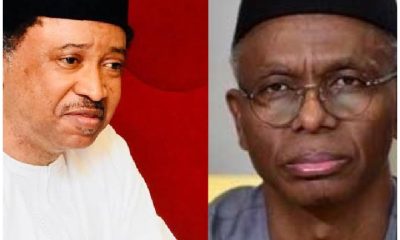

Shehu Sani: El-Rufai Never Did Enough to Stop Southern Kaduna Killings
Spread the love–He is paying price for misgovernance, irresponsibility By Isa Abdul, Abuja El-Rufai had no real commitment to stopping...


October AGLOFEST: To Converge Investors, Businesses, Cultural institutions, Creative Industry
Spread the loveBy Nick Ibe, Abuja October 2026 has been chosen by the Federal Government to launch the African Global...


US Sells ex-Gambian Dictator Jammeh’s $3.5m Mansion, Shares $2.5m to Victims
Spread the loveBy Son Tertsea The United States has returned about $2.5 million to The Gambia from the sale of...


Nasarawa Police Foil Murder Attempt, Net 4 Kidnappers, 2 Cultists
Spread the loveMichael Lim Four suspected kidnappers who allegedly plotted to kill their victim after collecting ransom have been arrested...
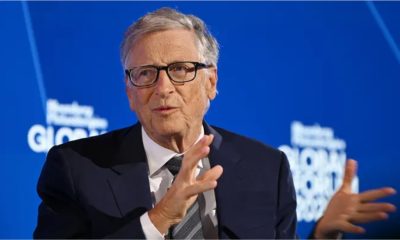

Bill Gates Warns AI Is ‘Powerful’ Enough To Destroy Humanity
Spread the love–There “absolutely” needs to be legislation regulating AI and law enforcement By Son Tertsea, Abuja Billionaire Bill Gates...
EFCC Chair: “I receive over 20,000 Corruption Petitions Yearly in Respect to Public Corruption
Spread the loveBy Son Tertsea, Abuja Fresh concerns have been raised over the scale of corruption in the public sector...