
Food and Agriculture
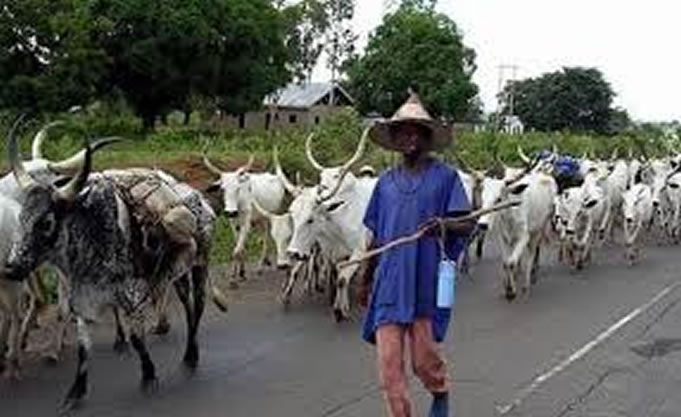
FG bans open grazing nationwide

By Aliyu Musa
As part of measures to stem the tide of the blazing insecurity across the nation, the Federal Government Monday November 24th, 2025 banned open grazing nationwide.
The decision, which marks a major shift in Nigeria’s livestock management system, was announced on Tuesday by the Minister of Livestock Development, Alhaji Mukhtar Maiha, during the inauguration of the first National Council on Livestock Development in Yola, Adamawa State.
Maiha explained that the Federal Government could no longer overlook the increasing violence linked to open grazing.
He noted that countless communities had suffered devastating losses—ranging from deaths to the destruction of farmlands and homes—because of recurring clashes between farmers and herders across different regions of the country.
According to him, the pattern of attacks and reprisals had become a national security threat demanding urgent intervention.
The minister described the new policy as a turning point, stressing that open grazing is now considered a capital offence under the revised livestock regulations.
He urged herders to adopt ranching immediately, pointing out that modern ranching practices are safer, more productive, and far more beneficial to both herders and host communities.
He emphasised that ranching would help reduce conflicts, improve the health and weight of cattle, and open doors to commercial opportunities within the livestock sector.
Maiha also highlighted the government’s broader economic vision for the livestock industry. He revealed that the ministry aims to position livestock as Nigeria’s second-largest revenue source after oil and gas.
With ongoing reforms already generating significant earnings, he projected that the sector could contribute up to $74 billion within the next five years.
He explained that the government is ready to support states and private investors willing to key into the new livestock development strategy.
In her remarks, Adamawa State Deputy Governor, Professor Kaletapwa Farauta, welcomed the Federal Government’s choice of Yola as the host city for the historic council meeting.
She said Adamawa remains one of the country’s largest livestock-producing states, making it a natural location for discussions on transforming the sector.
Farauta added that the new measures, if properly implemented, could stabilize rural communities that have endured years of conflict.
The newly inaugurated National Council on Livestock Development will serve as the central coordinating body for the reforms. It comprises directors of livestock services from all 36 states and the Federal Capital Territory.
The council is expected to oversee the rollout of ranching policies, monitor compliance, and recommend further measures to modernize the sector.

By Felix Umande, Makurdi
Benue farmers are facing significant financial losses due to plummeting prices of farm produce, despite soaring costs of inputs like fertilizers, herbicides, labor, and machinery.
Press icon survey indicates dampening morale among farmers who have embraced farming as a business. For instance, a Guma-based farmer, Mr. Gbamwuan Barnabas, who spoke to the press revealed that he invested over ₦1 million in rice and beans farming last season but only recovered about ₦500,000, prompting him to consider quitting the crops for cassava which is not capital intensive. He said the experience of his last investment has rendered him broken, shattered his expectations and weakened his hope.
Another farmer, Mr. Wayo Samson, who shared a similar experience told newsmen that he spent about ₦2 million on rice, cassava, beniseed and yam, but couldn’t recover half of what he invested. According to Wayo, with this experience, farm investment is no longer encouraging except for those who cultivate crops solely for consumption.
Another Makurdi-based farmer, Mr. Kwagh-hange Silas, who specializes in cassava is also facing losses of up to ₦11 million on 50 hectares of cassava investment.
According to Mr Kwagh-hange, he currently cultivates about 50 hectares of cassava where he invested about 26 million naira but due to the current selling price of #58 per 1kg as against the #300 per 1kg selling price in the previous years.
Kwagh-hange too is already at great lose as the entire farm’s net worth may not be up to #15,000,0000.
Kwagh-hange however faulted the low cost of farm produce in Benue State on market glut during harvest seasons, poor storage, and middlemen exploitation. He pointed out that places like Aliade, Katsina-Ala and Ukum, where many farmers harvest maize, yam, rice, and cassava at the same time, which leads to excess supply in markets such as Aliade Market.
“Another major problem is poor storage and processing facilities. Because farmers lack good storage, they are forced to sell immediately after harvest to avoid spoilage. Also, farmers in rural areas like Mbaivur, Mbakyan and Mbalom depend on middlemen who dictate prices. Low purchasing power of consumers and competition from imported food items, such as foreign rice, also contribute to the problem”, he said.
Speaking with Press Icon Newspaper correspondent, Felix Umande, in Makurdi, the Benue State Project Coordinator of Fadama Project, Mr. Kelvin Adugu Tarnongu attributed the low cost of farm produce recently to the massive import of some food items including Rice.
According to him, “When there is change in any Government policy, it is accompanied by a shift either ways. It could be positive or negative but that does not imply that the Policy is bad because there are short term and long term benefits of every shift in policy direction. Be that as it may, when there was hardship, the Federal Government decided to cushion the hardship by importing large quantities of rice and distributing it to the citizens including Federal and State civil services,” he added.
Adugu agreed further that despite the low cost of farm produce, the prices of agricultural inputs remained unchanged or are on the increase”. He noted that in order to also cushion the effect of high agricultural input prices, the government should in the next cropping season offer input to farmers at very subsidized rate to encourage them to sustain their agricultural production activities.
Mr. Adugu also advised farmers to always observe all the economic principles by adopting the best combination of inputs at reduced cost to ensure optimum benefits.
Food and Agriculture
AI-driven sustainable agri-finance and policy systems: Alawode and Nigerian spirit

By Philip Nyam
Agriculture is at the heart of our survival and economic well-being, providing food, jobs, and income for billions across the globe. However, this vital sector is facing mounting pressures from climate change, resource depletion, and unstable financial systems.
With rising temperatures, unpredictable rainfall, and changing ecological patterns, agricultural productivity has taken a hit in many areas, especially in developing nations. On top of that, inefficiencies in agricultural finance, policy execution, and global trade have widened the gap of inequality and jeopardized food security.
In light of these challenges, incorporating artificial intelligence (AI) into sustainable agriculture and agri-finance systems offers a groundbreaking opportunity. AI technologies can boost climate intelligence, enhance financial transparency, and streamline agricultural value chains, paving the way for a more resilient and fair global food system.
Ultimately, the convergence of AI, green finance and climate-smart policy design marks a transformative shift in the global agricultural paradigm. Despite these benefits, the use of AI-driven sustainable agri-finance and policy systems remains undersubscribed in Nigeria, primarily due to poor awareness.
It is commendable that an Osun-born agricultural economist, Mr. Adedapo Emmanuel Alawode along with his team of authors took a deep-dive to advance academic research, contributing to the body of knowledge within this area of human enterprise.
Alawode is an accomplished agricultural economist, data analyst and researcher with several publications in local and international journals. His work spans artificial intelligence, agricultural finance, climate resilience, and food security. According to Stats weekly report, Dapo has 3, 176 reads, 31 citations, with 96.9 RI score, which is compared to be higher than 63% of all ResearchGate members and higher than 98% of ResearchGate members who first published in 2023.
In his study on AI-Driven Climate-Smart Agriculture and Fraud-Resistant Green Finance, he explores how AI and digital technologies are transforming agriculture into a data-driven, climate-resilient sector. Using drones, sensors, and satellite data, AI systems enhance crop management, irrigation, and pest control. The research also addresses fraud risks in green finance, proposing AI-based verification and geospatial monitoring to ensure transparency.
Another work, Agricultural Subsidy Reforms and Their Effects on Smallholder Farmers, analyzes how reforming subsidies influences farmers’ income and efficiency. Drawing on data from Malawi, Nigeria, and Zambia, it finds that targeted, transparent subsidy systems—supported by extension services and credit—can improve productivity. However, weak administration and infrastructure remain key constraints.
In Integrating IoT and AI in Sustainable Agriculture, Alawode demonstrates how connected sensors, drones, and AI analytics can optimize resource use, reduce environmental harm, and strengthen financial accountability. Predictive modeling also enhances insurance accuracy and risk management. The study proposes a framework linking environmental sustainability with financial transparency.
His paper on Financial Derivatives and Risk Management in Agricultural Markets examines how tools such as futures and options help mitigate market volatility and stabilize prices. While derivatives support price discovery and liquidity, speculative trading and unequal access pose challenges. The study calls for inclusive regulation and financial education.
In The Role of Agricultural Value Chains in Enhancing Food Security and Economic Development, he explains how linking farmers to markets and processors boosts efficiency, reduces losses, and promotes inclusive growth. Upgrading value chains through infrastructure, digital platforms, and partnerships can foster food security, rural jobs, and gender equity.
His research on Climate Change Impacts on Agricultural Productivity and Rural Livelihoods in Sub-Saharan Africa details how erratic weather and heat stress undermine yields and livelihoods. It highlights adaptation through technology, indigenous practices, and inclusive policy, stressing gender and youth empowerment for climate resilience.
Adedapo’s article, Assessing Climate Change Impacts on Agricultural Productivity and Rural Livelihoods in Sub-Saharan Africa critically examines the multifaceted effects of climate change on agricultural productivity in SSA and its cascading consequences on rural household incomes, employment patterns, food systems, and migration trends, identifying gaps in current adaptation strategies and offering a roadmap for integrating climate-smart agriculture with broader rural development policies.
In another groundbreaking research work, he explores the heterogeneity in U.S. food consumption, with a focus on how households respond to changes in food prices across regions and other social demographics, such as SNAP and non-SNAP participants.
In a poster presentation titled Recent Trends in New Mexico Farm Income: The Significance of Government Payments, Adedapo examines trends of net farm income components from 2014 to 2020 (pre-pandemic) and 2021 to 2023 (post-pandemic) considering the COVID-19 pandemic. The study analyzes trends in the value of production, production expenses, and government payments, suggesting a meaningful effect of trade disputes, pandemic disruptions, and add-hoc payments on NM farm income.
He also worked on AI-Enhanced Scenario Planning for U.S. Food Trade Policy, with focus on how AI can strengthen trade policy amid global disruptions. Using machine learning and geospatial analytics, AI can forecast shocks, support rapid policy response, and promote equity. The study advocates ethical AI governance and collaboration to build resilient food systems.
The author’s body of work serves as a complex and detailed guide for transforming modern agriculture and finance, going well beyond what individual research papers can offer. At the heart of it all is a fresh blend of cutting-edge digital technology and essential economic policy changes, all spurred by the urgent challenge of climate change. The research clearly shows that building a climate-resilient global food system is tightly linked to creating fraud-resistant green finance and ensuring transparent governance.
Works like AI-Driven Climate-Smart Agriculture and Integrating IoT and AI in Sustainable Agriculture emphasize the practical role of technology, illustrating how tools like geospatial monitoring, sensors, and machine learning are pushing farming into a new era of efficient resource use and improved productivity. The immediate benefit here is a clear path toward environmental sustainability, along with a reliable way to verify land use and crop yields, which can significantly cut down on the misallocation and corruption often seen in agricultural subsidies and green investments. But the research doesn’t stop at technical applications; it also provides vital insights for systemic policy reform.
The thorough analysis of Agricultural Subsidy Reforms in Sub-Saharan Africa offers crucial evidence for policymakers, showing that effective interventions need to shift from poorly managed input-based support to more conditional, targeted, and inclusive frameworks that are closely tied to supportive extension services and access to credit. This push for transparency is echoed in the examination of Financial Derivatives and Risk Management, which, while recognizing the important role these instruments play in stabilizing unpredictable agricultural markets, also highlights the urgent need for stronger regulations to reduce speculative risks and tackle the unfair equity gap that often leaves smallholder farmers behind.
The cumulative impact of policies calls for frameworks that are not just efficient but also inclusive and fair at their core. This research portfolio’s most significant contribution lies in its emphasis on building resilience throughout entire ecosystems, stretching from local farms to global trade networks. The insightful evaluation of Climate Change Impacts on Agricultural Productivity in Sub-Saharan Africa offers essential regional context, highlighting the vulnerabilities faced by rain-fed farming. It champions integrated adaptation strategies that blend indigenous knowledge with modern technology, while also addressing the crucial roles of gender and youth in enhancing adaptation capacity.
This regional perspective is further enriched by the global initiative on AI-Enhanced Scenario Planning for U.S. Food Trade Policy, which raises the conversation to a level of national strategic preparedness. By introducing an AI framework to simulate and predict supply chain disruptions, the author lays out a blueprint for national policies that shift from merely reacting to crises to engaging in proactive, resilient planning.
Ultimately, by linking value chain improvements, subsidy reforms, digital integrity, and strategic trade planning, the author offers a thorough and actionable vision for transforming agriculture to withstand both current and future global and climatic challenges, with a particular focus on benefiting developing regions.
…Philip Nyam, Media expert and public affairs analyst writes from Abuja
Food and Agriculture
Nigeria making progress on security over Tinubu’s bold actions – Abbas… Distributes tractors, machines, tools to constituents

By Saint Mugaga
The Speaker of the House of Representatives, Hon. Tajudeen Abbas has said Nigeria is making progress on security due to the bold steps taken by President Bola Tinubu, and the resilience of the Armed Forces and the people.
Abbas said this on Sunday at the Renewed Hope Empowerment Programme and distribution of empowerment items in Zaria, Kaduna State.
While noting that empowerment is a pillar of national security, the Speaker explained that when communities are strong, criminals lose ground.
“When farmers have the tools they need, production rises. When young people have livelihoods, they turn away from violence. When women gain financial strength, families become stable.
“Today’s distribution is part of our answer to a national challenge. It is our local contribution to the wider effort to secure this country,” he said.
The two-day empowerment series began on Saturday with the groundbreaking of major legacy projects that will transform learning.
On Sunday, items distributed to farmers, entrepreneurs, artisans, and communities include 50 tractors, 92 combine threshers, 4,000 solar-powered water pumping machines, 1,920 grinding machines, 450 petrol-water pumping machines, 1,500 fertiliser applicators, 1,500 knapsack sprayers, 1,700 deep freezers, and 1,400 industrial sewing machines.
Another 25 SUVs were donated to traditional leaders.
The speaker said the government will continue “Placing tools directly in our people’s hands,” adding that “empowerment is most meaningful when it reaches families.”
He stressed that empowerment is most meaningful when it strengthens livelihoods and builds resilience from the ground up.
He said: “This two-day programme is part of our commitment to the Renewed Hope Agenda of President Bola Ahmed Tinubu, GCFR. It is a continuation of the vision to build prosperity from the bottom upward. It is aligned with our work in the House of Representatives. It reflects our belief that every community deserves visible development. Practical development. Development that improves daily life.
“Our nation still faces serious security challenges. Many communities across the North continue to confront threats. Farmers have been attacked. Traders have suffered losses. Families have endured hardship. Yet progress is being made. This progress stems from the bold actions of President Tinubu, the courage of our security forces, and the resilience of our people.”
He explained that the traditional leaders were recognised for being the custodians of culture and first responders in times of conflict. “They mediate disputes. They calm tensions. They safeguard the unity of our communities. These vehicles will enhance their mobility. They will strengthen their roles. They will help them reach communities more quickly. They will support their vital work in peacebuilding and conflict prevention,” he said.
The Speaker stated that the items represent a philosophy of development that places people at the centre. He added that they reflect the belief that economic growth must start at the household level, stressing that they show commitment to grassroots prosperity. “When we empower the family, we empower the community. When the community grows, the nation becomes stronger,” he said.
As the lawmaker representing Zaria Federal Constituency, Speaker Abbas emphasised that his work is part of a long-term vision.
He said while there was investment in education and skills on Saturday, he invested in livelihoods and empowerment on Sunday.
The Speaker said: “It is a complete strategy. It is a plan that addresses the needs of youth. It supports women. It strengthens farmers. It uplifts traditional leaders. It expands opportunities for traders. It touches every sector of our community.
“The Renewed Hope Agenda is about opening doors. It is about rebuilding trust. It is about restoring confidence. It is about showing that the government can deliver.
“It is about ensuring that every Nigerian feels seen and supported. What we are doing today is an expression of that national vision in our local community.”



Achado Kicks Off Constituency Education Scholarship With N20 Million in Benue
Spread the loveBy Felix Umande, Makurdi Member representing Gwer East/Gwer West Federal Constituency if Benue state, Arc. Dr. Austin Asema...

House wants improved funding for BPP…Warns Against E-Procurement Votes
Spread the loveBy Saint Mugaga The House of Representatives Committee on Public Procurement has called for increased budgetary allocation to...


Cybercrime: DSS to arraign El- Rufai next Wednesday
Spread the loveThe Department of State Services (DSS) will on February 25, arraign former Governor Nasir el-Rufai of Kaduna State...

“El-Rufai’s Admission to Tapping Ribadu’s Phone is a Serious Breach of National Security”–Arewa Think Tank
Spread the loveBy Our Reporter The Convener of Arewa Think Tank, Muhammad Alhaji Yakubu, has issued a statement on Wednesday...
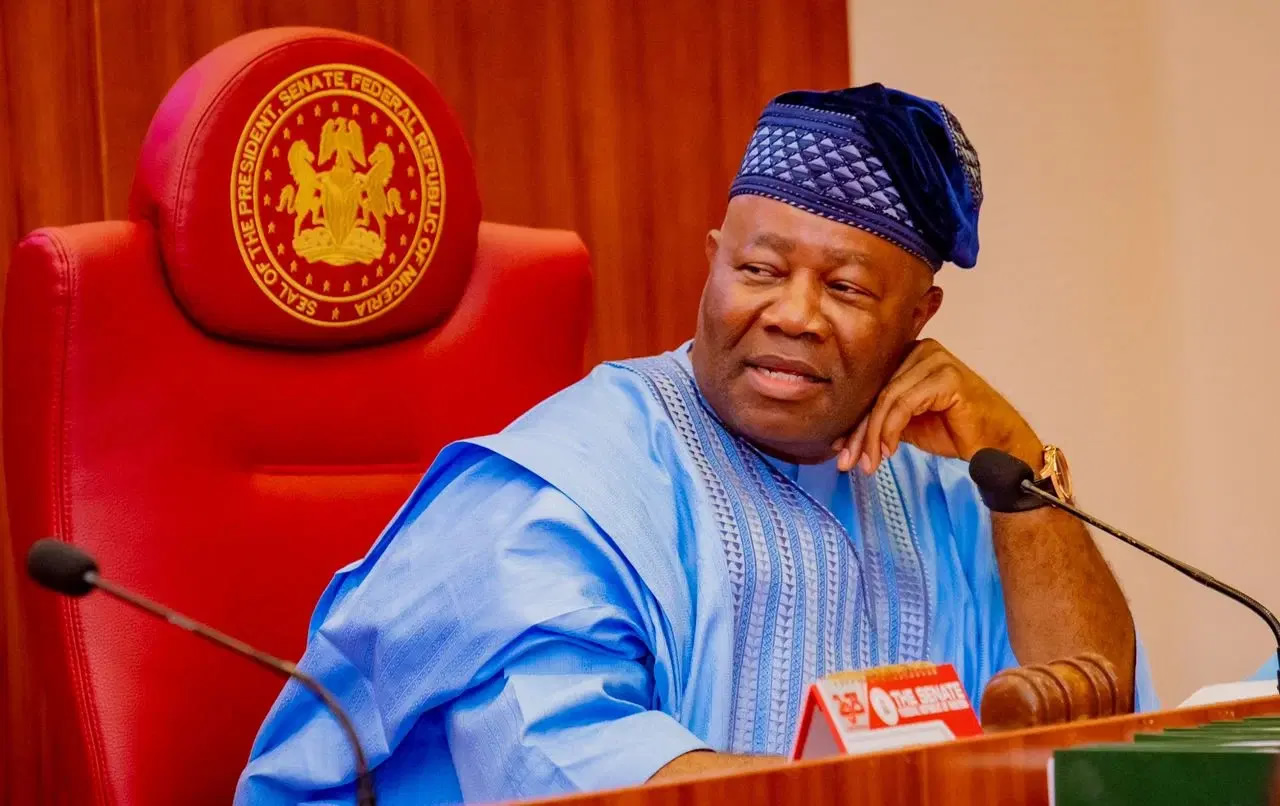
How Akpabio’s Leadership Secured Nigeria’s Electoral Future
Spread the loveIn the evolving story of Nigeria’s democratic consolidation, few issues have provoked as much intensity as electoral reform....

Akpabio hails Anyim at 65
Spread the loveBy Saint Mugaga The President of the Senate, Senator Godswill Akpabio, GCON has congratulated former President of the...
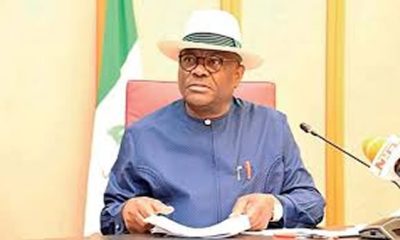

FCT Area Council Elections: Wike declares Friday Work Free, Restrict Movement From 8pm On Friday To 6pm on Saturday
Spread the loveBy Wumi Tewogbade, Abuja Ahead of the Saturday, February 21 Area Council elections in the Federal Capital Territory...


FCT Area Council Elections: AMAC PDP Chairmanship Candidate Steps Down For APC Candidate
Spread the loveBy Wumi Tewogbade, Abuja Less than 24 hours after the People’s Democratic Party (PDP) Chairmanship candidate for Bwari...


Khamenei: Regime Declares That It Wants To Destroy Israel & Is Investing Millions On Proxies” Kelman
Spread the loveRetired Israeli Air Force Major General Tal Kelman delivered a stark assessment of Iran’s priorities, stating that the...


President Tinubu Receives Professor Andrea Riccardo, Reaffirms Nigeria ‘s Commitment to Interfaith Dialogue and National Unity
Spread the loveBy Timothy Mvahan, AbujaPresident Bola Ahmed Tinubu, GCFR, has reaffirmed Nigeria’s steadfast commitment to interfaith harmony, national cohesion,...