
Foreign
Colombia Quake Claims 224, Injures 700


A magnitude 7.4 earthquake struck western Colombia leaving at least 224 people killed while rescue teams continued searching the collapsed buildings for survivors on Tuesday.
The earthquake struck at 7:34 am local time on Monday, with Cali, Pereira and parts of the Choco region among the worst affected areas.
Authorities warned that the death toll could rise as emergency teams reach more affected communities and assess the extent of the destruction.
Cali authorities reported 35 deaths, while officials in the Risaralda region, where Pereira is located, confirmed at least 40 deaths. Nine people were also reported killed in Choco, two in Caldas and one in Antioquia.
At least 700 people were injured in Valle del Cauca alone, according to President Abelardo de la Espriella, who declared a national state of emergency and said the government’s priority was to rescue people trapped under rubble.
More than 1,600 buildings were reportedly damaged or destroyed, including parts of a historic cathedral in Manizales.
Several upper floors of a hospital in Cali also collapsed, trapping some patients and forcing about 600 others to receive treatment outside amid the debris.
Rescue operations continued overnight and into Tuesday, with soldiers, firefighters, emergency workers, volunteers and relatives searching through collapsed buildings.
In Cali, volunteers formed human chains to remove concrete and other debris by hand, while rescue teams repeatedly stopped to listen for survivors.
Firefighters rescued two women and two children from a collapsed building, while rescuers in Pereira were reportedly in contact with a boy trapped beneath a bakery as cranes were used to remove unstable sections of the building.
Authorities have also deployed engineers, rescue workers and search dogs to Choco, where the scale of the destruction remains unclear because many communities are remote and difficult to reach.
The United States Geological Survey identified San Jose del Palmar, a community of about 4,800 people, as the epicentre. The area is about 400km west of the capital, Bogota.
Colombia’s Geological Service reported 21 aftershocks by late Monday and warned that further tremors were possible.
The rescue effort has been complicated by the geography of Choco, where some communities can only be reached by boat or aircraft.
The government has also imposed nighttime curfews in Cali, Armenia and Manizales, while hospitals in five cities were placed on red alert.
Operations at airports in Pereira, Manizales, Quibdo, Armenia, Cartago and Buenaventura were suspended temporarily to allow structural inspections.
Authorities postponed the Petronio Alvarez Music Festival in Cali, which was scheduled to begin on Wednesday, as well as professional football matches.
International assistance has also begun. The United States announced $15.5m in emergency aid for shelters, food and other relief, while the European Union activated its Copernicus satellite service to support rescue operations.
El Salvador and Mexico also offered to provide rescue teams, medical personnel, supplies and other assistance.
Rescuers are expected to face a critical window in the coming hours as they continue searching for people trapped beneath the rubble.



By Son Tertsea, Abuja
An Israel-bound plane co-pilot attacked the pilot midair, in what is believed to be a ‘suicide crash’ attempt.
The emergency landing on September 30 of a Tel Aviv-bound flydubai flight was due to a “terrorist” who wanted to crash the plane and kill Israelis, Israel’s far-right national security minister said.
One of the pilots of the Israel-bound flydubai flight diverted on Wednesday attacked his co-pilot and tried to crash the plane to kill everyone, a passenger said.
Passenger Miryam Shira Ohayon said the plane was “pretty much out of control” when the stabbing took place over Jordan on the flight’s path from Dubai to Tel Aviv.
“The co-pilot tried to murder the pilot and basically carry out a suicide attack on the plane,” she told reporters by speakerphone held up by her mother who was waiting at Israel’s Ben Gurion Airport near Tel Aviv.
“It was really on the way to crashing, and it was simply the resourcefulness of many people who took control of the co-pilot and neutralised him,” she said.
“There was also a doctor who gave first aid, and people who treated both of them. Other than the pilot, there were no injuries, but the bigger fear was really a crash, which is exactly what he was trying to do.”
Her mother, Yasmin Abukasis, said her daughter was on the flight to attend a service for her brother killed in the October 7, 2023 Hamas attack.
The daughter “thought they were going to die,” Abukasis told AFP, adding that one woman “went to the (cockpit) and saw a lot of blood”.
She said that two other pilots were on the plane and took charge, diverting it to Saudi Arabia.
[9/30, 8:56 PM] Wata Tachia, PhD: FG Carving 24-hour Power Zones: Lagos, Abuja, Kano, others
By Isa Abdul, Abuja
The creation of energy zones that ensure 24-hour power supply is the Federal Government’s new energy strategy. Already, it is engaging electricity distribution companies into the proposed 24-hour electricity supply to homes, businesses and industries in major demand centres across the country.
Consequently, the Minister of Power, Joseph Tegbe, held a closed-door meeting with the leadership of selected distribution companies to discuss the proposed initiative, which targets the Lagos axis, Abuja-Kaduna-Kano and Enugu-Port Harcourt corridors.
The meeting was disclosed in a statement issued on Wednesday by the minister’s media aide, Adeola Adelabu. It partly read:
“In furtherance of the Federal Government’s commitment to deliver reliable electricity to Nigerians, the Minister of Power, Joseph Tegbe, has held a strategic closed-door meeting with the leadership of select electricity distribution companies over the proposed Energy Zones, designed to deliver stable, 24-hour power supply to homes, businesses and industries in the country’s highest-demand areas, namely Lagos axis, Abuja-Kaduna-Kano and Enugu-Port-Harcourt.”
The initiative is designed to address electricity distribution constraints and ensure that power generated and transmitted to the national grid reaches consumers more reliably, particularly in areas with high commercial and industrial demand.
According to the statement, Tegbe said the challenges facing the power sector extended beyond electricity generation and transmission to the capacity of distribution companies to receive and deliver available electricity to end users.
“The constraint on the sector is not limited to generation and transmission but includes how much power is taken up and delivered at the distribution end.”
He said the proposed Energy Zones would help close the gap, unlock commercial and industrial demand, and improve the revenue and collection performance of distribution companies.
The minister also reaffirmed the Federal Government’s commitment to expanding electricity infrastructure in areas with high demand, noting that supply capacity must grow in line with the needs of Nigeria’s expanding economy.
The proposed zones are expected to focus on locations where reliable electricity is critical to businesses, manufacturing and other productive activities.
The statement did not provide a timeline for implementation of the proposed capacity of the zones or the specific infrastructure investments required to deliver round-the-clock supply.
The engagement, according to the statement, forms part of Tegbe’s commitment upon assuming office to adopt a disciplined and phased approach to addressing the sector’s longstanding challenges.
It also aligns with President Bola Tinubu’s Renewed Hope Agenda, which identifies reliable electricity supply as a key driver of economic growth, industrialisation and job creation.
The distribution companies and energy firm represented at the meeting were Abuja Electricity Distribution Company, Ikeja Electric, Eko Power, Ibadan Electricity Distribution Company and Sahara Energy Group.
[9/30, 8:57 PM] Wata Tachia, PhD: Tinubu Signs 2025 Budget Extension Bill, Implementation Now Till Dec 31
By Felix Umande
President Bola Ahmed Tinubu has signed into law the Appropriation (Amendment) (No.4) Bill, 2025, extending the implementation period of the 2025 budget from September 30, 2026 to December 31, 2026.
The presidential assent followed the swift passage of the amendment bill by both the Senate and the House of Representatives on Tuesday, September 29, 2026.
According to the Presidency, the extension gives Ministries, Departments and Agencies (MDAs) more time to complete ongoing capital projects and ensures that funds already appropriated are fully put to work for Nigerians without disrupting critical programmes.
President Tinubu commended the leadership and members of the National Assembly for their prompt consideration of the bill, describing it as a further sign of cooperation between the Executive and the Legislature in the service of the nation.
[9/30, 8:58 PM] Wata Tachia, PhD: Workers Commence Warning Strike October 2nd, If …
By Isa Abdul, Abuja
The Federal Government has been given an ultimatum over the rising cost of petrol, the demand for a wage award and the commencement of negotiations for a new national minimum wage by the Public servants under the Joint National Public Service Negotiating Council, JNPSNC, who have reaffirmed their September 30, 2026, ultimatum.
The JNPSNC, made up of eight public sector unions, issued a three-day warning strike notice to the Federal Government, beginning October 2, should the government fail to slash the price of petrol to N500 per litre, announce a wage award and introduce other measures to cushion the crushing hardship in the country.
Members of the JNPSNC include the Nigerian Civil Service Union; Medical and Health Workers Union; Association of Senior Civil Servants of Nigeria; and National Association of Nigerian Nurses and Midwives.
Others are the Amalgamated Union of Public Corporations, Civil Service Technical and Recreational Employees; Nigeria Union of Public Service, Reportorial, Secretarial, Data Processors and Allied Workers; National Union of Printing, Publishing and Paper Products Workers; and National Union of Agriculture and Allied Employees.
The council said it had mobilised public servants across the country for a three-day warning strike if the Federal Government failed to address the issues raised in its letter to President Bola Tinubu before the deadline.
Recall that the JNPSNC had, on September 21, written to Tinubu, demanding that the price of petrol be slashed to N500, the immediate announcement of a wage award and the beginning of negotiations for not less than N500,000 minimum wage from 2027, among others.
In a statement on Tuesday, September 29, 2926, leaders of the JNPSNC warned that should the issues of fuel pump prices and the wage award not be addressed by September 30, especially during the Independence anniversary speech by the President, public servants nationwide would commence a three-day warning strike beginning October 2, 2026.
The statement issued by the National Secretary of the JNPSNC and General Secretary of the Nigeria Civil Service Union, Gbenga Olowoyo, said the September 30 deadline remained sacrosanct, stressing that the concerns of Nigerian workers could no longer be ignored.
According to him, “The three critical issues requiring urgent attention are as follows: reduction of fuel price to N500 per litre. The Federal Government should take urgent steps to bring down the price of Premium Motor Spirit (PMS) to N500 per litre.
“This can be achieved through the provision of an intervention fund to address landing costs and support oil and gas operators.
“It is equally important for the Federal Government to ensure the sale of crude oil to the Dangote Refinery and operators of modular refineries at appropriate terms to facilitate increased domestic refining and help bring down the price of petroleum products.
“The current price of PMS, ranging from N1,450 to N2,000 and, in some locations outside major communities and cities, as high as N2,500 per litre, is unacceptable to Nigerian workers.
“The council maintains that the economic hardship occasioned by the high cost of fuel is placing the survival of Nigerian workers, their dependants and the general populace under severe pressure, making it increasingly difficult for Nigerians to live normal and dignified lives.
“The Federal Government should urgently approve a wage award for Nigerian workers to cushion the effects of the prevailing harsh economic conditions being experienced by workers, their dependants, and vulnerable Nigerians.
“The council believes that urgent action on this demand will further enable public servants to consolidate their loyalty, commitment and productivity within the public service ecosystem.”
Minimum wage committee
The workers asked the Federal Government to urgently establish a committee to facilitate negotiations for the new minimum wage.
“The Federal Government should urgently establish a tripartite committee to commence and facilitate negotiations for the new national minimum wage expected to become due in 2027.
“The Nigerian workers’ demand for the immediate constitution of the committee is informed by the need to avoid any administrative or procedural delay that could affect the implementation of the new National Minimum Wage once it is eventually negotiated and passed into law by the National Assembly,” the statement added.
Warning strike
“Consequently, the council states that failure by the Federal Government to take the necessary steps to address these issues on or before 30th September 2026 will leave Nigerian workers with no option but to commence a three-day warning strike, with effect from Friday, 2nd October 2026, to press home their demands.
“It is imperative to state clearly that the Independence Day address of the President of the Federal Republic of Nigeria should adequately address these critical issues.
“Failure to address the concerns raised, according to the Council, will attract the displeasure of Nigerian workers and their dependants, as well as other vulnerable Nigerians who continue to bear the brunt of the prevailing economic hardship,” the statement concluded.
[9/30, 8:59 PM] Wata Tachia, PhD: Ministry of Youth, Others Ranked Lowest Among MDAs
By Nick Ibe, Abuja
The Center for Fiscal Transparency and Public integrity (CeFTPI) has rated the Federal Ministry of Youth and Sports Development, Metallurgical Training Institute, Ontisha; Federal Polytechnic, Katungo, Gombe; Abuja Broadcasting Corporation; Ministry of Agriculture and Rural Development, and Hadeijia-Jama’are River Basin Development Authority as the lowest among the MDAs in transparency and accountability ranking.
Unveiled on Monday, 28th September, 2026, the report also showed others on the list including Federal Medical Center, Katsina, Federal College of Forestry Mechanisation, Afaka Kaduna state, FCE Kontagora Niger, Federal Medical Centre, Keffi, National Tuberculosis and Leprosy Training Center, Zaria, National Commission for Refugees, Migrants and IDPs and the National Cereals Research Institute Badeggi completed the list of bottom ten.
In the same vein, top on the list of MDAs with full transparency and accountability disclosures include: the Nigerian Investment Promotion Commission (NIPC), Independent Corrupt Practices and Other related Offences Commission (ICPC), Development Bank of Nigeria (DBN), National Oil Spill Detection and Response Agency and the Tertiary Education Trust Fund.
Others are the Nigeria Deposit Insurance Corporation, National Human Rights Commission, Bank of Industry, Nigerian Electricity Regulatory Commission and Nigerian National Petroleum Company Limited (NNPCL) completed the list of the top ten agencies
While commenting, the Director General of the Bureau of Public Service Reforms, Dasuki Arabi said the report is targeted at improving public service transparency and boosting confidence in public space.
[9/30, 9:00 PM] Wata Tachia, PhD: Amnesty: Release Five Opposition Politicians in Court over Anti-Tinubu T-shirts
By Michael Lim
Amnesty International has called for the release of five members of the opposition African Democratic Congress, ADC, in court in northeast Nigeria after being arrested for wearing “Tinubu Must Go” T-shirts.
Police arrested the men, aged between 21 and 44, in Borno state capital Maiduguri on September 25, accusing them of “criminal conspiracy, inciting disturbance, disturbance of public peace and thuggery”.
Amnesty International Nigeria said they were supporters of the opposition African Democratic Congress (ADC).
Police said the men printed the T-shirts with the “intent to cause breach of public peace”.
They appeared in court on Tuesday for the first time and were remanded in custody, with their trial continuing on October 6.
Elections in Africa’s most populous country are often marred by violence and allegations of malpractice.
Politicians have been accused of recruiting thugs to intimidate opponents and disrupt rallies or polling stations, but prosecutions for wearing anti-government T-shirts are rare.
“The authorities must immediately release all of those detained and drop any purported plan to put them through a sham trial based on bogus charges,” Amnesty said in a statement on Tuesday.
“The right to show and express political opinion is not exclusive to only one political party.”
[9/30, 9:01 PM] Wata Tachia, PhD: Stop Giving Judges “Greek gifts”: Retiring Supreme Court Justice Tells Politicians
By Isa Abdul, Abuja
Politicians have been cautioned against attempting to sway judicial officers with “Greek gifts” by a retiring Justice of the Supreme Court, Ibrahim Saulawa.
Justice Salawu who has retired from the bench on reaching the mandatory age of 70, insisted that action must be taken against the practice of politicians gifting cows and rams to judges, adding that he had previously raised the matter with the Chief Justice of Nigeria. In his words:
“Why should a politician send a ram, cow or other items to a Supreme Court Justice? It is unheard of in other countries.
“I am calling on the CJN to do something about this. I once raised the issue. It is demeaning and equally frustrating.”
Saulawa, who bowed out of the bench after a 44-year journey in the legal profession spoke at a valedictory court session the apex court held in his honour.
While urging judges across the federation to embrace a culture of integrity, honesty and morality, the retiring Justice recalled a case in which an influential person he later convicted had tried, before judgment was delivered, to influence him through proxies after he declined a gift of a car. He went down memory lane about the temptations judges go through saying:
“Prior to the case, the Alhaji had donated to me a brand new Peugeot motor vehicle, which I flatly rejected.
“He went to the extent of seeking the intervention of some prominent personalities, including the Emir, Alhaji Muhammadu Kabir Usman, the District Head, Alhaji Balan Goggo, et al., with a view to influencing me to accept the ‘Greek gift,’ but to no avail.”
Only six Senior Advocates of Nigeria (SANs) and 13 other lawyers attended the jurist’s valedictory session on Tuesday, in contrast to similar ceremonies in the past that attracted serving and former governors and other eminent personalities.
A representative of the Body of Senior Advocates of Nigeria (BoSAN), Mr. Damien Dodo, SAN, who declared that he was embarrassed by the poor attendance of lawyers, blamed it on miscommunication, saying it was not a reflection of the personality of Justice Saulawa, who, he said, served the country “with granite integrity.”
The outgoing jurist disclosed that, while in service, he had, in a bid to safeguard his principles, turned down several invitations to attend social gatherings.
“But some of my learned friends are always there, even if they didn’t need to be there,” he noted.
Recalling the crisis that led to the annulment of the June 12, 1993 presidential election, Justice Saulawa said that, as the Chief Registrar of the Court of Appeal at the time, he took steps to stem the tide of conflicting court orders which, he said, were orchestrated by the military.
He noted that while the FCT High Court issued two interim orders that restrained the Professor Humphrey Nwosu-led National Electoral Commission (NEC) from conducting the presidential poll and from announcing the results, some state high courts issued conflicting orders directing that the results be announced.
Insisting that the legal confusion was masterminded by the military, Justice Saulawa said he acted on the directive of the then President of the Court of Appeal (PCA), Justice M. Akanbi, by swiftly moving to Kaduna to take control of the appellate court’s registry.
“Appeals were filed at the Court of Appeal, Kaduna Division, by the NEC. As the Chief Registrar of the Court of Appeal, and the only spokesperson thereof, I flew from Lagos to Kaduna and took effective control of the Registry and supervised the registering of the appeals and the issuing of the appropriate court processes to the respective parties to the appeals.
“I equally issued a press release regarding the circumstances surrounding the two appeals and motions relating to.
“Later in the evening, I flew back to Lagos and briefed the PCA, Hon. Justice MMA Akanbi, a man of unquestionable integrity and unwavering courage. Upon my advice, the Hon. PCA called for an emergency meeting of the Hon. Presiding Justices over the crisis,” he added.
He said it was after every effort the military made to infiltrate the judiciary “was frustrated by myself and Justice Akanbi” that the then Head of State, General Ibrahim Babangida, annulled the outcome of the presidential contest on the excuse that he was saving “the judiciary from self-destruction.”
While faulting the military for engaging in “forum shopping,” which he said led to all the conflicting court orders, Justice Saulawa insisted the judiciary at that time deserved “a gold medal.”
“We actually did all we could do to frustrate the military,” he added.
Meanwhile, the CJN, Justice Kudirat Kekere-Ekun, in her address at the valedictory court session, extolled Justice Saulawa’s virtues, describing him as “a man whose life has been defined by service.”
The CJN recalled the time the retiring Justice was serving as the Presiding Justice of the Port Harcourt Division of the Court of Appeal, saying: “There was, during that period, a particular moment which has remained with me, because of what it revealed about the values we both held dear.
“A situation arose which called for a clear and principled response to an attempt, however discreetly made, to place a matter of personal benefit in the path of judicial duty.
“Without hesitation, we each took the position that the integrity of the judicial office admits of no compromise and that even the appearance of impropriety must be guarded against.
“What followed was a quiet but unmistakable affirmation of a principle that needed no elaborate expression: that the honour of the judicial office is preserved not merely in our judgments from the Bench, but also in the choices we make when no judgment is being written.
“I believe that moment deepened my appreciation of my Lord’s character and, in its own quiet way, helped to define the mutual respect and understanding that have characterised our relationship since,” the CJN added.
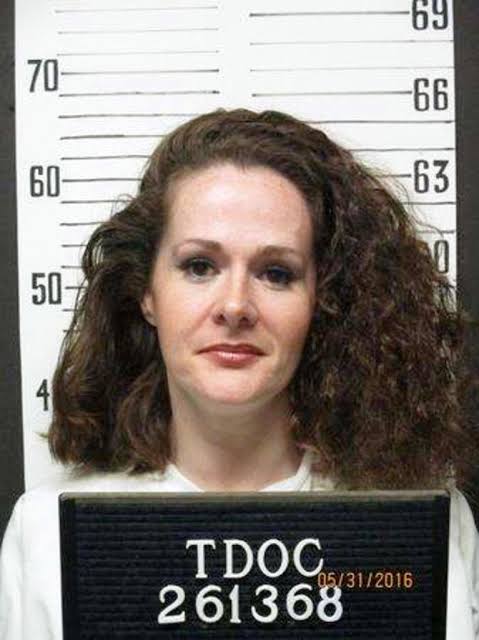
If the execution proceeds, Christa Pike would be the first woman to be executed in Tennessee in more than 200 years.
Tennessee Governor Bill Lee has denied a clemency request from death row inmate Christa Pike, who is scheduled to be executed by lethal injection on Wednesday.
Pike, now 50, was 18 when she and her then-boyfriend beat, tortured and murdered Colleen Slemmer, a 19-year-old they met at a job training camp for troubled teens.
She may have one last chance at halting her execution as her attorneys have filed a petition with the US Supreme Court hoping for a last-minute reprieve.
If it proceeds, Pike would be the first woman to be executed in Tennessee in more than 200 years. Only 18 women have been executed in the US since the 1970s, compared to 1,663 men.
Killer Christa Pike to be executed within days – but her defence say she’s a victim too
“After deliberate consideration of Christa Gail Pike’s request for clemency, and after a thorough review of the case, I am upholding the sentence of the State of Tennessee and do not plan to intervene,” Governor Lee said in a statement.
Pike’s legal team had filed the clemency petition earlier this month, requesting that her death sentence be commuted to life in prison.
Moving ahead with Pike’s execution puts Tennessee “on singular footing”, her attorneys said, as she would be the first person the state “executes in the modern death penalty era who was a teenager at the time of the offence”.
Attorneys Stephen Ferrell, Kelly Gleason and Randy Spivey said the governor’s decision “leaves unanswered vital questions about Tennessee’s execution protocol”.
“With this decision, the State of Tennessee is ignoring what both science and our legal system have decided: an 18-year-old brain is not an adult brain, and 18 is too young to face execution,” they said in a statement on Monday.
The murder of Colleen Slemmer created a media frenzy in Knoxville, Tennessee in 1995, when the 19-year-old was found with a pentagram – a symbol of Satanic ritual – carved into her chest.
Pike had accused Colleen of insulting her and trying to steal her boyfriend. Two other residents at the camp later testified that Pike had bragged about the murder before and after, and showed them a piece of Colleen’s skull.
A year later, she was convicted of first-degree murder and sentenced to death, while then-boyfriend Tadaryl Shipp- who was 17 at the time – was given a life sentence with the possibility of parole.
At the time of her incarceration, the 21-year-old was the youngest person on death row, according to the Tennessee Department of Corrections.
Pike is scheduled to be executed on 30 September after years of failed appeals.
Colleen’s mother has insisted she wants Pike’s execution to move forward so that her daughter “finally can be resting”.
Family handout Student Colleen Slemmer was tortured and brutally killed in the 1995.
Murder Family handout
Colleen Slemmer
Pike has a documented history of childhood sexual abuse, abandonment and neglect. Her lawyers believe that if she was found guilty of the same crime today as a teenager she would not receive a death sentence.
“The 18-year-old girl suffering from severe mental illness and near-debilitating trauma no longer exists,” her attorneys said. “Christa is a 50-year-old remorseful woman who understands her actions, receives proper treatment for her mental illness, and provides for and guides fellow incarcerated women.”
In the years since her sentencing, her defence team have uncovered details about her childhood that they say the jury never had the chance to consider.
Source: BBC

By Son Tertsea
The United States has returned about $2.5 million to The Gambia from the sale of a Maryland mansion linked to former President Yahya Jammeh, with the money set aside to compensate victims of his 22-year rule.
The funds are destined to compensate victims of Jammeh’s 22-year rule under The Gambia’s Victims Reparations Act of 2023.
US authorities seized and sold the property following investigations into corruption and money laundering.
Jammeh, who led The Gambia from 1994 to 2017, is implicated in widespread abuse, and the returned funds represent international cooperation to address such corruption.
US authorities ultimately forfeited and sold the Maryland mansion linked to former Gambian President Yahya Jammeh, generating $2,507,911.73 in net proceeds for return to The Gambia.
Property website Redfin records show that the mansion was sold for $2.65 million on June 6, 2023, and is now listed as off market.
The Maryland mansion is the best-documented foreign property linked to Jammeh, with the US Department of Justice saying it was acquired for about $3.5 million through a trust established by his wife, Zineb Jammeh, using alleged corruption proceeds.
The department said Jammeh and his wife used misappropriated Gambian public funds and other alleged criminal proceeds to acquire the property for their personal use.
The 11,318-square-foot mansion sits on 2.3 acres at 9908 Bentcross Drive in Potomac, Maryland, and includes a heated swimming pool, guest house and seven-car garage.
The sale followed a US civil forfeiture case in which prosecutors alleged that Jammeh obtained millions of dollars through the embezzlement of public funds and bribes from businesses seeking monopoly rights in sectors of the Gambian economy.
The Maryland property, however, represented only a fraction of the wealth investigators linked to Jammeh and his associates.
The Organised Crime and Corruption Reporting Project previously reported that Jammeh and his associates looted or misappropriated at least $975 million during his rule.
A Gambian commission of inquiry separately estimated that Jammeh personally stole about $363 million from the country.
Jammeh, who led The Gambia from 1994 to 2017, is implicated in widespread abuse, and the returned funds represent international cooperation to address such corruption.
Funds earmarked for Jammeh-era victims
Under an agreement between Washington and Banjul, the $2.5 million will be used to compensate eligible victims under The Gambia’s Victims Reparations Act of 2023.
The law provides a framework for reparations to people affected by human rights violations and abuses committed between July 1994 and January 2017, covering Jammeh’s 22-year rule.
Assistant Attorney General A. Tysen Duva of the Justice Department’s Criminal Division described the recovery as an “important example of international cooperation” aimed at preventing illicit proceeds from being hidden through the US financial system.
“Returning these funds forfeited from the former leader to compensate his victims demonstrates our commitment to recover funds taken in violation of the rule of law and to return them for the benefit of victims in a lawful process,” Duva said.
Homeland Security Investigations said the case also showed efforts to prevent foreign officials from using the US financial system to conceal proceeds linked to corruption, bribery and embezzlement.
Our findings show that, the $2.5 million recovered from the U.S. sale of former Gambian President Yahya Jammeh’s Maryland mansion is transferred directly to The Gambia’s Victims Reparations Fund. Under a formal agreement signed by the U.S. government and The Gambia’s Ministry of Finance, the money is distributed according to the legal frameworks established under The Gambia’s Victims Reparations Act of 2023.
Furthermore, the funds are shared out and allocated through the following process: Targeted Beneficiaries: The money is specifically earmarked to compensate eligible victims who suffered from human rights violations, corruption, and abuse of power during Jammeh’s 22-year rule (from July 1994 to January 2017).
The TRRC Identification Process: Rather than arbitrary distribution, the specific victims entitled to receive these funds are identified through the exhaustive findings of The Gambia’s Truth, Reconciliation and Reparations Commission (TRRC).
Regulated Accountability: To ensure the funds reach the intended victims and are not lost to further corruption, the agreement incorporates strict oversight measures managed by local civil society watchdogs—such as Gambia Participates and Transparency International—alongside government frameworks to ensure a transparent, lawful distribution process.

Nigeria @66: CAN Tells FG to Let Economic reforms Reach Every Nigerian Home
Spread the loveBy Nick Ibe, Abuja The Federal Government has been urged to ensure the country’s economic recovery translates into...

Nigerian Diplomat, Akpenpuun, Appointed CAF’s Coordinator for 2026 WAFU-B U-17 AFCON Qualifiers
Spread the loveBy Son Tertsea, Abuja The Confederation of African Football (CAF) has appointed a retired Nigerian elite football referee...

2027: APM Presidential Candidate, Makinde, Appoints Amos Dunia as Special Adviser, Public AffairsBy Saint Mugaga
Spread the loveThe Presidential Candidate of the Allied Peoples Movement (APM) and Oyo State Governor, Engr. Seyi Makinde, has appointed...


Pilot Attempts “Suicide Crash” With Israel-bound Plane: Overpowered by Passengers
Spread the loveBy Son Tertsea, Abuja An Israel-bound plane co-pilot attacked the pilot midair, in what is believed to be...


School Surprises Man, 98, With Diploma 80 Years after Dropping Out
Spread the lovePaul Little received his diploma from Dallas Center High School in Grimes, Iowa, more than 80 years after...


Education Ministry Introduces QR-Ranking, Approves 2026–2028 Textbooks
Spread the loveBy Nick Ibe, Abuja QR-based ranking codes have been introduced by the Federal ministry of Education to strengthen...


Press Iccon Independence Day celebrations
Spread the loveAll of us at Press Icon Media Ltd wish you, esteemed advertisers, friends, associates, well-wishers, readers and the...

Independence Day: Tinubu Declares End Of Emergency Reforms, Says Nigeria Now Entering Age Of Prosperity
Spread the loveBy Felix Umande President Bola Ahmed Tinubu has declared that Nigeria has passed the phase of emergency economic...
FROM REFORM TO PROSPERITY: INDEPENDENCE DAY ADDRESS TO THE NATION BY HIS EXCELLENCY, PRESIDENT BOLA AHMED TINUBU, GCFR, 1ST OCTOBER 2026
Spread the loveMy fellow Nigerians, Sixty-six years ago today, our flag was raised, for the first time, over a free...


Nigeria @66: Akpabio celebrates Nigerians’ resilience; urges love, unity, belief in the country’s futureBy Saint Mugaga
Spread the lovePresident of the Senate and Chairman of the National Assembly, Senator Godswill Obot Akpabio, GCON has congratulated Nigerians...