
General News
FROM REFORM TO PROSPERITY: INDEPENDENCE DAY ADDRESS TO THE NATION BY HIS EXCELLENCY, PRESIDENT BOLA AHMED TINUBU, GCFR, 1ST OCTOBER 2026

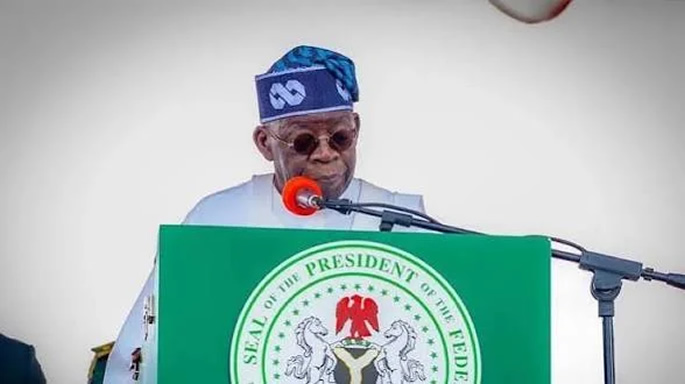
My fellow Nigerians,
Sixty-six years ago today, our flag was raised, for the first time, over a free and sovereign nation. Since then, we have journeyed together as one nation, bound by our collective trust in the great promise of Nigeria: that a country of our size, our bountiful resources, our cultural diversity and, above all, our extraordinary people can build a giant in Africa; that in this blessed and fertile land we can build a united, strong and prosperous nation; a land of regional authority and global consequence.
Our journey has not always been easy. In truth, it has generally been too hard for too many. We have known moments of great hope and periods of profound disappointment. We have endured war, military rule, economic crises, insecurity and political upheaval. Yet through it all, Nigeria, with the indomitable spirit of its people, has endured.
It has endured through the efforts of the farmer who rises before dawn to work his land. The trader who opens her shop each morning, hopeful for a productive day. The teacher who believes in the children entrusted to her care and the young entrepreneur who refuses to surrender ambition to circumstance. We are grateful for the men and women of our Armed Forces and security services who place themselves in harm’s way so that the rest of us may live in peace.
Through every difficulty, generations of Nigerians have continued to believe in one thing: that this country of ours will be better.
This faith, which sustains us all, is the inheritance of independence. Our founding fathers did not struggle merely for a flag, an anthem or a place among the nations of the world. Independence carried a larger promise: that Nigerians would have the freedom to shape their own destiny and build a nation capable of providing opportunity, dignity and a better life for its people. Sixty-six years later, Almighty God has made it our responsibility to deliver that promise.
Today, as we celebrate our independence, we must speak honestly about the journey so far, the choices we made, and the country we are determined to build from here.
For too long, the promise of Nigeria was undermined by choices that postponed difficult decisions and allowed deep economic distortions to grow.
By 2023, poverty was rising, and hope was nearly gone. The country’s situation was darker than ever. We had no choice but to act.
Nigeria was like a sick patient who receives the terrible news that he has cancer. His doctor explains that the treatment will be difficult and painful, but that it offers a strong prospect of recovery. The patient has a choice. He can begin treatment, endure its discomfort and fight the disease. Or he can ask only for morphine, dull the pain and leave the cancer to spread.
For too long, Nigeria’s leaders chose morphine while praying for a miracle that never came.
They focused on symptoms while allowing the disease to take hold deep within the fabric of our society. We spent enormous sums sustaining inefficient arrangements that were never intended to last. We hid from difficult truths and passed the consequences from one generation to the next.
When this Administration assumed office, we resolved to do things differently. We chose to excise the cancer. The reforms that followed were difficult. The side effects were real. Yet, we must never confuse the medicine with the disease.
Our reforms did not create the weaknesses in our economy. They confronted them. Now, as certain influential but regressive voices would have us abandon the treatment and return ourselves to the abuse of addictive subsidies, we must resist their siren song. We must remember why we began this journey and how far we have already come.
Three and a half years later, the evidence that Nigeria’s economic outlook has improved is undeniable. Our economy has grown by over 4 per cent this year. Both oil and non-oil sectors have contributed to the renewed period of stable growth.
Oil theft is down. Inflation has fallen substantially from its peak. Our foreign reserves have been rebuilt, our foreign exchange market has stabilised, and in 2025 this country recorded its highest revenue from non-oil exports in its history, exceeding $6 billion. This is real money being made by real Nigerian businesses.
These are not idle claims. International observers, journalists, NGOs and multilateral institutions can see the change. Each has concluded that our reforms have strengthened Nigeria’s economic stability and resilience. The private sector has long since delivered its verdict, and foreign direct investment continues to rise each year.
My fellow Nigerians, we have reached a turning point.
The emergency treatment is over. The foundation has been repaired. The central economic task before us has changed. For three years, our overriding purpose was to correct our nation’s course.
Now, our purpose is simple: shared and widespread prosperity.
When I speak of prosperity, I do not speak merely of a larger economy, abstract numbers or better statistics. I mean something much more personal.
I mean a Nigeria in which the farmer can cultivate his land safely, produce more at lower cost, and earn a decent return for his labour. A Nigeria in which factories have reliable power, businesses can obtain credit, and young people can find productive work. A Nigeria in which food and transportation are affordable, education is within reach, and hard-working families can look towards the future with confidence.
This is the promise we must now fulfil.
Our priority is to bring down the cost of living. We will achieve this by lowering the cost of producing and moving the things Nigerians consume.
We have the land and people to feed ourselves. My government is therefore focused on expanding mechanised irrigation and dry-season farming, improving access to seeds and fertiliser, holistically increasing mechanisation, and investing in storage and transportation. We are building and completing the roads, railways and ports that connect farms and factories to markets.
Our logic is simple. When a farmer produces more cheaply, when fewer crops are lost between the farm and the market, when a manufacturer spends less on electricity, when a truck reaches its destination faster, and when the business environment fosters fair competition, all those savings will ultimately find their way into the price of goods in the market.
But prosperity requires more than cheaper goods. It requires productive work.
Nigeria is a young country. Millions of young Nigerians enter adulthood every year with talent, energy and ambition. Our responsibility is to ensure that this great demographic strength becomes an engine of production rather than a source of despair.
We are therefore placing jobs, enterprise, and industrial growth at the heart of our government’s policies.
We will use our gas to power new industries. We will support businesses that work to bring factories back to life in our great industrial centres. We will expand digital connectivity into communities that have waited too long to participate in the modern economy. We will invest in the skills employers demand and support Nigerian businesses with the infrastructure and finance they need to grow.
I want to see more Nigerians making things. I want to see more Nigerian farms feeding our cities and supplying our factories. I want to see Nigerian businesses selling Nigerian goods to the whole world. I want young Nigerians building unicorns and creating opportunities for others here at home.
I am also conscious that millions of our fellow citizens cannot wait for tomorrow. Some Nigerian families still struggle today for the next meal, the next school fee, the next medical bill, or simply enough money to get to work. Their circumstances did not begin with the reforms of the last three years. Their struggle is the accumulated consequence of decades of low productivity, inadequate infrastructure, insufficient opportunity and institutions that too often failed those who needed them most.
We cannot erase in four years what accumulated over generations. But we can change its course. We can build an economy that steadily lifts people out of poverty while ensuring that those who remain vulnerable are not abandoned along the way.
That is why we are strengthening direct support for the poorest households and improving the National Social Register so that assistance reaches those who genuinely need it.
It is why the Nigerian Education Loan Fund is ensuring that the child of a low-income family need not surrender the dream of higher education simply because his parents cannot afford the fees.
It is why CREDICORP is giving working Nigerians access to consumer credit, allowing people to acquire vehicles, solar systems, digital devices and other essential assets without first having to accumulate years of savings.
That is why, working with our states and local governments, we will continue to strengthen primary healthcare, basic education, and the essential public services poorer Nigerians depend on most. Since 2023, we have paid salaries and pensions on time and in full. We have reformed the national pension program to benefit retirees and the vulnerable.
These programmes are not substitutes for prosperity. They are a bridge to aid our nation’s citizens on their path towards it. Our objective is not to manage poverty more efficiently.
We will defeat it.
It will take time. It will require discipline. It will require sustained growth year after year and the creation of millions of productive opportunities across our country.
But for the first time in decades, we embark on this task from a position of strength; with an economy whose fundamental direction has been corrected. We confronted the difficult choices we faced and have laid the foundations for lasting prosperity. Rather than fail the promise of a better future for our children, the time has come for us to build that future.
The age of reform has done its work. Now begins the age of prosperity. An age in which the promise of this great nation must finally become the lived experience of Nigerians from all walks of life.
We have travelled through difficult years together. We have made hard decisions together. And now, still together, we must build the country those decisions have made possible.
I believe deeply in what lies ahead.
I believe in the millions of ordinary men and women whose work, courage and determination have always been the true strength of our country. The road ahead will still demand much from us. But we travel it now with firm footing, a clear direction and renewed hope in our collective future.
Nigeria has corrected its course. We have passed through our own Red Sea. This is not the time to look back. Let us go forward together, with faith in ourselves, faith in our country, and faith that the sacrifices we have made will yield their reward.
The Promised Land before us is a Nigeria of abundance and opportunity; a nation where prosperity is broadly shared, where every child can dream beyond the circumstances of his birth, and where our country’s immense promise is finally reflected in the lives of our people.
Our destination is in sight. Our foundations are strong. Our direction is clear. So let us go forward. No looking back.
Happy Independence Day, my fellow Nigerians. God bless you all, and God bless the Federal Republic of Nigeria.
Bola Ahmed Tinubu, GCFR
President and Commander-in-Chief of the Armed Forces of the Federal Republic of Nigeria





–Suit ignites arrests
By Michael Lim, Jos
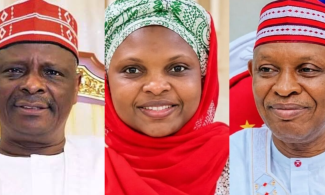
Zainab, daughter of the Nigeria Democratic Congress (NDC) Vice Presidential candidate, Dr. Rabiu Kwankwaso, has filed for divorce from Kano State governor, Abba Kabir Yusuf, as his second wife and marriage that is blessed with six children.
The papers for dissolution of the 20-year-old marriage were filed at the Upper Area Court sitting in Gudu, Abuja, 429 kilometres away from their Kano abode.
The process known in Islamic jurisprudence as Khul’i accords a wife the right to initiate and obtain a divorce, usually in exchange for the return of her dowry.
According to court documents with reference number CV/97/26, Governor Yusuf is expected to appear before the court on 17th November, 2026.
The couple married on 29th July, 2006, when Zainab was serving as an aide to her father.
In her particulars of claim, Zainab cited a breakdown of the marriage, saying it has been characterised by a persistent lack of reciprocal care, love, affection and emotional connection.
She said she had lost her love and affection for the governor and developed a deep-seated aversion to the marriage. She further expressed fear that continuing in the union would make it difficult for her to observe the limits prescribed by Allah regarding a wife’s obligations.
She consequently offered to refund the dowry paid by Governor Yusuf during their marriage for her to secure the dissolution of the marriage.
The governor was a close ally of Kwankwaso and both belonged to the New Nigeria People’s Party (NNPP), until late last year.
He formally resigned from the NNPP in January and joined the All Progressives Congress (APC) to the disappointment of the former governor.
Kwankwaso himself dumped the NNPP in March to join the African Democratic Congress (ADC) where he spent two months before moving to the Nigeria Democratic Congress (NDC).
Meanwhile, the divorce court move has led to the arrest of some of the wife’s security for reasons that are not yet clear.
By Michael Lim, Jos
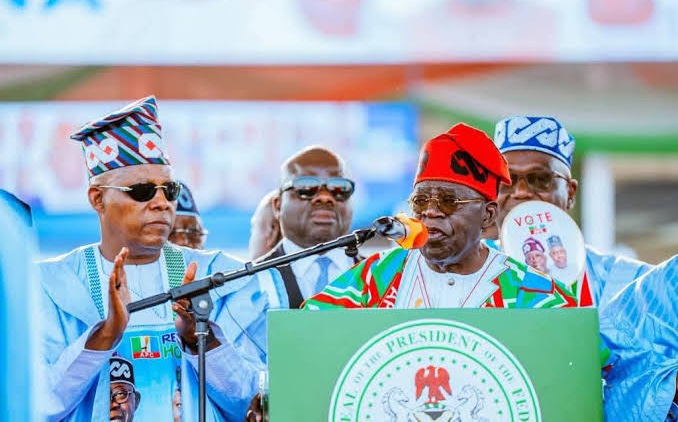
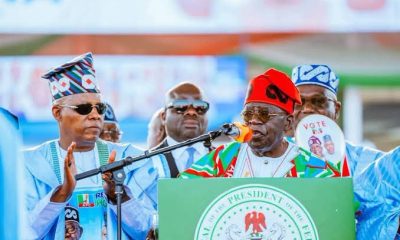
President Bola Tinubu at the weekend declared his government’s stern security measures against violence in the state to end the age-long communal attacks in Plateau State.
The president spoke Saturday at the All Progressives Congress (APC) Presidential Campaign Rally in Jos, the Plateau State capital, outlining fresh measures to address the prolonged insecurity in Plateau State, where recurring attacks have resulted in killings, destruction of homes and displacement of several communities.
Tinubu said he had directed security agencies to intensify operations against those responsible for violent attacks across the state. In his words:
“I have directed all the security agencies to take decisive action and sustain peace and stability on the Plateau.
“What we should be getting is prosperity, not havoc, not crisis. Our government is not elected to inflict wounds on one another or to bury people. We have to lift people up from adversity to prosperity.”
He said the security arrangements were particularly targeting threats confronting rural communities, where farmers and other residents have been forced to abandon their homes and livelihoods.
He announced that 1,000 forest guards were undergoing training for deployment, while surveillance cameras earlier promised by his government had already been procured to enhance intelligence gathering, early warning systems and rapid response to security threats.
“We are reinforcing security deployment and strengthening coordination and rapid response.
“One thousand forest guards are undergoing training right now. You will feel them. You will see them. You will feel secure in your villages and communities.
“The surveillance cameras are already procured, as I promised. They will further strengthen early detection and early warning security operations”.
The President promised rebuild communities ruined by attacks to facilitate the return of internally displaced persons to their ancestral homes.
He added, the Federal Government would work closely with Governor Caleb Mutfwang and other relevant stakeholders to rehabilitate affected settlements and restore normal economic and social activities. The president promised:
“I assure those displaced that we will rebuild your communities. We will rebuild your communities, and we will bring you back to your communities.
“To our displaced families, I say once again, government is working to see you return, to bring you back, to rebuild your communities.
“We will work with Caleb Mutfwang and other leaders to rebuild those communities and take you back to settle in the comfort of where you belong”.
Tinubu expressed condolences to families who lost loved ones in the attacks and residents whose homes and livelihoods had been destroyed.
“Crises and attacks have inflicted deep wounds on Plateau. Too many lives have been lost, homes destroyed, communities displaced.
“To every bereaved family, every survivor and everyone unable to return home, I offer my heartfelt condolences for your loss and pray that only God will console you”.
He further called on Plateau residents to live peaceful together and resist attempts to exploit ethnic, religious or political differences against one another.
.
He maintained, the state’s recovery from years of conflict depend on the willingness of its diverse people to live together in mutual respect, working towards common development objectives.
“We have to live together. We have to farm together. We have to build this Plateau and this country together. It is our responsibility to behave as brothers and sisters”, Tinubu counseled.
The President further assured Nigerians that the 2027 polls will be peaceful, warning individuals and groups plotting violence or intimidating voters to desist as his government will not tolerate any attempt to undermine the democratic process.
He also canvassed for votes for APC candidates at all levels: the presidential, governorship, National Assembly and state House of Assembly elections.
“APC, from top to bottom.”
Vice-President Kashim Shettima, on his part, credited the progress in Plateau and nationwide to Tinubu’s “transformational and courageous leadership,” calling the president a unique leader.
Shettima praised Plateau residents for their contributions to Nigeria in education, agriculture, the military, trade, culture and sport.
He asked voters to support Tinubu, Plateau Governor Caleb Mutfwang and other APC candidates in the 2027 elections.
By Michael Lim, Jos
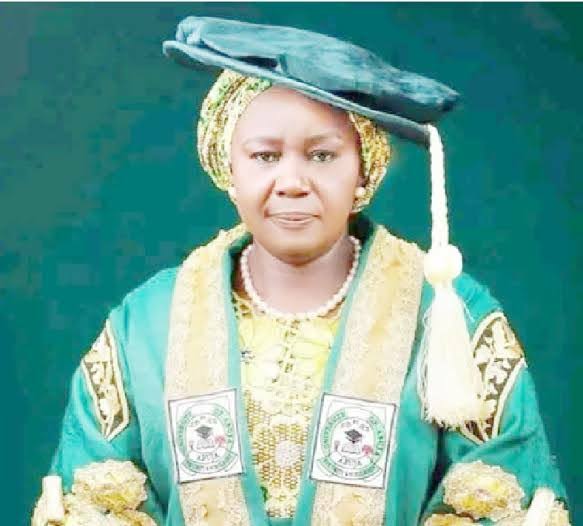
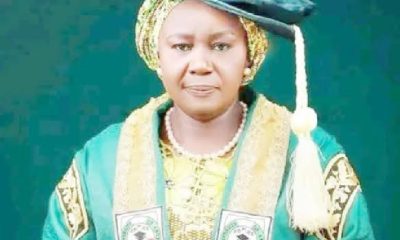
Professor Patricia Lar has been appointed vice chancellor of the .University of Jos (UNIJOS) and the institution’s 11th substantive vice-chancellor by the Governing Council. The appointment makes her the first woman to occupy the position since the establishment of the University.
The appointment is well-received by the university community.
Lar takes over from Professor Tanko Ishaya, whose tenure as vice chancellor ends soon.
Emmanuel Madugu, Deputy Registrar, Information and Public Relations, announced the appointment on behalf of the Registrar and Secretary to Council, in a statement.
According to the release, the appointment was announced on Thursday, November 12, 2026, by the Pro-Chancellor and Chairman of the University’s Governing Council, Senator Grace Folashade Bent, during a special meeting of the 15th Governing Council.
Bent charged the new appointee to remain focused and committed to her responsibilities. Senator Bent said this while presenting the letter of appointment to the incoming vice-chancellor,
Lar came first from a list of five candidates interviewed by the Governing Council on Wednesday.
Professor Sati Fwatshak and Professor Anthony Dakul came second and third, respectively.
The Person Prof Lar
Professor Patricia Lar was born on January 1, 1964, in Langtang North Local Government Area of Plateau State.
She is a Professor of Medical Microbiology at the University of Jos, a position she has held since October 1, 2015.
She attended Girls’ High School, Gindiri, before proceeding to Ahmadu Bello University, Zaria, where she obtained a Bachelor of Science degree in Microbiology in 1986.
She later obtained her Master of Science degree in 1989 and a PhD in 1998 from the University of Lagos, College of Medicine.
Lar also undertook postdoctoral research at the Institute of Human Virology, University of Maryland, Baltimore, United States, under the NIH-Fogarty Fellowship in 2005.
She joined the University of Jos as a Graduate Assistant in 1987 and rose through the ranks to become a Senior Lecturer in 2008, Associate Professor in 2012 and Professor in 2015.
In the course of her career, she has held several administrative positions in the university.
She served as Head of the Department of Microbiology from 2008 to 2010 and again from 2012 to 2017.
She was also Acting Director of Linkages from 2014 to 2017, Project Director of the Jos-Carnegie Partnership Project from 2008 to 2013 and a member of the university’s Senate from 2015 to date.
Her research interests include HIV, malaria and antimicrobial resistance. She has attracted several research grants, including a TETFund grant on malaria in HIV-infected pregnant women and a $1.8m Jos-Carnegie Institutional Capacity Strengthening grant.
She is also a member of several professional bodies, including the Nigerian Society for Microbiology, the American Society for Microbiology and the Parasitology and Public Health Society of Nigeria.
An alumnus of Ahmadu Bello University, Zaria, Lar was appointed Acting Vice-Chancellor of the University of Abuja, now Yakubu Gowon University, by President Bola Tinubu for a six-month tenure.
While speaking shortly after her appointment to the press, Prof Lar promised justifying the confidence reposed in her saying she would not disappoint the university community.
She assured of doing everything possible to ensure the success of the institution. In her words:
“My first gratitude goes to God Almighty for making this day come to pass.”
On her vision for the university, she said she would make it known after studying the university’s bulletin and working out the necessary modalities.
Some lecturers view Lar’s appointment as timely, expressing hope that she would take the institution to greater heights.
To Dr Longgul Makpring Dakwom of the Department of Theatre and Film Arts, a lecturer in the University, the appointment is well deserved.
He noted that Lar joined the university as a Graduate Assistant, rose through the ranks to become a full Professor.
Dakwom sees her as an experienced insider, who understands the university’s culture, strengths and challenges.
He said her recent experience as Acting Vice-Chancellor of Yakubu Gowon University, Abuja, had also equipped her with the necessary executive experience to lead UNIJOS.
“With her strong background in international linkages, having served as Director of Linkages and Collaborations and Carnegie when I was still a student union leader, I expect her to attract global research grants, strengthen postgraduate supervision and improve UNIJOS’s global ranking to become the second or best university in Nigeria and among the first 50 universities in Africa,” he said.
Dakwom, however, said the new Vice-Chancellor must maintain cordial relations with staff unions and address issues affecting workers.
“As a unionist, I trust ASUU, but I cannot say the same about a Vice-Chancellor. Hence, staff unions, including ASUU, SSANU, NAAT and NASU, will expect cordial and proactive engagement, transparency in the disbursement of earned allowances and resources usually fought for by our unions, as well as timely career progression.”
To Professor Ezekiel Major Adeyi of the Department of Political Science, University of Jos, the selection process was excellent.
He praised the outgoing Vice-Chancellor and the Governing Council for a smooth process that has produced the new VC. He added that expectations are high from the first woman VC. In his words:
“It was an excellent process, and thanks to the outgoing VC and the council for making it stress-free. She is the first woman to be appointed to the position. The expectations must be very high. People will expect extraordinary performance and the feminine touch in leadership.”
Adeyi said continuity would be important, particularly in sustaining ongoing projects and collaborations initiated by the outgoing Vice-Chancellor.
He maintained that Lar’s experience as Acting Vice-Chancellor in Abuja and her successful handling of sensitive positions at UNIJOS demonstrate her competence.
“She knows the university very well and will no doubt resolve so many issues requiring attention. Moreover, she is a team player, and I am sure she will work with those who contested against her and other good hands,” he opined.


Kwankwaso’s Daughter Files Divorce Suit from Kano Gov in Abuja
Spread the love–Suit ignites arrests By Michael Lim, Jos Zainab, daughter of the Nigeria Democratic Congress (NDC) Vice Presidential candidate,...

Tinubu In Jos: We are Taking Decisive Action Against Plateau Attackers
Spread the loveBy Michael Lim, Jos President Bola Tinubu at the weekend declared his government’s stern security measures against violence...

Prof Lar’s Appointment as First Female Unijos VC Triggers Hope, High Expectations
Spread the loveBy Michael Lim, Jos Professor Patricia Lar has been appointed vice chancellor of the .University of Jos (UNIJOS)...


The Disappearing Faces of Women in Nigeria’s Politics
Spread the loveThe number of women as candidates in the last primary elections of all the political parties in Nigeria,...
PERSPECTIVE: The Nigeria We Want To See is in Our Actions
Spread the loveBy Donald Aorkwagh Akule Yesterday, I met a Bolt driver named Aminu from Zamfara State. He told me...

ITF Jos Quits National Grid For Solar Power: the Way to Cleaner, Cheaper Power
Spread the loveBy Nick Ibe, Abuja The Industrial Training Fund, ITF, has started the process to permanently abandon the national...
PERSPECTIVE: The North, politics of power without development: Towards creating a paradigm shift
Spread the loveBy Umar Ardo There is a paradox Northern Nigeria can no longer avoid. After six decades of producing...

Abducted Abuja Farmer Dies in Captivity After Paying N56m Ransom
Spread the loveBy Nick Ibe, Abuja A farmer, Ibrahim Kadafa, popularly known as Ibro has been killed after kidnappers collected...
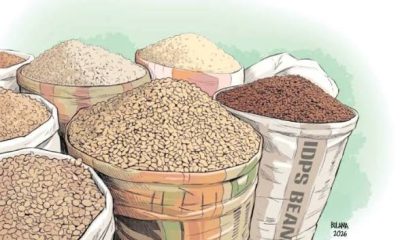

How Resilience and Necessity Forced IDPs to Build Abuja’s Largest Beans Market
Spread the loveBy Vincent Yusuf Ibrahim Philemon was compelled to abandon everything he had built in his youth and flee...


Youths Boo Tinubu at Abuja Mosque after Friday Prayers
Spread the loveYouths Boo Tinubu at Abuja Mosque after Friday Prayers By Isa Abdul, Abuja.Angry youths booed President Bola Ahmed...