
Food and Agriculture
Taraba Explores ADR for Sustainable Peace Between Crop, Livestock Farmers

By Michael Lim
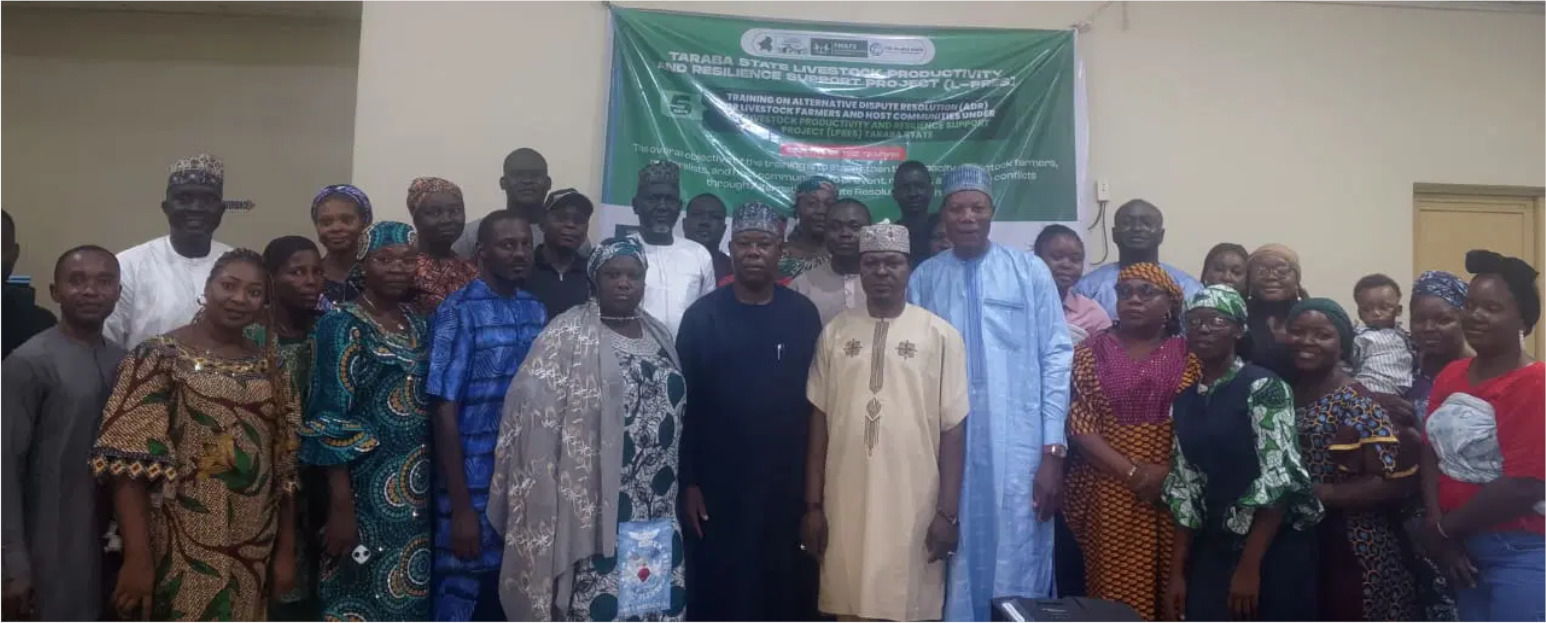
Conflict prevention between livestock farmers and host communities in Taraba State through the promotion of dialogue and Alternative Dispute Resolution by the Livestock Productivity and Resilience Support Project has been emphasised.
The initiative was highlighted at the opening of a five-day ADR training organised in Jalingo for livestock farmers, host communities, traditional and community leaders and other stakeholders in the livestock sector.
The training focused on peaceful, community-based approaches to resolving disputes before they escalate into violent conflicts, particularly disagreements over access to land and water, livestock movement and alleged destruction of crops.
Speaking during the training, the L-PRES State Project Coordinator, Hananiah Albert, said peace and stability were critical to the growth and sustainability of livestock production in the state.
Albert, who was represented by the project’s ICT and Communication Officer, Ezra Atimas, said livestock farming remained a major source of livelihood for many residents, stressing that disputes within the sector should be resolved through dialogue rather than confrontation.
He said ADR provided disputing parties with an opportunity to sit together, listen to one another and address their concerns with a view to reaching mutually acceptable solutions.
The coordinator also urged stakeholders to make greater use of existing community leadership structures, saying early intervention and effective communication could prevent minor disagreements from developing into serious conflicts.
Also speaking, a resource person and Dean of the Faculty of Social Sciences, Taraba State University, Dr Danjuma Yusuf, urged livestock farmers and members of host communities to make greater use of traditional and community leadership structures in resolving disputes.
Yusuf advised stakeholders to involve traditional rulers, religious leaders, women’s groups and livestock associations in conflict resolution, noting that their participation could promote dialogue, build trust and preserve relationships between farmers and host communities.
He stressed that ADR should not be limited to situations where conflicts had already erupted, but should also be used as a preventive mechanism for identifying and addressing grievances before they become violent.
The training is expected to strengthen the capacity of livestock farmers and host communities to peacefully manage disputes while promoting improved community relations, security and sustainable livestock development across Taraba State.





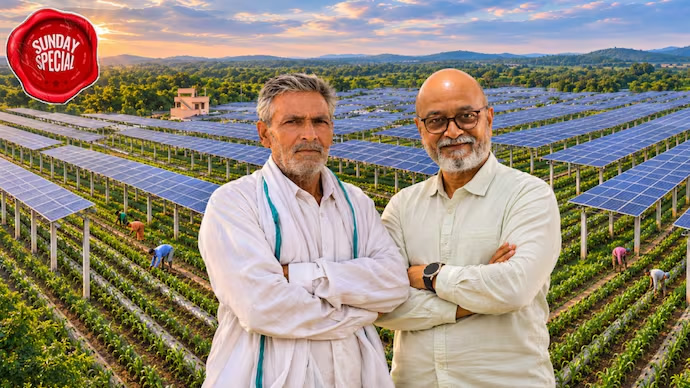
In India, a small but growing number of farmers are cultivating crops on their land while selling electricity generated by solar panels above.
The technological innovation, called agrivoltaics, is turning the same piece of land into two sources of income, with a Rajasthan farmer earning 10 times more than earlier.
Indian farmers are making this possible with crops beneath solar panels, and agrivoltaic plants on his farmland. is experimenting with crops beneath solar panels, and Anand Jain is exploring to add more agrivoltaic plants on his farmland.
A couple of years back, Kajod Mal Jat, a farmer from rural Jaipur in Rajasthan, having become an urjadata (energy provider), missed being an annadata (food provider). The solar panels he had put up on his field were generating electricity and money. But the land beneath them could no longer grow crops. Similarly, hundreds of kilometres away, in Madhya Pradesh’s Sagar district, innovator-farmer Anand Jain was determined not to let solar panels take away his joy of farming.
Today, both farmers are growing cash crops on their farms beneath and generating electricity from solar panels above, which they are selling to the government and earning big. Jat and Jain are annadatas and urjadatas at the same time. And, this has been made possible by a technology called agriphotovoltaics, or Agri-PV, or agrivoltaics, which combines farming and solar power generation on the same piece of land.
The technology, now taking its first steps on the ground in India, promises to revolutionise agriculture by boosting farmers’ incomes severalfold.
It’s already doing so.

By Lazarus Oko
By reducing farmers’ dependence on rainfall and attracting carbon credit financing for agricultural projects, the National Agricultural Land Development Authority on Tuesday revealed it is developing climate-smart farm estates powered by solar energy and electric machinery.
This was disclosed at a session on Green Industrialisation, Critical Minerals and Energy Security at the 2026 United Nations Climate Change Conference in Antalya, Türkiye, by the Executive Secretary and Chief Executive Officer of NALDA, Cornelius Adebayo, .
The CEO spoke during the session, which focused on climate-smart farming, stating that the agency was piloting a farm estate where land clearing would be done with electric bulldozers, while electric tractors were solar-powered. In his words:
“Our hope as an agency is to earn carbon credits from such farm estates and farm locations.
“We use zero-emission areas. We’re introducing electric bulldozers; we’re introducing electric tractors in that particular location. And we are introducing solar power irrigation for full irrigation of the scheme. Everything, every single thing within that facility is climate conscious. Every single thing. And that is our first location that is supposed to be a fully clean location.”
The agency’s plan comes as Nigerian farmers contend with increasingly unpredictable rainfall, which has disrupted planting seasons and exposed rain-fed agriculture to climate risks.
Adebayo said the experience of the current planting season had reinforced the need to move towards irrigation-based farming.
In his words, “The rains were not predicted in Nigeria. And the farmers- a lot of farmers that don’t do the planting yet were the lucky ones. The ones that did the planting were quite unlucky this year. So it shows that we need to move from rain-fed to climate-smart to irrigation-based farming. And this is one direction that Nigeria is going in headway.”
NALDA was working with investors to provide solar irrigation facilities to farmers, with users paying for the services based on the hectares cultivated, he disclosed. The model, he said, would make the facilities easier to extend to more farming communities.
However, the chief executive acknowledged that electric machinery and clean-energy systems cost more than conventional equipment. But the Bank of Industry and other development finance institutions were bridging the financing gap by providing capital at lower interest rates.
NALDA boss further stated that the agency is promoting an anchor-based farming arrangement designed to reduce the financial burden and production risks faced by smallholder farmers.
Under the model, farmers receive land, training, extension services, seeds, fertiliser and other inputs through an anchor investor. The investor also arranges mechanisation services and buys the produce after harvest, deducting the cost of services and inputs supplied.
Adebayo said the arrangement meant farmers would not have to raise all the capital needed to cultivate their land before planting.
“The person that is taking the risk for that expansion is the anchor, not the smallholder. So it’s just making everything easier for that smallholder farmer to scale up. If the crop fails, it’s really the anchor that takes the hit,” he said.
He added that agricultural insurance and risk-sharing institutions would provide additional protection, although the anchor investor would bear the largest share of the production risk.
The agency is also linking farm development to rural security, arguing that farmers working in organised clusters are easier to protect than those operating on scattered plots.
Adebayo said NALDA planned to use drones to monitor farm boundaries and detect threats around its estates, while security agencies could be deployed more effectively to concentrated farming communities.
He said the model was also intended to attract young people by providing housing, solar-powered electricity, clean water and recreational facilities within farm settlements.
NALDA was established in 1992 under an Act of Parliament to support agricultural land development, improve the use of rural land resources, expand food production and create employment.
The authority was reactivated in 2020 after years of inactivity, with integrated farm estates among its programmes.
In a separate technical presentation at the Nigerian Pavilion, NALDA outlined how its Green Hope Project was combining agroforestry, food production and youth participation to address environmental degradation and strengthen food security.
The CEO’s Special Adviser on Projects, Al-Mustapha Ibrahim, said the agency’s Green Hope Project had mobilised more than 400 volunteers to plant approximately 5,000 trees across five sites in Ogun, Plateau, Kwara states and the Federal Capital Territory.
The project covered 50 hectares and included mango, avocado and coconut trees intended to support both environmental restoration and future food production.
The sites include Odogbolu in Ogun State, where 1,000 trees were planted across 10 hectares with 80 volunteers; Barkin Ladi in Plateau State, with 500 trees across five hectares and 40 volunteers; and Oke Onigbin in Kwara State, where 1,500 trees were planted across 20 hectares with 120 volunteers.
The remaining locations are Iporin in Kwara State, where 1,000 trees were planted across five hectares with 80 volunteers, and the University of Abuja, where another 1,000 trees were planted across 10 hectares with 80 volunteers.
The presentation identified mango, avocado and coconut among the food-producing tree species planted under the initiative. Beyond restoring vegetation, the trees are expected to provide fruits for household consumption and commercial sale as they mature, creating additional income opportunities for farming communities.
NALDA said the initiative was designed to make environmental restoration part of agricultural production rather than treating tree planting as a stand-alone exercise. The trees are expected to improve land cover, protect soil, support biodiversity and strengthen the resilience of agricultural landscapes to climate-related pressures.
The agency further incorporated perimeter fencing to protect newly planted areas, stressing the need for site protection and post-planting management to ensure the trees survive and mature.
The project received support from the Agricultural Research and Training Institute, the National Council on Climate Change and the National Horticultural Research Institute.
The collaboration, according to the presentation, demonstrated the importance of partnerships among government agencies and technical institutions in addressing agricultural and environmental challenges.
The initiative also targets young people through practical participation in tree planting and environmental education, with more than 400 volunteers involved in the first phase, giving them opportunities to work with agricultural and environmental stakeholders and build experience in sustainable agriculture.
By Felix Umande
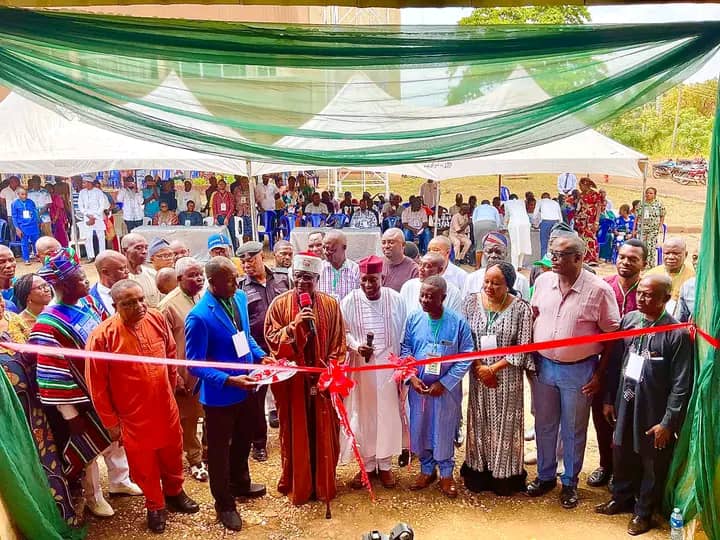
The Och’Idoma and Paramount Ruler of Idoma Kingdom, His Royal Majesty, Agabaidu John Elaigwu Odogbo, on Tuesday flagged off the office of the MATAN Food Bank Professional Association of Nigeria and its 21-Pillar Stakeholders’ initiative in Benue State.
The ceremony, which took place at the Bank of Agriculture, Makurdi on Tuesday, 3rd November 2026, was attended by government functionaries, traditional rulers, religious leaders and other stakeholders.
Speaking as both Och’Idoma and Patron of the Association, the monarch said food security must become a collective national priority, stressing that no society can attain sustainable prosperity when a significant portion of its population struggles to access adequate and nutritious food.
“Food is central to human existence, dignity, peace and national development,” he said, noting that Benue as the Food Basket of the Nation has the agricultural potential to transform its economy, but that potential must be translated into measurable productivity, income, employment and food availability.
The royal father charged the Association to move beyond meetings and ceremonial engagements to visible impact in the lives of people, measured by the number of families empowered, households supported, youths encouraged and jobs created. He also assured the leadership of his goodwill and support for initiatives that advance food security and sustainable agriculture.
He commended the Benue Chapter for adopting the 21-Pillar framework, describing it as a symbol of stability, structure and sustainability, but cautioned that the pillars must be developed into actionable programmes addressing real needs, including smallholder farmers’ empowerment, youth participation in agribusiness, women empowerment, community food banks, food processing and storage, agricultural financing, market access and skills acquisition.
The monarch further stressed the role of traditional institutions as indispensable partners in grassroots development and called for practical partnerships to encourage youths to embrace agriculture as a profitable venture.
Also speaking, the Special Adviser to the Benue State Governor on Internal Security, Chief Dr. Joseph Har, said without physical security, food security cannot be guaranteed. He noted that security challenges in the state have improved compared to the past and assured that government is determined to make the situation better.
In an interview with newsmen, the National Vice President, Contact, Mobilisation and Organisation of MATAN Food Bank Professional Association of Nigeria, Comr. Ikpe David Idah, said the event marked the official declaration of the Association’s office complex in Makurdi by its Patron, the Och’Idoma, and the kick-off of the 21 pillars in Benue as one of the pilot states in the North Central.
He listed some of the pillars to include MATAN Food Bank Foundation, MATAN Mobility, Community Food and Nutrition Resilience Initiative, Street Feeding, Pan-African and inter-regional commodity exchange, among others contained in the organisation’s profile.
According to him, the primary aim of the Association is to end hunger and ensure not just food sufficiency, but nutrition in quality, quantity and proportion, with laboratory testing and medical certification of food before distribution to the public.



ABU DSS student wins N1m prize at essay competition
Spread the loveA student of Demonstration Secondary School, Ahmadu Bello University, Adejoh Joshua Unekwu, has clinched a second position at...


Football Legend, Segun Odegbami, Attacked in Abeokuta, Escapes Death
Spread the loveBy Seyi Balogun, Lagos With no clear knowledge of the assailants or their motive, former Super Eagles captain...

FG, Chinese Firm Agree to Produce CNG Buses in Ibadan
Spread the loveBy Seyi Balogun, Lagos To introduce compressed natural gas-powered buses and establish a local assembly plant, to reduce...


JAMB UTME Free for Candidates with Disabilities, Fee Refund at Exam Centres
Spread the loveBy Isa Abdul, Abuja Special examination support has been established for candidates with disabilities, by the Joint Admissions...


Sharing Money is Digging Hole for Eco Woes, Can’t End Poverty – Fasua
Spread the loveBy Son Tertsea, Abuja A warning has been issued that distributing cash to Nigerians without addressing underlying economic...


“I conceded defeat to Buhari, a statesman that loved God, Nigeria.’ –Jonathan
Spread the loveBy Isa Abdul, Abuja The reason for conceding defeat to the late President Muhammadu Buhari in the 2015...


Secrets Behind Flamingos’ World Cup Win – Busari:
Spread the loveAfter guiding Nigeria’s Flamingos to a historic FIFA U-17 Women’s World Cup triumph, head coach Akeem Busari speaks...


Failure to Secure NNPCL GMD Job: EFCC Arraigns Woman Over N1.1 bn Fraud
Spread the loveBy Isa Abdul, Abuja One Halimat Adenike Tejuosho was Wednesday arraigned before a High Court of the Federal...

Let’s Honor All Pioneer Paramount Rulers Across Tiv and Idoma Lands.
Spread the loveBy Peters Ichull Today, the Tiv nation and the entire Benue family pause in solemn reflection to mark...


NKST Synod Says: “Alia Is A Talk-And-Do Governor”, Deserves Re-election in 2027
Spread the loveBy Felix Umande The NKST Synod has declared its support for the re-election of Benue State Governor, Rev....