
Business and Economy
Dangote IPO Subscription: Teachers, Artisans, Civil Servants, Students, Others Become Millionaires in 2 Years

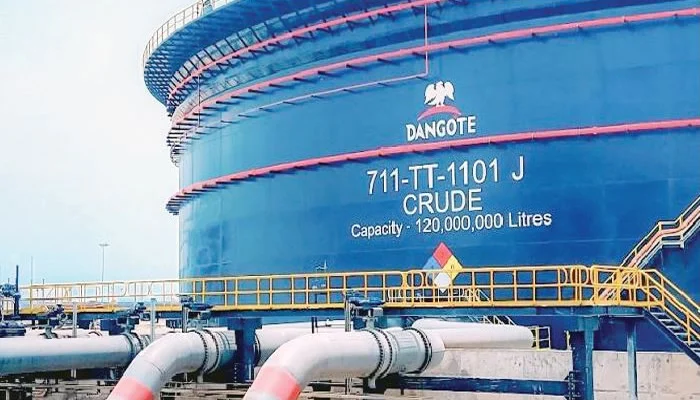
By Seyi Balogun, Lagos
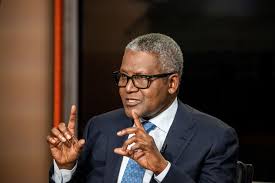
Those buy and hold shares in Dangote Petroleum Refinery and Petrochemicals could potentially become millionaires within one or two years, if the company’s share price rises significantly, according to the President of Dangote Industries Limited, Aliko Dangote.
In an interview with Arise TV Tuesday, Dangote stated this while discussing the refinery’s initial public offering on the Nigerian Exchange.
The refinery’s shares are being offered at N525 each, with Dangote expressing optimism that the price could eventually rise to between N5,000 and N10,000, depending on market forces.
Asked whether he expected the N525 offer price to rise to about N10,000, Dangote said, “I pray so, yes.”
Pressed on whether that was his prediction, he said, “Yeah, it can get up to that, you know, depending on where, you know. I’ve seen shares listed at 100; they go to 1,000.”
He added, “But our own, it will get to maybe 5, 10,OOO, you know. So, at least what you are looking at, if you invest something like maybe N100,000, you know, within one year, two years or so, you are talking about becoming a millionaire.”
Dangote urged investors not to sell their shares prematurely, saying they could benefit from dividends over time.
“So, why do you want to sell it? You remain there, you will be collecting money,” he said.
He also said investors who earned dividends in dollars could be better protected against naira depreciation.
“And, at a point when you have your kids studying abroad, even if there is devaluation of the currency, of the naira, you are safe.
“You are safe because your dividend, you will be collecting in dollars.”
According to PUNCH Online, investors flooded the Nigerian Exchange on Monday as the initial public offering of Dangote Petroleum Refinery and Petrochemicals attracted billions of naira in subscriptions within minutes of its opening.
The N2.15tn IPO, formally opened at the NGX trading floor in Marina, Lagos, comprises 4.1 billion ordinary shares offered at N525 per share.
The minimum subscription is 10 shares, valued at N5,250, with the offer opening on September 14, 2026, and is scheduled to close on October 13, 2026, subject to the terms contained in the prospectus.
The offer is open to retail, institutional and eligible African investors.
Dangote had urged Nigerians, including teachers, artisans, civil servants and students, to invest in the refinery, describing the offer as an opportunity for ordinary Nigerians and Africans to become part owners of the asset.
“The Dangote refinery IPO is more than an investment opportunity; it is an opportunity for millions of Nigerians and Africans to build lasting wealth through ownership of a world-class industrial asset. We have built a refinery that is already delivering strong revenues, solid profitability, and significant value to the economy,” he said.
Dangote said the IPO was also the beginning of a broader plan to list more companies within the Dangote Group.
“We fully share all our prosperity with the people. That’s why we call this a ‘People’s IPO.’ We know the journey has actually just started. It’s not only about the refinery,” he said.
He added that the group intended to list all its operating companies in the future.
“We, as a group, will list every single company that will operate. I don’t know about the others, but I know our own market cap, even at a 10 times P/E ratio by 2030, should not be less than $350bn,” he stated.
Dangote also said the Nigerian Exchange would serve as the primary platform from which the group could pursue dual listings on other global exchanges.
“From this exchange, then we can go to any other place. Nigeria and Africa are our base. We want to make sure that we join our continent,” he said.
He described the IPO as an opportunity for Nigerians to participate in the growth of a major industrial asset.
“We are not merely offering shares; we are offering Nigerians an opportunity to participate in a transformational chapter of our economic history. This is a strategic investment in an asset that is creating jobs, conserving foreign exchange, enhancing energy security and strengthening Africa’s industrial capacity,” he stated.
Dangote disclosed that the refinery generated approximately N19.47tn in revenue in the first half of 2026, while profit after tax stood at N2.55tn.
At the offer price of N525 per share, the refinery is expected to have an implied market capitalisation of about N65.22tn.
Meanwhile, a Bloomberg report said Dangote’s net worth could rise to as much as $58.2bn following the IPO, representing an increase of about $22.9bn from his estimated wealth of $35.3bn, according to the Bloomberg Billionaires Index.
The Chairman of NGX Group, Umaru Kwairanga, described the transaction as a defining milestone for Africa’s capital markets and evidence of the capacity of African capital to finance large-scale projects.
Lagos State Governor, Babajide Sanwo-Olu, said the IPO would create investment opportunities for a broad range of Nigerians.
“This transaction is changing perceptions about what is possible in Africa. It is creating opportunities for a broad spectrum of investors, from small business owners and market traders to institutional investors and technology entrepreneurs,” he said.
The Ooni of Ife, Oba Adeyeye Enitan Ogunwusi Ojaja II, also commended the accessibility of the offer, noting that the N5,250 minimum entry point allowed retail investors to participate in national wealth creation.
The Chief Executive Officer of Dangote Petroleum Refinery, David Bird, said the refinery had become the largest single supplier of refined petroleum products into Europe while maintaining safe, reliable and efficient operations.
Bird added that the company remained focused on achieving its Vision 2030 objective of becoming the world’s largest integrated refinery and petrochemical complex.



By Isa Abdul, Abuja
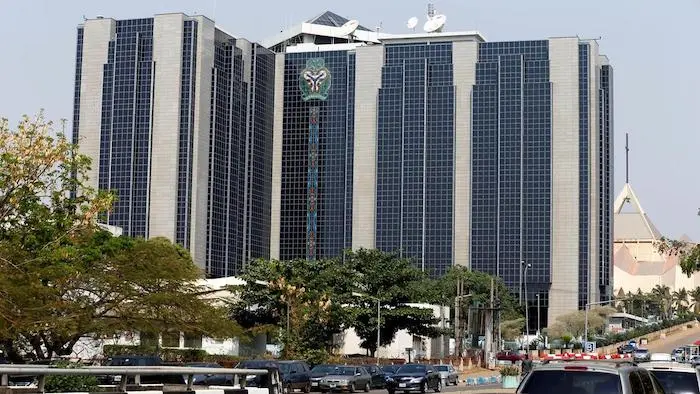
According to data from the Central Bank of Nigeria, Deposit Money Banks in Nigeria closed a net 476 branches and cash centres between 2022 and 2025, reducing their physical presence by 8.8 per cent in three yesrs.
CBN’s 2025 Statistical Bulletin shows figures for the Financial Sector with the number of bank branches and cash centres across the country declining from 5,410 in 2022 to 4,934 in 2025.
The decline occurred despite an increase in the number of banks operating in the country over the period, pointing to a gradual contraction in physical banking locations.
An analysis by The PUNCH showed that the number of branches fell by 37 from 5,410 in 2022 to 5,373 in 2023. The pace of contraction accelerated in the following year, with 229 locations disappearing as the total dropped to 5,144 in 2024. Banks closed another net 210 locations in 2025, bringing the number down to 4,934.
Consequently, about 92 per cent of the 476 net reduction recorded over the three-year period occurred in 2024 and 2025. The CBN explained that the figures cover branches and cash centres operated by commercial, merchant and non-interest banks. The data were sourced from the apex bank and the Nigeria Deposit Insurance Corporation.
The reduction in physical banking locations came even as the number of banks increased from 32 in 2022 to 33 in 2023 and 35 in 2024, before declining slightly to 34 in 2025. The number of branches operated abroad remained unchanged at two throughout the period.
A state-by-state analysis showed that Lagos recorded the largest decline in absolute terms. The country’s commercial hub had 1,602 branches and cash centres in 2022, but the figure fell to 1,532 in 2023 and 1,521 in 2024 before dropping further to 1,444 in 2025.
This meant banks closed a net 158 locations in Lagos within three years, representing a 9.9 per cent reduction. The state alone accounted for about one-third of the net decline recorded nationwide.
Despite the reduction, Lagos remained the dominant location for physical banking operations, accounting for about 29 per cent of the country’s 4,934 branches and cash centres in 2025.
The Federal Capital Territory also recorded a decline. The number of locations in Abuja stood at 400 in both 2022 and 2023 before falling to 391 in 2024 and 362 in 2025. This represented a net reduction of 38 branches and cash centres, or 9.5 per cent, over the three-year period.
Ekiti suffered one of the steepest contractions, with its branch network almost halving from 107 locations in 2022 to 57 in 2025, representing a decline of 50 locations or 46.7 per cent.
Enugu followed with a reduction of 44 locations from 162 to 118, while Oyo lost 41, declining from 237 to 196. Other states that recorded sizeable declines included Ondo, where the number fell from 127 to 105; Plateau, from 80 to 61; Osun, from 113 to 96; Cross River, from 83 to 67; and Rivers, from 290 to 275.
The decline was also evident in some of the major commercial centres in northern Nigeria. Kano increased its physical banking locations from 164 in 2022 to 175 in 2023 and 183 in 2024. However, the number fell sharply to 157 in 2025, leaving the state with seven fewer locations than it had three years earlier.
Kaduna followed a similar pattern, rising from 148 locations in 2022 to 156 in 2023 and 164 in 2024 before dropping to 146 in 2025.
Some states, however, recorded an expansion in their banking networks. Delta added 23 locations, with its total increasing from 173 in 2022 to 196 in 2025. Edo also rose from 155 to 165, while Jigawa increased from 31 to 37 and Kogi from 63 to 68.
The data further showed wide disparities in the distribution of physical banking infrastructure across the country. While Lagos alone had 1,444 locations in 2025, Yobe had 23, Taraba 26 and Zamfara 28. Bayelsa and Gombe had 31 each, while Ebonyi recorded 32.
For instance, Lagos alone accounted for more than 29 per cent of all branches and cash centres nationwide in 2025, highlighting the concentration of physical banking infrastructure in the country’s major economic centre.
The latest figures indicate that the contraction in the industry’s physical footprint has accelerated in recent years, underscoring how rapidly banking is migrating from brick-and-mortar to electronic platforms.
The PUNCH recently reported that the Central Bank of Nigeria called for greater adoption of alternative payment channels to expand access to financial services and stimulate economic activity.
Acting Director, Corporate Communications and Investor Relations Department of the CBN, Hakama Sidi-Ali, made the call at the 2026 CBN Fair in Lokoja, Kogi State.
Represented by Zubairu Salihu, Branch Controller of the CBN Lokoja Branch, she said alternative payment channels were particularly important for farmers, traders, small businesses and informal-sector operators who may have limited access to conventional banking services.
–Services include electric vehicle charging, liquefied petroleum gas, CNG, others
By Nick Ibe, Abuja
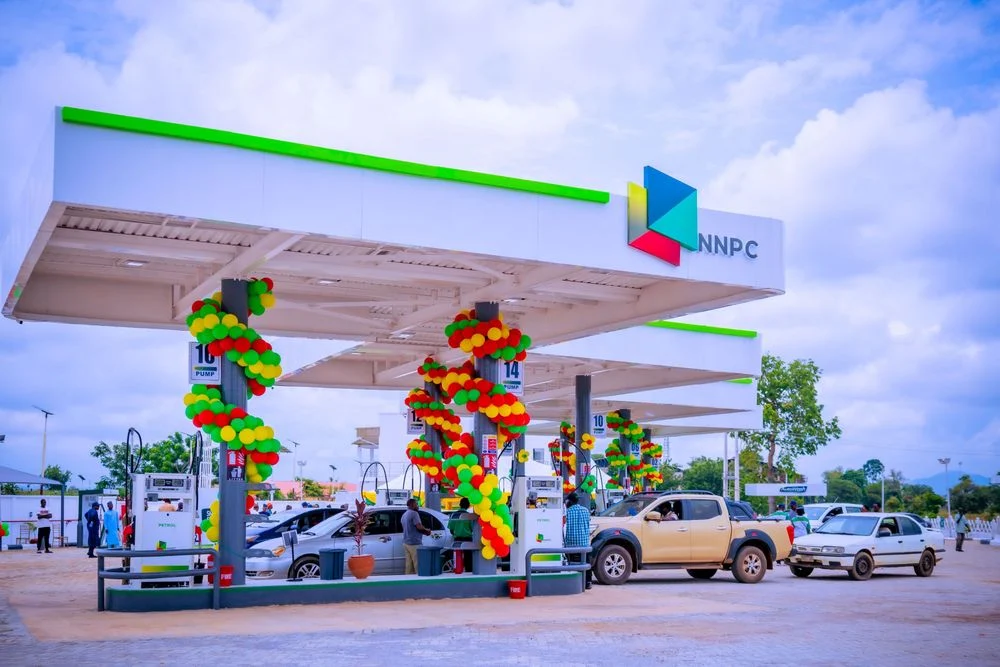
The Nigerian National Petroleum Company Limited has introduced the self-service fuel pumps at selected NNPC Retail stations, allowing motorists to dispense petrol themselves using a mobile application.
This, partly, is NNPC’s new policy to deploy between 50 and 70 smart, self-service stations across the country in the next six months.
This model is different from the old fashion pattern where attendants dispensed fuel to customers. The self-service model allows customers to select the amount of fuel they want, make payment through an app and use a code to activate the pump.
NNPC Retail shared the guide on its X handle on Friday giving motorists details of how to use the system.
The step-by-step guide on how to buy and dispense fuel yourself at participating NNPC stations:
Step 1: Motorists who want to use the self-service facility should first download the NRL Fuel App. Get the download link from the NNPC X handle.
Step 2: Open the app, tap Fuel Purchase, and select your fuel type.
Step 3: Browse the station list and choose an NNPC Retail station offering the self-service option.
Look for the green Self-Serve badge next to the station name. Tap it to select.
Step 3: After selecting the station, enter the amount you wish to spend on fuel. Review the quantity and price, then tap Pay from Wallet. The system will process the transaction based on the amount entered.
Step 4: Once the payment is successful, the app will generate a digital receipt. It contains your Order ID, your Self-Service Code, and a QR Code.
Step 5: At the pump, enter your 8-digit self-service code on the terminal and press the hash key. Once validated, pick up the nozzle and fuel up—exactly the amount you paid for.
NNPC Executive Vice President, Downstream, Mumuni Dagazau, said the new model was part of the company’s plan to transform conventional filling stations into broader energy and mobility hubs.
At the newly commissioned smart station on Bill Clinton Drive, Airport Road, Abuja, NNPC Retail Executive Director, Retail Operations and Mobility, Shettima Baba-Kukawa, said customers could complete transactions on their phones and dispense the exact amount of fuel purchased.
NNPC said the smart stations would combine conventional petrol sales with services such as electric vehicle charging, liquefied petroleum gas, compressed natural gas and other mobility services.

Maria Davidson: Building a Business
At Age 26
She Was a Construction Industry Outsider. Within 5 Years, Her Business Was Bringing In $5 Billion In Orders.
Maria Davidson got the idea for Kojo by showing up on construction job sites with pizza and donuts.
Kojo is the largest construction materials procurement platform in the U.S.
Its founder, Maria Davidson, was an outsider to construction when she decided to create the company.
Davidson relied on conversations she had with “thousands” of construction workers about pain points in the industry to create Kojo.
Eleven years ago, Maria Davidson was 23 years-old, living in London and working in an entry-level job as an investment banking analyst at Goldman Sachs when she went on vacation in California. While there, she had a chance encounter with Joe Lonsdale, co-founder of Palantir and founder of the venture firm 8VC. This meeting changed the trajectory of her life; in a single hour, he convinced her to quit her job, move to San Francisco and become his chief of staff at 8VC. Lonsdale saw potential in Davidson, and the 8VC team at the time was small.
“He gave me this pitch that Goldman is an incredible place, but you are a cog in a giant wheel,” Davidson tells Entrepreneur in a new interview. “There were so many industries that no one was paying attention to on the tech side in the U.S. He got me really passionate about doing something to help improve how those industries work.”
So, in 2015, at the age of 23, Davidson decided to move to the U.S. She knew precisely three people in California at the start, and lived on her friend’s couch for a while as she searched for a place to live longer term.
Maria Davidson. Credit: Kojo
Maria Davidson. Credit: Kojo
Working with Lonsdale at 8VC exposed her to “big, traditionally unsexy industries” full of broken workflows that affected millions of people but had seen little modern software. So at age 26, in 2018, she left 8VC to start Kojo, committing to spend the next eight years tackling one of the most complex of those industries: construction.
In a handful of years, Kojo was processing more than $5 billion in annual orders and became the largest construction materials procurement platform in the country.
How she got started
Davidson’s path to founding Kojo began far from Silicon Valley. “I got here in a very roundabout way, as many immigrants do,” she says.
She was born in the Soviet Union, then moved to Israel after the Soviet Union collapsed, without knowing a word of Hebrew. She then moved to London when she was 13 without speaking a word of English, completed school there and went on to study politics, philosophy and economics at Oxford. Her first taste of entrepreneurship was running the Oxford Union.
After college, she worked at Goldman Sachs for a couple of years. “I thought I needed to do the traditional route and follow the traditional wisdom,” she says.
Seeing a broken system
Davidson built Kojo around a simple question: why does it take so long, and cost so much, to build the physical world around us? She points out that the Empire State Building took only about 400 days to construct in the early 1930s, yet something as simple as a San Francisco bus lane took 27 years to complete. Projects, from hospitals to schools, are routinely late and over budget, slowing down city development.
Digging deeper, Davidson realized that for those in the trades, from electricians to plumbers to roofers, roughly 60% of costs are for labor and 40% are for materials. These tradespeople order more than $400 billion worth of commercial materials annually across the U.S. — yet the supply chain for those materials runs on phone calls, emails and text messages. There is little transparency about price, availability or inventory. Mistakes are common: wrong items arriving, double orders, materials lost in warehouses and field teams constantly chasing information.
As a complete industry outsider, Davidson started the process of identifying the problem by showing up on construction job sites with pizza and donuts to get workers to talk. She asked what slowed workers down, what caused delays and what they most hated doing.
“As I had thousands of conversations, I heard time and time again that materials were incredibly frustrating,” Davidson says. “That includes how people dealt with and tracked them. There was very little visibility into when materials were actually arriving and what materials had already been ordered.”
That feedback pushed her to focus on a real-world problem that construction workers felt every day.
Launching the product
The early years were spent simply figuring out what to build. Davidson founded Kojo in 2018, but didn’t bring a product to market until 2020. Kojo’s core product is a procurement platform that unifies field teams, office staff, and distributors in one place. It automates price and inventory comparisons, purchase order creation and communication.
Kojo officially launched the product in the summer of 2020, even though COVID hit and the team briefly feared the company was over. Instead, remote work and illness exposed just how risky it was to have purchasing data trapped in email inboxes and binders. Kojo’s sales took off as contractors sought centralized, digital visibility into materials.
Kojo grew astonishingly fast once it launched. In mid-2020, it was processing $0 in materials orders. Within five years, it was handling over $5 billion annually across more than 75,000 job sites, Davidson discloses.
She adds that the company saved over two million labor hours for construction workers last year alone, by cutting field workers’ time on phones and emails and eliminating about 75% of office teams’ manual data entry.
On the materials side, Kojo helps contractors save roughly 3% to 5% per order, according to Davidson.
The company raised a $7 million Series A in the fall of 2020, a $33 million Series B in the fall of 2021 and a $39 million Series C in the fall of 2022. In the fall of 2025, Kojo raised a $10 million Series C extension from Wesco, the largest electrical distributor in the U.S.
Early on, many investors told Davidson that construction firms didn’t want software. She relied on a handful of believers and small early checks to build a prototype. Only from the Series A funding round onward did strong metrics and customer enthusiasm start to flip investor sentiment.
Tactics for growth
Davidson says that the most important strategy for growth is building close relationships with customers from the very beginning. She understood from the start that construction is a word-of-mouth industry. The most important thing to do in the early days, she says, was to build an “extremely loyal” group of evangelists who loved the product and told everyone around them about it.
From that point, Davidson started hiring a sales team that was constantly on the phone with contractors, asking about their biggest pain points. The team tried to figure out the issues and send feedback to the product division, so that the product was constantly improving over time.
Through the process of scaling from zero to $5 billion, Davidson also realized that there are a lot of things that traditional investor wisdom tells you to do that you should actually not do.
She gave the example of investors urging her to hire seasoned executives with fancy titles after a fresh funding round. Instead of following that wisdom, she relied on internal promotions to make Kojo grow.
“What we found is being able to promote people from within allowed us to scale our teams much more effectively because those people knew how to do the work,” Davidson says. “They actually knew the product, they knew the customer.”
Davidson adds that it was important for her to approach a field like construction with a true beginner’s mindset. She didn’t have any preconceived notions about the way things worked and was able to assess the industry with a fresh pair of eyes.
She also emphasizes deep curiosity — when a process looks broken, there is usually a reason it evolved that way.
“If you want to solve it, you need to solve from a place of empathy and understanding why things are the way they are today,” Davidson says.
This article is part of Young Entrepreneur series highlighting the stories, challenges and triumphs of being a young business owner.



Dr Ngutor Anyam: 2027 Frontrunner For Benue North-East Senate Race Under SDP
Spread the loveBy Felix Umande, Benue Bureau Chief Ahead of the 2027 General Elections, Dr. Ngutor Anyam is a strong...


NUJ Ekiti Fights Quacks, Imposters as Journalists
Spread the love–Why it matters By Seyi Balogun Ekiti State Council of the Nigeria Union of Journalists, NUJ, has embarked...


“Help Us Fight Vandalism, Energy Theft” : Power Minister Tells EFCC
Spread the love–EFCC to incorporate Fraud Risk Assessment and Control to power projects By Son Tertsegha, Abuja The growing menace...


“Sasakawa Helped Us To Stand Again” — Benue Women Farmers Hail Foundation For Reviving Livelihoods
Spread the love–Cooperative Credits Intervention For 58-Hectare Farm Revival, Mechanization, Improved Seeds and Training By Felix Umande Farmers, particularly women,...


Let The Records Speak on Kadarko: An Appeal For Documentary Evidence In The Debate Over History, Identify And Traditional Authority
Spread the loveBy Peter Dooior, Kadarko The Alago Youth Movement in Nasarawa South Senatorial Zone should, with respect, exercise greater...


Dangote IPO Subscription: Teachers, Artisans, Civil Servants, Students, Others Become Millionaires in 2 Years
Spread the loveBy Seyi Balogun, Lagos Those buy and hold shares in Dangote Petroleum Refinery and Petrochemicals could potentially become...


“Secure Benue First”: Civil Society Groups Reject Proposed Ranches Without IDP Resettlement, Consultation
Spread the loveInsist on Compliance With Anti-Open Grazing Law, Demand End to Displacement Before Land Use Decisions By Felix Umande...


NEMA Teaches Disaster Risk Reduction in Benue
Spread the loveBy Vincent Tyosuugh The training for stakeholders in Benue State on the prevailing flood risks, preparedness and response...


Ajia At 47: No One Is Coming To Solve Nigeria’s Problem, Youths Must Rise — Ajia
Spread the loveIn The Kwara-born chieftain of the All Progressives Congress (APC) and security expert, Alhaji Ibrahim Mohammed Ajia, PhD,...


APC Govs Reject Wike’s Rainbow Coalition
Spread the love–Allege alliance would weaken Tinubu, APC candidates’ fortune at poll By Isa Abdul, Abuja The APC Governors’k Forum...