
Oil and Gas
Dangote Refinery Cries Foul As Imported Oil Gets 43% of Nigeria’s Market


–Condemns Issuance of More Licences Despite Ample Local Capacity.
By Son Tertsegha
Local regulators in the oil industry have been blamed by the Aliko Dangote refinery for issuing import licences, which alleged, caused the supply of about 43% petrol in the Nigerian market in July alone. The refinery further criticised regulators for continuing to license imports, arguing that surplus fuel it cannot sell at home is being forced offshore.
The complaint, issued Wednesday by the management of Dangote Petroleum Refinery and Petrochemicals, is based on a figure the company drew from its own market data.
This is coming weeks before an initial public offering for the refinery, which has been valued at about $40 billion.
With the import volumes difficult to forecast, the company said, it is holding inventory against a market it cannot size. It has carried reserved volumes since commissioning to guarantee supply, at a cost in storage, logistics and working capital, and said that in a market absorbing large licensed imports with no visibility on what follows, “it becomes commercially unsustainable to continue holding excess inventory indefinitely.”
Fuel the domestic market leaves unsold is being shipped out. Export volumes have risen in recent months to clear surplus and avoid storage and financing charges, the refinery said, describing the shipments as an operational response rather than any retreat from Nigeria.
The company also pre-empted blame for any shortage, saying disruptions caused by excessive importation and the resulting forecasting difficulties should not be laid at its door.
That account cuts against the reading given to export data the US Energy Information Administration published this week, which showed Nigerian seaborne petroleum product shipments averaging 561,000 barrels a day in the second quarter, against 79,000 a day in 2023. Exports accounted for 350,000 barrels a day of the total. Nigeria was importing close to 400,000 barrels a day of refined products before the plant opened.
The EIA offered no explanation for the growth, and the refinery cited none of the figures, but its statement describes a producer evacuating stock rather than one advancing into Europe and Africa from strength.
Timing gives the argument commercial weight. Dangote Petroleum Refinery has applied to Nigeria’s Securities and Exchange Commission for an offering of as much as $5 billion on the Nigerian Exchange in October, after a July private placement led by Africa Finance Corporation was oversubscribed 3.7 times. Investors weighing that offer are being told the domestic market is not fully available to the asset they are buying into.
The Lekki Free Zone plant, which began operating in 2024, lifted crude distillation capacity to 700,000 barrels a day from 650,000 after completing maintenance and expansion work in February.
Dangote asked regulators for transparency on import volumes, better market coordination and policies favouring local refining, foreign exchange conservation and greater domestic capture of the returns on Nigeria’s refining investment.
The development is creating complexities capable of throwing Nigeria into the fuel uncertainties of the past when local demand depended mostly on import.
Accusations and counter accusations intensify the rift. Dangote alleges continued giving of licences for oil import is harming its refinery by creating market uncertainty. Dangote argues, it is forced to ship excess petrol to other countries because storage tanks cost the company extra money in logistics and financing.
Consequently, the refinery has challenged the regulatory authority (NMDPRA) in court, arguing that the law says imports should only happen if local supply fails.
The Regulator and Marketers’ claim their action is to break monopoly. NNPC and fuel marketers argue that stopping all imports and relying on only one refinery is risky.
They believe open import licences protect the country from price spikes and sudden fuel shortages if the Dangote plant faces issues.





By Seyi Balogun
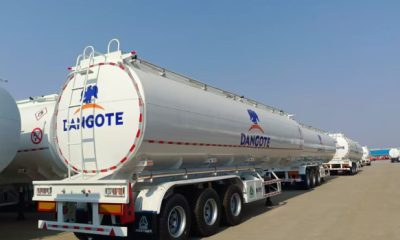
Major marketers have kicked against Dangote Petroleum Refinery’s non sale of Premium Motor Spirit (petrol) to importers of the product.
According to the refinery, importers of petroleum products into Nigeria will no longer enjoy sales from the Dangote Petroleum Refinery’s Premium Motor Spirit (petrol).
Reports confirm the refinery’s position saying it would no longer sell petrol to those blending Dangote fuel with imported grades.
“We are not selling petrol to those who are importing, since they are trying to blend our high-quality products with their ultra-low-quality imported products,” the source said, pleading for anonymity because he was not permitted to speak with the press.
Another source, according to the Punch said the refinery now prefers to sell its petrol to members of the Independent Petroleum Marketers Association of Nigeria, IPMAN, and others not known for importing. “We are selling to independent marketers and others who are not importing,” he stated.
It was learnt that the development informed why some marketers went to court to get an order that the Nigerian Midstream and Downstream Petroleum Regulatory Authority should continue to grant them import licences.
The marketers feared that they might be left stranded if they could not import fuel at a time when the Dangote refinery had halted petrol sales to them. Dangote had earlier threatened to stop transacting business with fuel importers, whom it accused of blending its Euro-5 petrol grade with imported grades.
It is concerned that such practices could make it difficult to distinguish between products supplied directly by the refinery and products subsequently blended or handled by third parties.
“It is difficult to understand why we would invest heavily in producing high-quality petroleum products for Nigerians, only for those products to be mixed with imported products of uncertain quality and the resulting product to be associated with the refinery,” the refinery said last month.
Reacting, importers and petroleum marketers kicked against the restriction of petrol sales to marketers who import petrol, describing the move as an attempt to block imports. The marketers also challenged the refinery to provide evidence that imported petrol entering the Nigerian market is below the required quality standard.
The marketers, who preferred not to be mentioned, accused Dangote of trying to prevent the importation of petrol. “We know what Dangote is trying to do. He is just trying to block imports,” one of the marketers said. The marketer argued that a company that sells petrol could not dictate whether a consumer should combine its product with fuel purchased from another supplier.
Using the example of motorists buying petrol from different filling stations, the marketer said Dangote could not prevent consumers from combining products sourced from different suppliers.
“For example, when you buy petrol from a TotalEnergies station, and you go down the road, and your petrol is almost finished, you then buy from MRS. Can TotalEnergies say you should not mix its petrol with MRS petrol? No, it can’t. I don’t understand the game that the Dangote refinery is playing,” he stated.
Another marketer also argued that the Federal Government had a responsibility to ensure an adequate petrol supply and protect consumers, insisting that imports remain necessary when domestic production drops.
Speaking, the National Vice Chairman of the IPMAN, Hamed Fashola, stated that the Dangote refinery is selective about who it sells petrol to because not all major marketers import.
“I don’t know how far that is correct; Dangote now sells to only IPMAN. I think somehow the information I have is that Dangote is selective about it, say those that are involved in importing. I think it’s not everybody that is importing,” he said.
Clarifying IPMAN’s purchasing position amid market competition, Fashola noted that independent marketers operate flexibly to secure the most competitive pricing, sourcing supply indiscriminately from both local refineries and importers.
“We buy our product anywhere we feel it is cheap. Anywhere we see the product, we go for it, both Dangote and the importers. We always go for the best price,” Fashola stated.
Meanwhile, the National Publicity Secretary of the IPMAN, Chinedu Ukadike, expressed the belief that the Dangote refinery is open to doing business with anyone.
Ukadike noted that independent marketers are ready to buy and sell petrol from all suppliers, stressing that they were not currently involved in importing the product.
While saying he would not know if importers truly blend Dangote’s petrol with imported petrol, he concluded that Dangote is in the best position to determine whatever it can do to discourage blending.
“I believe that the Dangote refinery is open for business and that it will continue to sell to marketers. The issue of blending, I cannot say yes or no, because I’m not part of those who are importing. Independent marketers are not importing yet; we are just marketers who buy and sell.
“So, if there is any measure to discourage adulteration of petroleum products by Dangote, I think the refinery and its experts know best. They know the best way to deal with that. But our own is to continue to buy and sell to marketers. If there is a way to discourage adulteration of petroleum products, I won’t stop Dangote from doing so,” Ukadike added.
Oil and Gas
NNPC Retail Gives Customers ₦66 Off Every PMS Litre…As Independence Anniversary Promotion Opens at Mega Stations
By Aliyu Musa
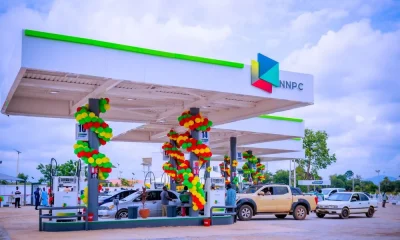
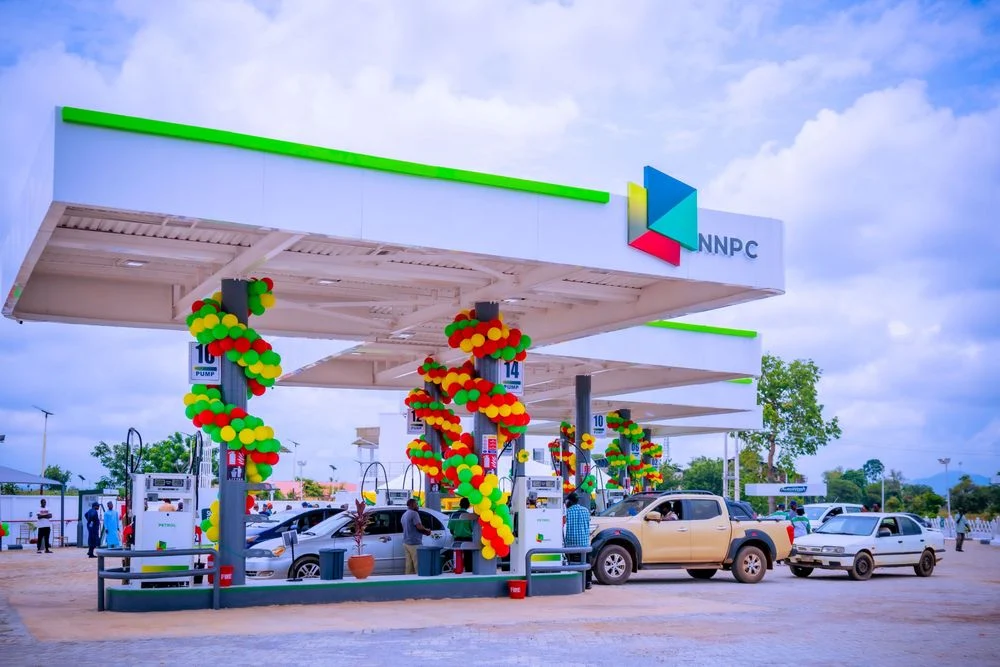
NNPC Retail Limited commenced its week-long 66th Independence Anniversary fuel promotion on 1 October 2026. On the day, Management and staff were at the mega station to engage with customers and promote awareness of the offer.
Customers get ₦66 off every litre of PMS purchased via the NNPC Fuel App, from 1 to 7 October 2026.
NNPC Retail’s Director, Operations, Baba Kukawa, said the promotion forms part of the company’s activities to commemorate Nigeria’s Independence Anniversary, combining the national celebration with a customer-focused promotion aimed at enhancing customer engagement and encouraging the use of its digital services.
By Philip Nyam
The Nigerian National Petroleum Company Limited (NNPC Ltd) has welcomed the $800 million Final Investment Decision (FID) on the Ima Gas Project, describing it as a landmark development that affirms the growing viability of Nigeria’s upstream gas sector.
The project, located offshore in OMLs 112 and 117 and developed by AMNI International in partnership with TotalEnergies, will produce about 300 million standard cubic feet of gas per day at peak.
According to Andy Odeh, Chief Corporate Communications Officer NNPCL, the output will supply critical feed gas to Nigeria LNG Limited in support of its Train 7 expansion, which will increase capacity at the Bonny Island plant from 22 million tons per annum to 30 Mtpa.
The FID was enabled by the Presidential Directives of 2024, which provided fiscal incentives for non-associated gas, streamlined contracting and lowered development costs.
Ima is the fourth major gas project to reach FID under President Bola Ahmed Tinubu, after Iseni, Ubeta and HI.
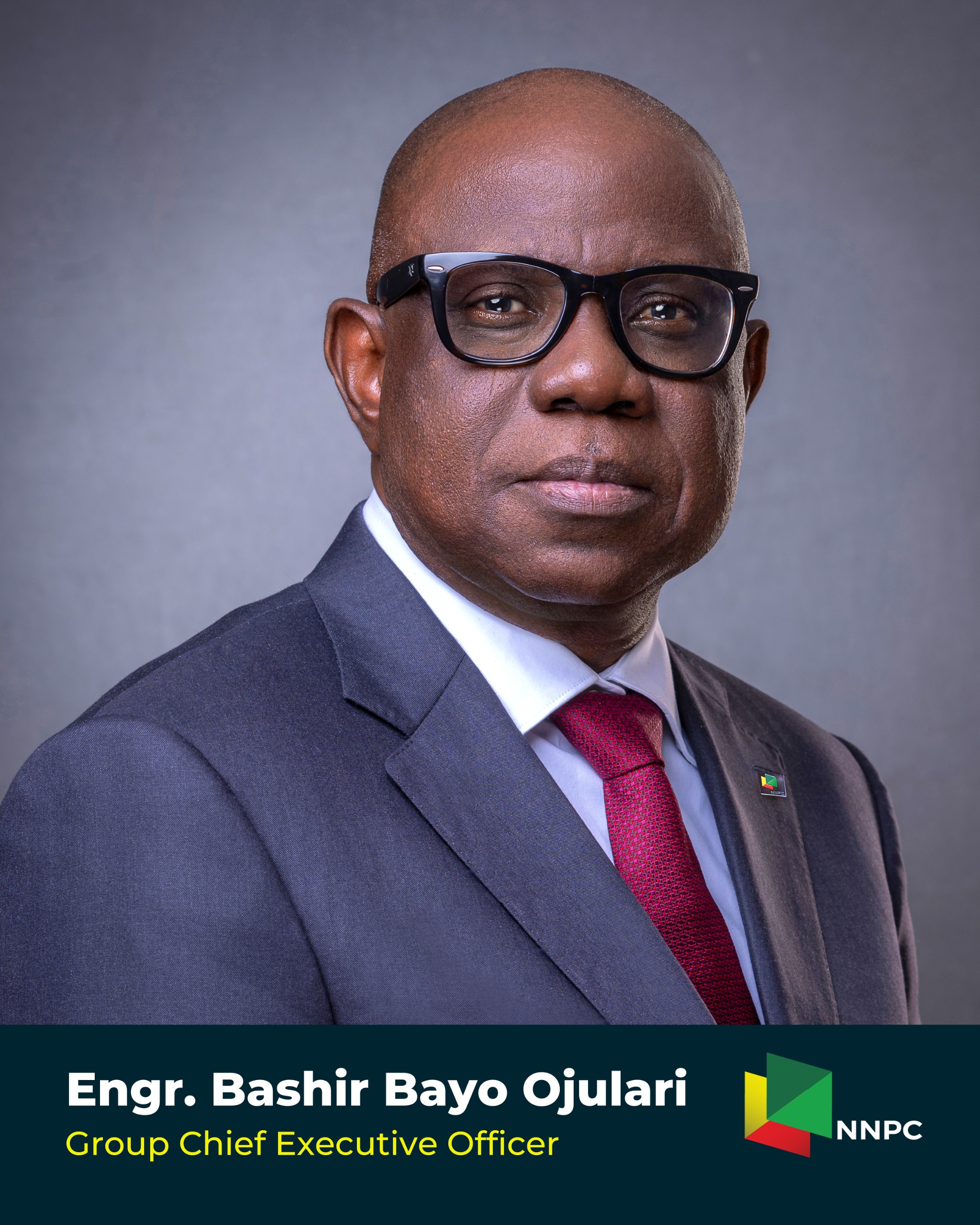
Group Chief Executive Officer, NNPC Ltd., Engr. Bashir Bayo Ojulari described it as “a decisive vote of confidence in Nigeria’s gas sector and in the bold reforms” that have created competitive terms and a predictable investment environment.
NNPC Ltd. also commends the collaboration between AMNI, TotalEnergies and the Nigerian financial sector, saying the model of indigenous operator, international partner and domestic capital is a template for future developments.
NNPC Ltd. reaffirms its commitment to work with government, regulators and industry partners to sustain investment momentum and deploy Nigeria’s gas resources for industrialisation, job creation and long-term prosperity.


FG Gives Workers N70,000 Monthly Transport Support for Six Months
Spread the loveBy Nick Ibe, Abuja To cushion the harsh impact of rising living costs, the Federal Government has approved...


Trump and the 95-year Mother: Government That Cares for All Citizens
Spread the love“Trump… Please bring my son back to me. I am begging you for mercy.” And what Trump did...


Probe Panel Says Heat, Dehydration Killed 33 Detained Niger Miners
Spread the love–Calls for NSCDC reforms, compensation for victims By Son Tertsea, Abuja Dehydration was cause of the death of...


Tinubu Seeks Law To Bring Back Nigerians Jailed Abroad
Spread the loveBy Felix Umande President Bola Ahmed Tinubu has transmitted a bill to the Senate seeking to empower the...

Senate Says: Travel Agencies, Short-let Apartments Need Closer Scrutiny in Human Trafficking Probe
Spread the loveBy Isa Abdul, Abuja As part of efforts to dismantle trafficking networks and protect Nigerians from exploitation abroad,...


El Niño: Its Meaning, Effects and How Nigerians Should Prepare for It
Spread the loveBy Son Tertsea, Abuja Nigerians have been alerted that El Niño event would raise concerns that potentially affect...

Accusations of Data Theft: MTN Explains How Nigerians Consume Data Fast
Spread the loveBy Nick Ibe, Abuja: Engaging in high-resolution video streaming, automatic downloads, background applications, cloud backups and increased internet...


Kogi Authorities Probe Why Police Corporal Killed female Colleague, Self
Spread the loveBy Michael Lim The Kogi State Police Command has begun to probe why a police corporal, Amos Yusuf,...


WHO Declares Nigeria Ebola-Free After Evacuation of Patient to Switzerland
Spread the loveBy Nick Ibe, Abuja Dr Mohamed Janabi, the World Health Organisation’s (WHO) Regional Director for Africa, says Nigeria...


Fake Letter Lands Atiku Supporter in Court
Spread the loveBy Isa Abdul, Abuja For circulating a fake document purportedly written by President Bola Ahmed Tinubu to the...