
Business and Economy
How Fraudsters’ Deepfake ads used Elon Musk, Johann Rupert to Swindle South African Investors of $61.5 million


By Nick Ibe
For adopting deepfake digital ads to swindle unsuspecting investors, South Africa’s Financial Sector Conduct Authority, FSCA, has fined online trading platform Banxso R2 billion ($123 million). And its four directors were handed 30-year industry bans after a year-long investigation concluded the company used deepfake advertisements featuring billionaires Johann Rupert and Elon Musk to steal approximately R1 billion ($61.5 million) from South African investors.
The FSCA detailed the scheme in its 2026 Regulatory Actions report, describing it one of the most significant enforcement actions against digitally enabled financial fraud in South African history.
The deepfake advertisements showed Rupert and Musk, two of the most recognizable business figures in the world, falsely promising investors profits of up to R300,000 ($18,450) a month from an initial investment of R4,700 ($289). The offering was branded as “Immediate Matrix.” Individuals who responded to the advertisements were systematically redirected to Banxso representatives and encouraged to trade primarily in contracts for difference, complex high-risk derivative instruments the FSCA regards as unsuitable for most retail investors.
Banxso and its representatives have consistently denied being behind the advertisements, claiming the firm was itself a victim of hacking. The FSCA launched its investigation in March 2024 after receiving information about the deepfake campaign and concluded that Banxso was directly or indirectly involved in, or at minimum materially benefited from, the dissemination of the deceptive material.
The investigation found that misleading information, including promises of unrealistic returns, was provided to prospective clients to undermine their ability to make informed decisions. Client funds were not placed with legitimate liquidity providers but were instead controlled internally by Banxso, commingled, transferred between non-designated accounts and rendered difficult to trace. The FSCA found that client funds were misappropriated and used for personal and business expenses.
The enforcement actions that followed reflected what the FSCA described as the scale, seriousness and systemic nature of the misconduct. Banxso owner Harel Adam Sekler, Warwick David Sneider, Manuel de Andrade and Mohammed Bux each received 30-year debarments. Henry James Simpson received a 10-year debarment. The R2 billion ($123 million) fine was imposed on Banxso, Sekler and Sneider jointly, with additional fines of R16 million ($984,000) on Banxso, R20 million ($1.23 million) on De Andrade, R10 million ($615,000) on Bux and R5 million ($307,500) on Simpson. Banxso’s financial services provider license was withdrawn.
The FSCA has referred its findings and supporting evidence to the Directorate for Priority Crime Investigation, known as the Hawks, to support potential criminal proceedings.
The legal battle is far from over. In September 2025, Banxso and its key individuals applied to the Financial Services Tribunal for reconsideration of the license withdrawal. The Tribunal dismissed the applications in December. In February 2026, the five Banxso representatives lodged fresh applications for reconsideration of the debarments and administrative penalties. That matter remains pending.
According to reports, the Western Cape High Court ruled that Banxso’s business model was illegal, triggering liquidation proceedings. Those proceedings are currently stalled following a legal challenge by Flamingo Clearing House, a company also owned by Sekler that served as Banxso’s CFD liquidity provider and was identified as a key player in the scheme.
The case represents the clearest illustration yet of how artificial intelligence-generated deepfake technology is being weaponized in South Africa’s financial markets, using the faces and reputations of the country’s most prominent billionaires to manufacture credibility for fraudulent investment offerings.
The intelligence satisfies curiosity. The paid briefings satisfy strategy.
Every Monday, Elite subscribers receive an Investor Memo breaking down the deal, the structure and the positioning behind the week’s most consequential African wealth story – the kind of analysis that doesn’t appear anywhere else.
Twice a month, a Wealth Intelligence brief profiles a single billionaire’s holdings, cash flows and expansion pipeline in detail no public source matches.










By Michael Lim
Kwara State Government has announced plans to buy shares in the Dangote Refinery Initial Public Offering (IPO) for female teachers in the state.
The plan is part of a new initiative to promote investment and financial inclusion among educators.
Governor AbdulRahman AbdulRazaq disclosed this on Monday in Ilorin while speaking at an event organised to mark the 2026 World Teachers’ Day.
The Governor also presented about N120 million in awards to outstanding teachers, head teachers, principals and schools.
The governor said the state would purchase 10,000 shares for 10 female teachers in each of the outstanding public schools.
He added that the scheme would also be extended to outstanding retired female teachers.
He said the initiative was being developed in partnership with the Dangote Foundation to encourage women to move beyond earning income to building assets through investment and share ownership.
“Dangote has created the Dangote Foundation, providing subscription grounds for women only. For every ten shares we purchase they will give a grant of another ten shares, making twenty shares,” AbdulRazaq said.
He added, “Our hardworking women teachers in TESCOM and SUBEB will get ten shares each. We will also extend it to the retired female teachers so that peace and prosperity will go round them.”
AbdulRazaq directed the Head of Service, Dr Olufunke Mercy Shittu, to work out modalities for capturing qualified retired female teachers under the initiative.
The governor said the investment programme was part of wider efforts to improve the welfare and economic opportunities available to teachers in the state.
He said his administration would continue to prioritise teachers because of their central role in determining the quality of education and, ultimately, the future of the state.
“We will continue to do our part, including improving your welfare and working conditions on a sustainable basis. We are confident that you and other stakeholders will always do your part,” he said.
The governor also presented financial awards totalling about N120 million to outstanding education stakeholders across different categories.
While 29 best principals and head teachers received N29 million, 119 outstanding teachers received N59.5 million.
Eleven serving and retired university dons were presented with N22 million under the Pioneer Professorship Recognition Awards, while three schools received N9 million for the Best Kept School Award.
AbdulRazaq said the recognition was designed to reward sacrifice and motivate educators to sustain their contributions to the state’s education system.
He said the administration’s education reforms had focused on improving both the quality of teaching and learning, citing merit-based recruitment, continuous professional development, improved school infrastructure and the use of technology and data through KwaraLEARN.
The governor also highlighted the regular promotion of teachers and implementation of the 27.5 per cent Teachers’ Specific Allowance as measures aimed at improving their welfare.
According to him, the interventions were yielding results, particularly in the performance of Kwara pupils at national and international competitions.
The Chairman of the State Universal Basic Education Board (SUBEB), Prof Sheu Raheem Adaramaja, announced that the 2026 promotion exercise for eligible teachers had been approved by the state government.
Adaramaja said the promotion examination would hold on October 10, adding that Kwara would be the first state in the federation to conduct its 2026 promotion exercise for eligible teachers.
Commissioner for Education and Human Capital Development, Dr Lawal Olohungbebe, said the award programme demonstrated that hard work deserved recognition.
He urged the awardees to sustain their performance and encouraged teachers across the state to continue developing themselves professionally.
The former Kwara State Chairman of the Nigeria Labour Congress (NLC) and keynote speaker, Comrade Umar Farooq, said supporting teachers should be regarded as an investment in children, communities and society.
The state Chairman of the Nigeria Union of Teachers (NUT), Comrade Yusuf Wahab Agboola, thanked the government for its interventions in school infrastructure and teachers’ welfare, while urging it to adopt the national harmonised retirement age for teachers.
*Plans intervention or games for young entrepreneurs
By Aliyu Musa
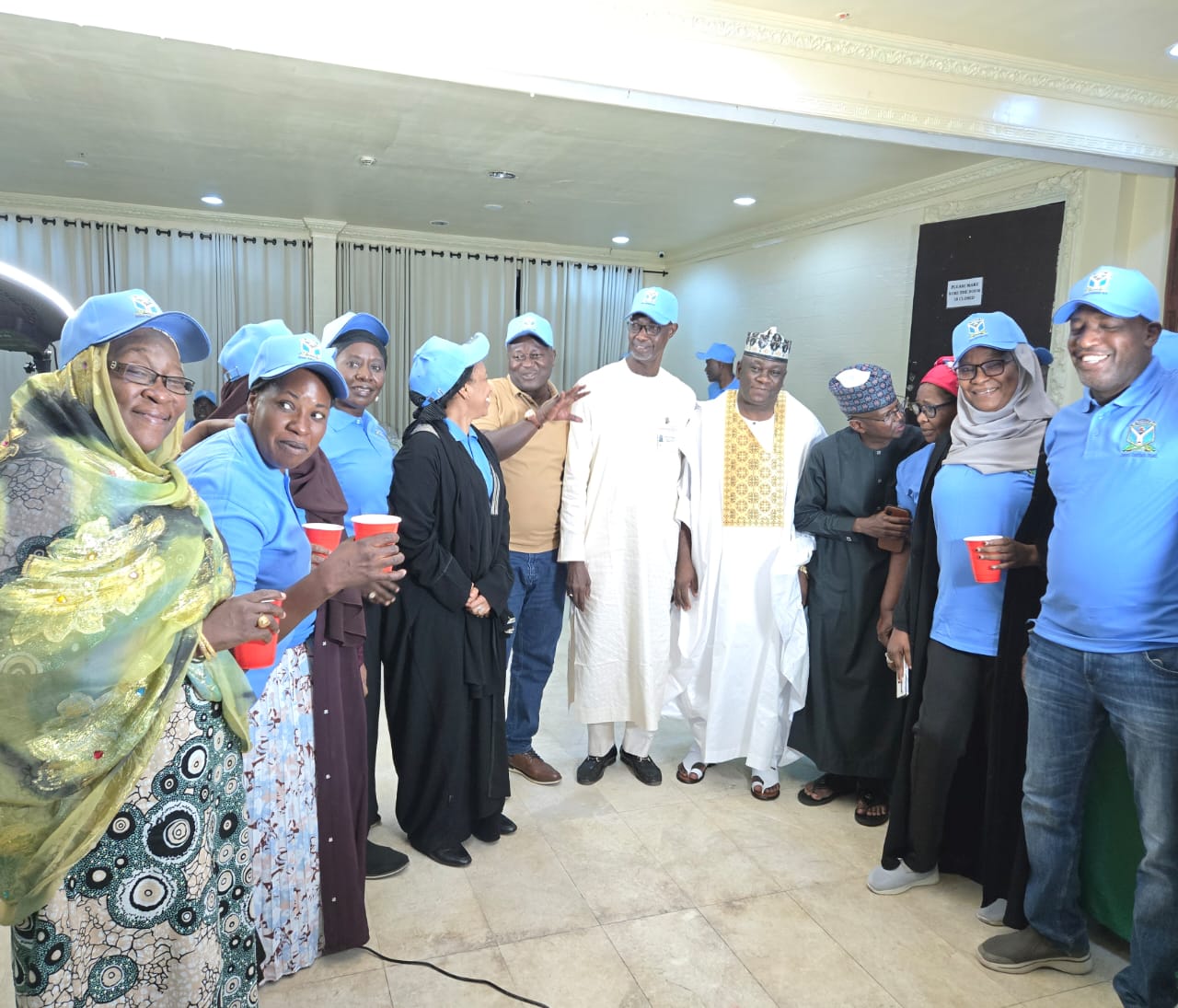
THE University of Maiduguri business management class of 1997 at its first reunion in Abuja emphasized the need to support young entrepreneurs and provide them the necessary support such that they can contribute to the micro economic growth and eliminate devices that falls below acceptable moral and legal standards.
The class of 97 also agreed to constitute an investment committee that will assist the forum pursue its goals ahead of its proposed 30th anniversary slatted for 2027.
Former deputy speaker of the House of Representatives,Honourable Babangida Nguroje who also spoke at the reunion called on his course mates to deploy their professional strength in ways that will strengthen the nation’s economy , give back to their university and groom upcoming entrepreneurs through trainings and offer opportunities for them to grow .
Honourable Nguroje emphasized the need to boost the micro economy of Nigeria through investments that will further create jobs for the teeming youths and grow the country’s domestic growth .
According to him ,”It is my honour to be in your midst this evening and a rare opportunity for all of us to be united again after several years.
“It is particularly important that this union is coming at a time that this country needs our expertise as students of figures ,data and research .
“This is out first reunion and I am glad that we have developed in our individual capacities and areas of interests .
“Much as we are here basically to catch up again , it is important that discourse matters that will send out footprints in our university by identifying areas we can assist our university , particularly our department .
“We must also look at ways of making this gathering annually and how best we can lift those in need and create opportunities for all of us .”
One of the organizers of the reunion Mrs Julianna Aiwerioghene said the class of 97 will take seriously the issues of empowerment and as managers ,it will be interested in grooming younger business owners to again their full potentials .
“We will be interested in harnessing their capabilities and help them build themselves through trainings and other forms of support .
“We want to see a productive generation for the younger ones and we will be subsequently looking at helping each other and continually look at how we will remain united and grow together. Progress is what we take seriously and we will also not forget out university in the process .”

–Job losses loom
A wide disparity in the ability of companies listed on the Nigerian Exchange Limited, NGX, to cover their debt obligations with cash has emerged, with some companies holding several times more cash than debt, while others have cash covering only a fraction of their outstanding borrowings.
Analysts noted that the cash/debt position of some of the listed companies could affect investment, employment, production and capital-market development.
The available data obtained by Vanguard, covering 40 companies in the second quarter of 2026, showed a combined total debt of N3.9 trillion, out of which 18 firms have cash/debt ratios of at least 1.0 times, indicating that their cash holdings are equal to or greater than their total debt, while 22 companies have ratios below 1.0 times, meaning their total debt exceeds cash on hand.
The cash/debt ratio measures a company’s ability to meet its debt obligations using cash available to it. A ratio above 1.0 times generally indicates that a company has sufficient cash to cover its total debt, although the ratio does not, on its own, measure overall financial strength or debt-servicing capacity.
Cash/debt analysis
On the table of the cash/debt analysis, HBM Nigeria led, with a cash/debt ratio of 319.07 times, based on cash of N393.68 billion and total debt of N1.23 billion.
It was followed by UPDC Real Estate Investment Trust, with 283.73 times, from cash of N7.15 billion against debt of only N25.2 million, while eTranzact International recorded 214.89 times, with N23.69 billion cash and N110.24 million debt.
CWG also recorded a high ratio of 211.1 times, with cash of N7.4 billion compared with total debt of N35.06 million.
Other companies with substantial cash coverage included Unilever Nigeria, with a ratio of 44.8 times; Berger Paints, 18.4 times; Industrial & Medical Gases, 13.56 times; and NASCON Allied Industries, 12.72 times.
Companies with stronger cash cover
The available data, as gathered by Vanguard, also showed that several major companies had cash exceeding their debt.
Vitafoam Nigeria recorded 5.88 times, while UPDC posted 5.47 times. International Breweries had 3.34 times, Sterling Financial Holdings 3.08 times and May & Baker Nigeria 2.83 times.
Livestock Feeds recorded 1.94 times, Julius Berger Nigeria 1.85 times, Chams Holdings 1.65 times and Dangote Cement 1.31 times. Skyway Aviation recorded 1.19 times.
The figures suggest that these companies have, based purely on cash on hand relative to total debt, a degree of liquidity protection against debt obligations.
However, analysts caution that a high cash/debt ratio should not automatically be interpreted as evidence that a company is more profitable or efficiently managed.
Debt exceeds cash in 22 companies
On the other hand, Aradel Holdings recorded a cash/debt ratio of 0.96 times, with cash of N1.77 trillion against total debt of N1.84 trillion.
Ellah Lakes recorded 0.81 time, John Holt 0.77 times, Academy Press 0.72 times and Eterna 0.69 times. ABC Transport had 0.58 times, while Cadbury Nigeria and Fidson each recorded 0.53 times.
The ratio fell further among BUA Cement, at 0.46 times; BUA Foods, 0.44 time; Beta Glass, 0.34 time; Conoil, 0.20 times; Guinness Nigeria, 0.16 times; and Champion Breweries, 0.16 times.
DAAR Communications recorded 0.14 time, while Cutix and Japaul Gold & Ventures each recorded 0.11 times.
Geregu Power had 0.09 times, FTN Cocoa Processors 0.08 times, C & I Leasing 0.07 time, Chellarams 0.05 times and Caverton Offshore Support Group the lowest at 0.03 times.
This means, for example, that Caverton’s N2.46 billion cash position represents only a small fraction of its N87.15 billion total debt, while Chellarams had N235.16 million cash against N5.12 billion debt.
Implications for companies
Market analysts said the cash/debt ratio provides investors with an important indication of the liquidity pressure facing companies, particularly in an environment where the cost of borrowing remains significant.
They noted that companies with ratios substantially above 1.0 time have greater cash buffers with which to meet debt obligations, fund working capital and withstand temporary disruptions in revenue.
However, they said excessive cash holdings could also raise questions about whether funds are being deployed productively.
According to the analysts, a very high cash/debt ratio may be positive from a liquidity perspective, but investors should examine why the company is holding so much cash instead of investing it in productive assets, expanding operations, reducing debt or returning capital to shareholders.
For companies with ratios below 1.0 time, the concern is different. A low ratio does not necessarily mean that a company is in financial distress because businesses generate operating cash flows and may have access to undrawn credit facilities and other sources of liquidity.
Nevertheless, analysts said a persistently low ratio could expose companies to refinancing and interest-rate risks, particularly where debt repayments fall due before sufficient operating cash is generated.
Implications for shareholders
For shareholders, the ratio has implications for both risk and returns.
Companies with relatively strong cash positions may have greater flexibility to service debt, maintain operations during difficult periods and finance expansion without immediately resorting to additional borrowing or equity dilution.
On the other hand, companies with low cash/debt ratios may face higher financial risk if earnings or operating cash flows weaken.
Analysts, however, stressed that shareholders should not make investment decisions based solely on the ratio.
They said investors should consider profitability, operating cash flow, interest expenses, debt maturity profile, working-capital requirements, asset quality and management’s capital-allocation strategy alongside the cash/debt position.
Implications for Nigerian economy
At the broader economic level, analysts said the cash/debt position of listed companies could affect investment, employment, production and capital-market development.
Companies carrying heavy debt burdens may devote a larger proportion of their earnings to interest and principal repayments rather than expansion, technology, employment and dividend payments.
Where debt is used productively, however, leverage can support expansion and increase productive capacity.
The implication, analysts said, is that the quality and use of debt matter as much as the amount of debt itself.
A company with a low cash/debt ratio but strong and predictable operating cash flow may be able to manage its obligations effectively, while a company with a high cash/debt ratio but weak operations could still face business challenges.
For the Nigerian economy, the ability of listed companies to maintain adequate liquidity is therefore important because financially stable businesses are better positioned to sustain production, employment, tax payments and investment.
Cash/debt ratio not a standalone measure
Analysts therefore advised investors to treat the cash/debt ratio as one component of a wider financial-health assessment.
The data shows a clear divide: while some NGX-listed companies have cash positions several times larger than their debt, others have debt that is many multiples of their available cash.
The difference highlights the varying approaches of companies to borrowing, liquidity management and capital allocation and provides investors with an additional indicator for assessing financial risk.
Analysts’ comments
Ambrose Omordion, Chief Operating Officer, InvestData Consulting Limited, said investors should not assess debt in isolation but should examine earnings, cash flow, interest-cover ratios and the maturity profile of borrowings.
He said a high level of debt could magnify shareholder returns when borrowed funds are invested in profitable projects, but could also magnify losses when earnings and cash flows weaken.
The same principle applies to the cash-to-debt ratio.
A company with a low ratio but strong and predictable operating cash flow may remain financially stable, while a company with a high ratio but weak operations may face longer-term challenges if its cash balance is not being replenished.
Impact on companies
For the companies themselves, high cash cover provides an important cushion in an environment of elevated interest rates.
Companies that need to refinance maturing loans may face higher finance costs when new loans are contracted. Those with significant cash can repay some debt, negotiate from a stronger position with lenders or fund part of their capital expenditure internally.
This could reduce finance costs and improve profitability.
Commenting on the ratios, economic and communications expert, Clifford Egbomeade, said: “The interpretation of cash and debt should go beyond the ratio itself,” stressing that investors should examine the quality and utilisation of the cash.
According to him: “A company with substantial cash and low debt has greater flexibility to respond to economic shocks, finance expansion or take advantage of investment opportunities without immediately resorting to expensive borrowing.
“This is particularly relevant in Nigeria where corporate borrowing costs remain relatively high.
“Some companies deliberately retain cash to finance inventories, capital expenditure, acquisitions, dividend payments and other strategic commitments.
“In addition, cash and cash equivalents may include restricted funds or short-term investments that cannot necessarily be deployed immediately.
“This means that shareholders should examine the composition of cash before drawing conclusions about a company’s liquidity.”


Benue Bishop Shuts Schs, Hospital, Parish In Alia’s Community Says “Church Cannot … Expose Priests, Students To Danger”
Spread the loveBy Felix Umande The Catholic Bishop of Gboko, Most Rev. William Avenya, has ordered the indefinite closure of...

President Tinubu Receives NNPC’s 2025 Audited Financial StatementBy Aliyu Musa
Spread the loveGroup Chief Executive Officer, NNPC Limited, Engr. Bashir Bayo Ojulari, today at the Presidential Villa in Abuja, presented...


NIMENA chair, Sylvanus receives tech leadership awardBy Philip NyamAbuja
Spread the loveThe National Chairman of the Nigerian Institution of Marine Engineers and Naval Architects (NIMENA), Dr. Eferebo Sylvanus has...


SDP crises: Court strikes out criminal case against Shehu Gabam
Spread the loveBy Saint Mugaga A Magistrate Court in the Federal Capital Territory (FCT), Abuja, has struck out a criminal...


Wike Orders Removal of Illegal Structures, Stops Unauthorised Commercial operations
Spread the loveBy Isa Abdul, Abuja Wike has ordered the immediate enforcement of operations against unauthorised commercial activities and illegally...


Benue Govt Closes Two Schools in Makurdi Over Textbook Sales Violation
Spread the loveBy Vincent Tyosuugh Two academic institutions, Orenda Opal Schools have been closed by the Benue State Government over...

Only Deaf, Dumb, and Blind Can Tell Us He’s not Hearing the Truth About Nigerians’ Suffering –Cardinal Onaiyekan
Spread the loveBy Son Tertsea, Abuja Cardinal John Onaiyekan has explained why the reactions to his interview with Arise TV’s...


Nigeria Fighting Cervica Cancer: 18 Million Girls Vaccinated
Spread the loveBy Nick Ibe, Abuja In its intensified efforts to eliminate cervical cancer in Nigeria, the Federal Government said...

Bauchi Govt: Minimum Pension Now N32,000, Pays Gratuities To 2012, 2013 Retirees
Spread the loveBy Michael Lim As part of effort to reduce the huge backlog of gratuities, the Bauchi State government...


Nigeria’s Overall Best Teacher From Ogun Shows: Where You Start in Life Does Not Matter
Spread the loveBy Seyi Balogun, Lagos The emergence of Nigeria’s Overall Best Teacher for 2026 at the Federal Government’s President’s...