
General News
FOR THE RECORDS: The Bar and the Bench are the Guardians of Democracy

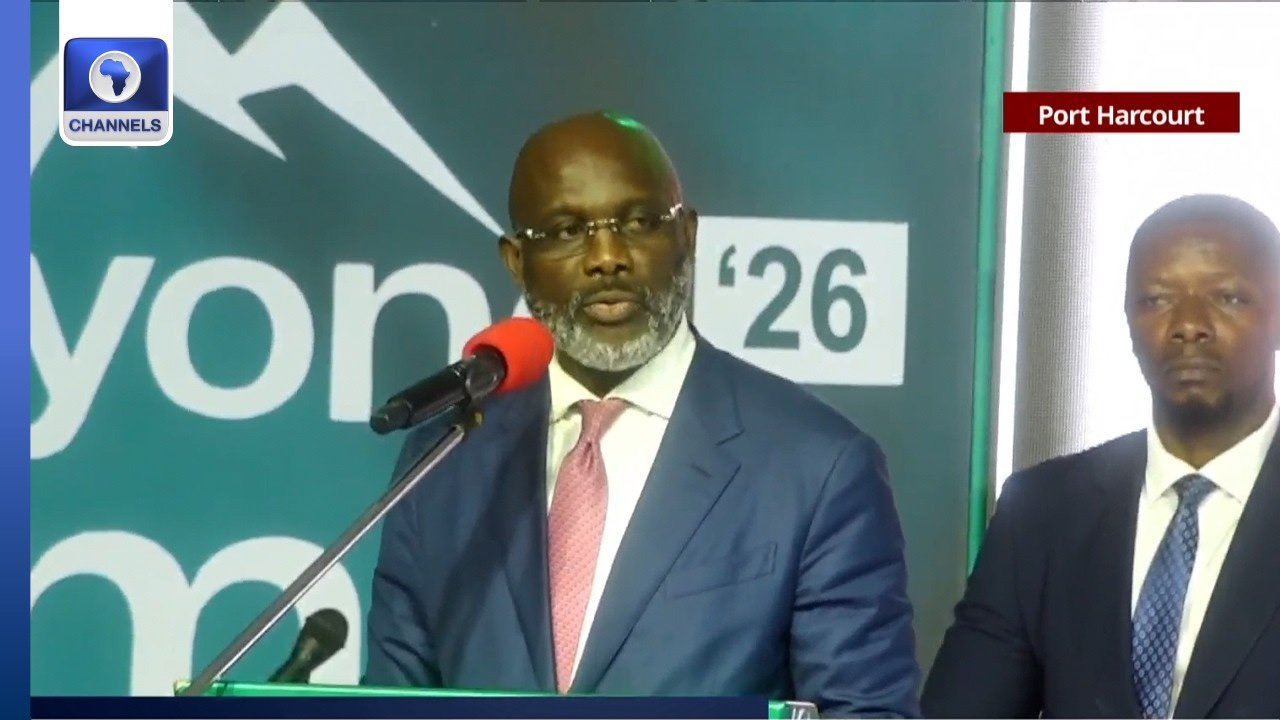
—George Manne Weah Tells NBA in Port Harcourt
I am glad to be here today, attending the 66th Annual General Conference of the Nigerian Bar Association here in Port Harcourt. With a membership of over One Hundred and Fifty Thousand, the Nigerian Bar is the largest, oldest and one of the most respected professional bodies on our continent.
I want to thank you for choosing a theme as bold as “Beyond Limits.” When I first heard it, I smiled, because if my own life has taught me one thing, it is that limits are very often not the walls we think they are. They are only the edge of what someone has tried so far.
I did not come into this hall as a lawyer, and I will not pretend to be one. I grew up in the ghetto of ‘Gibraltar’ in Monrovia, Liberia, where very few people believed that a boy raised largely by his grandmother would one day stand on the world’s biggest football stages, or take an oath as President of the Republic of Liberia.
I was told, in many quiet and not-so-quiet ways, what the limits of my life were supposed to be. I did not accept them — not out of arrogance, but because the limits placed on us by man are not the same as the limits placed on us by God. Beyond Limits, to me, is not a slogan. It is a living testimony of my life.
I am not here merely to tell you my story, but because what is true for one man can also be true for a profession, and for a continent.
Allow me to speak to you about two things today: first, the Bar and the Bench as guardians of our democracy, and the dangers that threaten that guardianship in West Africa today; and second, what it means for our peoples and our continent to truly go beyond limits — not in slogan, but in substance.
Let me start with a simple truth I came to understand not as a student of law, but as a man who has sat in the highest office of a nation. Democracy does not survive on the strength of elections alone. Elections are the doorway into democracy, not the house itself. What holds the house up — what keeps the roof from collapsing on the people who live inside it — are institutions, and among the most important of these, in every serious nation, is an independent judiciary, protected by a fearless, principled Bar.
And let me be plain about something else, because it is often the more dangerous of the two threats to democracy. The danger is not only that soldiers might seize power in the night, or that a defeated candidate might refuse to leave office. It is also that a leader who arrives in office through a free and fair election can, over time and often gradually, begin to govern like the very dictators the ballot was meant to guard against — leaning on the judiciary until it bends to his will, and strong-arming the legislature until it becomes an echo chamber rather than a check on his power. A tyrant with a certificate of return is still a tyrant. Democracy, properly understood, does not end on election night. It is tested every single day afterward, in how power treats the courts and the parliament that exist to restrain it.
I was glad to learn, in preparing to come before you, that your own outgoing President, Mazi Afam Osigwe, said something not long ago that I found myself nodding, as though he had seen my own notes before I wrote them. He said: “Democracy cannot survive on strong men. It survives on strong institutions.” That sentence deserves to be written above the door of every parliament and every courtroom in West Africa — a conviction that every serious African who has held power, and hopes to build something that stays after him, must eventually arrive at.
The rule of law is not an abstract phrase for law school lecture halls. It is the practical guarantee that a citizen’s rights do not depend on who is in office or what favor they can secure — that a journalist, a trader, or a student in Port Harcourt, Monrovia, or Bamako has the same protection under the law as a minister or a general.
The moment that guarantee weakens, everything else in a nation weakens with it: investment, security, public trust, and peace itself.
And here is the uncomfortable part: this danger does not only come from the coup-makers who seize power in the night. It also comes from governments that call themselves democratic — through budgets manipulation, wrong appointments, and pressure on judges, and deciding that courts should be a convenience rather than a check.
We have seen nations where a judiciary’s own budget must first pass through the executive it is meant to hold accountable. We have seen special courts created not to deliver justice but to secure political outcomes, and dozens of judges dismissed in a single stroke by presidential decree. And we have seen, across our region since 2020, an unsettling pattern of soldiers stepping over constitutions altogether.
I raise these examples because this Bar to which you belong and have gathered here in your thousands, cannot afford to assume that Nigeria, or Liberia, or any of us, is somehow immune. A court’s decision must mean what it says, without anyone’s political permission — it is what protects a nation from sliding, gradually but progressively, into the very conditions we condemn when soldiers do it with guns.
This is why I say to you: the Nigerian Bar Association is not merely a professional association negotiating welfare for its members. You are a standing sentinel of this Republic’s democracy. When the Bar is silent, courts become easier to be captured. When the Bar speaks with one voice, as guardians of the bench, the executive branch think twice before even dreaming of interference.
That tradition is not decoration. It is duty — because protecting the independence of your courts, and the rights of the ordinary Nigerian citizen, is protecting democracy itself, here in Nigeria and across our region.
Distinguished ladies and gentlemen, let me turn to the second thing I wish to leave with you: Beyond Limits is not only about defending what we have. It is about reaching for what we have not yet built. I have never believed that Africa’s limits are a matter of talent — I have stood beside the finest footballers our continent has produced, and sat at negotiating tables with heads of state from every corner of the earth. We Africans are not short of brilliance. We are short, too often, of the infrastructure and the organized will to let that brilliance connect to itself with us.
This room is proof of it. The Nigerian Bar counts among its numbers some of the finest legal minds in the world, many of whom have built extraordinary careers abroad — in London, in Washington, in the Gulf. That is nothing to be ashamed of, but it is something we must be strategic about. For too long we have called this only “brain drain,” as though it is purely a loss. I ask you to think instead about brain circulation — pulling that expertise back into nation-building without demanding anyone abandon what they have earned and learned abroad.
Our African diaspora already sends home well over one hundred billion dollars a year in remittances alone, more than the foreign aid and investment Africa receives combined. Imagine that same energy formally invited into legal reform and judicial modernization, as a deliberate national strategy.
Because the fight against poor governance and economic deprivation is not one we can afford to enter with half our talent unaccounted for. A Nigerian-trained lawyer on an arbitration panel in Paris, or advising a global institution in New York, is not lost talent — it is talent operating at the highest global standard, available to be called home if we organize the bridge for it to cross.
This, too, is what going Beyond Limits must mean for us: refusing to accept that our infrastructural and governance challenges, are any kind of ceiling on what is possible. I did not accept the limits the slum seemed to set for me.
I say this to you not as a theory but as something I have lived. In November 2023, when the early, provisional results of our run-off election made clear which way our country had voted, I did not wait for the count to be completed or for the final results to be formally announced before I picked up the telephone to congratulate my successor.
There were those around me who suggested patience — who argued that a sitting president owes it to himself to contest every figure until the very last vote is certified.
I chose otherwise. I chose to concede while the counting was still underway, because I have always believed, and still believe, that the will of the people must stand above the ambition of any one man in a democratic setting. Once elections do not follow democratic precepts, it is very dangerous for the peace and security of a country.
I am told that when this Association extended its invitation to me, its citation spoke directly of that decision — of a leader who chose to put his country before his own ambition. I want to thank the Nigerian Bar Association for that recognition.
It means a great deal to me, not because I need reminding of what I did, but because it tells me that this Bar understands precisely what is at stake when we insist that no office, however high, is worth more than the peace and the will of the people who conferred it.
If a small nation like mine can insist on that standard for itself, then surely this continent, with all its wealth of talent gathered in this very hall today, can insist on standards beyond the limits others have too often assumed for us.
Let me say, then, not only as a former president, but as a brother — a fellow traveler on this great continent of Africa, someone who understands deeply what it means to look at a wall of obstacles and decide to climb over it. When your leadership invited me to speak on the theme Beyond Limits, it resonated with the very core of my life’s journey.
To go beyond limits is not a phrase reserved for athletes who break records or politicians who win elections. It is a daily mandate for every lawyer, every judge, every leader, and every citizen who refuses to let their present circumstances dictate their ultimate destination. Limits, more often than not, are imagination born out of fear, of history, or of the low expectations others have placed upon us.
You already know part of my story — that boy from the slums of Monrovia. By every worldly measure, that boy was not supposed to play on the grandest stages of world football, let alone win the Ballon d’Or. He was certainly not expected to one day lead his nation, democratically, as president. So when I tell you that limits can be broken, I am not offering you a theory. I am offering you a life. How do we break these boundaries? We do it by anchoring our lives in five timeless, unshakeable values.
The first is discipline. Discipline is the bridge between goals and accomplishment. In football, talent without discipline gets you benched, or cut from the team entirely. In the law, brilliance without discipline leads to compromised justice. Discipline is the quiet commitment to doing what is right, what is necessary, and what is ethical, even when no one is watching.
Coupled with discipline is the raw necessity of hard work, because there are no elevators to success — you must take the stairs. To push past the barriers of systemic corruption, weak infrastructure, or institutional inertia, we must be willing to outwork our problems. As legal minds, your hard work secures the liberties of the common man and fortifies the rule of law.
Yet our labor means nothing if it is not governed by respect — respect for the dignity of every human being, for the sanctity of our institutions, and for the constitution that binds us.
True leaders do not go beyond limits by tearing others down. We go beyond limits by lifting others up, by respecting diversity of thought, and by upholding the integrity of the judicial process.
When you push against limits, the limits push back. That is where perseverance becomes your greatest weapon. You will face defeats. I lost elections before I ever won one. I lost matches before I ever raised a trophy.
Perseverance is the internal voice that says, “I will rise again.” For the legal profession in Nigeria and across Africa, perseverance means standing firm for justice even when the political or social winds blow fiercely against you.
Most importantly, we cannot transcend human limits without being spiritually strong. We must acknowledge a power greater than ourselves.
Spiritual strength gives us moral clarity when our choices are blurred. It gives conscience to our intellect and soul to our ambition. And it reminds us that every position of leadership we hold is a temporary stewardship, granted by the Almighty, to serve His people.
My distinguished friends, Nigeria holds a key to the promise of our whole continent. When the Nigerian Bar Association decides to go beyond limits, the legal architecture of Africa itself grows stronger. Let us commit today to breaking the chains of mediocrity — applying discipline to our craft, hard work to our duty, respect to our peers, perseverance to our trials, and faith to our foundational values.
Distinguished ladies and gentlemen, let us all stand for true justice — for the rule of law that builds greater unity, that makes a nation more attractive to investment, and that creates a stable environment in place of internal conflict.
True justice is blind. It does not know politics. It does not see family or friendship. It knows only the truth, and it interprets the law the same way whether or not anyone is watching.
Let us all interpret the law fairly, and apply it more effectively. Let justice prevail, and be done to all men and women, rather than spending our energy on division. The true measure of a lawyer is not how many cases you have won, how many titles you hold, or how much you earn. It is this: when the country needs courage, do you have the courage to stand? When justice needs a voice, will you give it one? And when the law itself is threatened, will you go beyond every limit to defend it? The law must never be an instrument of chaos. It must never become a weapon of war. It must remain what it was always meant to be: an instrument of remedy, of peace, of unity, and of accountability — an instrument for humanity, for transparency, and for truth.
My dear members of Nigerian Bar Association, I invite you to think of yourselves as referees who interpret the law fairly and plainly. As a lawyer, you must be able to protect the law whether the voice before you is rich, poor, or powerful.
As the law provides, you must be able to stand in defense of those who cannot defend themselves. You must ensure that due process is honored. Let us respect the law, and let us interpret it faithfully. I say to you, as with Lady Justice herself: carry the scales of substance and of justice, and let nothing tip them but the truth.
My brothers and sisters, Nigerians depend on you. West Africa depends on you. Africa depends on you. The world depends on you. Democracy depends on you. And free elections depend on you.
So I say to all of you here today: Africa must continue in peaceful coexistence, and we must all stand up for the rule of law. Stand up for fairness. Stand up for impartiality. Stand up for gender equality. Stand up for equality. Stand up for humanity. Stand up for peace and for democracy. Stand up against discrimination. Stand up for accountability. Stand up for free and fair elections.
Bravo, Nigerian Bar Association.
God bless the Nigerian Bar Association, and may God bless our beloved Africa.
I thank you.
Keynote Address
By George Manneh Weah,
Former President of the Republic of Liberia
At The 66th Annual General Conference of the Nigerian Bar Association
Theme: “Beyond Limits”
Port Harcourt, Rivers State. August 23, 2026.






General News
“Hold My Hand”: Yul Edochie Breaks Down As He Recalls Father Pete Edochie’s Final Words
By Felix Umande
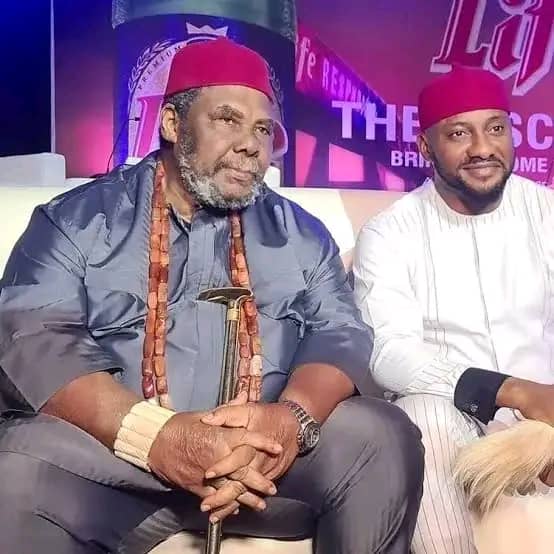
Nollywood actor Yul Edochie has recounted his final moments with his late father, veteran actor Pete Edochie, revealing that the deceased asked him to hold his hand while they were at the hospital.
Yul, in an emotional tribute shared on his Instagram page on Friday, described his father as a kind man, wonderful father, and role model, saying he was still struggling to come to terms with his death.
“I’ll never forget your last words to me at the hospital when you told me to hold your hand,” he wrote.
The actor recalled how his father supported him throughout his journey in Nollywood, adding that he had promised to make the veteran actor proud when he joined the movie industry.
“When I joined Nollywood many years ago, I told you I would make you proud. I’m happy I made you proud. I’m happy I’ve kept your legacy going. I’m happy I celebrated you constantly,” he wrote.
He also described their private moments together, saying they would spend hours talking and laughing, while his father constantly wanted him around and encouraged him to call every day.
Yul described the deceased as a strict but caring father who taught him generosity, integrity, and the importance of keeping his word.
He wrote, “You taught me to be a giver. You taught me to be a man of integrity. You taught me to be a man of my word.”
Veteran Nigerian actor, Chief Pete Edochie, died on Wednesday, November 25, 2026, in Enugu, after a prolonged battle with prostate cancer.
By Lazarus Oko
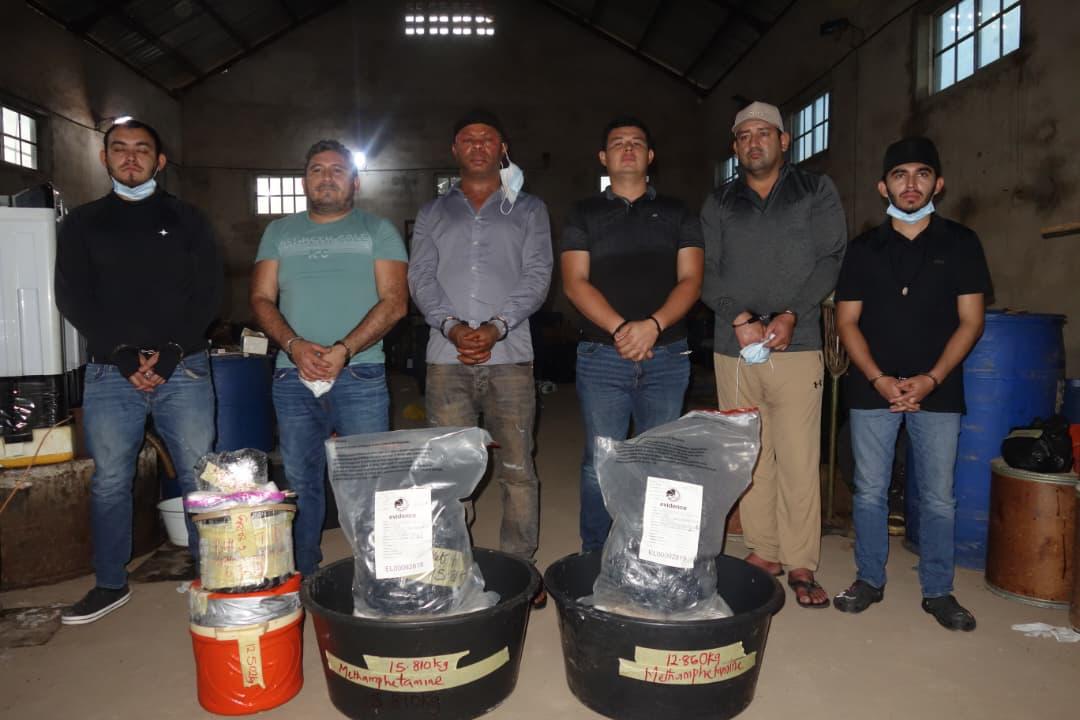
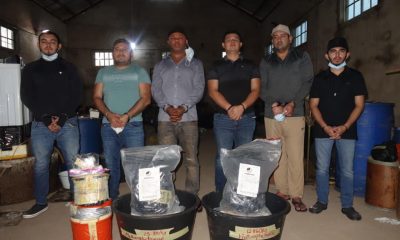
The National Drug Law Enforcement Agency (NDLEA) has dismantled the 4th industrial-scale methamphetamine laboratory in Enugu, arresting a 63-year-old drug baron, Chuks Enoch Ezeike, popularly known as ‘Over Size’, and five Mexican meth specialists whom he smuggled into the country with forged passports to produce the Class A drug on Nigerian soil.
According to a statement released by Femi Babafemi
Director, Media and Advocacy
NDLEA Headquarters, Abuja, on Wednesday, 25th November 2026, a total of 1,512 kilograms of methamphetamine, finished and in production, with an estimated value of US$226.8 million, equivalent of Three Hundred and Three Billion Nine Hundred and Thirteen Million Naira (N303,913,000,000.00), was recovered from the clandestine factory, alongside 6.68 tons of 20 different types of precursor and essential chemicals and an array of industrial equipment for making the illicit substance.
The release said that Ezeike, a businessman who holds the traditional title of Ebekuo Dike na Nanka in his community in Anambra state, had built the industrial complex behind San Savanna Oil Company Limited, at Kilometre ½ Abakaliki Expressway, Emene, Enugu, complete with living quarters for the Mexicans so they could live and produce in the same place without being seen in town.
Announcing the breakthrough at a press conference held at the NDLEA National Headquarters, Abuja on Wednesday 25th November 2026, Chairman/Chief Executive Officer of the Agency, Brig. Gen. Mohamed Buba Marwa (Rtd) described it as one of the most carefully planned, intelligence-led operations ever conducted by the Agency. According to him, the operation “began in faraway Mexico, ran through Colombia, France and the Republic of Benin, crossed into Lagos, and ended in an industrial complex in Enugu.”
Marwa explained that the Agency’s Special Operations Unit (SOU) began working on critical intelligence in April 2026, which identified Ezeike as a specialist in setting up clandestine methamphetamine laboratories with links to Oscar Ramos-Cardenas, a Mexican known for large-scale, industrial-grade methamphetamine production. “From that moment, Ezeike was a marked man. Our officers opened a file on him, and we watched and waited,” the NDLEA boss said.
“On 25th August 2026, we received intelligence on the flight itineraries of five Mexican nationals, all identified as methamphetamine experts who were travelling from Mexico to Nigeria. Our analysis left no room for doubt: they were coming to set up an industrial-scale meth laboratory on Nigerian soil.
“Working closely with the Nigeria Immigration Service, we ensured that when they landed here in Abuja on 28th August 2026, they were denied entry. They were put on the next available flight back to Mexico. On that same day, our officers found out that Ezeike had travelled from Enugu to Abuja to receive the visiting Mexicans. His own bank records later confirmed the hotel payment in Abuja that day. The visitors he came to receive were the very men we had just sent back”, Marwa stated.
Undeterred, Ezeike and his foreign collaborators worked out a new route. The meth experts were flown from Bogotá, Colombia, through Paris, France, to the Republic of Benin, while Ezeike procured forged Argentine, Colombian and Chilean passports and sent them through a driver to Cotonou, where the Mexicans handed over their genuine passports and took on new identities.
On 19th September 2026, the Agency was alerted that five Mexicans had arrived in Cotonou, intending to slip into Nigeria through the land border. They are:
i. Gonzalez Numez Lucas (Name on forged passport)
Oscar Ramos-Cardenas (Real name and leader/chief specialist)
ii. Lopez Salvador Vasquez Esperanza (Name on forged passport
Juan Antonio Sarabia-Cabrera (Real name)
iii Hernandez Cortes Carlos Fuentes (Name on forged passport)
Luis Enrique Garcia-Amador (Real name)
iv. Fernandez Rio Mateo Jimenez (Name on forged passport)
Jose Alejandro Renteria-Reyes (Real name)
v. Rodriguez Araya Andres Perez (Name on forged passport)
Salomon Cabanillas-Torres (Real name)
This time, Marwa said, the Agency took a deliberate decision to let them in. “We wanted the whole network: the meth specialist, the financier, the factory and the product. Sending them home a second time would only have postponed the problem,” he stated.
Three of the Mexicans crossed into Nigeria through the Seme Border Post on 20th September, while the remaining two followed on 21st September, on a road trip arranged by Ezeike. With NDLEA special operatives embedded in their every move, Ezeike received them in Lagos and lodged them in a hotel, where he was observed having breakfast with them on 22nd September, before moving them to Enugu.
While the Mexicans lived and worked in the San Savanna complex, Ezeike stayed at Adig Suites, 2 Nwafor Orizu Street, Enugu, moving about in three vehicles: a blue Toyota Corolla, a red Toyota RAV4 and a Lexus RX 350. Providing further details, Marwa said
“Throughout September and October, our officers kept watch on both locations. In the course of surveillance, we watched the regular movement of Ezeike’s blue Corolla drive into San Savanna, stay a few minutes, and return to Adig Suites. Assisted by appropriate tools such as the deployment of a drone and other intelligence deductions, we were able to put all pieces together by 7th November 2026.
“Having got all this down, it was now time to strike. On 9th November, 2026, we assembled over 200 personnel of our Strike Force and Enugu State Command into a staging area. On 10th November, 2026, I gave the order to take down the lab. At about 5a.m. on Wednesday, 11th November 2026, operatives of our Special Operations Unit, the Strike Force, the Forensic Directorate and the Enugu State Command carried out simultaneous raids on both locations. All personnel were appropriately deployed with clear tasks – those for outer cordon, inner cordon, search and arrest.
“At the San Savanna complex, our men stormed the laboratory and the adjoining guest house, which also served as a stash house. All five Mexicans were arrested at the scene, in the middle of production. At the same time, at Adig Suites, our operatives arrested Ezeike in Room 106. He was then taken to San Savanna to witness the search. There, in the presence of our officers, Ezeike admitted that he owns the laboratory and that he brought the Mexicans into Nigeria to manufacture methamphetamine. He told us that they had produced only a small batch so far. He also told us the Mexicans were due to leave Nigeria two days later, on Friday, 13th November 2026. In other words, we caught them with two days to spare.”
The 6.68 tons of precursor and essential chemicals recovered include 2,835kg of lead acetate, 1,050kg of tartaric acid, 450kg of mandelic acid, 160kg of P2P and 70kg of methylamine. Equipment seized includes four industrial burners, two industrial distillation units, two boilers, two hydraulic presses, eleven gas cylinders, two freezers, two digital scales and four washing/drying machines, all of which forensic experts have confirmed are consistent with industrial methamphetamine manufacture.
“They were producing methamphetamine not by the kilogram, but by the ton. Had they succeeded, that poison would have flooded our streets, our schools and our communities, and exported to destroy lives abroad, with Nigeria’s name stamped on it,” the NDLEA boss declared.
According to Marwa, statements by the suspects since their arrest confirm that this was no first-time venture but an organised, recurring transnational operation with three layers: a cartel command in Mexico that recruits, deploys and pays the specialists; Ezeike as the local coordinator who built the laboratory, procured the chemicals and arranged travel, transport and false documents; and the Mexican production crew led by Ramos-Cardenas, whose supporting members change with each deployment.
He said the cartel deliberately kept Nigerians out of the laboratory to reduce the risk of exposure, which was why the Mexicans lived where they worked and hid behind a company signboard. The cooks were paid according to their production output.
Marwa noted that in the last four months alone, NDLEA has dismantled four industrial-scale methamphetamine laboratories in Enugu, the Ogun forest, the Oyo forest and the Ebonyi forest, with five Mexican nationals arrested in the earlier operations already in prison custody facing trial. With the latest five, the number of Mexican meth specialists arrested in Nigeria in four months now stands at ten.
Sending a strong message to foreign cartels, the NDLEA boss said: “Nigeria is not your laboratory. It is not your warehouse, and it is not your transit route. You may change your passports, your names, your flight routes and your entry points, but you cannot change the fact that we are watching. The next person you send will meet the same fate. Every one of your cooks who comes to Nigeria will leave in handcuffs, or not leave at all, except to serve his sentence.”
To Nigerian collaborators, he warned: “You are the greater traitors. You sell out your own country and your own people for profit. There is no hiding place for you. Not in a hotel suite, not behind a company signboard, and not in the deepest forest. We will find you, we will arrest you, we will prosecute you, and we will go after every naira, every property and every asset you gained from this trade.”
He urged landlords, property owners and communities to know who lives in their property and what they do there, and to report anything suspicious to the nearest NDLEA office, assuring that their identities would be protected.
Marwa commended officers of the SOU, Strike Force, Forensic Directorate, DOGI, Intelligence Directorate, and Enugu State Command for their patience, discipline and courage over seven long months, following the cartel “from the airport to the border, from Lagos to Enugu, without once tipping them off.” He also thanked the Nigeria Immigration Service, the Agency’s international partners and President Bola Ahmed Tinubu for his unwavering support for the Agency’s work.
“The war against illicit drugs is a war for the soul of our nation. We will not lose it,” he stated.
General News
President Tinubu Supports Families of NAF Plane Crash Victims With N100m, Flats in Abuja
By Isa Abdul, Abuja
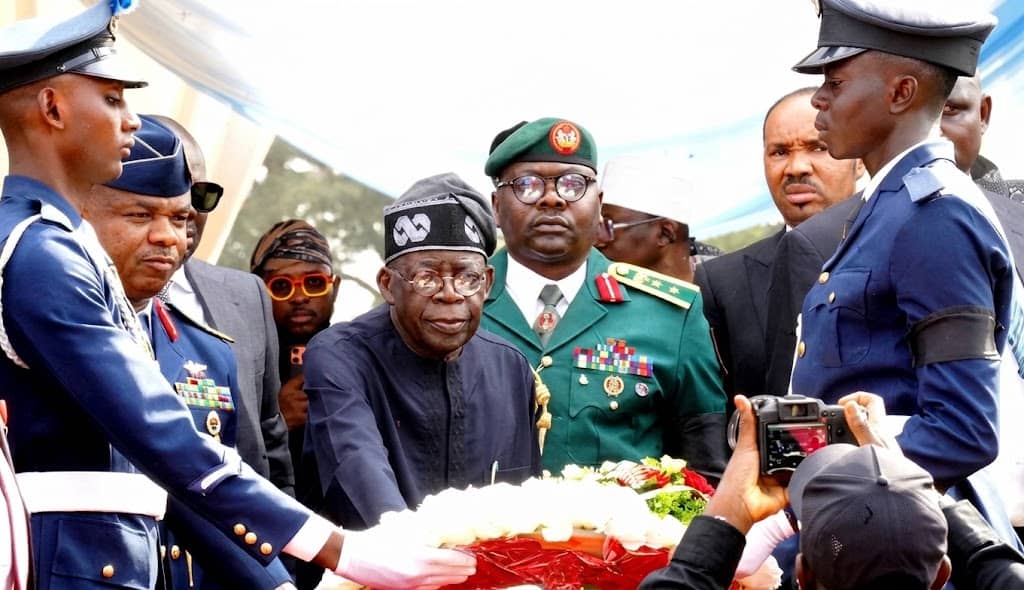
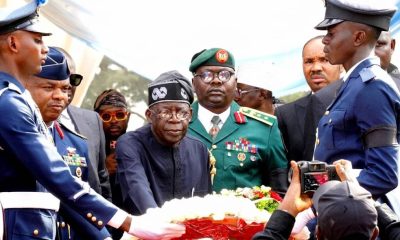
The 25 victims of the October 5 Nigerian Air Force (NAF) ATR 42 aircraft crash in Igbokoda, Ondo State were honoured by President Bola Ahmed Tinubu while leading top government officials and military chiefs in a wreath- laying ceremony.
The event was at the National Military Cemetery, Abuja, where a memorial service was organised, with the President announcing N2.5 billion financial support package and the allocation of houses to the families of the 25 victims of the Nigerian Air Force (NAF) aircraft accident in Ondo State.
He said each family will get N100 million and a three-bedroom flat at the Renewed Hope Housing Estate in Karsana, Abuja. In his words:
“As a tangible expression of the nation’s gratitude, I approve the allocation of three-bedroom flats in the Renewed Hope Housing Project in Abuja to the families of each of the military personnel who lost their lives in this accident.
“No home can ever replace the one you have lost, but they gave their lives for Nigeria, and Nigeria will give their family a home.”
President Tinubu said the gesture would also be extended to the immediate families of the civilians on board the aircraft.
“In addition to the flats, these officers would receive from this government N100m each,” he said, assuring the bereaved families of the government’s commitment to supporting them beyond the memorial ceremony.
“Long after the wreaths have faded, our commitment to these families must remain evergreen.”
The President, who pledged that the nation would neither forget their sacrifices nor abandon dependents of the departed, also promised a comprehensive investigation into the circumstances surrounding the crash.
He assured that the report of the probe would inform measures to strengthen military and civilian aviation safety standards, operational procedures and institutional accountability.
Describing the tragedy as a painful national loss, Tinubu said the welfare of military personnel and their families remained a sacred obligation of the nation, stressing that those who risked their lives in defence of the country deserved the best possible support from the government.
The President added: “As Commander-in-Chief, I reaffirm my administration’s commitment to a professional, well-equipped, and mission-ready Armed Forces. We will continue to prioritise modernisation, training, operational safety, and the welfare of our personnel.
“A nation that asks its sons and daughters to fly into danger must give them the best wing it can build. We must also stand by the families who bear the deepest cost of national service.”
Tinubu acknowledged the depth of their grief, particularly the additional anguish occasioned by the inability to recover the remains of their loved ones.
He said: “Your loss is our nation’s loss, and your grief is our grief. They were not merely passengers aboard the aircraft. They were our gallant officers, airmen and airwomen and fellow compatriots who travelled along with them.
“They carried dreams in their hearts and our flag on their shoulders. We could not bring them home to you, and our inability to recover their remains has made this harder still.
“But hear me, the sky did not take their honour. Nothing can diminish the worth of their lives or the love they leave behind.”
The President also commiserated with the leadership and personnel of the Nigerian Air Force and the wider Armed Forces over the loss of their colleagues, urging them to draw strength from one another and sustain their support for the affected families.
Chief of Air Staff (CAS) Air Marshal Sunday Kelvin Aneke, who spoke as the chief mourner, assured Nigerians that the Air Force would conduct a comprehensive and transparent investigation into the accident.
CAS Aneke pledged that the welfare of the bereaved families would remain a priority of the Service in line with the President’s directive, reaffirming the commitment of the Air Force to the safety and well-being of its personnel.
He maintained that the sacrifices of the fallen personnel would not be forgotten, assuring their families of the continued support and solidarity of the Service as they grappled with the consequences of the tragedy.
The CAS also presented the national flag to the next of kin of each of the deceased Air Force personnel in recognition of their service and sacrifice to the nation.
Read Also: Shettima to governors, LG chairmen: translate increased revenues into better living conditions for Nigerians
Assuring families of the deceased that the NAF’s responsibility towards them would not end with the memorial ceremony, he described the crash as “a profound loss to the Air Force, the affected families and the nation.”
The Air chief added that the service remained committed to the welfare, dignity and legitimate concerns of the bereaved families.
He stressed that they deserved continued engagement, transparent communication, assistance and compassionate treatment.
Aneke acknowledged that no speech or memorial ceremony could replace the loved ones lost by their spouses, parents, children, siblings and other relatives, noting that the pain of bereavement was deeply personal and could not be measured by the passage of time.
“Your grief is real, deeply personal and deserving of our utmost respect,” he said, acknowledging the sacrifices made by families who supported their loved ones throughout their demanding careers in service to the nation.
CAS Aneke also comforted children who had lost their parents, assuring them that memories, photographs and stories of their loved ones would remain a lasting connection to the lives they lived.
He called for continued compassion and understanding towards the bereaved, noting that grief differed from one individual to another and that every family deserved the freedom to mourn in accordance with its beliefs, traditions and personal circumstances.
The CAS said the tragedy went beyond the loss of 25 lives, as each victim represented a unique story of love, family, friendship, service and unfulfilled dreams.
He noted that the deceased comprised military personnel and civilians who had made different contributions to their families, communities and the nation.
According to him, their worth extended beyond their ranks, appointments and professional achievements to the relationships they built, responsibilities they carried and positive impact they made on the lives of others.
The Air chief expressed appreciation to President Bola Ahmed Tinubu, noting that his decision to attend despite his demanding national responsibilities demonstrated compassion, leadership and solidarity with the Air Force family.
On the circumstances surrounding the crash, Aneke acknowledged that questions remained unanswered, stressing that the investigation, as directed by the President, must be allowed to establish the facts through a thorough, impartial and evidence-based process.
He cautioned against speculation and premature conclusions, assuring that the Nigerian Air Force remained committed to communicating verified information responsibly and drawing appropriate lessons from the incident.
“I recognise that questions remain about the circumstances of the accident and that uncertainty can deepen the pain of bereavement. The relevant investigation must be allowed, as directed by Mr. President, to establish the facts through a thorough, impartial and evidence-based process.
“We will not substitute speculation for evidence or offer conclusions before they are properly published. We remain mindful of the importance of communicating verified information responsibly and of learning every appropriate lesson.
“Seeking answers with professionalism and integrity is part of the respect we owe both those who died and those who mourn them,” he said.
The Air Chief urged NAF personnel to reflect on the human purpose of their profession and ensure that the tragedy strengthened their commitment to operational safety, professionalism and the protection of lives.
Dignitaries at the solemn ceremony were: Senate President Godswill Akpabio; Ondo State Governor Lucky Aiyedatiwa; Defence Minister Gen. Christopher Musa; National Security Adviser (NSA) Mallam Nuhu Ribadu, Chief of Army Staff (COAS) Lt.-Gen. Waidi Shaibu; Chief of Naval Staff (CNS) Vice Admiral Idi Abbas and Inspector-General of Police (IGP) Tunji Disu.
Others were: National Intelligence Agency (NIA) Director-General Ambassador Mohammed Mohammed; Department of State Services (DSS) Director-General of Tosin Ajayi and National Emergency Management Agency (NEMA) Director-General Zubaida Umar Abubakar.
Those who died:
Crew:
Squadron Leader MI Aburime — Flight Captain
Squadron Leader AP Man-Ugwueje — Co-pilot
Flight Lieutenant IS Bako — Co-pilot
Warrant Officer Abubakar A — Aircraft Technician
Corporal Uguru HC — Aircraft Technician
Passengers:
Flight Lieutenant TL Lazarus
Flight Lieutenant M Akinloye
Flying Officer IM Adeshina
Master Warrant Officer Onwuka F
Master Warrant Officer Matini BA
Warrant Officer Nuhu FS
Flight Sergeant James RB
Flight Sergeant Mohammed AI
Sergeant Ani AE
Sergeant Izibenikien SI
Sergeant Alafuka C
Sergeant Mbadugha AN
Lance Corporal Ugwuba FC
Lance Corporal Eledan GE
Mrs Ezeh Nneka
Godstmine Tarabina
Joy Micheal
Sunday Micheal
Ukeme David
Gideon Omotola



Protecting the Ballot and ‘rig and die’ Slogan
Spread the loveBy Seyi Balogun, Lagos As the 2027 general elections approach, echoes of ‘rig and die’ slogan, a mantra...

Morocco’s Noor Quarzazate Complex: One of World’s Largest Solar Plants
Spread the loveIn 2016, Morocco installed a solar plant next to the Sahara Desert: 10 years later, it provides electricity...

“Hold My Hand”: Yul Edochie Breaks Down As He Recalls Father Pete Edochie’s Final Words
Spread the loveBy Felix Umande Nollywood actor Yul Edochie has recounted his final moments with his late father, veteran actor...

NDLEA Dismantles 4th Meth Lab in Enugu, Arrests Drug Baron, 5 Mexicans
Spread the loveBy Lazarus Oko The National Drug Law Enforcement Agency (NDLEA) has dismantled the 4th industrial-scale methamphetamine laboratory in...

President Tinubu Supports Families of NAF Plane Crash Victims With N100m, Flats in Abuja
Spread the loveBy Isa Abdul, Abuja The 25 victims of the October 5 Nigerian Air Force (NAF) ATR 42 aircraft...

Niger: Suspected FulaniTerrorists’ Attack, Kambari Vigilante Reprisal Leave 74 killed in Borgu LGA
Spread the loveBy Isa Abdul, Abuja The Niger State government has confirmed that death toll from the clash between Kambari...

Asisat Oshoala Looks Beyond the Pitch: Earns Post Graduate Degree
Spread the loveBy Nick Ibe, Abuja Super Falcons striker Asisat Oshoala has her focuse on the future beyond playing football...


FG Gives 600 Tailors N5m Support Each
Spread the loveBy Michael Lim, Jos The Industrial Training Fund, IMF, acting on behalf of the Federal Government, is floating...
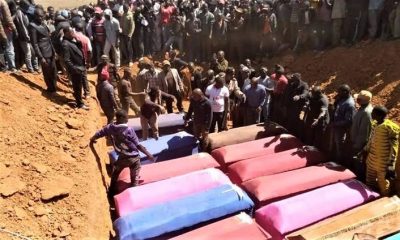

Plateau: Irigwe Mass Bury 17 Killed by Fulani, Allege Destruction of Farms
Spread the loveBy Michael Lim, Jos The 17 Irigwe people killed in a gunmen attack on Chando Zrreci (Tafi Gana)...

Kano to Establish Housing Regulatory Agency
Spread the loveBy Michael Lim The Kano State Government has set the stage to regulate the housing sector where rent...