
Interview
Nigerian Judiciary Now Elects Presidents, Governors, Senators –Agbakoba

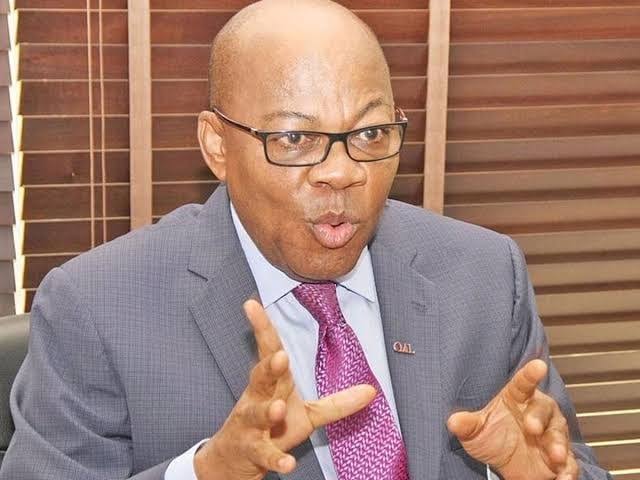
In this interview, former Nigerian Bar Association, NBA, President, Dr Olisa Agbakoba, SAN, examines the state of Nigeria’s judiciary, 66 years after independence. He discusses public confidence in the courts, conflicting judgments, judicial appointments, funding, executive influence and the reforms needed to strengthen justice delivery. He also calls for greater autonomy for the NBA and a constitutional approach to the relationship between religion and the state.
Disgraceful conflicting judgements that taint courts reputation
66 years after independence, how would you assess the Nigerian judiciary, today, particularly when compared with the past?
Generally speaking, I am not giving my personal view. I am giving the view of what I see the public saying. It seems to me that the perception of the public is that there is low performance on the part of the judiciary. They judge that from what they see as too much interference and uncertainty in the decisions of the courts, particularly in election petition cases.
The public perception is that it is not the place of the judiciary to determine political office holders, such as the President, governors and senators. It is the duty of the people who elect them. But it seems now that the judiciary has taken over that function, and everybody turns to the judiciary to ask, “Who will they elect?” That is not their function.
The judiciary should resist the invitation to be lured into becoming an electoral umpire. That is not its function. There are cases I have seen where a judge would take a case and you would ordinarily wonder: “Why is this case here? I am sitting in Jigawa, and this matter concerns a party dispute in Onitsha. Why is it here?”
Those are the issues. I think there is a lot that needs to be done to restore public confidence in the judiciary because there are so many fine judges on the bench. There are so many brilliant and distinguished judges serving today. But whether we like it or not, there is a very strong perception by the public that something is wrong.
What, in your view, are the major factors responsible for this perception, particularly the conflicting judgments that have become a concern?
There are two reasons for that. One is the public perception that judges are no longer following their oath and are influenced by considerations other than judicial considerations. Whether that is so or not, I don’t know.
But I have seen evidence of cases that look alike and should be decided alike, yet they receive different decisions.
The second problem has to do with competence. To be a judge is not an easy thing. You have to demonstrate competence. In the old days, when my father was around, there were competent people who did not apply for the job.
In fact, I know that the first Northern lawyer, Alhaji AbdulRazaq, the father of the current governor of Kwara State, declined to become a judge in 1969. They asked him and he said, “I just can’t afford to be a judge. How much are you going to pay?”
That was the quality of the time. It wasn’t a matter of being forced into it. People who wanted to be judges had already made successful careers as lawyers. They didn’t have the temptation to go there to make money. I don’t know if you can speak of that criterion today.
Appointment of judges
In the appointment of judges, it is very important that we talk about competence. If you do not have criteria for competence, then anybody can become a judge.
I have appeared before judges whom I am shocked by how they became judges. If a judge doesn’t understand the rudimentary rules of the law of evidence, how to decide cases or the substantive issues involved, then he will give poor-quality decisions. All these factors have brought into the public mind a very low perception of judges, and that needs to be turned around.
How, then, should judges and justices be appointed to ensure competence and integrity?
The appointment process should be transparent. I sat on the National Judicial Council, NJC, and we set up criteria for appointment. Unfortunately, those criteria are not being followed. I don’t know whether you are familiar with the objection process in churches when a couple wants to get married.
That is the way we should appoint judges. Put it in the newspaper: “The following 10 people have applied to be judges in the Anambra State High Court. Anyone who has any complaint or anything against them, please say so.” Put them through public scrutiny so that anything we have against them will be put on the table. I think that is a very important filter.
If the NJC criteria for the appointment of High Court judges, Court of Appeal justices and Supreme Court justices are followed, I think it will go a long way towards dealing with the problem we have. But they are not being followed. That is the problem.
Beyond the appointment process, what role should the NJC play in addressing conflicting judgments and other problems affecting the judiciary?
The problem with the NJC goes back a long way. The composition of the NJC makes the Chief Justice of Nigeria the almighty power. When I sat on the NJC, nobody could challenge the CJN. Nobody. Because he appoints virtually everybody.
The only CJN I can say tried to deal with the structural issues of the NJC was the late Dahiru Musdapher. When he became CJN, he constituted a high-powered 29-man panel to look at all these issues. The main thing we said was that if the NJC structure continued to be what it was, then we cannot have a great judicial policy.
Unfortunately, the late Dahiru Musdapher was only six months in office. He was the shortest-serving CJN in Nigerian history. Immediately he retired, all the reforms died. He appointed me to create model rules for the speedy administration of justice, but till today, not one person has remembered what the late Justice Musdapher put in place.
The NJC continues to be a body that doesn’t have any staff. It is unbelievable. We are all ex-officio members. The law says there are five NBA members and judges from the six geopolitical zones, and they are all appointed by the CJN. But what about the quality of people who work in the NJC?
There is nobody. So, they don’t deal with high judicial policy. There is no thinking about the concept of how to speed up justice. The only CJN I recall who was worried about that was Justice Dahiru Musdapher.
Is the lack of a clear response to conflicting judgments also responsible for the public’s concerns about the judiciary?
The only issue where speed of justice has relevance is politics. If it is the National Assembly where politicians have an interest, they have created a very fast timeline. Six months and it must be finished.
What about commercial cases? What about people on trial for murder who sit on death row for 30 years? When I was a political prisoner in Enugu under Abacha, I met two or three people on death row. One was an 80-year-old man who had been on death row for about 45 years.
Nobody cares. The only interest we see in speed is political cases because politicians have an interest. But the NJC ought to have an interest in saying: “If cases don’t go fast, nobody will be interested in going to the courts.”
All these rule-of-law things you see are just hype. We need to see a very active NJC. You mentioned conflicting decisions. Has the NJC ever made a statement on it? Has it ever said to judges, “why do you keep giving conflicting decisions?”
Nobody can tell what exactly constitutes a pre-election matter. Even me, at 50 years at the Bar, I am not sure that if a client comes to me and asks, “what exactly is a pre-election matter,” that I know.
There are too many conflicting decisions. In what cases can the courts determine to remove the chairman of a political party? I don’t know.These very basic issues heat up the polity.
You have mentioned the need for speedy justice. What specific changes would you like to see in the way courts operate?
The NJC and the constitutionally mandated organ to deal with judicial policy ought to do more about the speed of justice. You have to look at the rules of court and how the courts work.
Why are judges still handwriting and taking things down in longhand in today’s technological, digital age?
If Mr Justice Jones, who sat in the High Court of Lagos in 1830, were to come back to life today, he would recognise the system and say there has been no change. The entire architecture that underlies the way the legal profession works needs a complete overhaul.
Another issue is the relationship between Sharia law and Nigeria’s general legal system. What are the constitutional implications of the continued operation of Sharia alongside the general legal system?
The problem is the failure to observe Section 10 of the Constitution. When Sharia law first started in Zamfara, I led a strong team. We lost the case. We argued that the state could not declare that Zamfara was a Sharia state because it conflicted with the doctrine of separation of religion from the state.
Nigeria is a secular state. Nigeria is not a secular state for nothing. It does not mean Nigeria ceases to be a religious country. It means that religion is a private matter. It is in the Constitution.
But the Constitution is not obeyed. That is the problem. If the Constitution were obeyed, a lot of these conflicts around religion would have been dealt with. That is why I raised the issue that government should not sponsor pilgrimages to Mecca or Jerusalem. There should be nothing like Christian pilgrimage.
People criticised me for saying that, but that is what the Constitution says. The problem is that the Constitution is not being obeyed. There is no compliance with the Constitution.
How can the judiciary be insulated from executive influence, particularly through funding and infrastructure?
It goes back to the NJC. I sat on the NJC and raised this point: the Constitution confers on the NJC a funding structure. But the problem is that the funding structure set out in the Constitution is not being obeyed, and the NJC has not really pushed to have it obeyed.
I went to court. I went to three courts and I won all three cases. I raised the issue in the NJC that it has the power to determine its budget. Why doesn’t it take that power? At that time, it was Justice Aloma, the first female CJN.
I thought, since nobody would do it, I would do it. I won the cases establishing that the judiciary does not depend on the executive to be funded. Unfortunately, the effort I made and the decisions of the courts have not been implemented.
The NJC itself has not helped matters. Neither has the Supreme Court helped matters. There was a case before the Supreme Court on the funding mechanism of the Parliament, the executive and the judiciary. By Section 162(9) of the Constitution, the makers of the Constitution set out parameters for funding. The justices of the Supreme Court said that provision was unconstitutional.
That was shocking to me. Judges said that the way they should get money was unconstitutional. My predecessor, Alegeh, after he had been NBA president, went back to the Supreme Court and we again raised the issue that the Supreme Court does not have the power to declare the Constitution unconstitutional. It cannot, unless the National Assembly amends it.
The NJC sends an estimate to all branches of the judiciary across Nigeria. They gather together what is called an estimate and it is sent to the National Assembly for appropriation, not to the executive.
But what is going on now is that the NJC sends it to the executive, and somebody in the Ministry of Finance may then decide that the judiciary’s budget will be, for example, N100 billion. That is not their job. It is the job of the NJC to determine its budgetary allocation. That is the problem. And that is why Wike is building houses for them and they are gratefully accepting them. Is that his job?
It is the job of the judiciary to create a budget where it takes care of itself—its salaries, housing and courts. If a judge has collected a house from the executive, the public perception becomes: “Can this man really do justice in my case?”
You have raised concerns about judicial autonomy. What reforms would you prioritise to address these problems?
I would focus on the competence of a judge being properly weighed and subjected to public scrutiny. That is the area I would focus on, so that the person who becomes a judge is entitled, not only in law but by public confidence, to be called a judge.
Once the quality of a judge goes up, the judge is not interested in who you are. He does his job without fear or favour, then we are good. But if the judge is influenced by what he is going to get or fear of executive condemnation, then we don’t have a judiciary.
That is the most important thing: the quality of the individual judge sitting on the bench. You know what it was to be a judge in the old days? A judge was seen as a god. My father was Chief Justice, and you couldn’t just come to our house. Who were you to approach our house?
Even the Commissioner of Police in Enugu at that time couldn’t just come and see my father. He would come to the gate and sign the visitors’ book, saying, “My Lord, I am here to ensure that your safety and security are secured,” and he would go away.
My father never went to any social function. There was total seclusion. Today, it is strange. So, we need to go back to the period when a judge was found worthy in character and learning to occupy the bench.That would be my priority.
Apart from the quality of judges, what other reforms would you like Nigerians to see?
Funding. Judges must be free from executive control of their funding. They must be totally free. The constitutional provision that provides the framework for funding the judiciary should be a top priority. I should not need Wike to build me a house, nor should I need the executive to assign a budget for me to build courts. Once the judiciary controls its budget, that is the second important thing.
With quality judges and proper funding, I think you will see that judges will not be afraid. The words “without fear or favour” are very heavy words. The reason judges of old could dispense justice without fear or favour was because they were protected. They didn’t have anything to lose, either in terms of their emoluments or whatever.
There was a judge in a case in Benin who gave a decision adverse to the interest of the government. He was transferred from Benin to Maiduguri as punishment. Other judges would see what happened to him and become afraid. So, judges must be able to do their work without fear or favour. The Constitution needs to guarantee their tenure of office.
Look at how Justice Onnoghen, the CJN of Nigeria, was removed and nothing happened. Yet, the Constitution gives him protection. I was the one who defended him at the NJC trial against the way he was removed.
Finally, as a former NBA President, you have also called for greater autonomy for the legal profession. What changes would you like to see in the NBA?
I don’t even sit on the body that disciplines lawyers, yet I am their president. It is ridiculous. So, please don’t assume that the NBA is what you think it is. It has a powerful voice, but I think two things should happen.
Either the system should free the NBA and allow it to operate like ICAN. ICAN controls its own examination. There is no law school for ICAN; it has its own examination process and nobody controls it.
For us, everybody goes to law school. The NBA is too constrained by government bureaucracy and, as a result, it is not anywhere near as influential as people think. That is why, for me, the NBA cannot do much unless to play an advocacy role. But I want the NBA to have the sort of power that its equivalent in London has.
If a lawyer misbehaves in the United Kingdom, you complain to the professional body. If it finds that your complaint is justified, it can impose the relevant punishment, including striking the lawyer’s name off the roll.
But in Nigeria, by the time you go through the hierarchy and get to the Legal Practitioners Disciplinary Committee and all of that, the whole process is muddled in statutory bureaucracy.
We should regulate ourselves. Everything about the law profession should be done by us, not the government.We should determine the curriculum that lawyers require. We should determine the discipline that is required. We should determine the excellence that we will bestow on those found worthy of it. That is when you will have a strong NBA.
When there is misconduct, the decision should be taken at the local bar. If a lawyer in Lagos misbehaves, the Nigerian Bar Association, Lagos Branch, should be able to deal with it.
Source:Vanguard






FGN cannot continue to remain a distant observer to the continuing marginalisation of the Tiv people and other minorities.
— Alex Adum, PhD
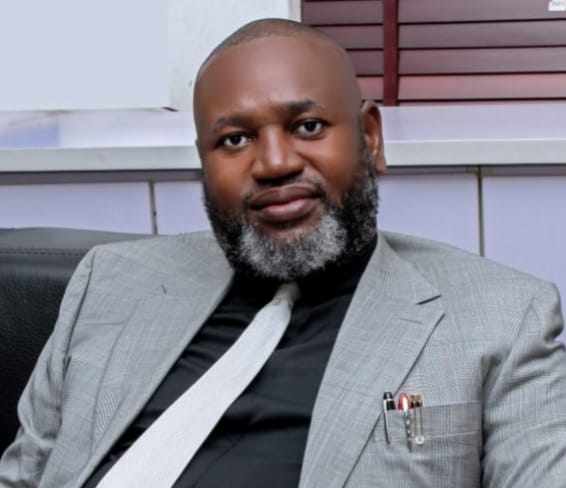
Press Icon Benue State Correspondent, Felix Umande, recently engaged Barr. Alex Ter Adum, PhD who served as Commissioner for Commerce in 2011 and later Attorney General and Commissioner for Justice under the Governor Gabriel Suswam’s administration in Benue state in an interview. He is now a member of the ADC.
Excerpts:
On the Senate-Passed Electoral Bill
The amendment is being marketed as reform, but in substance, it preserves the very ambiguity that has undermined electoral credibility in Nigeria. The Supreme Court’s interpretation in Atiku Abubakar v INEC (2023) already weakened the binding force of electronic transmission under the Electoral Act 2022. Instead of curing that defect, the National Assembly has now codified it.
By empowering Independent National Electoral Commission (INEC) to electronically transmit results but simultaneously permitting manual backup in cases of “network failure,” the law creates a loophole wide enough to drive electoral malpractice through. In a country where network coverage gaps are predictable and sometimes conveniently invoked, this fallback clause becomes a strategic escape hatch
If the Federal Government under the All Progressives Congress truly desires electoral integrity, it must legislate certainty not discretion. Electronic transmission should be mandatory, with technological redundancy such as satellite backup and real-time public viewing portals.
Democracy cannot be built on conditional transparency.
On the Makurdi High Court Ruling Against Governor Alia’s Public Order
The decision of the High Court of Benue State is not merely a legal correction; it is a constitutional reminder. Governor Hyacinth Alia’s directive, which effectively restricted freedom of movement and assembly, reflected a troubling overreach of executive authority.
Section 41 of the Constitution guarantees freedom of movement. Section 40 guarantees freedom of association. These are not privileges granted at the discretion of a governor; they are entrenched rights. When executive orders encroach on these liberties without legislative backing or clear emergency justification, the courts must intervene, and rightly so.
Governance must never descend into personalized rule. The symbolism of that judgment is profound: Benue State remains governed by law, not by decree.
On the Marginalization of Tiv Communities in Taraba and Nasarawa
The plight of Tiv communities in Taraba State and Nasarawa State is a longstanding structural issue that requires a multi-layered response.
First, there must be institutional political engagement. Representation in state assemblies, local governments, and federal appointments must reflect demographic realities in these states to reflect inclusion in line with their civic rights under the constitution; a fact which is currently not happening. Mind you, these are citizens who work and pay taxes in these states and contribute to the GDP of the states so to deny them civic and political rights in these states where they are aborigines and have no other place to call home is discrimination, which is against the letters and spirit of section 42(1) of the CFRN 1999.
Secondly, the security architecture of Nigeria and particularly in these states must be neutral and proactive; many Tiv settlements face displacement without adequate federal protection in their ancestral homes in these states. This shouldn’t be so, because as citizens of Nigeria they are constitutionally entitled to a legitimate expectation of protection from both the State and Federal Government of Nigeria because that is the primary responsibility of government under section 14 (2) of the constitution.
Thirdly, there should be coordinated constitutional litigation by the Tiv nation against these atrocities being perpetrated against our people, especially where land rights and political participation are infringed. And in this regard, I want to commend all vocal voices against the marginalisation of the Tiv people in these states and particularly Prof. Zack Gundu, Vice Chancellor University of Mkar, whose stringent and pointed accusations of the Nasarawa State Government’s belligerence over attacks and land grab against indigenous Tiv communities in the State, has pitched him in an ongoing defamation litigation at the FCT High Court where I am happy to be ably led by the Learned Sebastine Hon, SAN amongst several lawyers to appear pro bono in defence of the professor and the Tiv Nation.
So let me seize this opportunity to pointedly tell the Federal Government of Nigeria led by the All Progressives Congress that it cannot continue to remain a distant observer to the continuing marginalisation of the Tiv people and other minorities. Infact protecting minority rights within federating units is a core constitutional responsibility of the Federal Government. Silence or selective intervention only deepens alienation and promotes the feeling of minorities being second class citizens in their own country.
On Corruption, Transparency, and Accountability in Benue
Let me say this: Transparency is not declared; it is demonstrated. When government procurement processes are opaque, when budget performance reports are irregular, and when local governments appear financially subordinated, public suspicion is inevitable.
Secondly, government and the public service as a whole is built on the ethos of due process and the rule of law. Requirements, which must be upheld as sacrosanct because governance is a public trust, which must at all times be managed with trust accountability in mind. You cannot run government as if you were managing your own private estate by violating establishment due process and law with flagrant impunity.
The current administration has yet to convincingly show that fiscal governance in Benue for instance meets the standards of open government. Internally generated revenue data, security votes, and capital project allocations are opaque and are not subjected to public scrutiny.
I say this because in spite of over the 1 trillion naira revenue receipts accrued to the state from FAAC, IGR and other sources, this government’s performance in terms of open, transparent budgeting and delivery of projects leaves a yawning gap between revenue and results. Moreover, consistent revelations of whimsical and capricious procurement over invoicing and outrageous inflation of contracts leaves much to be desired, in terms of whether Benue is not being stupendously short changed; and is getting value for its money in the modestly delivered infrastructure projects. Mind you most of these projects are also being handled by contractors of highly questionable pedigree who are mostly selected not by competitive tender in line with the state public procurement law but behind closed doors with closed contract figures that are determined solely by one man.
As an opposition party, we are seriously alarmed by the collapse of due process in all facets of governance in Benue State under the APC. Opposition is not hostility; it is democratic responsibility. So, we in the African Democratic Congress insist that public funds must be traceable, measurable, and accountable.
Governance cannot thrive on faith alone—it must rest on verifiable transparency.
Can ADC Match the Ruling Party in 2027?
The political terrain is shifting. Nigerians are experiencing economic hardship, currency instability, and persistent insecurity. Incumbency is no longer synonymous with inevitability or invincibility.
The ADC is building quietly but strategically, strengthening grassroots structures, attracting technocrats, and consolidating reform-minded coalitions. Unlike legacy parties driven by patronage networks, ADC’s appeal lies in credibility and policy clarity.
By 2027, the contest will not be between big names; it will be between exhausted governance and renewed alternatives. Momentum is not measured by noise but by organization, and ADC is organizing itself to align with the true aspirations of Nigerians. And 2027 is not even about partisanship per se but between the APC (the oppressors) v Nigerians and the ADC stands with Nigerians and Nigerians will definitely stand with ADC, so we are very sure of victory.
On Claims that Benue is Governed Like a Private Enterprise or Parish House
Perception often mirrors experience and reality. When policy formulation appears centralized within a narrow circle, when dissent is discouraged, and when critical stakeholders feel excluded, governance begins to look insular.
Governor Hyacinth Alia emerged from a clerical background, which commands moral respect. However, democratic administration requires broader consultation beyond any ecclesiastical template. A state is not a congregation; it is a constitutional entity composed of diverse political, social, ethnic, and economic interests.
Leadership must be participatory. Institutions not personalities must define governance. So I ask you, what level of inclusion or multi stakeholder participation in government rather than unilateralism has been promoted in Benue since 29th May 2023? A democratically elected government, presupposes citizens participation not exclusion. The fact one is elected through the sovereign mandate of the people democratically makes it incumbent on him or her to govern democratically, not exclusively because like Abraham Lincoln famously said at the Gattysberg Address – Democracy is a government of the people, by the people and for the people – it is not a government of – One man, by one man and for himself.
On the Defection of Senator Gabriel Suswam
Senator Gabriel Suswam’s political movement underscores the fluidity of Nigeria’s political class. Defections are rarely ideological; they are often strategic recalculations.
However, the electorate is becoming more discerning. Political migration without policy reorientation no longer guarantees electoral advantage.
What Benue people demand is improved security, economic revitalization, infrastructure renewal, and accountable leadership. To what extent H.E, Sen. Suswam’s defection from the PDP to the APC would guarantee that under the extant arrangement I wouldn’t be able to hazard a guess not being a member of the PDP or APC.
Ultimately, however, 2027 will not be decided by elite alignments but by public judgment—both of the Benue State Government and of the Federal Government under the All Progressives Congress.
In the end, I think the central issue across all these questions is institutional integrity. Whether it is electoral reform, executive restraint, minority protection, fiscal accountability, or party competition, aspirations of Nigerians at this time.
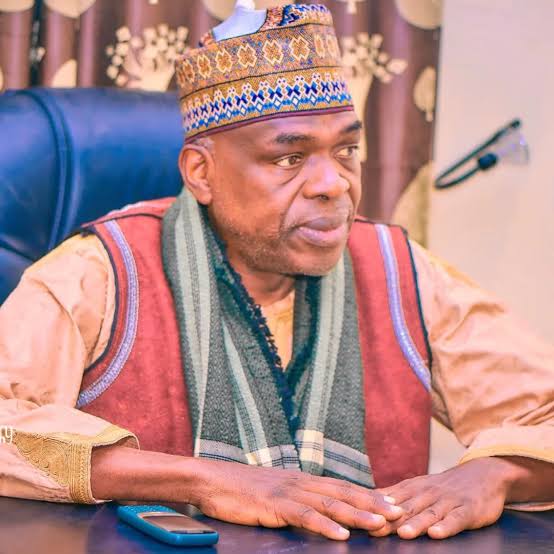
The Miyetti Allah Cattle Breeders Association of Nigeria has expressed surprise over the proposed sanctions against the association by the US lawmakers, insisting that the group is peaceful and law-abiding.
Baba Othman Ngelzarma is the National President of the Miyetti Allah Cattle Breeders Association of Nigeria (MACBAN). In this interview, he said there is no justification for the US Congress to contemplate designating herders’ umbrella body as a terrorist organisation after interfacing with them at the US Embassy in Nigeria and asked President Bola Ahmed Tinubu to protect his members from existential threat.
The U.S. Congress plans to designate your association as a terrorist organisation. How did you receive this?
We received it with the greatest shock because we don’t know what the association has done to deserve such a sanction because this is an association that was established 42 years ago as a non-violent and non-religious association which is a producer association that is created to protect the interests of cattle breeders irrespective of their religion and tribal affiliation. It’s a trade group that is established for the purpose of protecting the interests of cattle breeders in the country.
And it is the only pastoralist democratic group we have, democratic pastoralist group we have in the country because the leadership of this association comes through election. And this is an association that is not armed in anyway. This is an association that has never taken responsibility for any crime, that has never supported any criminality. It is not cooperating with any group of criminals.
In fact, the association even cooperates with the security agencies to fight crime and to search out criminals wherever they are. As a result of this, many leaders of the association have lost their lives. So, we are really surprised that this association is still being considered for sanction. We don’t know for what reason; we are not a faceless group. We have offices in all the 36 states and local governments. We operate with the Nigerian government. We operate within the ambit of the law. We work with the government at the state, local government and the federal levels. We work with all security agencies.
We even work with a lot of international communities in our effort to broker peace between farmers and herders. So we are really surprised. Our activities are very clear.
Our books are open for everybody to come and check. We have never gotten involved in any criminality. We have never been punished or taken to any court for any criminality, even within the country.
Have you made any effort to make your case, especially to international community, to explain that indeed you have also suffered monumental losses?
We did. When the report first came in November, we compiled a report and submitted it to the American Ambassador for onward resolution to the Congress. We have developed a comprehensive report showing that our members are also victims of the crisis, with lists of those who have been killed, with dates and locations, and with pictures. We have gone to the extent of even including letters of our activities with international communities, government and its agencies.
We have made a comprehensive submission to the American Ambassador for onwards Resolution to the U.S. Congress.
Did you receive acknowledgement or reply to your reports?
We received acknowledgement, but we did not receive any reply. Even the contingent who came last time met with us; the American contingent who came for this purpose, met with us at the American Embassy.
They came with that same report that we have sent. So, we thought this thing was receiving positive attention. All of a sudden, we saw yesterday, another report planning to sanction us as a criminal group. We are not a criminal group.
What do you think will happen if this plan is actualised and what is your call to the federal government?
Our call to the federal government will remain for it to protect us as citizens, because the federal government knows this association. The federal government and subsequent governments of Nigeria have been working with this association in so many ways. We are not a faceless group. We are always open. Our offices are everywhere. So, our call to the federal government is for it to present our case the way it is, so that the American Congress can understand and reverse this decision. That is because this decision, as it is now, is very dangerous for the association and its membership in general.
Culled: Daily Trust



INEC: Nigeria’s Registered Voters Over 103 Million Ahead of 2027
Spread the love–PVC Collection Begins Friday By Son Tertsea, Abuja The Independent National Electoral Commission, INEC, Chairman, Prof. Joash Amupitan,...


32 on Board Crashed Air Force ATR-42 Aircraft in Ondo
Spread the loveBy Seyi Balogun, Lagos The crashed aircraft in the Igbokoda area of Ondo State on Monday belonging to...

NITDA warns Nigerians against sharing NIN, BVN, others with AI platforms
Spread the loveDo not share sensitive personal information, including identification numbers, bank details, photographs and medical results, on artificial intelligence...


NNPC Retail Gives Customers ₦66 Off Every PMS Litre…As Independence Anniversary Promotion Opens at Mega Stations
Spread the loveBy Aliyu Musa NNPC Retail Limited commenced its week-long 66th Independence Anniversary fuel promotion on 1 October 2026....
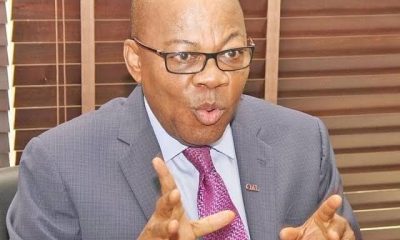

Nigerian Judiciary Now Elects Presidents, Governors, Senators –Agbakoba
Spread the loveIn this interview, former Nigerian Bar Association, NBA, President, Dr Olisa Agbakoba, SAN, examines the state of Nigeria’s...


Six Missing as Boat Capsizes on River Buruku
Spread the love–Blue Economy Commissioner asks for calm By Vincent Tyosuugh Six passengers have not been accounted for as the...

2027 Poll Success: INEC Inaugurates Youth Ambassadors
Spread the loveBy Isa Abdul, Abuja As part of efforts to strengthen its engagement with young Nigerians and promote informed,...
2027 election: INEC opens portal for ad hoc staff recruitment
Spread the loveBy Nick Ibe, Abuja Activation of the online portal for the recruitment of ad hoc staff for the...

2027: Tompolo Rallies Taraba For Tinubu, Donates 25 Campaign VehiclesBy Aliyu Musa
Spread the loveAs campaigns for the January 2027 presidential election gather momentum, the PBAT Door-to-Door Movement has launched its grassroots...

29 years after:Unimaid Business management class of 97 holds reunion
Spread the love*Plans intervention or games for young entrepreneursBy Aliyu Musa THE University of Maiduguri business management class of 1997...