
Health
To Protect Health Investments: FG Inaugurates Joint Task Team


–ICPC member
By Son Tertsegha, Abuja
In its bid to enforce preventive controls and protect investments in Nigeria’s health sector, the Federal Government has inaugurated a Joint Task Team comprising staff of the Federal Ministry of Health and Social Welfare and the Independent Corrupt Practices and Other Related Offences Commission (ICPC).
According to Ado Bako Assistant Director, Information and Public Relations, of the Health ministry in a press release on Monday, 17th August, 2026, the Coordinating Minister of Health and Social Welfare, Prof. Muhammad Ali Pate said the initiative is a deliberate shift from the old practice of responding to wrongdoing after it had occurred to one of identifying vulnerabilities early, closing loopholes and strengthening systems before public resources are lost. The statement said:
“Every naira invested in our health system carries an obligation: to reach the facility, the health worker, and the Nigerian whose life depends on it. When those resources are diverted, the cost is not abstract. It is a medicine that never arrives, equipment that is unavailable when needed, or a service that falls short. In this sector, corruption can cost lives.”
Prof. Pate sees the Joint Task Team as “an instrument for institutional change”, whose mandate is centred on identifying institutional vulnerabilities, strengthening preventive controls and improving oversight across the health sector.
Under BHCPF 2.0, the Federal Government has deployed 774 Performance and Financial Management Officers, one to every Local Government Area, to independently verify the receipt and utilisation of funds. Verified National Identification Numbers are also being used to strengthen beneficiary authentication and reduce duplication, while digitalisation is improving transparency and traceability.
The Task Team builds on the Federal Government’s Red Letter of October 2025, which called on communities and ward health committees to track whether BHCPF funds reach their facilities. The Joint Task Team now adds structured institutional oversight to that citizen vigilance.
The Joint Task Team will conduct assessments following each quarterly disbursement of the Basic Health Care Provision Fund, with the BHCPF Secretariat serving as its Secretariat. The Team is co-chaired by the Director of Hospital Services, representing the Ministry, and a Director of the ICPC, with membership drawn from relevant supervising offices and departments. The Memorandum of Understanding runs for two years, subject to renewal.
The Permanent Secretary, Federal Ministry of Health and Social Welfare, Daju Kachollom S. mni, said protecting health-sector resources is fundamental to the Ministry’s mandate to save lives, reduce the physical and financial pain of ill-health, and produce health for all Nigerians. In her words:
“This is a Team designed to be embedded in how the Ministry already works, not to sit outside it.”
The Chairman of the ICPC, Dr. Musa Adamu Aliyu, represented by the Executive Secretary of the Commission, Mr. Clifford Oparaodu, said the partnership strengthens preventive oversight of health-sector resources, particularly the BHCPF.
“Corruption in the health sector is not measured only in financial losses or accounting irregularities. The losses are measured in maternal and infant mortality rates, rates of immunisation, mortality from preventable diseases, easy and affordable access to medical care at all levels.”
The Coordinating Minister, alongside the Chairman of the ICPC, formally inaugurated the Joint Task Team.


By Sukhman Rekhi
According to a dietitian, soy is the best plant-based protein for improving cholesterol levels.
Soy is the top plant-based protein for lowering cholesterol because it is high in protein and low in saturated fat.
Eating about 25 grams of soy protein each day is linked to lower LDL, or “bad,” cholesterol.
Add soy foods like edamame, tofu, tempeh, or soybeans to meals and snacks.
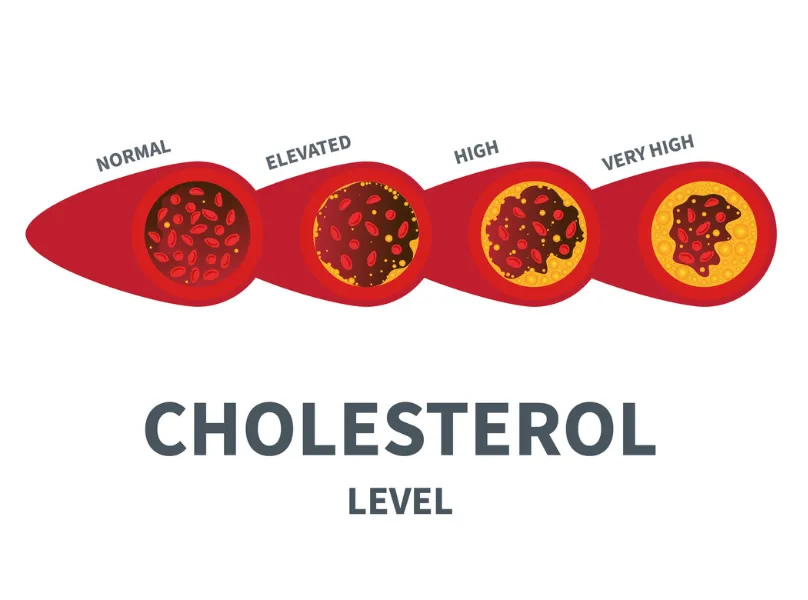
High cholesterol is one of the leading risk factors for heart disease. Factors like eating a diet high in saturated fats, physical inactivity, alcohol and tobacco use, and underlying conditions like obesity or lupus can all raise your risk of high cholesterol.
However, the foods you eat can lower your cholesterol over time and support your heart health. Eating plant-based proteins is a promising way to improve your cholesterol, and experts say there’s one plant-based option that’s a clear winner: soy.
Why Soy Is the Top Choice for Lowering Cholesterol
Soy is a recommended plant-based protein for people looking to lower cholesterol because it provides high-quality protein and is naturally low in saturated fat.
“Soy is the pick, whether you eat it as edamame, tofu, tempeh, or whole soybeans,” said Lauren Manaker, MS, RDN, a registered dietitian-nutritionist based in Charleston, South Carolina. “The data shows that eating about 25 grams (g) of soy protein a day is linked to lower LDL (or ‘bad’) cholesterol.”
While other plant-based protein options like lentils, beans, or quinoa can also support your heart health, there are a few main reasons why soy is the clear standout. “It’s a complete protein, as it contains all nine essential amino acids in amounts close to what your body needs, which is uncommon among plants,” Manaker said.
The nine essential amino acids offer several benefits, like repairing your tissues and supporting your immune system.
Because soy includes the essential amino acids that help keep your body functioning, it’s an easy way to add it to meet your protein needs without having to combine it with other plant-based protein sources. “It makes for an easy swap for meat and dairy without giving up protein quality,” Manaker added.
But soy also provides other valuable nutrients that help lower cholesterol. “Soy is naturally low in saturated fat and includes some plant-based omega-3 fat called alpha-linolenic acid (ALA),” Manaker said.
“It also offers protein, fiber, and healthy fats in one food.” Manaker maintains that soy is better researched than other plant proteins, so it has more established evidence of cholesterol-lowering benefits than foods like peas, nuts, or oats.
While soy is considered a top choice, Manaker cautioned that it’s not the only good plant protein option. “Beans, lentils, and chickpeas have strong evidence too,” she said. “Soy edges ahead mainly because it packs more protein per serving and comes in so many forms, from a glass of soy milk to a block of tofu.”
Nutritional Benefits of Eating Soy
Overall, soy offers a variety of heart-healthy benefits, thanks to its high protein, low saturated fat, fiber-rich, and mineral-rich properties.
“High-quality protein helps you feel full and makes it easier to replace animal proteins that carry more saturated fat,” Manaker said. In particular, “polyunsaturated fats, including omega-6 linoleic acid and omega-3 ALA, are linked to lower LDL when they replace saturated fat in the diet.” Essentially, when you regularly eat foods high in saturated fats, it can raise LDL (“bad”) cholesterol. But the unsaturated fats in soy can help lower LDL cholesterol over time.
By Isa Abdul, Abuja
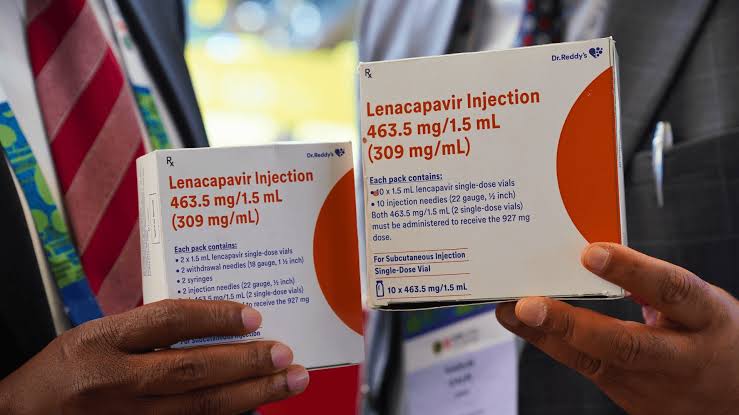
The first generic version of lenacapavir, a twice-yearly injection used to prevent HIV infection, has been given tentative approval by the U.S. Food and Drug Administration (FDA), in a major development for global HIV prevention.
The generic drug which has been developed by India’s Dr Reddy’s Laboratories, and is expected to cost about $40 per person annually, will be made available across 120 low- and middle-income countries, including Nigeria.
The injection has demonstrated near-total effectiveness in clinical trials, offering an alternative to daily HIV prevention pills. The approval is expected to accelerate access to affordable prevention options, although local regulatory processes, funding and distribution remain key to its rollout.
By Michael Lim
The Nigeria Centre for Disease Control (NCDC) has disclosed that the two suspected Ebola cases reported in Yola, Adamawa State, have tested negative following two rounds of laboratory testing.
The Agency noted in a statement that it is working with the Adamawa State Government to investigate the cases, which were isolated and tested.
The NCDC clarified that the index case previously confirmed in the Federal Capital Territory remains the only confirmed Ebola case reported in Nigeria.
It urged Nigerians to remain calm and rely on official government and public health channels for accurate information.
The Agency further advised anyone experiencing symptoms such as fever, severe weakness, headache, muscle pain, vomiting, diarrhoea or unexplained bleeding, particularly after possible exposure, to seek immediate medical attention and provide healthcare workers with relevant travel and contact history.



ABU DSS student wins N1m prize at essay competition
Spread the loveA student of Demonstration Secondary School, Ahmadu Bello University, Adejoh Joshua Unekwu, has clinched a second position at...


Football Legend, Segun Odegbami, Attacked in Abeokuta, Escapes Death
Spread the loveBy Seyi Balogun, Lagos With no clear knowledge of the assailants or their motive, former Super Eagles captain...


FG, Chinese Firm Agree to Produce CNG Buses in Ibadan
Spread the loveBy Seyi Balogun, Lagos To introduce compressed natural gas-powered buses and establish a local assembly plant, to reduce...


JAMB UTME Free for Candidates with Disabilities, Fee Refund at Exam Centres
Spread the loveBy Isa Abdul, Abuja Special examination support has been established for candidates with disabilities, by the Joint Admissions...


Sharing Money is Digging Hole for Eco Woes, Can’t End Poverty – Fasua
Spread the loveBy Son Tertsea, Abuja A warning has been issued that distributing cash to Nigerians without addressing underlying economic...


“I conceded defeat to Buhari, a statesman that loved God, Nigeria.’ –Jonathan
Spread the loveBy Isa Abdul, Abuja The reason for conceding defeat to the late President Muhammadu Buhari in the 2015...


Secrets Behind Flamingos’ World Cup Win – Busari:
Spread the loveAfter guiding Nigeria’s Flamingos to a historic FIFA U-17 Women’s World Cup triumph, head coach Akeem Busari speaks...


Failure to Secure NNPCL GMD Job: EFCC Arraigns Woman Over N1.1 bn Fraud
Spread the loveBy Isa Abdul, Abuja One Halimat Adenike Tejuosho was Wednesday arraigned before a High Court of the Federal...

Let’s Honor All Pioneer Paramount Rulers Across Tiv and Idoma Lands.
Spread the loveBy Peters Ichull Today, the Tiv nation and the entire Benue family pause in solemn reflection to mark...


NKST Synod Says: “Alia Is A Talk-And-Do Governor”, Deserves Re-election in 2027
Spread the loveBy Felix Umande The NKST Synod has declared its support for the re-election of Benue State Governor, Rev....