
Health
AMLSN to FG: Investment in Smart Diagnostics, Disease Surveillance and Laboratory Infrastructure

By Nick Ibe
The Federal Government has been urged to prioritise investment in smart diagnostics, disease surveillance and laboratory infrastructure. This was the advice of the Association of Medical Laboratory Scientists of Nigeria (AMLSN) as members commenced the 19th Annual Public Health Lecture and national executive council (NEC) meeting in Enugu.
The laboratory professionals also stressed that the Federal Government’s national security and universal health coverage cannot be possible without a strong medical laboratory system in place.
The theme: “Smart Diaygygnostics: The Role of Medical Laboratory Scientists in National Security and Universal Health Coverage,” which guided deliberations further stressed that medical laboratories were the country’s first line of defence against infectious diseases, antimicrobial resistance, bioterrorism and emerging public health threats.
The lab professionals noted that accurate diagnosis remained the foundation of effective healthcare, evidence-based policymaking and national preparedness.
Chairman of the occasion and Provost of the Federal College of Medical Laboratory Science and Technology, Professor Nkereuwem Etukudoh, said Nigeria was at a defining moment in the evolution of medical laboratory science, urging government at all levels to recognise diagnostics as a strategic national asset rather than a support service. In his words:
“There can be no health security without diagnostic security, and there can be no national security without laboratory intelligence. Every solution to our healthcare challenges begins in the laboratory. No laboratory results, no treatment; no data, no policy; no diagnosis, no security.”
He described the recent passage by the National Assembly of the bill establishing the Federal University of Medical Laboratory Science and Technology, Jos, as a historic milestone that would position Nigeria as Africa’s leading centre for specialised medical laboratory education, research and innovation.
Etukudoh appealed to President Bola Tinubu to promptly assent to the legislation, as the proposed institution would produce highly skilled manpower for disease surveillance, biotechnology, diagnostics, postgraduate training and universal health coverage across the continent.
The provost further stated that smart diagnostics required investment in skilled professionals, accredited laboratories, digital health systems, quality assurance and policies that integrate laboratory medicine into national development planning.
He warned that pandemics, antimicrobial resistance and emerging pathogens posed threats comparable to conventional security challenges, saying, “The first line of defence against these threats is the medical laboratory scientist. We identify the enemy before it strikes and provide the evidence that drives treatment, policies and national response.”
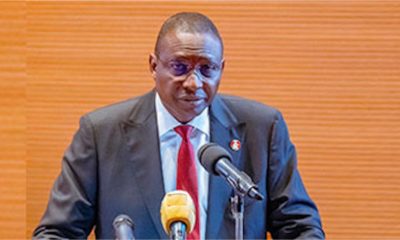
The Registrar and Chief Executive Officer of the Medical Laboratory Science Council of Nigeria (MLSCN), Dr. Donald Ofili, in his contribution, proposed a reform agenda aimed at strengthening regulation, transparency, institutional integrity and patient safety within the profession.
Ofili argued that the council’s transformation agenda would reposition it as a regulatory body digitally driven, transparent and globally respected institution. In his words:
“Regulation is not an obstacle to professional growth; it is the foundation of public confidence. Every reform we pursue must ultimately answer one question: Does it improve patient safety? If the answer is yes, we will pursue it with determination.”
The MLSCN boss warned tertiary institutions against unethical practices during accreditation exercises, including borrowing laboratory equipment or presenting temporary personnel as permanent staff, saying such actions undermine educational quality and endanger patient safety.
He also urged practitioners to embrace ethical conduct, continuous professional development, quality management systems and strict compliance with regulatory standards, while directing that all council payments be made only through approved channels to eliminate fraud.
Earlier, the National President of AMLSN, Dr. Casmir Ifeanyi, said modern medical laboratories had become indispensable to disease surveillance, outbreak preparedness, genomic intelligence, blood safety, emergency response and precision medicine.
He noted that although Nigeria continues to battle infectious diseases, rising cases of antimicrobial resistance,d non-communicable diseases and the migration of healthcare professionals, strengthening laboratory systems remains one of the most effective strategies for addressing the challenges.
“Universal Health Coverage cannot be achieved without Universal Medical Laboratory Coverage. Before treatment, there must be testing. Before intervention, there must be evidence. Before policy, there must be data,” he said.
Ifeanyi lamented that millions of Nigerians, particularly those in rural communities, still lack access to quality laboratory services because many primary healthcare centres operate without functional diagnostic facilities, leading to delayed diagnosis, poor treatment outcomes and preventable deaths.
He urged the Federal Government to develop a National Medical Laboratory Diagnostics Strategy, expand laboratory networks, invest in molecular diagnostics, genomic surveillance and local production of diagnostic reagents, while strengthening research and recognising medical laboratory scientists as indispensable partners in national development.
The AMLSN president commended President Tinubu for ongoing reforms in the health sector and expressed optimism that the president would soon sign into law the bill establishing the Federal University of Medical Laboratory Science and Technology, Jos.
He also acknowledged state governments, particularly the Enugu State government, for investing in healthcare infrastructure, human capital development and digital governance, describing such interventions as essential to building a healthier, safer and more prosperous Nigeria.
At the event also, a keynote lecture was delivered by the Medical Director of the National Orthopaedic Hospital, Enugu, Professor Emmanuel Iyidobi, on optimising laboratory systems for improved healthcare delivery and national security.
The event attracted medical laboratory scientists, healthcare professionals, policymakers, academics and stakeholders from across the country.
By Isa Abdul, Abuja
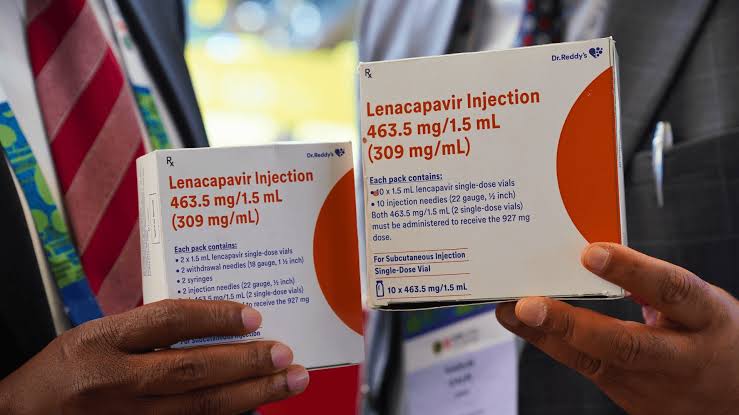
The first generic version of lenacapavir, a twice-yearly injection used to prevent HIV infection, has been given tentative approval by the U.S. Food and Drug Administration (FDA), in a major development for global HIV prevention.
The generic drug which has been developed by India’s Dr Reddy’s Laboratories, and is expected to cost about $40 per person annually, will be made available across 120 low- and middle-income countries, including Nigeria.
The injection has demonstrated near-total effectiveness in clinical trials, offering an alternative to daily HIV prevention pills. The approval is expected to accelerate access to affordable prevention options, although local regulatory processes, funding and distribution remain key to its rollout.
By Michael Lim
The Nigeria Centre for Disease Control (NCDC) has disclosed that the two suspected Ebola cases reported in Yola, Adamawa State, have tested negative following two rounds of laboratory testing.
The Agency noted in a statement that it is working with the Adamawa State Government to investigate the cases, which were isolated and tested.
The NCDC clarified that the index case previously confirmed in the Federal Capital Territory remains the only confirmed Ebola case reported in Nigeria.
It urged Nigerians to remain calm and rely on official government and public health channels for accurate information.
The Agency further advised anyone experiencing symptoms such as fever, severe weakness, headache, muscle pain, vomiting, diarrhoea or unexplained bleeding, particularly after possible exposure, to seek immediate medical attention and provide healthcare workers with relevant travel and contact history.
By Michael Lim
Two individuals have been isolated by health authorities following suspicion that they may be infected by Ebola disease in Nigeria’s North-East region as they are being subjected to investigations and lab tests.
An update on the disease situation by the Nigeria Centre for Disease Control and Prevention (NCDC), said contact identification and listing were ongoing, while samples from the suspected cases were being subjected to laboratory testing.
It clarified that the classification of the individuals as suspected cases did not mean they had tested positive for Ebola, noting that confirmation would depend on laboratory results.
The public was advised to maintain proper hand hygiene, practise enhanced sanitation and follow preventive guidance issued by public health authorities.
The update added that further information would be provided as verified details become available.



Alleged 4 Herbal Concoction Consumers Die in Benue
Spread the loveBy Vincent Tyosuugh After consuming a suspected poisonous herbal concoction allegedly sold to residents of Oju Local Government...

BENUE APC Split Deepens As SGF, Stakeholders Shun Alia Campaign Flag-off, Disown Campaign List
Spread the loveBy Felix Umande The crisis rocking the Benue State chapter of the All Progressives Congress (APC) deepened on...


Defence Minister Invites Cybersecurity, Drone, DefenceTech Experts for Collaboration with DICN
Spread the loveBy Nick Ibe, Abuja Minister of Defence, General Christopher Musa (rtd) has called on Nigerians with expertise in...


Bombshell In Abuja: Court Sacks David Mark, Nullifies Atiku’s ADC Presidential Ticket
Spread the loveBy Felix Umande In a stunning judgment that has thrown the African Democratic Congress (ADC) into fresh crisis,...


No, Gov Sule, Tinubu Is Not Wadada: Nasarawa Voters Must Be Free To Choose
Spread the loveBy Harira Najeem Democracy is not a loyalty test. Supporting President Tinubu does not mean surrendering the right...


Northern Nigeria’s Out-Of-School Crisis: Give Financial Incentive to Vulnerable Families– Prof Bukar
Spread the loveBy Nick Ibe, Abuja Bagoni Bukar, a professor of Law, has called on Northern governments to introduce sustained...

Olukoyede Counsels Youths: Avoid Internet Fraud, Ponzhi Schemes, Betting, Other Get-rich-quick Practices
Spread the loveBy Isa Abdul, Abuja Youths have been warned against internet fraud, Ponzi schemes, betting and other get-rich-quick practices...


Godwin Obla Sets Up Committee to Establish Three District Hospitals Across Benue South
Spread the loveBy Vincent Tyosuugh In his desire to establish three district hospitals across Benue South Senatorial District within the...


Lifu Judgment Academic, Too Late, Overtaken By Events – ADC PCC
Spread the loveBy Isa Abdul, Abuja The judgment delivered Thursday by Justice Peter Lifu of the Federal High Court, Abuja,...


Tiv Chiefdom In Nasarawa: Ogazi Pledges Support, Endorsed For 2027 Reps Race
Spread the loveBy Michael Lim Rt. Hon. Daniel Ogah Ogazi, representing Kokona East Constituency in the Nasarawa State House of...