
Oil and Gas
Fuel: Dangote decries allegations of monopoly, warn against fighting investors

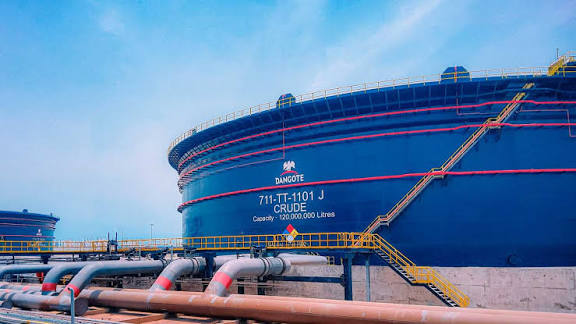
By Saint Mugaga, Abuja
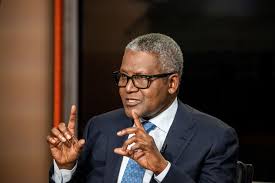
The Founder, Dangote Group, Alhaji Aliko Dangote, has cautioned against using the cry of monopoly to discourage indigenous investment and industrial growth in Nigeria, saying no one was prevented from investing in the country.
Dangote said this at the 2025 Inaugural Annual Downstream Petroleum Week organized by the House of Representatives Committee on Petroleum Resources (Downstream) on Monday.
Represented by the Group Chief Strategy Officer at Dangote Industries Limited, Aliyu Suleman, he rather encouraged focus on policies that encourage productivity, innovation, and competition.
Addressing the issue of monopoly with the refinery, he said, “Too many people with the means to build industries chose instead to invest abroad. We decided from afar while adding little value to our economy. We have chosen differently. We have chosen to get to Nigeria. We have chosen to build here, to employ here, to produce here. So let us not use the cry of monopoly to start from growth. No one is prevented from investing.We welcome others to build their own refineries and we will offer support in whatever way we can.”
“Nigeria holds the natural competitive advantage in refining. We enjoy proximity to oil and gas supply. We should therefore work together to develop this sector.
“We should work to enact and implement laws that will help this sector to prosper. Let us protect our industries and deliver the economic transformation this country deserves.”
He said today, the Dangote Refinery can meet all of Nigeria’s demand for diesel and jet fuel and still have surplus for exports.
Dangote said soon, the refinery would be listed on the stock exchange, giving Nigerians the opportunity to become shareholders of this national asset.
He said Africa’s refining sector remains underdeveloped, both relative to its consumption and relative to the volume of crude that is produced in Africa.
“While Europe and Asia refine over 95 % of their petroleum product refinement, Africa refines only 40%. In sub-Saharan Africa, there are very few large functional refineries today. This is understandable because refining is capital intensive, it is technologically complex and often is a low margin business. So as a result, many entrepreneurs and governments have chosen to stay away. But at Dangote, we are known for taking bold steps. We are known for making large scale investments to substitute imports and create value in the country.
“Therefore, this is a challenge that we were happy to take. When it came to tackling the refining challenge, we decided to do it even though it was not easy. Building a world-class refinery anywhere in the world is a huge task. It is capital-intensive and very demanding. To build ours, we collected over 2,700 hectares of land, pumped 65 million cubic meters of sand to stabilize the site, installed over 250,000 foundation bars, and laid millions of meters of piping, cabling, and wiring. At peak, we had over 60,000 people on site, of which 50,000 were Nigerians. We had these people working around the clock across hundreds of disciplines and nationalities.
“Today, the Dangote refinery can meet all of Nigeria’s demand for diesel and jet fuel and still have surplus for exports, which can be used in valuable foreign exchange for Nigeria. The refinery can meet 90 % of Nigeria’s PMS requirements. This is based on the official consumption numbers of 50 million per day. Our views are the real consumption, perhaps more about 40 million, in which case we should be able to meet demand.
“Across the world, major oil producers typically meet their petroleum product requirements through their own domestic refineries, not through imports. The United States, for example, imports only about 8 % of their petroleum products requirement. If you look at most of the major crude oil producers, you will see that they do not import more than 10 % of their petroleum products from the US. This is where Nigeria should be heading. And with the advent of the Dangote refinery and unbundling of the sector, we hope that we will get there.
“At the Dangote Group, our strategy across all our businesses is to provide our customers with high quality products at attractive prices. Not just in the refinery, across all the businesses. Same in cement, sugar and the rest. Refined products from our refinery are of higher quality and yet our prices are below import parity and below the average prices across most African countries. Across Africa, PMS and diesel sell for around $1 per litre, net of tax system of sorts. But in Nigeria, the current price is below $0.60 per litre.
“This is a huge cost benefit for Nigerians. Even though the cost benefit may not be immediately obvious because before the advent of the Dangote refinery, subsidies were used to mask the real market price. Still, despite all this, we find ourselves in a situation where Nigeria imports petroleum products, while at the same time Dangote refinery is exporting. This is a paradox that we must address in order for this sector to grow.
“Beyond energy security, domestic refining brought economic benefits. Refineries deliver job creation, skill development, industrial linkages, and exchange rates stability. The shipping sector is handling much more volumes than they used to handle before now. Engineering capacity is strengthened.
“Across Dangote, NNPC and the modular refineries, Nigeria has over one million barrels per day of installed domestic refining capacity. These benefits will multiply if we enable this capacity to operate fully. Across our businesses, the Dangote Group typically focuses on manufacturing, while accessing its distributors with the logistics required to deliver to their customers. Across Africa, we have over 10,000 trucks, who deliver products for our distributors. The same operating model applies to refining. We must all work together to renew distribution costs in order not to burden Nigeria’s energy efficiency.
“Historically, marketers source products from abroad and supply the country via coastal storage terminals. Today there is a domestic alternative. We must therefore find an optimal split of off-take between trucks loading directly at the refinery, versus loading into vessels for transportation to various storage terminals. It does not make economic sense to move products by ship to a nearby coastal depot at additional cost when the same volume could have been evacuated by trucks directly from the refinery.
“We are also working with NPA and the NIMASA to find ways to reduce coastal transport costs as this adds up to the total product costs that end up being passed on to Nigerians. That said, Nigeria’s fighting potential is massive. We are in a place where we can build a refining hub that will process crude from Nigeria surrounding African countries and supply Nigerian commonwealths.
“When we entered the cement sector, Nigeria produced less than two million tons per year. I was totally dependent on imports. Today, through visionary investment, timing execution, and government support, we have 2 million tons of capacity across Africa, and we’ll reach 60 million by next year. Nigeria is now a lead exporter of cement, and by 2027, we plan to export 500 million dollars worth of cement and clean cap annually. The same transformation is happening in refining
“Nigeria is now a net exporter of refined petroleum products, polypropylene and urea. This is a historic turnaround. And we’re not getting started. Soon, the Dangote Refinery would be listed, giving Nigerians the opportunity to become shareholders in this national asset.
“Given its potential, this sector must be nurtured and protected. The current import licensing regime, where import licenses are issued without considering domestic supply, has exposed domestic refineries to unfair competition. This is because most of this import comes from Russia and products from Russia are produced with crude that is priced 25 dollars per barrel, cheaper than Nigerian crude because of the sanctions.
“So this in a way, it is almost like dumping, which hurts domestic refineries. Aside from the crude for naira initiative, graciously introduced by Mr. President, local refineries grant the individual protection or incentives. ”
Speaker of the House of Representatives, Rt. Hon. Abbas Tajudeen, called on stakeholders in the petroleum industry to work collaboratively to reposition Nigeria’s downstream sector for sustainable growth, transparency, and innovation.
He said the event’s theme, “Celebrating Our Successes, Confronting Our Challenges and Finding Solutions for the Petroleum Downstream Sector,” reflected the country’s need to celebrate progress while tackling long-standing challenges through collaboration and self-assessment.
The Speaker, who was represented by his deputy, Rt Hon Benjamin Kalu, said the conference should serve as a defining moment in reshaping the downstream petroleum landscape.
He noted that Nigeria is at a critical juncture in its industrialisation drive and commended President Bola Ahmed Tinubu for the ongoing reforms under his Renewed Hope Agenda, which, he said, are revitalising key sectors of the economy, including oil and gas.
Abbas particularly lauded the operational take-off of the Dangote Refinery, describing it as a turning point in Nigeria’s quest for energy self-sufficiency.
He said the anticipated emergence of other private refineries underscores the need for a functional and enabling environment that will encourage investment, promote efficiency, and reduce dependence on fuel imports.
The Speaker recalled that much of the progress recorded in the petroleum sector was made possible by the landmark Petroleum Industry Act (PIA) 2021, which restructured the Nigerian National Petroleum Company (NNPC) into a commercial entity and established regulatory agencies such as the Nigerian Upstream Petroleum Regulatory Commission (NUPRC) and the NMDPRA.
He said the PIA has renewed investor confidence, promoted transparency, enhanced competition, and curbed oil theft and inefficiencies. Abbas reiterated that the National Assembly remains committed to crafting laws and policies that strengthen the downstream sector and ensure it contributes meaningfully to national development.
Chairman of the House Committee on Petroleum Resources (Downstream), Hon. Ikenga Imo Ugochinyere, called for stronger collaboration among stakeholders to sustain ongoing reforms and build a transparent, self-reliant, and globally competitive downstream petroleum industry.
He described the summit as more than a formal gathering, but a national dialogue aimed at repositioning the downstream petroleum sector as a driver of economic growth, innovation, and industrial development.
According to him, the event, themed “Celebrating Our Successes, Confronting Our Challenges and Finding Solutions for the Petroleum Downstream Sector,” represents a commitment to transparency, accountability, and progress.
He noted that the legislature, through the Petroleum Industry Act (PIA), had provided the legal foundation for reform, while the executive’s decision to remove fuel subsidies and liberalise the market restored efficiency and investor confidence.
Ugochinyere commended the Nigerian Midstream and Downstream Petroleum Regulatory Authority (NMDPRA) and the Nigerian Upstream Petroleum Regulatory Commission (NUPRC) for their professionalism in implementing reforms and ensuring that Nigeria’s energy transition remained credible and investor-friendly.
He also paid tribute to the Crude Oil Refiners Association of Nigeria (CORAN) for their courage and foresight in investing in local refining despite uncertainties that had kept some foreign investors on the sidelines.
He described their efforts as proof that Nigerian enterprise and innovation could drive industrial transformation and job creation.
Highlighting recent achievements in the downstream sector, Ugochinyere cited the expansion of Indorama Petrochemicals’ urea and fertilizer capacity to 2.8 million metric tonnes per annum, the scaling up of Waltersmith Modular Refinery in Imo State from 5,000 to 50,000 barrels per day, and the progress of the OPAC Refinery in Delta State.
He said the Dangote Refinery, now Africa’s largest at 650,000 barrels per day, symbolises a new era of energy self-sufficiency and regional stability. According to him, these milestones, combined with over $13 billion in upstream investments in 2024, reflect renewed investor confidence in Nigeria’s oil and gas sector.
The lawmaker also lauded the NUPRC for enforcing the Domestic Crude Oil Supply Obligation (DCSO), which mandates producers to prioritise crude supply to local refineries before exports.
He said the policy marks a shift from rhetoric to action, ensuring local value addition, job creation, and energy independence.
To deepen reforms, Ugochinyere announced plans by his committee to push new legislative measures granting local refineries the first right of refusal on crude allocations, streamlining regulatory processes, and introducing a Refinery Protection and Promotion Bill to classify refineries as strategic national assets.
These, he said, would guarantee stability, protect investments, and promote growth across the value chain.
On labour relations, Ugochinyere emphasised that no reform can succeed without industrial harmony, urging dialogue over disruptions in resolving disputes between industry players and unions.
The Minister of State for Petroleum Resources (Gas), Ekperikpe Ekpo, called for sustained collaboration between the Executive and Legislature to address lingering challenges in Nigeria’s downstream petroleum and gas sectors.
Ekpo said the continued reform and stability of the sector required policy consistency, private sector participation, and adherence to global best practices.




By Seyi Balogun
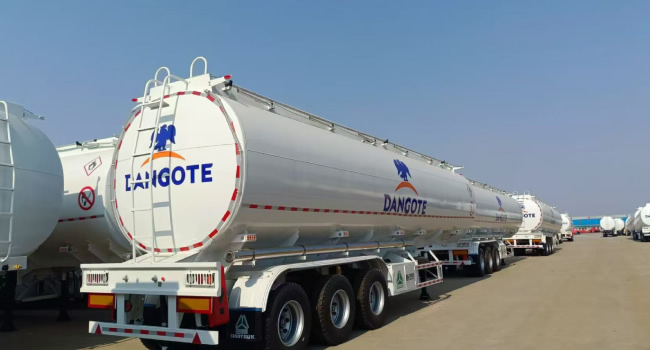
Major marketers have kicked against Dangote Petroleum Refinery’s non sale of Premium Motor Spirit (petrol) to importers of the product.
According to the refinery, importers of petroleum products into Nigeria will no longer enjoy sales from the Dangote Petroleum Refinery’s Premium Motor Spirit (petrol).
Reports confirm the refinery’s position saying it would no longer sell petrol to those blending Dangote fuel with imported grades.
“We are not selling petrol to those who are importing, since they are trying to blend our high-quality products with their ultra-low-quality imported products,” the source said, pleading for anonymity because he was not permitted to speak with the press.
Another source, according to the Punch said the refinery now prefers to sell its petrol to members of the Independent Petroleum Marketers Association of Nigeria, IPMAN, and others not known for importing. “We are selling to independent marketers and others who are not importing,” he stated.
It was learnt that the development informed why some marketers went to court to get an order that the Nigerian Midstream and Downstream Petroleum Regulatory Authority should continue to grant them import licences.
The marketers feared that they might be left stranded if they could not import fuel at a time when the Dangote refinery had halted petrol sales to them. Dangote had earlier threatened to stop transacting business with fuel importers, whom it accused of blending its Euro-5 petrol grade with imported grades.
It is concerned that such practices could make it difficult to distinguish between products supplied directly by the refinery and products subsequently blended or handled by third parties.
“It is difficult to understand why we would invest heavily in producing high-quality petroleum products for Nigerians, only for those products to be mixed with imported products of uncertain quality and the resulting product to be associated with the refinery,” the refinery said last month.
Reacting, importers and petroleum marketers kicked against the restriction of petrol sales to marketers who import petrol, describing the move as an attempt to block imports. The marketers also challenged the refinery to provide evidence that imported petrol entering the Nigerian market is below the required quality standard.
The marketers, who preferred not to be mentioned, accused Dangote of trying to prevent the importation of petrol. “We know what Dangote is trying to do. He is just trying to block imports,” one of the marketers said. The marketer argued that a company that sells petrol could not dictate whether a consumer should combine its product with fuel purchased from another supplier.
Using the example of motorists buying petrol from different filling stations, the marketer said Dangote could not prevent consumers from combining products sourced from different suppliers.
“For example, when you buy petrol from a TotalEnergies station, and you go down the road, and your petrol is almost finished, you then buy from MRS. Can TotalEnergies say you should not mix its petrol with MRS petrol? No, it can’t. I don’t understand the game that the Dangote refinery is playing,” he stated.
Another marketer also argued that the Federal Government had a responsibility to ensure an adequate petrol supply and protect consumers, insisting that imports remain necessary when domestic production drops.
Speaking, the National Vice Chairman of the IPMAN, Hamed Fashola, stated that the Dangote refinery is selective about who it sells petrol to because not all major marketers import.
“I don’t know how far that is correct; Dangote now sells to only IPMAN. I think somehow the information I have is that Dangote is selective about it, say those that are involved in importing. I think it’s not everybody that is importing,” he said.
Clarifying IPMAN’s purchasing position amid market competition, Fashola noted that independent marketers operate flexibly to secure the most competitive pricing, sourcing supply indiscriminately from both local refineries and importers.
“We buy our product anywhere we feel it is cheap. Anywhere we see the product, we go for it, both Dangote and the importers. We always go for the best price,” Fashola stated.
Meanwhile, the National Publicity Secretary of the IPMAN, Chinedu Ukadike, expressed the belief that the Dangote refinery is open to doing business with anyone.
Ukadike noted that independent marketers are ready to buy and sell petrol from all suppliers, stressing that they were not currently involved in importing the product.
While saying he would not know if importers truly blend Dangote’s petrol with imported petrol, he concluded that Dangote is in the best position to determine whatever it can do to discourage blending.
“I believe that the Dangote refinery is open for business and that it will continue to sell to marketers. The issue of blending, I cannot say yes or no, because I’m not part of those who are importing. Independent marketers are not importing yet; we are just marketers who buy and sell.
“So, if there is any measure to discourage adulteration of petroleum products by Dangote, I think the refinery and its experts know best. They know the best way to deal with that. But our own is to continue to buy and sell to marketers. If there is a way to discourage adulteration of petroleum products, I won’t stop Dangote from doing so,” Ukadike added.
Oil and Gas
NNPC Retail Gives Customers ₦66 Off Every PMS Litre…As Independence Anniversary Promotion Opens at Mega Stations
By Aliyu Musa
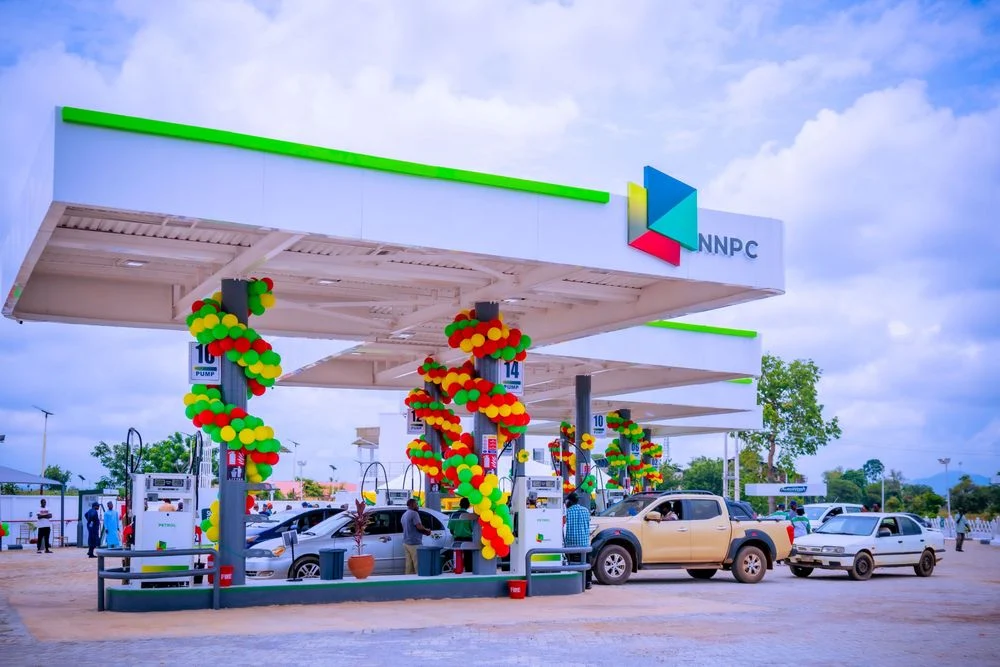
NNPC Retail Limited commenced its week-long 66th Independence Anniversary fuel promotion on 1 October 2026. On the day, Management and staff were at the mega station to engage with customers and promote awareness of the offer.
Customers get ₦66 off every litre of PMS purchased via the NNPC Fuel App, from 1 to 7 October 2026.
NNPC Retail’s Director, Operations, Baba Kukawa, said the promotion forms part of the company’s activities to commemorate Nigeria’s Independence Anniversary, combining the national celebration with a customer-focused promotion aimed at enhancing customer engagement and encouraging the use of its digital services.
By Philip Nyam
The Nigerian National Petroleum Company Limited (NNPC Ltd) has welcomed the $800 million Final Investment Decision (FID) on the Ima Gas Project, describing it as a landmark development that affirms the growing viability of Nigeria’s upstream gas sector.
The project, located offshore in OMLs 112 and 117 and developed by AMNI International in partnership with TotalEnergies, will produce about 300 million standard cubic feet of gas per day at peak.
According to Andy Odeh, Chief Corporate Communications Officer NNPCL, the output will supply critical feed gas to Nigeria LNG Limited in support of its Train 7 expansion, which will increase capacity at the Bonny Island plant from 22 million tons per annum to 30 Mtpa.
The FID was enabled by the Presidential Directives of 2024, which provided fiscal incentives for non-associated gas, streamlined contracting and lowered development costs.
Ima is the fourth major gas project to reach FID under President Bola Ahmed Tinubu, after Iseni, Ubeta and HI.
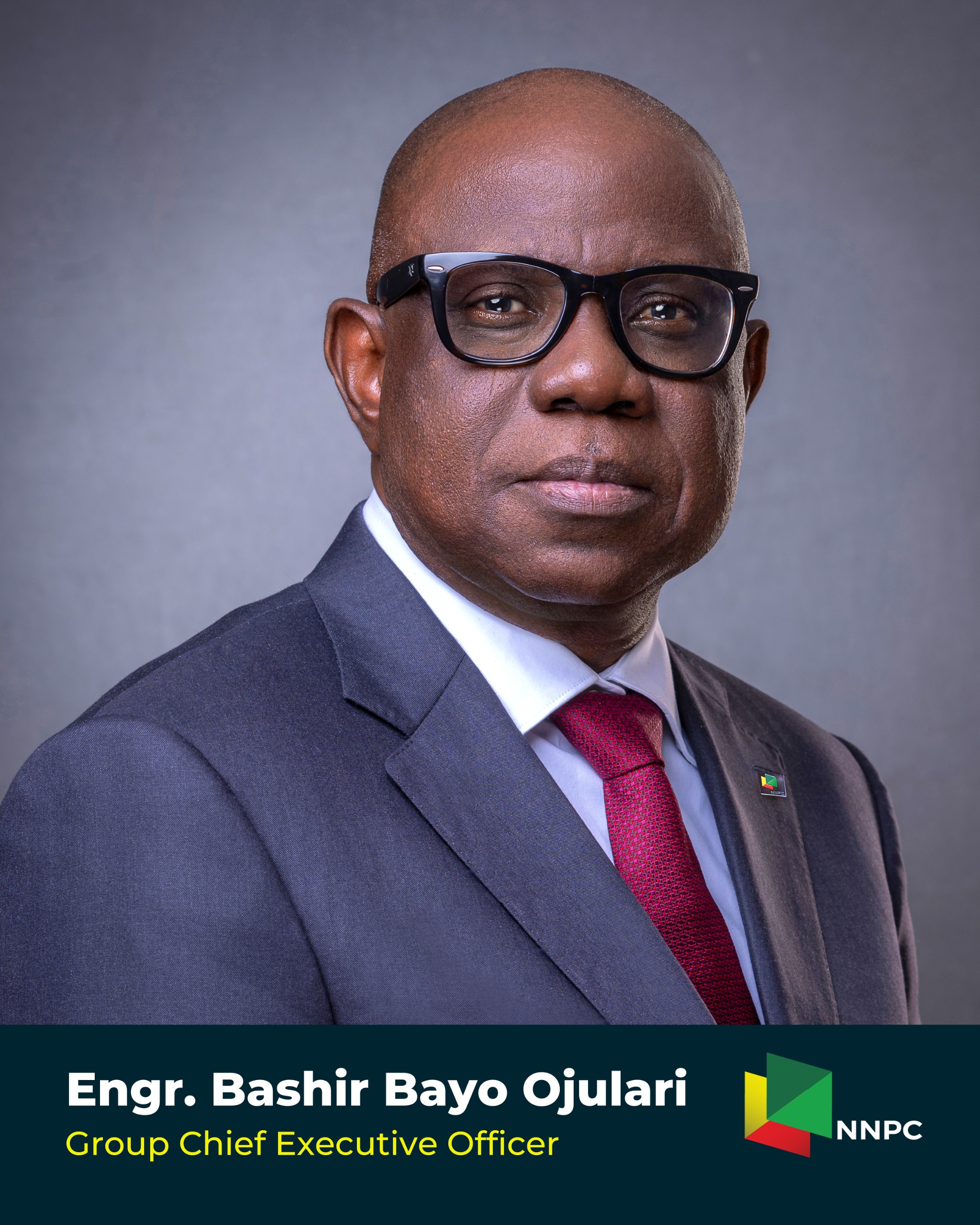
Group Chief Executive Officer, NNPC Ltd., Engr. Bashir Bayo Ojulari described it as “a decisive vote of confidence in Nigeria’s gas sector and in the bold reforms” that have created competitive terms and a predictable investment environment.
NNPC Ltd. also commends the collaboration between AMNI, TotalEnergies and the Nigerian financial sector, saying the model of indigenous operator, international partner and domestic capital is a template for future developments.
NNPC Ltd. reaffirms its commitment to work with government, regulators and industry partners to sustain investment momentum and deploy Nigeria’s gas resources for industrialisation, job creation and long-term prosperity.


FG Gives Workers N70,000 Monthly Transport Support for Six Months
Spread the loveBy Nick Ibe, Abuja To cushion the harsh impact of rising living costs, the Federal Government has approved...


Trump and the 95-year Mother: Government That Cares for All Citizens
Spread the love“Trump… Please bring my son back to me. I am begging you for mercy.” And what Trump did...


Probe Panel Says Heat, Dehydration Killed 33 Detained Niger Miners
Spread the love–Calls for NSCDC reforms, compensation for victims By Son Tertsea, Abuja Dehydration was cause of the death of...


Tinubu Seeks Law To Bring Back Nigerians Jailed Abroad
Spread the loveBy Felix Umande President Bola Ahmed Tinubu has transmitted a bill to the Senate seeking to empower the...

Senate Says: Travel Agencies, Short-let Apartments Need Closer Scrutiny in Human Trafficking Probe
Spread the loveBy Isa Abdul, Abuja As part of efforts to dismantle trafficking networks and protect Nigerians from exploitation abroad,...


El Niño: Its Meaning, Effects and How Nigerians Should Prepare for It
Spread the loveBy Son Tertsea, Abuja Nigerians have been alerted that El Niño event would raise concerns that potentially affect...

Accusations of Data Theft: MTN Explains How Nigerians Consume Data Fast
Spread the loveBy Nick Ibe, Abuja: Engaging in high-resolution video streaming, automatic downloads, background applications, cloud backups and increased internet...


Kogi Authorities Probe Why Police Corporal Killed female Colleague, Self
Spread the loveBy Michael Lim The Kogi State Police Command has begun to probe why a police corporal, Amos Yusuf,...


WHO Declares Nigeria Ebola-Free After Evacuation of Patient to Switzerland
Spread the loveBy Nick Ibe, Abuja Dr Mohamed Janabi, the World Health Organisation’s (WHO) Regional Director for Africa, says Nigeria...


Fake Letter Lands Atiku Supporter in Court
Spread the loveBy Isa Abdul, Abuja For circulating a fake document purportedly written by President Bola Ahmed Tinubu to the...