
Food and Agriculture
Why Youths Should Embrace Modern Commercial Goat Farming As A Pathway To Financial Creation

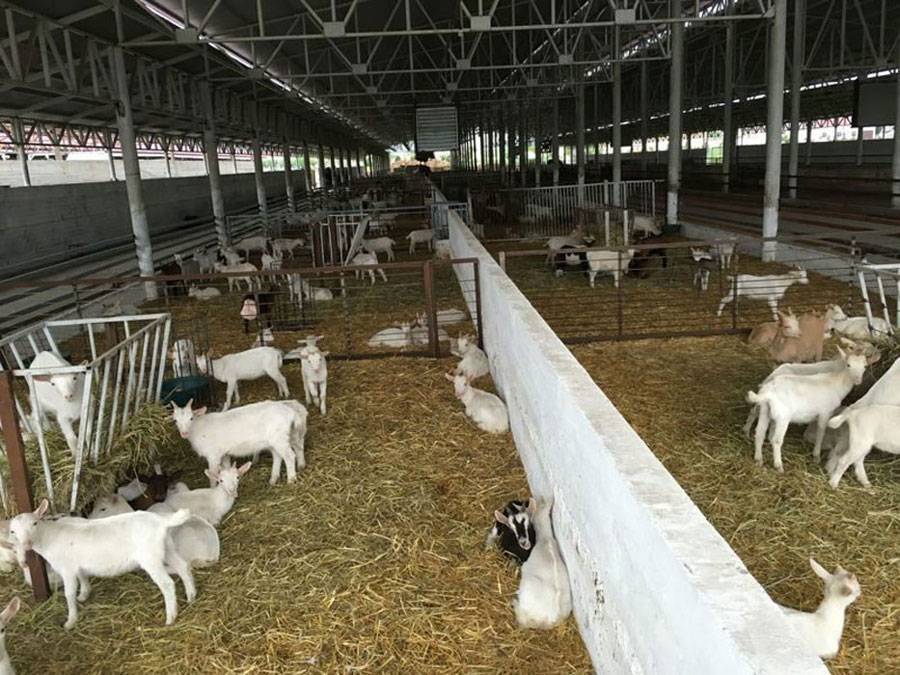
Many youths are waiting for government jobs, office work, or quick business opportunities before they start building their future.
But the truth is this: agriculture has changed, holding the key to success.
Goat farming is no longer just the old village system where animals are left to roam around without records, planning, feeding structure, or market strategy.
Modern commercial goat farming is becoming one of the practical pathways through which serious youths can build income, assets, skills, and long-term business value.
The truth is that Goat Farming is not a “get -rich-quick” business.
It rewards knowledge, patience, structure, discipline, and good management.
Here is why serious youths should consider it:
1.GOATS ARE LIVING ASSETS
A goat is not just an animal.
A healthy female goat can give birth, increase your herd, produce future breeding stock, and create value over time.
Unlike some businesses where your capital disappears after one mistake, livestock can multiply when properly managed. For example, a young person who starts with a few healthy females and one good breeding male can gradually build a herd if the animals are well-fed, vaccinated, dewormed properly, protected, and managed with records.
This is how small beginnings can become serious business assets.
2.THE DEMAND FOR GOAT MEAT IS STRONG
In Nigeria, and many parts of Africa, goat meat is consumed in homes, restaurants, events, hotels, pepper soup joints, celebrations daily, and during festive periods.
The demand is not seasonal alone. People eat goat meat all year round.
This means a youth who undertakes production, fattening, breeding, and or marketing can position himself or herself in a market that already has demand.
The challenge is not whether people need goats.
The challenge is whether the farmer can produce healthy, well-managed, good-quality animals consistently.
3.MODERN FARMING CREATES MORE OPPORTUNITIES THAN SELLING GOATS ALONE
A modern goat farmer does not only make money by selling mature goats.
There are several areas around the business:
Breeding stock production, Fattening for meat, sale of manure, feed production, hay production, silage production, farm training, Consultancy,
Farm setup, Medication and management services.
Other areas are: online livestock marketing,
Transport and supply chain, Crossbreeding and breed improvement
This means a youth can enter the industry from different angles depending on capital, location, skill, interest and or available resources.
4.GOAT FARMING CAN START SMALL
You do not need to begin with 100 goats.
In fact, many beginners fail because they start too big without experience.
A wise youth can start with 3 to 5 healthy females, learn proper management, understand feeding, keep records, study diseases, and grow gradually.
Starting small gives you time to learn without losing everything.
The goal business is not to impress people online.
The goal is to build a farm that can survive, grow, and produce results.
5.TECHNOLOGY HAS MADE FARMING EASIER
Modern goat farming is no longer guesswork.
Today, youths can use phones and simple tools to improve their farm.
You can keep records digitally.
You can advertise animals online.
You can learn from experienced farmers.
You can monitor breeding dates.
You can track vaccination and deworming schedules.
You can sell through Facebook, WhatsApp, TikTok, and YouTube.
You can build a farm brand from your phone.
This is where youths have an advantage.
Many older farmers may have experience, but many youths understand media, branding, content, networking, and digital marketing better.
That is a serious advantage if used properly.
6.COMMERCIAL GOAT FARMING TEACHES DISCIPLINE
A farm will train you.
Animals do not care whether you are tired, discouraged, or distracted.
They need water.
They need feed.
They need clean housing.
They need observation.
They need treatment when necessary.
They need protection.
This discipline can shape a youth into a responsible business person.
If you can manage livestock properly, you are learning patience, consistency, observation, planning, and accountability.
These are the same qualities needed in any serious business.
7.IT CAN REDUCE DEPENDENCE ON SALARY ALONE
Many youths are waiting for one job to solve all their problems.
But in today’s economy, relying on one income source can be risky.
A small but well-managed goat farm can become an additional income stream.
You can be working, schooling, trading, or learning a skill while building your livestock asset gradually.
That is why structure is important.
With good housing, feeding routine, record keeping, and proper supervision, a small goat farm can be managed without turning your whole life upside down.
8.GOAT FARMING BUILDS GENERATIONAL VALUE
Land, livestock, knowledge, and farm systems can be passed on.
A youth who builds a serious farm today is not only creating income; he or she is building something that can grow into a family business.
Many wealthy people today started with one practical business and stayed consistent.
Goat farming can become that foundation for some youths if they treat it as business, not as a casual hobby.
9.IT CREATES EMPLOYMENT FOR OTHERS
A serious goat farm will eventually need workers, feed suppliers, transporters, vets, attendants, marketers, and farm assistants.
So when one youth builds a proper farm, that youth can also create opportunities for others.
This is how agriculture can help reduce unemployment—not by theory, but by practical production.
10.IT CONNECTS YOUTHS BACK TO REAL PRODUCTION
Many people want money, but very few want to produce anything.
Goat farming teaches production.
You are producing meat, breeding stock, manure, value and solving a real food demand.
Any economy that ignores production will struggle.
Youths who enter agriculture with knowledge and structure will not go backward. They will step into one of the most important sectors of the economy in future.
Warning:
Do not enter goat farming blindly.
Before starting, learn first: Understand housing, feeding, breeds, disease prevention, vaccination, quarantine, deworming, record keeping, market demand, cash flow and mortality risk.
Do not use your last money to buy animals without a plan.
Do not buy goats from anywhere and mix them immediately with your flock.
Do not start with exotic breeds if you do not understand management.
Do not depend only on free grazing.
Do not think prayer alone will replace proper farm management.
God blesses wisdom, planning, diligence, and responsible action.
The Best Way For A Youth To Start
Start small.
Build a clean pen.
Buy healthy animals from a trusted source.
Quarantine new animals.
Keep records.
Feed properly.
Vaccinate.
Deworm responsibly.
Learn from experienced farmers.
Reinvest profit.
Grow gradually.
Build a farm brand online.
Final Word:
Modern commercial goat farming or any business is not for lazy people.
It is for people who can think, learn, observe, plan, stay focused and consistent.
It is not magic money.
It is a practical financial creation model built on livestock multiplication, market demand, discipline, and proper management.
Instead of waiting for opportunities.
Start with one goat, one pen, one customer, and one smart decision at a time.
The future belongs to producers.
If you are a youth and you are serious about farming, do not just admire goat farming from a distance: Learn it. Plan it. Start wisely.
Manage it smartly and grow it patiently.
What’s the biggest challenge stopping you from starting.
Is it capital, land, knowledge, fear, or market?
DoxaonFarms
LivestockBusiness





By Michael Lim
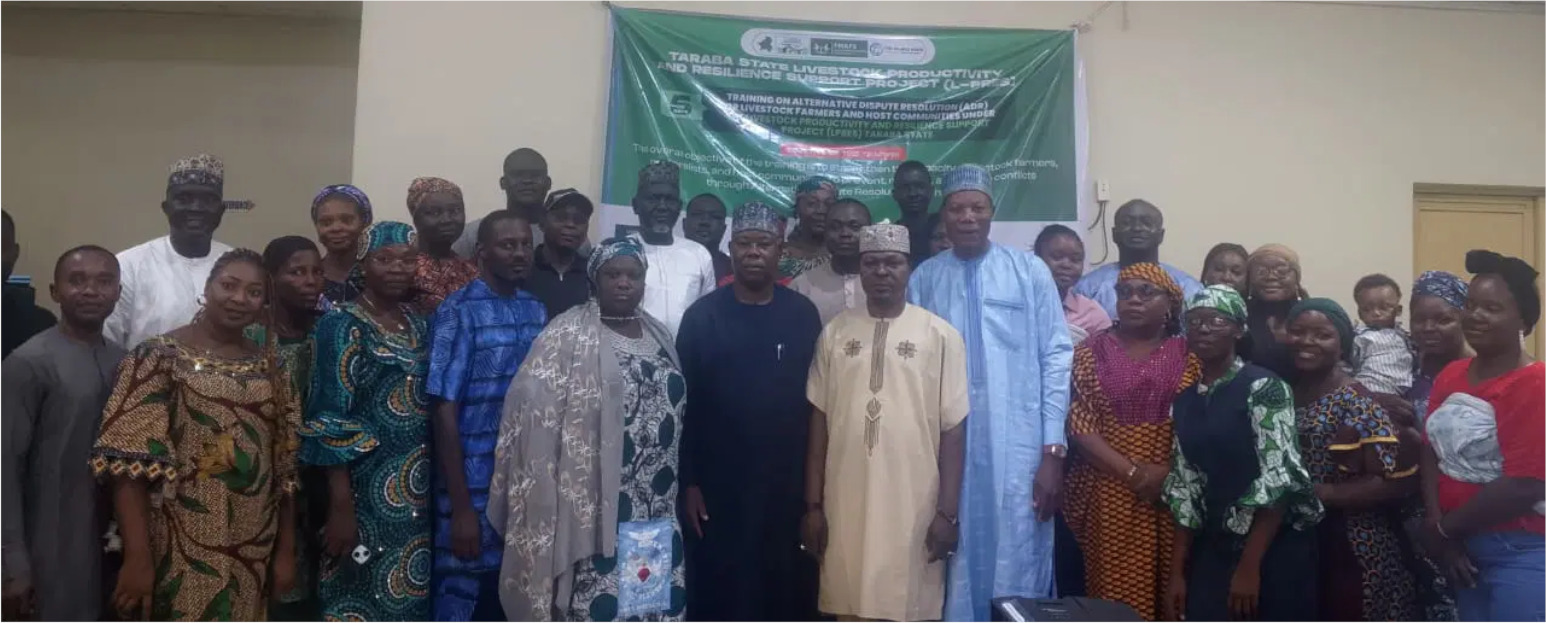
Conflict prevention between livestock farmers and host communities in Taraba State through the promotion of dialogue and Alternative Dispute Resolution by the Livestock Productivity and Resilience Support Project has been emphasised.
The initiative was highlighted at the opening of a five-day ADR training organised in Jalingo for livestock farmers, host communities, traditional and community leaders and other stakeholders in the livestock sector.
The training focused on peaceful, community-based approaches to resolving disputes before they escalate into violent conflicts, particularly disagreements over access to land and water, livestock movement and alleged destruction of crops.
Speaking during the training, the L-PRES State Project Coordinator, Hananiah Albert, said peace and stability were critical to the growth and sustainability of livestock production in the state.
Albert, who was represented by the project’s ICT and Communication Officer, Ezra Atimas, said livestock farming remained a major source of livelihood for many residents, stressing that disputes within the sector should be resolved through dialogue rather than confrontation.
He said ADR provided disputing parties with an opportunity to sit together, listen to one another and address their concerns with a view to reaching mutually acceptable solutions.
The coordinator also urged stakeholders to make greater use of existing community leadership structures, saying early intervention and effective communication could prevent minor disagreements from developing into serious conflicts.
Also speaking, a resource person and Dean of the Faculty of Social Sciences, Taraba State University, Dr Danjuma Yusuf, urged livestock farmers and members of host communities to make greater use of traditional and community leadership structures in resolving disputes.
Yusuf advised stakeholders to involve traditional rulers, religious leaders, women’s groups and livestock associations in conflict resolution, noting that their participation could promote dialogue, build trust and preserve relationships between farmers and host communities.
He stressed that ADR should not be limited to situations where conflicts had already erupted, but should also be used as a preventive mechanism for identifying and addressing grievances before they become violent.
The training is expected to strengthen the capacity of livestock farmers and host communities to peacefully manage disputes while promoting improved community relations, security and sustainable livestock development across Taraba State.
Food and Agriculture
October AGLOFEST: To Converge Investors, Businesses, Cultural institutions, Creative Industry

By Nick Ibe, Abuja
October 2026 has been chosen by the Federal Government to launch the African Global Festival , AGLOFEST, as part of efforts to strengthen Nigeria’s cultural diplomacy, economic cooperation and engagement with Africa and the global Black Diaspora.
Developed as a public-private partnership, the festival will bring together government officials, development partners and members of the global Black Diaspora.
The initiative has received presidential approval and is being developed in collaboration with relevant ministries, departments and agencies, including the Ministries of Art, Culture, Tourism and Creative Economy; Trade, Investment and Industry; and Foreign Affairs.
AGLOFEST is designed to showcase Nigeria’s cultural heritage, tourism potential, creative industries and investment opportunities while positioning the country as a meeting point for Africans and members of the Black Diaspora.
The festival will feature three major components: the Black Diaspora Economic Forum, which will focus on trade, investment and business partnerships; the Black Diaspora Cultural Presentation, highlighting African heritage and creative expressions; and the Renewed Global Hope and Peace Concert, which will use music and entertainment to promote peace, unity and global engagement.
The Convener of AGLOFEST and Chief Executive Officer of T-BYK, Tunde MacAlabi, praised President Bola Tinubu for approving the initiative.
MacAlabi described the approval as a major milestone in the development of the festival, saying it would deepen Nigeria’s economic, cultural and strategic relationship with the global Black Diaspora. In his words:
“AGLOFEST was conceived as a platform through which Nigeria can deepen its economic, cultural and strategic relationship with the global Black Diaspora.
“The October 2026 launch will mark the beginning of a new chapter in positioning Nigeria as a leading global hub for Black cultural expression, investment, tourism and economic cooperation.”
MacAlabi said preparations were ongoing, with engagements continuing with prospective international participants, strategic partners, investors, sponsors, cultural organisations and members of the global Black Diaspora.
He said the festival was conceived as a long-term international initiative that would create opportunities across tourism, hospitality, aviation, transportation, entertainment, creative industries, trade, investment and infrastructure.
The convener also called on state governments, private-sector organisations, international institutions, development partners, cultural institutions and members of the global Black Diaspora to support the initiative.
He said the October launch would mark a step towards strengthening Nigeria’s global cultural engagement, expanding economic partnerships and deepening the country’s relationship with Africa and the Black Diaspora.
Food and Agriculture
“Sasakawa Helped Us To Stand Again” — Benue Women Farmers Hail Foundation For Reviving Livelihoods
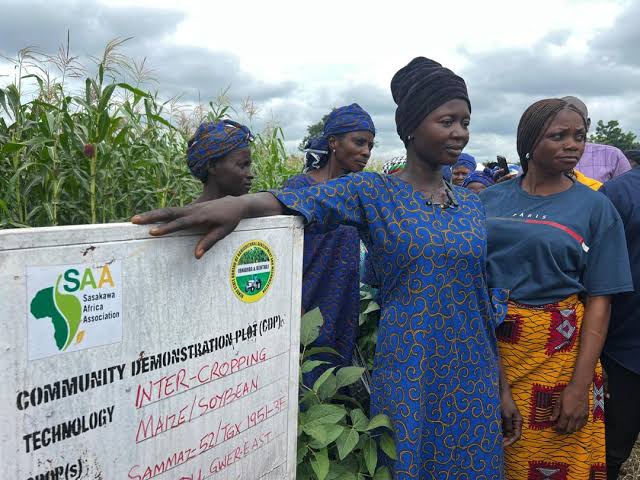
–Cooperative Credits Intervention For 58-Hectare Farm Revival, Mechanization, Improved Seeds and Training
By Felix Umande
Farmers, particularly women, in Benue State have expressed deep appreciation to the Sasakawa Africa Association, SAA, for its support that has revived their farms, processing businesses, and livelihoods.
Speaking during an interview on Tuesday, September 15, 2026 in Mbatier community, of Buruku LGA, the President of the Divine Open Doors Multipurpose Cooperative, Benue State, Mrs. Ngufan Blessing Chichi, said the intervention by Sasakawa since 2020 has been “so impactful” and has enabled women farmers to stand firmly in agriculture.
“We existed in several other local governments here in Benue State. In each and every local government, we intend to have a chapter. All our chapters have 50 women,” she said.
Mrs. Chichi said Sasakawa intervened with financial aid and donation of a power tiller to ease land preparation to encourage women who at some point got discouraged due to hardship and post-farming loses.
“The cost of doing a hectare manually was 60,000 Naira. But now, with the power tiller, we pay the boys 20,000 Naira, buy diesel 7,000 Naira, and some other services, just about 30-something thousand Naira, a hectare is finished. This has actually helped us,” she stated.
She said the support encouraged members to return to farming. Presently, the cooperative has about 58 hectares under cultivation with cassava and soybean.
Beyond cultivation, Mrs. Chichi said the cooperative now processes cassava into flour, popularly known as Akpu, which is packaged for wider distribution.
“With this product, it can go anywhere in the country, because it is not easy to travel with the raw Akpu. But with this one, it can be packaged in cartons. You just boil your water, pour inside and turn it, it’s just like pounded yam,” she explained.
She credited Sasakawa for training members on weed control, record keeping, and savings culture.
“If it is not because of their training, we wouldn’t have known about weed control. Anything record keeping, we know it because Sasakawa taught us. Anything savings, we know because Sasakawa helped us to know how to save and to use our money judiciously,” she said.
On marketing, she noted growing demand for their processed products through direct engagement. “Anytime we process, many people run to come and pick it from us. When they try, they send a message again because there is a number on it,” she said.
The cooperative operates a profit-sharing model where dividends are shared annually based on contributions, while also allocating one hectare yearly to the host community to foster goodwill and farm security.
“If it is not because of Sasakawa, we wouldn’t have been able to stand here today. Sasakawa has helped us to regroup once again. It has helped us to stand,” she said.
Another farmer, Mrs. Akombu Erdoo, listed interventions brought to her community by Sasakawa to include training, improved seed varieties, financial support, herbicides and fertilizer. She mentioned cassava varieties introduced to include 419, Dickson, Game Changer, Farmers’ Pride and Baba70, among others.
According to Mrs. Akombu, farmers in the community are now “building houses and sponsoring their family bills” from farm profits.
At Mbatsaase community of Mbaapen, farmers including Msugh Ahula and Wuese Felicia said Sasakawa’s training has transformed agriculture in their area and revived farming.
Speaking during a tour in Buruku, Dr. Engr. Moshood Sulaiman, Program Officer for Climate Resilient and Sustainable Agrifood Systems with Sasakawa Africa Association, said mechanization is key to the intervention.
“We empower local group with 18 horsepower power tiller to till the soil for them before planting. Mechanization alone can contribute like 20% in terms of farm production,” he said.
“So, we empower them with this 18 horsepower power tiller to help them to till the soil because if you look at the hectares of land they have here is very large. So, if you compare this power tiller to manual labor, it’s incomparable. The difference is widely significant. While this is, the power tiller can work like 20 to 40 times faster than what human labor can give you.”
He explained that one hectare that takes 7 to 10 days manually can be tilled in 2 to 3 hours with the power tiller, reducing drudgery and production cost.
“For sustainability, we train the operators on operation, repair, maintenance, and troubleshooting of the machine, and we are following up with that,” Dr. Sulaiman added.
The agricultural interventions of the Sasakawa Africa Association across the eight local government areas in Benue State has witnessed a widespread testimonies as residents seeks its operations in other local communities.



100 Days To 2027 Polls: INEC Vows Neutrality, Says BVAS, Ballots Ready
Spread the loveBy Felix Umande The Independent National Electoral Commission, INEC, has assured Nigerians and the international community of its...


THE LAST TANGO: Tears, Tributes and A Final Goal As Messi Bows Out After 21 Years
Spread the loveBy Felix Umande Emotions ran high at the Estadio Monumental on Tuesday night as Lionel Messi signed off...


Church’s Duty to Empower Individuals, Create Opportunities and Improve Family’s Economic Well-being
Spread the loveBy Seyi Balogun, Lagos The need for the Church’s commitment to empowering its members through employment opportunities, entrepreneurship...

Taraba Explores ADR for Sustainable Peace Between Crop, Livestock Farmers
Spread the loveBy Michael Lim Conflict prevention between livestock farmers and host communities in Taraba State through the promotion of...


Financial Inclusion: Kwara Buys Dangote Refinery Shares For Female Teachers
Spread the loveBy Michael Lim Kwara State Government has announced plans to buy shares in the Dangote Refinery Initial Public...


Benue Govt Gives 2-Week Ultimatum To Owners Of Illegal Billboards, Threatens Mass Removal
Spread the loveBy Felix Umande The Benue State Government has decried the arbitrary erection of billboards across the state by...


INEC Tracking Illegal Campaign Spending
Spread the love–Tells Editors: “remain primary filter against information disorder.” By Son Tertsea, Abuja The Independent National Electoral Commission (INEC)...

Importers, Petroleum Marketers Kick Against Dangote’s Restriction of Petrol Sales
Spread the loveBy Seyi Balogun Major marketers have kicked against Dangote Petroleum Refinery’s non sale of Premium Motor Spirit (petrol)...


Jim Ovia Counsels: Nigeria must not Sacrifice Quality for Quantity in Tertiary Education
Spread the loveBy Seyi Balogun, Lagos Nigeria must not allow the size and the number of universities to come at...


Unidentified, Mutilated Corpse of Man Found Behind Pankshin Market in Plateau
Spread the loveBy Michael Lim, Jos On Tuesday morning, the corpse of an unidentified man was found behind the Monday...